PFP Test - History
PageFeeds Pro! Test - History
  • 2 Bu gibi insanlar
  • 2065 Yazı
  • Fotoğraflar
  • Videolar
  • History and Facts
Site içinde arama yapın
Son Güncellemeler
  • WWW.THEHISTORYBLOG.COM
    Rich graves of three elite warriors found in Hungary
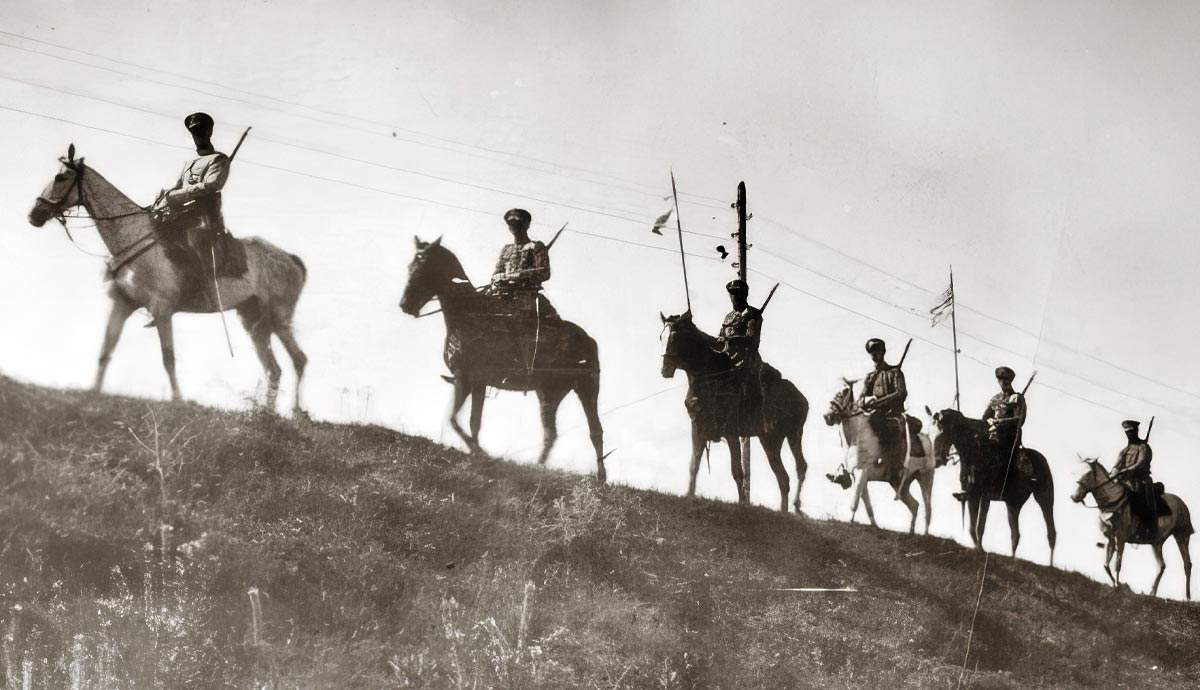
    The richly furnished graves of three elite cavalry warriors from the Hungarian Conquest period have been discovered in Akaszt, southern Hungary. The graves date to 920-930 A.D. and contain an exceptional wealth of goods, including gilded silver belt and horse harness fittings, a sabre, bows, arrows and silver coins from Northern Italy.The first grave contained the remains of a high-ranking warrior who was just 17 or 18 when he died. It was not looted or disturbed, and its furnishings make it one of the richest burials ever found in the region. He was buried wearing a gold ring with a blue glass stone, two gold hoops in his hair and decorated silver arm and leg rings.He was also wearing an extraordinary belt. The silver gilt fittings on the belt are complete and in excellent condition. The area around the deceaseds waist was removed in a soil block, recovering all of the belt fittings, plus silk fibers, textile remains and leather fragments. Such an intricate belt structure surviving intact with significant remains of its organic elements is unprecedented on the archaeological records not just of Hungary, but of Central and Eastern Europe. His rank is marked by the presence of a silver sabretache plate, the riveted ornament on the front of the leather pouch warriors carried that held their fire-making tools. The plates were bronze, silver or gold; the more precious the metal, the higher the status of the warrior and/or the princely family he served. Only about 30 of these plates are known. What makes this one even more exceptional is that the leather pouch has survived, complete with studs.As was typical of the warrior elite from the Conquest period, he was buried with head, legs and skin of his horse. His horses harness is richly ornamented with gilded silver fittings.The second grave contained an even younger warrior, just 15 or 16 when he died. His grave contained a quiver with seven arrows and a bow decorated with antler plates. The third warrior was an adult of 30-35 years. He was buried wearing a silver bracelet and was accompanied by a long sabre, a bow and arrows, and a horse harness decorated with gold coins.It total, 81 Italian silver coins, three bows, 30 iron arrowheads and approximately 400 other coins were recovered from the three graves. The number of Italian coins is particularly significant, as they are such a large group they double the number of such coins known from the Carpathian basin. They date to the reign of Berengar I (888-924 A.D.), great-grandson of Charlemagne and ruler of parts of Northern Italy. Warriors from the kingdom of Hungary were hired as mercenaries to fight in the many Italian wars during this period. Its possible these warriors fought in Italy and were paid in silver coins.Researchers have not yet been able to determined the causes of death, but initial genetic analysis indicates there was a familial relationship between the men. The third warrior was likely the father or older brother of the second, and all three were related through their paternal lines. The grouping of the burials and quality and quantity of the grave goods point to the boy and man having been in the bodyguard or entourage of the first warrior.The team also looked at the ratios of isotopes, or elements with varying numbers of neutrons in their nuclei, in the warriors remains. This analysis showed that the three warriors had diets rich in animal protein.From the archaeological finds, it can be stated that an elite warrior group, presumably members of a military leadership, were buried here, the archaeologists wrote. Research is underway to learn more about the warriors identities.
    0 Yorumlar 0 hisse senetleri 0 Views
  • WWW.ONTHISDAY.COM
    Today in History for 11th January 2026
    Historical Events1944 - Crakow-Plaszow Concentration Camp established1959 - 9th NFL Pro Bowl, LA Memorial Coliseum: Eastern Conference beats Western Conference, 28-21; MVPs: Frank Gifford, NY Giants, HB; Doug Atkins, Chicago Bears, DE1963 - Beatles release the single "Please Please Me" / "Ask Me Why"; peaks at #2 in UK, and #3 in US1966 - "Daktari" African adventure series premieres on CBS TV1987 - AFC Championship, Cleveland Stadium: Denver Broncos beat Cleveland Browns 23-20 (OT)More Historical Events Famous Birthdays1503 - Parmigianino [Girolamo Francesco Maria Mazzola,], Italian artist (Madonna with the Long Neck), born in Parma, Duchy of Milan (now Italy) (d. 1540)1905 - John Henry Jacques, English co-operative retailer and politician, born in Ashington, Northumberland (d. 1995)1946 - (Diana) "Naomi" Judd, American Grammy Award-winning country singer (The Judds - "Why Not Me"), born in Ashland, Kentucky (d. 2022)1952 - Kim Hartman, British screen, stage, and radio actress (Allo Allo! - "Helga"), born in Hammersmith, London, England1968 - Sharon Brown, American actress (Chantal-Generations), born in New York CityMore Famous Birthdays Famous Deaths1055 - Constantine IX Monomachos, Emperor of Byzantium, dies1954 - Edgard Tytgat, Flemish painter and etcher, dies at 771981 - Beulah Bondi, American actress (It's a Wonderful Life), dies at 882010 - Georgy Garanian, Armenian-Russian jazz saxophonist, bandleader and composer, dies of cardiac arrest at 752013 - Aaron H. Swartz, American computer programmer, dies from an apparent suicide at 26More Famous Deaths
    0 Yorumlar 0 hisse senetleri 0 Views
  • WWW.THECOLLECTOR.COM
    How Alexander Hamilton Became the Father of the US Financial System
    During the American Revolutionary War, the young New York lawyer Alexander Hamilton established a close working relationship with General George Washington and served as his senior aide-de-camp. His administrative abilities and financial expertise led Washington to appoint him as Secretary of the Treasury after becoming the first president of the United States. Hamilton had a grand vision for how the federal government could support the American economy. While his ideas were controversial and faced considerable opposition, his contributions helped the United States become an economic superpower.Washingtons Right-Hand ManThe First Meeting of Alexander Hamilton and George Washington. Painting by Alonzo Chappel, 1856. Source: National Heritage Museum, Lexington, Massachusetts via PBSAlexander Hamiltons working relationship with George Washington began in early 1777 when he was appointed the commander-in-chiefs aide-de-camp during the American Revolutionary War. Washington had been impressed by Hamiltons conduct as an artillery officer the previous year, and the general soon found him an indispensable asset in his efforts to lead the United States to victory over British forces.Since Washington struggled to deal with the voluminous correspondence from Congress, individual states, and subordinate officers on other fronts, the 22-year-old Hamilton quickly used his administrative skills to help the general manage the workload. Soon, he was given the authority to issue orders on Washingtons behalf. Although Hamilton begged Washington for a field command, the commander was reluctant to lose him from his staff and kept him on until March 1781. Hamilton secured his desired command in the summer of 1781 and took part in the Siege of Yorktown.During his service as Washingtons de facto chief of staff, Hamilton shared the generals frustrations regarding the Constitutional Congress limited powers and the tendency for individual states to prioritize their own narrow interests over the national cause. While the Articles of Confederation had come into force in 1781, after the war, Hamilton believed that further centralization was required and joined forces with James Madison of Virginia to call for a stronger national government.Their efforts led to the Constitutional Convention of 1787 in Philadelphia. Washington presided over the deliberations that resulted in the promulgation of a new Constitution in September 1787, which was ratified by the states the following summer.Secretary of the TreasuryWashington and his Cabinet. Print by Currier & Ives, c. 1876. Source: Library of Congress, Washington DCWashington became the first president of the United States in April 1789 and appointed Hamilton as Secretary of the Treasury in September. Other members of Washingtons cabinet included Secretary of War Henry Knox, who had been Hamiltons superior officer as artillery commander of the Continental Army, Attorney General Edmund Randolph of Virginia, and Secretary of State Thomas Jefferson. Jefferson had been serving as ambassador to France in Paris and did not take office until early 1790. The future president would become Hamiltons leading rival within the cabinet.Hamiltons immediate duties included setting up accounting systems for the federal government and creating the US Customs Service to collect the import duties that served as the main source of government revenue. While taxation was a contentious issue since it had been a major cause of the American Revolution, there was a general consensus among Americas early political leaders that the federal government had to be able to collect taxes to support its operations.Hamiltons most important task as Secretary of the Treasury was to address the issue of Americas public debt accumulated during wartime, which amounted to some $79 million. Much of this was in the form of bonds issued to war veterans in lieu of pay. Since there was little expectation that these would be redeemed, most veterans promptly sold their IOUs to financial speculators at heavy discounts to their face value. Hamiltons solution reflected his ambitions to leverage the scale of the federal government to stimulate economic development.Government CreditAlexander Hamilton represented on the US 10 dollar bill. Source: Wikimedia Commons/United States Treasury Bureau of Engraving and PrintingIn January 1790, Hamilton presented his 40,000-word First Report on Public Credit to Congress. The core of Hamiltons proposals were the concepts of redemption and assumption. Hamilton argued that the government should redeem the bonds by paying the bondholders rather than the initial recipients. Additionally, he believed that the federal government should assume the debt of the states, transferring bondholders loyalty to the national government rather than the states.Both redemption and assumption faced opposition in Congress. Hamiltons erstwhile ally, James Madison, broke with him on the issue of redemption, arguing that it would not be fair to war veterans while enriching speculators who did nothing to support the war effort. Hamilton defended his plans by emphasizing the importance of ensuring full faith in government credit so that the government could borrow and invest in the economy at low rates.While Hamiltons redemption bill was easily passed by Congress, the assumption bill was more politically contentious. Not only would this entail a significant centralization of powers for the federal governments powers to borrow and tax, but less indebted states felt it was unfair to share the burden at the federal level with more indebted states.Madison rallied opposition to defeat the assumption bill in the House. It was only after Hamilton compromised in June 1790 by agreeing to support a permanent capital on the site of Washington DC that Jefferson and Madison agreed to drop their opposition.The First Bank of the United StatesThe first Bank Building in Philadelphia. Source: National Parks ServiceIn December 1790, Hamilton presented his Second Report on the Public Credit, in which he sought to build on the foundations of his public credit system by establishing a central bank. This institution would issue a uniform national currency, loan to public and private entities to develop the economy, collect revenues, and hold government funds.While Hamilton saw the national bank as a key part of his program to stabilize the economy and stimulate investment, Jefferson and Madison argued that the proposals were unconstitutional as there were no provisions for such a bank in the Constitution.After the bill passed the House, Jefferson urged Washington to veto it on constitutional grounds. The president gave Hamilton the opportunity to respond, and the latter made a strong argument for its constitutionality since the Constitution allowed Congress to pass legislation considered necessary and proper for its functioning. Washington accepted Hamiltons arguments and chartered the Bank of the United States on February 25, 1791.The issue of a national bank has been contentious throughout American history. Hamiltons opponent, James Madison, was president in 1811 and refused to renew the 20-year charter of the First Bank of the United States. However, after the government was on the brink of bankruptcy during the War of 1812, Madison recognized that some form of national bank was required. The Second Bank of the United States, formed in 1816, was, in turn, abolished by President Andrew Jackson in 1836, and it was not until the creation of the Federal Reserve System in 1913 that the United States had a central bank again.Promoting American IndustryWall Street and Federal Hall of New York in c. 1791. Print by Cornelius Tiebout, c. 1879. Source: Library of Congress via Geographic GuideIn December 1791, Hamilton produced the Report on Manufactures, his third major policy paper as Secretary of the Treasury. Although Hamilton was in favor of close trading relations with Britain and endorsed free markets in principle, the rationale behind the report was to achieve economic independence from Britain and nurture the development of American commerce. In order to achieve these objectives, Hamilton suggested protective tariffs, subsidizing industry, and a public infrastructure program to encourage interstate trade and develop a national economy.Hamiltons proposals once again met with opposition from Jefferson and Madison as pandering to financial interests in his home state of New York, further deepening the split between Hamiltonian Federalists and Jeffersonian Republicans.In fact, Hamiltons recommendations were relatively moderate and sought to strike a balance between commercial and agrarian interests. The proposals for subsidies were particularly unpopular, and Congress never brought them to a vote. However, most of Hamiltons tariff proposals were enacted in the aftermath of the report. Tariffs would be a major factor in the sectionalization of American politics during the 19th century, with northern states preferring higher tariffs and southern states preferring lower ones.Despite its mixed reception from Congress, the Report on Manufactures has remained an influential text over the centuries in establishing how the central government could proactively support economic development. While Americans have mostly endorsed free trade, the federal government uses subsidies and infrastructure investment to stimulate the economy. The idea that protectionist policies can support industrial development in developing countries continues to be influential in development economics.Resignation From GovernmentAlexander Hamilton by John Trumbull, c. 1806. Source: National Gallery of Art, Washington DCSince the federal governments main source of revenue was customs and excise duties from international trade, Hamilton also took an interest in foreign affairs, which further contributed to his frosty relationship with Jefferson. After war broke out between France and Britain in 1793, Hamilton wanted a close trading relationship with Britain, while Jefferson sympathized with the French Revolution.In response to provocative actions by the British navy, such as intercepting American ships trading with France and forcibly enlisting American sailors into their ranks, Hamilton persuaded Washington to dispatch John Jay to negotiate a treaty to address the contentious issues and secure a favorable trading agreement.By the time Jay returned to the United States with an agreement that improved trading relations with Britain, but without any commitment to end the impressment of American sailors, Hamilton had already resigned from the Treasury at the end of January 1795. Shortly before doing so, he issued his Report on a Plan for the Further Support of Public Credit to Congress, which defended his economic program and proposed methods to prevent the indefinite accumulation of the national debt by assessing government revenues and expenditures.Hamilton further expanded on the necessity of protecting government credit by rejecting calls to tax interest payments to creditors or to sequester the property and assets of the nationals of hostile powers in wartime.An Enduring LegacyDuel between Alexander Hamilton and Aaron Burr, from the book Our Greater Country, Henry Davenport Northrop, 1901. Source: Wikimedia CommonsA few months after resigning from the Treasury, Hamilton returned to his lucrative legal practice in New York and continued to advise Washington behind the scenes, helping to draft his famous Farewell Address.In spite of his involvement in the embarrassing Maria Reynolds affair, Hamilton remained active in public life and was in effective command of the US Army during the Quasi-War with France. His intervention on behalf of his rival Thomas Jefferson in the 1800 presidential election at the expense of his New York rival Aaron Burr, together with his efforts to undermine Burrs 1804 campaign for governor of New York, contributed to the fateful Hamilton-Burr duel of July 11, 1804, which resulted in Hamiltons death the following day.Despite his death at the relatively young age of 49, Hamilton has left behind an immense legacy. While his image began to appear on the US $10 bill in 2006, public awareness of Hamilton soared after Lin-Manuel Mirandas musical Hamilton debuted on Broadway in 2015. However, Hamiltons greatest legacy is his undoubtedly public credit system, which arguably serves as the basis not only of the American economy but the global economy.Although the sustainability of US government debt has remained a contentious issue throughout American history, US Treasuries are widely considered to be the safest and most liquid assets in the world, and the US government has never defaulted on its debt. The faith in US government credit that Hamilton sought to protect remains a key factor in the American governments ability to borrow from domestic and international creditors at low rates, enabling the United States to be an economic and military superpower in the 20th and 21st centuries.
    0 Yorumlar 0 hisse senetleri 2 Views
  • ALLTHATSINTERESTING.COM
    How Legendary Mobster Lucky Lucianos Ring Allegedly Ended Up On The Show Pawn Stars
    Pawn Stars/YouTubeLucky Lucianos ring was never authenticated, and first surfaced in 2012.Lucky Luciano was known as the father of modern organized crime. Born in Italy at the turn of the century, he became a ruthless Mafia hitman in New York City and the first boss of the Genovese crime family. While his crimes were exposed at trial in 1936, it would take nearly a century for a ring that purportedly belonged to the gangster to surface.Luciano was certainly an impeccable dresser with a penchant for golden watches. A Patek Philippe that allegedly belonged to him was auctioned off for $36,000 in 2009 and become an entrancing piece of Mafia memorabilia for collectors. Little did anyone know that the ring would appear at a pawn shop in 2012 and be valued at $100,000.I have a piece of antique heirloom jewelry that my mother passed along to me, claimed the unidentified owner. It was the signet ring of the mafia boss Lucky Luciano. Ive had it in hiding for 40 years If anybody got possession of this piece, until now, there wouldve been bloodshed and war within the families.Lucky Luciano And The Italian MafiaBorn Salvatore Lucania on November 24, 1897, in Sicily, the legendary gangster would be named Charles Luciano upon arriving in the United States. He was only 10 years old when his immigrant family arrived in New York City and just as old when he was first arrested for shoplifting. He graduated to theft and extortion by the time he was 14.Luciano joined the Five Points Gang and extorted Manhattans Jewish youths into paying him 10 cents per week for protection against Irish and Italian gangs. Thats how he met Meyer Lansky, an ambitious young gangster himself who refused to pay Luciano. Impressed by each others gall, the pair became friends.Forming a new gang with another gangster named Benjamin Bugsy Siegel, they expanded their protection rackets. It was prohibition during the Roaring Twenties, however, that truly saw them come to power. Known for his loyalty and allegedly nicknamed for his luck at evading arrest, Luciano had risen in the ranks by 1925.Wikimedia CommonsLucky Luciano was convicted of running a prostitution racket in 1936 and later exiled to Italy where he died of a heart attack.As chief lieutenant to Mafia boss Joe Masseria, Luciano was thought untouchable. That changed when rival gangsters gruesomely slashed his throat and stabbed him with an ice pick on Oct. 17, 1929. While Luciano survived with an intimidating scar, Masseria launched a war against Salvatore Maranzano in 1930.Determined not to die under the reign of an antiquated leader, Luciano orchestrated Masserias murder. He invited him to dinner on Coney Island in Brooklyn, only to excuse himself to go to the restroom and have his crew shoot Masseria in the head. He took care of Maranzano next, and became the boss of all bosses.Hoping to turn the Mafia into a network of regulated businesses, Luciano organized a meeting and proposed restructuring its criminal activities into groups, thus spawning the Five Families of New York. To keep the peace, a code of silence called omert and a governing body called the Commission was put in place.Lucky Lucianos RingUltimately, Lucky Lucianos life took a drastic turn. He went from befriending Frank Sinatra and lavishing his many mistresses with gifts to being charged with running prostitution rackets in 1935. Prosecutor Thomas Dewey called him the most dangerous gangster in the world during the trial and convicted Luciano in 1936.He would ultimately be exiled to Italy as a result of his wartime assistance to the American military, Luciano died of a heart attack on Jan. 26, 1962. Then, one of his most prized possessions was allegedly discovered in Las Vegas, Nevada, half a century later as seen in the Ring Around the Rockne episode of Pawn Stars.I decided to come to the pawnshop today to sell my ring that belonged to Lucky Luciano, one of the most notorious mafia dons that ever existed, said the unidentified owner. Its a one-of-a-kind piece that has a lot of power and a lot of authority. Theyre going to want it not for its jewelry value but because of its history.The Mafia and Las Vegas certainly have a vast and shared history together. When Nevada banned gambling in 1919, organized crime simply filled the vacuum. It garnered a serious foothold in the industry by the time gambling was legalized in 1931. According to the owner of Lucky Lucianos ring, it was a gift to his mother.Theres an individual whose name I can not use that gave this to my mother, he said. My mother was a woman who did special services for these people, because she had their personal confidence. These gentlemen trusted her with things that they couldnt trust anyone else with. The ring was made of gold with a diamond in the middle and a demon howling above. The owner wanted $100,000 for it but had no papers of authenticity. While Luciano certainly enjoyed gold, the demon may have been too blasphemous for his Catholic faith and a consulted expert hesitated to deem it authentic.I just dont think we can conclude this is Lucky Lucianos ring, said Jonathan Ullman, the executive director of The Mob Museum of Las Vegas, [but] its a great story.After learning about the Lucky Luciano ring, read about Operation Husky and Lucky Lucianos WW2 efforts. Then, learn about Henry Hill and the real-life Goodfellas.The post How Legendary Mobster Lucky Lucianos Ring Allegedly Ended Up On The Show Pawn Stars appeared first on All That's Interesting.
    0 Yorumlar 0 hisse senetleri 2 Views
  • ALLTHATSINTERESTING.COM
    How Did David Bowie Die? Inside The Hidden Health Issues That Ended The Rock Stars Life
    ilpo musto/Alamy Stock PhotoDavid Bowie at the Rainbow Theatre in Finsbury Park, London. 1990.Look up here, Im in heaven, sings David Bowie in Lazarus, a single from his 25th and final album, Blackstar. That album, largely recorded in secret and released in January 2016, was greeted with excitement and enthusiasm from fans and critics alike. Little did they know that at the time of the release, David Bowie was nearing his death. For 18 months before the release of Blackstar, the legendary rock star had been battling liver cancer, a fact that was known only to a few people close to him. He had been receiving treatment, but while he was filming the music video for Lazarus a song that deals with themes of death and revival, referencing the Biblical figure by the same name David Bowie learned that his cancer was terminal. His treatment was ending.Still, this tragic turn of events was kept from the public. When Blackstar was released in early 2016, on Bowies 69th birthday, many assumed that the albums darker themes and subject matters were just part of another persona or artistic reinvention for him. He was getting older, after all it made sense that he was reflecting on his life, death, and legacy. Needless to say, David Bowies death on Jan. 10, 2016 in his New York City home, just two days after the release of Blackstar, came as a major shock. To the outside world, Bowie was still at the top of his game. Suddenly, Blackstar didnt feel like an ordinary album; for many fans, it felt more like a farewell. In fact, some even described it as his parting gift.David Bowies Early Life And EducationDavid Bowie was born David Robert Jones on Jan. 8, 1947, in Brixton, South London, in a postwar Britain still rebuilding from the rubble. His father worked as a promotions officer for a childrens charity, while his mother was a cinema usherette, which likely influenced Davids theatrical flair. From an early age, it was clear that young David would go on to be a performer. In a letter written by his cousin Kristina Amadeus to The Economist, she notes how his parents encouraged him from the time he was a toddler and gave him his first instruments a plastic saxophone, a tin guitar, and a xylophone before he was even an adolescent. It was at Bromley Technical High School, however, where David Robert Jones began to transform into David Bowie. He studied art, music, and design, subjects that helped lay the groundwork for his approach to performance. He also received a distinctive physical feature: a permanently dilated left pupil, the result of a fight with his friend George Underwood over a girl. It was just horrible. I didnt like it at the time, Underwood told the BBC in a 2024 interview. But of course, later on, lo and behold, he says I did him a favor because its given him this enigmatic, otherworldly look.George UnderwoodDavid Bowie and George Underwood remained friends throughout their lives.The mismatched eyes would undoubtedly enhance Bowies unique looks throughout his career, but looks alone wouldnt make him one of the most remarkable musical pioneers in modern history. David Bowies Rise To Musical StardomBy his teens, David Bowie had been learning proper saxophone techniques and immersing himself in jazz and rhythm and blues records that would heavily influence his sound. But he still had a long road ahead of him.Throughout the 1960s, he cycled through various bands, like The Konrads, The King Bees, The Manish Boys, and Lower Third. These early projects yielded little commercial success, but they provided a perfect training ground for the young performer to hone his craft. Rolf Adlercreutz/Alamy Stock PhotoWith his musical talent and knack for reinventing himself, David Bowie became a legendary rock star before his death.When he was 18 years old, he officially changed his name to David Bowie to avoid being confused with a different British musician, Davy Jones, who went on to become the frontman for The Monkees.Under the new name, Bowie would embark on a solo career that eventually ascended him to god-like status in the music world but not right away. His first album, released in 1967, saw little success. This led him to study with famed dancer, mime artist, and choreographer Lindsay Kemp, who helped Bowie immerse himself in a variety of artistic mediums. Before I met him, I was so enamored of the music of his songs the same as he was with my little show [Clowns], Kemp told Uncut in 2017. We were mutually enamored with each other. It was the voice and the songs themselves. Then when I met him, it was his physical beauty. It was like the Archangel Gabriel standing there. And then of course, it was his charm, his wit, his humor, his charisma. His talent goes without saying.Wikimedia CommonsTony Defries with David Bowie in 1971.Two years after he met Kemp, Bowies breakthrough finally arrived. Combining his love for theater with his unique musical background, he created the 1969 song Space Oddity strategically released around the time of the Apollo 11 Moon landing which captivated listeners with the haunting tale of Major Tom, an astronaut lost in space. I think I wanted to write a new kind of musical, Bowie recalled in 2002, and thats how I saw my future at the time. Wikimedia CommonsDavid Bowie performing as Ziggy Stardust on tour in 1972. Known for his creative personas, David Bowie reinvented himself countless times before his death.Space Oddity had garnered a good amount of attention, but it wasnt until he created the character of Ziggy Stardust in 1972 (with the help of his first wife Angie) that he achieved genuine superstardom. The androgynous, flame-haired alien rock star persona revolutionized popular music, blending glam rock with elements of science fiction and theatrical spectacle. Ziggy Stardust had transformed Bowie into a genuine cultural phenomenon. People began to closely analyze his lyrics, line by line. They regarded him, in many ways, as a guru of sorts a title that he was hesitant to accept.Im not that convinced at the moment that I am anybodys guru, he said in a 1972 interview with NME. I know there is a lot of interest in what Im doing, and we seem to be getting our goodly fair share of exposure, but Im not convinced that we are leading any particular cult. As Bowies fame rose, he also began heavily using drugs. His former wife Angie later recalled him having numerous incidents of cocaine-induced paranoia in the 1970s and sometimes even psychosis which was part of the reason why their relationship eventually deteriorated. Though David Bowie later kicked his cocaine habit (and eventually became fully sober by the 1990s), some were convinced that he was destined for an early death due to his drug use and wild lifestyle. In fact, some even feared that he would join the infamous 27 Club.He later reflected, By the mid-80s, it was really apparent to me that I really needed to stop losing myself in my work and in my addictions. What happens is you just wake up one morning and feel absolutely dead. You cant even drag your soul back into your body. You feel you have negated everything that is wonderful about life. When you have fallen that far, it feels like a miracle when you regain your love of life.Though music was clearly one of Bowies biggest sources of joy throughout his life, he also found fulfillment in his acting career putting just as much effort into his movie roles as he did with creating Ziggy Stardust.A Screen Presence Beyond The MusicWikimedia CommonsAn RCA publicity photo of David Bowie from 1979.David Bowies first movie role actually came before his music career took off, in the short film The Image, which was filmed in 1967, but his first substantial film work was starring as the alien Thomas Jerome Newton in the 1976 science fiction film The Man Who Fell to Earth. He leveraged the same alien-like nature that had made Ziggy Stardust a breakout success.Throughout the years, Bowie continued to explore acting alongside music. He appeared in Just a Gigolo in 1978, performed in the play The Elephant Man on Broadway, and, perhaps most memorably, portrayed Jareth, king of the goblins, in Jim Hensons 1986 fantasy adventure Labyrinth. David was my first choice for the part, Jim Henson had told Entertainment Tonight back in 1985. He described Bowies aura as something you cant quite put your finger on. And at the same time its very powerful and it has the ability to go from very attractive to [nearly] villainous. LucasfilmDavid Bowie in Labyrinth. Although Labyrinth did not perform well at the box office, the film later became regarded as a cult classic, with Bowies performance highly praised. Later, he would appear as Pontius Pilate in Martin Scorseses The Last Temptation of Christ and the inventor Nikola Tesla in Christopher Nolans The Prestige. And while acting never overshadowed Bowies musical legacy, it was clear that he brought the same fearless creativity and constant reinvention to his performances on screen as he did to his musical performances.By the time The Prestige was released in 2006, however, Bowie had become more reclusive. This was in large part due to a heart attack he suffered in 2004, which led him to stop touring. He also limited his public appearances.But his lack of live performances didnt mean he was about to stop working, and his surprise album The Next Day was greeted with much enthusiasm in 2013. The same went for his album Blackstar, which was released in 2016. Sadly, Blackstar would be David Bowies last piece of work before he died.How Did David Bowie Die?Wikimedia CommonsDavid Bowie performing in 2003. The 2004 heart attack was not the only health issue David Bowie faced in his later years. In fact, Bowies biographer Wendy Leigh later claimed that he faced six separate heart attacks that he kept hidden from the public.By 2014, Bowies health had declined even further and he was diagnosed with liver cancer. He kept his diagnosis private, only telling a few people. During this agonizing time, Bowie continued to push himself creatively. In 2015, a musical titled Lazarus that featured Bowies music debuted at the New York Theater Workshop. The musical was designed to be a sequel to The Man Who Fell to Earth, continuing the story of Thomas Newton.As Bowie privately underwent treatment for his cancer, he also started to work on what would end up being his final album, Blackstar. Notably, a single from that album was also titled Lazarus.Some of the band members who worked with Bowie on Blackstar knew he was ill, but others did not. And even those who were aware of his diagnosis didnt know how serious it was even as they learned about the music video for Lazarus, which featured Bowie lying on a hospital bed. The last music video David Bowie released before his death.To me, it had to do with the Biblical aspect of it it had nothing to do with him being ill, the videos director Johan Renck told The Guardian. I found out later that, the week we were shooting, it was when he was told it was over, they were ending treatments and that his illness had won. Bowie had kept this information largely under wraps, even as the release of Blackstar and his 69th birthday approached. Despite his ailing health, Bowie was apparently keen to keep producing art. He had even suggested making a sequel to the Lazarus musical, director Ivo Van Hove said.Bowie was still writing on his deathbed, you could say, Van Hove remembered. I saw a man fighting. He fought like a lion and kept working like a lion through it all. I had incredible respect for that. But sadly, no amount of determination could save Bowie, and he eventually had to come to terms with the fact that he was running out of time.I dont find it strange he kept his illness so private, said Francis Whately, who directed a documentary about David Bowie shortly after he died. Hed had his life picked over for 40 years and he thought he had said everything he wanted to say, there was nothing more.Wikimedia CommonsA temporary memorial to David Bowie set up outside his New York apartment after he died.Blackstar was released on Jan. 8, 2016, coinciding with Bowies birthday, to positive reviews. Some even considered it to be Bowies best work in years, praising the experimental jazz-infused sound. But its moody atmosphere and dark subject matter were not lost on listeners. It was quickly made clear why the album may have taken on such a somber tone. Just two days after the release of Blackstar, on Jan. 10, 2016, David Bowie succumbed to his illness and died in his New York City home. After reading about the death of David Bowie, read about how Prince died that same year. Then, read about Patrick Swayzes tragic battle with cancer. The post How Did David Bowie Die? Inside The Hidden Health Issues That Ended The Rock Stars Life appeared first on All That's Interesting.
    0 Yorumlar 0 hisse senetleri 3 Views
  • WWW.THECOLLECTOR.COM
    Understanding the Ideas of Cultural Hegemony and the Decolonization of Museums
    Decolonization begins in museums. This was clear to Bndicte Savoy, French art historian and restitution specialist, who resigned from the advisory board of the Humboldt Forum in Berlin in July 2017 to protest the museums unwillingness to fully acknowledge the colonial implications of its rich ethnological collection. Since then, many museums around the world, from Turin to Berlin, from Ottawa to Sydney, have finally begun to address the problematic issues of colonial exploitation and cultural hegemony that surround the acquisition of most of their artifacts.Cultural Hegemony, According to Antonio GramsciItalian philosopher Antonio Gramsci, 1933. Source: Wikimedia CommonsIn some cases, to maintain power, the dominant groupwhether a colonial government or a dictatorseeks the consent of subordinate groups. This consent is often fragile and filled with ambiguities due to the unequal power dynamic involved. As T.J. Jackson Lears writes in his The Concept of Cultural Hegemony, Ruling groups never engineer consent with complete success; the outlook of subordinate groups is always divided and ambiguous. Even when they appear to achieve stable success, dominant groups depend on the implementation of a critical process known as cultural hegemony. While there is no fixed definition for cultural hegemony, there is a man who has tried to define it in the context of Marxist philosophy. That man is Italian philosopher Antonio Gramsci (1891-1937).Mussolini inspecting Italian troops during the Italo-Ethiopian War. Source: The National WWII MuseumOne of the most notable victims of the Fascist government, Gramsci was arrested in 1926 and spent the remainder of his life in prison, where he suffered from deteriorating health and ultimately died on April 27, 1937, aged 46. Despite his declining condition, he continued to write while incarcerated, creating his influential Prison Notebooks (Quaderni dal Carcere, in Italian), which were successfully smuggled out of prison in the 1930s.Gramsci was not only a Marxist and anti-fascist philosopher but also a writer, journalist, and politician who keenly observed the effects of power on his fellow citizens. These observations allowed him to develop the concept of cultural hegemony, which refers to the cultural (and not only political) dominance imposed by the ruling class over their subjects through a carefully orchestrated propaganda campaign. While the concept of cultural hegemony is obviously linked to domination, it represents a more subtle form of control that doesnt need to rely on force and physical coercion.Armed anti-fascists leading a captured fascist leader through the streets of Rome, 1944. Source: The National WWII MuseumCultural hegemony is a means of gaining the consent of the masses by dominating education and media to shape peoples perception to the extent that the worldview of the ruling class is eventually accepted and embraced also by society as a whole. Over time, this ruling class worldview becomes the natural order of things, accepted without question or challenge.A key aspect of cultural hegemony is the complicitynuanced, sometimes unwillingof less powerful subordinate groups. Subordinate groups, Lears writes in discussing Gramscis notion of cultural hegemony, may participate in maintaining a symbolic universe, even if it serves to legitimate their domination. In other words, they can share a kind of half-conscious complicity in their own victimization. Gramsci, who spent much of his life under the Italian Fascist regime, witnessed such half-conscious complicity firsthand and understood it all too well.Cultural Hegemony in European MuseumsThe British Museum in London, photograph by Nicolas Lysandrou. Source: UnsplashThe British Museum in London and the Louvre Museum in Paris are two of the most visited museums in Europe and the world. According to the museums website, the Louvres collections are an invitation to travel a celebration of beauty in all its forms and guises, transcending classification. At the Louvre, a small, everyday Egyptian chair is just as much a masterpiece as the most iconic works of the Italian Renaissance.While both the Louvre and the British Museums extensive collections can be seen as an ode to the beauty and power of art, they also serve as a testament to the impact of Europes colonial history and the imperialist drives of Great Britain and France in the 18th, 19th, and 20th centuries. The same can be said of the Rijksmuseum, in Amsterdam, visited by thousands of tourists each year.Kaygasiw Usul, mask made by Alick Tipoti, from Torres Strait Islands, Queensland, 2015. Source: British MuseumAmong the thousands of artifacts it houses, the Dutch museum also displays paintings, such as Schuylenburghs The Trading Post of the Dutch East India Company in Hooghly, Bengal (1665), and objects associated with and/or celebrating the history of the Dutch East India Companywithout fully addressing the companys role in the Dutch colonial and imperial expansionas well as colonial-era collections from two former Dutch colonies, present-day Indonesia and Suriname (formerly known as Dutch Guiana).European (and American) museums are overflowing with artifacts from the Colonial Period. The British Museum, for example, houses thousands of Benin bronzes, sculptures, and relief plaques made of brass and bronze created from the early 16th century onwards for the royal court of the Oba (king) of the West African Kingdom of Benin, in what is now Nigeria.Indian indentured laborers in Surinam, then a Dutch colony, photograph by Thodore van Lelyveld. Source: RijksmuseumMost of these pieces were looted by British soldiers when the British Army captured Benin City, the historic capital of the Kingdom of Benin, in February 1897, during the so-called Scramble for Africa. From then on, the entire region came under the control of the British Empire. Thousands of men died during and after the British took the city. The Obas palace was looted and burned, several Benin chiefs were executed and the last independent Benin king, Oba Ovonramwen (1857-1914), was exiled to Calabar.Thousands of ceremonial objects, from statues and reliefs to ivory tusks and commemorative brass heads of former kings, were distributed among British soldiers as spoils of war. 304 bronzes found their way to London and many more were acquired in later years. Today various Benin artifacts are also on display in museums across Africa, from Benin City to Ibadan, from Lagos to Kaduna and Enugu, as well as in the National Commission for Museums and Monuments (NCMM).British soldiers inside the Obas compound during the siege of Benin City photograph by Reginald Granville, February 1897. Source: Wikimedia CommonsSome can also be found at the Weltmuseum in Vienna, in the Museum of Archaeology and Anthropology in Cambridge, as well as in Stockholm and across the United States, in Chicago, New York, Boston, Washington, and Philadelphia. In Europe, however, most of them are in German museums, in Dresden, Hamburg, Cologne, Stuttgart, and Leipzig.The controversy surrounding the Benin Bronzes continues as historians have pointed out that the Benin Kingdom, along with other West African kingdoms, played a crucial role in the transatlantic slave trade, capturing slaves that it later sold to the British in exchange for goods such as bronze. It was from these materials that the Benin Bronzes were made. Indeed, some argue that the Benin Bronzes are more than works of art stolen by colonial officials: they are objects created thanks to the suffering of thousands of Africans.Decolonizing Art in BerlinThe Humboldt Forum (and the Berlin Cathedral in the background), Berlin, Germany, 2023. Source: Wikimedia CommonsThe Humboldt Forum proudly stands in the heart of Berlin, on Museum Island along the shores of the Spree. It is housed in the recently reconstructed Berlin Palace, which served as the residence of the House of the Hohenzollern from 1443 until 1918, directly across from the Berlin Cathedral and the Unter den Linden, a majestic boulevard that connects the Berlin Palace to the Brandenburg Gate and the (in)famous Bebelplatz. It was here, on the evening of May 10, 1933, that Nazi supporters burned some 20,000 books.Since its opening in 2020, the Humboldt Forum has frequently been referred to as the German British Museum, a label that is both flattering and problematic. The Forum brings together two former museums, the Museum of Asian Art and the Ethnological Museum (Ethnologische Museum) of Berlin. Since 2010, the Ethnologische Museum has been at the forefront of discussions regarding restitution and decolonization.Berlin, photograph by Adam Vradenburg, 2019. Source: UnsplashAmong the objects and art pieces displayed in its four wings is a sculpture of Surya, the Hindu sun god, from Eastern India, displayed not far from a Peruvian clay vessel of a monkey with a lime container. The presence of these objects on German soil, far from the place where they were conceived and created, tells a story of colonial exploitation and land appropriationat best, it reflects economic transitions that occurred during a period of aggressive imperialism and unbalanced power dynamics.This is particularly true for the extensive collection of Benin Bronzes displayed in the Humboldt Forum. In 2020, just days before the Forums inauguration, German Chancellor Angela Merkel received a letter from Nigerias ambassador demanding the return of the Benin Bronzes. Less than a year later, the Nigerian Federal Ministry of Information and Culture sent a written request to the British Museum asking for the repatriation of old Nigerian antiquities, including of course the Benin Bronzes.King with two accompanying figures, housed in the Humboldt Forum as part of the Benin Bronzes collection, 16th century. Source: Staatliche Museen zu BerlinNegotiations began in 2021. As of 2024, while the British Museum insists it is open to discussion with partners in Nigeria, boasting excellent long-term working relationships with Nigeria colleagues and institutions. In July 2022, the German and Nigerian governments signed a Joint Declaration, an agreement that entailed the transfer of ownership of more than 500 Benin Bronzes to the Nigerian state. About one-third of these artifacts will remain on loan in Berlin and be exhibited in the Humboldt Forum.In August 2022, when the restitution of some of the Benin Bronzes to Nigeria was finalized, Claudia Roth, then German Minister of Culture, declared: This return will serve as an example for all museums in Germany that have collections stemming from colonial contexts. I am very pleased that further agreements to return such collections will follow over the coming months.and in New ZealandMuseum of New Zealand Te Papa Tongarewa in Wellington. Source: Wikimedia CommonsIn any post-colonial country, the process of decolonization is inextricably linked to the revitalization of Indigenous languages. Throughout the Museum of New Zealand Te Papa Tongarewa, the Mori language (Te Reo Mori) is used alongside English on explanatory panels, a sign of respect that is being increasingly shown also in Canada. The name of the museum itself combines the two most widely spoken languages in Aotearoa/New Zealand, English and Mori.Te Papa Tongarewa literally translates as the container of treasures but, as we read on the museums website, a more complete and nuanced interpretation is our container of treasured things and people that spring from mother earth here in New Zealand. Its worth noting that the Mori term papa is typically used to describe both Mother Earth (Papatnuku) and the traditional carved Mori treasure box called a papahou. And while Tongarewa refers to a semi-transparent type of greenstone, it can also be used to describe anything someone holds dear, including a loved one.A Mori treasure box (papahou) owned by an unspecified tribe from the Bay of Plenty region in the North Island and today housed in the Metropolitan Museum of Art in New York City, 18th century. Source: The Metropolitan Museum of ArtAs we have seen, the Mori terms papa and tongarewa have a multitude of meanings and nuances that are difficult, if not impossible, to translate into English. When used together as part of the official name of the Museum of New Zealand, they serve to honor and celebrate the two dominant cultures at the heart of New Zealand society, the Mori and the pkeh (anyone of European and/or non-Mori descent).Te Papa is more than just a museum. It is a leader of the Karanga Aotearoa Repatriation Program and works closely with Mori iwi to locate, identify, and negotiate the return of Mori ancestral skeletal remains (kiwi tangata), Moriori remains (kimi tangata/kimi tchakat), and preserved Mori tattooed heads (Toi moko) to their rightful owners. Over two decades, from July 2003 to May 2024, according to the museums website, Te Papa has repatriated 850 Mori and Moriori ancestral remains from overseas institutions, including from countries such as Australia, Austria, Canada, France, Germany, Sweden, the United Kingdom, the United States of America, and others.A Mori p (village), 1880s. Source: Museum of New Zealand Te Papa TongarewaThe history of the Museum of New Zealand Te Papa Tongarewa in Wellington is also the history of Aotearoa/New Zealand. Te Papas predecessor was a tiny museum opened in 1865 behind Parliaments buildings: its official name was the Colonial Museum. Some five decades later, it was renamed the Dominion Museum. In 1992, the Museum of New Zealand Te Papa Tongarewa Act established Te Papa from the merging of the National Museum of New Zealand and the National Art Gallery as a forum for the nation to present, explore, and perverse the heritage of its cultures and knowledge of the natural environment in order to better understand and treasure the past, enrich the present and meet the challenges of the future. Entry to Te Papa is free for all New Zealanders.The Egyptian Museum in Turin, ItalyThe Egyptian Museum (Museo Egizio) in Turin, Italy houses one of the largest collections of Egyptian artifacts in the whole world outside Egypt. Source: Museo EgizioThe Museo Egizio (Egyptian Museum) in Turin, the largest museum of Egyptian heritage outside Egypt, has a (relatively new) permanent exhibition room dedicated, according to the museum itself, to the study of the Egyptians attitudes to life and death through their relationship with mummification and the concept of afterlife, starting from the study of human remains and the grave goods that in some cases accompany them.The ethical concerns surrounding the most appropriate (and less sensationalized) display of human remains are at the heart of the process of decolonization, and the Museo Egizio doesnt shy away from addressing them. On September 30 and October 1, 2019, it hosted the conference Human Remains. Ethics, Conservation, Display, a follow-up to similar conferences held a few months earlier in Naples and Pompeii, with the declared aim of exploring and giving voice to different and interdisciplinary approaches.From left to right: middle coffin, inner coffin, and mummy of Nesmutaatneru, Late Period, Dynasty 25, 760-660 BCE. Source: Museum of Fine Arts BostonThe Museum also launched a survey to gauge public opinion on the display of human remains in museums and display cases containing human remains throughout Museo Egizio are marked with a red triangle, giving visitors the choice to view or avoid these displays. For decades, museums around the world have sensationally showcased mummies, human remains, and artifacts acquired during the Colonial Period and treated them as scientific curiosities and/or trophies of war. For years in the 19th century, Westerners traded thousands of Toi Moko, the preserved Mori tattooed heads, for muskets during and after the Musket Wars in Aotearoa/New Zealand.Scientists stole, dismembered, dissected, and ultimately transported the bodies of various Aboriginal Tasmanians to Great Britain for scientific study. Today, the tide has finally turned. We now know that the acquisition of these artifacts and human remains was enabled by a general climate of cultural hegemony, power imbalance, and outright violence.Art Gallery of Ontario, Toronto, Canada, photograph by Donna Lay, 2019. Source: UnsplashIn recent years, many museums around the world have finally begun to work with the governments and Indigenous communities of the countries where such artifacts were conceived and created to either determine the most appropriate and respectful treatment of human remains or to repatriate them. While some institutions have decided to replace human remains altogether with digital reconstructions, other museums have chosen to continue to display them and now provide full explanations of how and when such remains (and art objects) were acquired.Other museums, such as the Art Gallery of Ontario in Toronto, have begun to translate explanatory panels into the Indigenous languages of First Nations on whose lands the museums were built, showing the world that decolonization does indeed begin in the halls of our galleries and museums.
    0 Yorumlar 0 hisse senetleri 3 Views
  • WWW.THECOLLECTOR.COM
    6 Outrageous Facts About Jonestown & the Peoples Temple
    As 20th-century America progressed into its second half, the seeds of revolution and change were planted, rooted in various ideas and causes. People looking for a better life, protection against a fearful future, or something to believe in the 1960s and 1970s often turned to charismatic cult leaders. Evangelist Jim Jones saw the opportunity to lead vulnerable Americans to a set of beliefs he constructed, promising a sense of community and a socialist utopia to his followers. The shocking collapse of his Peoples Temple in 1978 left many questions. Time has uncovered a few answers, but scholars and historians still marvel at Jones ability to engage and control his followers.1. What Was the Peoples Temple?Jim Jones in San Francisco in 1977, photographed by Nancy Wong. Source: Wikimedia CommonsJames Warren Jones, known as Jim, was born in Indiana in 1931. He gained an interest in religion around the age of ten when he accompanied a neighbor to church. From there, he visited other houses of worship and became passionate about his spirituality. After marrying, he was called to become a minister in 1952.Later, he branched out on his own, gaining a reputation as a faith healer and preaching in an evangelical manner. He created the Wings of Deliverance church in 1955, which later became the Peoples Temple. The mission of the Peoples Temple was to create a society of equality devoid of class and race issues. The congregation believed that living by socialist principles would lead to a kingdom of God on Earth. Jones called his method of living apostolic socialism.2. The Temple Was DiverseJim Jones was praised with a Martin Luther King, Jr. Humanitarian Award in 1977. Photograph by Nancy Wong. Source: Wikimedia CommonsUnlike many aspects of society in the mid-20th century, the Peoples Temple welcomed members from all races. Their belief in equality was one of the foundational principles, and the church was one of the few places in America where whites were the minority. Members of the congregation varied not only in their racial backgrounds but in age and social class. People who had been maligned by society were welcomed with open arms and treated with equality at the Peoples Temple.3. The Congregation Moved Several TimesGuyana is located in the Northeastern area of the South American continent. Source: Suriname Central / Wikimedia CommonsThe Peoples Temple was founded in Indianapolis, Indiana, where it enjoyed considerable success with its involvement in the community, which led to a growing congregation. Jim and his wife Marceline were happily married, had a son, and adopted several children. However, in 1965, Jones claimed to have had a vision of a nuclear apocalypse. He decided to move his group to California, asserting that a safer location was to be had there. The group moved to Northern California originally but then headed south, spending time in San Francisco and Los Angeles. The congregation would move for the final time in 1977.Jonestown from the air. Source: Federal Bureau of Investigation / Wikimedia CommonsThe Temple rented land in Guyana, which borders the Atlantic Ocean, Brazil, Suriname, and Venezuela in the Northeast region of South America. Sparsely populated, the region offered a tropical climate conducive to agriculture.Three years before the migration, Jones sent workers to the acreage to prepare it for settlement. The community that became known as Jonestown was secluded, requiring travel by air or boat followed by several miles of rough jungle roads. By the time the majority of the congregation moved in 1977, the settlement, known as Jonestown, or the Peoples Temple Agricultural Project, had already been built, with sixty homes, commercial-sized kitchens, food storage, laundry areas, an infirmary, two schools, and a large pavilion for meeting and worship. The goal was to create a utopia where the group could exercise their beliefs and create their idealistic community without government interference and oversight. It would also allow Jones to build and exercise his power further.4. Families Were DividedA sign welcoming visitors to Jonestown. Source: Wikimedia CommonsAnother method that Jones used to control his congregation was to split up existing families. He declared himself the father of all and discouraged sexual relations while at the same time carrying on numerous sexual affairs himself. He saw romantic relationships as a threat to the egalitarian ideas of the Temple and encouraged members to focus on their work in the community rather than their individual families.Jones instructed parents on when and how to punish their children and also held public punishments, both verbally and with a paddle. In addition to breaking apart families within Jonestown, the Peoples Temple was responsible for the division of multiple families in the outside world. Some married couples or other relations could not reconcile religious beliefs involving the Temple, leading to divorce and estrangement when one family member left to join Jones. Custody issues even arose when one parent chose to join the church, and one was against it.5. A Six-Year-Old Served As the Catalyst for Mass SuicideBodies of Jonestown congregants photographed by a member of the US military in 1978.A child custody battle is believed to be the incitement for Jones decision to lead his followers to death. As time passed, Jones teachings became more fanatical. Inquiries from the US government increased, largely encouraged by the Concerned Relatives organization that was founded by family members who had anxieties about the fates of their loved ones living in Jonestown. Jones became paranoid as a result, and this wariness was further fueled by drug abuse. The final straw came when Grace and Timothy Stoen attempted to retrieve their son, John Victor Stoen, from Jonestown.Joness followers farming in Jonestown. Source: Julia Scheeres via NewsweekGrace had defected from Jonestown in 1976. Her husband left a year later, but complications arose when he tried to remove his son, John. The couple had signed an affidavit not long after the childs birth that claimed Jim Jones was Johns father. Jones cited the affidavit and claimed Grace was an unfit mother, retaining physical custody of the boy. California courts awarded the Stoens custody of their son in 1977, but there was no way to retrieve him from Jonestown. This court order also prevented Jim Jones from ever entering the United States again without facing contempt of court charges for failing to return the child to his parents. This court case became a major threat to Jones power, setting a precedent for other families to seek child custody or adult conservatorship of loved ones lost to Jonestown.Congressman Leo Ryan. Source: Office of the Clerk, US House of Representatives / Wikimedia CommonsTim and Grace Stoen visited Jonestown along with several other concerned relatives and Congressman Leo Ryan in November 1978. Ryans mission was to visit Jonestown and determine if people were being held there against their will. Cases such as the Stoens had brought national attention, which led to many in the US asking questions about the reality of Jonestown.6. They Didnt Drink the Kool-AidPhoto of drink mix in Jonestown after the massacre. Source: Federal Bureau of Investigation / Wikimedia CommonsAs his paranoia grew, Jones believed that if push came to shove, mass suicide was the only way to save his congregation and himself from the outside world. He put his followers through suicide drills, in which they would be woken in the night, forced to congregate at a central meeting place, and given a drink they were told was poisoned. After the visit from Ryan and his entourage on November 18, 1976, sixteen people elected to leave with the congressman. Jones ordered an attack on the group as it attempted to board planes to leave the local airstrip, then led his followers to their deaths, distributing cyanide-laced punch. Some argue that the event was not a mass suicide but a mass murder. While some may have drunk the punch willingly, it appears that some church members were injected or may have been forced at gunpoint to take the liquid. The 304 children who perished at Jonestown, including John Victor Stoen, certainly were not capable of making the decision to die for their church.The kitchen at Jonestown. Source: Federal Bureau of Investigation / Wikimedia CommonsThe phrase dont drink the Kool-Aid has become a common saying in the United States when encouraging someone not to fall victim to false ideals. This trope arose as a result of reporting after the Jonestown incident, but it wasnt Kool-Aid that poisoned the followers. Flavor-Aid was the drink used in the suicides.Regardless, the saying has mixed connotations today and is considered offensive by many who had family members among the deceased. Nine hundred seven people died in the poisonings at Jonestown. Jim Jones and his nurse, Annie Moore, died by gunshot. At the Temples headquarters in Jonestown, Sharon Amos slit her childrens throats and her own, adding four to the death toll. Five people, including Leo Ryan, were killed in the attack at the airstrip. The total number of deaths as a result of the events in Jonestown on November 18, 1976, is 918.
    0 Yorumlar 0 hisse senetleri 4 Views
  • WWW.ONTHISDAY.COM
    Today in History for 10th January 2026
    Historical Events402 - Theodosius II, aged just nine months, is proclaimed co-Augustus with his father Eastern Roman Emperor Arcadius - then the youngest to hold an imperial title1861 - Fort Jackson and Fort Philip are taken over by LA state troops (US Civil War)1863 - General McClernand's Union troops surround Fort Hindman, Arkansas1878 - US Senate proposes female suffrage1999 - Fatboy Slim's music single "Praise You" hits #1 in the UKMore Historical Events Famous Birthdays1843 - Frank James, American outlaw (member of the James-Younger gang), born in Clay County, Missouri (d. 1915)1944 - Frank Sinatra, Jr., American singer and bandleader, born in Jersey City, New Jersey (d. 2016)1952 - Scott Thurston, American session and touring guitarist, keyboardist and songwriter (Iggy Pop, 1973-79; Motels, 1982-84; Tom Petty and The Heartbreakers, 1989-2017), born in Medford, Oregon1974 - Steve Marlet, French footballer, born in Pithiviers, France1994 - Faith Kipyegon, Kenyan athlete (Olympic gold women's 1,500m 2016, 20; World C'ship gold 2017), born in Bomet, KenyaMore Famous Birthdays Famous Deaths1959 - Colin Gregory, English tennis player (Australian C'ship 1929, chairman All-England Club, Wimbledon), dies at 552005 - Erwin Hillier, British cinematographer (b. 1911)2015 - Michael Wright, British academic and Vice-Chancellor of Aston University (1996-2006), dies of cancer at 672017 - Clare Hollingworth, British war correspondent who was the first to report on the outbreak of WWII, dies at 1052017 - (Armando) "Buddy" Greco, American jazz and pop singer ("Ooh! Look-A There, Ain't She Pretty"; "The Lady Is A Tramp"), pianist, and television personality (Away We Go), dies at 90More Famous Deaths
    0 Yorumlar 0 hisse senetleri 5 Views
  • WWW.THEHISTORYBLOG.COM
    Unique bone box found in Roman-era grave
    A unique box carved out of bone has been discovered in a Late Roman grave in Broadway, Worcestershire. There is no comparable example of such a box known on the archaeological record.The Milestone Ground site in Broadway in Englands north Cotswolds is being excavated by a team from Worcestershire Archaeology ahead of planned development. Archaeological remains indicate human occupation in the area going back 8,000 years, from the Mesolithic era through the Anglo-Saxon Middle Ages.The box was found in the grave of a young woman. It is petite at 2.7 inches long, 1.3 inches wide and 1.2 inches deep and is intact in excellent condition. It has a sliding lid and is decorated with the ring and dot pattern like the marks on Roman playing dice. It was crafted from the bone of a Roe deer. The style of decoration suggested a late Roman date, and this was confirmed by radiocarbon dating of the human remains found in the grave.It was carefully placed in the grave, clearly a prized object of its owners. Archaeologists believe it may have been used to hold ointment or a similar cosmetic product.Jamie Wilkins, who led the excavation, described the discovery as, extraordinary, not only because of the boxs craftsmanship and condition, but because of the story it tells about the community that lived here. I had never seen anything like this object before, and it immediately became clear that we had uncovered something truly special.
    0 Yorumlar 0 hisse senetleri 5 Views
  • ALLTHATSINTERESTING.COM
    Mordechai Vanunu, The Former Nuclear Technician Who Revealed Israels Nuclear Secrets
    Right LivelihoodAfter working at an Israeli nuclear facility, Mordechai Vanunu told the world about his countrys nuclear secrets. Israel has long followed a policy of strategic ambiguity, when it comes to its nuclear program, refusing to disclose whether or not it has nuclear weapons. But in 1986, a former nuclear technician named Mordechai Vanunu stepped forward and exposed Israels nuclear program to the world. He shared what he knew with the British press, which published Vanunus assertion that Israel had quietly produced hundreds of nuclear weapons. Almost immediately afterward, Vanunu was lured to Rome by a honeypot spy. There, where he was abducted by Israeli intelligence agents and brought back to Israel to stand trial. Mordechai Vanunu was ultimately found guilty of treason and sentenced to 18 years in prison. In the years since, some have come to see him as a noble whistleblower, while others consider him a traitor to his country.The Man Who Documented Israels Nuclear CapabilitiesBorn to a large Jewish family in 1954, Mordechai Vanunu spent his early years in Marrakech, Morocco. But in 1963, his family emigrated to Israel. After attending school, Vanunu spent three years serving with the Israeli Defence Force, during which he fought in the Yom Kippur War. Upon the completion of his service, he received an honorable discharge and went to work as a nuclear technician at Israels top-secret Dimona nuclear research center in 1976. There, Israel was quietly developing nuclear weapons. While working at Dimona, Vanunu also began to study philosophy at Ben Gurion University. His studies changed his life. As The Guardian noted in 2004, he began to question Israels policies, support Palestinians, and work with an organization called the Movement for the Advancement of Peace. Public DomainThe Dimona nuclear facility was top secret and Israel refused to admit whether it had nuclear weapons.Vanunu also began to question the secrecy around Israels growing nuclear program. He began to feel that he had an obligation to share the extent of the countrys nuclear capabilities with his countrymen and the wider world. And when Vanunu learned he was going to be fired in 1985 after nine years on the job, he started taking photographs of the facility. Soon afterward, Mordechai Vanunu left the country and made the decision to reveal Israels nuclear secrets to the British press.How Mordechai Vanunu Exposed Israels Nuclear ProgramWith a $7,500 severance payoff in his pocket, Mordechai Vanunu traveled the world, visiting Nepal, Burma, and Thailand before stopping off in Australia. There, he converted to Christianity, and church discussions around peace and nuclear proliferation convinced him to share what he knew about Israels nuclear program with a freelance journalist. The journalist shopped the story around, and found an audience for it with Londons Sunday Times. Vanunu flew to the United Kingdom, where he shared his photos and inside knowledge about the Dimona nuclear plant.On Oct. 5, 1986, the Sunday Times published its explosive expos based on Vanunus intel, entitled Revealed: The Secrets of Israels Nuclear Arsenal. In the shocking article, journalist Peter Hounam wrote: Hidden beneath the Negev desert, the factory has been producing atomic warheads for the last 20 years. Now it has almost certainly begun manufacturing thermonuclear weapons, with yields big enough to destroy entire cities.The Sunday TimesThe Sunday Times published Vanunus story as an expos in 1986. Indeed, the Sunday Times reported that Israels nuclear program was so advanced that it ranked as the worlds sixth nuclear power, and that the country had an estimated 200 weapons. With that, Israels policy of strategic ambiguity around its nuclear program was seriously challenged. And it didnt take long for Israel to react. In fact, Israel had been tipped off about the story before it was published and on orders from prime minister Shimon Peres, the countrys spy agency Mossad launched an operation to arrest Vanunu. Though they failed to stop the publication of Vanunus story, the spy agency did succeed in luring Vanunu out of London with the use of a honeypot spy named Cindy.The Capture of Mordechai Vanunu In RomeAccording to reporting from Haaretz in 2004, Mordechai Vanunu thought hed run into Cindy entirely by chance. The two crossed paths while looking at the same store window in Leicester Square and it was Vanunu, not the agent, who spoke first. Vanunu asked her if she were a tourist, and the agent responded that she was a Jewish-American visiting London.Vanunu asked her out for coffee, and the two seemingly hit it off. Before long, Cindy invited Vanunu to Rome. Vanunu agreed even though Hounam warned him that Cindy might be a Mossad agent. Ultimately, it turned out that Hounam was right. Moments after Vanunu entered Cindys sisters apartment in Rome, two Mossad agents seized him, drugged him, and brought him back to Israel. Sharir Efi/The National Library of IsraelMordechai Vanunu was abducted in Rome and brought back to Israel to stand trial.It was luck, pure luck, that we managed to track him down, establish contact with him, and bring him to Israel in the end, a retired Mossad official told Haaretz.Mordechai Vanunu went on trial for espionage and treason in August 1987. He was ultimately sentenced to 18 years in prison, 11 of which he spent in solitary confinement in a six-by-nine-foot prison cellTraitor Or Whistleblower?In the aftermath of Mordechai Vanunus arrest, trial, and sentencing, many in the global community sided with him, declaring him to be a whistleblower and hero for peace. The Bertrand Russell Peace Foundation nominated Vanunu for the Nobel peace prize in 1988, and a petition from 20 scientists, including 12 Nobel prize winners, declared: No greater regard can be shown by the court for the decent opinion of humankind than by acknowledging the lonely courage of Mordechai Vanunu.But many in Israel saw Vanunu as a traitor.Wikimedia CommonsMordechai Vanunu spent 11 years in solitary confinement, triggering calls for his release from organizations like Amnesty International.So why did Mordechai Vanunu reveal his countrys nuclear program? In 2004, after serving his sentence, Vanunu explained his motives to the BBC. I felt it was not about betraying; it was about reporting, he said. It was about saving Israel from a new holocaust.Vanunu also denies that his whistleblowing was an attempt to end Israels nuclear program. What I did was to inform the world what is going on in secret; I didnt come and say, we should destroy Israel, we should destroy Dimona. I said, look what they [Israel] have and make your judgement.The Israeli government disagreed, and Mordechai Vanunu is under severe restrictions to this day: He cannot meet with foreigners or leave the country. Deputy Prime Minister Joseph Lapid said in 2004, We think he still knows secrets and we dont want him to sell them again. We think there are things he knows that he hasnt divulged yet. He may do so; hes hell-bent to harm this country, he hates this country.But Mordechai Vanunu would not change history if he could. I have no regrets in spite of the fact I have paid a heavy punishment, Vanunu remarked. I think it was worth it.After reading about Mordechai Vanunu, the man who exposed Israels nuclear program to the world, learn about Operation Wrath of God, the Mossads revenge for the Munich Massacre of 1972. Then, learn about how Operation Entebbe rescued over 100 hostages after a plane hijacking. The post Mordechai Vanunu, The Former Nuclear Technician Who Revealed Israels Nuclear Secrets appeared first on All That's Interesting.
    0 Yorumlar 0 hisse senetleri 4 Views
  • ALLTHATSINTERESTING.COM
    The Harrowing Story Of Travis The Chimps Attack That Left A Woman Without A Face
    On February 16, 2009, tragedy struck when Travis the Chimp, a chimpanzee who had gained national celebrity over the years, viciously attacked his owners close friend, Charla Nash. Travis behavior had become increasingly erratic, and the attack left Nash severely disfigured and Travis dead.Charla Nash knew Travis since he was a baby, but he attacked her in 2009.Today, Nash continues to heal from the attack, and conversations around the ownership of exotic animals have only gained more traction following the shocking attack.Travis The Chimps Early YearsTravis The Chimp was born at whats now called the Missouri Chimpanzee Sanctuary in Festus, Missouri, on Oct. 21, 1995. He was taken from his mother, Suzy, when he was 3 days old and was sold to Jerome and Sandra Herold for $50,000. Suzy was later killed after she escaped from the sanctuary.Travis named after country music star Travis Tritt lived in the Herolds home in Stamford, Connecticut. He became something of a local celebrity, going everywhere with the couple and often accompanying them to work.Travis The Chimp was a local celebrity in the 1990s.Raised alongside humans, Travis paid close attention to the directions the Herolds gave him. Their neighbor once told them, He listened better than my nephews.Travis, in many ways, was like their child. He dressed himself, did chores, ate meals with the family, used a computer, and knew all the times that local ice cream trucks made their rounds. It was said that he was also a big fan of baseball.Travis and the Herolds had many good years together, but soon tragedy struck and Travis struggled to understand.Sandra Herold Treated Travis The Chimp Like Her ChildPublic DomainTravis was taken from his mother, Suzy, three days after his birth in Festus, Missouri.In 2000, the Herolds only child was killed in a car accident. Four years later Jerome Herold lost his battle with cancer. Sandra Herold used Travis as a comfort for her losses and began pampering him. The pair ate all their meals together, bathed together, and slept together every night.Travis began having fits of erratic behavior just before Jerome died. In October 2003, he escaped their car and ran loose in Stamford for a period of time after someone threw trash at him through the cars window.The incident was the force behind the states passage of a law limiting primates to 50 pounds if they were pets and requiring owners to have a permit. Travis was exempted from the rule because the Herolds had him for so long.Six years later, Travis made national headlines when he attacked Sandra Herolds friend, Charla Nash, after a seemingly normal encounter. Travis The Chimps Gruesome Attack On Charla NashCharla Nash was a frequent visitor to Herolds home as the pair had been friends for many years. On Feb. 16, 2009, she was visiting the duo when Travis escaped the house with Herolds car keys. In an attempt to lure him back into the house, Nash held out his favorite toy a Tickle Me Elmo doll. Though Travis the Chimp recognized the doll, Nash had recently changed her hair which may have confused and scared him. He attacked her outside the home, and Sandra Herold had to intervene.She hit him with a shovel before resorting to stabbing Travis in the back with a knife. She later recalled, For me to do something like that put a knife in him was like putting one in myself.She frantically called 911 and told the operator that Travis may have killed Nash. Emergency services waited until the police arrived to help Nash. When they arrived, the chimp tried to get into the police car, but the door was locked.Scared, injured, and enraged, Travis circled the police cruiser until he found an unlocked door, smashing a window in the process.Officer Frank Chiafari opened fire and shot Travis multiple times. Travis made his way back into the house and to his cage, likely his safe space, and died.Charla Nashs Long Road To RecoveryNancy Lane/MediaNews Group/Boston Herald via GettyCharla Nash lost virtually her entire face and required extensive surgery following Traviss vicious attack.In the days following the attack, Travis the Chimps victim, Charla Nash, required many hours of surgery by multiple surgeons. Travis had broken nearly all the bones in her face, torn away her eyelids, nose, jaw, lips and most of her scalp, rendered her blind and fully removed one of her hands and most of the other.Her injuries were so severe that the Stamford hospital offered the staff that treated her counseling sessions. After they saved her life and successfully reattached her jaw, she was flown to Ohio for an experimental facial transplant.Travis head was taken to a state lab to be examined as the investigation of the attack continued. He did not have any diseases, though he was on medication for Lyme disease prevention. The toxicology report revealed that Travis had been given Xanax the day of the attack, as Sandra had told police. The drug may have fueled his aggression as side effects like hallucination and mania were sometimes reported in humans.On Nov. 11, 2009, Nash appeared on The Oprah Winfrey Show to discuss the event, the experimental procedure, and her future. She said she wasnt in any sort of pain and was looking forward to returning home. By then, attorneys for the former friends were embroiled in a $50 million lawsuit, which was settled for $4 million in 2012. National Changes That Followed Travis The Chimps AttackIn 2009, Rep. Mark Kirk co-sponsored the Captive Primate Safety Act, which was supported by the Humane Society of the United States and Wildlife Conservation Society, The Hour reported. The bill would have prohibited apes, monkeys, and lemurs from being sold as pets, but it died in the Senate.Struggling to get therapy for the depression and anxiety caused by shooting Travis, Officer Frank Chiafaris experience led to a 2010 bill that called for mental health care to be covered for police officers who were forced to kill an animal.Travis attack on Charla Nash sparked a long road of discussion over the ownership of exotic pets one that continues today.After reading about Travis the Chimp, learn about the elephant that trampled a woman to death in India, then attacked her funeral. Then, read about Timothy Treadwell, the man who devoted his life to grizzly bears until they ate him.The post The Harrowing Story Of Travis The Chimps Attack That Left A Woman Without A Face appeared first on All That's Interesting.
    0 Yorumlar 0 hisse senetleri 19 Views
  • ALLTHATSINTERESTING.COM
    Researchers Discover Chlamydia In The Deepest Reaches Of The Arctic Ocean
    T. Ettema, et alA sediment coring device at work in the Norwegian-Greenland sea during the expedition.The deepest reaches of the Arctic Ocean contain one of the most desolate environments on our entire planet. It is known as Lokis Castle, a large field of hydrothermal vents on the sea floor thats extremely low in oxygen and high in pressure and a very difficult place for any organisms to survive.But to the surprise of scientists recently digging in the sediment there, they found what appear to be new species of bacteria: the kind commonly related to chlamydia.Scientists collected the new strains of chlamydia-related bacteria from sediment several feet beneath the Arctic Oceans floor which is two miles below the surface. They analyzed DNA from 68 samples and found that 51 of them contained Chlamydiae, the collective term for chlamydia and other related bacteria.According to Smithsonian, researchers found multiple strains of chlamydia bacteria that are typically known for causing sexually-transmitted infections in humans and animals. Its an unexpected discovery that has left scientists baffled.Finding Chlamydiae in this environment was completely unexpected, Jennah Dharamshi, the lead author of the new study and a PhD researcher at Swedens Uppsala University, said. And of course begged the question, what on earth were they doing there?ShutterstockScientists unexpectedly uncovered several new species of chlamydia-related bacteria from the seabed of the Deep Arctic.Because Chlamydiae typically depend on living host organisms to survive, researchers are astounded that the newly discovered strains had learned how to live in isolation. According to the new study published in the journal Current Biology, the Chlamydiae bacteria found on the floor of the Arctic Ocean were in fact abundant, diverse and active.Furthermore, the researchers happened upon this abundance of Chlamydiae by accident. The international team of scientists had been using probes to find microbes that live well below the oceans surface. They used metagenomic data, which collectively sequences the genetic makeup of all organisms that live in an environment. This allows them to scope out diverse microbial life without the need to grow them in the lab. The vast majority of life on earth is microbial, and currently most of it cant be grown in the lab, Thijs Ettema, a microbiology professor at Wageningen University and Research in the Netherlands who was involved in the research. By using genomic methods, Ettema added, we obtained a more clear image on the diversity of life. Every time we explore a different environment, we discover groups of microbes that are new to science. This tells us just how much is still left to discover.T. Ettema, et alThe expedition boat in Lokis Circle, a deep-sea field of hydrothermal vents in the Arctic.In addition, the exceptional abundance of the chlamydia-related bacteria suggests that they could have a significant role in the deep Arctic seas ecosystem.Chlamydiae have likely been missed in many prior surveys of microbial diversity, co-author Daniel Tamarit, a biologist at Uppsala University, explained. This group of bacteria could be playing a much larger role in marine ecology than we previously thought.But how did the Chlamydiae survive the harsh environment of the deep Arctic in the first place? Researchers suspect that the strains of bacteria living deep in the frigid ocean might require compounds from other microbes living in the marine sediments.Researchers were unable to conduct further tests since it would be difficult to replicate the deep Arctic environment in a lab setting.Nevertheless, the study has certainly challenged the scientists notions of how Chlamydiae can survive in our world. Not only that, the discovery will also help researchers understand the evolution of Chlamydiae and how it adapted to become the disease that affects humans around the world today.Next, learn about how scientists are discovering organisms like 40,000-year-old worms in the Arctic ice and bringing them back to life. Then, take a look at some of the most incredible Arctic animals.The post Researchers Discover Chlamydia In The Deepest Reaches Of The Arctic Ocean appeared first on All That's Interesting.
    0 Yorumlar 0 hisse senetleri 19 Views
Daha Hikayeler