



WWW.LIVESCIENCE.COM
Thousands of liberated Africans died on a remote island after the British Navy freed them. We now know where they came from.
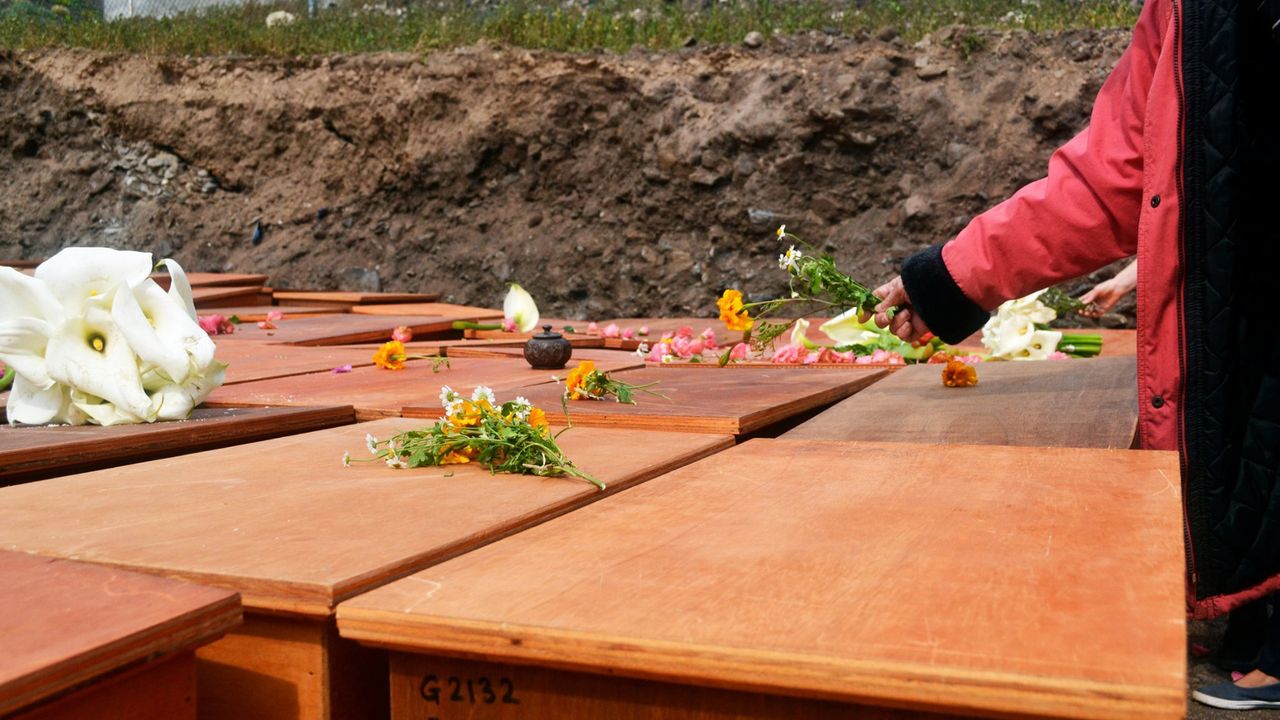
Little is known about the tens of thousands of liberated Africans who were buried on the remote Atlantic island of St. Helena in the 19th century. But now, a new chemical and dental analysis reveals where more than 150 of these individuals spent their childhoods in Africa. About 27,000 liberated slaves ended up on St. Helena after the British Empire outlawed slave trading in 1807, with the Royal Navy enforcing the ban. St. Helena was used to drop off enslaved people whom the navy had liberated. However, about 8,000 of these newly liberated people, who were malnourished and in poor health, died on the South Atlantic island not long after landing there. These burials were forgotten until they were found ahead of an airport construction project centuries later. The dig, carried out in 2007 and 2008, found the buried skeletons of the liberated slaves, according to a new study published Thursday (July 16) in the journal Science. To determine the origins of the liberated slaves, scientists studied the teeth of 152 individuals, measuring the ratio of strontium isotopes, which are atoms of the element strontium that have a different number of neutrons in their nuclei. When a person's teeth grow during childhood, the strontium isotopes in the food they eat and the water they drink are incorporated into their tooth enamel. By studying the unique strontium ratios in a person's enamel, researchers can determine where individuals lived as children. The study found that many of the liberated slaves lived near the coast of West Africa, although some lived farther inland. "Most individuals likely came from coastal or near-coastal regions in western Central Africa, [and] others appear to have originated much farther inland, implying forced displacement over hundreds to thousands of kilometers before embarkation," the team wrote in the study.In one case, a man who died between the ages of 19 and 25 had been moved from inland Angola to the coast as a child, between the ages of 7 and 9. The scientists detected this movement by comparing the isotope signatures of his teeth that grew when he was around 7 to those that grew when he was around 9. He may have been trafficked as a slave when he was between those ages, the team wrote in their paper.It's "possible that their displacement during childhood was connected with their enslavement," study co-author Hannes Schroeder, an associate professor of molecular ecology and evolution at the Globe Institute at the University of Copenhagen, told Live Science in an email. Unfortunately, we don't know much else about this individual, Schroeder said.In addition to this man, the study found evidence that at least 10 of the liberated slaves had been transported as children or early adolescents. Schroeder said it's not clear if any of the people in the study have living descendants on St. Helena but it's unlikely given that these people probably died not long after landing on the island.The team also used historical records and DNA analyses of 20 of the individuals to help determine where they were from. The DNA analysis "revealed affinities with present-day populations from Gabon and northern Angola, while also showing considerable diversity," the team wrote. "These results are consistent with eyewitness accounts by Royal Navy personnel on the island, who reported multiple languages among the captives, including Congo and Benguela dialects," the team wrote, noting that the findings also align with historical records from Angola, Cuba and Brazil. The reburial ceremony for the liberated slaves on St. Helena, a remote island in the Atlantic. (Image credit: Photo courtesy of the St Helena Museum)"The tragedy of enslaved children"The new study sheds much needed light on the lives of enslaved people, researchers told Live Science."This study is especially impactful because it investigates instances of slavery, where knowledge of individuals' ancestors and descendants have been erased from history," Steven Micheletti, a geneticist who has studied the trans-Atlantic slave trade but was not involved in the new research, told Live Science in an email. However, he said the study would have benefited from analyzing the DNA of more people. David Head, a historian at the University of Central Florida who was not involved in the study, praised the study. We "know a lot about the embarkation/disembarkation of enslaved people, thanks to slave traders keeping records of their business but less about where people originate from and how they got to the ports," he said in an email. "It's not surprising that the study found most people came from relatively close to the coast but that there were cases of people who came from much farther inland as well."What "seems most interesting to me is the promise of learning about individuals, which is often very hard to do since the slave traders kept the records," and records kept by slave traders tended not to include a lot of information on the lives of their slaves, Head added. He was also struck by the study's findings that many of the enslaved people were moved at a young age. "It makes sense that slave traders wanted younger people, with the potential for many years as laborers, but to have [this] reinforced through their [teeth] reveals the tragedy of enslaved children."Related storiesEnslaved people were kidnapped from all across Africa, rare look at DNA from colonial cemetery revealsEnslaved Africans led a decade-long rebellion 1,200 years ago in Iraq, new evidence suggestsPlantation slavery was invented on this tiny African island, according to archaeologistsAlex Bentley, an anthropology professor at the University of Tennessee who wrote an article discussing the study in the journal, praised the research, noting how it combined the isotope data with historical records and some DNA analysis. This is important because "although strontium isotope ratios in human tooth enamel ultimately reflect local geology, they record a biologically available mixture of foods and water consumed while the tooth was forming during childhood," Bentley told Live Science in an email. "So it's rarely a unique geographic fingerprint." It's possible that similar approaches could be used to study the origins of enslaved people in the United States, Bentley added.The remains were reburied in 2022. The scientists and members of St. Helena's community looked into the possibility of repatriating the remains to countries in Africa where the people came from, but no agreements were reached. In some cases, it would have been difficult to determine which country to return them to, the team noted in their paper.
0 Commenti
0 condivisioni
3 Views








 English
 Arabic
 French
 Spanish
 Portuguese
 Deutsch
 Turkish
 Dutch
Dutch
 Russian
 Romaian
 Portuguese (Brazil)
 Greek
Greek