• WWW.THECOLLECTOR.COM
    Why the Invasion of Spain Was Napoleons Fatal Error
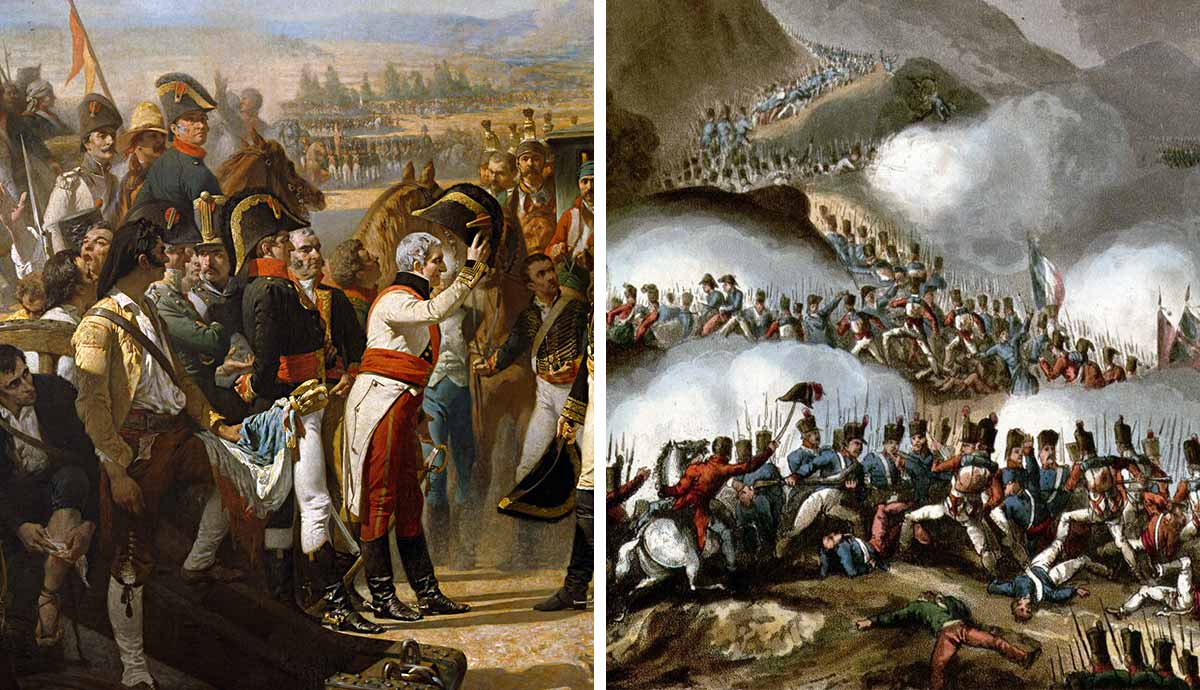
    Frances decision to occupy Spain saw its troops were stuck in a war that it couldnt get out of. From 1808 to 1814, French forces battled British, Spanish, and Portuguese regulars up and down the Iberian Peninsula, along with Spanish guerrillas who continued their resistance to French occupation. The war starved Napoleon of the troops he needed to fight his enemies across Europe.The Continental System and the Portuguese TrapAn illustration of smugglers violating the Continental System by John Augustus Atkinson, 1808. Source: Wikimedia CommonsIn 1806, Emperor Napoleon I of France was on his way to becoming the master of continental Europe. However, he faced a major challenge at sea, as the British Royal Navy blockaded French ports and occupied French overseas colonies at will.In response, Napoleon instituted the Continental System, a scheme designed to prevent British ships from trading with continental Europe, while developing industry in the European continent. Starting with the Berlin Decree of 1806, the emperor prohibited his subjects and allies from trading with Britain. This was followed by the Milan Decree of 1807, which stated that any ship that consented to a British inspection or sailed into a British port could be seized by French authorities.The Continental System proved to be a major failure. Merchants all across Europe continued to trade with the British. Many French officials proved to be unwilling to address the smuggling, including Napoleons brother Louis in the Netherlands. British naval power ensured that new trade routes could be opened to the Americas and Asia. Most disastrously, Napoleons efforts to enforce the system led him to start several new wars despite defeating his major continental rivals by 1807.Portugal was Englands oldest ally in mainland Europe and it refused to stop trading with the British. As a result, Napoleon issued an ultimatum to Portugals Prince Regent, the future King Joo VI. The Portuguese intentionally dithered, enraging France and causing Napoleon to authorize an invasion of the territory. Spain, at this time an ally of France, consented to allowing French forces to cross its territory. While General Jean-Andoche Junots 30,000 strong Army of Portugal suffered losses from attrition as they advanced on Lisbon, they seized the capital and while the Portuguese royal family evacuated to Brazil aboard British ships.The Abdications of Bayonne: A Political BlunderA portrait of Charles IV of Spain before his abdication by Francisco Goya. Source: Museo del Prado, MadridSpains decision to allow French forces to cross its territory proved to be a blunder. By early 1808, some 100,000 French soldiers poured into Spain and began establishing themselves near major Spanish cities. Napoleon mistrusted the Spanish and he hoped to exert as much control over Spanish policy as possible. To many Spaniards, it became clear that France was taking advantage of Spains friendship, fuelling resentment towards the French garrisons and the pro-French chief minister Manuel Godoy.Napoleon confirmed the worst fears that many Spaniards had when he began meddling in the affairs of the Spanish monarchy. In March 1808, supporters of the heir apparent, Ferdinand VII, forced his unpopular father, King Charles IV, to abdicate. Charles later changed his mind and sought to reclaim his throne. Both Ferdinand and Charles appealed to Napoleon for support. Napoleons brother-in-law Joachim Murat, commander of the army in Spain, encouraged both men to travel to Bayonne over the border in France, where Napoleon would arbitrate between them.However, the emperor deceived both of them, forcing Ferdinand to recognize his father as king and then forcing Charles to abdicate. Upon doing this, Napoleon declared the Spanish throne vacant and recognized his brother Joseph as the new king in July. Both Bourbons stayed in captivity until 1813.Even before the two kings were forced to abdicate, Spanish resentment against French interference resulted in the outbreak of riots in Madrid on May 2, 1808. While Murat brutally crushed the Spanish rioters, this revolt became the catalyst for the Peninsular War.Why Bailn and the Spanish Ulcer Changed EuropeThe Surrender of Bailn by Jos Casado del Alisal, 1864. Source: Museo del Prado, MadridAfter the imposition of King Joseph, large numbers of Spanish troops refused to swear allegiance to the new French regime. As several bodies of French troops moved to subdue the remaining Spaniards, in July 1808 General Pierre Dupont led his II Corps of 20,000 men into Andalusia, where the regional governments in Seville and Cadiz had refused to submit to King Joseph.Dupont was confident that the Spanish forces against him were an ill-trained motley crew that were no match for the professionalism of the French army. However, a combination of difficult terrain and Spanish resistance proved fatal to his army. When he decided to turn back in the face of Spanish hit-and-run attacks, he found a force numbering around 30,000 men under the command of General Francisco Javier Castaos.The Spaniards proved to be a formidable adversary and they were assisted by the desertion of several Swiss regiments in the French army. When Dupont ordered assaults on the Spanish lines, his men took heavy losses and were gradually encircled. By July 19, he agreed to surrender with his remaining 17,000 men. Instead of being repatriated to France, they spent the rest of the war in Spanish captivity.The destruction of Duponts corps proved to be cataclysmic for Napoleons ambitions. Many members of the Spanish elite who had wavered in their loyalty decided to join the juntas in Seville and Cadiz. Joseph panicked and fled towards the Ebro River, before regaining his composure and returning to Madrid. Britain began landing troops in Portugal to expel Junot from Lisbon. Elsewhere in Europe, Austria began rearming and anti-Bonapartist movements in Germany prepared to fight as well. In late 1808, Napoleon personally assumed command of the French troops in Spain to reimpose French control.The Birth of Guerrilla: Why the French Could Not WinJuan Martn Dez, one of the most famous Spanish guerrillas who fought the French occupiers, 1811. Source: The History AvenueDespite their success at Bailn, most Spanish regulars struggled in battle against the French. However, many ordinary Spaniards vowed to make their land inhospitable to the occupation forces. This led to the rise of the Spanish guerrillas and one of the worlds first organized insurgencies. From 1808 to 1814, tens of thousands of Spaniards fell on French positions far beyond the actual front lines.The guerrillas were a mix of professional soldiers, local peasants, and urban dwellers from across the political spectrum. They were united in their desire to reassert their sovereignty over their country. Initially, they were armed with a heterogeneous mixture of weapons, but over time they were more standardized. Using the rugged terrain to their advantage, the guerrillas struck French supply convoys, outposts, and columns sent to hunt them down. While the French did have counterinsurgency experience from crushing the Vende uprising in western France, they were never able to subdue the guerrillas in Spain.At the height of the war, France had between 250,000 and 300,000 men stationed in Spain. However, only 70,000 of these men were available on the field. The remainder were assigned to garrison duty to fend off the guerrillas, tying down valuable manpower that Napoleon could have used elsewhere. The Spanish guerrillas proved to be a perfect case study of how a sustained insurgency could wear down a professional military force over time.The British Intervention: Wellingtons Long GameAn illustration of Wellingtons victory at the Battle of Talavera in 1809 by William Heath, 1815. Source: Wikimedia CommonsIn conjunction with the Spanish guerrillas and regular army, the British government sent Arthur Wellesley, later Duke of Wellington, to command an Anglo-Portuguese force to drive the French out of Portugal. In August 1808, Wellesley defeated Junot at the Battle of Vimeiro to expel the French from Portugal. In 1809, he joined a Spanish force to defeat the French at the Battle of Talavera, where he was ennobled as Viscount Wellington.When Marshal Andr Massna led an army back into Portugal in 1810, Wellington retreated behind a set of fortifications known as the Lines of Torres Vedras. Massna was forced to retreat to Spain, and a further attempt in 1811 proved equally fruitless while Wellington continued to build up his forces for a counteroffensive.By 1812, with Napoleon preoccupied with his campaign in Russia on the other end of Europe, Wellington launched an offensive into Spain with the intention of pushing towards Madrid, where King Joseph was reliant on the advice of Marshal Jourdan and struggled to control the other marshals, who acted as independent warlords. Wellington made good progress, decisively defeating a French force under Marshal Auguste Marmont at Salamanca in 1812 and briefly taking the capital. However, he decided to retreat to Portugal after unsuccessfully besieging the city of Burgos.When Wellington crossed into Spain for the last time, he marched into the northern mountains where Joseph Bonaparte had not expected him to go. Fearing that he would cut off Frances supply lines by seizing the foothills of the Pyrenees, Joseph and Jourdan marched out from Madrid to meet him. The subsequent Battle of Vitoria, fought on June 21, 1813, proved to be the death knell of the French occupation of the Iberian Peninsula. The surviving French forces engaged in a fighting retreat across the Pyrenees while Wellington advanced into southwestern France. In December 1813, Napoleon agreed to acknowledge Ferdinand VII as King of Spain.Did Spain Cause Napoleons Downfall?The Battle of the Pyrenees by William Heath, 1814-15. Source: City Library of ToulouseWhen people consider Napoleons most disastrous error, the decision to invade Russia in 1812 comes to mind. It isnt hard to see why; he lost hundreds of thousands of men and he lost some of his credibility as a leader. However, his intervention in the Iberian Peninsula proved to have an even worse long-term impact. By manipulating the Spanish elite, he turned most of the country against him and lost one of Frances closest allies. Additionally, he failed in his initial objective of stopping the smuggling of goods from Spanish and Portuguese ports to Britain.Every leader who desires to control a large empire needs to have the resources and manpower available to do so. Napoleon learned this lesson the hard way when he sought to fight a series of conflicts with his rivals in Central and Eastern Europe while simultaneously occupying parts of Northern and Southern Europe. Having hundreds of thousands of men tied down fighting in the Iberian Peninsula did not bring the French any strategic gains. It did, however, deprive France of much-needed manpower for the invasion of Russia.The imposition of the Continental System was an attempt to even the odds between France and Britain. However, British naval superiority ensured that Napoleons plan would fail. Spain may not have been Napoleons most effective ally, but it was friendly with the French nonetheless. Napoleons actions also breathed new life into Spanish nationalism when many Spaniards were asking themselves what the future of their country would be. It is fair to say that invasion of Spain was one of the worst decisions made by Napoleon during his career.
    0 Comentários 0 Compartilhamentos 6 Visualizações
  • WWW.THECOLLECTOR.COM
    Why Kabuki Became Japans Most Famous Theater
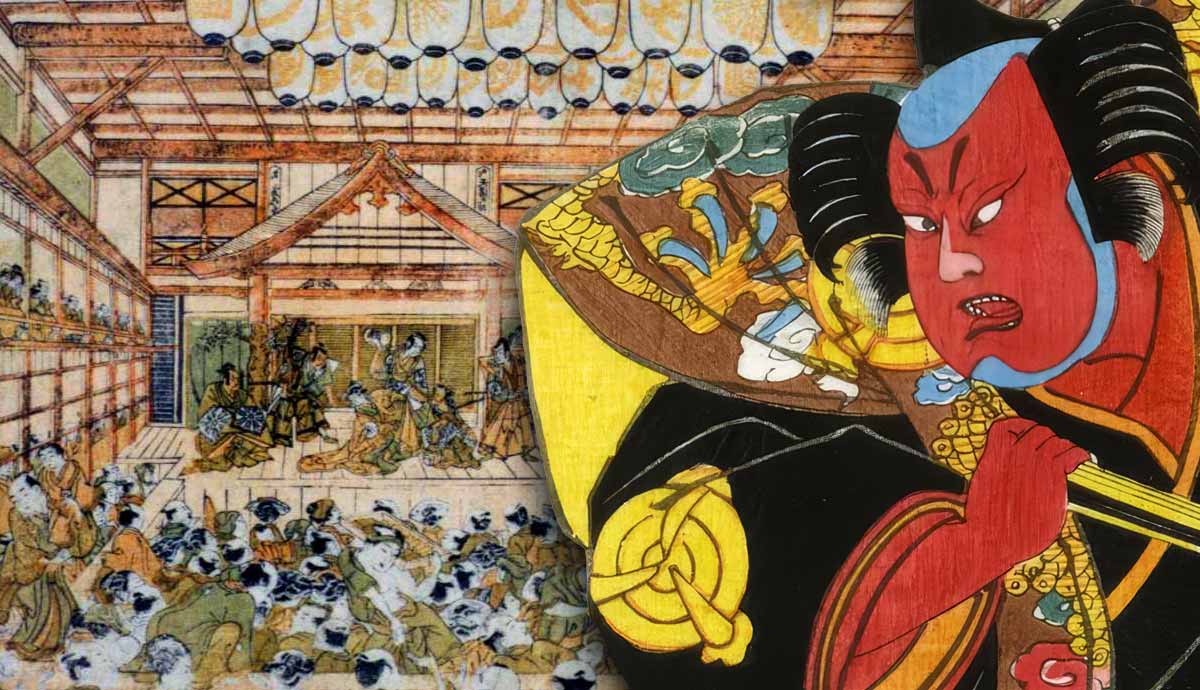
    Kabuki theater occupies a special space within the world of Japanese performing arts, combining history and tradition with innovation and popular appeal. Emerging around the early 16th century, kabuki developed as a form of mass entertainment while also offering commentary on social structures and the politics of its time. Over the years, it adapted to regulation, changing audiences, and technological development without losing its unique identity. Examining kabukis origins, characteristics, and patterns of popularity reveals how a traditional art form can keep reinventing itself while preserving its core conventions.From Riverbanks to Indoor StagesIzumo no Okuni, Unknown Author, early 1600s. Source: Kyoto National MuseumKabuki theater emerged during a period of urban growth and cultural experimentation. It is said to have been created by Izumo no Okuni (Okuni from the lands of Izumo, modern-day Shimane Prefecture, western Japan), a female shrine dancer who started organizing informal performances at the beginning of the 17th century.Under Okunis vision, dance and dramatic storytelling were combined in ways that differed from established theater traditions of the imperial court and religious institutions, up until then the primary venues for the performing arts. Okunis kabuki was geared towards the common man, and this accessibility helped the art form attract a diverse audience, particularly among townspeople who were gaining economic and cultural influence during this period.Women played a central role in the formation of kabuki. Early plays were led entirely by female performers who danced, played music, sang, and portrayed both male and female characters, typically in dry riverbed areas. These shows were notable for their contemporary themes and visual appeal, which distinguished them from orthodox theatrical forms that were focused more on the past and subdued, austere aesthetics.The popularity of kabuki, however, soon drew the attention of authorities concerned with public order and morality, as Okunis troupes were more often than not made up of courtesans who would offer their non-acting services to audience members after kabuki shows.Sagimusume (Heron Maiden) dance performed by onnagata Akifusa Guraku, by Fujisaki Tomoya, 2011. Source: Wikimedia CommonsThis, however, was not a universal phenomenon, and the eventual decision to prohibit women from kabuki was driven as much by moral panic as it was by the desire to control women and to stop them from criticizing the government through plays. Japanese performance arts have a long tradition of speaking truth to power.The ban on women fundamentally altered kabuki theater. Young male performers replaced female actors, but this arrangement did not really curb prostitution behind the scenes (literally and figuratively) since homosexual relationships were not uncommon in Japan. Nevertheless, through government interference, women were erased from part of Japanese history, and not for the first time.Ultimately, adult male actors became kabukis sole performers, establishing a system in which they portrayed all the roles. From this emerged the practice of male actors specializing in female roles (known as onnagata), a convention that became one of the defining features of kabuki theater.Despite these changes, kabuki did not decline. Instead, it adapted in order to survive. Performance styles became codified, acting lineages formed, and theaters became permanent fixtures within urban entertainment districts. What began as experimental and female-led performances out in the open transformed into a regulated but resilient indoor theatrical tradition, shaped as much by social control as by a spirit of defiance.The Language of Kabuki TheaterPortrait of Onoe Kikujiro II, Utagawa Kuniyoshi, 1847. Source: British MuseumKabuki is immediately recognizable through a set of unique characteristics refined over the generations. The acting style, visual design, music, makeup, and stage technology of kabuki have changed greatly with time but have always worked together to create a coherent language of this Japanese theatrical form.One of the most prominent features of kabuki is its highly stylized acting. Performers do not aim for naturalistic expressions but instead emphasize exaggerated yet controlled movement, fixed heroic poses, and energetic gestures. These poses function as visual punctuation of a kabuki performance, signaling emotional or narrative climaxes. The vocal delivery in a kabuki play has evolved along similar tracks, with heightened intonation and rhythm being praised over realistic delivery (Jones and Watanabe, pp. 2829).Costume and makeup are equally important. Kabukis flashy clothes are often elaborate, using colors and patterns to communicate character types, social statuses, and emotional states. Makeup is similarly symbolic, particularly in the use of bold lines and colors. Together with the complex wigs, it most likely evolved from adult men having to play the roles of young maidens. Hiding the wrinkles of age and communicating quickly what a character is supposed to be are just one example of how even the most exaggerated art styles can often have pragmatic origins.Hanamichi at the National Theatre of Japan, by Nesnad, 2018. Source: Wikimedia CommonsKabuki is a theater of spectacle, movement, and engagement, and its stage has been refined through the centuries to reflect that. One of the most distinctive elements of a kabuki stage is the extended walkway (called a hanamachi the flower road) that passes through where the audience sits, allowing actors to enter and exit the play while remaining visible to the spectators. This feature strengthens the connection between performers and the audience and enhances the drama during key moments of a play.Technical innovation is another important element of kabuki. Mechanical devices and practical effects allow for rapid scene changes, sudden appearances, and dramatic transformations. Curiously, these effects are not hidden. Stagehands are often as visible as the actors, though they are traditionally dressed in black to signal their role as non-performers. Some theories claim that the all-black attire of kabuki stagehands who are physically present but remain, for all intents and purposes, invisible, is the source of the pop-culture image of the ninja.Kabuki music serves both narrative and atmospheric functions. Musicians may be positioned onstage or to the side, providing melodic accompaniment, pointing out emotional cues, and elevating the emotional aspect of the play. Together, all of these elements form a tightly structured theatrical system that still opens itself up to reinvention and reinterpretation. Kabukis identity is maintained not through rigid replication but through disciplined variations within established conventions. This balance between consistency and adaptation allows kabuki to remain recognizable while accommodating change, and the key to survival not just in theater, but also in all aspects of life.Why Kabuki EnduresThe Ichimura-za kabuki theater, Masanobu Okumura, 1790s. Source: Wikimedia CommonsKabukis popularity during its formative period can be attributed to its accessibility via a focus on contemporary life. Unlike elite or ritual-based performance art, kabuki addressed the interests of urban populations at a time when they were gaining the economic power that would eventually translate into political power. Early kabuki stories often drew from current events, popular literature, and familiar social situations, allowing audiences to see themselves on stage. This way, kabuki was elevated from mere entertainment into a mirror for society, helping audiences to recognize and celebrate their shared humanity.Kabuki theaters functioned as social spaces as much as artistic venues. Attending a kabuki performance was a communal activity that involved food (which might have served as the inspiration for bento packed lunches), conversation, and extended engagement with people from all walks of life. While higher classes like the samurai were for the longest time technically banned from attending kabuki, many could not resist the call of the theater and attended performances in disguise, literally rubbing elbows with people below them in the social hierarchy and seeing more things that connected them than divided them. The same went for merchants and peasants (Ernst, pp. 6768).Performances could last for many hours, encouraging audiences to come and go and focus on their favorite actors if they chose to do so. This flexible structure greatly contrasted with more formal performance traditions and inspired repeat attendances.Kabuki Acrobats at Sadlers Wells Theatre, London, by GanMed64, 2010. Source: Wikimedia CommonsStar actors played a significant role in sustaining kabukis popularity. Performers developed public personas that extended well beyond the stage, influencing fashion and popular culture. Fans followed specific actors and acting families, creating a form of celebrity culture that closely mirrors modern obsession with movie stars.In the modern era, kabuki faces many challenges but continues to attract audiences. Institutional support, including preservation efforts and official recognition of historic buildings and intangible traditions, has been instrumental in kabukis survival into the 21st century. Education and tourism have also contributed. Performances are often contextualized and annotated in official programs and hearing/visual aids that help usher new audiences into this wonderful Japanese performing art.In the end, though, Kabukis survival is ultimately best attributed to its adaptability. While core elements remain unchanged, new productions may incorporate revised staging, updated interpretations, or collaborations (Scott, p. 17). And while classics from the Edo Period (16031868) remain the most popular, new plays are being continuously written by modern playwrights who use the language of this traditional theater form to do what it has done for centuries: educate, shake up, and entertain.A Living TraditionThe Kabuki-za Theatre, by Kakidai, 2019. Source: Wikimedia CommonsKabuki theater endures because it balances traditions with adaptability. Its centuries-old origins reflect social change and its conventions provide boundaries within which new things can be tried and tested. Rather than existing as a static relic, kabuki operates as a living system shaped by regulation, innovation, and passion. Kabukis continued relevance suggests that tradition and popularity are not opposing forces but rather necessary elements for a sustained cultural presence.SourcesErnst, E. (1956). The Kabuki Theatre. Secker & Warburg.Jones, S., Watanabe K., edited by (2013). An Edo Anthology, Literature from Japans Mega-City 17501850. University of Hawaii Press.Scott, A. C. (2024). The Kabuki Theatre of Japan. Dover Publications.
    0 Comentários 0 Compartilhamentos 6 Visualizações
  • WWW.MASHED.COM
    Michael Jackson Frequented This Restaurant In The '80s
    Learn about the restaurant that Michael Jackson just couldn't get enough of, so much so he had it delivered to studios, on sets, everywhere.
    0 Comentários 0 Compartilhamentos 6 Visualizações
  • WWW.BGR.COM
    3 Devices You Might Not Have Known You Can Control With Your Voice
    Voice-controlled devices are more popular than ever, but there are some surprises among them. Here are some gadgets you may not have suspected are on the list.
    0 Comentários 0 Compartilhamentos 6 Visualizações
  • WWW.BGR.COM
    Can You Use A Laptop As A Monitor For Xbox?
    It's most common to use a monitor or TV as a display for a gaming console like the Xbox, but sometimes, for whatever reason, one might not be available.
    0 Comentários 0 Compartilhamentos 6 Visualizações
  • YUBNUB.NEWS
    WHCD shooting suspect Cole Allen no longer on suicide watch, lawyers say
    The man charged with trying to assassinate President Trump during the White House Correspondents Dinner was removed from suicide watch on Sunday, court records show. Defense lawyers for Cole Allen,
    0 Comentários 0 Compartilhamentos 6 Visualizações
  • YUBNUB.NEWS
    Rudy Giuliani Hospitalized, In Critical-But-Stable Condition
    Former Republican New York City Mayor Rudy Giuliani is in critical condition and receiving treatment in a hospital, according to a statement released Sunday. The exact details of the ailment which led
    0 Comentários 0 Compartilhamentos 6 Visualizações
  • WWW.BGR.COM
    3 Refurbished iPads Under $500 That Are Actually Worth Buying In 2026
    Are you in the market for an iPad? If you don't want to splurge on a brand-new one, here are some of the best refurbished iPads for under $500.
    0 Comentários 0 Compartilhamentos 6 Visualizações
  • WWW.BGR.COM
    The Danger With Trying To Retrieve A Phone That Falls Between Plane Seats
    A lost phone between plane seats is more than an annoyance; it's a safety emergency. Discover the dangers of the seat gap and what to do next.
    0 Comentários 0 Compartilhamentos 6 Visualizações
  • WWW.BGR.COM
    3 Refurbished iPads Under $500 That Are Actually Worth Buying In 2026
    Are you in the market for an iPad? If you don't want to splurge on a brand-new one, here are some of the best refurbished iPads for under $500.
    0 Comentários 0 Compartilhamentos 6 Visualizações