


WWW.THECOLLECTOR.COM
Why Kabuki Became Japans Most Famous Theater
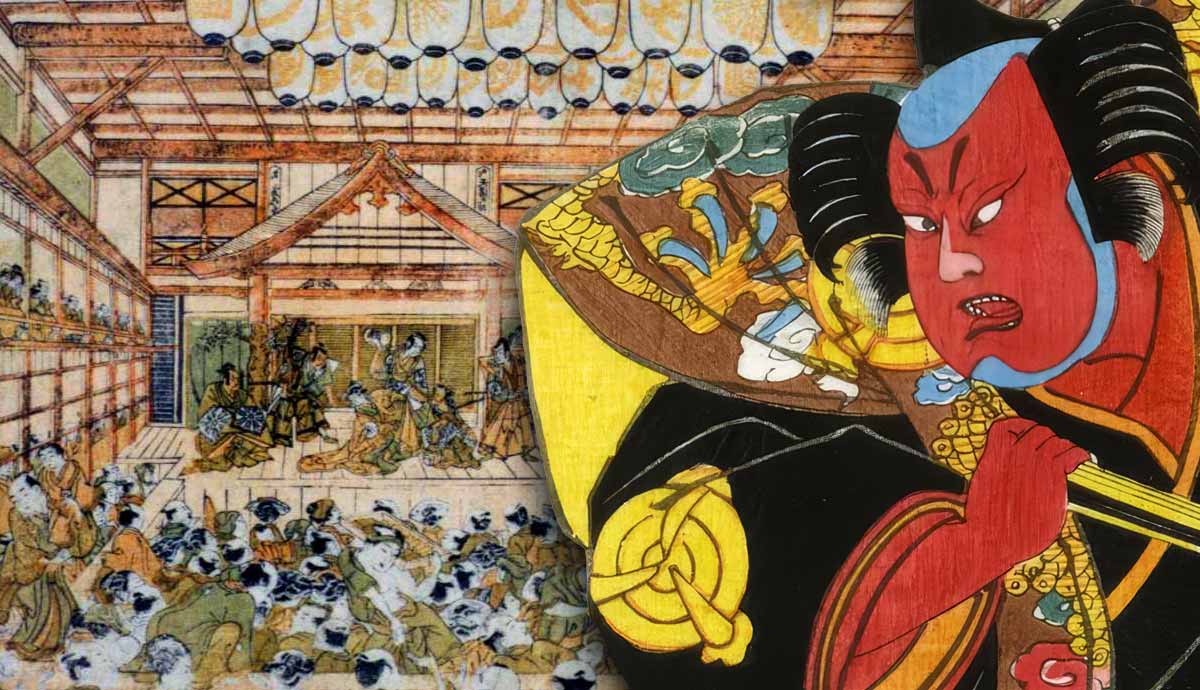
Kabuki theater occupies a special space within the world of Japanese performing arts, combining history and tradition with innovation and popular appeal. Emerging around the early 16th century, kabuki developed as a form of mass entertainment while also offering commentary on social structures and the politics of its time. Over the years, it adapted to regulation, changing audiences, and technological development without losing its unique identity. Examining kabukis origins, characteristics, and patterns of popularity reveals how a traditional art form can keep reinventing itself while preserving its core conventions.From Riverbanks to Indoor StagesIzumo no Okuni, Unknown Author, early 1600s. Source: Kyoto National MuseumKabuki theater emerged during a period of urban growth and cultural experimentation. It is said to have been created by Izumo no Okuni (Okuni from the lands of Izumo, modern-day Shimane Prefecture, western Japan), a female shrine dancer who started organizing informal performances at the beginning of the 17th century.Under Okunis vision, dance and dramatic storytelling were combined in ways that differed from established theater traditions of the imperial court and religious institutions, up until then the primary venues for the performing arts. Okunis kabuki was geared towards the common man, and this accessibility helped the art form attract a diverse audience, particularly among townspeople who were gaining economic and cultural influence during this period.Women played a central role in the formation of kabuki. Early plays were led entirely by female performers who danced, played music, sang, and portrayed both male and female characters, typically in dry riverbed areas. These shows were notable for their contemporary themes and visual appeal, which distinguished them from orthodox theatrical forms that were focused more on the past and subdued, austere aesthetics.The popularity of kabuki, however, soon drew the attention of authorities concerned with public order and morality, as Okunis troupes were more often than not made up of courtesans who would offer their non-acting services to audience members after kabuki shows.Sagimusume (Heron Maiden) dance performed by onnagata Akifusa Guraku, by Fujisaki Tomoya, 2011. Source: Wikimedia CommonsThis, however, was not a universal phenomenon, and the eventual decision to prohibit women from kabuki was driven as much by moral panic as it was by the desire to control women and to stop them from criticizing the government through plays. Japanese performance arts have a long tradition of speaking truth to power.The ban on women fundamentally altered kabuki theater. Young male performers replaced female actors, but this arrangement did not really curb prostitution behind the scenes (literally and figuratively) since homosexual relationships were not uncommon in Japan. Nevertheless, through government interference, women were erased from part of Japanese history, and not for the first time.Ultimately, adult male actors became kabukis sole performers, establishing a system in which they portrayed all the roles. From this emerged the practice of male actors specializing in female roles (known as onnagata), a convention that became one of the defining features of kabuki theater.Despite these changes, kabuki did not decline. Instead, it adapted in order to survive. Performance styles became codified, acting lineages formed, and theaters became permanent fixtures within urban entertainment districts. What began as experimental and female-led performances out in the open transformed into a regulated but resilient indoor theatrical tradition, shaped as much by social control as by a spirit of defiance.The Language of Kabuki TheaterPortrait of Onoe Kikujiro II, Utagawa Kuniyoshi, 1847. Source: British MuseumKabuki is immediately recognizable through a set of unique characteristics refined over the generations. The acting style, visual design, music, makeup, and stage technology of kabuki have changed greatly with time but have always worked together to create a coherent language of this Japanese theatrical form.One of the most prominent features of kabuki is its highly stylized acting. Performers do not aim for naturalistic expressions but instead emphasize exaggerated yet controlled movement, fixed heroic poses, and energetic gestures. These poses function as visual punctuation of a kabuki performance, signaling emotional or narrative climaxes. The vocal delivery in a kabuki play has evolved along similar tracks, with heightened intonation and rhythm being praised over realistic delivery (Jones and Watanabe, pp. 2829).Costume and makeup are equally important. Kabukis flashy clothes are often elaborate, using colors and patterns to communicate character types, social statuses, and emotional states. Makeup is similarly symbolic, particularly in the use of bold lines and colors. Together with the complex wigs, it most likely evolved from adult men having to play the roles of young maidens. Hiding the wrinkles of age and communicating quickly what a character is supposed to be are just one example of how even the most exaggerated art styles can often have pragmatic origins.Hanamichi at the National Theatre of Japan, by Nesnad, 2018. Source: Wikimedia CommonsKabuki is a theater of spectacle, movement, and engagement, and its stage has been refined through the centuries to reflect that. One of the most distinctive elements of a kabuki stage is the extended walkway (called a hanamachi the flower road) that passes through where the audience sits, allowing actors to enter and exit the play while remaining visible to the spectators. This feature strengthens the connection between performers and the audience and enhances the drama during key moments of a play.Technical innovation is another important element of kabuki. Mechanical devices and practical effects allow for rapid scene changes, sudden appearances, and dramatic transformations. Curiously, these effects are not hidden. Stagehands are often as visible as the actors, though they are traditionally dressed in black to signal their role as non-performers. Some theories claim that the all-black attire of kabuki stagehands who are physically present but remain, for all intents and purposes, invisible, is the source of the pop-culture image of the ninja.Kabuki music serves both narrative and atmospheric functions. Musicians may be positioned onstage or to the side, providing melodic accompaniment, pointing out emotional cues, and elevating the emotional aspect of the play. Together, all of these elements form a tightly structured theatrical system that still opens itself up to reinvention and reinterpretation. Kabukis identity is maintained not through rigid replication but through disciplined variations within established conventions. This balance between consistency and adaptation allows kabuki to remain recognizable while accommodating change, and the key to survival not just in theater, but also in all aspects of life.Why Kabuki EnduresThe Ichimura-za kabuki theater, Masanobu Okumura, 1790s. Source: Wikimedia CommonsKabukis popularity during its formative period can be attributed to its accessibility via a focus on contemporary life. Unlike elite or ritual-based performance art, kabuki addressed the interests of urban populations at a time when they were gaining the economic power that would eventually translate into political power. Early kabuki stories often drew from current events, popular literature, and familiar social situations, allowing audiences to see themselves on stage. This way, kabuki was elevated from mere entertainment into a mirror for society, helping audiences to recognize and celebrate their shared humanity.Kabuki theaters functioned as social spaces as much as artistic venues. Attending a kabuki performance was a communal activity that involved food (which might have served as the inspiration for bento packed lunches), conversation, and extended engagement with people from all walks of life. While higher classes like the samurai were for the longest time technically banned from attending kabuki, many could not resist the call of the theater and attended performances in disguise, literally rubbing elbows with people below them in the social hierarchy and seeing more things that connected them than divided them. The same went for merchants and peasants (Ernst, pp. 6768).Performances could last for many hours, encouraging audiences to come and go and focus on their favorite actors if they chose to do so. This flexible structure greatly contrasted with more formal performance traditions and inspired repeat attendances.Kabuki Acrobats at Sadlers Wells Theatre, London, by GanMed64, 2010. Source: Wikimedia CommonsStar actors played a significant role in sustaining kabukis popularity. Performers developed public personas that extended well beyond the stage, influencing fashion and popular culture. Fans followed specific actors and acting families, creating a form of celebrity culture that closely mirrors modern obsession with movie stars.In the modern era, kabuki faces many challenges but continues to attract audiences. Institutional support, including preservation efforts and official recognition of historic buildings and intangible traditions, has been instrumental in kabukis survival into the 21st century. Education and tourism have also contributed. Performances are often contextualized and annotated in official programs and hearing/visual aids that help usher new audiences into this wonderful Japanese performing art.In the end, though, Kabukis survival is ultimately best attributed to its adaptability. While core elements remain unchanged, new productions may incorporate revised staging, updated interpretations, or collaborations (Scott, p. 17). And while classics from the Edo Period (16031868) remain the most popular, new plays are being continuously written by modern playwrights who use the language of this traditional theater form to do what it has done for centuries: educate, shake up, and entertain.A Living TraditionThe Kabuki-za Theatre, by Kakidai, 2019. Source: Wikimedia CommonsKabuki theater endures because it balances traditions with adaptability. Its centuries-old origins reflect social change and its conventions provide boundaries within which new things can be tried and tested. Rather than existing as a static relic, kabuki operates as a living system shaped by regulation, innovation, and passion. Kabukis continued relevance suggests that tradition and popularity are not opposing forces but rather necessary elements for a sustained cultural presence.SourcesErnst, E. (1956). The Kabuki Theatre. Secker & Warburg.Jones, S., Watanabe K., edited by (2013). An Edo Anthology, Literature from Japans Mega-City 17501850. University of Hawaii Press.Scott, A. C. (2024). The Kabuki Theatre of Japan. Dover Publications.
0 Comments
0 Shares
140 Views

 Arabic
 French
 Spanish
 Portuguese
 Deutsch
 Turkish
 Dutch
Dutch
 Italiano
 Russian
 Romaian
 Portuguese (Brazil)
 Greek
Greek