How Yokohama Rose From a Fishing Village to Japans Second Largest City
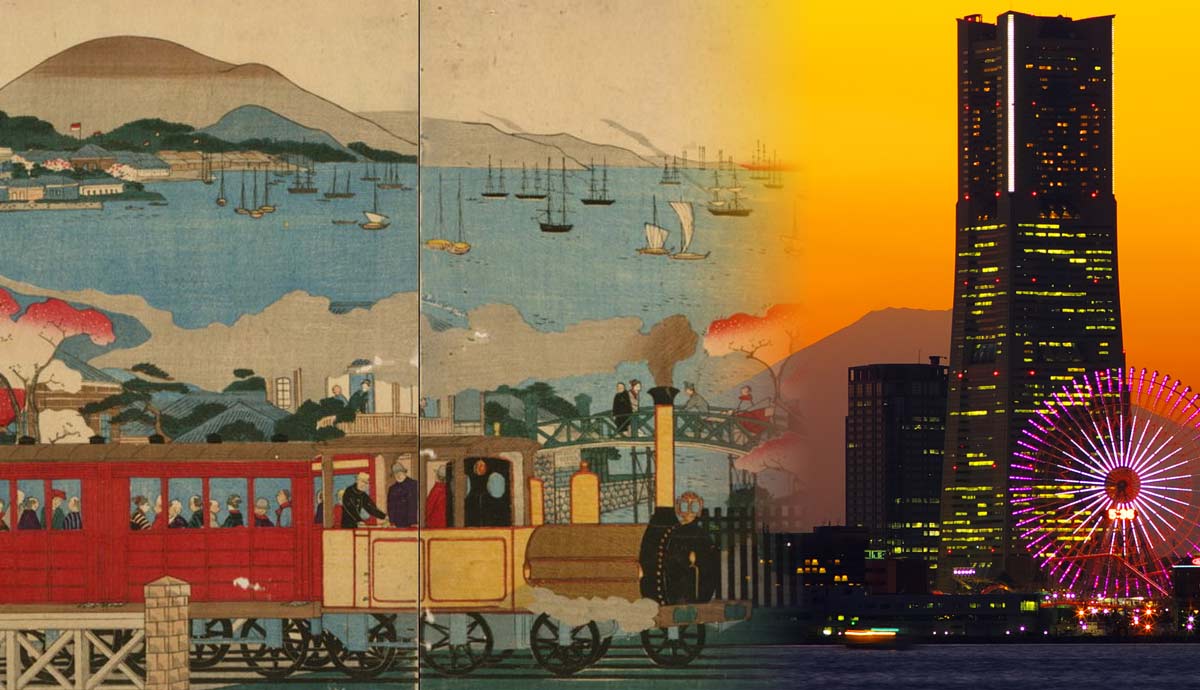
Yokohama, Japans second most populous city at 3.8 million residents, began as little more than a cluster of fishing huts by the water southwest of Edo (modern-day Tokyo). Its transformation was neither gradual nor isolated. Rather, it was explosive; the product of international pressure, uneasy compromises, an experiment in multiculturalism, and, eventually, recovery from a devastating natural disaster. The ports opening in the mid-19th century marked a break from centuries of seclusion going back to the 1600s, positioning Yokohama as the window through which Japan welcomed and understood the outside world.When Black Ships Decided a Small Fishing Villages FateCommodore Matthew Calbraith Perry, Mathew Benjamin Brady, c. 1856-58. Source: Wikimedia CommonsYokohamas rise began under pressure from foreign powers. By the mid-19th century, Western nations sought footholds throughout Asia. Russias expansion to the Pacific and the British dominance in China created a sense of geopolitical anxiety for the United States.Wary of being excluded, the country dispatched Commodore Matthew C. Perry to Japan with his Black Ships (nicknamed so for the black smoke of their coal-fired steam engines) in 1853 and again in 1854 to secure Americas interest in the region. Upon his arrival, Perry presented a demand: Japan must open its ports to foreign trade. With his superior weapons, Perrys unspoken threat of violent consequences if the US demands were not met was heard loud and clear.The General Convention of Peace and Amity of 1854, opened the two ports of Shimoda [Izu] and Hakodate [Hokkaido] to foreign vessels in need of provisions or safe haven. It assured safe treatment of shipwrecked sailors Perrys Convention was quickly followed by comparable treaties with Britain and Russia (Totman, p. 289). The later Treaty of Amity and Commerce of 1858 expanded the United States access, promising additional ports, initially planned for Kanagawa.However, the shogunate ultimately shifted the location away from the central Tokaido tract and the capital to the less developed fishing village of Yokohama. After about a year of tireless work, Yokohama was transformed into a massive port city, officially opening on June 2, 1859.A View of the Amusements of the Foreigners in Yokohama, Utagawa Yoshitora, 1861. Source: Wikimedia CommonsThis decision marked a turning point in Japanese history. While Western powers considered the treaties a diplomatic success, many Japanese viewed them as a humiliating defeat, especially in the face of granting foreigners extraterritorial rights (Totman, p. 289) and tariff concessions. Dissatisfaction spread, contributing to the growing opposition to the Tokugawa regime. The resentment culminated in the collapse of the shogunate during the 1860s as samurai and reformers rallied for a return to imperial rule. They succeeded and the Meiji Restoration of 1868 ended Japans feudal system.However, the discontent surrounding the treaties that gave birth to Yokohama lingered on. Samurai were especially resistant, not just because of the unequal terms on which the city was built, but also because the end of feudalism that followed it caused many of them to lose their sources of income. The Satsuma Rebellion of 1877 was a last stand against a new world represented by Yokohama, even if the city itself never became a battlefield. In just a few years, an overlooked fishing settlement had become the symbol of Japans forced debut on the global stage.Brothels, Lotteries, and Building a City Nobody WantedView of the Miyozaki Brothel District in Yokohama, Utagawa Yoshitora and Robun Kanagaki, 1864. Source: Wikimedia CommonsConstructing a functioning port at Yokohama was a tremendous endeavor. The choice of siteaway from established trading and political centers in an effort to prevent Japan from being strong-armed by foreign powersmeant that officials had to build the infrastructure from almost nothing.The government designed a walled compound in the Kannai area (today one of the most vibrant parts of Yokohama) to house foreign residents. Surrounded by a moat and checkpoints, it offered both convenience for traders and control for the authorities. Within those walls, merchants and diplomats were unbound by Japanese law, further fueling Japanese resentment.Yet a city requires more than wharfs and customs offices. It also needs brothels. Japan has a long tradition of well-regulated red-light districts but this was not about that. [T]he commissioners also recognized that by providing sexual services to foreigners, they would be able to exercise a measure of control We have heard of repeated incidents in which foreign sailors, from their extreme boredom, enter the shops of merchants, steal liquor, and then go on a drunken rampage. The commissioners reasoned that an officially monitored entertainment quarter would prevent major trouble arising from a trivial cause (Partner, p. 15).An English Woman with a Chinese Servant in the Foreign District, Utagawa Yoshikazu, 1861. Source: Wikimedia CommonsYokohamas entertainment district would eventually gain notoriety and come to be known by the vivid name of Bloodtown. However, it served its political purpose by keeping prostitution confined and under surveillance. Few wanted to live or work there, though, and there are historical records describing professional women from brothels in Edo having to draw lots to decide who would go to this new city. Some had to be locked inside their palanquins to make sure they did not try to escape on the way there (Partner, p. 16).Despite the initial difficulties, Yokohamas foreign and domestic settlements quickly expanded, with residents of both looking for new commercial opportunities in this strange, hybrid port city. The city trade was facilitated by Chinese immigrants who could communicate with both foreignersthanks to their knowledge of English acquired through contact with the Britishand Japanese people through the use of kanji characters. Gradually, what began as an experiment evolved into a functioning, multicultural community.The Phoenix City of FirstsFirst Steam Train Leaving Yokohama, Utagawa Kunisada III, 1872. Source: Wikimedia CommonsBy the Meiji Period, silk exports became the backbone of Yokohamas trade, with Britain as the main partner. The city also quickly distinguished itself as a hub of innovation and cultural exchange. Japans first daily newspaper, first gas-powered streetlamps, first ice cream, first beer brewery, first railway (linking Yokohama to Shinbashi in Tokyo in 1872) all originated in Yokohama.These symbols of modernity played an unexpected role in shaping Japanese identity. The constant, visible presence of contrasting Western customs, from clothing to cuisine, forced people to reflect on what it truly meant to be Japanese in an ever-shrinking world.Yokohamas rapid ascent was not without devastating interruptions. On September 1, 1923, the Great Kanto Earthquake leveled much of the city. Over 30,000 residents were reported dead, with tens of thousands more injured. Rumors of sabotage led to tragic violence against Korean residents, exposing social tensions beneath the citys seemingly cooperative surface. Reconstruction followed, with rubble repurposed to build new infrastructure like Yamashita Park, today one of the symbols of Yokohama.1923 Great Kanto Earthquake Destructions, Unknown Author, 1923. Source: Wikimedia CommonsThe city suffered another wave of destruction during World War II. Attacks by Allied forces culminated in the 1945 firebombing of Yokohama when American planes reduced nearly half the city to ashes in a matter of hours, killing untold thousands of people.And yet, despite all these setbacks, the postwar decades were a time of fast-paced revitalization for Yokohama, the phoenix city that always gets back up on its feet. Shipyards and wharfs were rebuilt, and by the 1950s, plans for a Port Future vision began. The Minato Mirai 21 project, launched in the 1980s, symbolized Yokohamas reinvention as both a business hub and a cultural destination. The areas Landmark Tower was the tallest building in Japan when it was completed in 1993 and stood as a statement of its homes ambitions. The Bay Bridge and waterfront developments such as the reconstruction of Osanbashi Pier, now nicknamed The Whales Back for its wavy rooftop, also reconnected the city with its port identity.By hosting the 2002 FIFA World Cup final and international conference after international conference thanks to PACIFICO Yokohama, one of the largest MICE (Meetings, Incentives, Conferences, and Exhibitions) spaces in Japan, Yokohama made itself known to the world again. By charging from repeated destruction to modern reinvention, Yokohama has more than earned its modern reputation for resilience.From Fishing Nets to SkyscrapersMinato Mirai 21 and Mt. Fuji at Sunset, Nagoya Taro, 2007. Source: Wikimedia CommonsStanding on the foundations of a fishing village once overlooked by history, Yokohamas story encapsulates Japans shaky path into modernity from feudal beginnings. From the opening forced by Perrys fleet to the citys role as a testing ground for cultural exchange, Yokohama has been both a product of foreign influence and an expression of Japanese initiative, which seemed to have made it indestructible. It endured earthquakes, war, and occupation, yet emerged stronger each time. Yokohama remains not just Japans second city, but its first gateway to the world.BibliographyPartner, S. (2018). The Marchants Tale. Yokohama and the Transformation of Japan. Columbia University Press.Totman, C. (2016). A History of Japan, Second Edition. Blackwell Publishing.






 English
 Arabic
 French
 Spanish
 Portuguese
 Deutsch
 Turkish
 Dutch
Dutch
 Italiano
 Russian
 Portuguese (Brazil)
 Greek
Greek