• YUBNUB.NEWS
    Chaos in the Quarter: Shia LaBeouf Arrested After Street Fight
    Actor Shia LaBeouf just cant seem to keep himself out of trouble. That reality is absolutely tragic when you consider his very recent conversion to Catholicism, which seemed to help set him on the
    0 Comentários 0 Compartilhamentos 15 Visualizações
  • YUBNUB.NEWS
    Breast cancer and the lie weve been living
    [View Article at Source]The Tenpenny Files Breast cancer dominates headlines and fundraising campaigns, yet one daily habit escapes scrutiny. Sydney Ross Singer questions what decades of breast compression
    0 Comentários 0 Compartilhamentos 15 Visualizações
  • YUBNUB.NEWS
    Environmental toxins and immune dysfunction: The mold connection
    [View Article at Source]America Out Loud PULSE with Dr. Myriah Hinchey Dr. Crista clarifies the critical distinction between common environmental molds and the dangerous conditions associated with
    0 Comentários 0 Compartilhamentos 15 Visualizações
  • YUBNUB.NEWS
    EXCLUSIVE:Heritage Foundation Calls for End to Free Education for Illegal Alien K-12 Students
    Children should not receive a free education at Americas public schools unless they are lawfully present in the United States, a new report from The Heritage Foundation contends. States and local governments
    0 Comentários 0 Compartilhamentos 15 Visualizações
  • Android 17 Beta 1 arrives for Pixel: How to download it
    Android 17 Beta 1 arrives for Pixel: How to download it Google just released the first public beta for Android 17, and you can install it now if you have a compatible Pixel device.Those who consider themselves brave enough to test the waters of an upcoming OS release can now download Android 17's initial beta. The simplest way to do so...
    0 Comentários 0 Compartilhamentos 20 Visualizações
  • WWW.UNIVERSETODAY.COM
    An Ancient Merger Could Have Created Titan and the Debris Created Saturn's Rings
    New research presents a timeline for recent (astronomically speaking) events in the Saturnian system. It shows that Titan collided with a proto-Hyperion, and the collision smoothed Titan's surface while some of the debris accreted onto a new Hyperion and also created Saturn's rings. The research can also explain some of the Saturnian system's other unusual characteristics.
    0 Comentários 0 Compartilhamentos 15 Visualizações
  • WWW.THECOLLECTOR.COM
    How the Creation of Flagstaff Erased 150 Years of Maine History
    While innovation and progress are hallmarks of Americas growth and prosperity, those achievements often come at a forgotten cost. The creation of Flagstaff Lake in postwar Maine is a testament to such sacrifice. In an effort to bring efficient electricity to rural Maine and beyond, three occupied towns were destroyed and submerged, their citizens forced to leave their lives in ruin. Did technology go too far? Or was the development of Flagstaff Lake a necessary consequence in the name of modernity?A Symbol of ResilienceBenedict Arnold led his troops through Maine on their way to fight in Quebec during the American Revolution. Source: Brown University/Wikimedia CommonsFrom its early days, Flagstaff Village embodied resilience and strength. During the Revolutionary War, Benedict Arnold and his men faced a treacherous March through the Maine winter on their way to Quebec. The going was tough, but the soldiers persevered. Stopping along the Dead River, they camped and planted a flagpole to mark their position. This gesture of resilience inspired the name of the later incorporated Flagstaff Village.The first permanent settlers arrived in the early 1800s, and soon Flagstaff, along with neighboring towns Dead River Plantation and Bigelow Township, was thriving. The area was home to a rich timber industry, and farming was a common pursuit among the settlers. Timber-adjacent businesses, such as sawmills, sprung up through the settlements. A schoolhouse, store, and churches contributed to the feeling of community, and events such as picnics and dances were common. The bustling towns were placed among a stunning backdrop of Maine wilderness, including beautiful distant mountains, dense forests, and incredible glacial rock.A Growing NecessityCommunity events were common in Flagstaff and the neighboring villages. Source: Maine Department of Agriculture/Wikimedia CommonsWhile Flagstaff was thriving, the rest of the state was growing as well. By the late 19th century, electricity was becoming a modern convenience, and local generation facilities had sprung up across the state. It is believed that Maine had more of these facilities than any other state at this time. Though there were many of these plants, they produced low volumes of electricity and served small areas, usually during hours that would be considered today as off-peak.At the very end of the 19th century, a company that eventually became known as Central Maine Power (CMP) was formed by business partners Walter Wyman and Harvey Eaton. They purchased the Oakland Electric Company in 1899 and had a mission to consolidate and expand electricity in Maine. They recognized the potential that Maines waterways held for the future of electricity.By 1919, CMP had purchased small electric companies in eight towns and operated five power plants to serve over 21,000 customers. Eaton resigned in 1924, but CMP continued to grow through the Great Depression and Second World War, adding new hydroelectric plants, steam plants, and storage reservoirs. In 1942, the company merged with Cumberland County Power & Light, becoming the largest electric utility in northern New England.Central Maine Power lines in Lewiston, Maine. Source: Cindy/Micov via Wikimedia CommonsHowever, CMP had plans for additional growth that had started decades prior. To further grow its generation abilities, the company wanted to build dams on Maines powerful rivers. In the 1920s, Wymans propositions were blocked by Percival Baxter, Maine state legislator and eventual governor, who sought to preserve as much of Maines natural beauty as possible, keeping it out of the hands of corporations. However, Wyman kept lobbying, and eventually, a series of legislation was passed by the state that allowed for the construction of three dams. These three dams were to be located on the Kennebec River in the town of Bingham, on the outlet of Indian Pond in Northeast Somerset, and a final one on the Dead River. This legislation was especially controversial. Not only would the dam on the Dead River disrupt the natural beauty of the area, but the reservoir it was designed to create would completely submerge the three villages in the immediate vicinity. The towns of Flagstaff, Dead River, and Bigelow would be completely destroyed. The final piece of legislation passed in 1927 gave CMP the right not only to build the dams but also to claim privately owned land through the process of eminent domain as needed to complete the projects.Percival Baxter pictured with his dog, Garry Owen. Baxter was a state legislator who opposed CMPs actions. His efforts to delay the dam building bought the towns some additional years, but he eventually lost the fight against the corporation. Source: Maine Secretary of State/Wikimedia CommonsEminent domain is the power of the government to seize private property and convert it to public use, though just compensation must be provided to the property owners in return. In 1930, CMP began purchasing land to build the dam on the Dead Riverthe villages of Flagstaff, Dead River, and Bigelow. The purchase offers were considered modest for the time, and residents of the three villages were largely unhappy that they were being forced to give up their lives to benefit the more urban areas of the state (According to the Fernald Law, which was later repealed in the 1950s, CMP could not legally sell electricity made in Maine to out of state customers or entities).Though they were not pleased about having to relocate, most village residents accepted purchase offers from the corporation and packed up their entire lives, moving to other areas of the state. Some buildings could be moved, either whole or in pieces, but the buildings that remained were razed and burned in preparation for the dams construction. The few people who refused CMPs offers waited until the last minute to move, and as a result, some buildings were left standing when the flood waters eventually arrived.Flagstaff Lake holds a dark history beneath its depths. Source: Willbike18 via Wikimedia CommonsConstruction of Long Falls Dam on the Dead River was completed in 1950, and the former villages slowly flooded. Eventually, the reservoir, now called Flagstaff Lake, grew to a surface area of over 20,000 acres. Today, Flagstaff Lake is Maines fourth-largest lake and is visited by tourists and Mainers alike, though its shores remain relatively undeveloped. It has become a destination for fishing, canoeing, and kayaking. The nearby mountains are home to recreational trail systems for hiking, ATV use, and snowmobiling. The Appalachian Trail crosses nearby, heading to its endpoint (or starting point if hikers head south) on Mount Katahdin.Still ContestedThe Iberdrola Tower in Bilbao, Spain. The logo seen on the building is mirrored in the current logo for Central Maine Power. Source: Zarateman via Wikimedia CommonsPropelled by business successes such as the Flagstaff project, CMP is still thriving in the 21st century. Now owned by Iberdrola Group, a parent company based in Spain, the company is supplying power to more than 650,000 customers in the state of Maine. CMP is Maines largest utility company and the only electrical service provider in many parts of the state. The company is no longer generating electricity but operating the system on which it is distributed. The company does, however, continue to generate controversy.A 2019 joint investigation by the Portland Press Herald and Maine Sunday Telegram found that CMP misled the public with inaccurate, expensive bills and mismanaged the rollout of a new billing system. In 2021, Maine voters rejected a referendum that would allow CMPs parent company to build a 145-mile transmission line to carry power from Quebec, Canada, southwards for use in other New England States. Paid for by Massachusetts power customers, the building of the CMP Corridor would carve into areas of untouched Maine wilderness. Despite the rejection, a jury overturned the referendum vote, claiming that CMP had already established vested rights and could continue the construction.In 2024, the state charged the company with overspending on power restoration and passing the cost onto its customers. In the settlement, under review at the time of writing, CMP will be forced to shift 850,000 dollars in spending from its ratepayers to its shareholders. The impact of CMP on the state of Maine continues to show a history of contention, three-quarters of a century after the drowning of the Flagstaff area.Time ErasedFlagstaff Lake today, with the Bigelow Mountains in the background. Source: Mlanni98 via Wikimedia CommonsThe creation of Flagstaff Lake and the destruction of the villages of Flagstaff, Dead River, and Bigelow was a slow, emotional process that forever changed the lives of many. While numerous cities and towns benefitted from the boon of hydroelectric power, and CMP saw new profits, the citizens of the former towns watched everything be taken from them. The natural landscape of the countrys most wooded state was branded with a new man-made fixture. In the name of progress, history was erased. Was it worth it? For the people once of Flagstaff, Dead River, and Bigelow and their descendants, the question has an easy answer. The poem Man Made Lake by Jeep Wilcox summarized the feelings of many:No way, could I stop their flood,So knowing nothing I could do,Using a token dollar or two,They took what cost me sweat and blood.

    0 Comentários 0 Compartilhamentos 14 Visualizações
  • WWW.THECOLLECTOR.COM
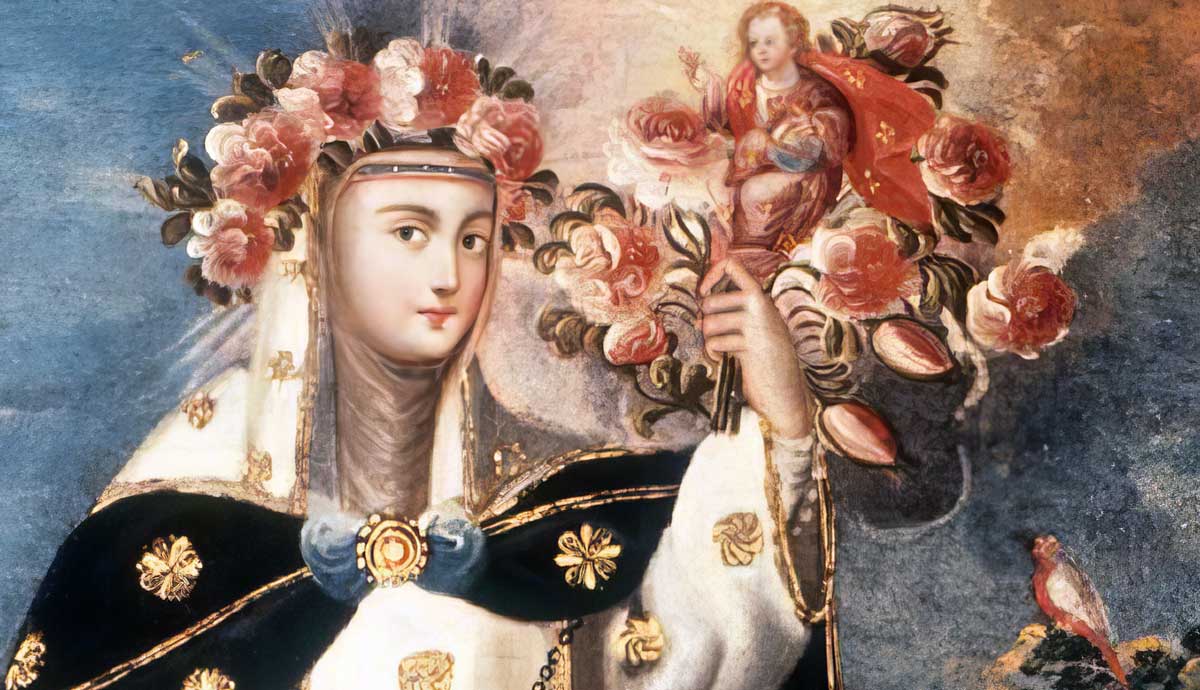
    The Story of Rose of Lima, the Americas First Saint
    St. Rose of Lima, born Isabel Flores de Oliva in Lima, Peru, was the first person from the Americas to be venerated as a Saint. She is best known for her emulation of Saint Catherine of Siena through fasting, dedicated prayer, and even self-inflicted pain. Though her life began in Peru, tales of her allegiance to her faith spread throughout the world, in some cases inspiring religious cults.Origins of the RoseSaint Rose of Lima (1586-1617) with the Infant Jesus being venerated by the natives of South America, Lazzaro Baldi, 1668. Source: JstorSaint Rose of Lima was born Isabel Flores de Oliva in Lima, Peru, on April 22, 1586. She was the daughter of a Spanish cavalryman, Gaspar Flores, and a mixed Native woman, Maria de Oliva y Herrera. Isabel was just one of 10 other children born to Gaspar and Maria. Some sources claim that the name Isabel came from her grandmother, while others claim that it came from her aunt and godmother. Whatever the case, Isabel was soon dubbed Rosa by her mother and some servants of the household. The stories surrounding the introduction of this nickname vary greatly. One source claims that through some holy miracle, Isabels face was temporarily transformed into the image of a rose. Another simply states that Isabel was beautiful, like a rose, which earned her the name. Isabel formally took on the name Rosa after her confirmation in 1597.From an early age, Rosa looked up to Saint Catherine of Siena and often undertook long periods of fasting and prayer in an attempt to emulate her. When she came of age, Rosa took a vow of virginity, pledging herself only to God and Jesus. This was to the dismay of her parents, who had hoped to marry her to a wealthy young man. In response to receiving the attention of young men, Rosa reportedly cut off her hair and rubbed chili peppers on her face to drive them away. This would only be the beginning of a short life of dedication to God and her faith.Rosas Life of DedicationPhoto of a stained glass window depicting St. Rose of Lima in the Mother Joseph Residence Hall Chapel, Caldwell University, designed by Sister Julia Marie in 1961. Source: JstorDespite Rosas fervent wishes, her parents did not allow her to enter the convent once she became an adult. Instead, Rosa became a tertiary in the Third Order of Saint Dominic. The position of tertiary allowed her to lead a deeply religious life but remain within the public as her family wished. She had a hut built behind her parents house, which can still be visited today, where she could pray in silence. It was during this period that Rosa took on extreme forms of devotion to her beliefs. It was reported that she regularly engaged in long fasts, denied herself sleep, and even inflicted wounds on her body. Rosa felt that she deserved the pain that she experienced from these things for the sins that she had committed. Later, Rosa stated that the Christ Child had come to her bearing a ring and asking her to marry him. The idea of being married to Christ was far from unusual among nuns and other religious women of the period.Rosa was also recognized for her good deeds. In the time that she wasnt praying, she would practice her embroidery and gardening. The results of her work would be sold at the market to provide money for her family and for the less fortunate. Her mother also remarked that when Rosa encountered enslaved Black people in the streets, she would bring them in to care for them. Her selfless actions, along with the suffering that she purposefully inflicted on herself, were enough to bring a wave of international popularity her way.Death and BeatificationSt. Rose of Lima altar in Saint Patricks Cathedral in New York, 1858-1897. Source: JstorSadly, Rosa passed away at the early age of 31 on August 24, 1617. Her death was the result of an illness that had plagued her for an extended period. The process of her beatification began just days after her death, though proceedings were halted due to the recent passing of a law stating that beatification could not begin until 50 years after a persons death. However, King Philip IV of Spain rallied for the cause of Rose of Limas beatification, asking the pope to continue the process.Her veneration was completed by Pope Clement IX in 1668 at St. Peters Basilica in Rome, and she was later canonized by his successor, Pope Clement X, in 1671. In 1669, she was declared the patron of Lima and Peru and was later named patron saint of the Indies and the Philippines as well. Afterward, her home was purchased by the auditor Andres de Vilela on the citys behalf and donated to the Dominican Order that she had been a part of.Rosa was investigated by the Spanish Inquisition twice, both during her life and after her passing, for the uproar she had caused, possibly due to her miracles. St. Rose is cited as having performed many miracles, both before and after her death. It is said that when the Dutch came in ships to invade Lima in 1615, St. Rose climbed onto the altar of the Church of St. Dominic to protect the Holy Sacraments. This, some chroniclers claim, scared the Dutch away. Another popular story claims that the entire city of Lima smelled of roses on the day of her death. However, Rosa is most popularly credited with having saved Lima from countless earthquakes.St. Rose Beyond the AmericasThe Chapel of St. Rose in Sittard, The Netherlands. Source: Wikimedia CommonsThough Rosa began her work in the Americas, soon, word of her actions and devotion would spread across countries and continents. Poland and Lithuania are two countries that developed a particularly strong attachment to St. Rose of Lima. This is especially true in Lithuania, where a sort of cult following developed. Many churches in this small country began to create and display imagery of the Saint, marveling at her power and the miracles she is said to have performed. She is often displayed alongside her role model, Catherine of Siena, as well as Saint Hyacinth.Rosa is also revered in the town of Sittard in the Netherlands. In the years between 1620 and 1670, the land surrounding the town had been experiencing waves of plague and dysentery. Following the advice of the local Dominicans, the town declared St. Rose of Lima to be their patron in 1669. Miraculously, the wave of dysentery completely bypassed the town, leaving everyone untouched. This action is considered another one of the miracles performed by the saint after her death.Rosas Inspiration: St. Catherine of SienaSt. Catherine of Siena Invested with the Dominican Habit, Giovanni di Paolo, 1460s. Source: JstorIt is well known that from a very young age, Rosa had looked up to the Italian Saint Catherine of Siena, who had been canonized by Pope Pius II in 1461. In fact, Rosas life mirrored that of Catherines in many ways. Catherine had devoted herself to Catholicism from a young age, and when her parents arranged a marriage for her, she fasted and cut her hair to make her appearance unseemly. This pattern of fasting would continue and become more severe as she grew older. Catherine had also refused to become a nun and instead joined a group of dedicated women within the Order of St. Dominic, where she spent the rest of her life assisting the poor and ill. This group would eventually develop into the Third Order of St. Dominic, the very order that Rosa would join.Rosa was also not the only saint to claim to have married JesusSt. Catherine of Siena had also stated this. Another aspect that they shared was their propensity toward isolation, though both ended up leaving behind the life of the convent to remain in the public eye. St. Rose would spend hours praying alone in the hut she had built on her parents property. St. Catherine, meanwhile, was reported to have spent three years in seclusion before God requested that she leave her room and return to the world. It is clear that St. Rose looked upon St. Catherine with great admiration and wished to continue the work that she had started.Modern InterpretationsS. Rose of Lima, Cuzco Circle, 18th century. Source: JstorMany modern scholars writing on St. Roses life point out that the extremes of her dedication to Catholicism could indicate mental health problems. Many connect her symptoms with an eating disorder, anorexia nervosa, which is characterized by long stretches of fasting or avoiding food. However, some offer a different perspective on the reasons for Rosas and other saints extended participation in fasting. Recent theories argue that gluttony was often associated with the Roman Empire, where an excess of food and eating was celebrated. Therefore, starvation, a rejection of those Roman ideals, would bring people closer to God and Jesus.Other scholars suggest that fasting allowed some women to take control of their lives at a time when they were little more than property. It is said that St. Catherine of Siena starved herself in order to appear less attractive and thus avoid a nearly inevitable marriage arranged by her family. Other women used starvation as a bargaining chip to achieve what would normally be impossible for them. The one thing that most modern scholars agree on is that labeling Rosa anorexic erases the entirety of her extraordinary religious and spiritual experience.
    0 Comentários 0 Compartilhamentos 14 Visualizações
  • WWW.DUALSHOCKERS.COM
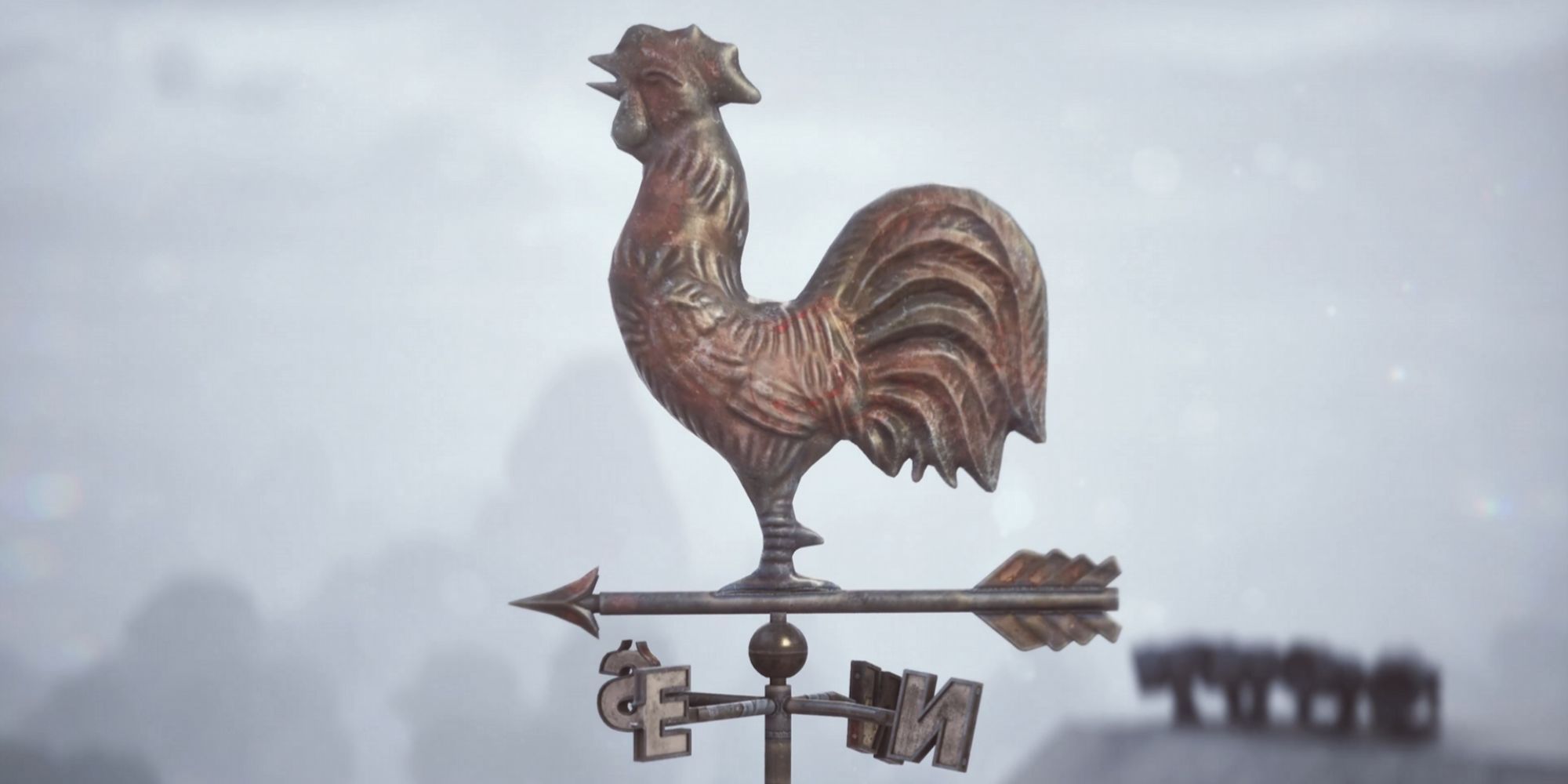
    Extreme Weather Alert: ARC Raiders Shrouded Sky Update Release Date
    A storm is brewing in ARC Raiders, as Embark Studios has revealed their next major content update, Shrouded Sky, will be going live on February 24th.
    0 Comentários 0 Compartilhamentos 14 Visualizações
  • WWW.MASHED.COM
    11 Ways Trader Joe's Gets You To Spend More Money
    Trader Joe's is known for its exclusive brand products and unique shopping atmosphere. If you're keeping an eye on your bill, here's what you should know.
    0 Comentários 0 Compartilhamentos 14 Visualizações