Visiting Warsaws Historical Sites in Just 48 Hours
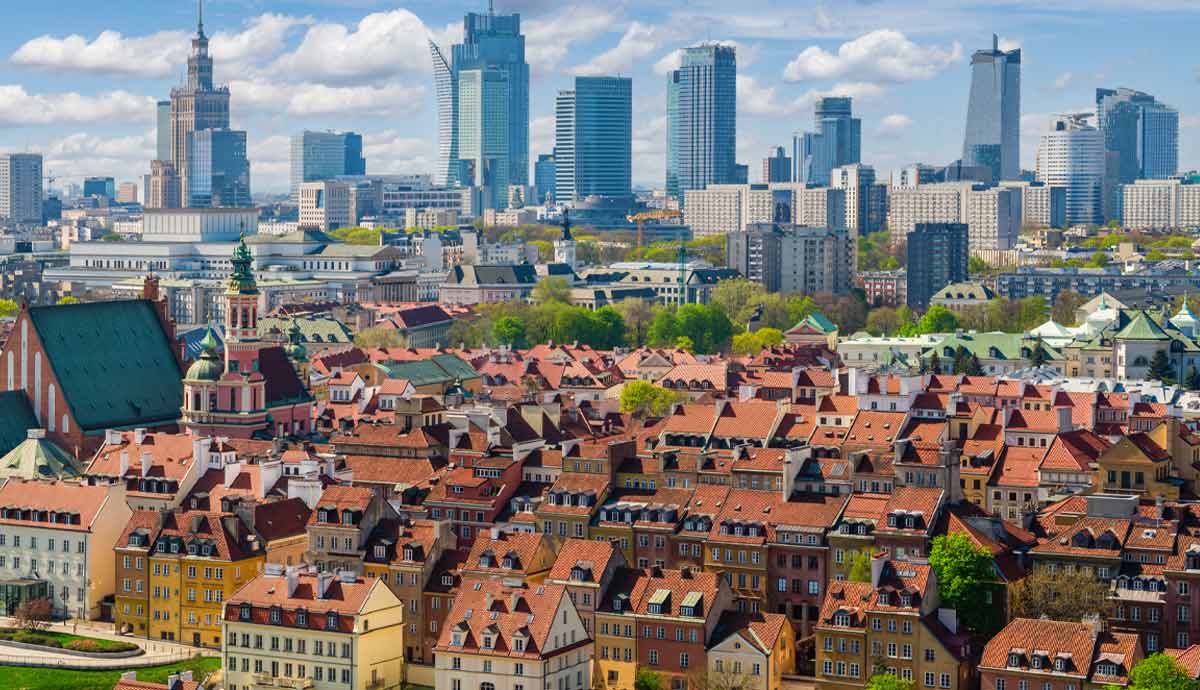
Warsaw, the capital of Poland, is a European city full of rich history, which began in the 13th century. The city is extremely walkable and has many sites that can be visited on foot. Though 48 hours may seem like a short time to visit a city with such a long history, many stops can be made in this time using this Warsaw travel guide.1. Tomb of the Unknown SoldierChanging of the guard at the Tomb of the Unknown Soldier, 2023. Source: Denise BrownThe Tomb of the Unknown Soldier resides in Warsaws city center in Jzef Pisudski Square and is located on the former Saski Palace grounds. In 1923, the President of the Republic of Poland, Stanisaw Wojciechowski, established a committee to create this monument in remembrance of those who died from 1914 to 1920. The committee appointed Stanisaw Kazimierz Ostrowski, a famous Polish sculptor, to create the monument. Once construction finished, a draw was held in April 1925 to determine that the remains of an unnamed soldier from the 1918-1919 Lww battlefield would be exhumed and laid to rest in the tomb. The inaugural ceremony took place from October 30 to November 2, 1925. Over the years, plaques have been added to remember fallen soldiers, dating from 972 to 1963.When visiting today, one will see an eternal flame burn inside the tomb. To ensure the tombs protection it is guarded by soldiers 24 hours per day, year-round. On the top of each hour there is a changing of the guard where visitors can witness soldiers marching in to exchange watch duties.2. The Royal Castle and Old Town WarsawThe Royal Castle in Old Town, 2023. Source: Denise BrownThe Duke of Masovia founded the city of Warsaw in 1280. Present-day Old Town Warsaw occupies a space that grew throughout the 13th to 20th centuries. In the 14th century, a wooden structure and a brick tower were constructed. This site is what is known as the Royal Castle today. By the 16th century, King Zygmunt III Vasa had hired a team of Italian architects to remodel the Royal Castle into a royal residence.Beginning with the Swedish Wars in the 17th century, the Royal Castle suffered interior and exterior damage for many years. In 1944, Nazi troops destroyed the castle during the Warsaw Uprising. In 1980, the Royal Castle and Old Town Warsaw were granted UNESCO World Heritage status. This status was designated because of the large-scale restoration and reconstruction of 85% of the historic city after the Uprising.There are many ways to visit this World Heritage Site. Visitors can simply choose to stroll the Old Town streets, stopping at restaurants and shops along the way. During the winter season, Old Town hosts its own Christmas market, complete with handcrafted art booths and an ice skating rink. The City Wall is one of the most unique and stunning sites to see in Old Town. Records show that construction began on the original wall in the 14th century, likely started by the Duke of Mazovia.The detailed medieval architectural wall was destroyed during the 16th and 17th centuries. However, the walls were reconstructed along with the rest of Old Town after The Warsaw Uprising of 1944. Visitors can enjoy a free, self-guided walking tour of the City Wall through the Museum of Warsaws website. The Royal Castle is also open inside for visitors, with an audio-guide tour Tuesday through Sunday from 10:00 am to 5:00 pm.3. POLIN Museum of the History of Polish JewsSynagogue Exhibit in the POLIN Museum of the History of Polish Jews, 2023. Source: Denise BrownThe POLIN Museum of the History of Polish Jews has a core exhibition that allows visitors to explore the 1,000-year history of the Jewish community in Poland. The exhibits are immersive and contain many hands-on elements. In one exhibit, guests can try their hand at making their own print in the printing house. In another, visitors find themselves inside a recreated synagogue full of colorful animal symbols representing justice, wisdom, and more. The museum features many personal accounts, both written and oral. It can take two or more hours to experience this fascinating place, so keep that in mind when planning a visit. An audio tour guide is available in many different languages.The museum is open for visitors Monday, Wednesday, Thursday, Friday, and Sunday from 10:00 am to 6:00 pm and on Saturdays from 10:00 am to 8:00 pm. The museum is closed on Tuesdays.4. Warsaw Ghetto WallWarsaw Ghetto Wall Fragment, 2023. Source: Denise BrownAt the start of World War II, one-third of Warsaws population was Jewish. In October 1940, walls were built, creating the Warsaw Ghetto. Jewish citizens were isolated inside the walls on the pretense that this would protect Warsaws other citizens from a typhus epidemic. The walls were 3 meters high and topped with barbed wire. In reality, the reason behind the segregation was related to the Third Reichs anti-semitic policies. In April 1943, 2,000 Nazi soldiers entered the ghetto to liquidate it. The Jewish inhabitants fought back in the 29-day Warsaw Ghetto Uprising, which was ultimately suppressed. The majority of the Jewish population in the Warsaw Ghetto were killed or deported to various concentration camps.Echos of the wall can be seen throughout the city. Sidewalk plaques mark wall boundaries. Remains of the wall itself can still be seen at 62 Zota Street. The remains seen here originally marked the area of the original Jewish quarter. On the backside of this portion of the wall is an entrance to a Remembrance Garden that features green space and exhibition panels with photographs and information about the Warsaw Ghetto. This area also includes a granite cube with a sculpted map of the ghettos boundaries. Other remnants of the wall can be found throughout the city, many still containing markings from the fighting during the 1943 uprising.5. Holy Cross ChurchInside of Holy Cross Church, 2023. Source: Denise BrownHoly Cross Church is an active Catholic Parish with a rich history that attracts visitors from all walks of life. The churchs history begins in the 16th century. It started as a wooden structure that was destroyed during the Swedish Wars. During the late 1600s, royal architect Jakub Bellotti completed rebuilding the church in the same spot in 1696. Over time, additions were made until the church was destroyed during The Warsaw Uprising in 1944. The church was reconstructed between 1945 and 1972.One of the biggest draws is the heart of Frdric Chopin. This famous composer was born in Zelazowa-Wola, a village six miles outside of Warsaw, in 1810. Chopin studied in Warsaw but moved to Paris later. He lived out the remainder of his life in Paris, but on his deathbed, voiced that he would like to be buried in his home of Poland. While his body was buried in Paris, his heart went to Poland for burial and is now located under a monument inside of Holy Cross Church. Other notable things to see in the church include Warsaws largest organ, a monument to Polish Pope John Paul II, and an urn with the remains of Nobel prize-winning author Wadysaw Reymont.Visitors can explore the church Monday through Saturday from 10:00 am to 4:00 pm and Sundays from 2:00 pm to 4:00 pm.6. The Warsaw Rising MuseumWarsaw Rising Museum, 2017. Source: Adrian Grycuk, Wikimedia CommonsThe Warsaw Rising Museum opened in 2004 to commemorate the 60th anniversary of the beginning of the Warsaw Uprising. According to the museums website, the museum is a tribute of Warsaws residents to those who fought and died for independent Poland and its free capital.The museums main exhibition focuses on everyday life and resistance during the occupation. The exhibition includes photographs, film, and audio recordings of first-hand accounts before, during, and after the Warsaw Uprising. In another section, the exhibition focuses on the Allied airdrops. It includes a replica Liberator B-24J Bomber and official texts from the Germans and the Allies. The museum also features rotating temporary exhibits.The Warsaw Rising Museum is open for visitors Wednesday through Monday from 10:00 am to 6:00 pm. An audio-guide tour is available in multiple languages.7. Museum of King Jan IIIs Palace in WilanwThe Museum of King Jan IIIs Palace in Wilanw, 2015. Source: Dennis Jarvis, FlickrThe Museum of King Jan IIIs Palace in Wilanw is the oldest Polish art museum. The museum opened in 1805, but the Palace started as the residence of King Jan III, who reigned from 1677 to 1696. The main floor consists of a tour through the royal baroque-era residence. Many paintings, statues, antique furnishings, and period decor can be found on this floor. The first floor houses the Gallery of the Polish Portrait. Portraits feature monarchs and royal families, participants in national uprisings, and other people honored by Poland. The museums mission is to shape civic attitudes and patriotic responsibility for the national, cultural, and natural heritage.Guests can visit the museum by taking a bus from downtown Warsaw. The museum is open from January 8 to December 15 daily from 10:00 am to 4:00 pm. The park and courtyard are also available to visit throughout the year, however, the timing shifts depending on the season. The museum grounds cover more than 90 hectares and include Baroque gardens, a nature preserve, and landscape parks.Old Town Warsaw, 2023. Source: Denise BrownWarsaw contains many historic sites. Featuring a recreated Old Town designated as a World Heritage Site, numerous museums covering history and art in the area, and relics of the past that can be seen just walking around town, Warsaw is a popular destination for tourists interested in Eastern European history.








 English
 Arabic
 French
 Spanish
 Portuguese
 Deutsch
 Turkish
 Dutch
Dutch
 Italiano
 Russian
 Romaian
 Portuguese (Brazil)