• WWW.IFLSCIENCE.COM
    One Of The Worlds Rarest, Smallest Dolphins May Have Just Been Spotted Off New Zealands Coast
    Officials are asking the public for help to locate the dolphin so that it can be properly identified.
    0 Comments 0 Shares 4 Views
  • WWW.THECOLLECTOR.COM
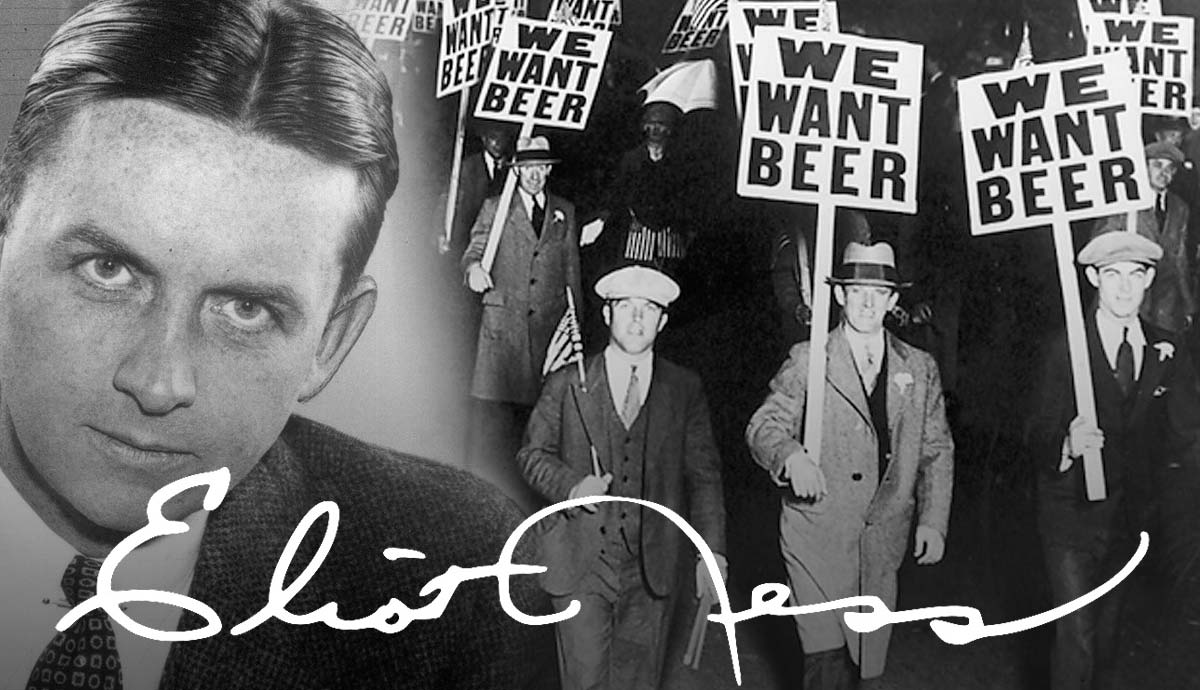
    Biography of Eliot Ness, Prohibitions Most Formidable Lawman
    From a tough childhood in Chicago, Eliot Ness rose to become one of Americas most formidable twentieth-century lawmen. He enforced prohibition and battled mobsters but also brought innovation to public safety in one of Americas largest cities. His tenure in Cleveland resulted in dropping crime rates and advances in technology and forensics that set the tone for modern policing.A Challenging ChildhoodNess childhood home in Chicago. Source: Stephen Hogan / Wikimedia CommonsA son of Norwegian immigrants, Eliot Ness was born in Chicago in 1903. He was the youngest of five children, with three sisters and a brother, and was younger than his closest sibling by ten years. As a result of this age gap, Eliot was given lots of attention and grew up playing with his nieces and nephews instead of his siblings. Unfortunately, even a loving family such as Ness is not immune from tragedy. When Eliot was only fourteen, both of his parents passed away. Still, Ness focused on his education and took school seriously. He graduated from Fenger High School and went on to the University of Chicago. He graduated from college in 1925 in the top 10% of his class with a degree in political science, commerce, and business administration.Introduction to the LawAn anti-prohibition protest in Chicago in the 1920s. Source: Library of Congress / Wikimedia CommonsAfter college, Ness worked for a few years as an investigator for a credit company in Chicago. However, he found his work boring and returned to the University of Chicago for some postgraduate studies. In 1928, his trajectory changed when his brother-in-law, Alexander Jamie, an employee of the Prohibition Bureau, got him a job in the US Treasury Department. At the time, Prohibition was in effect. Under Prohibition, which lasted from 1920 to 1933, it was illegal to produce and consume alcohol in the United States. The ban was the product of a Constitutional Amendment (the 18th), which was repealed by the 21st Amendment. Though controversial, Prohibition was the law of the land, requiring officers to enforce it.A mugshot of Al Capone in Florida in 1930. Source: Miami Police Department / Wikimedia CommonsNess became one of those officers, eventually transferring to the Justice Department and Prohibition Bureau like his brother-in-law. Chicago was rife with illegal booze, and a particular offender was none other than the infamous Al Capone. President Herbert Hoover issued a directive to get Capone, who controlled a criminal empire that had reach throughout Chicago. Involved in offenses such as prostitution, drug trafficking, and gambling, Capone had a reputation as one of the premier bootleggers or illegal alcohol makers and distributors in the United States. Part of the reason that Capone was so successful was his ability to bribe law enforcement officers to look the other way. Eliot Ness intended to change that.Becoming UntouchableCapones inmate file from Alcatraz, 1934. Source: United States Bureau of Prisons / Wikimedia CommonsNess was assigned to create a task force to bring down Capone. He handpicked ten fellow lawmen from around the United States to complete his group, with one key attribute in mindthe men must stand firm against bribery. They did, and as a result, the group became known as the Untouchables. They went after Capone, looking for evidence of Prohibition violations, determined to stop the production of illegal alcohol. Ultimately, the team compiled over 5,000 violations, which were used in an indictment. This indictment was coupled with another, charging Capone with tax evasion, and the gangster was convicted. He would serve over seven years in the infamous Alcatraz prison and never again re-entered the criminal underworld.The Customs House building in Chicago, where Ness and his Untouchables had offices on the 7th floor. Source: Stephen Hogan / Wikimedia CommonsIn addition to taking down Capone, Ness Untouchables destroyed the success of many of Chicagos other notorious bootleggers and gang members. However, with the end of Prohibition in 1933, the Untouchables ceased to exist, with state and federal agencies re-organizing without the need for a Prohibition Bureau. Ness transferred to Cincinnati in September 1933 as a senior investigator, working with the Department of Treasury once again.Turning Ohio AroundEliot Ness in 1933. Source: Wikimedia CommonsNess worked in Cincinnati briefly but was soon promoted to assistant investigator in charge of the city office of the Alcohol Tax Unit, or ATU, division of the Treasury Department. Under his leadership, large liquor syndicates were dismantled, and public support for their work grew. As the legal liquor industry became functional again in Cincinnati, Ness realized he needed to take his talents to Cleveland. Cleveland was the countrys seventh-largest city in 1934. It was rife with crime, and corruption among politicians and public officials was rampant. The public had little faith in law enforcement, and the police department was virtually useless. Ness was transferred to Cleveland as the Special Agent in Charge of the ATU there in December 1934. His reputation for success only continued to grow as Ness, and his department of thirty-four agents busted illegal liquor operations, seized equipment, and stopped tax evaders in their tracks.Promoting Public SafetyNess signature. Source: Stephen Koschal / Wikimedia CommonsIn 1935, the mayor of Cleveland, Harold H. Burton, admiring the work Ness had done in his city, asked Eliot Ness to join his staff as Director of Public Safety. In this role, Ness would oversee the police, fire department, and building division. The youngest man to ever hold the position, 33-year-old Ness had a big job ahead of him. Almost immediately, he started re-organizing the police department, slapping five high-ranking officers with bribery charges and imprisoning them. He instituted a scientific training school for policemen and created hiring procedures to ensure that only the best candidates would become Cleveland cops. Potential police officers had to take a civil service test once they passed his training program and had to undergo a character investigation and be fingerprinted. A mandatory two-year probationary period was required.Boy Scouts in Columbus, OH, 1918. Source: Upper Arlington Archives / Wikimedia CommonsA separate police force was designed to tackle Clevelands traffic issues. These motorcycle cops devoted solely to traffic allowed other officers to focus on other offenses. Traffic deaths in Cleveland dropped to half their former rate under Ness leadership. In addition, Clevelands total crime rate dropped by 25%, while arrests and convictions increased by 20%. Ness focused on the next generation, starting a number of Boy Scout troops in the city, and juvenile crime dropped by 80% under his tenure. Ness focused on revitalizing the police and fire departments with modern equipment, including two-way radios and typewriters, to improve communication.Florence Polillo, Victim 3 of the Cleveland Torso Murderer, 1934. Source: Patrick Lyons / Wikimedia CommonsWhile Ness tenure in Cleveland was largely successful, he did have some detractors. In 1936, at request from the mayor, Ness became more involved with a serial killing case known as the Cleveland Torso Murders. Six killings had taken place in 1936 alone, then continued into the following years. In 1938, Ness and a group of thirty-five officers raided a homeless encampment, taking sixty-three men into custody and searching the various tents and shanties for clues. With no success, Ness ordered the encampment burned, gathering a great deal of public criticism.The case was never officially solved. With World War II intensifying and Mayor Burton elected to the US Senate, Ness decided it was time for a career change. He remained Clevelands Public Safety Director but started traveling extensively, working as a consultant for the Federal Social Protection Program. He left his job in Cleveland to become the National Director for the program two years later. At the conclusion of the war, he worked at Diebold Safe and Lock in Canton, Ohio, and started an import-export business with a friend. Ness passed away in 1957 from a heart attack.Personal LifeNess cenotaph at Lake View Cemetery, Cleveland. Source: Erik Drost / Wikimedia CommonsEliot Ness was married three times. His dedication to his job often got in the way of his relationships. His first wife, Edna, was married to Ness from 1929-1939. Ness remarried quickly, making vows to Cleveland socialite Evaline McAndrews 10 months after his divorce. A book artist, Evaline traveled extensively for her work at the same time Ness was traveling for his career, and they divorced in 1945. He married for the final time to a friend of Evalines, Elisabeth Anderson Seaver, in 1946. Ness never had children but enjoyed them and wanted a family of his own. He and Elisabeth adopted three-year-old Robert. Robert died from Leukemia at just age 29 in 1976, predeceasing his mother by a year. Elisabeth died from throat cancer in 1977. The three members of the Ness family had their ashes scattered by Roberts widow in 1998 in a formal funeral ceremony.Ness is Remembered as a HeroRobert Stack as Eliot Ness in the television show The Untouchables, 1960. Source: ABC TelevisionThough Ness wasnt beloved by all throughout his career, he is largely remembered as a hero of public safety in the modern era. He has been portrayed on television and in film by the likes of Robert Stack and Kevin Costner. His biography, Untouchables, published after his death, was wildly successful. He may not have been perfect, but Eliot Nesss determination and innovation left a lasting mark on US law enforcement.
    0 Comments 0 Shares 4 Views
  • WWW.THECOLLECTOR.COM
    When Did Women Get the Right to Vote in the United States?
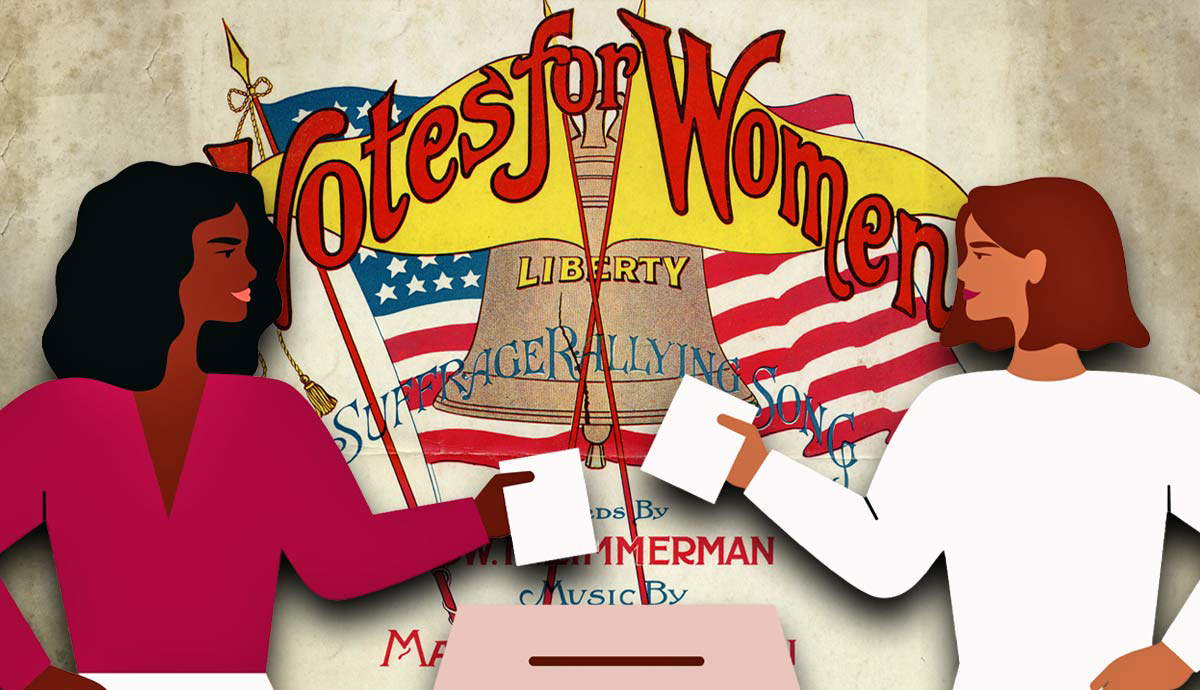
    The struggle for gender equality is a story that has been unfolding for hundreds of years. From ancient times right through to the present, women have fought for recognition, representation, and freedom in patriarchal societies. Many women suffered, and many died for their attempts. Of major significance in the modern era was the struggle for womens suffragethe right to vote.When were women granted the right to vote in the United States, and what were the consequences?Women and the Right to VoteWomen and the right to vote. Source: iStockIn the United States, women were granted the right to vote on August 26, 1920, with the certification of the 19th Amendment, which stated:The right of citizens of the United States to vote shall not be denied or abridged by the United States or by any State on account of sex.This was not the beginning of a movement but rather the culmination of efforts across the country in a process that spanned many decades. In Wyoming, in 1869, for example, the territory passed a suffrage law that granted women the right to vote as well as to hold office. In 1893, Colorado became the first state to grant women suffrage by a referendum.At a federal level, there were no laws that actually forbade women to vote, but the Nineteenth Amendment entrenched womens right to vote as a legal right throughout the country. Before then, voting rights were usually decided at the state level.The petition for womens suffrage presented to the New Zealand Parliament in 1893. Source: Archives of New Zealand via Wikimedia CommonsOf course, the United States is not the only country where this struggle took place, and it was only one of many countries that engaged in movements with marches and protests to demand equality. Often cited as the first country to grant women the right to vote, New Zealand, a self-governing colony at the time, did so in 1893. Although a great victory, women were not allowed to stand for election until 1919.In 1895, South Australia gave women the right to vote and to stand for election, while in Britain, in 1894, single women were granted suffrage. It was only in 1928 that all women were given the right to vote on a level equal to that of all men in the UK.What Is the Nineteenth Amendment?Susan B. Anthony, photographed in 1890. Source: Wikimedia CommonsOften referred to as the Susan B. Anthony Amendment, after the woman who played a pivotal role in its adoption, the 19th Amendment is the guarantor of voting rights based on sex. The amendment explicitly bans any discrimination that allows for the denial of womens voting rights at the federal or state level.Established in 1780, the Constitution did not list any restrictions on gender-based voting, thus leaving the gates open for further legal development of suffrage. Ironically, before the establishment of the United States, women had voting rights in the colonies. Then, after the Revolutionary War, states denied women the right to vote at even a nominal level. As the 19th century progressed, however, so did the movement for universal suffrage, including the right for women to vote. Organizations sprang up and began campaigning vigorously for this right.The 19th Amendment, c. 1920. Source: National Archives and Records Administration via Wikimedia CommonsThe movement was interrupted by the pressing matters of the Civil War. However, as the decades progressed afterward, and into the early 20th century, womens rights movements continued, with some opting for more confrontational methods of protest. Many suffragists picketed and took part in silent vigils and hunger strikes.Central to this movement were Susan B. Anthony and Elizabeth Cady Stanton, who, in 1878, were successful in arranging an amendment to be presented to Congress. This amendment proposed giving women the right to vote. Stanton died in 1902, and Anthony died in 1906, both at the age of 86. They did not live to see the final fruition of their struggles. The 19th Amendment to the US Constitution was ratified in 1920, ushering in a new era in American politics that would signify huge shifts in the political climate as women exercised their right to vote.The legal status of womens suffrage in each state in 1919. Source: Boston Public LibraryOf note is the fact that it was the Republican Party that gave huge support to womens suffrage. In the vote to pass the 19th Amendment in the Senate, 82 percent of Republicans voted in favor of it, while only 41 percent of Democrats did so.Political Participation After 1920A rally conducted by the League of Women Voters in St. Louis, Missouri, 1920. Source: University of Missouri via Wikimedia CommonsDespite the ratification of the 19th Amendment, the struggle for womens rights in the political sphere was one that continued. The amendment did not solve the myriad issues that still persisted at the time. The generation following the First World War lived in an era of extreme apathy, and the addition of womens voting rights had little impact. Apathy was so high that many former suffragists didnt even bother voting.An article from the National Womens History Museum notes that in 1927, a survey was conducted with the results showing that only 35 to 40 percent of eligible women voters made their mark in the 1920 elections.This wasnt only due to voter apathy. There was pushback from patriarchal circles, especially in the southern states, where many men opposed the idea of women having the right to vote.In the Democratic strongholds of Georgia and Mississippi, the state leadership actively suppressed voting rights for women. Nevertheless, women in those states generally voted Democratic in the 1920 election. In the north and the west of the country, the general trend was that women voted more in favor of the Republicans, the party that had historical ties with the suffrage movement.In recent decades, the Democratic and Republican parties have undergone huge shifts in their platforms. As a result, the Democratic Party is now seen as the more socially progressive organization, while the Republicans stand for issues that are more socially conservative.How Did Womens Votes Change the Political Landscape in the United States?Women voting. Source: iStockIn the immediate wake of the 19th Amendment, it is difficult to determine how women voted. Illinois was the only state that recorded the presidential vote by sex, thus determining how women voted in 1920 and 1924 is plagued by a severe lack of data. The same survey mentioned above also noted that women tended to vote as their husbands did, in a dynamic that reflects the patriarchal mores of the time. Nevertheless, it is likely that women contributed in part to the success of the Republicans at local and state levels in 1920, as well as the success of Warren G. Harding in his bid to become president.A stamp from 1970 commemorating womens suffrage. Source: iStockPolitical party platforms are subject to major shifts, as has clearly happened before in the United States. If and when these changes occur, the effect they will have on voting trends remains a subject of speculation. It is not safe to assume the Democrats will always push a liberal agenda, nor is it safe to assume that women will always vote more liberally. Gendered values are not consistent, nor are the circumstances that affect how people vote.A study in Britain, for example, showed that women were more likely to vote Conservative (right of the political spectrum) in the years following the Second World War all the way through to 2017. Recent events, such as Brexit, have impacted the trend, but there is no guarantee that women are more likely to be liberal. Events have shaped how women vote rather than any notion of inherent feminine traits that generate a leaning toward certain political theories.Ultimately, it can be said that women are individuals and are concerned with far more than just womens issues. The way they vote is likely reflective of this. With that being said, however, identity politics do play a huge role in the United States, and appealing to women on account of their gender does increase the share of womens votes, as many women choose to focus on particular policies that directly affect them as women.This dynamic has been a hallmark of Democratic Party policies in recent years.What Percentage of Women Vote Democrat Today?Kamala Harris, the Democratic nominee for the 2024 election, signing cards in 2018. Source: Kamala Harris via Wikimedia CommonsOver the past few elections, statistics have shown that women, as a demographic, continue to shift more to the left of the political spectrum than men. As such, in recent decades, the Democratic Party has benefited more than the Republican Party from womens votes.The 2024 election mirrored recent trends in gender-based voting results that stretch back at least as far as 1992. Since Bill Clintons run in 1992, data show that women are more likely to vote Democrat than men. Exit poll Data from Edison (formerly Voter News Service 1992-2000) shows that in that year, support for the Democrat candidate amongst women was four points higher than amongst men.Since then, exit polls have consistently shown that women tend to favor Democratic candidates more than men. In the last few elections, the difference has been considerable. In 2016, Hillary Clinton won 54 percent of the womens vote compared with 41 percent for Donald Trump. That 13-point difference dropped to 12 points for Joe Biden in 2020 and 10 points for Kamala Harris in 2024. In the 2024 election, Harris garnered 53 percent of the womens vote and 43 percent of the mens vote, while Trump got 45 percent of the womens vote and 55 percent of the mens vote.A Powerful ForceVotes for Women, ca. 1915. Source: New York Heritage via Wikimedia CommonsWomen voters represent a powerful force in the world of politics. In the United States since 1980, a bigger proportion of women have turned out to vote than men in every election. Thus, women represent an incredibly important demographic in the democratic process.It has been over a hundred years since womens suffrage was granted in the United States. While women have achieved equity in being able to vote, there is still a long road ahead in achieving par with men in political representation in government. Although two women have stood as the Democratic nominee for the presidency, the United States has yet to have a Madam President.

    0 Comments 0 Shares 4 Views
  • WWW.DUALSHOCKERS.COM
    5 Characters Perfect to Bring Back After Resident Evil Requiem
    Resident Evil enjoys bringing characters from previous games back in new games, but Chris and Leon get to be recurring characters a disproportionate amount. In Resident Evil Requiem, Leon returns once again to join Grace in her terrifying assignment that has her facing threats she's never had to encounter in person, but that Leon has faced more times than he'd like.
    0 Comments 0 Shares 4 Views
  • WWW.PCGAMESN.COM
    From new Command and Conquer and Half-Life campaigns to a full expansion for an RPG classic, these are the top ten mods of the year
    It's not often I get to write about Half-Life these days, even if fans are absolutely certain that the threequel is on the way. I still don't think Gabe Newell can count that high, but at least we've got an army of loyal modders to create new experiences for Gordon Freeman to explore. The majority of my gaming time this year has been spent on modded playthroughs, so I anticipated ModDB's annual roundup of the best mods of 2025 with bated breath. We, the players, voted for the top mods of the year, and the results are finally in.Read the full story on PCGamesN: From new Command and Conquer and Half-Life campaigns to a full expansion for an RPG classic, these are the top ten mods of the year
    0 Comments 0 Shares 4 Views
  • WWW.MASHED.COM
    15 Southern Appetizers You'll Want To Make All Year Long
    Start your meal with one of these delicious Southern appetizers, which capture the spirit of the South in a delicious array of tastes and textures.
    0 Comments 0 Shares 4 Views
  • WWW.BGR.COM
    You Should Upgrade Your Old HDMI Cables - Here's Why
    They might all look the same, but not every HDMI cable is as good as the next. Here's what you should get if you just got a fancy new TV or monitor.
    0 Comments 0 Shares 4 Views
  • WWW.BGR.COM
    5 Of The Cheapest Wireless Apple CarPlay Adapters Still Worth Using
    If you are stuck with a car that only supports wired Apple CarPlay, here are some of the best CarPlay adapters that are also light on your wallet.
    0 Comments 0 Shares 4 Views
  • TECHCRUNCH.COM
    The 32 top enterprise tech startups from Disrupt Startup Battlefield
    Here is the full list of the enterprise tech Startup Battlefield 200 selectees, along with a note on what made us select them for the competition.
    0 Comments 0 Shares 4 Views
  • TECHCRUNCH.COM
    Samsung plans to bring Google Photos to its TVs in 2026
    Samsung said that Memories features for Google Photos will be exclusive to its TVs for six months
    0 Comments 0 Shares 4 Views