• 0 Commentarii 0 Distribuiri 14 Views
  • WWW.THECOLLECTOR.COM
    5 Ways Medieval Castles Were Used to Control Society and Economy
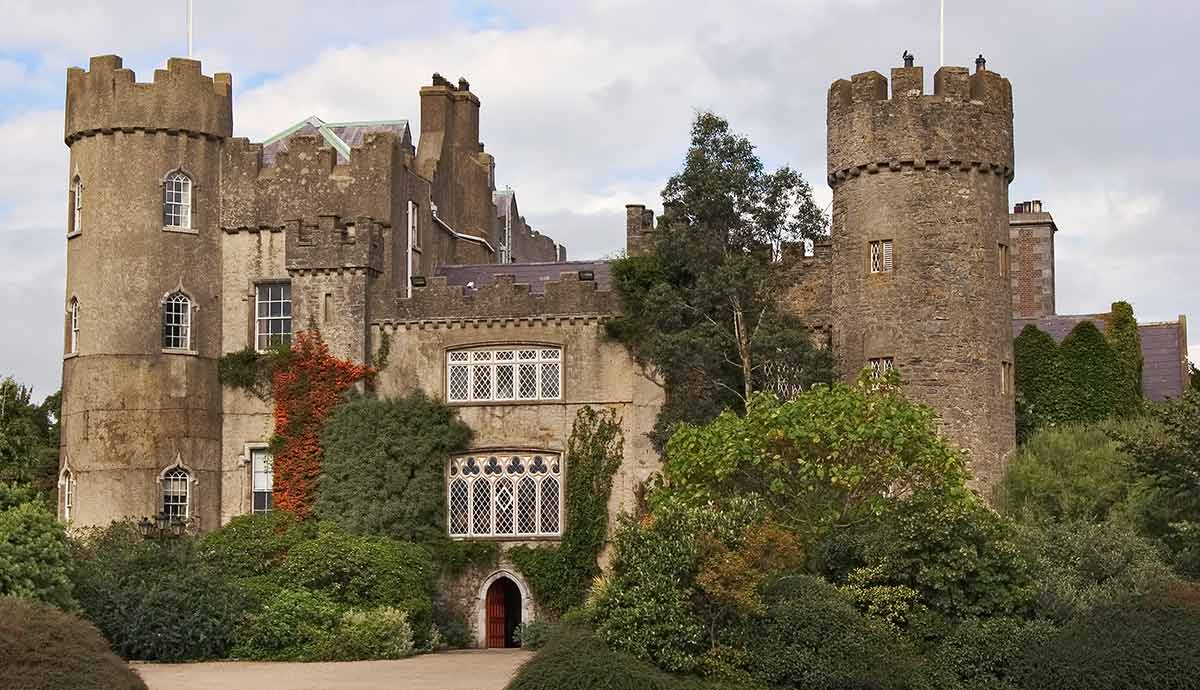
    Medieval castles are often portrayed in modern literature as beautiful buildings belonging to brave leaders, but the truth is much darker. In many cases, kings and lords built the giant structures, not to protect local populations, but to dominate the masses and collect money from them. And so, for hundreds of years, castles stood as instruments of conquest. This was particularly true from the 10th to the 15th centuries. In what ways did castles help nobles dominate and govern entire societies?Castles Were Used to Seize Territory and Suppress RebellionImage from the Bayeux Tapestry showing William with his half-brothers. William is in the center, Odo is on the left with empty hands, and Robert is on the right with a sword in his hand. Source: WikipediaMedieval castles offered much more than simple refuge to soldiers in times of war. The enormous buildings were regularly used to dominate subjects in the areas in which they were built and derive revenue from them through taxes. The story of the Norman Conquest of 1066 illustrates the situation clearly, as right after their victory, the Normans went on a building spree and built roughly 600 to 800 castles across England by the 12th century. William the Conqueror, in particular, handed out land in a calculated pattern so that one royal castle was, in many cases, within a days march (roughly 15 to 20 miles) of the next. The spacing pattern helped to suppress rebellion among the defeated Anglo-Saxons.They Were Used as Toll Collection CentersThe Rhine in Basel, Switzerland. Source: WikipediaOnce the fighting died down and trading resumed, the towering medieval castles of Europe ceased being just fortresses. They were converted into revenue collection points by the lords who controlled them. As a result, many nobles built their castles right on the busiest roads and rivers so that merchants had no other choice but to pay up if they wanted to use the routes. Nowhere was this more obvious than along the Rhine. By the early 1300s, more than 60 castles lined its riverbanks, each one basically a medieval toll booth. A trader heading from Basel to Cologne would, for example, be compelled to pay between 10 to 25 percent of his cargos worth, just in fees.That said, things in England worked a bit differently. Because most towns grew under the protection of a castle or a major church, locals paid steady market tolls and rent to the lords.They Were an Immense Economic BurdenBeaumaris Castle, Anglesey, UK. Source: Wikimedia CommonsThe process of building castles required total domination of territories in which they were to be built in order to obtain cheap labor for construction. Unfortunately, the procedure also stripped the land of its resources such as timber and stone. King Edward I of England revealed just how expensive such endeavors were when he launched his final conquest of Wales in the late 13th century.Beaumaris Castle alone, which was constructed in 1295, took thousands of laborers to build. It utilized about 400 skilled masons and over 2,000 laborers at peak periods, most of whom were paid wages, though some were compelled to work under wartime labor obligations. It is estimated that Edward spent roughly 80,000 to 100,000 on his ring of Welsh castles and associated fortifications between 1277 and 1330. The sum, spread over more than five decades, placed a heavy burden on the royal treasury as the average annual revenue during that period was about 20,000.They Were Used as Centers of JusticeBeaumaris Castle Inner Ward. Source: CadwCastles stood as important centers of administration in many regions during the medieval years and acted as hubs where lords managed their estates and enforced local laws. Established lords, especially from the 11th century to the 13th century, held special rights called high justice in many places across Europe. The rights allowed them to dispense punishments to lawbreakers for breaking local laws, and even order executions. Hanging was a regular punishment in many regions at the time, but over the years, kings started to take more control, especially from the 14th century onward. They also started to gain greater influence over local justice systems through royal courts.Towering Symbols of Fear and Royal ControlThe Norman White Tower, the keep of the Tower of London, overlooking the River Thames. Source: WikipediaAlmost every medieval castle was an unmistakable symbol of the royal authority that held power over the lives of ordinary people. King Henry II of England made this point unmistakably clear in the 1180s when he commissioned the building of the massive Great Keep at Dover Castle a towering castle that was visible for miles across the English Channel. Later kings recognized the danger of having too many private towering fortresses and introduced the License to Crenellate (from roughly 1200 to 1500). The royal permit meant that no noble could build or fortify a castle without the crowns explicit, written approval.
    0 Commentarii 0 Distribuiri 4 Views
  • WWW.THECOLLECTOR.COM
    How Did Working Class Victorians Celebrate Christmas?
    Everyday life was difficult in the 19th century, particularly in the city of London. Despite this, many families and children were just as excited about Christmas as we are today. Let us now endeavor to rediscover the true meaning of Christmas simply by exploring the precious traditions of the Victorian working classes. These unfortunate people savored one day of jollity with what little they could afford, and by all accounts were surprisingly grateful for everything they did have. So, how exactly did they celebrate each year?Christmas in 19th-Century LondonA depiction of a German family with their Christmas Tree, drawn in 1888. Source: Wikimedia CommonsThe Victorian Period is remembered as one of poverty and hardship. For a large percentage of the London population, the 19th century was a time of constant struggle. Each day was defined by a selection of burdens, worries, dangers, and troubles. The joys of life were permanently overshadowed by a battle to avoid loss of employment, homelessness, and the ever-present threat of the debtors prison or the workhouse.During the year of 1850, there were around 2.3 million people living in London. Tens of thousands of these people, children included, slept each night on the cold, cobbled pavements. A further 16,000 individuals were spread across the 86 workhouses operating in the city, but many families chose homelessness over entering such an institution.Furthermore, around 30 percent of the population lived in what would now be considered extreme poverty. Many who were lucky enough to afford accommodation lived in unheated, overcrowded, and unsanitary conditions. In such a world as this, how could one possibly think about celebrating Christmas? Despite living in a period of such uncertainty, the Victorians loved Christmas and were even responsible for shaping Christmas traditions as we know them today.Victorian London, by Gustave Dor, 1872. Source: Wellcome CollectionThe truth of the matter is that each separate class experienced very different versions of Christmas, all of which were anticipated and enjoyed in equal measure. In this article, we will focus on Christmas as it happened in the homes of the typical, hardworking familiesthe type of family that filled the majority of houses in the city. These were the sorts of people who endured long and laborious hours for a pitiful wage, but just about managed to scrape by with what they had. Their Christmas budget would not have extended beyond one low-price present for each member of the family, a meager goose, and perhaps a Christmas pudding or a little bottle of brandy.Of course, Christmases here could not be compared with the opulence and grandeur enjoyed annually by the residents of Buckingham Palace and other great houses, but a more expensive Christmas did not necessarily equate to a better one. Who is to say that the children of Queen Victoria should be any more excited than the children of a poorer family, similar to the Cratchits from A Christmas Carol?How Are Thy Leaves So Verdant?An artwork showing Queen Victoria and Prince Albert decorating a Christmas Tree in the 1840s. Source: Wikimedia CommonsWhen it comes to Christmas, if there is one thing that the Victorians are famous for, it is the introduction of the Christmas tree to England. By the mid-19th century, the decorating of a tree had become an integral part of Christmas preparations, and there was hardly a family in London that did not partake in the tradition in one way or another.According to popular and historic tradition, it was Martin Luther, some 300 years previously, who first came up with the idea of decorating a tree at Christmas. His intention was supposedly to commemorate the birth of Christ by creating a display of natural beauty, illuminated with candlelight, and to keep it in his home over the twelve days of Christmas. Legend has it that the idea came to Martin Luther as he walked through a pine forest on Christmas Eve, near his home in Wittenberg in Germany. The sight of the sparkling stars between the branches reminded him of the heavens, and moved him to such an extent that he had a tree of his choosing chopped down and brought into his house. He informed his family that the tree would be a reminder of the coming of Christmas Day and the coming of Christ as the light of the world.By the 17th century, the idea of the Christmas Tree had become widespread in Germany, particularly in the South. An anonymous chronicler recorded that, at Christmas, the people of Strasburg set up fir trees in their parlors and hung roses cut out of colored paper, as well as apples, wafers, gold foils, and sweets.The Royal Family in 1846, by Franz Xaver Winterhalter, 1846-7. Source: The Royal CollectionSo, how did it happen that the tradition spread so suddenly across Europe and into Britain? As with many other traditions, it is usually Prince Albert, the husband of Queen Victoria, who is credited with the introduction of the Christmas Tree in England. Although he undoubtedly had a part in its popularization, he was by no means the first person to decorate a Christmas tree in Britain.It was actually Charlotte of Mecklenburg-Strelitz, the wife of King George III, who set up the first known Christmas tree in England. This tree, the first recorded to have appeared in Britain, was erected at Windsor Castle. Charlotte had been born in Northern Germany in 1744, and consequently, when she arrived in London, she brought with her a variety of Christmas traditions and customs.We know that the young Victoria, the future Queen of England, decorated a Christmas tree in 1832, five years before she inherited her throne. On Christmas Eve, at the age of just 13, she recorded her experience of her Christmas tree in her diary. After dinner, we then went into the drawing room near the dining room, she wrote, and there were two large tables on which were placed two trees hung with lights and sugar ornaments, the presents being placed around the trees.Christmas tree, by Elliott B. Source: UnsplashIt is now thought that, by the year 1860, there was not a middle-class family in England that did not either keep or know about the tradition of the Christmas tree. As decorations were generally inexpensive, the tradition of the Christmas tree spread into the homes of families of all incomes. Popular and cheap decorations for a tree included real candles, tinsel, and homemade paper chains or cut outs.Those who had neither room, money, nor desire to keep a Christmas tree may have chosen to decorate their home with cheaper alternatives, such as holly, ivy, mistletoe, and other natural greenery. They may also have appreciated trees erected for public viewing, such as in churches or shop windows. It was customary to decorate on Christmas Eve, gathered around the tree with the whole family.Sweet Singing in the ChoirCarol singers, by David Beale. Source: UnsplashIn a world where television and internet did not exist, and money was lacking, people learned to make their own entertainment. At Christmastime, particularly on Christmas Eve and Christmas Day, the Victorians loved to sing carols. Carol singing, then also known as wassailing, was commonly performed in a variety of places and for a variety of reasons. It took place in crowded, snowy streets as public performances.Wassailing took place in churches as part of religious services. It took place with family and friends gathered around the Christmas tree. It took place at Christmas parties, and it took place in residential areas, when people went door to door with their choirs. Whether accompanied by a piano or acapella, whether against the warmth of a fire or in the cold of the winter night air, singing carols was an integral part of Christmas entertainment.It was during the year of 1880 that the first so-called Carol Service took place. A musically-minded man named E.W. Benson, the bishop of Truro cathedral, held a newly invented ceremony on Christmas Eve. He called his service Nine Lessons With Carols, and as expected, it featured nine Biblical readings and nine Carols. When combined, they told the story of Christmas from the Annunciation of the Angel Gabriel to Mary, until the visitation of the Magi and the Epiphany.Truro Cathedral, by Winston Tjia. Source: UnsplashThis service was a major event for the Victorian working classes, as the attendance of such services was permitted for all manner of folk. They could attend Church on Christmas Eve and sing amongst the middle classes. Whilst wealthier members of society could afford to pay musicians and choirs for their musical entertainment, Church music was free, and therefore could also be enjoyed by the poor.It may surprise you to learn that almost all of the carols we sing today were written during the Victorian era. Some, like O Come O Come Emanuel, had been written as early as the 12th century. Others, such as The Boars Head Carol, were composed in the 15th, and were sung by the likes of King Henry VIII. But many were written by the Victorians themselves, and this newly-penned selection would have been considered extremely modern during the 19th century. Just a few of the Carols enjoyed by the Victorians include, Good Christian Men Rejoice (c. 1400), The Coventry Carol (1534), God Rest Ye Merry Gentlemen (c. 1650), Hark the Herald Angels Sing (1739), O Come All Ye Faithful (c. 1740), Silent Night (1818), O Holy Night (1847), Once in Royal Davids City (1848), Deck the Halls (1862), In the Bleak Midwinter (1872), and Away in a Manger (1895).The Goose is Getting FatChristmas pudding on a Christmas card, 1890. Source: The Met, New YorkAlthough the Victorians gave each other gifts for Christmas, these were usually small tokens, and present giving was not the most important thing that happened on the day. At the center of a Victorian celebration was the Christmas Dinner, as it gave time for the whole family to sit down together, partake in a hard-earned feast, and generally enjoy each others company.At the mention of a 19th-century Christmas dinner, one may immediately bring to mind two pictures. The first is of Queen Victoria, sitting at a banqueting table in Windsor Castle with the rest of the royal family. Her table would have been graced with all sorts of expensive and sumptuous delights. Secondly, a picture of the Cratchit family, brought to life by Charles Dickens, as they gathered around a small table and distributed pieces of one of the smallest geese the shop could provide. Despite their differences, both pictures are equally merry.Mulled wine, by Hannah Pemberton. Source: UnsplashPopular dishes served on Christmas Day, whether in the households of rich or poor, included roast goose, plum pudding, Christmas pudding, roast chestnuts, warm brandy, mulled wine, Christmas punch, and gingerbread. The courses of wealthy families were somewhat more lavish and may have included a boars head, venison, roast beef, oyster soup, roast ham, or roast turkey. Vegetables were equally important to all classes, and root vegetables such as potatoes, parsnips, and carrots were found on tables all over the country. Even sprouts became associated with Christmas dinner during the Victorian era.In an ideal situation, even in poorer households, Christmas dinner would be accompanied by a roaring fire in the hearth, a selection of greenery to adorn the room, and many smiling faces around the table. The ambience was likely to have been warmer and more inviting than it was at any other time of the year.All the Little Children That Round the Table GoPoster for Tom Smiths Christmas Novelties Including Crackers, 1911. Source: Wikimedia CommonsA British baker and confectioner, who lived between the years of 1823 and 1869, established one of our most treasured Christmas lunch traditions. Although he was by trade a sweet-maker, he is now most famous for his invention of the Christmas cracker.Tom Smiths inspiration for the Christmas cracker was thought to have been his roaring fire. When he heard the crackle of a log he had just thrown on, he was struck with an idea. He made a long, cylindrical package to replicate a log, and determined that the product would produce a bang when pulled apart.Inside, patrons would discover something to eat (a sugared almond from his confectioners) and some form of entertainment (a short motto on a piece of paper). Due to the excitement of the bang, the product soon became known as the Christmas cracker.When he invented and advertised his first Christmas cracker in 1847, little did Tom Smith know that they would endure the centuries and only grow in popularity. It might shock him to realize that an estimated 154 million crackers are pulled each Christmas in the present era.Glad Tidings We Bring, to You and Your KinPhotograph of Sir Henry Cole, 1876-84. Source: Wikimedia CommonsMoving on from the inventor of the Christmas cracker, we come to the inventor of another Christmas staple. Henry Cole, who lived between the years of 1808 and 1882, is credited with the invention of the Christmas card. These cards, which are still sold, written, and exchanged by people all over the world, originally came about during the year of 1843.The popularity of Henry Coles invention was helped along by a variety of factors, including the arrival of cheaper printing techniques, cheaper and easier postage, and the introduction of the Penny Black postage stamp. For the first time, people began to wish each other seasons greetings with a special card rather than a letter.Common designs for Victorian Christmas cards included pictures of decorated Christmas trees, presents, pieces of holly and ivy, birds such as robins, snow-covered churches and villages, and even musical notes and directions for various Christmas carols.Let Nothing You DismayThe Workroom at St Jamess Workhouse, by Thomas Rowlandson, 1808. Source: Londonlives.orgTo the many thousands of people living in the workhouse during the 19th century, Christmas Day was pretty much a day like any other. The most that could be expected was some sort of festivity at lunchtime. This came in the form of a plate of roast beef, a little glass of something alcoholic, and, if you were really lucky, a meagre slice of plum pudding. Some children may have been given an apple or an orange.Whether or not this actually occurred was subject to many factors, such as the current laws regarding the treatment of the poor and the whim of the owner of the institution. There was certainly no day off from work, so if there was no Christmas dinner to be had, Christmas Day could easily have come and gone without so much as a passing mention.If You Have No HaPenny, Then God Bless YouPhotograph of Charles Dickens, portrait by Geremiah Gurney Head, 1867-8. Source: Wikimedia CommonsWhile the fictional Ebenezer Scrooge may have thought of Christmas as a time for finding yourself a year older and not a penny richer, or as a poor excuse for picking a mans pocket every twenty-fifth of December, many real Victorians considered Christmas a perfect time for generosity and charitable giving. It was customary, especially on Christmas Eve, for businessmen to be visited by well-meaning people, collecting donations to pass on to the poor in time for Christmas Day.In fact, it was Ebenezer Scrooge himself who actually contributed to a massive increase in yuletide charitable giving; 6,000 copies of A Christmas Carol were published on December 19, 1843, and every single copy had been purchased by Christmas Eve. Influenced by an inspiring tale of warmth and generosity, charitable donations by the middle classes to the poor soared, practically overnight.Charles Dickens is often remembered by the epithet the man who invented Christmas, as he changed the way thousands of people thought of those less fortunate than themselves, particularly during the winter season. Christmas is still thought of as a time for sharing what you have, whether it be a great deal or very little. Many charities continue to appeal during December, in the hope of providing a better Christmas for somebody in need.Tis the Season to Be JollyThe Ghost of Christmas Present, drawn by John Leech, 1843. Source: Wikimedia CommonsIn this article, we have reviewed the main parts of a Victorian Christmas celebration. From the pulling of Christmas crackers to the sending of Christmas cards, from the singing of carols to the enjoying of a hearty Christmas dinner, 19th-century traditions dont seem so different from our own.What really stands out about Victorian Christmas, particularly for the most unfortunate of families, is the fact that they relied solely upon the entertainment they could create for themselves. Christmas was uncommercial, by default inexpensive, and acted as one single day of bright hope for the future, amongst a year of other difficulties. The run-up to Christmas was not defined by frantic preparations, hurried Christmas shopping, and a mass accumulation of material goods. Instead, Victorian shoppers went out on Christmas Eve, unhurried and glowing with Christmas spirit, to collect what they needed for themselves and their loved ones. They attended Church, spent time in prayer, and considered Christmas as a time, firstly for the annual remembrance of the coming of Christ into the world, and secondly for love of family and community.The Victorians captured the true meaning of Christmas and celebrated it in a way that would make many people happier than they might imagine, even today. Undoubtedly, the hardships faced by the Victorian people gave them great cause to appreciate Christmas in a way that really mattered.

    0 Commentarii 0 Distribuiri 4 Views
  • WWW.THECOLLECTOR.COM
    Was King Arthur Really an Irish Prince Named Artuir mac Aedan?
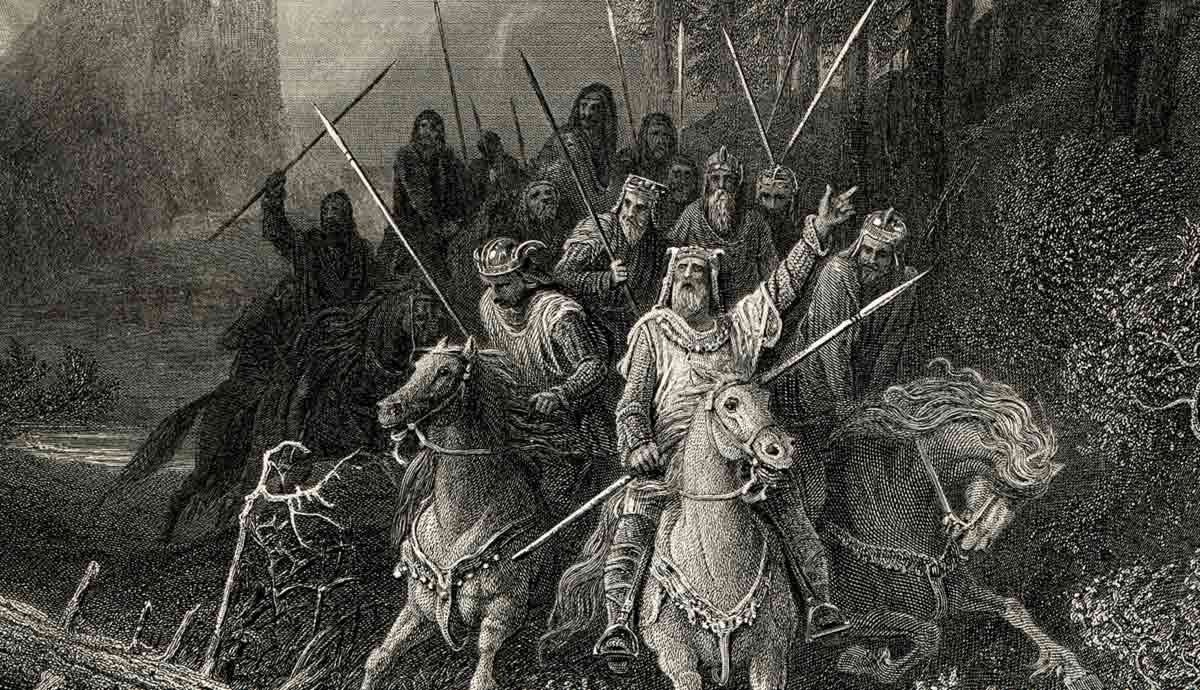
    In the search for the historical King Arthur, historians often attempt to identify the legendary Arthur with a known historical figure. One such theory identifies King Arthur with Artuir mac Aedan, a historical prince of the Irish kingdom of Dal Riada in southwest Scotland. For a variety of reasons, some scholars have argued that he was the historical figure who formed the basis of the legends of King Arthur. But do the facts really support this suggestion?Why Might Artuir mac Aedan Be the Real King Arthur?View of the territory of Dal Riada from Ben Nevis. Source: Copyright Caleb HowellsArtuir mac Aedan was the son of Aedan mac Gabran, a powerful king of Dal Riada. In fact, Dal Riada was one of the most notable and powerful kingdoms in Britain in the 6th century. For this reason, we can reasonably conclude that Artuir mac Aedan was a relatively important prince. We know that he was historical because he is mentioned in the Life of Saint Columba (the Vita Columbae). This was written in about the year 700 by Adomnn, only a few generations after the events it describes.The idea that Artuir mac Aedan was the historical foundation for the legends of King Arthur is based on a few key facts. Firstly, his name is identical to King Arthurs. The form Artuir is simply an Irish form of Arthur, whereas the legends of King Arthur are primarily from Welsh and Latin sources. Secondly, Artuir lived in the 6th century, which is when King Arthur was supposed to have lived.Replica of the Stone of Scone, Scone Palace, Scotland. Source: Aaron Bradley, via FlickrIn addition to those two basic facts, we have also seen that Artuirs dynasty was particularly powerful. This is an important detail because King Arthur was supposed to have been the most prominent king of his time.In addition to those three basic facts about Artuir, several minor details supposedly connect Artuir to King Arthur. For one thing, the legend of the Sword in the Stone is argued to be derived from the accession ceremony of the kings of Dal Riada. This ceremony allegedly involved the use of a sword and a stone. Furthermore, proponents of this theory claim that there is evidence that Artuir had a sister named Morgan, just like King Arthur in the legends.Other even more minor points have been highlighted as supporting evidence for this theory. However, these are the main pieces of evidence used to identify Artuir mac Aedan as King Arthur.Chronological Issues With Artuir mac AedanFolio of the Annales Cambriae recording the Battle of Badon in the right hand column, in Harleian MS 3859, c. 12th century. Source: British LibraryOne crucial problem with this theory is the chronology. One key event involved in dating the Arthurian legends is the Battle of Badon. This was supposedly King Arthurs climactic battle against the Anglo-Saxons.Gildas mentions this battle in his De Excidio, where he refers to it as having occurred 43 years before he was writing. The Annales Cambriae, a 10th-century chronicle, places it in 516 CE. As per Rachel Bromwichs suggested revised chronology for a king known as Maelgwn Gwynedd, to whom Gildas directed some comments, this date might need to be brought forward by several decades. Nevertheless, it is clear that the Battle of Badon was not an event that took place as late as the second half of the 6th century. This is a fatal problem for the theory that Artuir mac Aedan was really King Arthur.Stained glass depiction of Columba, who wrote about King Aedan, from Iona Abbey. Source: Historic Environment ScotlandBased on the evidence from the Vita Columbae and the Irish Chronicles, we have a very good idea of when Artuir mac Aedan lived. According to the Annals of Tigernach, his father was reportedly born in 530 or 531. The Annals of Ulster provide information consistent with this, telling us that Aedan became king in 574.Consequently, Aedan cannot have reasonably fathered Artuir before the year 550. In fact, Artuir could have been born quite a few years later since there is no reason to believe that he was Aedans eldest son. In other words, Artuir mac Aedan was not even born when the Battle of Badon took place. That battle was supposed to have been Arthurs climactic battle against the Saxons after years of war between them. This being so, it is clear that Artuir mac Aedan cannot have been King Arthur. At the very least, he cannot have been the earliest core of the legend.Issues With the Proposed EvidenceStone of Scone. Source: Edinburgh CastleHowever, recognizing this crucial chronological issue, it might be suggested that the legendary King Arthur was actually a composite figure. If we take this view, then we could potentially argue that Artuir mac Aedan contributed to the legends of Arthur, even if he was not the warrior who fought at the Battle of Badon. In support of this is the evidence concerning the Sword in the Stone and the argument that Artuir had a sister named Morgan, just like King Arthur.However, when we examine the supposed evidence in more detail, we see that it does not really stand up to scrutiny. In the case of the Sword in the Stone, the argument is that this is a distorted memory of the accession ceremony of the kings of Dal Riada. The problem is that, despite persistent claims online, there is no evidence that a sword was ever involved in this ceremony. The new king would simply stand or kneel on the Stone of Scone, which would then allegedly emit a shriek. No sword is ever recorded as being involved. Furthermore, there is the simple fact that Artuir never became king of Dal Riada.Martyrology of Oengus, in MS G10, p. 24, c. 16th century. Source: National Library of IrelandWhat about the claim that Artuir had a sister named Morgan, just like King Arthur? The basis for this claim is a document known as the Martyrology of engus, written in the 9th century. This refers to a daughter of Aedan named Muirgein, near enough to Morgan. The problem is that there is no evidence that the Aedan in question was Aedan, the father of Artuir. In fact, there is evidence that actively suggests that it was a different Aedan.The Martyrology of engus gives the birthplace of Muirgein as a certain Belach Gabrain. This is surely the same as a place called Bealach-Gabhran mentioned in the Tripartite Life of St Patrick. That latter document explicitly places this location in Ireland, not Britain. Many modern scholars identify it as the modern-day Gowran Pass.In any case, that same document also mentions a certain Aedan mac Colman in Ireland. It seems far more likely that Aedan, the father of Muirgein, was this Aedan and not Aedan mac Gabrain, the father of Artuir.The Issue of PrestigeAnnals of Ulster, in IE TCD MS 1282, fol. 45v, 16th century. Source: Trinity College DublinThere is one more crucial issue with the identification of Artuir mac Aedan as the real King Arthur or even as a contributor to a composite figure. The evidence suggests that Artuir mac Aedan was not a very important person. While the kingdom of Dal Riada was certainly important, Artuir himself seems to have been a minor and unimportant prince. The basis for this conclusion is the way in which the death of Aedans sons is presented in the Annals of Tigernach and the Annals of Ulster.The Annals of Ulster records the fact that several of Aedans sons died in battle against the Miathi. Notably, Artuir is listed last among his brothers. In the equivalent entry in the Annals of Tigernach, Artuir is missed out entirely. This strongly suggests that Artuir was not a renowned and famous warrior. This severely weakens the suggestion that he had anything to do with contributing to the legends of King Arthur. Certainly, it makes it extremely unlikely that he was the core figure behind the legends.Was Artuir mac Aedan the Real King Arthur?Illustration of Excalibur, by Howard Pyle, 1903. Source: Wikimedia CommonsIn conclusion, the theory that Artuir mac Aedan was the historical figure behind the legendary King Arthur is primarily based on three factors. He had the same name as Arthur, lived at approximately the right time, and came from an important kingdom. However, when we look at the facts more closely, we see that there are some serious issues.The Battle of Badon, which was King Arthurs famous victory against the Saxons, took place somewhere within the first half of the 6th century. However, Artuir mac Aedan was not even born then.Furthermore, while Artuirs kingdom was prominent and powerful, the evidence strongly suggests that Artuir himself was unimportant and forgettable. This makes it highly unlikely that he contributed to the legends about King Arthur.In addition, we have seen that the extra details that supposedly support this identificationnamely, the accession ceremony of the kings of Dal Riada and Artuirs alleged sisterdo not really stand up to scrutiny.The search for the real King Arthur continues.
    0 Commentarii 0 Distribuiri 4 Views
  • 0 Commentarii 0 Distribuiri 5 Views
  • WWW.THECOUNTRYCOOK.NET
    Jalapeo Popper Dip
    ThisJalapeo Popper Dip appetizer is a warm, creamy recipe with a crunchy topping that will be the surprise hit at any party or gathering!A CREAMY AND WARM DIP RECIPEThis easy Jalapeo Popper Dip is one of our favorites. Its the perfect dip to make during the winter months because its a warm and creamy dip. Every time I make this dip, I always come home with an empty dish. It is that good!There are several variations of this recipe online but this is the BEST! Weve made it soooo any times and I have been asked for this recipe pretty much every time I make it. Thank you! LisaTIPS FOR MAKING JALAPEOPOPPER DIP:Dont worry, this dip is not blazing hot. It just has a slight kick. If you want it hotter, you could certainly add in more jalapeos or some cayenne pepper or use pepper jack cheese.Whenever a recipe calls for softened cream cheese, I leave it out on my counter overnight to make the next day. Or if Ive forgotten to leave it out, I cut up the unwrapped cream cheese into small cubes, place on a plate, and leave it out on the counter for about 10 minutes until softened or use the softening option on your microwave oven.Cooked, chopped bacon can be added for even more flavor. I would use about 1/2-1 cup of cooked bacon. If using store-bought bacon pieces, I would only use about 1/2 cup of those. If you dont have Panko bread crumbs, just used crushed Ritz crackers.INGREDIENTS NEEDED: (SEE RECIPE CARD BELOW FOR THE FULL RECIPE)cream cheese see my post on How to Soften Cream Cheese Quicklymayonnaise this might sound strange but it really helps with creaminess and overall scoop ability so dont skip it, you dont taste it as a separate ingredient.Mexican cheese blend feel free to adjust the cheese to your liking. If you prefer more spice, try using a pepper jack cheese.parmesan cheese I used shredded but if all you have is grated (like the stuff in the green bottle), you can used that instead.diced green chiles I am very sensitive to spice and this (to me) is not spicy at all in this dip. It adds a very small little kick but nothing I would call hot.pickled jalapeos they make tamed jalapeos now if you are worried this will be too spicy. It gives you all the flavor of pickled jalapeos without the spice.panko bread crumbs you can use regular breadcrumbs but we like the crunchiness of the panko..salted butterHOW TO MAKEJALAPEOPOPPER DIP:Preheat oven to 375F degrees.Spray a 2-quart casserole dish with nonstick cooking spray.Using an electric mixer (or a food processor), mix together the cream cheese, mayonnaise, Mexican blend cheese, 1/2 cup Parmesan cheese, green chiles andjalapeos. I also throw in a pinch of salt and pepper too. You do not need to drain either can of peppers.Mix until smooth and totally combined.Spread the dip filling into your casserole dish.In a bowl, mix together Panko bread crumbs, 1/2 cup Parmesan cheese and melted butter.I added just a bit of dried parsley into the mix to add some color. This is completely optional.Sprinkle crumb mixture evenly over dip filling.Bake for about 20 minutes (on the middle rack). Do not overcook. Topping should be golden brown and the dip should be gently bubbling around the edges.Serve with your favorite buttery crackers!CRAVING MORE RECIPES?Crock Pot Jalapeno Popper Corn DipJalapeno Popper Egg RollsWarm Bacon Cheddar DipPoolside DipJalapeo Popper BitesJalapeno Popper Chicken SaladJalapeno Popper WontonsBaked Jalapeo Popper PinwheelsThe Best Shrimp DipPepper Jelly Cream CheeseMillion Dollar DipJalapeo Popper PinwheelsJalapeno Popper Butter Swim BiscuitsJalapeo Popper Chicken CasseroleCrock Pot Smoked Queso DipCreamy Taco DipMississippi Sin DipHot French Onion DipOriginally published: December 2013Updated photos & republished: December 2025 PrintJalapeo Popper DipThisJalapeo Popper Dip appetizer is a warm, creamy recipe with a crunchy topping that will be the surprise hit at any party or gathering.Course AppetizerCuisine AmericanPrep Time 10 minutes minutesCook Time 20 minutes minutesTotal Time 30 minutes minutesServings 8Calories 576kcalAuthor Brandie SkibinskiIngredients2 (8 ounce) blocks cream cheese, softened to room temperature1 cup mayonnaise1 cup shredded Mexican Cheese Blend1 cup shredded Parmesan Cheese (divided use, can use grated cheese)4 ounce can chopped green chiles (undrained)4 ounce can chopped pickled jalapeos1 cup Panko bread crumbs cup salted butter (1/2 stick), meltedsalt, pepper, dried parsley (to taste)InstructionsPreheat oven to 375F degrees. Spray a 2-quart casserole dish with nonstick cooking spray.Using an electric mixer (or a food processor), mix together 2 (8 ounce) blocks cream cheese, softened to room temperature, 1 cup mayonnaise, 1 cup shredded Mexican Cheese Blend, cup shredded Parmesan cheese, 4 ounce can chopped green chiles and 4 ounce can chopped pickled jalapeos. Add a pinch of salt and pepper. Spread the dip filling into your casserole dish. In a bowl, mix together 1 cup Panko bread crumbs, 1/2 cup shredded Parmesan cheese and 1/4 cup salted butter (1/2 stick), melted (and a bit of dried parsley, optional). Sprinkle crumb mixture evenly over dip filling. Bake for about 20 minutes (on the middle rack). Topping should be golden brown and the dip should be gently bubbling around the edges. Serve with your favorite buttery crackers or tortilla chips. VideoNotesYou can add about 1/2-1 cup of cooked and crumbled bacon if you prefer this with bacon.See my notes and ingredient list in the above post for more tips.NutritionCalories: 576kcal | Carbohydrates: 10g | Protein: 13g | Fat: 54g | Sodium: 1047mg | Fiber: 1g | Sugar: 3g
    0 Commentarii 0 Distribuiri 4 Views
  • WWW.BGR.COM
    The 5 Best Apple Watch Face Apps You Need To Try
    Looking to customize your Apple Watch? Discover the 5 best Apple Watch face apps of 2025 that let you design, download, and personalize your screen today.
    0 Commentarii 0 Distribuiri 4 Views
  • TECHCRUNCH.COM
    Waymo explains why its robotaxis got stuck during the SF blackout
    The company also said its robotaxis navigated more than 7,000 dark stoplights successfully on Saturday.
    0 Commentarii 0 Distribuiri 4 Views
  • TECHCRUNCH.COM
    Waymo is testing Gemini as an in-car AI assistant in its robotaxis
    Waymo is testing a Gemini-powered in-car AI assistant, per findings from a 1,200-line system prompt. The assistant can answer general knowledge questions, control certain in-cabin features, and more.
    0 Commentarii 0 Distribuiri 4 Views
  • TECHCRUNCH.COM
    Can AI fix the operating room? This startup thinks so
    Theres plenty of hype around AI and robots in healthcare, but the problem thats actually costing hospitals money right now is operating room coordination.Two to four hours of OR time is lost every single day, not because of the surgeries themselves, but because of everything inbetween frommanual scheduling and coordination chaos to guesswork about room []
    0 Commentarii 0 Distribuiri 4 Views