Why Did China and Japan Clash in the First Sino-Japanese War?
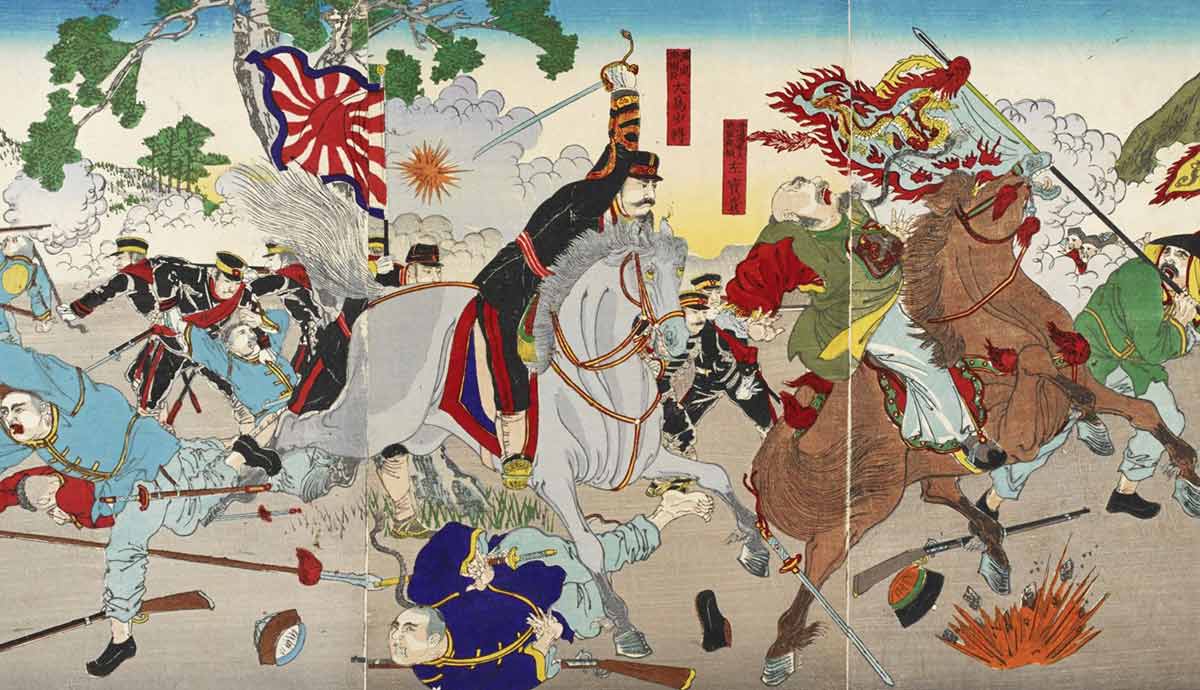
Towards the end of the 19th century, Qing Dynasty China and Meiji Era Japan were involved in a long-standing regional dispute that devolved into an armed conflict known as the First Sino-Japanese War. The war began over a debate as to which nations should be allowed to exert control over the strategically important peninsula of Korea. The conflict ended with an outcome that permanently changed the geopolitics of the region. The war not only signaled the rise of Japan but also heralded the decline of Chinas influence over East Asia.The Historical Context That Preceded the First Sino-Japanese WarThe new Japanese constitution is read out by the emperor of Japan. Source: The Graphic / Wikimedia CommonsThe late 19th century was a period of significant change in East Asian geopolitics that saw regional power structures shift and old orders collapse. The Qing Dynastywhich had ruled China for over two hundred yearsfaced a series of internal and external struggles that weakened its hold over the region. The most significant of these were the Taiping Rebellion, a civil war that devastated Chinas internal stability, and the Opium Wars, a series of conflicts that left Chinas economy severely weakened.As Chinas influence began to wane, Japan was rapidly transformed into a modern nation by the administration that came to power with the restoration of the Meiji Emperor in 1868. After generations of isolationist rule under the Tokugawa Shogunate, the new Meiji government sought to pursue aggressive policies of modernization, industrialization, and expansionism. Notably, the Meiji Emperor looked to European nations such as Britain, France, and Germany, and sought to emulate their success with a policy of colonial expansionism. To realize these ambitions, the Meiji-era government invested heavily in modernizing the Japanese military and soon built up a force that could rival the nations of East Asia.Standing between the waning power of China and the expansionist policies of Japan was the peninsula of Korea. The nation had long been a tributary state of China and was a key source of wealth for the Qing Dynasty. However, for Japan, the area held vital strategic importance. Control over Korea not only brought economic benefits but also provided Japan with an important buffer zone that would help the nation defend itself against other regional powers.The Scramble to Control the Korean PeninsulaCaricature about the dispute between China, Japan, and Russia over Korea. Source: The Tobae / Wikimedia CommonsWhile Korea was historically known as the Hermit Kingdom due to its isolationism, it was still a major part of Chinas tributary system. This system allowed China to exert a level of soft power over its regional neighbors by providing military and diplomatic assistance in return for a regular monetary tribute. There were various levels of autonomy under this system, in which Korea maintained almost total control over its domestic affairs. Nevertheless, Koreas participation in this system of tribute guaranteed China a favorable trading and diplomatic relationship with the peninsula.For Japan, this system presented an inherent barrier to the Meiji governments ambitions of expansionism and military dominance. If Japan were to end this system and exert control over Korea, it would be able to take advantage of the areas rich agricultural resources while developing its own soft power system. Geographically, Korea was an ideal place for Japan to exercise its colonial ambitions as the peninsula lay just a few kilometers from Japan and provided a natural land barrier between its biggest rivals in East Asia.For China, Korea remained a vital asset during a time of internal and external conflict that had weakened the nations economic and regional influence. Therefore, any attempt by Japan to exert dominance over the area would be met with the strongest possible reaction. With the stage set for a showdown on the peninsula, Japan sought to take advantage of any possible opportunity to fulfill its own goals. Such an opportunity soon came when the Donghak Rebellion plunged Korea into chaos.The Donghak Rebellion: China Steps InPicture depicting peasants gathered at Malmok marketplace as they ready to revolt. Source: Wikimedia CommonsAfter almost half a century of internal strife, the Donghak peasant rebellion and subsequent military intervention by China was a catalyst for the First Sino-Japanese War. The rebellion was a broad movement of farmers and devout Buddhists that had begun in the 1860s as an anti-Western coalition that rejected modernism and embraced Confucianism and traditional aspects of Koreas shamanistic religion.The Donghak movement became a full-scale rebellion in 1894 when a large group of peasant farmers rebelled against local authorities in response to high taxes and government corruption. The uprising soon threatened to plunge the Korean peninsula into a full-scale peasant revolt. In response, the beleaguered Korean authorities petitioned China for military aid in order to assist their domestic troops in suppressing the revolt. The forces of the Qing Dynasty responded by sending two thousand seven-hundred troops to the region to bolster Korean forces.While Japan was informed of Chinas actions beforehand in accordance with the 1885 Treaty of Tientsin, the Meiji government interpreted Chinas intervention as a ploy to exert its own influence over Korea, and soon Tokyo dispatched its own troops. These forces set up defensive positions within Seoul under the pretense that they were protecting the lives of Japanese citizens from the threat of peasant violence. However, Japans true intentions soon became clear. Japanese troops swiftly took control of the royal palace in Seoul and demanded that the government of Korea under King Gojong adopt new domestic reforms that would benefit the Meiji Emperor.How Diplomacy Failed to Prevent the First Sino-Japanese WarA woodblock print depicting the Battle of Phungdo, 1894. Source: Kobayashi Kiyochika / Wikimedia CommonsBefore the Sino-Japanese War began, both sides attempted to find a diplomatic solution to end the crisis. The diplomatic efforts began in May 1894 when the Qing Dynasty and representatives of the Meiji Emperor began negotiations to disengage their respective troops from Korea. However, despite publicly declaring their willingness to negotiate, both countries were secretly preparing to engage in a full-scale conflict while these discussions took place. Nevertheless, Japanese diplomats proposed to the Qing Dynasty that a joint commission be created to reform the Korean peninsula and its relations with nations other than China. This proposal was dismissed by China, who saw it as an attempt by Japan to undermine its influence in East Asia.The diplomatic path to avoiding war was blocked irrevocably in the summer of 1894 by the drastic actions of Japanese troops who took control of the Korean royal palace and held King Gojong hostage. After this step, Japan sought to use its military to force the Korean government to enact a series of reforms that would benefit Tokyo. However, such a brazen act angered the Qing Dynasty, and war was officially declared on August 1st, 1894, marking the start of the Sino-Japanese War.Key Battles of the First Sino-Japanese WarSoldiers of the Imperial Japanese Army, 1894. Source: Wikimedia CommonsThe First Sino-Japanese War unfolded over a series of significant battles and decisive victories that swiftly showed the world just how quickly Meiji-era Japan had modernized its military. When facing Japanese troops, Chinese forces were shown to be ill-equipped and poorly trained. As a result, the Qing Dynasty suffered crushing defeats at the hands of Tokyos better-equipped soldiers.The first decisive battle of the war took place at Pungdo on July 25, 1894. During this battle, Japans naval forces roundly defeated the Chinese navy in a victory that allowed Japan unfettered access to the Bay of Asan, where it was able to land more troops in Korea and control vital trade routes in the Yellow Sea. Another decisive blow was dealt to Chinas Navy at the Battle of the Yalu River on September 17th. During the battle, Japans modern warships outmaneuvered and outgunned the Chinese Navy and effectively destroyed Chinas Beiyang fleet.The defeat left the Qing Dynasty vulnerable to attack along much of its coastline, allowing Japan to continue its conquest across much of the Korean peninsula. Further Japanese victories came in September when it defeated Chinese forces and took control of the city of Pyongyang. Following this victory, Tokyos forces began to advance into the territory of Manchuria, and in early 1895, Japanese forces captured the fortress city of Weihaiwei from the Chinese. With the Japanese encroaching upon the territory of mainland China, the Qing Dynasty made the radical decision to sue for peace in order to bring the devastating conflict to an end.Public Opinion During the First Sino-Japanese WarThe Battle of Pyongyang, 1894. Source: The British Library / Wikimedia CommonsPublic sentiment towards the Sino-Japanese War couldnt have been more different in Japan and China. In Meiji-Era Tokyo, there was widespread support for the war, which was further amplified by a growing nationalist sentiment in the country. The Japanese national press and government propaganda spread the narrative that the war was needed to fulfill Japans expansionist destinya goal that many believed justified the use of any means necessary, including military conflict.In contrast to Japans public support for the war, the national sentiment in China was deeply divided. While many in China saw the war as necessary to maintain regional interests in East Asia, a great deal of national sentiment opposed the conflict. For many in China, the ambitions of the Qing Dynasty to maintain control over Korea were opposed to unfolding internal tensions that remained unaddressed. In brief, the Sino-Japanese War came at a time when Japan was united behind the goal of expansionism, and China was divided over its future.The Reaction of the International CommunityCartoon depicting Western powers trying to divide their interests and influence in China after the First Sino-Japanese War, by Henri Meyer, 1898. Source: Wikimedia CommonsThe success of the Japanese military during the First Sino-Japanese War alarmed international observers who were taken by surprise at the rapid modernization of Japan under the Meiji Emperor. The Russian Empire was particularly alarmed by Japans expansion into East Asia as it maintained its own influence in the region of Manchuria and Korea, areas that were now largely controlled by the Japanese military. This regional encroachment by Japan into Russias sphere of influence eventually led to the Russo-Japanese War (1904-1905), a conflict that would have devastating consequences for the world.While the conflict demonstrated Japans newfound military strength to the world, the outcome for China was devastating. The defeat of the Qing Dynasty signaled to Western powers that the once mighty Chinese Empire had begun to collapse. As a result, European nations began to encroach on Chinas sovereignty and eroded its regional power through a series of unequal treaties that demanded unrealistic concessions from Beijing. Moreover, Chinas defeat proved to be a catalyst for internal tensions that culminated in the 1911 revolution, which overthrew the Qing Dynasty and transformed the country into a republic.The Treaty of ShimonosekiPeace Conference at Shimonoseki, 1929, by Nagatochi Hideta. Source: Wikimedia CommonsThe First Sino-Japanese War was officially brought to a close on April 17, 1895, with the signing of the Treaty of Shimonoseki. The terms of this treaty overwhelmingly favored Japan and brought about a significant shift in the power dynamics of East Asia. The treaty forced China to end its tributary relationship with Korea and recognize the peninsula as a fully independent nation. This not only reduced Chinese influence in the region but also paved the way for Japan to establish a foothold and exploit the rich resources of the area.Moreover, China agreed to cede the territories of Taiwan, the Liaodong Peninsula, and the Pescadores Islands to Japan. While Tokyo was eventually forced to return control of Liaodong to China after the Triple Intervention of France, Russia, and Germany, it still maintained significant control of the region. The Treaty of Shimonoseki was also highly beneficial to the Japanese economy because the terms agreed by both nations stipulated that in return for peace, China would allow Japanese traders to operate in the ports of Shashi, Chongqing, and Suzhou.While the Treaty of Shimonoseki did bring the First Sino-Japanese War to an end, it created an entirely new set of grievances and territorial disputes between Japan and China that paved the way for a much larger conflict. Moreover, Japans rapid success during the war further bolstered the nationalist and expansionist ambitions of the hardline factions within the Japanese militaryaspirations that would have devastating consequences for the world.












 English
 Arabic
 French
 Spanish
 Portuguese
 Deutsch
 Turkish
 Dutch
Dutch
 Italiano
 Russian
 Romaian
 Portuguese (Brazil)