• WWW.LIVESCIENCE.COM
    Snakes' mind-bending 'heat vision' inspires scientists to build a 4K imaging system that could one day fit into your smartphone
    The human eye can only detect wavelengths in the visible light range, but a new imaging system will let us "see" infrared radiation using smartphones.
    0 Yorumlar 0 hisse senetleri 34 Views
  • 0 Yorumlar 0 hisse senetleri 35 Views
  • 0 Yorumlar 0 hisse senetleri 35 Views
  • WWW.THECOLLECTOR.COM
    8 Famous Populist Movements From Antiquity to the 19th Century
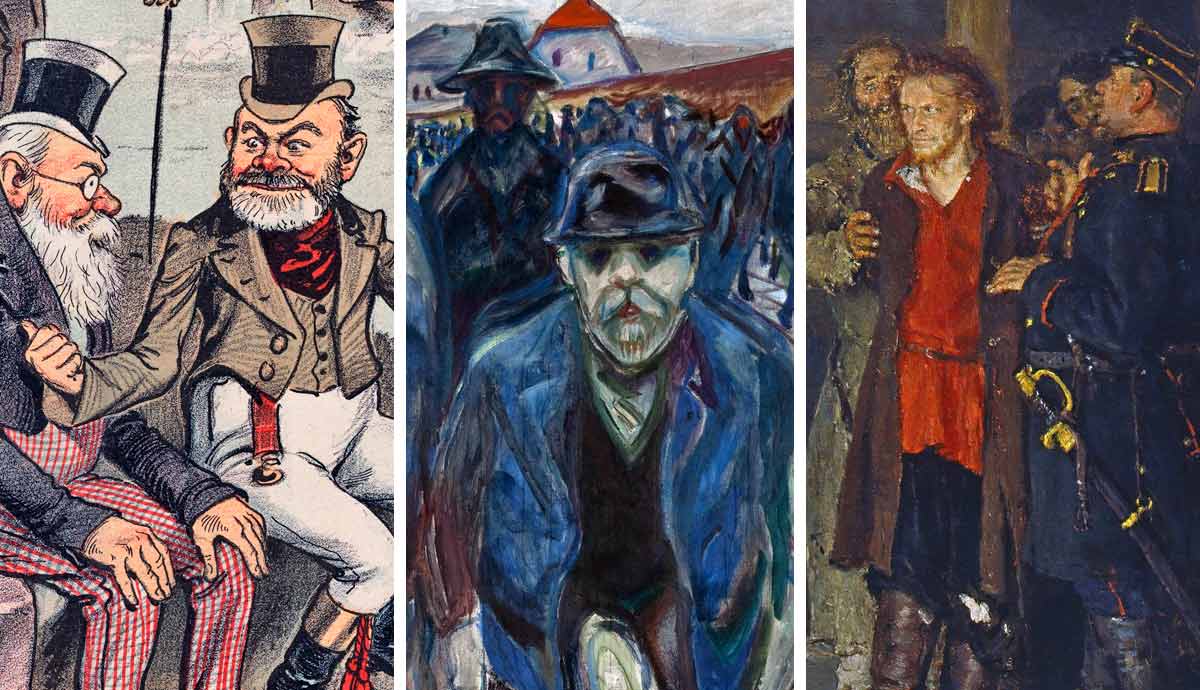
    In the current political climate, populism is often mentioned in a derogatory way, usually regarding right-wing movements. However, populism can be found both on the right and left sides of the political spectrum. The core of populism is the people versus the elite narrative. Throughout history, it has not been uncommon for politicians and political leaders to use populist strategies to gain votes or power.1. Gracchi Reforms: A Populist Movement in Ancient RomeThe Gracchi, by Jean-Baptiste Claude Eugene Guillaume, 1822-1905. Source: Wikimedia CommonsIn the late Roman Republic, populist ideas began to appear with the Gracchi Reforms. The reforms originated from the work of Tiberius Sempronius Gracchus (163-133 BCE) and his brother Gaius Sempronius Gracchus (154-121 BCE) in the 2nd century BCE.As a tribune of the plebeians, Tiberius worked to safeguard common people and seek societal improvements. The Senate soon grew concerned after seeing how many people backed his cause. A violent crowd opposed the change, and the elite murdered both him and his supporters.His brother followed the same path to tribune status but shared his unfortunate demise, too. The senatorial officials planned and executed the deaths of Gaius and his supporters when they sought social and economic equality.The death of the Gracchi brothers was a pivotal moment in ancient Roman political history because they displayed escalating conflict between upper-class rulers and the plebeians. The Senate demonstrated its refusal to surrender power by violently suppressing reforms and intensifying social conflicts. The next few decades brought additional populist leaders who destabilized the Roman Republic before it transformed into an empire.2. Hussite MovementJan Hus at the Council of Constance, by Karl Friedrich Lessing, 1842. Source: Wikimedia Commons / Stdel Museum, Frankfurt, GermanyIn medieval Bohemia, a populist movement that shaped the modern Czech Republic took form in the 15th century. The movement named itself after its leader, Jan Hus.Jan Hus studied theology and became aware of the Catholic Churchs issues early in his career. He demanded reforms and taught people to focus on God and the Bible instead of the Churchs authority. Hus believed that teaching the Holy Word in Czech would help ordinary people understand it better while also supporting financial reforms for society. Today, scholars identify Hus as the first pioneer who led the way for the Protestant Reformation. Indeed, his teachings gained increasing support from followers who joined his movement.The authorities arrested Hus and put him in prison before burning him alive for heresy in 1415. Huss followers, known as Hussites, became upset when he died, so they chose to act alone. Their long struggle, coupled with armed resistance, eventually led the Hussites to victory over the authorities who allowed them to worship in the Czech language, giving people stronger Czech national feelings.The Hussite Wars (1419-1434) transformed Bohemian society while opposing the Catholic Churchs power after Hus was executed. Internal Hussite disagreements did not prevent the movement from developing new military tactics, which helped it resist multiple crusades against it. Their actions established the basis for Czech nationalism and religious transformation throughout European territories.3. The LevellersOliver Cromwell, by Samuel Cooper, based on a work from 1656. Source: Wikimedia Commons / National Portrait Gallery, LondonIn early modern England, a political movement developed that displayed clear populist features. The members of this movement, named Levellers, promoted an equal society and called for freedom of religion for all. During the English Civil Wars of 1642-1651, the Levellers appeared to protect common peoples rights and supported the parliament against the king but lost support when the Republic emerged.The Commonwealth government used force to silence the Levellers, putting them in prison and killing them. Their legacy, however, endured. Indeed, the Levellers were rather active in writing and authoring many texts concerning the improvement of society and elaborating the foundations of democracy. They also fought for social and economic justice before the Enlightenment Era, which made them pioneers in Western Europe.Although the Levellers did not achieve their original objectives, their concepts spread into subsequent British democratic movements and beyond. Their writings predicted democratic concepts that later formed the foundations of contemporary democratic systems. Their vision helped drive the wider movement for constitutional rights, motivating future generations to fight for political and social changes.4. The Jacobin MovementPortrait of James Francis Edward Stuart, by Alexis Simon Belle, circa 1712. Source: Wikimedia Commons / National Portrait Gallery, LondonThe French Revolution (1789-1799) was probably one of the most consequential moments in modern European history. Its influence also reached the rest of the world. Toward the end of the 18th century, the population sought to replace their restrictive government with a fair system that would give people decent lives. The revolution could not happen by itself; it gained traction because of revolutionary movements like the one led by the Jacobins.The Jacobins were one of the leading and most radical political groups during the revolution. In 18th-century France, the Enlightenment Era was led by prolific thinkers and authors who debated and shared their philosophical and political ideologies. A group of men who shared their ideals, spirit, and urge to change the status quo decided to form a group, the Jacobin Club.The clubs members started developing revolutionary ideas and programs based on Enlightenment ideals, asking for democratic institutions and the end of the aristocracys rule. After the fall of the monarchy in 1792, they gained more recognition and power; however, that didnt last long. The movement had inner conflicts, and because of those differences, the Jacobin Club ceased to exist in 1794.The Jacobins collapse did not erase their permanent effects on French political development. They shaped the direction of the revolution and republican evolution. Despite their breakup, the Jacobins political ideals motivated future political ideas in France and other countries.5. ChartismWorkers on their Way Home, Edvard Munch, from 1913 until 1914. Source: Wikimedia Commons / Munch Museum, OsloChartism, a British working-class movement, emerged in the 19th century. It advocated political changes, better worker rights, and improved working conditions for everyone. Chartism became a leading popular movement that championed fair treatment and economic fairness for working-class people.The movements title came from the Peoples Charter, which presented specific worker demands. The early phase of their efforts gained substantial popularity and support across society. However, government crackdowns and internal disputes caused the movements decline during the mid-19th century. Although the movement might have ended, the working class gained voting rights through new laws in 1867 and 1884.The principles of Chartism shaped various British labor movements and social reform efforts that followed. The demands of Chartism finally transformed into legislation during the subsequent decades following its initial movement in 1838. Chartism created a vital historical record establishing its importance in democratic development and worker rights protection.6. Narodniki: A Russian Populist MovementArrest of a Propagandist, by Ilya Repin, 1880-1889, 1892. Source: Wikimedia Commons / Tretyakov Gallery, MoscowBefore the Bolshevik revolution in Russia, there was a populist movement that called for reforms and a better and more equal society. It was the Narodnik Movement, a movement of emancipated people asking for equality and political rights.Narod in Russian means people, and that is what this movement represented: people fed up with the oppressive regime of Tzarist Russia. The movement received widespread support from the everyday Russian people. It was one of the first in Russia, laying the groundwork for much bigger movements and revolutions.Although the movements supporters did not achieve their goals, they managed to awaken the people and, most importantly, their dissatisfaction and rage. The Narodniks served as intellectual forefathers to both the socialist revolutionaries and the Bolsheviks. Their movement aimed to rally peasants against autocratic rule, which became fundamental to future revolutionary ideologies. The Narodniks unsuccessful attempts to create change contributed to the establishment of revolutionary movements that eventually dismantled the tsarist government.7. Populist Movement in AustraliaMembers of the Anderson Dawsons ministry leaving Government House after the swearing-in ceremony in Queensland. In 1899, Andre Dawson led the first Labor Party government in Australia. Photograph from The Queenslander, December 9, 1899. Source: Wikimedia CommonsThe most powerful populist movement in Australian history occurred towards the end of the 1800s. The movement emerged during harsh times when workers and farmers faced high unemployment, economic instability, and critical social and economic conditions.It all started with strikes and workers dissatisfaction. Farmers and workers began forming unions, which became essential to the movement. Unions fought for better working conditions and organized people to fight for their rights.Good organization among different unions led to the formation of the Australian Labor Party, which fought for better working policies and conditions. The party ultimately gained a lot of support in Australia and became one of the most important political parties in the country.8. Agrarian Populism in the USA political parallel Statement of responsibility, by Opper Frederick Burr, 04-16-1884. Source: Wikimedia Commons / Boston Public LibraryAt the turn of the 19th century, US farmers and agricultural workers developed a powerful political and labor movement. They banded together to fight against their unfavorable positions and harsh workplace conditions. They wanted political and financial improvements, so they started the Peoples Party, which became known as the Populist Party.The party focused on bringing all farming workers together to achieve the desired improvements. Following its union with the Democrats in 1896, the Populist Party influenced the Democratic Partys platforms through its original ideas.Although the Populist Party no longer exists as an official organization, its principles remain embedded within Democratic Party policies, which defend workers interests and support labor unions.Populism and its features can be found in every part of the world throughout history. The various populist movements mentioned in this article undeniably shaped the countries in which they developed and shaped the course of political history.
    0 Yorumlar 0 hisse senetleri 28 Views
  • WWW.THECOLLECTOR.COM
    How the United States Artillery Decided Wars and Earned the Nickname King of the Battle
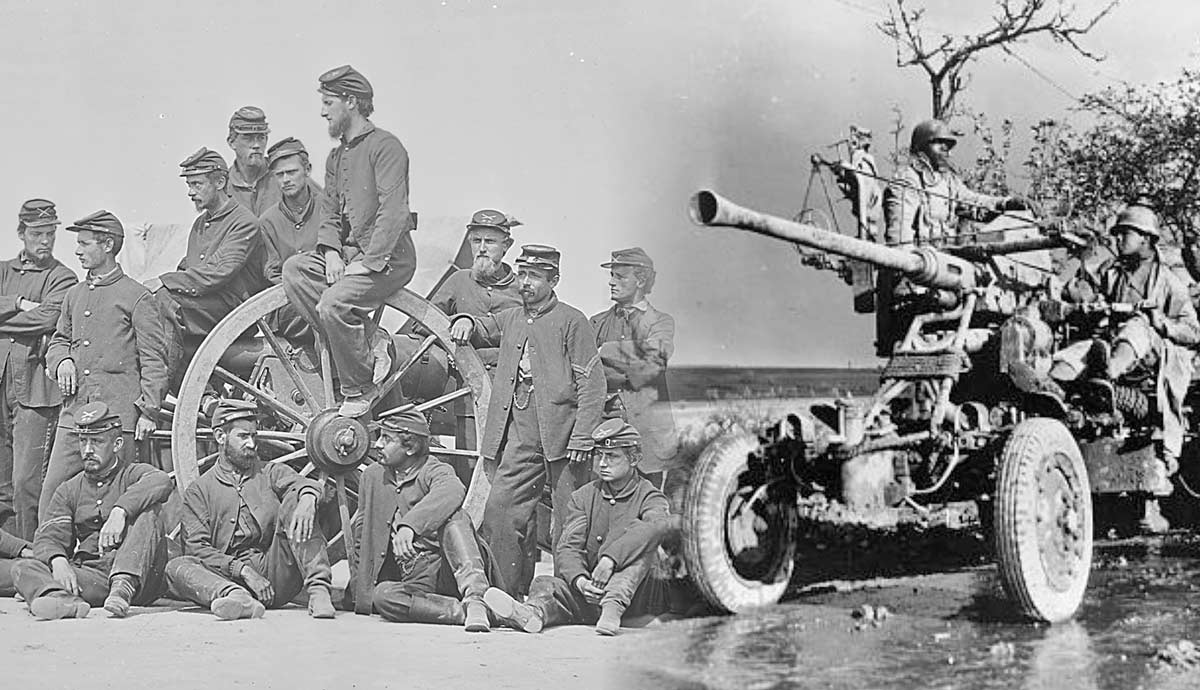
    The history of the United States artillery dates from the nations founding. Playing a pivotal role in the American Revolutionary War due to figures like Henry Knox and Alexander Hamilton, artillery has played a major contribution for the United States military success over the years. Although the artillery arm is aptly named the King of Battle, indirect fire was not always an easy tactic to deploy and use, but technological advances over the years have made artillery more precise and deadly than ever before.The American Revolutionary WarHenry Knox, major general of the artillery in the American Army, John Norman, 1782. Source: Library of CongressArtillery pieces in the American Revolution, then known as bombards, were hindered by many limitations. Indeed, artillery during the American Revolutionary War was considered a direct fire asset as gun crews had to observe their targets first-hand. In the 18th century, deploying artillery was much like a chess match: emplacing heavy cannons dragged by horses and gun crews took ample time, requiring deliberate strategy on where, when, and how to deploy guns.Major considerations included timing advances or retreats alongside infantry lines and deciding what enemy units to target. If gunners targeted their British artillery counterparts, each unit risked being destroyed and allowing enemy infantry to gain precious ground. If infantry lines were targeted, however, artillery crews were vulnerable to counterfire from enemy batteries. Artillery units which chose poorly were commonly overrun by cavalry and risked having their guns being turned against their own men. As such, George Washingtons Continental Army required purposeful synchronization between battlefield commanders to maximize the effects of the wars most powerful assets.Artillery played a crucial role in the American Revolution. When Washington was besieging Boston during the winter of 1775-76, Colonel Henry Knox and his men hauled an artillery train 300 miles from Fort Ticonderoga in upstate New York to Boston, where their arrival forced the British evacuation. On Christmas night, 1776, Knox brought his guns across the icy Delaware River to attack a Hessian outpost at Trenton on Christmas night, earning promotion to general and overall artillery commander. American artillery also played a major role at the ensuing Battle of Princeton, as well as at the decisive Siege of Yorktown in 1781.War of 1812The bombardment of Fort McHenry, 1814. Source: Smithsonian InstitutionDuring the War of 1812, artillery was employed in a similar fashion to the American Revolutionary War with two major innovations. The first introduced shrapnel as a complementary blast effect in addition to traditional black powder explosions. Named after British surgeon Henry Shrapnel, this evolution caused devastating effects to human targets by spreading hot metal upon impact. The second advancement, rocket-based artillery, allowed faster rates of fire and easier maneuverability. Early rockets were notoriously inaccurate, but their psychological impact is undeniable. Rockets were frequently employed during the War of 1812, notably observed by Francis Scott Key at the Battle of Fort McHenry in 1814. Observing the rockets red glare, Keys poetry captured the essence of the eras advancements in artillery technology in what became the United States national anthem.Artillery proved crucial as both an offensive and defensive weapon during the war. Future president General William Henry Harrison, for example, exploited artillery against British and Native American troops to defend a vulnerable outpost, causing the enemy to retreat. The Battle of Plattsburgh similarly witnessed artillery fire on both land and sea, leading to an American victory and an end to fighting in the northern United States. Although America and Britain signed a treaty to end hostilities in December 1814, the news did not reach New Orleans beforeGeneral Andrew Jackson employed his guns to decisive effect against a superior British force in January 1815.The Civil WarKeystone Battery of Pennsylvania, 1861-1865. Source: Library of CongressThe American Civil War saw major advancements in field artillery technology and tactics. Most importantly, by the 19th century, cannons were rifled, meaning their barrels had metal grooves to spin the projectiles and ensure a more accurate trajectory. This innovation allowed gun crews on both sides to provide artillery fire with greater accuracy from farther distances, leading to their modern deployment as indirect fire assets.While modern artillery is guided by state-of-the-art targeting equipment, forward observers, and even unmanned aerial surveillance platforms, Civil War bombardment observation was carried out from hot air balloons, which had first been employed for such a purpose during the French Revolutionary Wars. Artillery spotters flying hundreds of feet over the battlefield communicated with artillery batteries using unique flag signal combinations, allowing gunners to target enemy formations without direct line of sight. These new capabilities encouraged the greater use of artillery during the Civil War.The Unions victory over the Confederacy was largely fueled by an unassailable advantage in the manufacture of artillery pieces. The most significant deployment of artillery during the Civil War occurred on the final day of the Battle of Gettysburg. As Confederate General Picketts infamous charge led thousands of infantrymen towards Union soldiers on Cemetery Ridge, General Meade ordered a 90-minute artillery barrage, overwhelming the enemys assault. Artillery continued to play a pivotal role in holding off waves of incoming rebel cavalry during the Battle of Palmito Ranch, the final engagement of the war before General Lees surrender at Appomattox Courthouse.World War IAmerican 155mm artillery in France, 1917-1918. Source: Library of CongressThe nature of trench warfare in World War I compelled artillery units to adopt modern techniques and strategies. Creeping fire, for instance, was introduced to guide infantry across no-mans land by maintaining a constant wall of fire just ahead of advancing friendly troops, and the tactic is still used in battle today. American commanders used telephone communication in addition to traditional target identification techniques such as aerial reconnaissance and signal flag communication. By waging artillery warfare without direct sight of the enemy, World War I was the first widespread conflict that required the integration and coordination of artillery, intelligence, infantry, communications, and aviation assets.Having entered the First World War in its latter stages, the United States achieved immediate successes through skilful artillery deployment. During the first major American offensive at Cantigny in May 1918, American troops captured crucial terrain from the Germans through indirect fire support. On its first independent operation, the US Army employed howitzer teams to help their infantry counterparts break through enemy lines with a constant barrage. This dedicated support was paramount in countering other technological advancements of the conflict including chemical weapons, tanks, and modern machine guns. From the Second Battle of the Marne to the final Allied operation, the Meuse-Argonne Offensive, the King of Battle proved paramount to the US Armys ability to conduct combined operations with its allies, and some of the artillery innovations from the era remain part of modern doctrine today.World War IIAmerican artillery troops in Belgium, 1944. Source: Library of CongressIn the two decades following World War I, the United States advanced the capabilities of its artillery by developing howitzers that could shoot further, more accurately, and with different types of munitions for particular targets. One of the most important innovations was the use of self-propelled cannons. Limbered artillery inherently represents an enticing target for the enemy, and the towed artillery of previous conflicts was difficult to maneuver and deploy to support troops in combat and withdraw from action to avoid counterfire. Although not among the common weapons of choice during World War II, American assets including the M7 Priest laid the foundation of modern self-propelled artillery that combined speed and maneuverability with firepower.On the European front, it is difficult to identify a battle involving US forces where artillery did not play a vital role in achieving victory. From the Allied invasion of Europe on D-Day to the Battle of the Bulge, defeating the Germans was only possible through operations combining artillery and aerial bombardment with infantry assaults on the ground. Artillery additionally led to Americas earliest World War II successes in North Africa including at the Battle of Kasserine Pass. The situation in the Pacific, however, was different altogether. While naval gunfire and mortars proved vital in defeating the Japanese in island warfare, landing heavy field artillery pieces was logistically challenging. Despite this fact, earlier advancements in field artillery, including the development of armor-piercing munitions and streamlined targeting procedures, enabled limited use of artillery in the Pacific.Photograph of President Harry Truman. Source: Smithsonian InstitutionUltimately, the decision to drop atomic bombs against Hiroshima and Nagasaki to prevent further bloodshed was made by President Harry Truman. Truman, a former WWI artillery officer, understood the horrors of what warfare does to soldiers on both sides. While Trumans decision remains controversial, there is no denying the effect of American artillery on the nations history. As the decades passed, American howitzers and rockets continued to see action all over the world. Namely, their persistent use in Korea, Vietnam, and during the Global War on Terrorism proves their timeless utility.By liberating the nation from British colonial rule, helping the Union defeat slavery, and supporting the Allied victory over Nazism, US artillery holds a significant place in Americas fights for justice. Just as it has done so throughout its history, modern US artillery continues to develop new technology and tactics to adapt to the constant evolution of warfare.

    0 Yorumlar 0 hisse senetleri 28 Views
  • WWW.DUALSHOCKERS.COM
    DualShockers 2025 Game of the Year Awards: Best Indie Games
    2025 could easily be described as the Year of the Indies, with GOTY categories featuring titles made by companies outside the big publishers.
    0 Yorumlar 0 hisse senetleri 35 Views
  • WWW.DUALSHOCKERS.COM
    All Azure Flamestone Locations in Octopath Traveler 0
    One of the biggest parts of the story of Octopath Traveler 0 involves you rebuilding your hometown of Wishvale. During this questline, you will ultimately recreate many of the structures that you see during the opening sequence to the game.
    0 Yorumlar 0 hisse senetleri 35 Views
  • WWW.DUALSHOCKERS.COM
    Hyrule Warriors: Age of Imprisonment Is The End Of The Breath Of The Wild Era
    As the sand in the proverbial hourglass begins to run out for the Breath of the Wild era, The Legend of Zelda is poised to make a big leap in the next few years. Before we know it, a new mainline Zelda entry to become obsessed with will be announced.
    0 Yorumlar 0 hisse senetleri 35 Views
  • WWW.BGR.COM
    Tesla's Newest Release Isn't An Electric Vehicle (It's Worse)
    Tesla says it took months of collaboration, and lots of research and development to come up with the unique paddle. Also, it comes with a nice carrying bag.
    0 Yorumlar 0 hisse senetleri 28 Views
  • 0 Yorumlar 0 hisse senetleri 28 Views