• 0 Comments 0 Shares 18 Views
  • WWW.THECOLLECTOR.COM
    The Rise and Fall of Victorian Pleasure Gardens
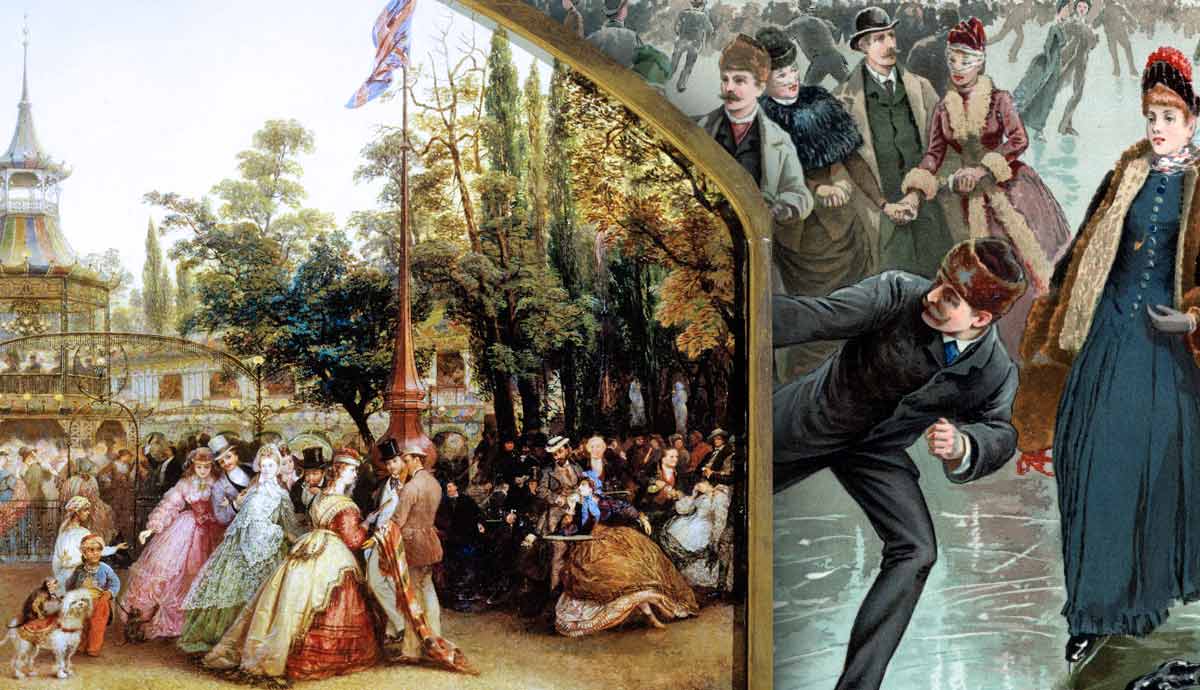
    From the baths of ancient Rome to modern-day recreation centers and parks, people have always loved a good outing. In 18th- and 19th-century London, and especially for the Victorians, this often included pleasure gardensoutdoor spaces that served as venues for concerts, zoos, and other entertainment.Life in the Victorian EraGin Lane by William Hogarth, 1751. Source: Metropolitan Museum of Art, New YorkCharles Dickens famous portrayals of life in Victorian England as rough, dirty, and usually impoverished were typically spot onthe average lifespan was only 42 years. Unless one were fortunate enough to be born into a middle- or upper-class family, such as that of a doctor or wealthy business owner, most individuals ended up as factory workers or, if they were women, as domestic servants.Both of these roles exploded in popularity around the Victorian era as a result of the rising middle class. Also referred to as the bourgeoisie, a term coined by contemporary thinker and economist Karl Marx, this new-money class emerged as a result of a strong currency and cheap labor. With most of Britains population moving to big cities, fine goods such as silverware, jewelry, and glass became more accessible than ever. The luxuries of the rich were not exclusive to the aristocracy anymore, and the Victorian era was arguably one of the golden ages of the middle class. However, as demand for goods and services rose, so did that for laborers.Unlike their middle- and upper-class counterparts, working- and lower-class Victorians did not have access to luxuries. Poverty and mistreatment were rampant, and the crime rate was extremely high. Pressure from long hours and terrible living conditions drove many to drink excessively or use drugs, and the cities were dirty, often dangerous places.Thanks to the growing population and the rapid industrialization of England, the countryside began being developed to accompany factories, housing, and urbanization. This left a lot of peopleespecially upper-class and aristocratic individualslonging for a simple, picturesque country life. A harsh city life meant that many were eager to find escape through recreation such as sports, crafts, and travel.Outdoor Recreation in Victorian EnglandSkating, Henry Sandham, 1885. Source: Library of CongressThe Victorians were active people. Because passive entertainment such as radio or television shows had not yet been invented, sports in almost all forms were the pastimes of choice for many Victorian men. Bear baiting and cockfighting, two popular blood sports, were banned under Queen Victoria, but the advent of the locomotive was changing sports by allowing teams to travel. This meant that organized sports could now be played at a national level, leading to agreed rules and tournaments.Two of the eras most popular sports were football (soccer) and croquet. The Football Association Challenge Cup was created in 1871, and the FA Cup remains the oldest football tournament in the world. Football was intended as a game simply meant to keep people healthy, but within a few years, rules such as penalty kicks were needed in order to establish order in the wildly popular sport.Whereas football was exclusively for men, croquet was enjoyed by everyone. The Victorians did not hold a flattering view of women, believing them to be inherently weaker and less skilled than men. As a result, they were not accepted in many sports, but croquet was seen as being simple and unskilled enough for anyone to play, and thus became popular as something men and women could do together.In spite of these perceptions, however, plenty of Victorian women participated in sports. Activities such as rifle shooting, long-distance swimming, and golf tournaments were all very popular, and many schools even formed girls sports teams. Women became more and more visible outside of the domestic space, and the popularity of outdoor activities, especially sports, contributed to the changing image of women in society.The Origins of the Pleasure GardenThe Hanging Gardens of Babylon. Source: iStockFinding pleasure in nature as part of entertainment came long before the Victorians. Although humans have enjoyed the natural world for thousands of years, the first depictions of nature as a form of entertainment specifically date back to 1500 BCE. One of many famous examples is a mural of patrons sitting leisurely, surrounded by trees, musicians, and dancers that was created for the Tomb of Nebamun, roughly around 1350 BCE. Likewise, many Victorians were familiar with classical history, including the Hanging Gardens of Babylon, one of the Seven Wonders of the Ancient World, created by King Nebuchadnezzar II for his homesick queen.The Walls and Hanging Gardens of Babylon, W. T. Copeland & Sons, 1898. Source: Metropolitan Museum of Art, New YorkThe ancient Romans also enjoyed pleasure gardens, and likely served as the inspiration for their Victorian counterparts. Gardens were a popular place for gatherings, especially for women, and often featured music, dancers, games, and sports. As space in Roman cities grew scarcer, wealthy Romans crafted their luxury gardens to show off their status and to offer a refuge from urban life.Among Romes most famous gardens was Caligulas Horti Lamiani. Known for his violence and eccentricity, Emperor Caligula ruled over Rome from 37 CE until his assassination in 41 CE. As part of his massive residence, he crafted a garden of exquisite plant life and exotic animals, which he adorned with statues of colored marble and a full bathhouse. Caligula also kept animals in his private garden for entertainment, including deer, peacocks, and lions. Keeping animals was a feature that would continue to the Victorians, who built zoos in their gardens.The Victorian Pleasure GardenVauxhall Gardens by Thomas Rowlandson, 1784. Source: The Yale Center for British ArtThe rising popularity of outdoor recreation, as well as the sense of claustrophobia and longing for country life brought on by industrialization, created a market for the Victorian-era pleasure garden. Although these private gardens had been around for quite some time, they experienced a unique explosion of popularity with the Victorians. They were often the highlight of the summer nightlife and provided their wealthy guests with dancing, music, and plenty to eat and drink under the stars. The cost to enter such a party, however, was too high for the average laborer. Two of Londons most well-known gardens, Vauxhall and Cremorne Gardens charged one shilling each for entryfor reference, in 1834, most laborers only earned about 10 shillings per week.The Dancing Platform at Cremorne Gardens by Phoebus Levin, 1864. Source: Wikimedia CommonsFor those more fortunate, however, the pleasure garden provided elegantly landscaped views that were described as being filled with, fine pavilions, shady groves, and most delightful walks, illuminated by above one thousand lamps by the English Gazetteer in 1751. Prominent artists also used the gardens as a place to display their latest works. Painters including William Hogarth and Francis Hayman were exhibited at Vauxhall, a show that is now considered Britains first public art gallery. Likewise, the architecture was created by artists inspired by settings around the globe because travel was becoming a more popular and accessible form of leisure. Gardens featured buildings such as Chinese-influenced pavilions and Italian piazzas, where nighttime entertainments were featured.Drinking, dancing, and dining were the most frequent forms of entertainment found in a pleasure garden. Masquerade balls, filled with luxurious costumes, were popular at the time and often attracted prominent contemporary musicians. In 1764, an eight-year-old Wolfgang Amadeus Mozart performed a concert benefiting a hospital at the Ranelagh Gardens in Chelsea. But newer, more novel forms of entertainment also became popular as time went on. Exciting acrobatic performances, hot air balloon rides, fireworks, and zoos were among the attractions offered by gardens as they struggled to keep their wealthy clientele following the decline of the fads popularity.Notable GardensDescent of Madame Saqui, surrounded by fireworks by Thomas Kelly, 1822. Source: New York Public LibraryVauxhall Gardens was the first true pleasure garden, having opened in 1732. Much unlike modern parks and gardens, Vauxhall did not open its gates until five or six PM and would remain open until the last visitors leftwhich could be as late as the next morning. However, during the day, some parts of the gardens were open to families, where they could take a walk or play in the park.It was only when night fell that the park revealed its most famous attraction: thousands of glass lamps. The garden also hosted a number of world-famous guests, especially in the Victorian era, when managers were strategizing new and more exciting ways to attract visitors. Among these celebrities was tightrope walker and dancer Marguerite-Antoinette Lalanne, also known as Madame Saqui. Already a world-renowned sensation, Madame Saqui performed frequently at the gardens and was known for her spectacular finale, where she ran a tightrope across the gardens as fireworks exploded in the background.Vauxhall Gardens shewing the Grand Walk by Benjamin Cole. Source: Yale Center for British ArtTen years after Vauxhalls opening, Ranelagh Gardens came into operation. Set near Chelsea Hospital, patrons to this garden could arrive by foot or carriage via the roads, or by boat, as the garden overlooked the River Thames. Although Ranelagh also offered beautiful natural landscapes, it set itself apart with the construction of a massive rotunda, where events could be held even in poor weather. The rotunda was heated, which meant Ranelagh was able to stay open significantly longer in the year than strictly outdoor gardens. Around the rotunda, the gardens featured a Chinese pagoda, a canal, and a temple of Pan.All this luxury came at a price, howeverthe entrance fee to Ranelagh was more than double that of Vauxhall, a steep price of two shillings and a sixpence.Londons third garden was Cremorne Gardens, which opened officially in 1845. Previously, the gardens had been the house of Viscount Cremorne, and they had changed hands and purposes several times before becoming Cremorne Gardens.Like the other gardens, Cremorne offered a competitive array of entertainment to attract its guests. Aside from the gardens, there was an American bowling alley, a circus, a marionette theater, and weekly fireworks shows. However, Cremornes later years earned it a less-than-flattering reputation as home to a seedier crowd. In spite of the owners best attempts to keep the gardens reputation intact with renovations and competitive attractions, it was heavily criticized as being in the possession of Lost Women and their male friends and abettors, and a pamphlet circling in 1876 referred to it as nursery of every kind of vice.What Happened to Pleasure Gardens?An inside View of the Rotundo in Ranelagh Gardens by Nathaniel Parr after Antonio Canaletto. Source: The Yale Center for British ArtPleasure gardens began to decline in popularity as Victorians moved on to other forms of entertainment, such as casinos and art galleries, and the trend died out as many often do. Additionally, as was the case with Cremorne, many fell into a state of disrepair, and became hotspots for criminals; others were damaged during bombings in the world wars. The expansion of the railroad also changed Victorian life, giving people a new, faster, and now more accessible mode of travel. Although public parks are now a staple of daily life, the flashy entertainment, lavish guests, and grand parties of pleasure gardens are a relic of the Victorian age.

    0 Comments 0 Shares 15 Views
  • WWW.THECOLLECTOR.COM
    Lessons From Colombias Armero Tragedy, the Disastrous Volcanic Erruption of 1985
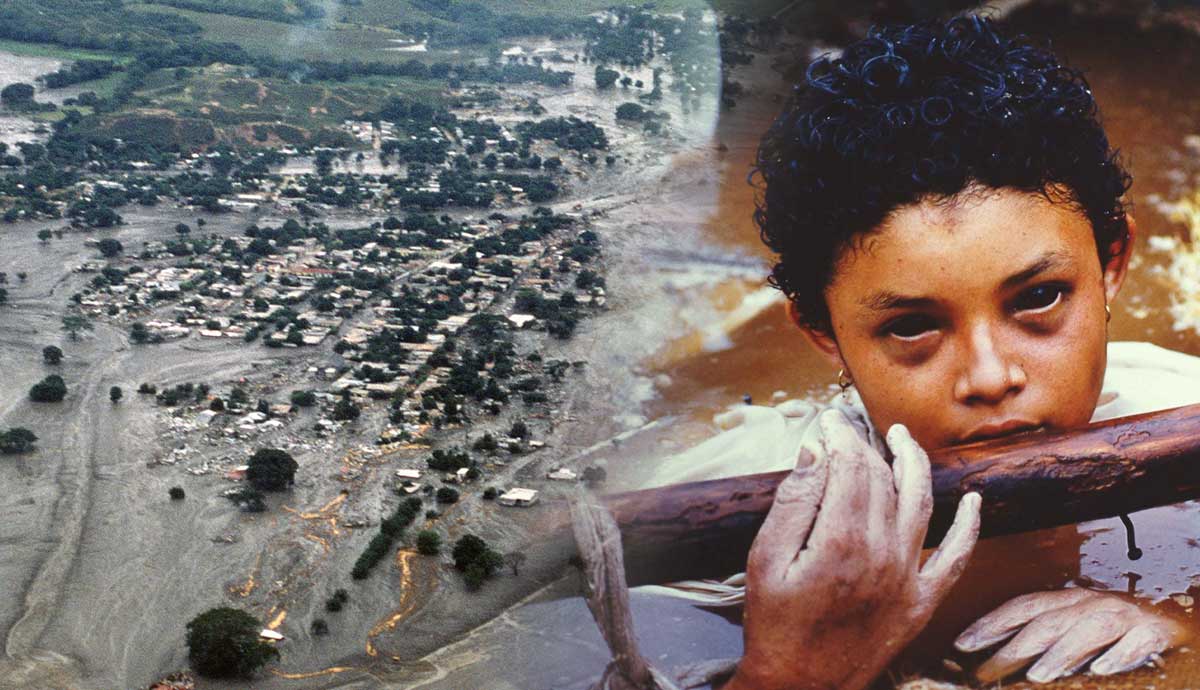
    The tragedy of Armero was one of the most horrific natural disasters witnessed in Colombias history. Occurring almost 40 years ago, the tragedy was caused by the eruption of the Nevado del Ruiz Volcano in the central Andes Cordillera. The deadly eruption happened on November 13, 1985, and triggered the melting of lahars that buried an entire nearby village, Armero, killing most of its residents. Although the volcano had been silent for over 70 years, it had shown signs of possible eruption for several months before the tragedy.Where Is Armero?Photo of Armero before the tragedy. Source: QhuboArmero was the third-largest urban center in Tolima, Colombia. It was 48 km (30 m) away from the Nevado del Ruiz volcano and was an important agricultural center known for its rice production.Volcanic activity in the region was not uncommon. It has been registered since the 16th century, with activity peaks during the 19th century. After the explosion of Mount Pele in 1902 on the French island of Martinique, Nevado del Ruizs eruption is considered the second-largest volcanic event of the 20th century.Nevado del Ruiz VolcanoAerial photo of Volcn Nevado del Ruiz by Georges Vitton, 2024. Source: LCDVThis snowy volcano is located in the northern part of the Andes volcanic belt between Tolima and Caldas in Colombia. More specifically, it is part of a national park, the Parque Nacional de los Nevados (Snowy Mountains National Park), which lies on the Pacific Ring of Fire.The volcano has remained active since the Pleistocene. Typical eruptions include the expulsion of pyroclastic flows that can melt surrounding glacier ice and produce lahars, or volcanic mudflows. The volcanos ice cover is an important potable water resource for nearby villages. However, due to climate change, it has been decreasing in recent years.Volcanic activity and eruption events have been documented at Nevado del Ruiz since the 16th century, and especially during the 19th century. Because the last major eruption had happened 140 years before the day of this tragic event, for the locals, it was easy to ignore the potential threat. Moreover, smoke from the volcano had rarely been seen as a cause for alarm by nearby populations. Following the 1985 explosion, the most recent eruption happened in 2012, with the volcano expelling only gases and ash.View of Volcn Nevado del Ruiz from the city of Manizales, a city nearby. N.A. Source: Alcalda de ManizalesAlthough people had been aware of Nevado del Ruizs volcanic activity since early November 1984, geologists had identified increasing seismic activity in the region and a more visible expulsion of smoke from the different volcanic chimneys. Direct contact between magma and water produced an explosion on September 11 of the same year, leading local authorities to prepare evacuation plans and produce risk maps published in different national newspapers. Unfortunately, this information did not reach Armeros population effectively.One Year Later: The Night of November 13Photos of Armero, Colombia. N.A. Source: infobaeAt 3 p.m. on November 13, 1985, columns of ash were expelled from the volcano. By 7 p.m., ash rain had started to fall over the village. The director of the Colombian civil defense was informed about the peculiar events and issued recommendations to evacuate nearby villages. Some survivors have shared that the village mayor, informed of the imminent risk of eruption, walked the streets warning the people. Despite his efforts to save Armeros people, other authorities recommended that the people remain calm and return to their houses. At the same time, the Colombian Red Cross started organizing evacuation plans in nearby villages. At 9:09 p.m., the volcano erupted, throwing pyroclasts 30 km (19 mi) into the atmosphere. After the explosion, the Colombian National Geological Service recommended immediate evacuation. However, due to storms, these warnings never reached Armeros authorities.The volcanos explosion melted 2% of the mountains glaciers, producing lahars that traveled down the mountain through descending river courses, reaching speeds up to 60 km (37 mi) per hour. Lahars mix mud, debris, and water. Before hitting the village, the main lahar traveled through the Lagunillas River, which neighbored Armero.Photo of rescue activities after the Armero tragedy. Source: ClipintevAround 11:30 p.m., the first lahar reached the village, followed by the arrival of 350 million cubic meters of mud mixed with branches and rocks that reached 30 meters (98 ft) in depth. Almost instantaneously, nearly the entire village was submerged, destroyed below the mudflow. The mud crushed buildings and people and smothered many.Absent warnings from the government, and due to the timing, with many already sleeping, 20,000 people died, corresponding to around 94% of Armeros population. After the mud had covered the village and destroyed connecting bridges and roads, it was almost impossible for the emergency services to reach the people. Twelve hours after the event, the first emergency services could finally reach the survivors.The Next Day: DesolationPhoto of Armero after the tragedy, December 1985. Source: National ArchivesThe next day, emergency trucks came to begin removing bodies that were buried and stuck between rubble, rocks, and trees. Some of them were cremated. The total toll of affected people reached 230,000, and initial damages were calculated to be approximately USD $218 million. Because the lahars had destroyed the local hospital, wounded people were moved to hospitals in nearby urban areas, most of them forever displaced by the tragedy and separated from their families.Playing Politics: Delayed ResponsePhoto of Pope John Paul II visiting Armero. N.A. Source: InfobaeAfter the flooding, recovery operations for the victims were both slow and poor. Colombias political landscape was unstable, and the government was directing its attention to other issues. One week before the event, the Colombian Palace of Justice had been occupied by the M19 guerilla movement, which was garnering most of the countrys attention. At the international level, the eruption of Nevado Del Ruiz happened only two months after an 8.1 magnitude earthquake struck Mexico City, which limited the number of supplies sent by the international parties.Despite the unstable landscape, less than a year after the catastrophe, on July 7, 1986, Pope John Paul II visited the site as part of his six-day tour in Colombia. There, the pope declared the terrain a holy ground. A high cross penetrated the now-dried mud, where the pope knelt and prayed.Omayra Snchez, Face of a TragedyPhoto of Omayra Snchez by Frank Fournier, 1985. Source: Le Nouvel ObsOmayra Snchez was a 13-year-old girl who was trapped in the mud for 60 hours before she passed away. She became the symbol of the Armero tragedy because of her story of resilience and hope amid her unavoidable fate. After the flooding, her legs had been trapped in the rubble. A rescue team of divers tried to free her from the debris trapping her, only to realize that the arms of her aunt were holding her tightly from the depths of the water. Efforts to rescue her were broadcast on national television, and a picture of her taken by journalist Frank Fournier was named the photo of the year by World Press Photo of the Year in 1986.In the subsequent years, Omayra became a source of inspiration for literature and music, in the works of writers such as German Santa Mara Barragn and Isabel Allende. Her figure also attracted worshipers, who have been trying to secure her beatification. Today, the site of her passing has become a place of pilgrimage and offerings for many who still commemorate and believe in her.Armero TodayRuins of Armero, unknown photographer, 2021. Source: rtveDriving between the cities of Ibagu and Honda, travelers pass by what is left of the village: to the right, abandoned houses half-buried, and to the left, half of a hospital still popping out from the ground. The site is visited by many people who come either as tourists or pilgrims to the sacred site for the curiosity of worship.Every year, on November 13th, more visitors gather, and different commemorative activities occur. Some are survivors. Others are descendants of the victims. As an act of remembrance, the Colombian Army throws rose petals from helicopters while masses are celebrated on the holy ground. Five kilometers away, a new village called Armero-Guayabal was built to house thousands of survivors. After the tragedy, many orphaned children were lost; some were even kidnapped. However, despite some being rescued, tracking adoptions is basically impossible because of the lack of a functional registry system.Front page of the website Fundacin Armando Armero, portraying surviving children currently being searched for, 2024. Source: Fundacin Armando ArmeroFrancisco Gonzlez, one of the survivors, lost his father and brother on the day of the event and founded an organization called Armando Armero (Building Armero). This institution is currently fighting alongside other survivors to find the lost children who, in some cases, were adopted by foreign families. They have filed a complaint against the Instituto Colombiano de Bienestar Familiar (Colombian Institute for Family Well-Being), which, in 2021, declared that it did not have official records about the protocols used for rescuing and protecting the young survivors.Lessons LearnedAerial photo of Armero after being submerged by lahars, 1985. Source: CerosetentaThe incredible number of deaths in Armero was caused, in significant part, by misinformation and the inability of mass media to deliver an effective warning message. Geological services could not communicate in a timely fashion with local emergency services in Armero, while local people ignored the signs of imminent danger, beginning with the ash rain that fell that afternoon.In 1985, Colombia did not have the proper live geological measurement equipment. However, after the Armero tragedy, different geological monitoring services and technologies in Colombia were improved and developed, and today cover 25 active volcanic zones out of 50 present in the nations territory. In 1988, Colombia created the Sistema Nacional para la Prevencin y Atencin a DesastresSNPAD (National System for Disaster Prevention and Response), and in 2012, the Sistema Nacional de Gestin de Riesgo de DesastresSNGRD (National Disaster Risk Management System). These, together with the Servicio Geolgico ColombianoSGC (National Geological Service), are today the institutions that work together to safeguard vulnerable communities in high-risk disaster zones. Armero also testified to the importance of an effective preventive organization that takes into consideration Colombias complex geological characteristics, which must entail collaboration between government and scientific institutions.Aerial photograph taken over Armero after the lahars wiped out the village, 1985. Source: InfobaeThe Amero tragedy is a reminder of the devastation volcanic eruptions can have on nearby urban and rural areas and how preparedness is a vital tool to mitigate such risks. In the case of Armero, miscommunication and misinformation exacerbated the loss of lives, which had a long-lasting social impact on the country, especially for the survivors. Lastly, the search for the young survivors of the tragedy reflects how important it is to have effective rescue and protection protocols in place in the aftermath of disasters.
    0 Comments 0 Shares 15 Views
  • 0 Comments 0 Shares 16 Views
  • 0 Comments 0 Shares 16 Views
  • WWW.DUALSHOCKERS.COM
    Best Obscure and Budget-Friendly JRPGs
    The indie scene is packed with JRPG-inspired games that aim to recapture the childlike wonder we felt while playing JRPGs during the SNES and PS1 eras. Many games succeed and rise to stardom, while several others also succeed but remain largely unknown.
    0 Comments 0 Shares 19 Views
  • WWW.DUALSHOCKERS.COM
    A PC Racing Classic Is Back On Steam
    2025 has been a surprisingly good year for racing fans.
    0 Comments 0 Shares 19 Views
  • 0 Comments 0 Shares 15 Views
  • TECHCRUNCH.COM
    Radiant Nuclear raises $300M for its semi-sized 1 MW reactor
    Radiant Nuclear is developing a small modular reactor to replace diesel generators. The startup previously raised $165 million in May.
    0 Comments 0 Shares 15 Views
  • YUBNUB.NEWS
    Kamala Harris Knocks Dems as Stuck in the Past in Revealing Interview
    Kamala Harris is sharpening her message and she isnt mincing words about her own party. According to Fox News, during a candid conversation released Wednesday on Jaime Harrisons At Our Table
    0 Comments 0 Shares 0 Views