



WWW.THECOLLECTOR.COM
How a Rebel Sailor Named Giuseppe Garibaldi Became Italys National Idol
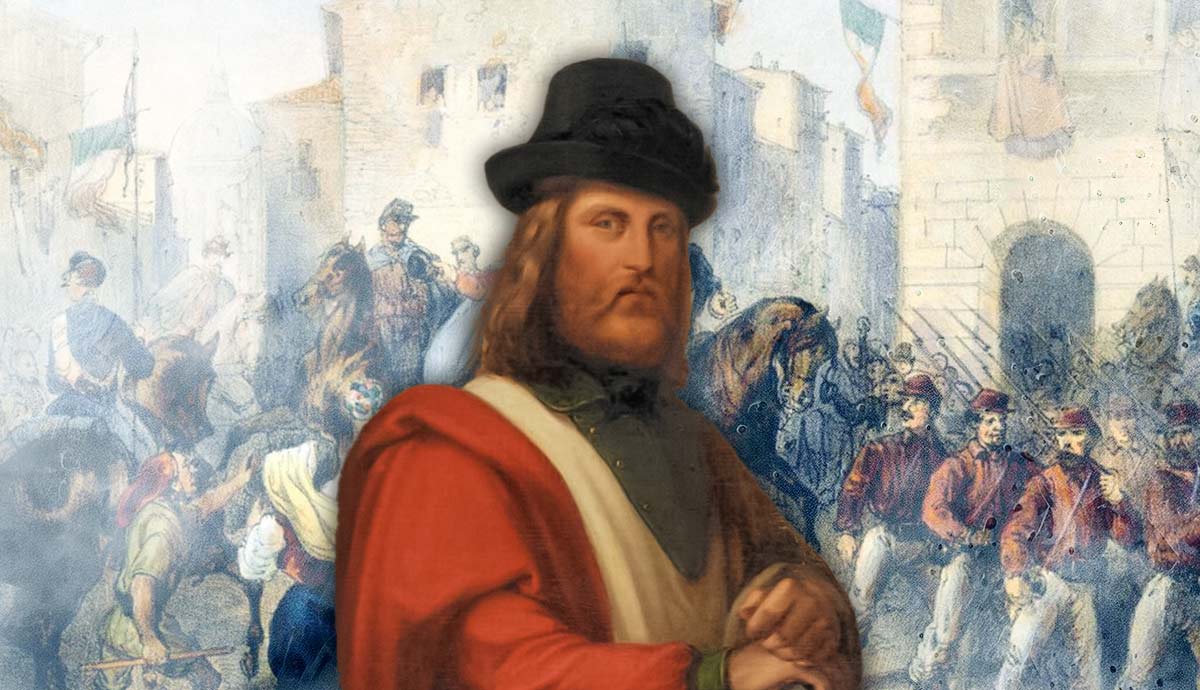
In almost every Italian city or town, youll find a street or square named after Giuseppe Garibaldi. Often clad in his signature poncho and red shirt, Garibaldi was the most successful and charismatic patriotic leader during the Risorgimento, the fight for Italys independence and unity. A media sensation during his adventurous life, Garibaldi was already a mythical figure at the time of his death in 1882. Read on to discover more about Giuseppe Garibaldis role in the Risorgimento and how he became the most prominent symbol of Italian national identity.Before the Risorgimento: Giuseppe Garibaldis Early YearsDrawing of the house in Nice in which Garibaldi was born, published in Blackett, H. (1888). Life of Giuseppe Garibaldi, Italian hero and patriot, London, Scott. Source: Wikimedia CommonsGiuseppe Garibaldi was born on July 4, 1807, in the seaport city of Nice, then controlled by the counts of Savoy. When he was around 26 years old, Garibaldi joined the navy of the Kingdom of Piedmont-Sardinia, a monarchical state that encompassed the region of Piedmont (northwestern Italy) and the island of Sardinia and was ruled by the house of Savoy.After the Congress of Vienna in 1815 redrew the map of Europe at the end of the Napoleonic Wars, most of the network of kingdoms and duchies in the Italian peninsula fell under Austrian control. The restored rulers, including the Piedmontese king, quickly set to reverse the reforms introduced by Napoleon, sparking widespread opposition among the intellectual and political circles that, inspired by the ideals of the French Revolution, called for a united Italy free of foreign control.Portrait of Giuseppe Mazzini by Gaetano Chierici. Source: Musei Civici Reggio EmiliaAmong the most active patriotic secret societies was Giuseppe Mazzinis Giovine Italia (Young Italy). In 1834, Garibaldi, a member of Mazzinis society, took part in an uprising organized by Mazzinis followers in Piedmont. When the revolutionary plot failed, Garibaldi fled to France to avoid arrest and was sentenced to death in absentia. He would return to the Italian peninsula only 14 years later.In 1836, forced to live in exile, Garibaldi settled in South America, where he became an active participant in the political turmoil of the region. Between 1839 and 1840, he scored a series of victories as a naval captain for the Rio Grande do Sul Republic during its uprising against Brazilian control. Around this time, Garibaldi met and eloped with Anna Maria Ribeiro da Silva (Anita), a married woman who became his companion in arms.Portrait of Anita Garibaldi, by Gaetano Gallino, 1845. Source: Wikimedia Commons/Museo del Risorgimento, MilanTwo years later, Garibaldi took part in Uruguays Guerra Grande (Great War), joining the faction fighting against the Argentinian dictator Juan Manuel de Rosas. He was eventually put in charge of an Italian Legion at Montevideo. Like all Uruguayan opponents of de Rosas, the members of Garibaldis group used red colors, making them his first redshirts (more on that later). While in Montevideo, Garibaldis courage and skill as a military leader impressed foreign observers, and his fame as a rebel for the cause of liberty soon spread across Europe.News of Garibaldis exploits also reached Giuseppe Mazzini, at the time in exile in London. Garibaldi is a man who will be of use to the country when it is time for action, wrote the founder of Young Italy in a 1843 letter to an Italian exile in Uruguay. The time for action came five years later, when an anti-Austrian revolutionary wave swept across the Italian peninsula.Fighting for a United Italy: The First Wars of IndependencePopular print showing the different uniforms worn by Garibaldi during the Risorgimento, ca. 1861. Source: Wikimedia CommonsGaribaldi and Anita left Montevideo in April 1848 to return to Italy. Sixty-three of his men who fought beside him in the Italian Legion followed him. As he later remarked in his Memoirs, Garibaldis goal was to spark a war of national liberation: We were determined to tempt fate and trigger [insurrectionary movements] ourselves by landing on the wooded coasts of Tuscany or anywhere else where our presence would be most welcome and useful.While his first offers of military assistanceto Pope Pius IX and King Charles Albert of Piedmont-Sardiniawere rejected out of suspicion for his fame as a guerrilla leader, Garibaldi was able to assist the Milanese in their resistance against the Austrian troops led by General Radezsky. Then, in March 1848, Charles Albert, alarmed by the democratic and republican nature of the uprising, declared war on Austria. It was the beginning of the First War of Italian Independence.The Italian patriots (and Garibaldis) hopes that the conflict would further their cause were disappointed in July, when the Piedmontese army suffered a defeat at the Battle of Custoza and withdrew from Milan. Unwilling to surrender, Garibaldi continued to fight against the Austrians. In August, however, he was forced to retreat and seek refuge across the border in Switzerland. He then settled in Nice with Anita, whom he had married in 1842, and their children.Garibaldi in Rome during the 1849 French siege of the city, by Rudolf Eduard Hauser. Source: Wikimedia CommonsStill resolved to free the entire Italian peninsula from foreign control, Garibaldi came back to Italy in 1849, where a republican revolt in Rome led by Mazzini forced the pope to flee from the city. Elected a member of the Roman Assembly, Garibaldi organized a courageous and desperate defense against the French and Neapolitan forces aiming to overthrow the democratic Roman Republic. His resistance during the French siege in June turned him into a leading patriotic figure and earned him the nickname eroe dei due mondi (Hero of the Two Worlds).After the fall of the republic, Garibaldi, pursued by the Austrians, managed to reach the Tuscan coast, but his wife died during the long and difficult retreat. He then spent the following four years in exile in Tangiers, Staten Island, and Peru.He was allowed to return to Italy in 1854, where the Piedmontese prime minister, Camillo Benso, Count of Cavour, aware of Garibaldis popularity, hoped to pry him away from the republican current of the Risorgimento. Four years later, in 1858, Cavour, who had secured Frances support in a secret agreement at Plombires, invited Garibaldi to take part in what would become the Second War of Italian Independence.Napoleon III and Victor Emmanuel meet at Villafranca, by Enrico Gonin, based on a drawing by Carlo Bossoli, 19th century. Source: Wikimedia CommonsIn April 1859, Garibaldi, in charge of an army of volunteers known as Cacciatori delle Alpi (Alpine Huntsmen), led a successful campaign in northern Italy, reaching the frontier in South Tyrol after capturing the cities of Varese and Como. Meanwhile, as the French and Piedmontese troops secured victories at Magenta and Solferino, other Italian cities rebelled against Austrian rule.In July, at the armistice of Villafranca, the Habsburg Empire ceded Lombardy to Napoleon III of France, who, in turn, gave it to Piedmont. In 1860, a series of plebiscites in the duchies of Parma and Modena, the Papal Legations, and Tuscany confirmed the popular sentiment in favor of annexation with the Kingdom of Piedmont-Sardinia.The Expedition of the ThousandsMonument commemorating the Expedition of the Thousands in Quarto dei Mille, near Genoa, from where Garibaldi set sail in 1860, photograph by Marlendive, 2007. Source: Wikimedia CommonsIn 1860, Cavours political and diplomatic acumen achieved an important step in the movement for Italian independence, securing most of northern Italy for Piedmont-Sardinia. Garibaldi, however, like many Italian patriots, did not consider the Risorgimento complete as long as all territories of the peninsula were freed from foreign control.Soon after the end of the Second War of Independence, he attempted to convince Victor Emmanuel II to organize a possible invasion of the Papal States. The monarch, however, was more interested in expanding his kingdom and refused the proposal as too dangerous. Meanwhile, in April 1860, a wave of unrest, inspired by the Mazzinian movement, broke out in Sicily. Upon hearing the news, Garibaldi seized the opportunity to launch what would be his greatest exploits: the spedizione dei mille, or the Expedition of the Thousands.On the night between May 5 and 6, 1860, a group of about 1,089 volunteers sailed from Quarto, a district near Genoa (Liguria), to assist the Sicilian rebels and overthrow the Bourbon rule in southern Italy. The Sicilian insurrection carries the destinies of our nation. In the end I will find myself in my element: action in the service of a noble idea, wrote Garibaldi in a letter to a friend. Among the volunteers setting sail with Garibaldi were lawyers, doctors, engineers, students, and artists, all representatives of the elitist, urban middle class that led the movement for Italian independence.Lithography depicting Garibaldi entering Messina, Sicily, 1861. Source: Wikimedia CommonsWhile Garibaldis followers (or Garibaldini) wore a variety of uniforms, the red shirt donned by 150 of them would become their signature uniform, and they became widely known as camicie rosse (Redshirts). The Redshirts landed in Marsala, Sicily, on May 11. After winning the first clash with the army of the Kingdom of the Two Sicilies at Calatafimi (May 15), the Redshirts conquered the entire island in less than three months.The Sicilian population initially welcomed Garibaldi and his troops with jubilation. Ferdinand Eber, a correspondent for the Times, described the enthusiasm rippling through Palermo during Garibaldis tour of the city: The popular idol, Garibaldi, in his red flannel shirt was walking on foot among those cheering, laughing, crying, mad thousands The people threw themselves forward to kiss his hands. In the face of the provisional governments reluctance to introduce radical land reforms, however, the initial enthusiasm slowly ebbed, replaced by disillusionment among the lower classes.Fresco depicting the meeting between Garibaldi and Victor Emmanuel II at Teano, by Pietro Aldi, 1886. Source: Museo Civico di Siena, TuscanyMeanwhile, Garibaldi sailed across the Strait of Messina to reach the southern Italian mainland. Moving through Calabria with lightning speed, the Redshirts entered Naples on September 7, 1860, where Garibaldi declared himself Dictator of the Two Sicilies in the name of Victor Emmanuel II. After suffering a defeat in the decisive Battle of Volturno (near Caserta) at the beginning of October, Francis II of the Two Sicilies fled to Gaeta.Alarmed by Garibaldis rising popularity and military successes, Cavour urged Victor Emmanuel of Savoy to seize the initiative. The Piedmontese king and Garibaldi met at Teano on October 16, 1860, where Garibaldi hailed Victor Emmanuel II as king of Italy and handed him over Sicily and the southern mainland. On November 7, they triumphantly entered Naples. The Kingdom of Italy was officially established half a year later, on March 17, 1861.Giuseppe Garibaldis Last CampaignsThe Wounded Garibaldi After the Battle of Aspromonte, by Gerolamo Induno, 19th century. Source: Wikimedia Commons/Museo Civico Rivoltella, Trieste, ItalyGaribaldi was offered a seat in the parliament of the newly formed Kingdom of Italy. However, he grew dissatisfied with the administration of the southern provinces he had conquered. Moreover, he accused Cavours government of failing to give the volunteers who fought alongside him and played such a key part in the Italian unification the treatment they deserved.Despite the rocky relationship with the Italian government, Garibaldis prestige outside Italy had risen so high that in 1861, US President Abraham Lincoln offered him the position of major general in the Civil War. When his requests for a higher rank in the Union army and the immediate abolition of slavery were denied, however, Garibaldi turned down the offer.The following year, he turned his attention to those Italian territories that were not yet part of the Italian kingdom, especially the Papal States in central Italy. When Victor Emmanuel allowed him to recruit volunteers for an anti-Austrian campaign in the Balkans, Garibaldi used his army to attack the Papal States. Alarmed, the Italian government sent the regular army to stop him. Seriously wounded at the Battle of Aspromonte, he was taken prisoner, but was later released.After taking part in the last war of independence that ended with the annexation of Venice in 1866, Garibaldi organized another expedition into the Papal States, this time with the secret backing of the government. When the French forces intervened to defend the pope and defeated Garibaldis Redshirts at Mentana (November 1867), he was again arrested by the government, anxious to cover up their involvement in the expedition. Rome and the Papal States would become part of the Italian Kingdom in 1871, leading to a long dispute between the papacy and the Italian state.Giuseppe Garibaldi: A National HeroGiuseppe Garibaldi, by Giuseppe Ugolini, 19th century. Source: Wikimedia Commons/Tricolor Flag Museum, Reggio Emilia, ItalyGaribaldi died in Caprera, an island off the Sardinian coast, on June 2, 1882. By then, he had already become an almost mythological figure in Italy and abroad, with poems and songs celebrating his military exploits with a mix of religious and patriotic vocabulary.In London, where a huge crowd had welcomed him in 1864, the Times mourned the loss of a man who had fascinated two hemispheres for thirty years and achieved a miracle of national regeneration. A nation is better for an ingredient of romance in its history, remarked the journal, and Italy had that ingredient copiously in the entire career of Garibaldi.Portrait of Giuseppe Garibaldi in Palermo, by Gustave Le Gray, July 1860. Source: Wikimedia Commons/BnF Gallica Digital LibraryIndeed, in the rocky transitional years after the unification, the newly formed Italian kingdom promoted the patriotic cult of Garibaldi in its nation-building efforts. After all, Garibaldis actions during the Risorgimento made visible all those ideas of romantic heroism that generations of poets had described in their verses: martyrdom, regeneration, and patriotism. In this sense, Garibaldi became the embodiment of the Risorgimento culture, and, more importantly, a new sense of Italianit.
0 Comments
0 Shares
195 Views





 Arabic
 French
 Spanish
 Portuguese
 Deutsch
 Turkish
 Dutch
Dutch
 Italiano
 Russian
 Romaian
 Portuguese (Brazil)
 Greek
Greek