


WWW.THECOLLECTOR.COM
How the Papal States Grew to Become a Medieval Superpower
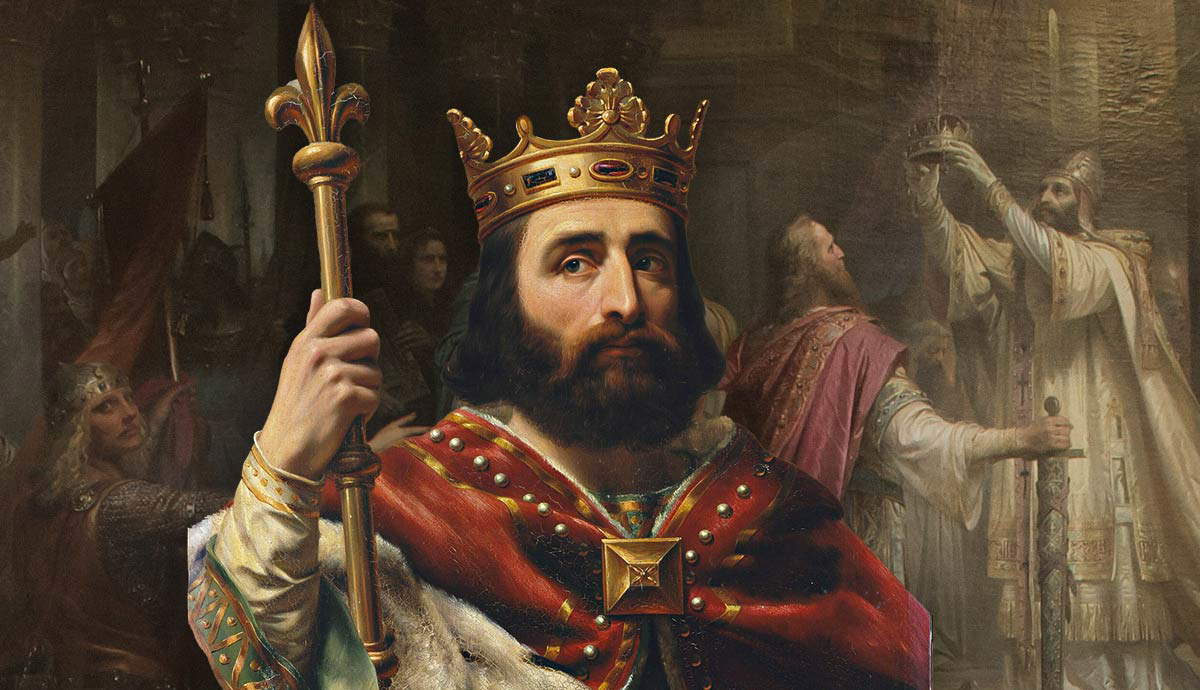
If youve heard of the Papal States before, youll likely understand how much power they held. While we tend to think of the Papal States at their peak during the High Middle Ages, they rose to power in the Early Middle Ages. But just how did they manage to do so? Find out below.The Origins of the Papal StatesAn imagined portrait of Pepin the Short, by Louis-Felix Amiel, 19th century. Source: Wikimedia CommonsThe first question that should be answered is: What were the Papal States?The Papal States were a temporal realm governed by the Pope. They were first established in the mid-8th century and lasted in one form or another until the 19th century, when they were annexed to the Kingdom of Italy. In the modern age, the Papal States have essentially become a singular Papal State, which is also the smallest country in the world: the Vatican City.While the Papacy has always held some sort of power since its establishment following the death of Jesus Christ (c. 33 CE), with many Catholics claiming that Peter was the first Pope, for the first 300 years of its existence under the Roman Empire, it held very little authority.During the reign of Constantine the Great (r. 30637), the first Christian Roman Emperor, the Papacy began to have an active role and began to scoop up more power.Under Emperor Constantine, the Bishops of Rome had been awarded real estate and lands as rewards for their services. However, it was not until the reign of the Frankish king Pepin the Short that the sitting pope, Pope Stephen II, received lands as a temporal sovereign.This donation from Pepin in 756 essentially began the rise of the Papal States.The Papal States Before Pepins DonationStatue of Constantine the Great in York, UK. Source: Wikimedia CommonsNaturally, Pepins donation to the Papal States changed history forever, but why did he donate this land?For more context, after the fall of the Western Roman Empire in the late 5th and early 6th century, the Papacy was in a dangerous position. While they held lands that had been gifted to them, they held them as a sovereign entity, not as private land ownership, meaning that any lands could be taken from them at any point.By the mid-6th century, most of Italy was under the control of the Ostrogothic kings, despite the repeated attempts by the Byzantine Emperor Justinian I to wrest Rome back from them.By 568, the Lombards had entered the Italian peninsula and settled in the north, effectively blocking any way out for the Papacy, other than by sea. The Lombards used this northern base to establish their own Italian kingdoms, and over the next two centuries, they would attempt to take over all of modern-day Italy.However, the Pope still held much of the power in Italy, especially given that Rome had by this point been absorbed into the Byzantine Empire. It was during the 8th century that Byzantine power began to weaken in Italy. The center of the Empire was so far away in Constantinople, and the Lombards took advantage of this.The Papacy had to protect Rome, but it lacked the military knowledge and resources to do so. As such, due to the ever-growing threat of the Lombards, Pope Stephen II turned to the Franks for support.The Donation of Pepin the ShortSilver coin of Pepin the Short, 751-68. Source: The British MuseumThe Frankish king at the time was Pepin, known as Pepin the Short. Pepin responded to the Popes cry for help, and he invaded Italy with an army of Franks, successfully repelling the Lombards from Rome in 754 and 756.But where does the term donation come from? It was surely the Pope who should have been donating lands, titles, and money to Pepin, right?While it may seem that way initially, it was actually Pepin who benefited from the invasion. He took control of Lombardy and donated the Exarchate of Ravenna, which the Lombards had also held, to the Papacy. This added a huge amount of extra lands to the Papacy and began the early formation of the Papal States.For Pepin, this meant he could control Lombardy and bring it into the territory of the Frankish Kingdom, while for the Papal States, it meant that they had an extra barrier of security, and more lands, which meant more revenue.Relations Between the Frankish Kingdom and the Papal StatesPepin the Short, artist unknown, 1112. Source: Wikimedia CommonsRelations between the two powers were strengthened when Pepins successor, arguably one of the most famous monarchs of all time, inherited the Frankish throne: Charlemagne.Charlemagne codified the regions over which the Papacy would rule, and the relationship between the Frankish Kingdom and the Papacy simply got better and better. For both parties, it meant more safety, more security, and more revenue.According to Charlemagne, the Papal States territory would include Rome, Ravenna, as well as parts of Lombardy, Tuscany, Corsica, the Duchy of Pentapolis, and parts of the Duchy of Benevento. This was a huge amount of land, and as would be expected, Charlemagne was duly rewarded for his donations.This reward culminated with Charlemagne being crowned Holy Roman Emperor in 800 by Pope Leo III, another hugely significant moment in European history, as the role of Holy Roman Emperor would last for another 1,000 years.The Papal States Relationship With the Holy Roman EmpireThe Coronation of Charlemagne, by Friedrich Kaulbach, 19th century. Source: Wikimedia CommonsFollowing the advent of the Holy Roman Empire in 800 CE, the relationship between the Papal States and the Holy Roman Empire was not always as good as it had been when it was just between the Papacy and the Frankish Kingdom.When the Holy Roman Empire was subdivided among Charlemagnes grandchildren, the Papal States lost their original relationship and direct connection to the Frankish Kingdom.As a result, imperial power in Italy also declined, and the Papal States prestige declined, too. This opened up the way for corruption, under the form of a wealthy Italian noble family in the 10th century known as the Theophylacti, who ruled over the Papal States.This period is known as the dark age of the Papacy, while others refer to it by the term rule by harlots. Popes were unable to rule in sovereign terms at all; they simply held on to (or, rather, grasped at) religious authority while the Theophylacti ruled smaller governments in each of the Papal States.It was not until the German ruler, Otto I, conquered northern Italy in the mid-10th century that the pope at the time, Pope John XII, crowned him as Holy Roman Emperor, and the two of them ratified the Diploma Ottonianum. The result of this alliance and treaty was that the emperor became the guarantor of the independence of the Papal Statesthey could no longer remain under the control and corrupt rule of any noble family, no matter how senior they were.The Papal States Road to IndependencePope John XII, 16th century. Source: Wikimedia CommonsUnfortunately, the honeymoon period between the Papal States and Emperor Otto did not last very long. Over the next 200-300 years, the squabbling between the Empire and the Papal States resumed, and it looked like it was heading towards full dissolution at some points.German rulers began to treat the Papal States as part of their realms, especially when they flexed their muscles in northern Italy, while the Papal States attempted to reach further than they could grasp at the same time.However, it was the end of a notable German dynasty that changed the course of history once more. The Hohenstaufen Dynasty came to an abrupt end in 1254 with the execution of Conrad III after he failed to recapture the Kingdom of Sicily for the Hohenstaufen family. Following Conrads death, the Germans rarely interfered in the Papal States territory.With less and less German and French influence in Italy, the Papal States began to reach a new level of independence, and at the turn of the 14th century, they were practically fully independent.The Legacy of the Papal StatesMiniature of Conrad III of Germany from Chronica Regia Coloniensis, c. 1240. Source: Wikimedia CommonsIn medieval Europe, it was no secret that the Pope was the most powerful man on the continent. To most citizens, he was the most powerful man in the known world, as Gods chosen representative on Earth.It was through this authority that the Papal States garnered so much power in the Medieval Period. They managed to successfully deal with conflicts in Christendom, offered soldiers for armies throughout Europe, and used their authority to grant wishes and monies to various kingdoms throughout Christendom.While the Papal States would go on as an organization until the late 19th century, it was during the Middle Ages that they reached their apogee.Without the influence of the Papal States, Italy would also not have developed as it did in later centuries, largely thanks to the huge amount of money that the Papal States generated.The Papal States were one of the most formidable organizations in medieval Europe. From humble beginningsa simple donation changed the course of European and likely global history foreverto the huge institution that it eventually became, European history would certainly have been less eventful, if not bleaker, without the Papal States.
0 Commentarii
0 Distribuiri
195 Views

 English
 Arabic
 French
 Spanish
 Portuguese
 Deutsch
 Turkish
 Dutch
Dutch
 Italiano
 Russian
 Portuguese (Brazil)
 Greek
Greek