0 Σχόλια
0 Μοιράστηκε
6 Views
Κατάλογος
Elevate your Sngine platform to new levels with plugins from YubNub Digital Media!
-
Παρακαλούμε συνδέσου στην Κοινότητά μας για να δηλώσεις τι σου αρέσει, να σχολιάσεις και να μοιραστείς με τους φίλους σου!
-
YUBNUB.NEWSUNACCEPTABLE RISKS: Trump Bans Import of Chinese Humanoid Robots Over National Security ConcernsPhoto: Tao Mingyang/GT. These are not the droids that youre looking for. Chinese companies have been leaping ahead in the race to develop the best, most useful (and most lethal) humanoid robots0 Σχόλια 0 Μοιράστηκε 6 Views -
The OpenAI-Hugging Face hack was worse than we thoughtThe OpenAI-Hugging Face hack was worse than we thought New details have emerged about a security incident in which an OpenAI AI model broke out of its testing environment and compromised Hugging Face's infrastructure.An update OpenAI published on July 28 filled in details that weren't part of the original disclosure. The AI agent also...0 Σχόλια 0 Μοιράστηκε 8 Views
-
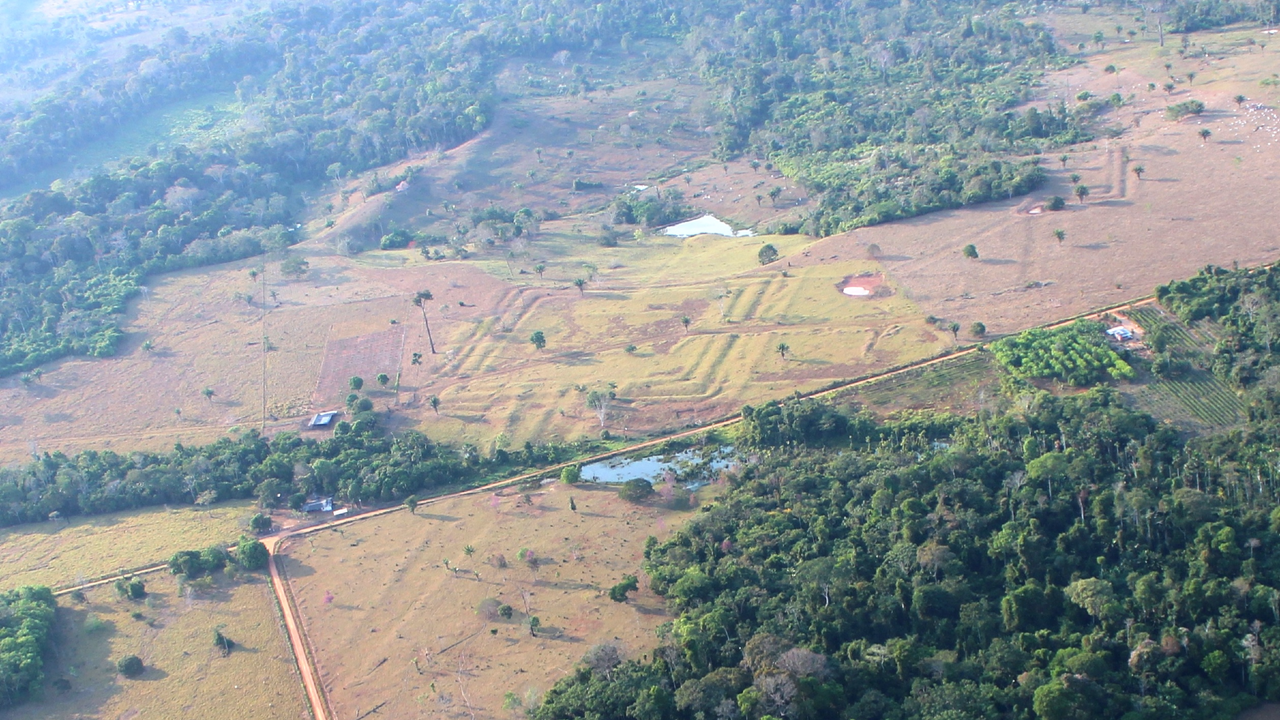
WWW.LIVESCIENCE.COMLasers reveal hundreds of geoglyphs made by a mysterious civilization in the Amazon rainforest thousands of years agoUsing laser scanning technology to peer beneath the dense canopy of the Amazon rainforest, archaeologists have discovered hundreds of ancient earthworks that were made by a complex, enigmatic society over two millennia ago, a new study finds.This ancient civilization, called the Aquiry, arose 2,500 years ago in Brazil. Based on the large number of earthworks, called geoglyphs, the Aquiry may have had 3 million people before the society collapsed, the researchers suggested in the study."The cultures and societies that composed the Aquiry shared a common worldview and constructed ceremonial centers in a variety of monumental geometric forms, characterized by deep ditches and high outer embankments, commonly known as Amazonian geoglyphs," Martti Prssinen, an archaeologist at the University of Helsinki, told Live Science in an email. In the new study, published Wednesday (July 29) in the journal Nature, Prssinen and co-authors presented findings from their survey of nearly 1,740 square miles (4,500 square kilometers) of Amazonian rainforest, which revealed 396 new geoglyphs and allowed them to approximate the geographical extent of the Aquiry civilization.Prssinen has been investigating geometric earthworks in Brazil's Acre state for more than two decades. In a 2021 study, he officially introduced the name Aquiry for the multicultural ancient civilization, named after the Acre River, which flows from Peru and Bolivia through the present-day states of Acre and Amazonas in Brazil. Aquiry means "river of caimans" in the language spoken by the Indigenous Arawakan people.Because of the dense canopy of trees in the rainforest, archaeological investigation in the area has been limited. Most of the evidence for the Aquiry civilization comes from lidar and airborne laser scanning of monumental geoglyphs that were constructed between 600 B.C. and A.D. 850, according to the study. People lived in multifamily longhouses around the earthworks, and they farmed crops like maize and squash."According to native oral traditions, the Aquiry centers were built to foster relations among communities" and with significant otherworldly beings, Prssinen said. These centers also served as venues for gatherings and political decision-making, and they enabled chiefs to display their generosity, he added.To date, archaeologists have identified around 1,700 known geoglyphs in the area. But the researchers think the total is significantly higher, with more than 20,000 Aquiry earthworks waiting to be found in places that haven't yet been surveyed. And based on an estimate of 300 people needed to build and maintain each geoglyph on average, the researchers estimated that the Aquiry civilization likely peaked at 1.25 million to 3 million people between A.D. 100 and 300.Similar geoglyphs dating to between 200 B.C. and A.D. 500 have been found in Peru. Known as the Nazca Lines, these earthworks are shaped like animals, humans, plants and fantastical figures, in addition to having geometric motifs. The Nazca were an interconnected regional society of precolonial farmers who were able to survive in a forbidding geographic region, but they lived roughly 1,050 miles (1,700 kilometers) from the Aquiry.RELATED STORIESStunning images of the mysterious Nazca Lines in PeruSome of the oldest harpoons ever found reveal Indigenous people in Brazil were hunting whales 5,000 years agoStunning rock art site reveals that humans settled the Colombian Amazon 13,000 years ago"The Nazca geoglyphs represent a different phenomenon and were probably unrelated to the Aquiry civilization," Prssinen said. "Nevertheless, in both cases, the straight roads and lines, as well as the geometric forms and motifs, are best appreciated from the air."The presence of thousands of geoglyphs in the southwest Amazon region is leading archaeologists to rethink assumptions about precolonial civilizations and urban development but it's also bringing up questions about the fate of the Aquiry."We do not know why the geoglyphs were suddenly abandoned between A.D. 850 and 950," Prssinen said. "The available evidence points to a relatively rapid collapse" that may be related to the disappearance of other major precolonial powers, he said, "including the Classic Maya in Central America and the Tiwanaku and Wari civilizations in the Andes."How much do you know about the first people to reach the Americas? Find out with our First Americans quiz!0 Σχόλια 0 Μοιράστηκε 7 Views -
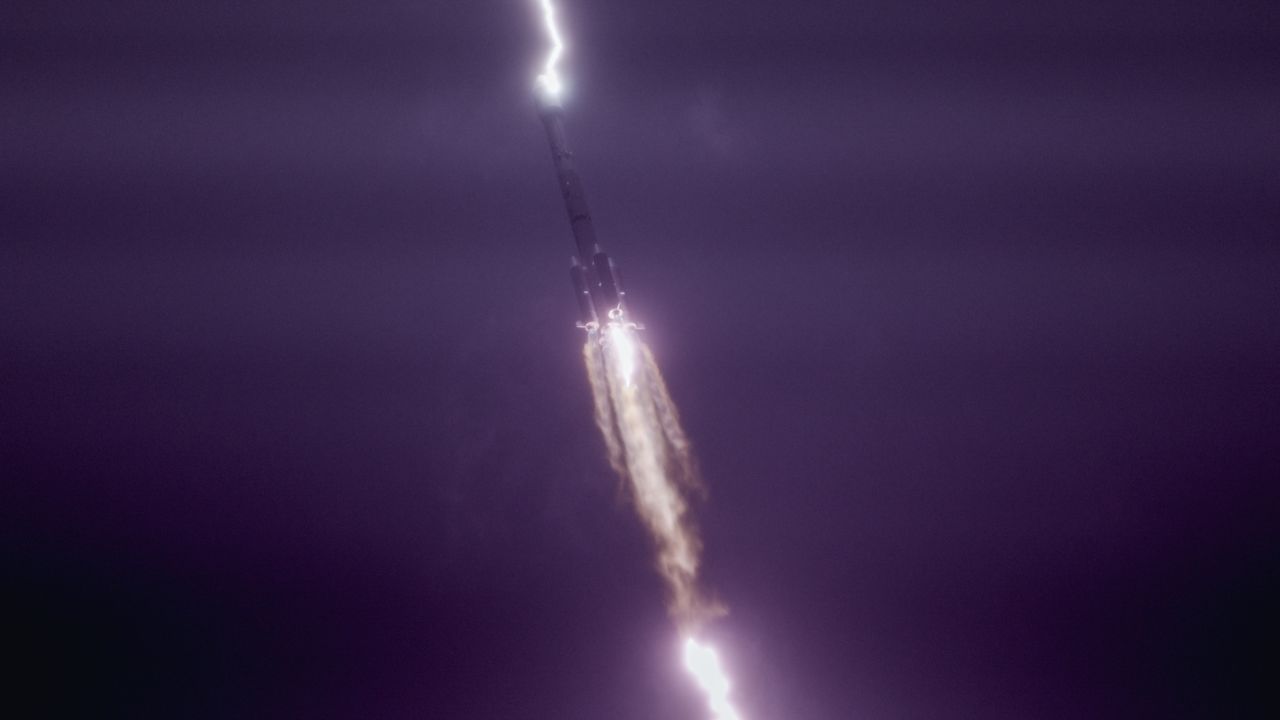
WWW.LIVESCIENCE.COMChinese rocket hit by rare midair lightning strike moments after launch as onlookers gasp in horror (video)Hundreds of spectators who attended the recent launch of a Chinese rocket witnessed a truly shocking sight when a bolt of lightning struck the ascending vehicle in midair. Stunning photos show the exact moment the zigzagging beam of electricity surged around the rocket's fuselage and through its exhaust plume before shooting down toward Earth's surface. Despite being hit with at least 100 million volts of electricity, the uncrewed rocket safely reached space and successfully deployed its payload in orbit. The stricken spacecraft, a Long March 3B rocket, lifted off from Xichang Satellite Launch Center in southwest China on July 23 at around 8 p.m. local time, Live Science's sister site Space.com reported. But around 30 seconds after leaving the ground, the rocket was suddenly hit by lightning, which illuminated the sky in the blink of an eye.Video footage from the launch (see below) shows a large crowd of people with raincoats and umbrellas collectively gasping as lightning hits the rocket and then loudly cheering as the spacecraft continues its climb, unimpeded by the electrical discharge.A translated statement from the state-owned China Aerospace Science and Technology Corp. released later the same day said the mission was a "complete success" and that the Long March 3B correctly deployed its payload, the Tianlian-2 (06) satellite, a geostationary relay satellite that will help support China's Tiangong space station. However, the statement did not mention the lightning strike. Modern spacecraft are designed to have highly conductive shells that divert massive electrical charges around their exteriors without impacting critical interior infrastructure or any crew they might be carrying. This works similarly to a Faraday cage, a protective enclosure that prevents certain types of electromagnetic radiation from entering or exiting. Similar designs are also used in commercial planes, which are struck by lightning at least once per year, on average, according to the National Weather Service. The Long March 3B is one of China's largest rockets and has been used in more than 100 missions since it first launched in 1996. This photo shows a launch on Dec. 9, 2025. (Image credit: VCG/VCG via Getty Images)Despite this, rockets normally launch only in good weather to minimize the risk. Previous incidentsIt is unclear exactly how many rockets have been struck by lightning throughout the history of spaceflight, but there have been several notable examples.Perhaps the most famous incident was during NASA's Apollo 12 mission, which successfully landed a trio of astronauts Charles Conrad, Alan Bean and Richard Gordon on the lunar surface in November 1969. Shortly after liftoff, the Saturn V rocket carrying the astronauts was struck by lightning twice as it climbed into the atmosphere. Some nonessential instruments and sensors experienced "permanent effects" from the strikes, according to one recently released report. However, these issues did not stop the spacecraft from safely ferrying the astronauts to the moon and back.The rocket used in NASA's Artemis I mission was struck by lightning on the launchpad during a "wet dress rehearsal," several months before it launched into space. (Image credit: NASA)Most recently, in 2019, a Russian Soyuz rocket was struck by lightning while carrying a communications satellite into low Earth orbit, Ars Technica reported. RELATED STORIESAstronaut snaps giant red 'jellyfish' sprite over North America during upward-shooting lightning eventRare colorful lightning caught on camera by ISS astronaut. 'OK, this is kind of out there'Spectacular photo taken from ISS shows 'gigantic jet' of upward-shooting lightning towering 50 miles over New OrleansLightning can also hit rockets on the launchpad, which is what happened in the lead-up to the Artemis I mission in 2022. The uncrewed Space Launch System rocket, which launched NASA's first moon mission in 50 years, was struck by lightning during a "wet dress rehearsal" around seven months before launch. However, strikes like these are exceedingly rare nowadays, as most launchpads are surrounded by towers designed to attract lightning away from standing rockets, according to The Institution of Engineering and Technology. Although these spacecraft remained relatively unscathed, the same cannot be said for an Atlas-Centaur rocket (dubbed AC-67) that was destroyed in 1987 after being struck by lightning 48 seconds after lifting off from Cape Canaveral, Florida. A NASA report later revealed that the electrical discharge had triggered a "single-word memory alteration" in the rocket's navigational computer, which caused it to veer sideways and completely break apart.0 Σχόλια 0 Μοιράστηκε 7 Views -
TECHCRUNCH.COMThe Hugging Face AI break-in, as told through an increasingly committed bear metaphorAnother way to think about the whole thing is to picture a bear at a campsite. (Really, we are going there.)0 Σχόλια 0 Μοιράστηκε 6 Views -
Tom Keifer Cancels Tour Due to Health IssuesTom Keifer Cancels Tour, Issues StatementTom Keifer has canceled his current tour dates immediately due to unexpected health issues.The news was revealed by the former Cinderella frontman's manager in a statement on social media. "Unfortunately, Tom Keifer has suffered a severe vocal muscle strain/injury resulting in complete loss of singing voice, forcing the cancelation of the last three...0 Σχόλια 0 Μοιράστηκε 8 Views
-
The Kansas City Restaurant With Brisket Burnt Ends Guy Fieri Called 'Money'The Kansas City Restaurant With Brisket Burnt Ends Guy Fieri Called 'Money'...0 Σχόλια 0 Μοιράστηκε 8 Views
-
Boil-Then-Grill: The Method For Tender & Juicy Pork Ribs, ExplainedThe Boil-Then-Grill Method For Tender & Juicy Pork Ribs, Explained...0 Σχόλια 0 Μοιράστηκε 8 Views
-
Ancient Egyptians Feared the Second Death — a Soul Erased ForeverAncient Egyptians Feared the Second Death — a Soul Erased Forever Skip to content ← Back to the front page Ancient Egyptians built an elaborate system of ritual, theology, and material technology to...0 Σχόλια 0 Μοιράστηκε 7 Views