• YUBNUB.NEWS
    Is This the End of Transgender Hysteria?
    A few years ago, things looked pretty bleak for skeptics of transgenderism -- those of us who have great compassion for those afflicted by what the Diagnostic and Statistical
    0 Kommentare 0 Geteilt 3 Ansichten
  • The Trader Joe's Filipino-Style Food We'll Likely Never Buy Again
    The Trader Joe's Asian Food We'll Likely Never Buy Again...
    0 Kommentare 0 Geteilt 6 Ansichten
  • One small change to make browsing instantly better
    One small change to make browsing instantly better TL;DR: The AdGuard Family Plan cleans up ads, blocks trackers and malware, and adds parental controls—across up to nine devices, for life, for just $19.97 (reg. $169.99). $19.97...
    0 Kommentare 0 Geteilt 7 Ansichten
  • WWW.UNIVERSETODAY.COM
    Are there Hidden Dimensions to the Universe? Part 2: The Hierarchy Problem
    The problem that large extra dimensions just might solve is called the hierarchy problem, and its one of the nastiest outstanding problems in modern physics.
    0 Kommentare 0 Geteilt 3 Ansichten
  • ALLTHATSINTERESTING.COM
    Unexploded WWII-Era Bombs Dropped By The U.S. Army Found On Hawaiian Volcano
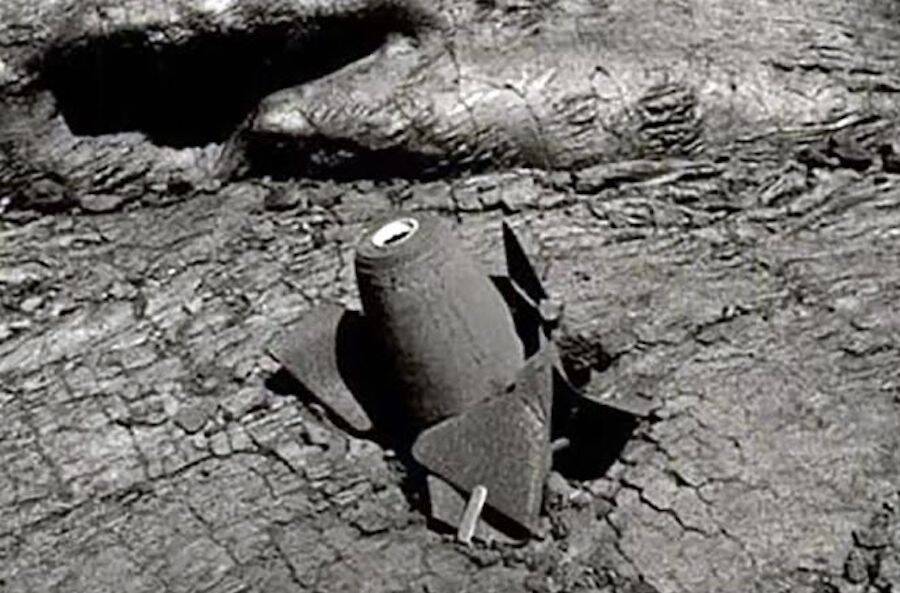
    Jack Lockwood/USGSThe bomb was dropped on Mauna Loa in 1935 and first photographed in 1977 (above), but is believed to have not been seen again until now.When Kawika Singson went for a hike on Hawaiis Big Island, he surely expected nothing more than some scenic hiking around Mauna Loa volcano. As it turns out, the adventurer stumbled upon two unexploded bombs from 1935 the remnants of a failed U.S. Army attempt to divert lava flow.As the Hawaiian Volcano Observatory (HVO) explained in a blog post, it remains hotly contested whether this bomb the volcano strategy ever worked. Though lava flow did slow down after attempts in 1935 and 1942 and victory was declared, scientists still believe these were coincidences.Both of the small pointer bombs discovered by Singson were from the 1935 bombing and were intended to target a set of 20 MK I demolition bombs, each containing 355 pounds of TNT. While the two bombs contained only a small charge, they had yet to explode, and so remained dangerous. For Singson, who hosts Everything Hawaii Adventures with Kawika Singson and worked with explosives while serving in the military it was a rather unsettling discovery. Kawika Singson/Everything Hawaii TVKawika Singson was out for a regular hike when he noticed the protruding 1935 relic.According to Singson, he had no particular agenda other than being out there and hiking. Fortunately, he knew the history of these Pacific bombing runs during the volcanos 1935 eruption and even worked on a segment about the strategy for his show.The idea to bomb Mauna Loa came from HVO founder and volcanologist Thomas A. Jagger Jr. When the volcano began erupting in November 1935 and spewed lava into a growing pond to the north, the pond breached and sent a searing flow of lava toward the city of Hilo at one mile per day.One of the primary dangers here was lava spilling into Wailuku River, which wouldve cut off Hilos water supply. As such, Jagger called the U.S. Army Air Corps and suggesting they bomb the area to open up new flows of lava, thereby diverting the threat elsewhere.Our purpose was not to stop the lava flow, but to start it all over again at the source so that it will take a new course, Jagger said at the time. While that didnt happen when the bombs were dropped on Dec. 27, 1935, the lava flow did slow down and the volcanic eruption stopped within a week. Jagger claimed his strategy was responsible though there was clear evidence that it was not.The likely reason that the plan worked was that the bombs landed in lava tunnels and exposed some of the underground lava to air, which cooled it. This essentially created a dam of cooling lava which ultimately put a stop to its spread.USGSAn aerial view of the Dec. 27, 1935 bombing intended to divert Mauna Loa volcanos lava flow from spilling into Wailuku River.When Kawika Singson encountered two of these unexploded bombs, he immediately panicked, though not before getting some decent video footage and photos of the bombs.I got out of there, got out of the immediate area, he said. I couldnt believe I came across these.Kawika Singson/Everything Hawaii TVKawika Singson found the bomb in Mauna Loas remote lava fields, the coordinates of which he later shared with local officials.Singson met with officials from Hawaiis Department of Land and Natural Resources (DLNR) and provided them with the relevant coordinates. A DLNR spokesperson confirmed a few days later that the bombs were in a remote area of the Mauna Loa Forest Reserve.While authorities of the Division of Forestry, DLNR, and the Division of Conservation and Resources Enforcement cooperate on handling the situation, Singson will cover his involvement in the find as well as chronicle the history of this strategy on an episode of Everything Hawaii.After learning about the TV host who found two unexploded bombs from 1935 near Hawaiis Mauna Loa volcano, read about the unexploded bombs from World War II underneath Pompeii. Then, take a look at these awe-inspiring pictures of volcanic eruptions around the world.The post Unexploded WWII-Era Bombs Dropped By The U.S. Army Found On Hawaiian Volcano appeared first on All That's Interesting.
    0 Kommentare 0 Geteilt 3 Ansichten
  • ALLTHATSINTERESTING.COM
    The Disturbing Story Of James Jameson, The Whiskey Heir Who Paid To Watch Cannibals Eat A 10-Year-Old Girl
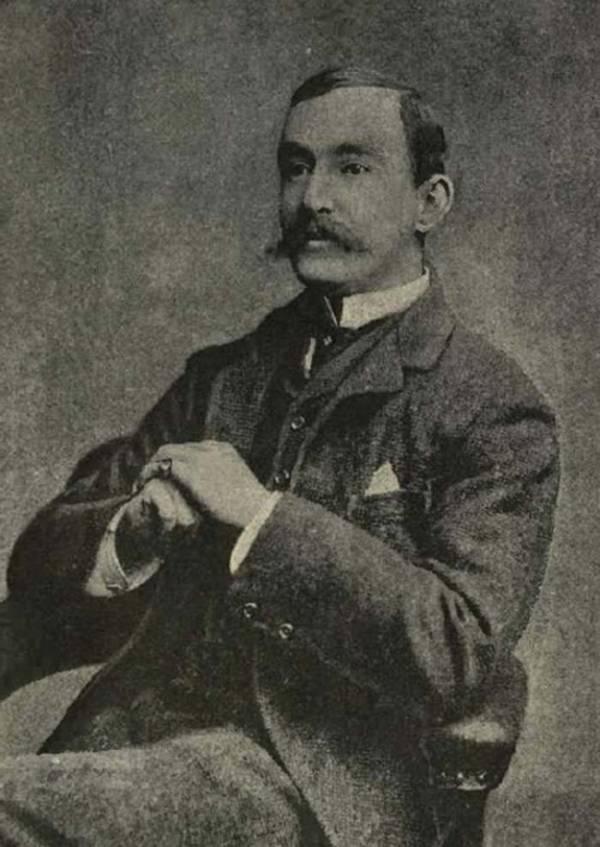
    Public DomainJames Sligo Jameson, the whiskey heir and Scottish naturalist who handed a young girl over to African cannibals in 1888.James Jameson was a prolific traveler, an accomplished naturalist, and the grandson of one of the founders of Jameson Irish Whiskey. He was also fascinated by cannibalism.During an expedition to Africa in the 1880s, Jameson purchased a 10-year-old girl from a slave trader and handed her over to cannibals just so he could watch them eat her. He even sketched the gruesome scene and proudly shared the drawings with anyone who asked.Jameson later tried to claim that he didnt think the Africans were actually going to eat the little girl, but other men on the expedition called his bluff. The naturalist didnt live long enough to defend himself, though.James Sligo Jameson died after spiking a high fever just a few months later, on August 17, 1888, at age 32. Today, despite his work in ornithology and famous family connections, hes best remembered for the needless act of violence he incited along the Congo River.James Jamesons Journey To AfricaBorn in Alloa, Scotland, on August 17, 1856, James Sligo Jameson was a grandson of whiskey distiller John Jameson. He was also the uncle of Guglielmo Marconi, the man credited with inventing the radio. After completing his education, Jameson began traveling, visiting Ceylon (now known as Sri Lanka), Singapore, and Borneo in 1877. While in Southeast Asia, he became the first person to scientifically describe the black honey buzzard. Public DomainA portrait of James Sligo Jameson taken shortly before he set off on his expedition to Africa in 1887.The following year, Jameson headed to Africa for the first time, hunting big game in South Africa and making his way north toward Zimbabwe, collecting animal heads to take back to Scotland. He hunted in the Rocky Mountains, too, before settling down to marry and have two children.Jameson couldnt stay still for long, though. In 1887, he joined the Emin Pasha Relief Expedition as a naturalist. Led by Henry Morton Stanley, the expedition aimed to cross Darkest Africa and potentially annex new territories for Britain beginning in the Democratic Republic of the Congo and following the Congo River to East Africa. Their other goal was to rescue Emin Pasha, an Ottoman physician and the governor of Equatoria (far southern Sudan). He faced threats from the Mahdists who had taken over the rest of Sudan, separating Equatoria from Egypt.Public DomainHenry Morton Stanley (center) with other officers of the Emin Pasha Relief Expedition.So, in March 1887, Jameson and nearly 700 other men set out from the western African port city of Banana and headed inland. Even from the earliest days of the expedition, the naturalists team members noticed that he seemed fascinated by the concept of cannibalism.But it wasnt until May 1888 that Jameson got to witness the grisly act for himself.Cannibals Eat A 10-Year-Old GirlThroughout the second half of 1887 and the first few months of 1888, James Jameson and his fellow team members made their way up the Congo River. They formed a relationship with Tippu Tip, a notorious African slave trader, who sent men to help the Europeans carry supplies. National Maritime Museum, Greenwich, London, Michael Graham-Stewart Slavery CollectionTippu Tip circa 1890, just after he worked with James Jameson and other members of the Emin Pasha Relief Expedition.However, this connection to Tippu Tip proved to be detrimental to the expedition. Local villagers along their route refused to trade with them, as theyd been personally victimized by Tippus slave raids. So, Jameson and his comrades took to kidnapping African women and children and holding them ransom until their communities handed over food. Jameson himself wrote in his diary on July 22, 1887: We finished our last plantain to-day, and have only two more fowls left, a kid and a goat; I see no chance in getting any more, for the natives do not trade, or offer to, in the least. As a last resource we must catch some more of their women.The naturalist also spent this time identifying various birds and insects. Some of these creatures were named after him, such as Jamesons antpecker, Jamesons firefinch, and Jamesons wattle-eye. Derek Keats/Wikimedia CommonsJamesons firefinch, an African bird described by and named after James Jameson.Then, in May 1888, the expedition reached the central forests of the Democratic Republic of the Congo. Jameson was near the village of Yambuya with Tippu Tip when he witnessed residents dancing. Tippu informed him that such celebrations typically ended in cannibalism. As Jameson wrote in his diary, I told [Tippu Tip] that people at home generally believed that these were only travellers tales, as they are called in our country, or, in other words, lies. He then said something to an Arab called Ali, seated next to him, who turned round to me and said, Give me a bit of cloth, and see.'He purportedly thought the men were joking, so he sent his assistant to fetch six handkerchiefs. Then, however, a man appeared, leading a young girl of about 10 years old by the hand. She had recently been captured during a slave raid in a nearby village.James Jameson recorded the gruesome sequence of events that proceeded to unfold in front of him:I then witnessed the most horribly sickening sight I am ever likely to see in my life. He plunged a knife quickly into her breast, twice, and she fell on her face, turning over on her side. Three men then ran forward, and began to cut up the body of the girl; finally her head was cut off, and not a particle remained, each man taking his piece away down to the river to wash it. The most extraordinary thing was that the girl never uttered a sound, nor struggled, until she fell.So, did Jameson really believe it was all a joke? Or as his fellow expedition members claim did he just want to see cannibalism firsthand?The Truth Behind The Macabre Jameson AffairUntil the last moment, I could not believe that they were in earnest, Jameson wrote in his diary. I could not bring myself to believe that it was anything save a ruse to get money out of me, until the last moment.He made several sketches of the scene after returning to his tent though some who were familiar with the so-called Jameson Affair say that he started the drawings as the horrific event was still taking place. Assad Farran, James Jamesons interpreter during the expedition, gave an affidavit about the incident two years later. As reported by The New York Times in November 1890, Farran stated, The man who had brought the girl said to the cannibals: This is a present from a white man who desires to see her eaten.'Public DomainAn 1890 recreation of James Jamesons sketches of the cannibals.Farran went on to describe how the girl was tied to a tree and stabbed before the cannibals cut pieces off of her corpse. Jameson in the meantime, said Farran, made rough sketches of the horrible scenes. Then we all returned to the chiefs house. Jameson afterward went to his tent, where he finished his sketches in water colors.Jameson reportedly delighted in showing off these sketches to his companions which only strengthens the argument that he knew very well what was going to happen when he handed over the handkerchiefs that day in May 1888. However, Jameson never faced justice for his actions, even though they were controversial among his own men at the time.James Sligo Jameson died just three months later, on August 17, 1888, at age 32, after developing a high fever. He was buried on an island in the Congo River. His diaries from the expedition were published posthumously, both securing his legacy as a celebrated naturalist and throwing his work into controversy. Many have suggested that the birds named for Jameson should be given new monikers. In the end, this whiskey heir who could have gone down in history for his contributions to ornithology is instead remembered for his unimaginable cruelty.After reading about the controversial life of James Jameson, learn what human meat tastes like. Then, go inside Stalins horrific Cannibal Island.The post The Disturbing Story Of James Jameson, The Whiskey Heir Who Paid To Watch Cannibals Eat A 10-Year-Old Girl appeared first on All That's Interesting.
    0 Kommentare 0 Geteilt 3 Ansichten
  • ALLTHATSINTERESTING.COM
    The Terrifying Story Of The Peshtigo Fire, The Deadliest Blaze In U.S. History
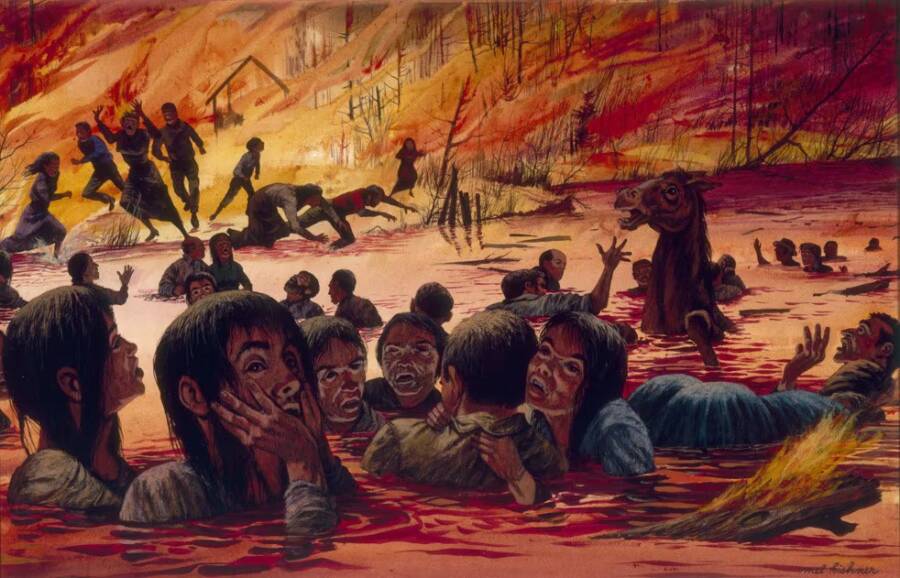
    Wisconsin Historical SocietyA painting of the Peshtigo Fire by Mel Kishner.On October 8, 1871, the Great Chicago Fire tore through the city, killing 300 people and destroying some 17,000 wooden structures. Its remembered today as one of the most infamous fires in American history, and most people know the story about Mrs. OLeary cows allegedly starting the blaze by kicking over a lantern. But on the very same night, a far more deadly fire occurred some 250 miles north of Chicago: the Peshtigo Fire.The deadliest fire in American history, the Peshtigo Fire in Peshtigo, Wisconsin, killed as many as 2,500 people in a single night. The entire town of Peshtigo went up in flames, and the devastation was so great that some have since speculated that the town was hit by a fiery comet.Yet while the Great Chicago Fire became an important chapter in American history, the Peshtigo Fire has been all but forgotten. This is what happened on the terrible night in Wisconsin back in 1871.The Town That Turned Into A TinderboxThree decades before the Peshtigo Fire, the town of Peshtigo, Wisconsin was settled along the banks of the Peshtigo River. In 1838, the towns first sawmill was built, and Peshtigo quickly became an important mill town in the region. It sent its abundant white pines down the river and through Lake Michigan, where timber from Peshtigo was consumed across the Midwest. Public DomainA birds eye view of Peshtigo, Wisconsin, in 1871, created just one month before the Peshtigo Fire. Unfortunately, Peshtigos industrial success made it vulnerable to fire. Not only was the entire town made of wood both its sidewalks and structures were wooden, and even the roads were paved with wood chips but its lumber industry created the perfect conditions for an inferno. As Minnesota Public Radio pointed out in 2002, lumberjacks left huge mounds of branches out in the woods, and millers left behind piles of wooden slabs and sawdusts. Meanwhile, burning was a popular way of clearing land in the region, used by both farmers and railroad builders alike. Though the summer of 1871 was one of the driest on record, people in and around Peshtigo continued to use fire as a tool. Minnesota Public Radio reports that the air was so thick with smoke in the week before the fire that harbormasters in nearby Lake Michigan had to use their foghorns to keep ships from running aground. Meanwhile, a 1921 retrospective on the Peshtigo Fire in the Peshtigo Times recalls that there were at least two large fires in Peshtigo before the Peshtigo Fire, one of which destroyed a house and barn. Peshtigo Fire MuseumA scene from Peshtigos thriving 19th-century lumber industry.Yet none of this was a matter of serious concern in Peshtigo. That is, until the winds started to pick up on October 8, 1871. The Peshtigo Fire Of October 1871Wisconsin Historical SocietyA painting by Mel Kishner of townsfolk during the Peshtigo Fire.On the day of the Peshtigo Fire, a powerful cold front came sweeping through the Midwest. It brought with it intense winds, which fanned smoldering fires into blazes. And by 10 p.m. that night, Peshtigos citizens began to hear the sound of a rumble that began to grow into a roar.On looking towards the west, whence the wind had persistently blown for hours past, I perceived above the dense cloud of smoke over-hanging the earth, a vivid red reflection of immense extent, and then suddenly struck on my ear, strangely audible in the preternatural silence reigning around, a distant roaring, yet muffled sound, announcing that the elements were in commotion somewhere, Reverend Peter Pernin, a witness, later recalled. The roaring, he continued, sound like thunder seemed almost upon us.Then, in what seemed like the blink of an eye, fire descended on the town. Small fires in the region exploded into a firestorm, which, powered by 100-mile-per-hour winds, swept across Peshtigo. Buildings burned in an instant as the high winds knocked people of their feet, and the hot, dry air made it almost impossible to breath. Meanwhile, the temperature spiked up to 2,000 degrees, and a vortex created by the wind sucked the smoke up into the sky, so that the flame-filled air became agonizingly clear.Those lucky enough to escape the blaze made their way to the river. But even there, they werent safe from the fire which had consumed their town. Peshtigo Fire MuseumA depiction of people running into the Peshtigo River during the Peshtigo Fire.Once in water up to our necks, I thought we would, at least be safe from fire, but it was not so, Pernin later recalled.[T]he flames darted over the river as they did over land, the air was full of them, or rather the air itself was on fire. Our heads were in continual danger. It was only by throwing water constantly over them and our faces, and beating the river with our hands that we kept the flames at bay as far as the eye could reach into space I saw nothing but immense volumes of flames covering the firmament, rolling one over the other with stormy violence as we see masses of clouds driven wildly hither and thither by the fierce power of the tempest.The next morning, those who managed to survive through the night found that the town was gone. The Peshtigo Fire had destroyed everything. The Night America Burned: The Aftermath Of The Peshtigo FireOf the 2,000 people living in Peshtigo, between 500 and 800 had lost their lives in the Peshtigo Fire. But the blaze had extended far past the town it had consumed an astounding 1.2 million acres and hundreds of people in the surrounding communities had perished as well. Its believed that up to 2,500 people died in all, making it the deadliest fire in American history. Wisconsin Historical SocietyBurned out streets following the Peshtigo Fire in October 1871.But it was not the only fire to occur that night. Not only had fires struck that night in Holland, Port Huron, and Manistee, Michigan, but a blaze had also erupted hundreds of miles south of Peshtigo in Chicago. Though not really started by a cow, as popularly claimed, the Great Chicago Fire was immensely destructive, and killed some 300 people and destroyed 17,000 structures as it burned through the metropolis. The Great Chicago Fire was terrible but death toll in the Peshtigo Fire was far worse. Why then, was one remembered and not the other?Perhaps the destruction of a city seemed more newsworthy than the destruction of a town of just 2,000. But perhaps it had something to do with telegraph lines. In Peshtigo, the towns only telegraph line was destroyed by the blaze, meaning that news of the fire didnt reach newspapers or government officials until much later. Meanwhile, news of the Great Chicago Fire spread far more easily and quickly across the nation. Public DomainA depiction of the Great Chicago Fire which, while not as deadly as the Peshtigo Fire, became the more famous of the two blazes. Though the Peshtigo Fire never became as well known as the Great Chicago Fire, it stands as the deadliest fire in American history. It was so hellishly terrible that some believe that it was caused by fragments of Comet Biela though this theory has never been proven. Rather, it seems that the Peshtigo Fire was triggered by terrestrial causes. The lumber industry had left Peshtigo vulnerable to fire, and the town itself was more or less made of wood. This, combined with the use of fire to clear land, the dry conditions, and the high wind, turned Peshtigo into a tinderbox.Thats why the night of Oct. 8, 1871, during which fire consumed Peshtigo, Chicago, and other places, is sometimes called the night America burned. After reading about the Peshtigo Fire of 1871, the deadliest fire in U.S. history, discover the tragic story of the Iroquois Theater Fire, the devastating 1903 blaze that killed 600 people and transformed building safety standards in the United States. Or, learn about the devastating Happy Land Fire, the worst arson attack in New York City history that killed 87 people. The post The Terrifying Story Of The Peshtigo Fire, The Deadliest Blaze In U.S. History appeared first on All That's Interesting.

    0 Kommentare 0 Geteilt 3 Ansichten
  • WWW.MASHED.COM
    The Trader Joe's Filipino-Style Food We'll Likely Never Buy Again
    Nobody wants a disappointing meal, so unless Trader Joe's gives this frozen Filipino-style food a transformation, we probably won't add it to our carts.
    0 Kommentare 0 Geteilt 3 Ansichten
  • WWW.BGR.COM
    What's The Difference Between American And European Electrical Plugs?
    If you've ever traveled to Europe, you might have noticed the different electrical plugs. Here's why European plugs differ from their American counterparts.
    0 Kommentare 0 Geteilt 3 Ansichten
  • 3 Rock + Metal Songs Played During Super Bowl Player Intros
    The 3 Rock + Metal Songs Played During Super Bowl Player IntrosKevin C. Cox, Getty Images / YouTube - Alice In ChainsThree huge rock and metal songs played during the Super Bowl player intros during the game tonight (Feb. 8).The Super Bowl LX, taking place at Levi's Stadium in Santa Clara, Calif., sees the Seattle Seahawks take on the New England Patriots. During the Seahawks player...
    0 Kommentare 0 Geteilt 6 Ansichten