• WWW.IFLSCIENCE.COM
    A Chinese Gene-Editing Trial Led To A Young Girl's Death. Now Her Parents Are Calling For Accountability
    Gene editing could be the most powerful tool in medicine, but the responsibility of those developing it is sometimes lacking.
    0 Commentarii 0 Distribuiri 3 Views
  • WWW.THECOLLECTOR.COM
    The Cosmopolitan Medieval Ports That Linked East and West
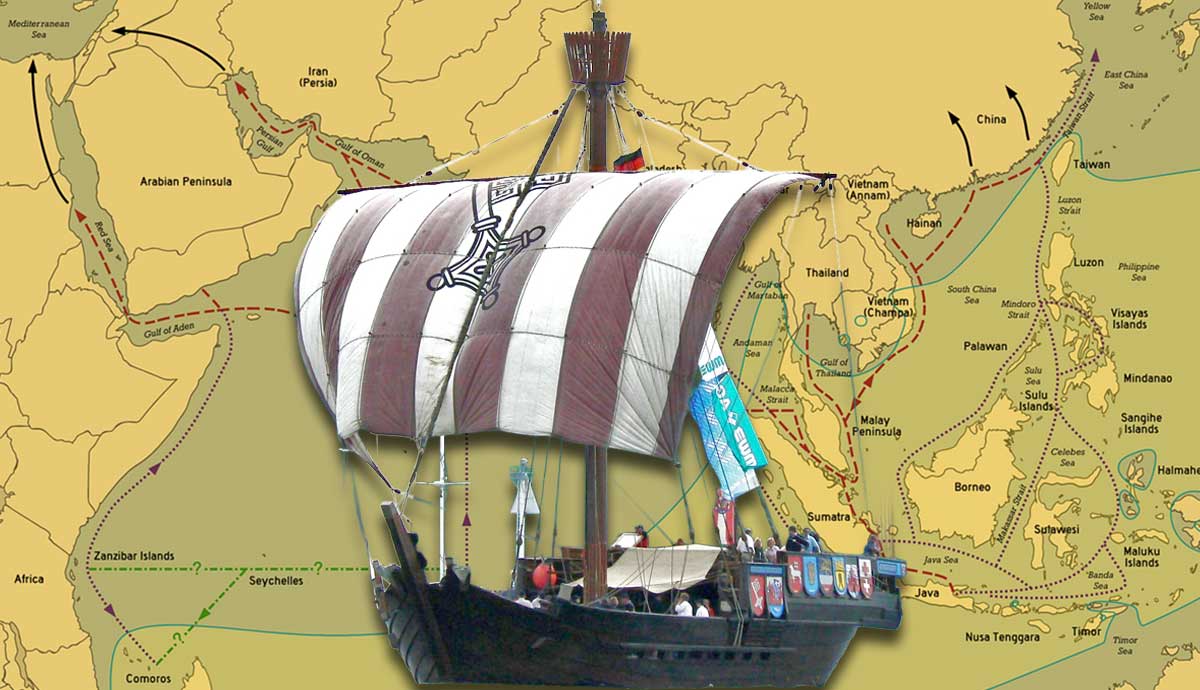
    Far from being a period of stagnation or regression, the Middle Ages were a time of expansion in the transfer of knowledge, merchandise, and people. It has been called the Global Middle Ages because of this increase in connections within and across different regions of the world. Ports of this period linked not only European cities to one another but also connected them to those in Africa and Asia. The end of the ancient empires intensified these links in ways that affected people of all social classes.How a Tech and Money Revolution Sparked the Medieval Trade BoomLbeck, the most powerful city in the Hanseatic League, at the end of the Middle Ages. Source: Wikimedia CommonsSeveral changes occurred during the Medieval period that enabled the rise of connections between major ports. Ships became larger and gradually transitioned from galleys to sail. This meant smaller crews, fewer stops for food, and longer journeys. Additionally, the magnetic compass was introduced, and the steering oar was replaced by a rudder. Both made navigation more accurate.Increasingly, rents were collected in money rather than goods or services, thereby increasing the money supply and aiding economic growth. Banking became widespread locally, and by the 14th century, international banking using bills of exchange was common. Interest rates fell, aiding economic activity. There was also an increase in regular courier services, linking many states by the mid-13th century. The population, which had declined after the fall of the Roman Empire, began to grow from the 7th century. This increase stimulated trade, especially in foodstuffs.Why Constantinople Was the Ultimate Trade Magnet at the Crossroads of EmpireA model of a Byzantine Dromon, a warship of the 9th or 10th century. Source: Athens War Museum / Wikimedia CommonsConstantinople was one of the largest ports of this period and a major world city. Up to about 1000 CE, it was the largest city in Europe. As a hub for trade across the Mediterranean and Europe, to Central Asia and North Africa, it became a magnet for merchants and manufacturers from many different regions of the world. It survived the collapse of the Roman Empire in the 5th century CE and was the capital of the Byzantine Empire. Strategically located on the Bosporus, at the junction of Europe and Asia, it controlled the entrance to the Black Sea, as well as having access to the Mediterranean. It was also on the route of the ancient Silk Road. Merchants imported grain from Africa and traded with Venice, which had its own preferential facilities and regulations. Trade included food, metalwork, cloth, raw materials, pottery, and slaves.How Venice Rose From Mud to Monopoly to Build a High-Tech Maritime EmpireThe Capture of Constantinople in 1204 by the Venetian Navy. Painting by Tintoretto, 1580. Source: Wikimedia CommonsVenice began as a settlement at the time the Roman Empire was declining, and started to thrive as the power of Constantinople waned. It became the foremost Medieval port in western Europe and was the center of a maritime empire. By the end of the period, Venice dominated commerce in the Mediterranean and had strong links with Constantinople. Its strength was founded on naval power, trade, and industrial capacity, which included the Arsenale, where ships were mass-produced using prefabricated components.It also had important trade with Syria and North Africa, and imported goods via the Silk Road from India and China. Adding to its power, Venice was a banking and insurance hub and a source of navigational maps and charts. By the late Medieval period, Venice was one of the largest European cities with a population of up to 200,000.How Quanzhou Scaled the Maritime Silk Road as Chinas Massive 12th-Century Melting PotThe routes of the Maritime Silk Road, from China to the Middle East and Southeast Asia. Source: Wikimedia CommonsArab traders reached Quanzhou in the 8th century, and by the 11th century, it had become the starting point for what became known as the Maritime Silk Road, connecting China with Western Europe. By the 12th century, it was one of the largest cities in the world, with a population of around half a million and a large proportion of Muslim, Christian, and Jewish foreign merchants. Twenty-ship convoys would arrive several times a year, and the port traded in copper, salt, ceramics, and alcohol. During the 14th century, the city began to decline, hastened by anti-foreigner riots, targeting many of those involved in commerce.The Forgotten African and Indian Ports That Linked the Global Middle Ages Beyond EuropeA replica of a Cog, used from the 10th century, primarily for trade in northern Europe. It is wholly sail-driven. Source: VollwertBIT / Wikimedia CommonsThere were many other ports around the globe involved in international trade. In North Africa, there was Alexandria and several in sub-Saharan Africa, like Sofala, in present-day Mozambique. There were several ports in India, such as Quilon (now Kollam), which was home to many religions and nationalities. Trade between these cities was generally funded by private traders, unlike many of the voyages from 1492 onward, which were often organized by governments.The history of the Global Middle Ages is not Eurocentric, unlike much of the early Modern Period, but involved civilizations around the globe. People involved in this worldwide trade were not only sailors, merchants, or agents but were frequently the cargo itself. They could be administrators, priests, skilled workers, or slaves, who were the most numerous group of human captives.How Medieval Melting Pots and Maritime Laws on the Borderless Sea United Three ContinentsMerchants discussing sea law in Hamburg during the late Middle Ages. Source: Wikimedia CommonsAn important aspect of these trading ports was their multi-ethnic composition. The funduqs of the Arabic world are examples of this. These workshops were often attached to living quarters, and people of different backgrounds worked under the same roof. Quanzhou was another example where people of many religions, as well as Arabs, Indians, and Persians, and the locals all labored. These ports were melting pots centuries before the term was first coined.The sea was the highway that enabled these cities to flourish, and there were codified laws governing maritime trade, stretching back as far as 1780 BCE. By the early Middle Ages, there were accepted rules of the sea developed by the burgeoning city ports. These maritime rules were far more global than the laws of the states that made up the medieval world, and were part of a multicultural connectivity across three continents.
    0 Commentarii 0 Distribuiri 3 Views
  • WWW.THECOLLECTOR.COM
    Why Were There Archery Contests in Medieval England?
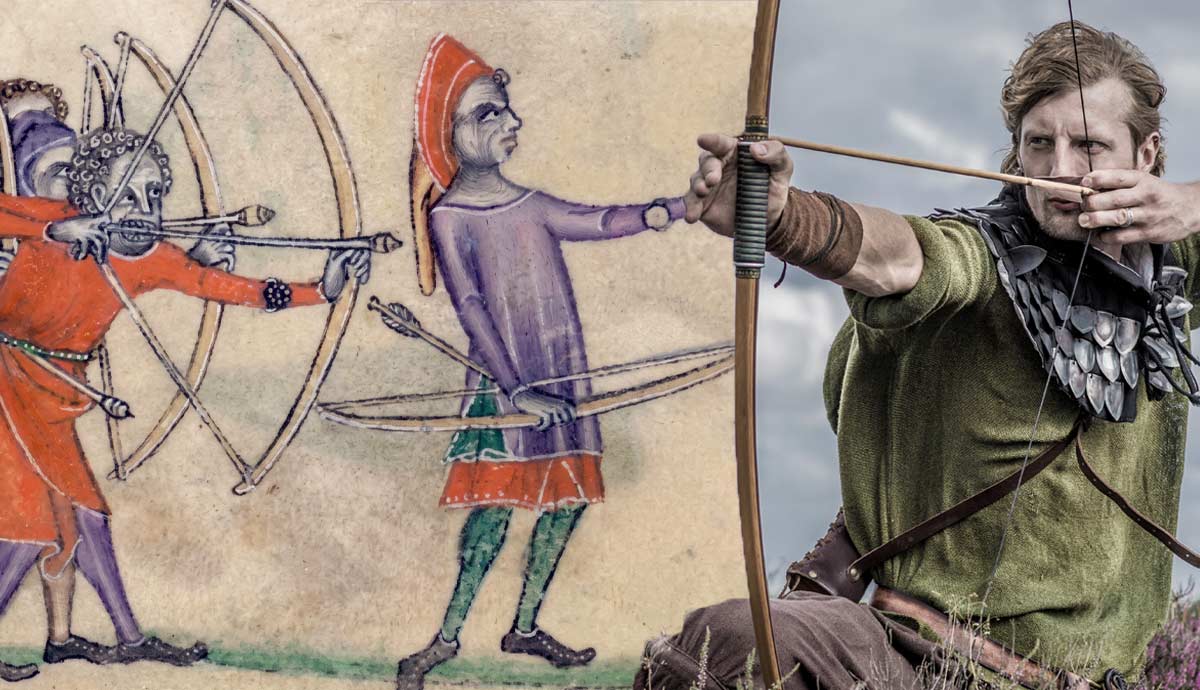
    The story of Robin Hood participating in an archery contest is one of the most iconic scenes from Medieval England. Archery contests were very common in England in the Middle Ages, thanks to laws demanding that many men own bows, and commit to practice or competitions every Sunday. This was a strategic military move, as the English leveraged the longbow to combat the larger armies of empires such as France. Archery contests were part of a broader strategy to train teams of bowmen for the English army.Englands AdvantageEdward I paying tribute to Philip the Fair of France, from Les Grandes Chroniques de France by Jean Froissart, c. 1455. Source: Bibliothque nationale de FranceAlthough prosperous, in the Middle Ages, England was very much a middle power in Europe. It was smaller, less rich, and less militarily powerful than France and the Holy Roman Empire. Further, since the time of Edward I (r. 1272-1307), France was allied with Scotland, meaning England would face war on two fronts if it ever went to war with France. Yet, the national mythology is full of famous victories over the French and Scots at the likes of Crcy, Flodden Field, Poitiers, and Agincourt.Conscious of their natural inferiority, English rulers, following the fall of the Angevin Empire, consciously adopted two strategies to punch above their weight. The first was alliances, taking advantage of Frances internal structure of powerful regional nobles to build coalitions against the countrys kings. The second was a technological innovation that would give the English an advantage over their contemporaries, similar to the impact of the Gatling gun for the 19th-century colonial powers or Bletchley Park in the Second World War.English Yew Longbow. Source: Wikimedia CommonsThat innovation was the longbow, so-called because it was typically six feet long. Its exact origins are unclear. Archery was already common in English warfare before its introduction. Archers had been present in the Norman army at the Battle of Hastings. The Welsh became notorious for their effective use of archery against the English from the 12th century, and Welsh archers became consistent components of English armies thereafter. Edward I appears to have been the first to combine them effectively with infantry and cavalry in his wars against the Scots. It was at this point, sometime in the early 14th century, that the longbow began to emerge as a weapon of war.At the Battle of Hastings, the English leader, King Harold Godwinson, reportedly took an arrow to the eye, as depicted on the Bayeux Tapestry. But this seems to be a later invention designed to suggest he received divine punishment for perjury. Contemporary sources suggest that four Norman knights hacked him to death in a combined targeted attack.Archery Proves DecisiveThe Battle of Crcy, from the Chroniques de Jean Froissart, c. 1400. Source: Bibliothque nationale de FranceThe longbow was effective because of its range and power. It was constructed using wood from yew trees, which were plentiful in England and began to be grown in earnest. Yew wood offered several advantages over other types, principally that it has a tensile elasticity that allows it to create a natural spring-like action. Shorter bows allowed people to draw to the chest. The size of the longbow meant that the draw could go to the ear. This enabled weights of as much as 150 pounds to be fired.This was combined with an evolution in arrow points, with the introduction of bodkin points, with tips shaped into quadrangles. This enabled them to more easily penetrate chainmail. Together, this meant that well-trained, strong longbowmen could pierce armor from as far away as 250 yards.This was to prove decisive in a series of English victories through the Hundred Years War. The most famous triumphs usually involved a smaller English force defeating a much larger French one through good tactics, nerve, and the power of the longbow.The Battle of Sluys, from the Chroniques de Jean Froissart, c. 1400. Source: Bibliothque Nationale de FranceIn 1346 at Crcy, 7,000 English longbowmen killed as many as 12,000 Genoese and French. At Poitiers, a decade later, the scale was magnified when 10,000 of the Black Princes bowmen wiped out a French force that, in some accounts, was as large as 60,000 men, allowing them to capture the French king. The most famous victory was at Agincourt in 1415, where another vastly outnumbered English army again crushed the French thanks to the courageous tactics of Henry V and the ferocity of their Welsh and English longbowmen.Archers werent just required on the battlefield. The Hundred Years War was also marked by naval battles, where again English and Welsh archery prowess made an impact. At sea, the French advantage in cavalry was completely irrelevant, and the kings forces were able to clear decks of enemy troops. At the Battle of Sluys in 1340, English archers vastly outperformed the French crossbowmen in range and rate of fire, enabling the English to secure safe passage across the Channel.The French reportedly lost 190 ships and 18,000 men at the Battle of Sluys. Everyone at the French court was too afraid to tell King Philip VI, so it fell to the court jester, who called the English cowards for not jumping into the sea like the brave Frenchmen, who were fleeing the English archers.Compulsory TrainingThe Battle of Poitiers, from Chroniques de Jean Froissart, c. 1450. Source: Wikimedia CommonsBut the longbow itself was no guarantee of victory in battle. It had to be deployed effectively, and it required extensive training, not least to build up the strength of those required to hold the bow and pull back the immense weight. The former was largely the purview of the nobles and royal commanders. The latter required a familiarity with the weapon in large parts of the population, which may be called into service. Military training for the nobility had largely centered around tournaments focused on jousting and melee, but a different, less formal approach would be required for archers.The importance of archery became clear from 1242 when the Assize of Arms mandated, for the first time, that those with land valued between 40 and 100 shillings were to possess bows and arrows. A little over a century later, Edward III required that all men begin practicing with bows and arrows on Sundays and holidays, after the impact of archers at both Poitiers and Crcy.Areas known as the butts started appearing across villages and towns. The name may derive either from the Old French word, which meant target, or more likely from an Old English word referring to an oddly shaped piece of earth or mound, likely alluding to the fact that shots were generally taken at one or more mounds. Many such placenames survive across the country to this day.As well as requiring target practice on Sundays, all other sports, such as football (soccer) and cock fighting, were also banned on those days in 1363. The ban was only officially lifted in the 17th century.Archery GamesArchery Practice, from the Luttrell Psalter, 1325. Source: Wikimedia CommonsThe type of practice undertaken on Sundays varied. Shooting at the butts was likely the most popular due to its low cost and effort. But it was low pressure, and did not adequately mimic the atmosphere of a battlefield. Competitive contests were a way of, in a small way, placing more pressure on the shooter. One common and cheap form of competitive practice was roving. An archer identified a natural target, such as a tree, and each archer in turn would attempt to shoot at it. The archer who hit it or whose shot was closest would win the competition and call the next target.A more structured contest emerging from the early 14th century was to tie a bird, either living or wooden to the top-sail of a windmill and have archers shoot at it. This was not unique to England, with a strikingly similar activity alluded to in the Iliad, albeit with the bird tied to the ships mast. The game survives to this day as popinjay.Popinjay on Kilwinning Abbey, Scotland. Source: Wikimedia CommonsThis game was also practiced in Scotland by the Ancient Society of Kilwinning Archers, founded in 1483 in Ayrshire. Its members shot at a wooden pigeon suspended from a 100-foot abbey tower pole.Another contest was clout shooting, where a piece of cloth was pegged to the ground at a distance of between 160 and 240 yards. This later evolved into an 18-inch piece of canvas stuffed with straw, fixed to the ground on a wooden stake known colloquially as a prick. To hit both the stake and the bag was considered a special trick. The exercise trained how to judge distances.Alternatively, there was mark shooting. This was where wooden posts were spread across a larger area and obscured by natural features such as hedges or trees. This also trained to judge distances accurately, but also to ignore or take into account obstacles. This mimicked how a target on a battlefield or ship might be blocked by natural obstacles, horses, or even your own men. An 11-acre site in London was set aside in 1498 just for this purpose, known as Finsbury Fields. One event at Finsbury in 1583 drew in 3,000 participants.In the ballads about Robin Hood written in the 15th century, he is imagined as participating in a clout contest. A silver arrow was an extravagant prize, but one known from high-stakes tournaments.Archery Outside EnglandThe Battle of Agincourt (1415), c. 1450. Source: Wikimedia CommonsArchery was not an exclusively English practice. Europe had seen archery contests before its popularization in England, albeit not with precision longbows. France hosted events such as those at the Ressons-sur-Matz from the late 12th century. Frankish and Muslim archers even engaged in friendly distance-shooting contests in 1191 during the Crusades. The French regularly incorporated archery into their tournaments, which typically centered on jousting, but placed a greater emphasis on mounted archery.As the benefits of precise archery became clear, regular archery competitions spread outside of England, particularly in Flanders. This may have been because the area was heavily influenced by English economic ties and its traditional alliance with England against the French crown. Records describe archery competitions, sometimes lasting weeks, from the early 14th century, usually with rewards in the form of wine.The Decline of Archery ContestsA wheellock pistol made in Augsburg, c. 1575. Source: Metropolitan Museum of Art, New YorkThe end of archery began at its high point. Most remember the devastating impact of longbows at Crcy, but few know that the French were deploying primitive cannons. Gunpowder had arrived in Europe from China in the early 14th century. It took a long time for its impact to be felt technologically on the European field of war, but by the late 15th and early 16th centuries, early forms of guns were beginning to be regularly deployed.Their gradual replacement of archery was driven by technological development in both defense and attack. Improvement in plate armor through the 15th century had eventually made it harder to penetrate with arrows. Bullets could more easily pierce it.The manufacture of guns also became cheaper over time. It was also much easier to train someone to use a firearm than the years of practice it took to become strong enough and accurate enough to effectively use a longbow. By the late 16th century, archery had largely faded from the battlefield, although some archers are recorded as having participated in sieges and skirmishes during the English Civil War.Englands laws around owning bows and practicing archery on Sundays soon became unenforced, but they were technically on the books until 1960.SourcesHardy, R. (1992). Longbow: A Social and Military History. Kensington, MD.Prestwich, M. (2005). Plantagenet England, 1225 1360. Oxford.Sellman, R. (1973). Mediaeval English Warfare. London.

    0 Commentarii 0 Distribuiri 3 Views
  • North America Aesthetic Medicine And Cosmetic Surgery Market Demand, Innovations and Growth Prospects 2034
    North America continues to lead the Aesthetic Medicine And Cosmetic Surgery Market due to its advanced healthcare infrastructure, strong consumer awareness, and widespread adoption of minimally invasive and surgical aesthetic procedures. The region benefits from high disposable income, rapid integration of innovative technologies such as AI-assisted imaging, laser-based treatments, and...
    0 Commentarii 0 Distribuiri 6 Views
  • ALLTHATSINTERESTING.COM
    11 True Ghost Stories, From The Shining Hotel To The Amityville Horror
    Not everybody believes that there are real ghost stories buried in the annals of history. Skeptics are confident that theres an absolute separation between the realms of the living and the dead.On the other hand, most people also know someone who has had an experience that they cant fully explain. The list of these kinds of accounts across history is staggering, though theres also little scientific proof to back them up.But whether or not you are a believer, these 11 ghost stories will undoubtedly leave you unnerved.YouTubeThe real ghost story that helped inspire The Conjuring 2, the Enfield haunting shocked London in the late 1970s.From the real-life Stanley Hotel that inspired Stephen King to write The Shining, to the apparitions of enslaved people wandering the Myrtles Plantation, these true ghost stories may even have you reconsidering what you think you know.The Real Ghost Story Of Kate Morgan, The Beautiful StrangerWikimedia CommonsKate Morgan, otherwise known as the beautiful stranger.It was 1892 and Kate Morgan was a grown and capable 24-year-old woman. According to Californias notorious Hotel del Coronado, she checked in to the resort on Thanksgiving Day.Some say she never checked out.Employees recalled that Morgan said she was waiting for a gentleman to join her. After five days as a guest, the ghost story goes, nobody showed and Morgan shot herself in the head. While nothing was found at the scene to identify her, police telegraphed her description to authorities around the country.The media dubbed her the beautiful stranger for her description and it was soon discovered she had an estranged husband. Her gentleman caller, it was presumed, was a lover. Morgan was also reportedly pregnant when she killed herself.FlickrThe Hotel del Coronado where Kate Morgan committed suicide.Before her suicide, Morgan worked as a household caretaker in an affluent suburb of Los Angeles. During her travel to the hotel, onlookers saw her verbally spar with an unidentified male. He got off mid-route and abandoned her, leaving Morgan melancholy upon her arrival.Though unclear whether this figure was her husband or not, Morgan sorrowfully wandered into town and procured a pistol. According to Beautiful Stranger: The Ghost of Kate Morgan and the Hotel del Coronado, theres no shortage of people whove reported paranormal activity in the hotel. Guests have experienced flickering lights, a rogue television, and a change in temperature that appears out of nowhere and vanishes just as inexplicably. Doors have opened and shut on their own, footsteps and voices have been heard but no people have been seen.A paranormal investigation team stays in room 3327 of Hotel del Coronado, where the famous ghost of Kate Morgan is said to haunt.Because human curiosity knows no bounds, Morgans room has been the most requested room of them all at the hotel. Even a group of independent paranormal researchers stayed there to document the so-called hauntings.The team employed infrared cameras, night vision goggles, radiation sensors, indicators for toxic chemicals, microwave imaging systems, and high-frequency sound detectors. Though Morgan stayed in Room 3327 (formerly 302), her apparition has appeared elsewhere. There have been several sightings in room 3519 (formerly 3502 and intended for maids), for instance. Guests have reported objects moving independently. Stranger still, the hotel owners mistress also killed herself at the resort after discovering she was pregnant.Of course, countless guests had already reported seeing her, both in the hallways and by the beach.The hotel gift shop, too, has seen unexplained phenomena, with items flying off shelves and often landing right-side up. Ultimately, its unclear what exactly is going on at the hotel. An elaborate ruse by management? Buyers remorse on behalf of guests? Or, possibly, real paranormal activity in plain sight.Conjuring Up Real Ghost Stories With Ed And Lorraine WarrenYouTubeThe notorious Perron house, where the Warrens investigated the familys reports of demons.James Wans 2013 horror film The Conjuring introduced mainstream audiences to the true story of paranormal investigators Ed and Lorraine Warren and their horrifying experience with the Perron family. The true ghost story, though, may be even scarier than the film.According to USA Today, Lorraine Warren consulted on the movie and was adamant that it was true to what happened to her and the Perron family.The things that went on there were just so incredibly frightening, she said. It still affects me to talk about it today. Neurologist Steven Novella, president of the New England Skeptical Society, however, investigated the couple and is convinced they fabricated the whole thing. The Warrens are good at telling ghost stories, he simply stated.Getty ImagesEd and Lorraine Warren are paranormal investigators whose cases have inspired movies such as The Conjuring, The Amityville Horror, and Annabelle.The Perrons alleged haunting began in January 1971 when they moved into their new farmhouse, built in 1736, in Harrisville, Rhode Island. Carolyn and Roger Perron and their five daughters began to notice strange occurrences almost immediately.Oddly enough, they continued to live there for nine years.Andrea Perron was 12 years old at the time and claimed the film was a beautiful tapestry with many elements of truth to it, and some moments of fiction. Little did the Perron family know that the 200-acre home was said to have once been inhabited by a woman named Bathsheba Thayer and her four children, three of whom died young. The town labeled Thayer a satanist who allegedly hanged herself from a tree in the backyard, and the Perrons were allegedly attacked by her spirit. Some of these incidents were harmless. Some claim she never lived there at all. Other incidents on the property, however, were fairly violent.The official trailer for The Conjuring.The Perron children allegedly played and did chores with some of the spirits. Thayers ghost was not as friendly. She purportedly moved furniture to scare the new tenants, appeared fully at times, and as depicted in the film, haunted the familys matriarch most of all. Carolyn Perron was allegedly pinched and forcefully slapped by Thayers ghost.Whoever the spirit was, she perceived herself to be mistress of the house and she resented the competition my mother posed for that position, said Andrea Perron. The Warrens were hired to help in 1974, but the Perrons eventually asked them to leave after Carolyn Perron became temporarily possessed. Her daughter allegedly witnessed this first-hand.I thought I was going to pass out, she said. My mother began to speak a language not of this world in a voice not her own. Her chair levitated and she was thrown across the room. Both my mother and I would just as soon swallow our tongue than tell a lie. People are free to believe whatever they want to believe. But I know what we experienced.The so-called Conjuring House where the Perrons experienced the paranormal has recently been bought by two new owners. The fearless couple said they havent felt anything evil in the house, though it is certainly busy.The post 11 True Ghost Stories, From The Shining Hotel To The Amityville Horror appeared first on All That's Interesting.
    0 Commentarii 0 Distribuiri 3 Views
  • WWW.DUALSHOCKERS.COM
    10 Friendslop Games Perfect for Party Night
    The friendslop video game genre is often thrown around as a half-joking label for games with low stakes, simple controls and mechanics, ragdoll physics, betrayal mechanics, inside jokes, and other similar elements. Exactly what you would expect a party game to have. Having played plenty of them myself, I can tell you that they really are just as chaotic and silly as people make them out to be.
    0 Commentarii 0 Distribuiri 3 Views
  • WWW.PCGAMESN.COM
    Fortnite just made late-game battle royale matches sweatier, with "less time to rotate"
    Fortnite has received a huge shake-up to its battle royale mode, with late-game storm circles closing faster than before. While moving around the map early on will feel the same as it currently does, Epic notes that "as the match goes on, you'll have less time to rotate late." Sucks for someone like me who [...]
    0 Commentarii 0 Distribuiri 3 Views
  • WWW.PCGAMESN.COM
    Anime Dungeons codes (July 2026)
    It's not easy regaining your power from the ground up, which is where our Anime Dungeons codes come in. Use these codes for free gems, trait rerolls, and stat rerolls to boost your team's combat prowess without spending a single penny. Even the world's greatest heroes need a little help sometimes. We look for new [...]
    0 Commentarii 0 Distribuiri 3 Views
  • WWW.PCGAMESN.COM
    Nexus Mods wants to make modding "Spotify-easy," with a "browse, click, and play" system
    It's no secret that modding is a core part of the PC gaming ecosystem. It is also, however, one of the most complex things to really dig into for those who aren't as computer-savvy as more hardcore players. In his first public letter on Nexus Mods, however, new owner and Chosen CEO Victor 'Foledinho' Folmann [...]
    0 Commentarii 0 Distribuiri 3 Views
  • 0 Commentarii 0 Distribuiri 3 Views