



WWW.LIVESCIENCE.COM
We tested Canons $10,000 wildlife zoom can it replace a prime lens?
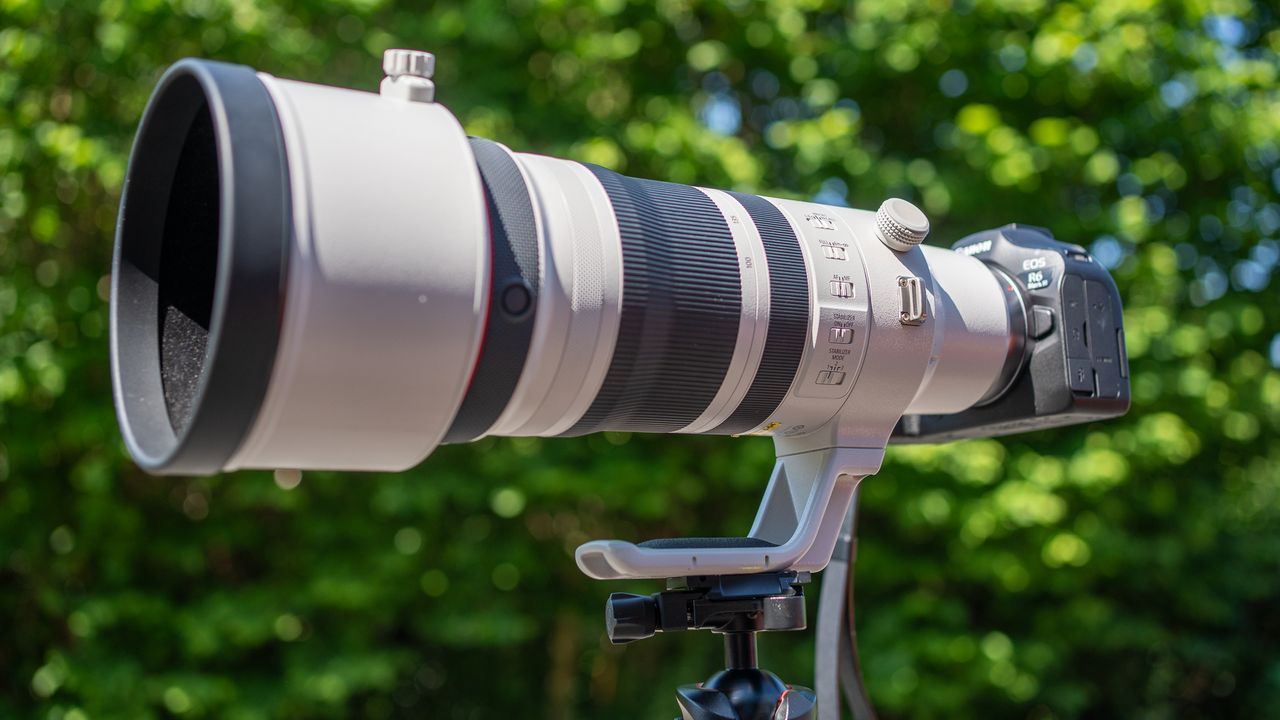
When it comes to the "silly money" category of lenses, they are typically those ridiculously long prime lenses that make your arms ache just by looking at them. They provide incredible image quality but lack the versatility of a zoom. Enter the Canon RF 100-300mm f/2.8L IS USM: With a constant f/2.8 aperture throughout the entire 100-300mm focal range, this lens is a serious contender for wildlife pros and sports photographers.Of course, at an eye-watering $10,500, it's not for everyone. It's not even for "many people"; it's for a select few who either have serious money lying around or make serious money from photography, where a lens of this caliber would be a sensible investment. Still, we took it for a test drive to see just how much better the performance is compared to the more reasonably priced wildlife zoom lenses.Canon RF 100-300mm f/2.8L IS USM: DesignKimberley LaneKimberley LaneKimberley LaneWeight is surprisingly manageableInternal zoomSolid and sturdy build qualityAlthough its weight is comparable to that of the much cheaper SIGMA 60-600mm Sport lens we tested recently, this lens from Canon is actually the lightest f/2.8 300mm lens on the market. And because the zoom is internal, the weight distribution feels much more manageable in the smaller package than it does on a lens that extends. (But thats not to say our arms werent aching the following day). It's also dust- and weather-resistant, which wed expect on a lens that's this expensive. It's solid and sturdy with a plethora of lens coatings to eliminate glare and ghosting, and it feels every bit the professional-grade Canon L lens you would want.It comes with plenty of buttons and switches on the barrel, including the standard AF/MF switch, focus limiter and IS on/off. It has another switch to choose between three stabilization modes (mode 1 for static subjects, mode 2 for panning and mode 3 for tracking erratic moving subjects). The final switch is a focus preset button, which enables you to pre-focus on a certain spot where you expect the action to be, then switch back and forth as you're shooting. Alternatively, you can set this switch to L-Fn to utilize it as a programmable function button instead.Key specs:Type: Canon full frame, mirrorlessFocal length: 100-300mmAperture: Constant f/2.8Close focusing distance: 5.9 feet / 1.8 m (constant)Image stabilization: 5.5 stopsFilter thread: 112 mmDimensions: 5.04 x 12.73 inches / 128 x 323.4 mmWeight: 5.7 lbs / 2,590 gThis lens isn't expensive because it introduces any revolutionary build features. It's expensive because Canon has combined every premium design element internal zoom, magnesium construction, professional weather sealing, compact packaging and meticulous engineering into a lens that is designed to meet the needs of professional photographers.Canon RF 100-300mm f/2.8L IS USM: PerformanceKimberley LaneKimberley LaneKimberley LaneKimberley LaneKimberley LaneKimberley LaneOutstanding image qualityBasically no image defectsBeautiful bokehImage quality is, unsurprisingly, absolutely beautiful. The shots we took are razor-sharp and clean with basically no defects whatsoever. There's a tiny bit of distortion, which is easily corrected in Lightroom (and wouldn't be detectable unless you were directly comparing the before/afters), but the images have no chromatic aberration or vignetting at all. This lens shows every strand of fur or feather and effortlessly captures the moment perfectly every time. The bokeh is soft and creamy thanks to the constant f/2.8 aperture, which beautifully isolates the subject and blurs out distracting background elements. We took images at f/2.8, f/4, f/5.6, f/8 and f/11 at 100mm, 200mm and 300mm to see how the lens performs across a variety of settings. Looking at the center portion of our test chart shots, the sharpest images are f/5.6 at 100mm, f/2.8 at 200mm and f/2.8 at 300mm. At 100mm, our f/2.8, f/4 and f/5.6 shots were all of similar quality in terms of central sharpness, but f/5.6 has the edge when it comes to contrast. Those same three apertures were also very similar at 200mm, but in this instance, f/2.8 has the edge. At 300mm, there was a significant drop in contrast between f/2.8 and f/4, but both images were of similar sharpness. Unsurprisingly, the corners were sharpest towards the f/8 range, but wildlife photography rarely ever calls for sharpness across the entire frame, so the softer corners at f/2.8 - f/5.6 aren't a dealbreaker.Canon RF 100-300mm f/2.8L IS USM: FunctionalityKimberley LaneKimberley LaneKimberley LaneKimberley LaneKimberley LaneKimberley LaneConstant f/2.8 aperture throughout the whole zoom range5.5 stops of image stabilizationVersatile focal length and teleconverter compatibilityA big selling point with this type of lens is the constant f/2.8 aperture throughout the entire focal range and this is a common feature with many lenses at this price range. The wide aperture allows for faster shutter speeds, which is ideal for capturing sharp images of fast-moving wildlife or sports photography, and the wide aperture also increases light intake in low-light situations, like photographing animals at dawn or dusk or indoor sports.Although the 100-300mm focal length wouldn't be the best choice for photographing small birds or distant subjects, it provides a good focal range to cover many other types of wildlife, like equine or safari photography, as well as a variety of indoor sports. While it's not the biggest zoom range on offer, it eliminates the need to switch between lenses while on a shoot. This, in turn, means faster reactions to changing scenes, less chance of missing shots when the subject moves unexpectedly and better protection from dust and rain due to less swapping. Plus, when paired with the Canon 1.4x teleconverter, this lens becomes a 140-420mm f/4, and a 200-600mm f/5.6 with the 2x extender, opening up the possibilities even further.With the lens's 5.5 stops of image stabilization (which increases to 6 stops when paired with EOS R cameras with IBIS), this lens has no trouble following fast-moving subjects smoothly and efficiently which is useful for both image quality and viewfinder steadiness.Should you buy the Canon RF 100-300mm f/2.8L IS USM?(Image credit: Kimberley Lane)It feels counterintuitive to give this lens 5 stars but say "no, don't buy it," and it's not that we're saying "don't buy it," but as good as this lens is, it's quite niche, and we are finding it hard to justify the price compared to other setups from Canon. Related articles:Best wildlife lensesBest wildlife camerasBest wildlife lenses under $1,000Best camerasBest binocularsBest binoculars for bird-watchingBest compact binocularsCurrently, this lens is the only way to get 300mm at f/2.8 (unless you get a used EF 300mm f/2.8L IS II USM and an EF-EOS R adapter), so unless you really need to shoot between 200-300mm at f/2.8 and have the money to do so, there are more sensible options that either save money or give you more value. For example, you could buy an R1 and a used EF 300mm f/2.8L lens with an adapter for around the same price as this 100-300mm lens. And if you find good deals, you could even add the Canon RF 70-200mm f/2.8L IS II USM to that lineup with a teleconverter. The only advantage the 100-300mm would then have is that you wouldn't need to change lenses but is that worth such a steep price? If this lens isn't for you For serious birders Canon RF 600mm f/4L IS USM For birds or distant wildlife, the Canon RF 600mm f/4L IS USM lens will be more appropriate. Although you lose a bit of aperture at the wide end, it won't make too much difference in practice, and the longer reach makes this lens much more suitable for photographing birds. If you want a cheaper telephoto zoom Canon RF 70-200mm f/2.8L IS USM For photographers who don't need 300mm very often and want to save several thousand dollars, the Canon RF 70-200mm f/2.8L IS USM covers up to 200mm and also has a constant f/2.8 aperture. Plus, it's a lot lighter and more compact. If you prioritize reach over speed Canon RF 200-800mm f/6.3-9 IS USM If you photograph distant subjects or small birds in good light and you need more reach, the Canon RF 200-800mm f/6.3-9 IS USM has the most reach of any Canon zoom and produces beautiful images.Read our full Canon RF 200-800mm f/6.3-9 IS USM review
0 Kommentare
0 Geteilt
25 Ansichten








 English
 Arabic
 French
 Spanish
 Portuguese
 Turkish
 Dutch
Dutch
 Italiano
 Russian
 Romaian
 Portuguese (Brazil)
 Greek
Greek