0 Comentários
0 Compartilhamentos
31 Visualizações
Diretório
Elevate your Sngine platform to new levels with plugins from YubNub Digital Media!
-
Faça o login para curtir, compartilhar e comentar!
-
YUBNUB.NEWSAOC Should Thank Baby Boomers for the World They Left HerAlexandria Ocasio-Cortez says she knows why socialism is on the rise: Blame it on the boomers.Millennials and Gen Z combined, now for the first time, are eclipsing the number of baby boomers, she0 Comentários 0 Compartilhamentos 31 Visualizações -
YUBNUB.NEWSDont Trust AND VerifyGary VarvelGary Varvel is the editorial cartoonist for The Indianapolis Star.Born in Indianapolis, Indiana in 1957, Varvel was drawn to cartoons as a child when he saw a copy of MAD magazine. His freshman0 Comentários 0 Compartilhamentos 31 Visualizações -
YUBNUB.NEWSU.S. Moves Two Carrier Strike Groups Toward Iran as Trump Considers Renewed Port BlockadeMore than 20 American warships are operating across the Middle East as the Trump administration weighs restoring a blockade following renewed attacks on commercial vessels in the Strait of Hormuz. By0 Comentários 0 Compartilhamentos 31 Visualizações -
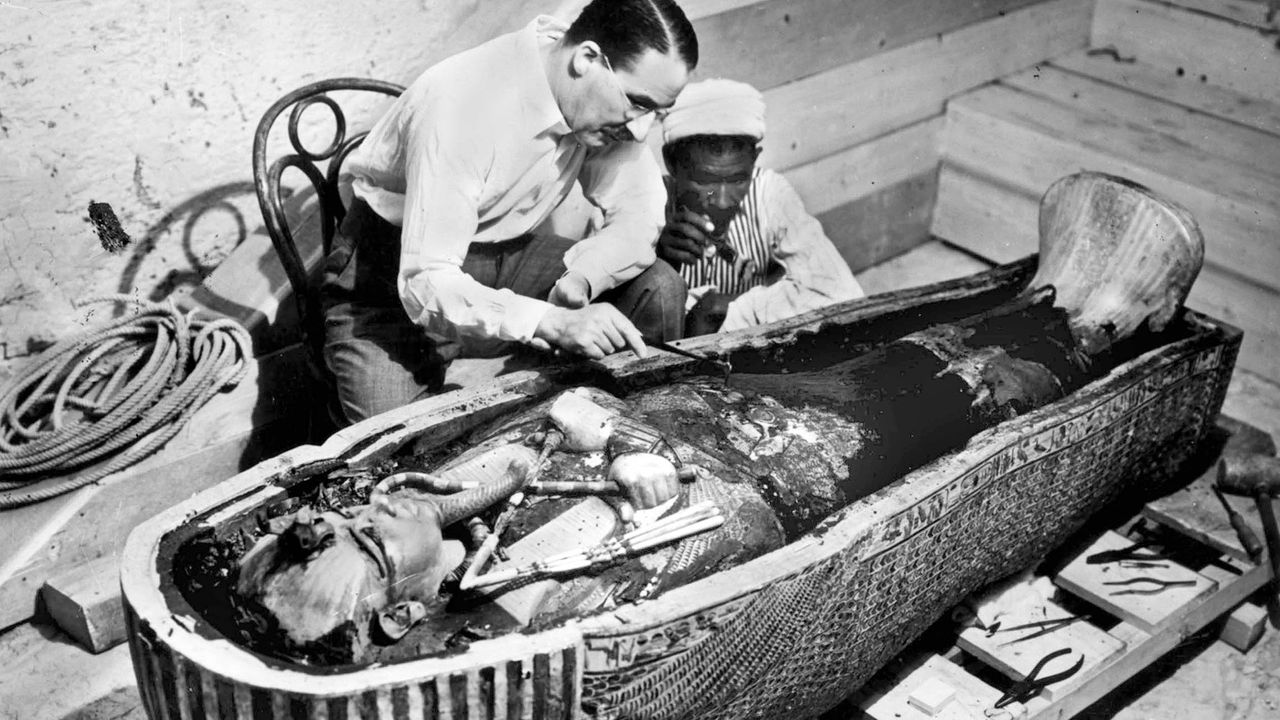
WWW.LIVESCIENCE.COM'He looked like Ramses the Great': How experimental archaeologists used ancient techniques to mummify a modern-day personIn most areas of archaeology, excavators painstakingly dig layer by layer to reveal not just buried artifacts but also charred seeds, broken bones and microscopic grains of ancient pollen. This delicate process is followed by months of intensive lab work to study the newfound remains. But there is one kind of archaeologist that takes a different approach to understanding the past. Experimental archaeologists replicate how people did things in the past, using techniques they recreate from archaeological information and modern knowledge.In his new book, "Dinner with King Tut: How Rogue Archaeologists Are Re-creating the Sights, Sounds, Smells, and Tastes of Lost Civilizations" (Little, Brown and Co., 2025), science writer Sam Kean explores the experimental side of archaeology. Through a series of ancient and modern vignettes, Kean discovers how Stone Age city dwellers kept their houses cool 9,000 years ago, how the Romans used needle and thread to style hair, and how bog bodies were formed in Iron Age Europe.In this excerpt, Kean meets two men who used ancient techniques to diligently mummify a human body in an effort to understand how ancient Egyptians took care of their dead.Related: Read our interview with Sam Kean on 'Dinner with King Tut'Cultures throughout history have mummified their dead, and a handful still do today, but Egyptian mummies remain the most iconic. Unfortunately, the Egyptians wrote down virtually nothing about their embalming process. This leaves experimental archaeology as one of the few avenues available for understanding mummification, and several practitioners have indeed re-created mummies in modern times. In most cases, they work with animals, but a few intrepid souls have mummified human beings, most famously when Bob Brier and Ronn Wade did so in 1994. The cover of "Dinner with King Tut: How Rogue Archaeologists Are Re-creating the Sights, Sounds, Smells, and Tastes of Lost Civilizations." (Image credit: Little, Brown & Company / Hachette Book Group)Wade grew up wanting to be a mortician like his father. After a stint as a medic in the Vietnam War, he became an anatomist and eventually the head of Maryland's state anatomy board. Brier also has training in anatomy, but is an Egyptologist by training and passion. He's accumulated so many books on Egypt over his life that he rents a second apartment just to accommodate them. Brier and Wade selected their mummy from the pool of people in Baltimore who donated their bodies to science. Ultimately, they settled on a seventy-six-year-old Caucasian man who died of a heart attack. His identity remains secret, but a bit crassly, Wade nicknamed him E. M. Balm.For authenticity's sake, Brier and Wade used replicas of pharaonic-era tools and materials, including linen wraps, an oddly wide wooden embalming table, and copper and obsidian blades although they quickly abandoned the copper ones, which couldn't cut flesh well. Before starting on their mummy, they practiced one important step on other cadavers: extracting the brain. Instead of using full cadavers for this, they obtained some decapitated heads leftover from a medical school's plastic surgery class. ("They were looking a little weird," Brier recalls. "They'd had facelifts and such.") From some scant references, Brier knew that Egyptian embalmers removed the brain by inserting a hooked rod through the nostrils, but the details were vague. Brier and Wade first tried scooping the brain out with such a rod, but the tissue proved too soft and wouldn't come out. They finally took to squirting water up the cadaver's nose, then used the rod to whisk the brain into a slurry. After that, it poured right out. "Like a milkshake," Brier says. "A strawberry milkshake to be exact." Skills honed, the duo began making their mummy in May 1994. The first step involved removing his organs.Related stories7 famous mummies and secrets they've revealed about the ancient worldWorld's oldest mummies were smoke-dried 10,000 years ago in China and Southeast Asia, researchers findEgyptian mummy has part of the 'Iliad' in its abdomen, archaeologists discoverDifferent organs met different fates in Egypt. Unclear about the purpose of the brain, embalmers typically threw it away. The heart, in contrast, was left in situ [in place]; it was considered the seat of all thinking, emotion, and intelligence. Abdominal organs were carefully extracted and preserved. Following this protocol, Brier and Wade made a 3-inch [9 centimeters] incision in their cadaver's abdomen and removed the spleen, liver, gallbladder, lungs, and twenty-two feet [6.7 meters] of intestines. Given their size, extracting the liver and lungs required some creative geometry and determined squeezing. The most difficult part involved detaching the lungs from the heart while working blind inside such a tiny hole.With the organs removed, the pair cleaned the abdomen with palm wine and myrrh, then stuffed frankincense into the skull. This was an important ritual step to prepare the body for the afterlife, and also helped kill microbes and mask bad smells. Ancient embalmers used other sacred substances as well, often imported from Europe and Asia at great cost pistachio resin, beeswax, castor oil. Ramses the Great's mummy had peppercorns from India shoved up his nose.Next, Brier and Wade dehydrated the body using natron, a mineral of equal parts salt and baking soda that forms naturally in Egyptian wadis, or dry gullies. Like a sponge, natron sucks the moisture out of flesh, leaving it too dry to support bacteria, maggots, beetles, and other putrefying agents; the leftover tissue is essentially jerky. (Fully committed to authenticity, Brier dug the natron himself in Egypt, and recalls that sneaking hundreds of pounds of unidentified white powder through customs at JFK Airport was one of the more ticklish aspects of the project. Luckily, he was traveling with a film crew, and could hide the powder in suitcases amid their equipment.) In their lab, Brier and Wade placed the mummy's spleen, lungs, liver, and intestines into bowls and covered them with natron. They also packed 29 linen bags of the powder into the body's empty torso, laid the body on top of 211 more pounds [96 kilograms], and dumped 583 additional pounds [264 kg] over it. They kept the body in Wade's old office, with the heat cranked up to 104 degrees F [Fahrenheit, or 40 degrees Celsius] and dehumidifiers running night and day to simulate Egyptian air. Over the next five weeks, the natron on top turned crusty and brown from absorbing bodily juices, forcing Brier and Wade to crack through it with an iron rod. (Today Brier remembers the odor as acrid but not unpleasant, although news reports at the time say he and Wade donned surgical masks against the smell.) Regardless, the sight of the body beneath thrilled Brier. As it dries, the skin of mummies tightens and shrivels, especially on the face and scalp. The lips retract to reveal the teeth, and skin with less melanin turns brown-yellow. Brier always wondered whether those changes resulted from the immediate mummification process, or from several thousand years of weathering in Egypt's arid climate. One glance at his mummy and Brier knew the answer: even after five weeks, "he looked just like Ramses the Great," he recalls, with leathery skin, a beaky nose, and wispy hair sticking up. The embalming process, not time, made the iconic mummies we know today.Ramses II's long-preserved mummy. Experts have recreated the mummification process to learn more about how the ancient Egyptians preserved their dead. (Image credit: Patrick Landmann via Getty Images)Beyond changing the body's appearance, the dehydration process left the limbs as stiff as tree branches, and dropped its weight from 188 pounds [85 kg] to just 79 [36 kg]. (Thirty-one pounds [14 kg] of that represented the removal of organs.) The organs drying in the bowls withered as well, which helped explain another mystery of Egyptian mummification: as other archaeologists have noted, embalmers typically placed the organs in socalled canopic jars, funerary vessels with slim necks so slim that it seemed impossible to fit the larger organs inside. But the natron shrunk them down enough to slip right in.After removing him from the natron, Brier and Wade gave Mr. Balm a full body massage with lotus, cedar, and palm oils, another step that, while important ritualistically, also had pragmatic benefits restoring flexibility to the joints, making the mummy easier to handle. This accomplished, they wrapped the body in linen bandages. (Embalmers in ancient times started with the hands and feet, wrapping each digit separately, then proceeded to the arms, legs, and torso. The penis was individually wrapped as well or, if embarrassingly shriveled, a codpiece of stiff linen was bound in place.) At this point, they let the mummy dry for three more months in the arid office, which dropped its weight to 51 pounds [23 kg]. Afterward, they added several more layers of wrappings. In between the layers, they slipped magic amulets and scraps of papyrus with spells on them, a common practice in ancient times.For the past three decades, the mummy has been lying in a metal casket in Maryland, stored at room temperature. Brier and Wade have partially unwrapped it twice to check for rot, but found nothing amiss. "He's dead and well," says Brier. LITTLE, BROWN Dinner With King Tut: How Rogue Archaeologists Are Re-Creating the Sights, Sounds, Smells, and Tastes of Lost Civilizations Finalist for the 2026 PEN/E.O. Wilson Literary Science Writing Award | LOS ANGELES TIMES BESTSELLER | INDIE BESTSELLER | The New Yorker's Best Books of 2025Whether it's the mighty pyramids of Egypt or the majestic temples of Mexico, we have a good idea of what the past looked like. But what about our other senses: The tang of Roman fish sauce and the springy crust of Egyptian sourdough? The boom of medieval cannons and the clash of Viking swords? The frenzied plays of an Aztec ballgame...and the chilling reality that the losers might also lose their lives? See how much you know about mummies with our mummy quiz!0 Comentários 0 Compartilhamentos 31 Visualizações -
WWW.LIVESCIENCE.COM'Some people called it horrifying': 'Dinner with King Tut' author on using Egyptian mummification techniques on a modern-day human bodyMost archaeologists spend time digging in the dirt or piecing together broken artifacts or bones in the lab, attempting to make sense of the past in a painstakingly slow process. But others use that information and a little ingenuity to re-create the sights, sounds, smells and tastes of ancient societies through a practice called experimental archaeology.In his book "Dinner with King Tut: How Rogue Archaeologists Are Re-creating the Sights, Sounds, Smells, and Tastes of Lost Civilizations" (Little, Brown and Co., 2025), author Sam Kean delves into the overloaded sensory world of experimental archaeology practitioners. Along the way, he learns to knap a stone tool like early Homo sapiens did, create an intricate hairstyle that would make a Roman woman proud, tattoo someone using ancient tools, play an Aztec ball game, and bake the kind of sourdough loaf that King Tut once ate.Kean spoke with Live Science about his book, which was a finalist for the 2026 PEN/E.O. Wilson Literary Science Writing Award and was named one of The New Yorker's best books of 2025. Related: Read an excerpt from Kean's book, "Dinner with King Tut."Kristina Killgrove: What intrigued you about experimental archaeology?Sam Kean: There was sort of a conflict within me because, on the one hand, I really love the questions that archaeology brings up. There's some big, meaty questions about who we are as a species, how we spread across the Earth, how we changed as we spread across the Earth these really important, big questions about human history. But whenever I would go to an actual archaeological site, it just seemed to me like the most boring work I could imagine. It's just people sitting around in the dirt with toothbrushes or dental picks or whatever, picking up potsherds, and it just seemed so tedious to me.Experimental archaeology seemed like a lot more lively, sensory-rich field because archaeologists in this field are actually doing things. They're re-creating stone tools, making ancient foods. You can smell the past. So it was just a lot more exciting way for me to get into archaeology.KK: Tell me about your research process for this book. Did you "embed" with archaeologists and participate in their experiments?SK: Each chapter is set in a different time and place, so you're really immersed in a day in the life of that person. There was a lot of reading about traditional archaeology and what we've learned from that, because we have learned a lot from it. But then I would go talk to experimental archaeologists and go through the process of brain-tanning leather or getting on a ship that they would have sailed on, and I just experienced it in the way that they're doing their research and experienced it more like people would have in the past too.KK: Did you have a favorite experiment that you learned about or a favorite archaeologist you embedded with?SK: There's a guy out in Utah who built a trebuchet a giant medieval catapult. It was about 30 or 40 feet [9 to 12 meters] tall, I think. And we just spent a lovely day flinging these giant garden stones around at this palisade that he had built, as a stand-in for a fort, essentially. And we just spent a day flinging these huge stones at this fort and watching it smash in and splinter the wood and try to destroy this little fort. Getting to pull the trigger on this catapult it was just like this majestic dragon coming to life, almost, as it started to fling these balls. And it was like a whip cracking of the sling as it would fling the stone out. That was just a really lovely memory, partly because everything worked properly that day. A lot of the book was actually me floundering around, failing to complete the projects or figuring out what I was doing wrong. And I think that was a good learning method. I did learn a lot by flailing around, probably more than I would have had I gotten things correct the first time immediately. But it was nice when things went right every once in a while. And the catapult was a good example of that.KK: That sounds so cool! And in the excerpt that we are publishing on Live Science from your book "Dinner with King Tut," you talk to people who used ancient Egyptian mummification techniques on a real human body. What did you learn from talking to these people? And did you get to try mummifying a body yourself?SK: Not a body, but I did do a little mummification myself. I didn't know this before I started writing the book, but the Egyptians mummified a lot of animals, a huge variety of animals, dozens of different types, and on a big, big scale. There's one grave site they found with something like 4 million bird mummies. So there have been a fair number of archaeologists in modern times who have tried to and succeeded in mummifying different animals, even though the Egyptians didn't write down a whole lot about the process. We don't know if it was lost to time or if it was just sort of a guild secret where they didn't write things down. So they would do this to learn about the mummification process with animals. But, of course, the thing that really intrigues us about ancient Egypt are the human mummies. And everyone thought we couldn't actually make a human mummy until two guys did in the '90s. It was one Egyptologist [Bob Brier] and the guy who was in charge of the Maryland state anatomy board [Ronn Wade], who got to decide where cadavers went that had been donated to science. He decided this was a worthwhile project. The donor remains anonymous, but he was a 76-year-old man from Baltimore who had died of a heart attack. They went all out to be authentic for this project. They went to Egypt to get the mineral natron that they would have used to mummify him. They had ancient tools made, and they went through all the steps that were known in mummification and turned this person into a mummy.KK: Did these researchers learn more than what is in the historical records? What did they learn from doing this themselves?SK: It was a controversial project. People said, when you donate your body to science, that's not a blank check to do whatever you want. Some people called it horrifying. And some people said that they didn't think it had any scientific value. I understand the ethical concerns, but I don't think it's true that we didn't learn anything. One thing that sticks out in my mind that I was surprised about is how they used authentic tools. Archaeologists have found obsidian blades with mummies those are volcanic glass and they found copper tools associated with them. So, when these guys were trying to open the body up initially, it turned out that the copper blades they had were not good at all. They could not get through the skin and the muscle of the abdomen very well. The obsidian tools turned out to be much better at that task, which surprised me. I wouldn't have thought that the stone tools would have been better than the metal tools. That's something we wouldn't have learned had we not gone through the process.Also, the iconic look of the mummy: It has retracted teeth and sparse hair and a forehead pulled very tight. Bob Brier, the Egyptologist involved, had seen a lot of mummies, and he always wanted to know, do they look like that because they've been sitting in Egypt, a dry environment, for 3,000 years, or is it the mummification process that gives them that look? And he said that even after about five weeks, when they took a peek at the body, they could tell it had that classic iconic mummy look. He said it looked exactly like Ramesses the Great to him. So we did learn things about the mummification process through this that we just wouldn't have known otherwise.KK: That's amazing that this controversial experiment produced new knowledge. You mentioned you mummified something tell me about it.SK: I did mummify a fish for the book. That was kind of a fun process, and it was a surprisingly easy thing to do. You can rub the oils in, wrap them up, include little spells like they did back then. But the basic process is just using natron which is baking soda and salt and you just put the fish or whatever you want to mummify underneath this. Then it just does the work on its own. KK: Then I guess the real question is, did you eat that fish that you mummified? SK: No, but it's sitting on my shelf still as a little memento. I did accumulate quite a nice collection of artifacts and things stone tools I made, I opened and ate an ostrich egg. I made tapa or kapa which is a type of Polynesian bark cloth. So I did get to do and make and take home a lot of cool souvenirs from this.RELATED STORIESEaster Island statues may have 'walked' thanks to 'pendulum dynamics' and with as few as 15 people, study findsArchaeologist sailed a Viking replica boat for 3 years to discover unknown ancient harborsAncient Greek mystery cult priestesses may have chemically tweaked fungus to induce psychedelic hallucinationsKK: That's so fun! And your book is a little different from some other popular science books because you include these fictional narratives based in archaeological and historical fact. In the introduction, you call them a "form of time travel." Tell me a bit more about why you chose this unusual structure for the book and what you hope readers will get out of that.SK: What I really value about experimental archaeology is that it's pretty immersive, especially the sensory aspects of it. You do get to feel to some degree, at least that you are there and that you are doing the things that people back then were doing. I thought that fiction would allow me to take that even one step further and really get in the minds and be in the world that those people lived in. So you get to wake up where they did, eat the foods that they did, and experience their society. Something like religion or their beliefs in the supernatural or spiritual beliefs are not going to be amenable to experimental archaeology, but you can do that in fiction. And so it allowed me to take it one step further, and it was just fun to try and fun to write as well.KK: Is experimental archaeology going to be something you cover more in a future book? SK: I think I could do it if I wanted to revisit it because there were other cultures that, for various reasons, I decided to not include. People are doing work in ancient Greece, but that didn't make it into the book. I do have one chapter in sub-Saharan Africa tens of thousands of years ago, but that was the Cradle of Humankind. I could certainly do other aspects of that. There's definitely fodder out there for another book, especially as these techniques get more accepted. It has been heartening to see that people are more accepting of experimental archaeology, and even people on traditional digs now are running maybe an experiment or two. So they're not going all the way to experimental archaeology, but they're incorporating these practices.It's just such a fun field. I really would encourage people to get involved with it and to try it out, because you can do a lot of basic things like gather acorns and try to make a recipe out of those. Or research some ancient Roman or Greek food and try to re-create that stuff just little experiments and things you can do to get people excited about it and bring the past alive in a new way.And I have a new book coming out in the fall called "The Museum of Lost Things: True Tales of Fabled Treasures, Legendary Cities, and Mythical Creatures That Vanished From History" [National Geographic, 2026]. It's about the greatest lost treasures in history and has some interesting archaeological angles in there.KK: I'll look forward to reading that. Thanks for chatting with me! Editor's note: This interview has been edited and condensed for clarity.Dinner with King Tut: How Rogue Archaeologists Are Re-creating the Sights, Sounds, Smells, and Tastes of Lost Civilizations -- $17.24 on AmazonFrom one of Americas smartest and most charming writers (NPR), an archaeological romp through the entire history of humankindand through all five sensesfrom tropical Polynesian islands to forbidding arctic ice floes, and everywhere in between.View DealAncient Egypt quiz: Test your smarts about pyramids, hieroglyphs and King Tut0 Comentários 0 Compartilhamentos 31 Visualizações -
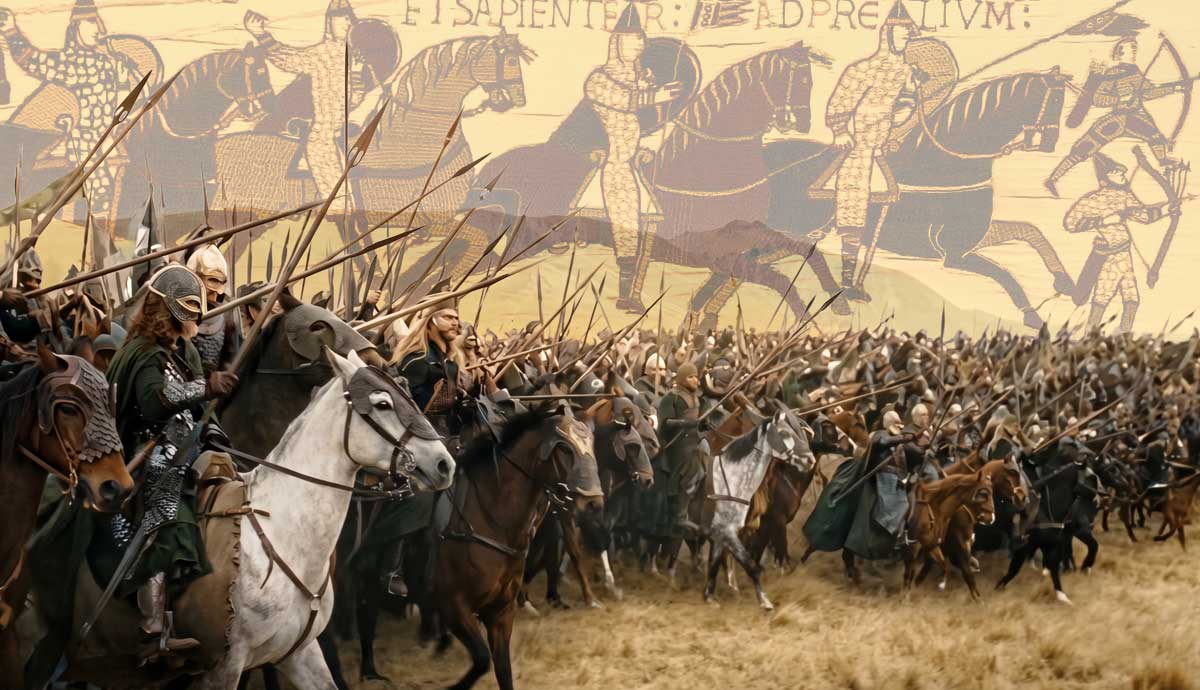
WWW.THECOLLECTOR.COMHow Hollywood Gets Medieval Cavalry Charges WrongHollywood never fails to entertain with a powerful display of knights on horseback, crashing into a line of terrified infantry. The images and sounds are visceral, with men screaming and the clash of steel upon steel as hundreds of horses charge headlong into the enemy at high speed, carving a deep wedge into the enemy formation. This powerful visual seems effective on screen, but it is full of poetic license that wouldnt work well on a real battlefield.In reality, the use of cavalry in medieval combat was far more nuanced. It relied on careful planning, immense discipline, and a large degree of psychology to be effective. And when it was effective, it was utterly devastating. The Myth of the Suicidal Horse CollisionVintage illustration of knights charging an infantry line at the Battle of Hastings in 1066. Source: iStockHorses are naturally skittish animals. Even well-trained warhorses are prone to instinctive responses in dangerous situations that humans can be trained to override. Historian Sir John Keegan noted that cavalry charges against disciplined, well-prepared infantry often failed because horses refused to gallop into a dense mass of enemies. When a mass of soldiers is wielding sharp objects, the prospect becomes even less appealing.The Ride of the Rohirrim from The Return of the King (2003). Source: Wingnut Films / New Line Cinema.While pikes were perfect for holding back cavalry, they were not the only option. Even before the age of the pike, infantry with spears and other polearms were easily able to resist cavalry charges. A perfect example of this is the Battle of Hastings in 1066, where the Anglo-Saxon shield wall stood firm against many attempts by the Norman cavalry to break through.Here, and in many battles before and since, the horses simply refused to impale themselves on spears. Which is quite reasonable from the horses perspective. In the age of the pike, the spears became ever longer and deadlier, putting a lot more distance between the charging cavalry and the defending infantry.So, with the refusal of horses to throw themselves onto a wall, bristling with spikes, how did the cavalry charge actually succeed? Much of the answer lies with psychology. Shock Tactics and Psychological Warfare on the BattlefieldDetail of the Battle of Orsha by Hans Krell, ca 1524-1530. Source: National Museum in Warsaw / Wikimedia CommonsFrom ancient to modern times, mass charges used shock tactics, relying heavily on breaking enemy morale and forcing soldiers to rethink the wisdom of standing in the path of 1000 lbs of equine fury. Throughout history, holding the line against mounted riders has always been a terrifying proposition. In the face of a wall of horses and mounted knights, all it takes is for a few infantrymen to break, for a gap to be exposed, which cavalry can then exploit.As such, cavalry had to break the enemy formation, not by force, but by psychology. A feigned charge could cause men to scatter, and a feigned retreat could cause infantry formations to break in pursuit, at which point the cavalry wheeled round and took advantage of the lack of infantry cohesion.Ultimately, it was a game of chicken in which the resolve of the infantry and the cavalry was tested until one side broke or miscalculated the others intentions.Norman knights depicted on the Bayeux Tapestry. Source: Wikimedia CommonsAlthough exceptions always exist, a solid line of cavalry seldom made contact with a solid line of unbroken infantry, and when it did, it was often catastrophic for the cavalry. Without a gap to exploit, cavalry would simply be impaled.In short, the general theme was that cavalry would charge at the infantry. If the infantry broke, the cavalry would press the attack. If the infantry stood firm, the cavalry would veer off at the last moment and reform to try again. Sometimes the cavalry would feign retreat to lure the enemy infantry out of formation, then turn and attack.Mass, Momentum, and Deadly PrecisionPolish Hussars at a re-enactment in Gniew, 2020. Source: iStockHollywoods full-pace cavalry charges are certainly spectacular, but full of creative interpretation, and often very far from reality. Approaching the enemy was far more disciplined and slower than on-screen depictions.The cavalry line was not haphazard. It was in the formation of cohesive, serried ranks of knights, slowly increasing speed, and breaking into a gallop at the last moment. Mass and momentum were key. Such discipline played into psychology, heightening the panic in the enemy. With lances presented, such a sight could easily cause individual soldiers to flinch, panic, and in some cases, run. If the infantry, even individuals, lost their nerve, gaps would open, and the cavalry would ride in, pushing soldiers aside and widening the wedge.If that happened, the infantry formation was doomed more often than not.0 Comentários 0 Compartilhamentos 32 Visualizações -
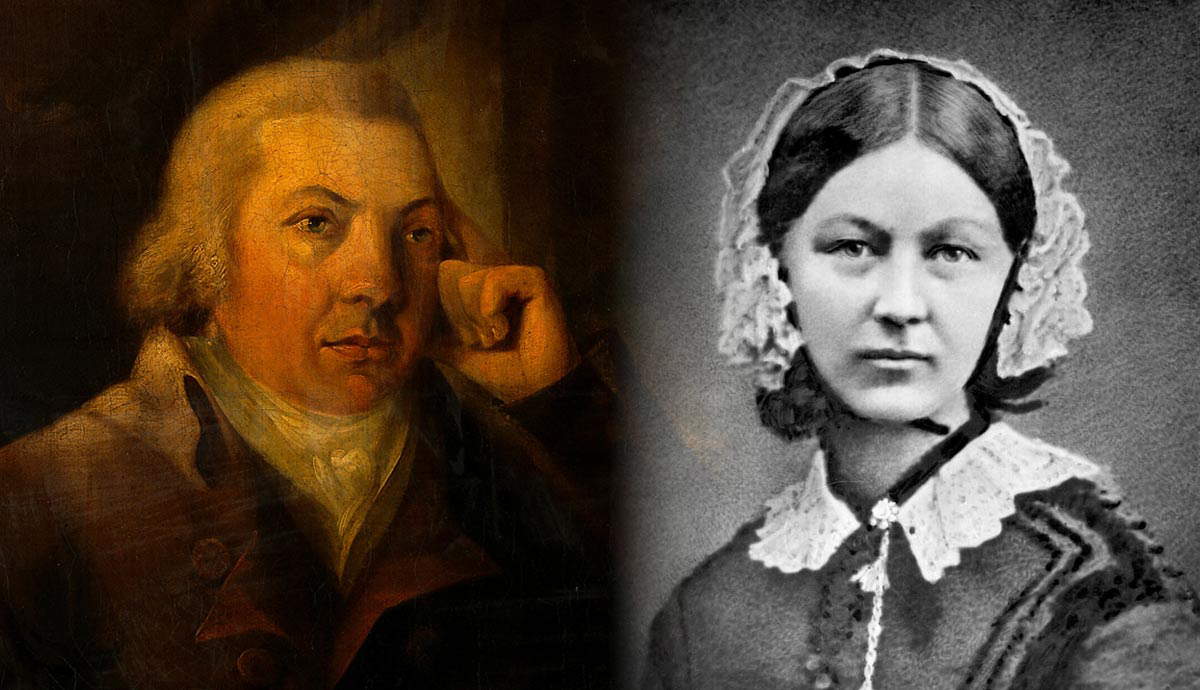
WWW.THECOLLECTOR.COM7 People Who Saved the Most Lives in HistoryHistory is replete with brutal dictators, emperors, warlords, kings, and khans who have caused untold misery and loss of life through their conquests. The actions of a single human can cause the death of millions, leaving a legacy of infamy that echoes through the ages and leaves an indelible mark on human society.Meanwhile, there are those whose actions have saved millions of lives, and their memory is rarely preserved with such fervor in the collective and individual minds.The children and grandchildren of those who were saved barely recognize the names of those whose efforts contributed to their existence. Yet these heroes existed, and through their work, countless millions are alive today.Here are 7 people who saved the most lives throughout human history.1. Norman Borlaug: Fighting World HungerNorman Borlaug in 2004. Source: Wikimedia CommonsAwarded the Nobel Prize for a lifetime of work, Norman Borlaug was an American agronomist who led the Green Revolution, changing the way the world farms, and leading to massive increases in crop yields. His efforts were central to the huge reduction in global hunger.Born on March 25, 1914, Borlaug studied biology and forestry at the University of Minnesota, earning a Ph.D. in 1942. After a brief stint at DuPont, Borlaug joined the Rockefeller Foundation to work on wheat improvement in Mexico. By experimenting with novel varieties, Borlaug led scientific efforts to develop strains that were more hardy and had higher yields.He then began work in India and Pakistan, where rapid population growth had led to critical food shortages. Because of his efforts, better wheat and rice varieties were introduced to developing countries, greatly reducing hunger around the world. Borlaug was in high demand as a consultant, serving on panels and committees dealing with agriculture, resource management, and population growth. His work culminated in the establishment of the Norman Borlaug Institute for International Agriculture in 2006.He died on September 12, 2009, and his legacy is one of unambiguous benefit to mankind. It is difficult to say exactly how many people were saved as a result of his work, but it is likely more than a billion.2. Edward Jenner: A Vaccine for SmallpoxPortrait of Edward Jenner. Source: Wellcome Collection/Wikimedia CommonsArguably the biggest killer of the 18th century, smallpox was an extremely infectious disease with a high mortality rate, especially among children. Victims suffered from fever and vomiting while their skin was covered in painful blisters. Survivors were left scarred and often blind by the diseases horrific rampage. Today, it is eradicated, with the last case ever being reported in 1977. This wouldnt have been possible without a vaccination.The foundation for the vaccine came from folklore in Britain that claimed milkmaids who got cowpox never contracted smallpox. In 1796, Edward Jenner tested this theory by injecting pus from a cowpox pustule into the arm of eight-year-old James Phipps (with his fathers permission). Jenner was able to prove Phipps immunity to smallpox as a result. The medical community, however, demanded more proof, and Jenner vaccinated several more children, including his 11-month-old son.These experiments turned Jenners theories into facts. His work resulted in mass vaccinations, and hundreds of millions of people were saved from the horrendous disease. Although the vaccine remains available, it is no longer necessary. Jenner initiated a process that led to the complete elimination of one of humanitys most deadly diseases.3. Maurice Hilleman: Over 40 VaccinesMaurice Hilleman. Source: Walter Reed Army Medical Center/Wikimedia CommonsHugely underrecognized in public memory, Maurice Hilleman can be said to have saved hundreds of millions of lives through his work in creating multiple vaccinations for many of humanitys most pernicious ailments.Born in 1919, Hilleman grew up on a farm in Montana during the worlds deadliest flu pandemic. After earning his doctorate at the University of Chicago, Hilleman went to work for pharmaceutical company E.R. Squibb, where he began developing and producing vaccines. When a flu epidemic broke out in Asia in 1957, Hilleman predicted it would come to America. His warnings were dismissed, but he bypassed regulatory agencies and went straight to manufacturers, who heeded his warnings and began producing vaccines. The epidemic did hit America, exactly as Hilleman predicted. It claimed the lives of around 70,000 peoplefar fewer than the estimated one million who would have died had Hilleman not taken action.After that, he worked on mumps, measles, rubella, and a host of other vaccines, modernizing medical science and giving humanity a massive defense against most of the worlds common diseases. Today, eight of the 14 most commonly recommended pediatric vaccines were developed by Hilleman.Much of Hillemans success was due to his unrelenting work ethic. He was no joy to work with. He worked a seven-day week, and those who couldnt keep up with his rigorous demands were unceremoniously fired. Nevertheless, he was a hero credited with saving many millions of lives.4. Louis Pasteur: Germ Theory, Pasteurization, and a Vaccine for RabiesLouis Pasteur. Source: Wellcome Collection/Wikimedia CommonsKnown mainly for the process that bears his name, pasteurization, Louis Pasteur was, in fact, responsible for many other life-saving endeavors. In the middle of the 19th century, Pasteur conducted a wide range of experiments and studied fermentation processes, which helped him refine his understanding of germ theory. This represented a massive leap for medical science and formed the basis for Pasteurs further experiments. He disproved the idea of spontaneous generation, which held that fleas arose from dust and maggots from rotting meat.His work on germ theory led to cleanliness and sterilization being considered important parts of medical practice. Through his studies, Pasteur made significant advances in understanding how diseases spread, and some of his methods for reducing their transmission are still used today.No less important was his work in combating individual diseases through vaccinations. He created vaccines for chicken cholera, anthrax, and arguably his most important of all, rabies. With the help of these vaccines and his other work, Pasteur championed the dynamic of preventative medicine, which has become standard practice around the world today.It is extremely difficult to estimate how many lives have been saved through Pasteurs initiatives, but over 100 million people is easily conceivable.5. Florence Nightingale: The Lady With the LampFlorence Nightingale. Source: Store Norske LeksikonKnown mainly for her nursing work during the Crimean War, Florence Nightingale rose to prominence in Victorian society. Holding a lamp and lighting the darkness, she was a vision of comfort for injured and dying soldiers. Her work towards improving standards for those suffering cannot be pinpointed to a single, overriding aspect, but it is widely accepted that through her methods and her legacy, many millions of people were saved, while the standards she set continue to save millions more.In 1860, Nightingale opened the second secular nursing school in the world, following on from La Source, opened by Countess Valrie de Gasparin in Switzerland. Nightingale set the precedent for the professionalism of the industry. While her hands-on methods of sanitation were revolutionary, what made her work so widely accepted was the way she presented it.She had the mind of a scientist and used statistics to back up her claims. She was also a prolific writer and aimed her literature not only at academics but also at the undereducated and barely literate. By writing in simple English, she made her ideas accessible to the actual nurses and medical staff, as well as a huge cross-section of society who could implement any aspect of nursing. Simply observing correct sanitation was a considerable advancement in medical care, whether it was in a hospital or in the home.6. Jonas SalkJonas Salk. Source: Wikimedia CommonsFor thousands of years, polio was a major concern for societies across the world. Endemic to human beings, this disease mainly targets children and can cause death, with survivors often left disfigured and paralyzed. To this day, there is no specific treatment, and the disease cannot be cured. It can, however, be prevented. And that is where Jonas Salk focused his efforts.Born on October 28, 1914, in New York City, Jonas Salk was the eldest of three sons born to Daniel and Dora Salk. He earned his medical degree in 1939 from the New York University School of Medicine before starting a research fellowship at the University of Michigan, where he worked on an influenza vaccine. In 1947, he became the director of the Virus Research Laboratory at the University of Pittsburgh School of Medicine and began working on a vaccine for paralytic poliomyelitis, better known as polio.In the mid-1950s, the vaccine was rolled out, and polio rates began dropping immediately. Salk never patented his discovery, nor did he earn any money from it. He wanted it to be distributed as widely as possible across the world without any fear of legal infringements.7. Albert SabinLeft: Polio vaccine. Source: Danmarks Nationalleksikon; Right: Albert Sabin. Source: Wikimedia Commons.Following Salks work was Albert Sabin, who improved the delivery methods for the polio vaccine. Sabin was born in 1906 in Biaystok, then part of the Russian Empire, and in 1921 his family emigrated to the United States. He earned his medical degree from New York University in 1931 and worked in the field of infectious diseases. During World War II, he helped develop a vaccine for Japanese encephalitis. In the 1950s, despite the tensions of the Cold War, Sabin worked with Soviet colleagues to perfect an oral version of the vaccine, which proved effective at blocking the virus in the intestines before it could enter the bloodstream.Rollout of Sabins vaccine was slow as the US health system supported Salks version. The USSR, however, was not so reticent and administered over a hundred million doses, even supplying other countries, such as Japan, which had been hit hard by polio. Eventually, the results spoke for themselves, and the vaccine was adopted and became the predominant version in the United States as well.Such was the effectiveness of the vaccine that from 1988 to 2022, the number of confirmed polio cases dropped from 350,000 to just 30. While other doctors and scientists also deserve credit for eradicating polio, it cannot be denied that Jonas Salk and Albert Sabin were the central figures in conquering this horrendous disease. Many tens of millions of lives were saved as a result of them.Many Other Names(Left) Vasily Arkhipov. Source: Wikimedia Commons; (Right) Alexander Fleming in 1943. Source: Imperial War Museums/Wikimedia CommonsUltimately, defining metrics for the number of people saved is difficult. There are no set standards for calculating such things, and as a result, people who deserve consideration can easily be overlooked.While certain politicians deserve credit for guiding the world toward a less deadly place, there are also ordinary people who saved lives through simple actions rather than through concerted, lifelong efforts. Vasily Arkhipov saved the world in 1962, during the Cuban Missile Crisis, when, as an executive officer on board a nuclear submarine, he vetoed the launch of nuclear weapons. The same could be said for Stanislav Petrov, another Soviet officer, who, in 1983, ignored protocol and disobeyed orders when he received reports of a nuclear attack. Instead of starting a chain of events that would have led to a nuclear war, he dismissed the reports as false alarms. Needless to say, a nuclear war could have cost hundreds of millions, even billions, of lives.Other names deserving of recognition include Alexander Fleming, who accidentally discovered penicillin, and Henry Dunant, who established the Red Cross and won the first Nobel Peace Prize.And of course, credit has to be given to the unnamed people from prehistory who invented soap!0 Comentários 0 Compartilhamentos 32 Visualizações -
WWW.DUALSHOCKERS.COM10 Indie Game OSTs That Outperform AAA TitlesAs generations have progressed, soundtracks have acquired a seminal role in interactive adventures, helping to establish the tone and emotions with great ease.0 Comentários 0 Compartilhamentos 31 Visualizações -
WWW.THEKITCHN.COMFrench Toast SticksWhy drizzle when you can dip?READ MORE...0 Comentários 0 Compartilhamentos 31 Visualizações