The Secret Relationship between Elizabeth I and the Ottoman Empire
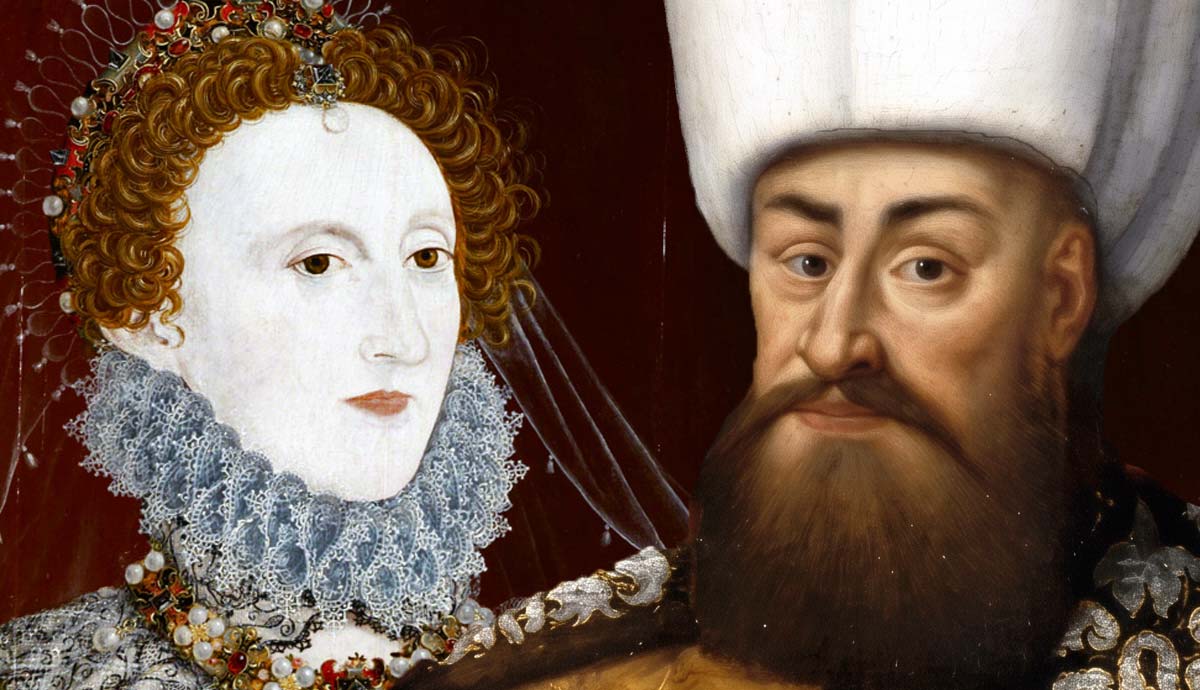
Cast aside by Catholic Europe, Elizabeth I pursued an unexpected alliance with Sultan Murad III of the Ottoman Empire. Capitalizing on their shared enemies and limited European trade routes, Murad III accepted Elizabeth Is offer and introduced her impoverished island nation to the opulence, power, and wealth of the Islamic world. Even though English popular culture quickly exoticized and stigmatized its new Muslim allies, this friendship became one of Englands most profitable commercial relationships, laying the foundation for its future as a global superpower.Relations Between Christian and Islamic EmpiresBattle of Nikopolis 1396, painted 1472-1475, during this battle on September 25, 1396, the Ottoman Empire defeated a Crusader army, leading to the end of the Second Bulgarian Empire. Source: Wikimedia CommonsBy the advent of the Ottoman Empire in 1299, most Christian European kingdoms, voivodeships, and republics were in commercial contact or involved in campaigns against Islamic empires. From 711 to 1492, different Spanish Catholic Kingdoms fought to remove the Moors from their occupation of Southern Spain in the Andalusia region. Eastern European kingdoms and the Byzantine Empire were in constant trade with Islamic caliphates in Egypt, Syria, Palestine, and Persia. Yet, the Papacy and its fellow Catholic powers were increasingly threatened by the quick expansion of the Ottoman Empire and its encroaching influence in the Balkans, Eastern Europe, and the Mediterranean region. After Mehmed II defeated the Byzantine Empire at the Siege of Constantinople in 1453, the Papacy condemned the Empire as one of the greatest threats to Christendom.However, after being excommunicated by Pope Pius V on February 25, 1570, Elizabeth I found herself and her kingdom in the same heretical and political blacklist as the Islamic nations. Surrounded by Catholic kingdoms ready to invade, cut off from some European trade networks, and abandoned by most allies, Elizabeth I was left with no choice but to pursue unconventional alliances that horrified Christian Europe.The Enemy of My Enemy Is My FriendThe Battle of Lepanto, 7 October 1571, late 16th century, the Ottoman Empire was defeated and its navy almost entirely destroyed by the Holy League. Source: Wikimedia CommonsInheriting an impoverished nation wracked by plague and sectarian violence with no allies, Elizabeths advisors sought any alliance that could stabilize England. Inheriting a debt of 300,000 from her father King Henry VIII, Elizabeth I was also targeted by the king of Spain, Philip II. Widower of her late sister Mary I, Philip II was a staunch Catholic, notorious for his religious intolerance and violence. His animosity towards Elizabeth only intensified after she rejected his marriage proposal and ascended to the throne as an unwed Protestant queen regnant. As a result, he and other Catholic monarchs promised Catholic rebels in England military and financial support to depose their Protestant queen.Her excommunication was soon realized to be her saving grace. No longer pressured into following papal and imperial policies forbidding diplomatic ties with Islamic empires, Elizabeth Is advisors began encouraging her to pursue new relations with fellow sovereigns rejected by Catholic Europe. Her spymaster, Francis Walsingham, advised Elizabeth to form an alliance with one of the largest economic and territorial powers of the time: the Ottoman Empire. Accordingly, Elizabeth and her advisors devised an offer to appease the Ottomans based on shared enemies, like Pope Pius V, Philip II, and other Catholic monarchs.Queen Elizabeth I, by Nicholas Hilliard, c. 1575. Source: National Portrait Gallery, LondonMurad III ruled the Ottoman Empire during its territorial peak from 1574 to 1595, inheriting the sparkling legacy of his grandfather Suleiman the Magnificent. However, his reign began in the aftermath of the Ottomans naval defeat by Catholic forces. Aiming to suppress the Empires expansion, Pope Pius V reenacted the Holy League led by Spain and Venice, defeating and almost destroying the entire Ottoman navy at the Battle of Lepanto on October 7, 1571.Even though the Ottoman navy was quickly rebuilt, this was one of the first and most definitive victories of Catholic forces against the Ottomans. With financial and social strains emerging all over the empire from continuous military campaigns, Elizabeth I approached a Sultan who was just as eager to form profitable European alliances away from and against the pope and Spain.Unexpected Pen PalsA letter written by Queen Elizabeth I to her brother, Edward VI of England, 1552. Source: Wikimedia CommonsElizabeth I first reached out to Murad III in 1579 in a letter offering a commercial and diplomatic alliance. She detailed how their nations were facing the same threats from Spain and the Papacy, but together could form a profitable relationship that would strengthen their reigns, economies, and overall standings in Europe. In addition to their shared enemies, Elizabeth I contended that their alliance would not only be pragmatic but theologically sound. She asserted that Sunni Islam and Protestantism shared a fundamental belief that condemned idolatry, which she argued was evident in the Catholic tradition of using priests and saints for intercession with God.Accounts from the Ottoman court detail Murad IIIs astonishment at receiving such a bold offer from a female queen. After being shown where England was on the map, Murad III was captivated by Elizabeths small nation and its ability to survive while surrounded by Catholic enemies. Curious and intrigued, Murad III accepted Elizabeths offer to cultivate a peaceful alliance that would expand his markets away from Catholic Europe.Ottoman tughra, official signature of the Sultan, dating from the reign of Murad III, 1575. Source: Wikimedia CommonsElizabeth I received Murad IIIs response on March 7, 1579. His letter dazzled the English court, arriving in a satin satchel clasped with silver and dusted with gold. Written in a gilded font, his three-foot-tall letter accepted Elizabeth Is offer and granted English merchants safe and total access to all Ottoman ports. While war with Catholic states waged on, Elizabeth I was now welcomed into one of the most robust, extravagant, wealthy, and diverse trade networks in the early-modern world.From this original correspondence blossomed a 17-year friendship between Elizabeth I, Murad III, and his wife, Safiye Sultan. Despite never meeting in person, Elizabeth I became one of the largest recipients of royal correspondence from the sultanate in Ottoman history.Elizabeth I often sent gold fabric, portraits, paintings, and clocks decorated with precious jewels to the Sultan and Sultana. In return, Elizabeth was gifted clocks, musical organs, carriages, and gowns made from the gold cloth. These letters not only reflect the formidable diplomatic and economic ties developed between England and the Ottoman Empire, but also remain some of the first documented regular correspondences between an English monarch and a non-Christian ruler.Englands Diplomatic Entrance Into the Islamic WorldMap no. 50, Teatrum Orbis Terrarum, by Abraham Ortelius, 1570. Source: Wikimedia CommonsFrom 1579, Elizabeth I began developing intensive diplomatic channels to foster new trade networks throughout the Ottoman Empire and neighboring Islamic empires. In 1580, Murad III issued the Ottoman Empires first Capitulation with England, granting all English traders, merchants, and diplomats unlimited access to Ottoman markets with extraterritorial status. This granted Englishmen a special tax and status that exempted them from Ottoman laws.Shortly after, consuls representing Elizabeth I were established throughout the Ottoman Empire, enforcing English laws on their citizens and facilitating the expansion of English companies and capital.Through the legitimization of English industries in Ottoman markets, Elizabeth I expanded her international networks to other Islamic empires. Referred to as Sultana Isabel, the Kingdom of Morocco and Barbary States offered Elizabeth I similar trade access and treaties. For example, Moroccan Sultan Ahmad al-Mansur granted English ships safe passage along their North African coasts through the Strait of Gibraltar, giving English merchants direct maritime access to the Ottoman Empire. Also threatened by Spain, the Barbary Company signed a similar charter in 1585 to grant England exclusive trading rights on its Mediterranean coasts with protected access to Ottoman ports.With these new allies and international markets, Elizabeth I now had direct access to the prosperity, consumer culture, and technological developments across North Africa, the Arabian Peninsula, the Middle East, and the Levant.Exchange of Goods Between Islamic and English MarketsLater depiction of an Ottoman Bazaar, by John Varley, 18th-19th century. Source: The Wellcome CollectionEnglish consumer culture surged with the circulation of new silks, textiles, spices, art, and tiles from the Ottoman Empire and its neighboring territories. Ottoman tapestries and carpets became status symbols for wealthier households. Additional luxury items like Iranian silk, cotton, pearls, precious metals, and gemstones became coveted displays of rank and class in English high society. Persian, Egyptian, Syrian, and Anatolian tapestries and tiles became common backdrops for English portraiture.New words were even invented in English to account for the explosion of Ottoman goods in English markets. For instance, the word tulip was added to the English language during this period. Spices, new fruits, nuts like pistachios, and most importantly, sugar from Moroccan companies became popular among the English population. Candied fruits from Morocco quickly became Elizabeth Is favorite treat. Many accounts and researchers believe that her obsession with Moroccan sweets was the real culprit behind her blackened teeth.In return for direct and more affordable access to goods previously limited in English markets, English merchants offered Islamic businesses lucrative deals related to war manufacturing and rearmament. Further enraging Catholic Europe, Elizabeth I stripped the ruins of former Catholic churches destroyed during the English Reformation to sell tin, lead, and other metals used to make bullets and weapons. English merchants additionally exchanged these metals alongside timber, muskets, and cloth with the Kingdom of Morocco for saltpeter, the key ingredient for gunpowder. English textiles and fabrics were also sold to make Ottoman military uniforms.These lucrative exchanges not only strengthened the English and Islamic economies but also provided them with the weapons necessary to wage war against Catholic Europe.Exchange of People Between England and the Islamic WorldThe Ambassadorial Procession, by Jean Baptiste Vanmour, 1707-1708, Vanmour depicted the arrival and passage of a European ambassadorial delegation to Istanbul escorted by Ottoman dignitaries. Source: The Pera MuseumThe alliance between England and the Ottoman Empire also launched a mass circulation of people between the two nations. Thousands of English traders, merchants, diplomats, and those who could afford it were eager to travel and explore the Ottoman Empire, the Holy Lands, and sites of the most prolific ancient civilizations in Egypt and the Arabian Peninsula. Stories from those travelling quickly became exoticized retellings of everyday life across the Ottoman Empire as Englishmen tried to explain how a culture so foreign to theirs possessed such wealth, diversity, and vibrancy.Hundreds of English subjects were permanently settled across the Islamic world. Most who remained converted to Islam and changed their names to participate in the business opportunities and cosmopolitan lifestyles within the Ottoman Empire.Some English subjects who were even kidnapped by pirates along these trade routes also preferred to stay in the Empire. For example, Samson Rowlie was an English merchant who was captured, castrated, and brought to Algiers to serve as a eunuch by pirates. He converted to Islam, adopted the name Hasan Agar, and later became the main treasurer for the Ottoman administration in Algiers. He rejected his familys demands to return to England, arguing that he would not have such a great position, food, or weather back home.Barbary pirates ransom Christian slaves, 1637. Source: Wikimedia CommonsIt was less common for Ottoman subjects to travel or permanently settle in England. While Ottoman diplomats frequently visited Elizabeth Is court, the sultanate did not have a tradition of establishing permanent embassies. Similarly, the Kingdom of Morocco would send diplomats to England for short periods. For example, the Moroccan Ambassador Abd el-Ouahed ben Messaoud is believed to have inspired Shakespeares character of Othello during his stay in London.Some historians contend that one of the first Muslim women recorded in England was welcomed during Elizabeth Is reign. Anthony Jenkins, an English diplomat and businessman, gifted Elizabeth I an enslaved Tatar woman, named Aura Soltana, whom he purchased in Greater Russia when travelling back from the Ottoman Empire. Elizabeth I welcomed Soltana into her court and elevated her to one of her ladies-in-waiting and fashion advisor.Exoticization of the Muslim Other in English Popular CultureOpera Reminiscences: Desdemona and Othello, by William Heath, 1829. Source: Folger Shakespeare LibraryMurad III and Elizabeth Is friendship coincided with the birth of theater culture as the dominant form of entertainment in England. Despite Elizabeth and Murads strong friendship, her subjects were still wary of trusting non-Christians. English populations were just as intrigued as they were terrified by the incomparable wealth and luxury that was coming from the Islamic World in comparison to their humble island. To grapple with their exotic, rich, yet un-Christian trading partners, English playwrights began including Muslim characters, histories, and settings into their productions.Sultans, Islamic merchants, and diplomats became caricatures of the exotic other, socially legitimizing grand generalizations, exoticizations, and prejudice against Muslim communities. After the opening of Englands first playhouse in 1576 to the end of Elizabeth Is reign in 1603, over 60 plays featured Muslim characters that were labelled interchangeably as Turks, Persians, or Moors. Despite the diversity of beliefs, cultures, and identities across all Islamic empires, English plays depicted Muslim characters as greedy and brutish villains or tyrants with darker skin complexions who sought to defile nave European women.Life-Size Portrait of Sultan Murad III (1574-1595), c. 17th century. Source: Wikimedia CommonsFamous playwrights like Christopher Marlowe and William Shakespeare highlight the common ways Muslim characters were portrayed and stereotyped during this time. For example, Marlowes first famous play, Tamburlaine the Great (1590), loosely depicts the history of Timur, a notorious 14th-century Turco-Mongol conqueror. Marlowe characterizes Tamburlaine as a sacrilegious, overly ambitious, and bloodthirsty ruler with exotic features and an affinity towards violence that the English associated with Turkish and Muslim leaders.Some of Shakespeares characters also built upon these stereotypes. For instance, in his famous play, Othello (1603), Othello is portrayed as a dark and exotic Moorish Venetian general who falls for Desdemona, a European noblewoman. Even though these plays are not outwardly anti-Muslim, their characterization of figures from Islamic regions shows how English populations generalized, judged, and, to some extent, feared Muslim communities and their homelands.The End of an EraThe Somerset House Conference, 1604, in the center of the table is an Ottoman throw with the Holbein print produced in the Anatolian region. Source: National Portrait Gallery, LondonThe friendship between England and the Ottomans dwindled after the passing of Murad III in 1595 and Elizabeths passing in 1603. Her successor, James I of England and VI of Scotland, continued to profit from the intensive trade routes and businesses with the Ottoman Empire. However, his pious nature made him less inclined to maintain strong diplomatic ties with his Islamic counterparts.Instead, James, I was drawn to healing Englands fractured relations with Catholic Europe, finding their partnerships less blasphemous than his cousins previous bond with non-Christian empires. As such, in 1604, James I signed the Treaty of London with Spain, officially recognizing Protestant England as a sovereign nation, ending 19 years of warfare, and resuming peaceful trade between the two nations.The Capitulations, trade negotiations, treaties, and business deals continued between England and the Ottomans until the fall of the Ottoman Empire in 1922. While history tends to focus on the Ottoman Empires final chapter as the Sick Man of Europe, it was the Sultan who took a chance on a fractured island nation that helped Elizabeths reign become the Golden Age of England. With the commercial and political support from some of the wealthiest empires in the early-modern world, these Islamic nations helped build the foundations that led England to later become one of the most dominating empires in modern history.











 English
 Arabic
 French
 Spanish
 Portuguese
 Deutsch
 Turkish
 Dutch
Dutch
 Italiano
 Russian
 Romaian
 Portuguese (Brazil)