0 Комментарии
0 Поделились
13 Просмотры
Каталог
Elevate your Sngine platform to new levels with plugins from YubNub Digital Media!
-
Войдите, чтобы отмечать, делиться и комментировать!
-
YUBNUB.NEWSUkraine Conducts More Long-Range Strikes Into RussiaThe Ukrainian leader has said his countrys forces conducted further long-range drone attacks inside Russian territory, targeting Moscows oil industry.Ukrainian President Volodmyr Zelenskyy confirmed0 Комментарии 0 Поделились 13 Просмотры -
Masters at work: how Riot grew Valorant into its second global esportMasters at work: how Riot grew Valorant into its second global esport Lauren spends most of her time dead in League of Legends, or equally as dead in Valorant. Don't ask her about Vampire: The Masquerade. Published: July 9, 2026 The energy at Valorant Masters London is electric. Everywhere I look, there are people. They're dressed as their favorite Agents - there's many a...0 Комментарии 0 Поделились 15 Просмотры
-
Elon Musk says X will message you if a post you interacted with gets correctedElon Musk says X will message you if a post you interacted with gets corrected The owner of X, the everything app, has announced a new feature that might be useful but also annoying.In a standalone post on X, Elon Musk announced that Community Notes will get a new feature at some point soon. If a user interacts with a post that has...0 Комментарии 0 Поделились 14 Просмотры
-
Humanoid robots just removed a gallbladder in a live surgeryHumanoid robots just removed a gallbladder in a live surgery Next time you go in for a surgery, will your doctor be a five-foot tall, 60 pound humanoid robot named Surgie? It very well could be!A team of surgeons and engineers at University of California San Diego just successfully completed the first ever pair of surgeries during a...0 Комментарии 0 Поделились 16 Просмотры
-
WWW.LIVESCIENCE.COM'Astronomers have to revise estimates': The Milky Way may be larger, heavier, and more lopsided than we realizedTwo of the Milky Way's gigantic spiral arms appear to be much farther away than we realized, scientists have discovered after listening to the echoes of distant cosmic explosions. The findings could potentially force us to reconsider our galaxy's mass and maybe even its shape, researchers say. The Milky Way is a barred spiral galaxy made up of a dense central region containing a supermassive black hole (dubbed Sagittarius A*), orbited by four major arms the Sagitarrius arm, the Scutum-Centaurus arm, the Perseus arm and the Outer arm that curve and stretch outward like a giant pinwheel. Most of our galaxy's stars and gas are tightly packed together in these cosmic limbs, although some stars, including the sun, exist in the gaps between them or within other smaller structures.Until now, researchers have estimated the size of these arms based on the Milky Way's rotation rate, because it is impossible to see our galaxy's entirety from Earth's position inside the galaxy. This, in turn, has helped us estimate the galaxy's total size (around 100,000 light-years across) and its mass, which is equivalent to around 1.5 trillion suns, according to NASA. However, this way of measuring the massive structures is not foolproof and has led to several uncertainties about our galaxy since we first discovered its spiral shape around 175 years ago, Live Science's sister site Space.com reported."We usually model the Milky Way's outer arms indirectly based on what we know of how our galaxy rotates, but doing it this way leaves room for error," study first author Beatrice Vaia, a researcher at the Italian National Institute for Astrophysics who led the new study as part of her doctorate, said in a statement. The farther away from the galactic center, the more uncertain the measurements become, she added.In the new study, published June 19 in the journal Astronomy and Astrophysics, researchers came up with a new method of measuring the arms using the most powerful and luminous explosions in the universe, known as gamma-ray bursts (GRBs). As X-ray light from these cosmic outbursts passes through dense clouds of gas, like those within our galaxy's arms, it creates luminous rings, or echoes, whose size corresponds to their distance from Earth.Researchers studied echoes of X-ray light leftover from GRBs as the radiation from these powerful cosmic explosions passed through gas clouds in our galaxy's arms. (Image credit: X-ray: NASA/CXC/INAF/B. Vaia et al.; Optical: Pan-STARRS; Image processing: NASA/CXC/SAO/N.Wolk & P.Edmonds)The team used data from NASA's Chandra X-ray Observatory and the European Space Agency's XMM-Newton observatory (both of which orbit Earth) to analyze echoes from three different GRBs that shone through gas clouds in the Perseus, Outer and Scutum-Centaurus arms, respectively. This revealed that both the Outer and Scutum-Centaurus arms are likely around 10% farther from Earth than we thought. This may not sound like much, but it equates to several thousand light-years. The biggest potential implication of this discovery is that our galaxy is wider and, therefore, probably more massive than we realized, which could have major knock-on effects for our understanding of our cosmic neighborhood."The differences are small, but any revision of these distances is important because they are so fundamental for understanding our galaxy," study co-author Ilaria Fornasiero, an astronomer at the University of Bologna in Italy, said in a separate statement. "For example, this could mean that astronomers have to revise estimates of the mass of the galaxy, because that affects how wide the arms stretch."The new positions of the Outer and Scutum-Centaurus arms (shown in red) suggest that the Milky Way is not as perfectly symmetrical as we thought. (Image credit: NASA/CXC/SAO/M.Weiss)Animations released alongside the new paper show how the Milky Way might look based on the new data, revealing the Outer and Scutum-Centaurus arms extending farther into intergalactic space, making our galaxy look more like a lopsided snail's shell than a perfect spiral.These visualizations do not necessarily show the true shape of the galaxy, as the Sagitarrius arm and other minor galactic limbs have not been measured using the same methodology. However, the fact that the Perseus arm was not as distant as the other two GRB-illuminated limbs hints at a surprising asymmetry throughout our galaxy that cannot be easily explained. RELATED STORIESThe Milky Way ate a galaxy called Loki, and scientists think they found its bonesA 'mass migration' of stars from the Milky Way's center could explain why there's life in our solar system'Rare and enigmatic' structures found at the Milky Way's center in largest-ever map of its kindThe researchers are now on the hunt for more GRBs that can be used to map out the rest of our galaxy's shape and help us better understand what our cosmic neighborhood actually looks like. However, finding these cosmic explosions is easier said than done. "We're relying on the universe to provide us with these events, and so far, over 25 years, we've only found a handful that we can use," study co-author Andrea Tiengo, an astronomer at Scuola Universitaria Superiore Pavia in Italy, said in the statement. "That said, we will continue to be on the lookout for more."0 Комментарии 0 Поделились 13 Просмотры -
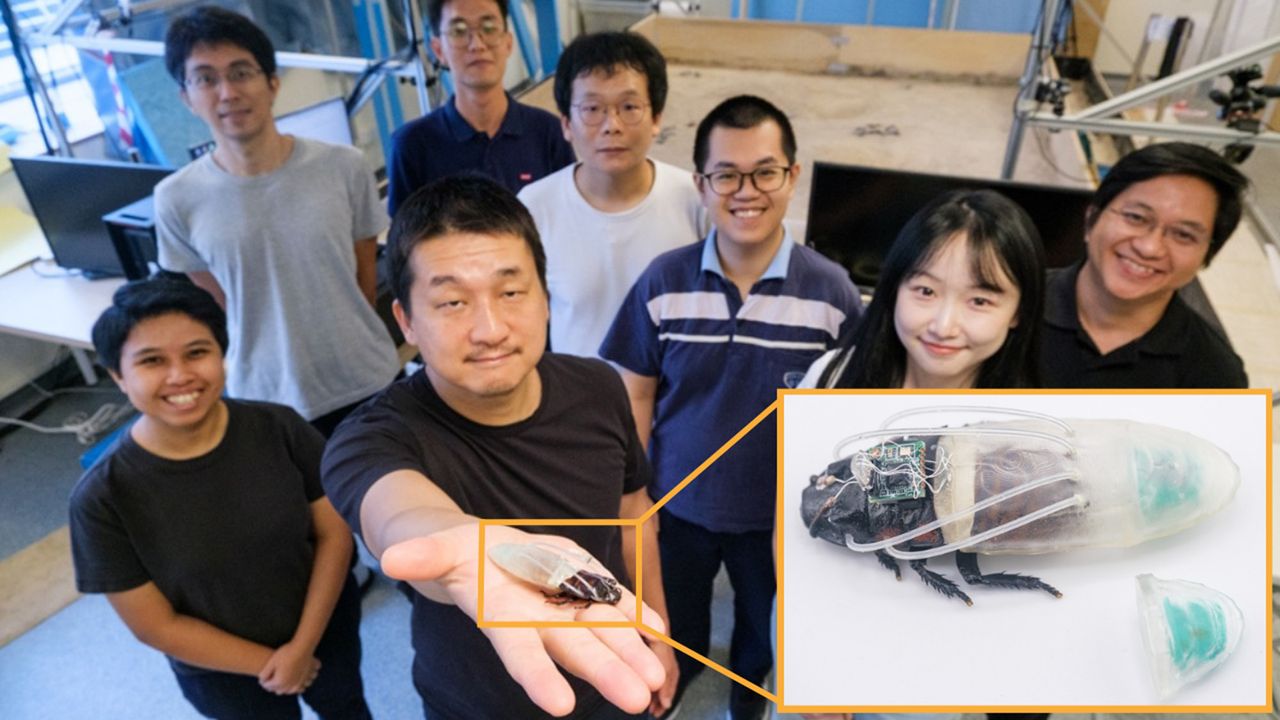
WWW.LIVESCIENCE.COMScientists build tiny 'diving suit' for cockroaches, turning them into search-and rescue cyborgsEngineers have designed a waterproof "diving suit" for cyborg cockroaches that enables the hybrid insects to survive and roam underwater for up to three hours. This function expands the capabilities of cyborg insects and could one day be deployed in disaster zones, according to the team.A built-in oxygen generator and silicone tubes deliver the gas directly to a cockroach's breathing holes, known as spiracles. The design is adapted for use in low-oxygen conditions as well as submerged environments, the researchers said in a new study published June 29 in the journal Nature Communications."Our approach combines a soft waterproof shell with a simple yet reliable chemical oxygen generator," study co-author Shinjiro Umezu, a professor in the School of Creative Science and Engineering at Waseda University in Japan, said in a statement. "This allows the insect to retain its natural mobility while being protected from an environment that it cannot normally survive in."Cyborg insects are living insects that have been fitted with electronic controllers that guide their movements. Researchers have previously used them in search-and-rescue operations to access and investigate hard-to-reach areas; for example, they were used in rescue efforts after the devastating magnitude 7.7 earthquake in Myanmar in March 2025 that killed at least 3,700 people and injured 4,800 more. The advantage of cyborg insects over tiny robots is that the former employ insects' muscles to move, whereas the latter rely on high-power batteries that consume energy and can run out of steam.The cyborg insects deployed in Myanmar were developed in the laboratory of Hirotaka Sato, senior author of the new study and a professor in the School of Mechanical and Aerospace Engineering at Singapore's Nanyang Technological University.Sato has spent more than a decade pioneering cyborg insect technology. He and colleagues hope the new diving suit will extend cyborg insects' operational range to include flooded and partially submerged areas in disaster zones.The suit consists of a flexible shell, four silicone tubes that attach to the spiracles and a transparent, 3D-printed oxygen tank. To make the tank produce oxygen, the researchers sprinkled manganese dioxide onto a highly absorbent sponge inside the tank. They then injected a small amount of diluted hydrogen peroxide, which breaks down slowly in the presence of manganese dioxide to produce oxygen. Finally, the team sealed the tank with ultraviolet adhesive to prevent leaks."The key engineering challenge was to build a system that was small, light and flexible enough for the insect to wear, while still producing enough oxygen for long-duration underwater movement," Umezu said.The silicone tubes send oxygen straight into the thoracic spiracles, while the abdominal spiracles, which are lower down the insects' bodies, take in the oxygen contained in the suit."Our new insect diving suit works like the oxygen tank used by human divers," Sato said in the statement. The silicone tubes can be attached and removed without pain or harm to the insect, the researchers added.RELATED STORIESScientists found the optimal robot body, and it has 20 legs watch it scale walls and move through treesMIT builds swarms of tiny robotic insect drones that can fly 100 times longer than previous designsAI compressed billions of years of evolution into seconds to create 'Lego-like robots' that can recover even when they lose limbsThe researchers tested the suit on a cyborg Madagascar hissing cockroach (Gromphadorhina portentosa), which they placed in a water tank and later sent into a plastic tube that simulated submerged and low-oxygen environments.The suit enabled the cockroaches to roam underwater for up to three hours, raising the prospect that cyborg insects, including locusts and beetles, could one day be used to inspect flooded pipes, drains, tunnels and other hard-to-access places.Next steps include improving the diving suit to potentially include sensors and a navigation system; and testing the design in simulated disaster environments, according to the statement.0 Комментарии 0 Поделились 13 Просмотры -
WWW.LIVESCIENCE.COMQuantum computing wielded to create extremely rare material critical to nuclear fusionUsing a quantum computer alongside a supercomputer, scientists have developed a breakthrough pathway for modeling the physics inside a fusion reactor. The world-first experiment could help clear a path to developing clean, abundant nuclear power and solving the global energy crisis, the researchers said. Using hybrid quantum computing and artificial intelligence (AI) methods, scientists with IBM and Oak Ridge National Laboratory (ORNL) have blueprinted how to make tritium, an extremely rare isotope of hydrogen that's critical to the fusion process. Although their research uploaded June 29 to the preprint server arXiv has not been peer-reviewed, the researchers say it's the first time that different kinds of computing elements have come together to propose the most effective way to create this material. Fusion reactors are experimental power sources that create energy by fusing atomic nuclei. The heat produced in the subsequent nuclear reaction is then harnessed as energy. This method produces no carbon byproducts or long-lived radioactive waste, making it one of the cleanest potential forms of mass energy production.It's projected that, at scale, a single fusion reactor could produce about 4 million times as much energy as a coal-burning facility and around four times the amount of energy as a modern nuclear fission reactor. Current attempts at building a viable fusion reactor have resulted in numerous laboratory experiments that prove the technology works, with magnetic confinement reactors, such as tokamaks, widely considered the front-runner. But many engineering challenges remain before the first commercial reactors could come online.Turning seawater into fuelThe base fuel for nuclear fusion reactors is a hydrogen isotope called deuterium, which is commonly found in seawater. It's estimated that there are 33 grams of deuterium in every cubic meter of seawater. But deuterium is only half of the equation. Nuclear fusion also requires tritium a heavier hydrogen isotope and the fusion released from just 1 gram (0.04 ounces) of deuterium-tritium fuel equals the energy from about 2,400 gallons (9,100 liters) of oil, according to the U.S. Department of Energy. Unfortunately, tritium, a radioactive isotope, is extremely rare; only 44 pounds (20 kilograms) of it is produced on Earth each year, and its 12-year half-life makes it difficult to use in nuclear power plants. Instead, scientists must painstakingly produce tritium in nuclear reactors by bombarding lithium atoms with neutrons. It's then superheated and bound with powerful magnets into a whirling ring of plasma within a tokamak, a special fusion chamber designed to shape and heat plasma using magnetic fields. A diagram showing the process of nuclear fusion. (Image credit: Designua | Shutterstock)Scientists add more deuterium and then bash the tritium and deuterium together, causing them to fuse into helium. The force of this reaction creates heat that's converted into energy.The current bottleneck lies in creating enough tritium to sustain fusion long enough to produce energy. But modeling the particle physics and chemical reactions involved in the tritium-creation process has proved beyond the capabilities of classical supercomputers.In the new study, however, scientists say they have addressed this bottleneck by simulating nine molecular configurations of a liquid salt that contains fluorine, lithium and beryllium (FLiBe) one of the leading candidate materials for extracting tritium. This is the first time quantum computers have been used to model reactions inside a fusion reactor. If perfected, FLiBe could provide a near-limitless source of fuel for nuclear fusion reactors, they said, but the chemistry involved is incredibly complex.Demystifying complex chemistryA "blanket of molten salt" made of FLiBe is wrapped around the nuclear reaction inside a fusion reactor, IBM researchers told Live Science. This provides both a fuel source and a thermal shield for the device. To create enough tritium, the researchers had to calculate the physics involved while a process called "neutron bombardment" constantly altered the blanket's chemistry. Designing a salt that holds up under competing demands and keeps releasing tritium is a key problem in building this kind of reactor."If tritium grabs onto fluorine in the salt, it forms tritium fluoride, which is corrosive and stubborn to remove," the researchers explained. "If it binds to another tritium atom to form a gas, it bubbles out on its own. Predicting which way the reaction goes means modeling the interaction between tritium and the salt with high precision and accuracy that is challenging for classical methods."Because no ordinary computer can perform the necessary calculations, the team used a combination of AI running on the Frontier supercomputer at ORNL, alongside quantum computing algorithms running on an IBM Quantum Heron quantum processing unit (QPU) in New York. The resulting workflow demonstrated a proof of concept for offloading complex chemistry computations to a quantum computer.That workflow relied on a technique called wave-function-based embedding, which fragments the calculation into easier-to-calculate clusters, the scientists said in the study. They used classical computers to solve the smaller clusters and passed off the more difficult chunks to a quantum computer. The classical computers then stitched the molecule back together. This is a method that study co-author Kenneth Merz, a biochemist and principal investigator at Cleveland Clinic Research, pioneered in previous research. Earlier this year, in collaboration with IBM and the Japanese national research institute RIKEN, he used quantum computers to calculate the structure of a 12,635-atom protein. Fusing quantum and AIIn the new study, the researchers tested their model against known molecular configurations that were already solved by a nonhybrid classical system and determined that the accuracy was maintained with the addition of quantum computations.This proof of concept should serve as a direct pathway for scaling the models used to predict tritium production within fusion reactors, potentially solving what may be the biggest hurdle to large-scale fusion energy production. The broader workflow the scientists outlined in a technical blog post involved three stages. First, AI agents proposed and screened many candidate salts from the ORNL database, and for each candidate, calculations estimated various qualities in the tritium breeding process, including how much fuel the salt would make under neutron bombardment. Related storiesScientists trained an AI model using an IBM quantum computer and it answered questions correctly that the base model couldn'tNew data center will be partially powered by human brain cells for the first timeMeet the world's smallest AI supercomputer it packs 'doctorate-level intelligence', its makers say, and can fit into your pocketThe most promising salts then went to a supercomputer, which modeled them atom by atom, using the density functional theory (DFT) process to approximate how a molecule's electrons would arrange themselves. These are expensive simulations, so the scientists used "AI stand-ins" trained to reproduce the physics to run them fast enough to be useful. The third stage brought in the quantum computer to figure out where the tritium would bind, which is a shortcoming for DFT. In the future, the research team will model larger molten-salt systems and study more molecular configurations before evaluating whether AI can slash the time it will take to find a promising molten-salt material. The wider aim, the scientists told Live Science, is to build a reliable computational pathway for fusion-materials discovery that can help researchers predict how well a blanket material breeds tritium, whether that tritium can be recovered, and how the material may perform in the extreme environment of a fusion reactor. Can you match these ancient devices to their pictures? Find out with our computing quiz!0 Комментарии 0 Поделились 13 Просмотры -
WWW.IFLSCIENCE.COMStory Of "Mike" The Time Traveler From The Year 3,700 May Be The Stupidest Thing We've Seen In MonthsHe says he's been to the year 3,000. A lot has changed but we don't live underwater.0 Комментарии 0 Поделились 13 Просмотры -
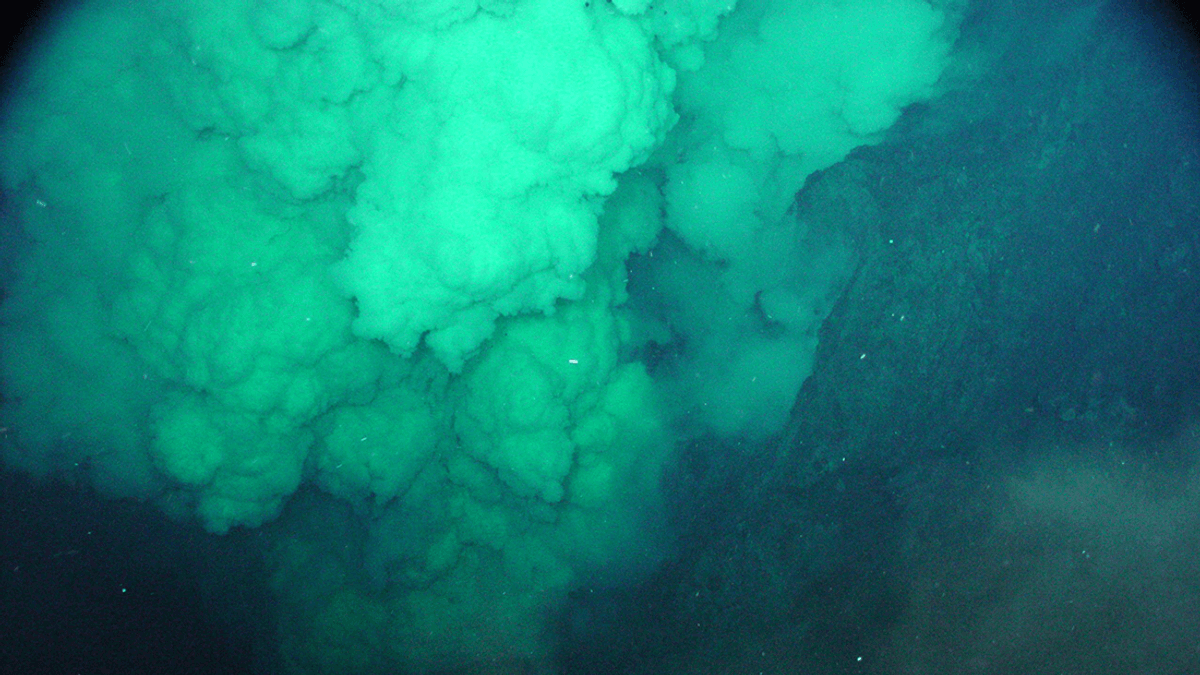
WWW.IFLSCIENCE.COMAn Underwater Volcano Erupted And May Have Spewed Magma From 4.5 Billion Years In Earth's PastIf correct, we may have found magma from Earth's earliest geological eon, and a new geological puzzle to solve.0 Комментарии 0 Поделились 13 Просмотры