0 Commenti
0 condivisioni
2 Views
Elenco
Elevate your Sngine platform to new levels with plugins from YubNub Digital Media!
-
Effettua l'accesso per mettere mi piace, condividere e commentare!
-
YUBNUB.NEWSRyan Grim, Drop Site News Report That Graham Platner's Victim Was Sort of Asking for It (A Massage)The democratization of journalism has been both a curse and a blessing. It's been a blessing in that we now learn from X stories that the cable and broadcast news networks choose not to report. It's also0 Commenti 0 condivisioni 2 Views
-
YUBNUB.NEWSRadical Pro-Abortion Group Will Spend $23.5 Million to Take Over CongressThe Abortion Lobby just put a price tag on flipping Congress. $23.5 million. Thats whatReproductive Freedom For All(RFAA) formerly NARAL one of the largest pro-abortion0 Commenti 0 condivisioni 2 Views -
YUBNUB.NEWSDemocrats Accuse Platner Of Meddling, Trying To Pick His Own Replacement If He Drops OutDemocrats are accusing their embattled Maine Senate nominee, Graham Platner, of trying to influence who would replace him if he drops out of the race after facing rape allegations. Platner is being pushed0 Commenti 0 condivisioni 2 Views -
Halifax Explosion 1917: The Accidental Blast That Leveled a CityHalifax Explosion 1917: The Accidental Blast That Leveled a City Skip to content ← Back to the front page When two ships collided in Halifax Harbour on December 6, 1917, a French freighter packed with...0 Commenti 0 condivisioni 3 Views
-
Medieval Times Spanned 476–1492, But Historians Argue Both DatesMedieval Times Spanned 476–1492, But Historians Argue Both Dates Skip to content ← Back to the front page Most historians place the Middle Ages between 476 AD and 1492, but both dates are contested — the...0 Commenti 0 condivisioni 3 Views
-
Transfer files of any size for life for a one-time $80 through July 19Transfer files of any size for life for a one-time $80 through July 19 TL;DR: Send unlimited files of any size with lifetime access to Transfr Pro for $79.97 through July 19. If your work involves large files, you’ve probably run into upload limits, expired download links, or another monthly subscription just to send a project. Transfr...0 Commenti 0 condivisioni 3 Views
-
WWW.UNIVERSETODAY.COMDetecting Atomic Weapons in SpaceThe Outer Space Treaty from 1967 prohibits weapons in space. But a satellite launched by Russia has generated suspicion. Despite claims that it's a normal satellite, some things about it suggest otherwise. New research proposes a way to detect atomic weapons in space, helping enforce the treaty.0 Commenti 0 condivisioni 2 Views -
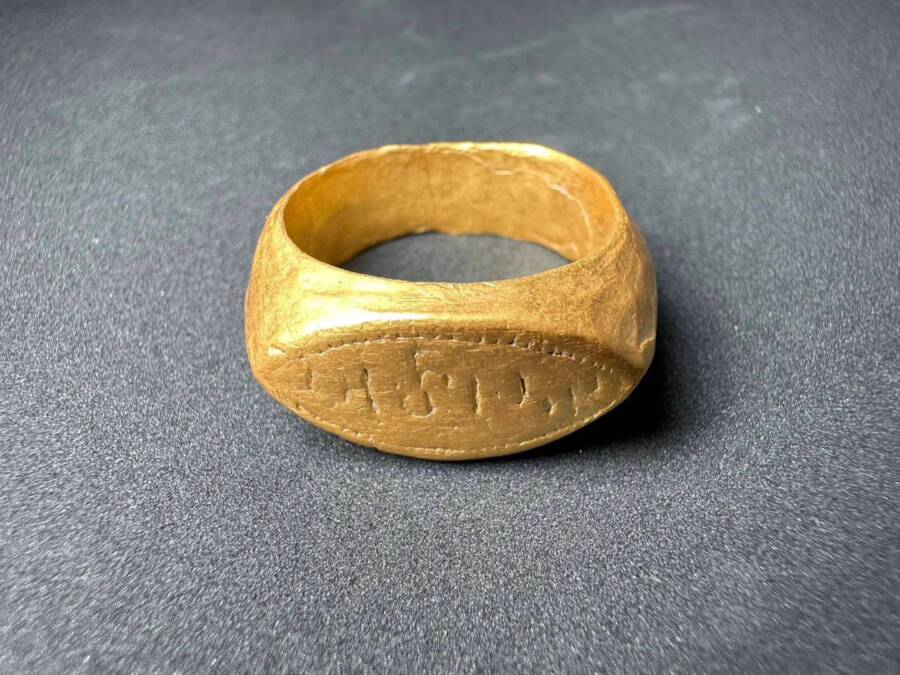
ALLTHATSINTERESTING.COMArchaeologists In Thailand Just Unearthed A Pair Of Perfectly Intact Gold Rings That Date Back 2,000 YearsThe Fine Arts Department via APArchaeologists in Thailand discovered this 2,000-year-old gold ring adorned with a Brahmi inscription.Archaeologists at the Don Yai Thong archaeological site in western Thailand just discovered a pair of rare gold rings that date back a whopping 2,000 years. While one ring is plain gold without any pattern, the other bears an inscription in an ancient Indian writing system that references the zodiac.Now, these discoveries and the others made at this same site are inspiring new questions and ideas about life in Thailand during the late Iron Age.The Ancient Gold Rings Found Among Human Remains At Don Yai ThongThe Fine Arts Department of Thailand announced the discovery of the rings, found among a number of scattered human bones, in late June.Excavations at the archaeological site, located about 80 miles southwest of Bangkok in the Phetchaburi province, had been ongoing since February. It was then that locals accidentally discovered the site after coming across pieces of ancient bronze drums in nearby rice fields.The Fine Arts Department via APResearchers have been excavating the site since February, and have also found nine human skeletons thus far.Since then, archaeologists have discovered a trove of artifacts, including gold ornaments, pottery, and glass beads, which they date to the Iron Age, around 2,500 to 1,500 years ago.The team has also already uncovered eight human skeletons, and each seems to have been buried in a deliberately ritualistic way, facing northeast with a bronze object placed above their heads. Fine Arts Department Director-General Phnombootra Chandrajoti told the Bangkok Post that this burial positioning is rarely found at archaeological sites in Thailand.Now, this new find adds to an already fruitful excavation at Don Yai Thong.The team has found a ninth human skeleton, this one likely belonging to a child under the age of 12. The childs skeleton was also buried in accordance with the same ritual used for the previous eight skeletons. In addition to the human remains, the team discovered a possible bronze gong, more glass beads and pottery, and a well-preserved jaw of a cow or buffalo.The Fine Arts Department via APThe research team believes that the rings owners belonged to the Vaishya social class.It was alongside all of these finds that the archaeologists unearthed the two gold rings, both of them in an excellent state of preservation.One of the rings is unadorned, without any writings or patterns. The other is engraved with Brahmi, an ancient Indian script that scholars believe was derived from Aramaic, and was the foundation for many modern languages in southeast Asia, including Thai.After initial analysis of the script, researchers determined that it says pusarakhitasa in Brahmi, which means the one protected by Pushya. According to the Fine Arts Department, Pushya is one of the most auspicious zodiac signs in Indian astronomy.What This Rare Discovery Reveals About Life In Iron Age ThailandResearchers believe that these Iron Age burial grounds were reserved for community members of high social standing. For instance, the first skeleton found at the site was buried with rings, bangles, earrings, and gold pendants luxurious grave goods, all of them.The Fine Arts Department via APThe artifacts and human remains uncovered at Don Yai Thong date back to the late Iron Age.Such valuable grave goods also indicate that this entire society was likely prosperous, and that they valued elaborate funerary practices, including offerings to the dead.The non-human remains found at the site may indicate a practice of sacrificial animal offerings or ritual animal burials, but researchers said that more study is needed to confirm such a hypothesis.But what is clear now, after only an initial analysis, is that the rings were owned by members of the Vaishya social class, which ranked third out of the four classes in the traditional Indian caste system. The Vaishyas were generally merchants, artisans, farmers, and traders.This opens up questions about how social class affected burial rituals in this ancient society, given that researchers found burials of elites right alongside those of community members with lower status.The Fine Arts Department said they plan to continue uncovering more remains and artifacts in July, but that work is currently suspended because of flooding risks due to the areas rainy season.The team also plans to conduct 3D scans of the burial grounds, as well as send charcoal samples to the U.S. for scientific dating analysis.Before initiating conservation processes, the department will display the artifacts to the public for several days, which will perhaps lead to a permanent exhibition for these stunning finds.After reading about the rare pair of 2,000-year-old gold rings found in Thailand, see the 29,000-year-old remains of a child that were unearthed elsewhere in Thailand. Then, learn about the 2,200-year-old zodiac paintings found in an Egyptian cave.The post Archaeologists In Thailand Just Unearthed A Pair Of Perfectly Intact Gold Rings That Date Back 2,000 Years appeared first on All That's Interesting.0 Commenti 0 condivisioni 2 Views -
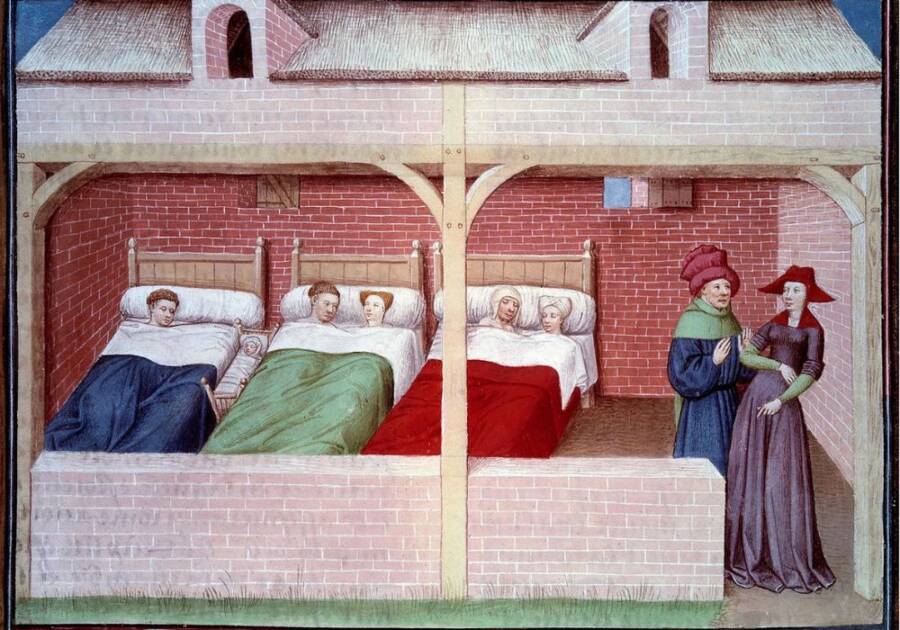
ALLTHATSINTERESTING.COMI Have This Sleep Schedule Now And Its The Best: Woman Says Our Ancestors Didnt Used To Sleep Through The Night. Then She Explains WhyPublic DomainIn medieval times, families often shared beds and seemingly woke up in the middle of the night to socialize and do chores.In the modern world, the average person sleeps for roughly seven to nine hours each night before waking up, going about their day, and heading back to bed. But that may not have always been the case. Some experts believe that biphasic sleep sleep that is broken up into two separate phases was common throughout history.In a video with over 2.6 million views, TikTok user Lexi Natoli (@yolkfather) states, If you slept for eight hours straight in the medieval times, people would probably think theres something wrong with you.Inside The Theory Of Biphasic SleepAccording to Natoli, Sleeping straight through the night was not a normal thing to do. Instead, she says that sleep in the medieval period was biphasic, which basically just means instead of one long stretch, the night was split into two different sleeps.People would go to bed early Im talking right after sunset and then sleep for about four hours, she says. And then, around midnight, everyone would just wake up. People would read or pray or talk to their families. It was such a normal thing that some people would even go visit their neighbors next door.Many people saw this time as their quiet, sacred period in the middle of the night, Natoli states. It was much needed after being busy all day and not having any time to relax.Public DomainAccording to some scholars, biphasic sleep was common and socially accepted during the medieval period.In the caption, she adds, Can we bring back biphasic sleep? That actually sounds nice.This idea is based on a theory by historian Roger Ekirch. Beginning in the early 1990s, Ekirch scoured historical documents like letters, diaries, books, legal testimonies, medical textbooks, and newspapers and found countless references to a first sleep and a second sleep. Additionally, he found evidence that various activities took place between these two phases, indicating that sleep was occurring in two separate blocks.In the years since his initial theory was published, other scholars have found evidence that indicates biphasic sleep was common and socially accepted. Some claim that one single stretch of sleep only became normal during the Industrial Revolution, when mechanization meant that people converted their schedules to clock time. So, without industrialization, would humans be natural biphasic sleepers? A study from 1992 sought to answer this question by limiting participants to just 10 hours of light per day. The experiment found that participants naturally shifted into a biphasic sleep pattern.Public DomainCouples likely used the period between sleep cycles to conceive children, as depicted in this 15th-century painting of newlyweds on their wedding night.However, the theory that this is natural is a bit controversial. The 1992 study had just 16 participants, so it wasnt the best indicator of general human behavior. Furthermore, the experiment was criticized for having unnatural conditions. In 2023, Dr. Niall Boyce wrote in the journal Medical History, The extent to which this experimental regime can be considered a simulation of sleeping conditions in the pre-industrial and specifically the early modern world is dubious.In fact, later studies that were repeated in more natural environments found that, while circadian rhythms were affected, biphasic sleep was not reported.So, was biphasic sleep actually a widespread phenomenon throughout history?Is This The Way Were Supposed To Sleep?In his paper, Boyce noted that reports of biphasic sleep may have been the result of restlessness, not ideal slumber. Other literary references to first and second sleep, he stated, may have non-biphasic explanations. For example, they could have referred to peculiar sleeping circumstances, such as needing to wake in the middle of the night to perform a household task like stoking the fire or checking on livestock. They also may have been recording normal phases of sleep that we now categorize as Rapid Eye Movement (REM) or non-REM.Furthermore, historians have not found consistent references to biphasic sleep across the globe. If this were truly a natural phenomenon, its likely that it would appear in records from different cultures throughout history.All of this is not to say that biphasic sleep did not happen. Instead, it simply calls into question whether it was natural or cultural and, in places where it did occur, how widespread it really was. Still, its certainly fair to say that some people in the Middle Ages were probably awake during the night and may have engaged in social activities during that time.The Morgan Library & MuseumDuring the Middle Ages, families may have risen around midnight to add wood to the fire or pray.However, this doesnt mean that modern humans should convert their own sleep to a biphasic schedule. Some studies have even shown that the sleep pattern can have detrimental health effects. Still, viewers of Natolis video were enthusiastic about the idea. I was definitely surprised by the amount of people who said they already practice some form of segmented sleep in their daily lives, Natoli told All Thats Interesting in an email. I thought it was much less common! Many of those commenters also mentioned how this style of sleeping actually helps their insomnia and leads to them feeling more rested throughout the day.Natoli noted that when she came across the idea of biphasic sleep, and especially how it was believed to be common during the medieval period, she was fascinated.Learning how industrialization and changing lifestyles contributed to its decline made me want to learn more and understand how a segmented sleep pattern benefited people throughout history, and whether or not it still has relevance today, Natoli said.She also echoed expert opinion that biphasic sleep was not something practiced by everyone throughout history. I think one thing that often gets misunderstood is that this style of sleeping was not universal, Natoli explained. While there is strong historical evidence that segmented sleep was common in many societies, it wasnt practiced by everyone or in every culture. @yolkfather Can we bring back biphasic sleep? That actually sounds nice #medievalhistory #biphasicsleep #historytime #medievaltiktok #TikTokLearningCampaign Chopin Nocturne No. 2 Piano Mono moshimo sound design After reading about the theory of biphasic sleep, explore these 21 bizarre facts about sleep. Then, learn about the Hat Man who haunts peoples dreams.The post I Have This Sleep Schedule Now And Its The Best: Woman Says Our Ancestors Didnt Used To Sleep Through The Night. Then She Explains Why appeared first on All That's Interesting.0 Commenti 0 condivisioni 2 Views