• WWW.LIVESCIENCE.COM
    Chinese supercomputer leapfrogs best US machines to be ranked worlds fastest
    A Chinese system has become the worlds most powerful supercomputer, surpassing American machines for the first time since 2021.LineShine, installed at Chinas National Supercomputing Center in Shenzhen, clinched the top spot in the 67th TOP500 ranking of the worlds most powerful supercomputers. The new system has already been used in a range of fields, giving developers another route to achieve supercomputing power.The machine, which came online in the first half of 2026, can reach speeds of 2.198 exaFLOPS where 1 exaFLOP is 1 quintillion (1018) floating-point operations, or mathematical calculations, per second (FLOPs) making it the only supercomputer on the planet to exceed 2 exaFLOPS per second. It's also the first time China has hosted the world's fastest supercomputer since 2017.A FLOP is a type of calculation used to benchmark computing performance. Exascale supercomputers can perform more than 1 quintillion of these operations every second. In comparison, home computers can perform roughly 5 trillion FLOPS.According to TOP500, LineShine can achieve speeds about 22% faster than El Capitan, a supercomputer housed at Lawrence Livermore National Lab in California that had previously held the top spot since November 2024.The systems computing power is the result of "a comprehensive breakthrough in a series of core technological barriers," according to a translated statement from China's National Supercomputing Center.Unlike many other supercomputers, LineShine uses only central processing units (CPUs) to perform calculations. Other systems rely on both CPUs and graphics processing units(GPUs), which run many jobs simultaneously by dividing tasks among smaller, specialized cores.Since 2018, the U.S. government has restricted exports of semiconductor chips to China, including GPUs. However, startups such as DeepSeek have wrangled other technological advancements to train artificial intelligence (AI) models with fewer and less powerful GPUs than comparable systems such as ChatGPT.LineShine "represents a historic leap forward for China's supercomputing field, breaking through foreign technological blockades and building an independent and controllable software and hardware system," the statement read.The system has already been used on projects in multiple research areas, including atmospheric science, drug discovery and AI, according to the National Supercomputing Center. In general, supercomputers perform extremely complex calculations at speeds much faster than traditional computers can handle, allowing them to solve problems that would otherwise take too long or cost too much to address.Related storiesChinese researchers just built an open-source rival to ChatGPT in 2 months. Silicon Valley is freaked out.Meet the world's smallest AI supercomputer it packs 'doctorate-level intelligence', its makers say, and can fit into your pocketChina achieves quantum supremacy claim with new chip 1 quadrillion times faster than the most powerful supercomputersThe fastest supercomputers utilize a range of different designs and processors, showing that high-performance computing doesnt rely on any one single method."The list demonstrates that there is no single dominant technology path to leadership-class computing; instead, vendors are pursuing a variety of CPU, GPU, APU, and custom-accelerator approaches coupled with different interconnect and system designs," TOP500 representatives said in a statement.Following LineShine and El Capitan, two supercomputers at U.S. national laboratories and one in Germany claimed spots three through five on the TOP500 list. Machines in Italy, Switzerland, Japan and the U.S. round out the top 10.Can you match these ancient devices to their pictures? Find out with our computing quiz!
    0 Commentarios 0 Acciones 10 Views
  • WWW.IFLSCIENCE.COM
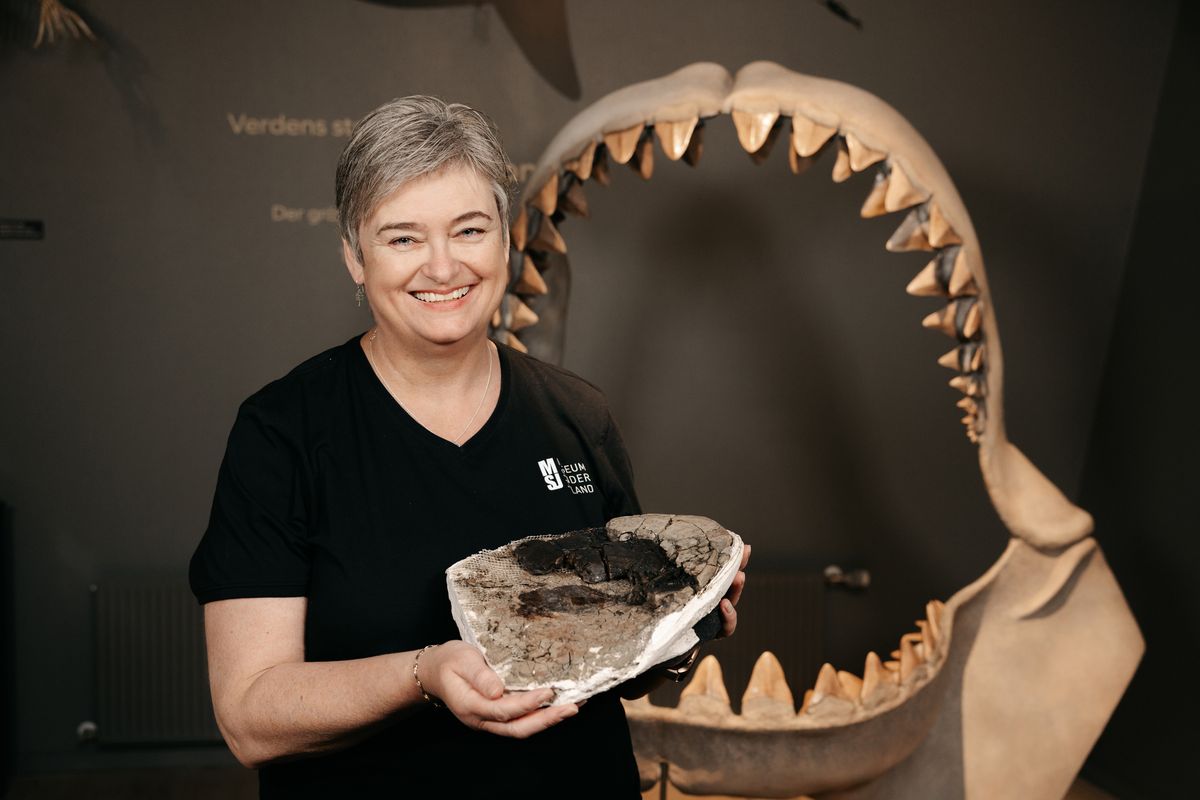
    The World's Largest Known Megalodon Vertebra Went Missing In A Museum Move Now Scientists Have Found It Again
    In addition to validating a recent size estimate for the monster fish, scientists found evidence this one had recently eaten a basking shark.
    0 Commentarios 0 Acciones 10 Views
  • WWW.IFLSCIENCE.COM
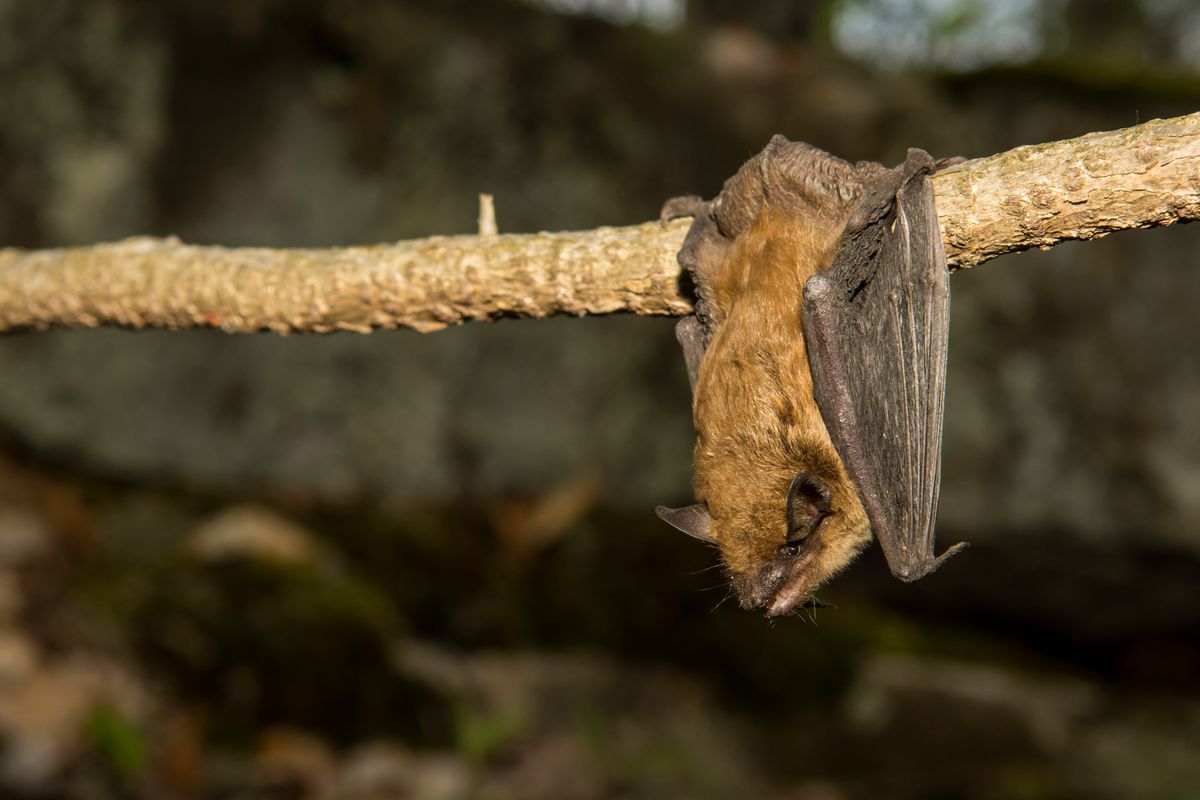
    11-Year-Old Kid Died Of Rabies After A Bat Landed On His Face But There Was No Sign Of A Bite Or Scratch
    This is the first locally acquired case in Ontario since 1967 and has flagged an important gap in public awareness.
    0 Commentarios 0 Acciones 10 Views
  • 0 Commentarios 0 Acciones 10 Views
  • WWW.THECOLLECTOR.COM
    Were There Any Foreign-Born Samurai in Japan?
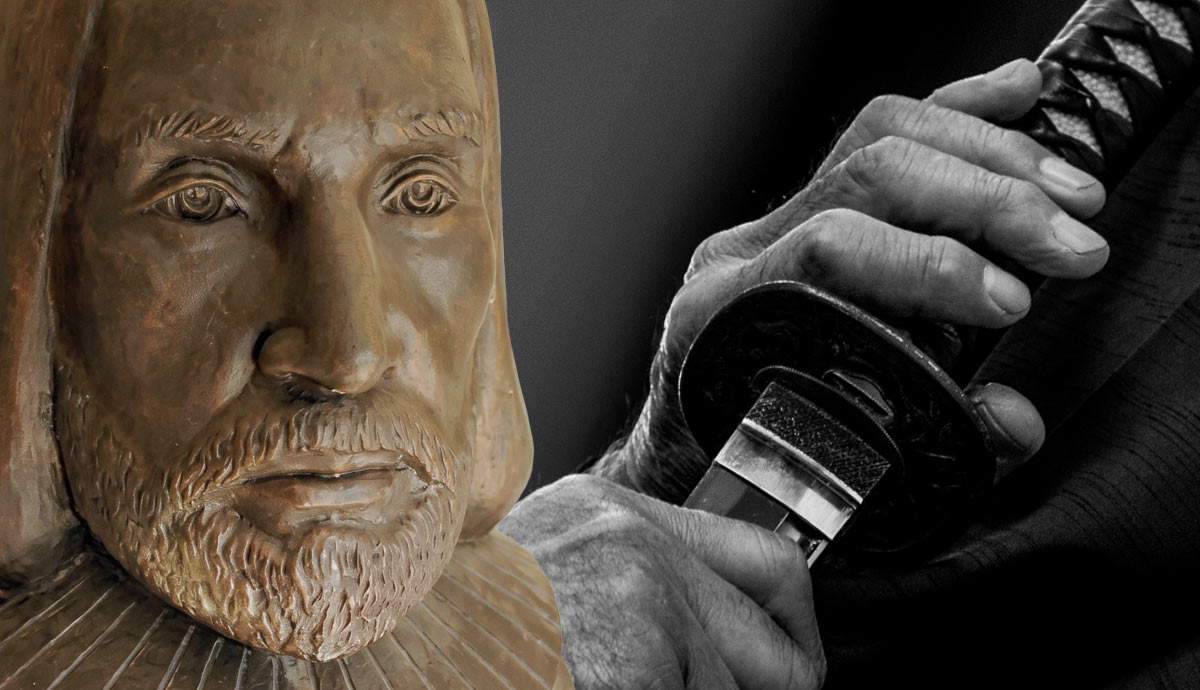
    Few historical figures embody Japanese culture quite like the samurai. Their massive helmets, decorative iron armor, and the famous curve of the katana have fascinated generations interested in the national culture.The history of the samurai, however, has a few interesting wrinkles that are often glossed over. And one of them is the fact that a handful of foreigners were able to scale the ranks of Japanese society to become samurai despite Japans strict warrior caste system that became incredibly rigid in later years. A few samurai from other continents made notable contributions to local society.Yasuke, the African SamuraiRimpa-style suzuri-bako (detail) from the 1590s, possibly depicting Yasuke. Source: Wikimedia Commons / Museu do CaramuloYasuke was one of the most famous samurai of his time; his life represents a definitive chapter in African samurai history. He was born in Africa and was brought to Japan by Alessandro Valignano, an Italian missionary exploring East Asia in the 16th century.Arriving in Japan in 1579, he and his group found themselves right in the middle of Japans Warring States period, known as the Sengoku Jidai (roughly 1467 to 1615). When Yasuke arrived in Kyoto in 1581, he caught the eye of Oda Nobunaga, one of Japans greatest warlords.Impressed by Yasukes physical strength and behavior, Nobunaga hired him as his personal bodyguard. Books from the era, most notably The Chronicle of Lord Nobunaga, described Yasuke as having a dark complexion and the strength of ten men. Yasuke became Nobunagas weapon-bearer in addition to having bodyguard duties, even fighting beside him in June 1582 during the attack known as the Honn-ji Incident. Yasukes story ended with him bravely fighting for the Oda family before his capture and release, but he is still remembered as one of the earliest documented foreign-born samurai in Japan.William Adams, the Navigator Who Became a SamuraiWilliam Adams before Shogun Tokugawa Ieyasu, in a 19th-century illustration. Source: Overseas Images of Japan Database / Wikimedia CommonsWhile Yasukes rise to status was sudden and fast, Adams rise came slowly and by accident. The story of the English samurai William Adams, later known as Miura Anjin, began when he was born to a family in Gillingham, England, in 1564. Adams got to Japan after he joined the crew of the Dutch ship De Liefde as a navigator. However, during its journey, the ship was badly damaged. It anchored in Japan in 1600, just as Tokugawa Ieyasu finalized his plan to become Japans next shogun.Impressed with Adams skill as a navigator, Ieyasu appointed him hatamoto, or a direct retainer to the lord. Adams was also given land in Hemi (now Yokosuka) as well as a large yearly salary. He was also given the Japanese name Miura Anjin, which translates to The Pilot of Miura. Under the new regime, Ieyasu heavily relied on Western advisors to navigate international trade and diplomacy. Adams became the link between the Japanese government and visiting Westerners, eventually becoming an advisor. Adams was granted samurai status and lived as a high-ranking official until his death in 1620 after a short illness.Other Notable SamuraiBust of Jan Joosten van Lodensteyn at the Kuroshima museum. Source: Wikimedia CommonsWhile Adams lived a long and successful life in Japan, he was not the only person to benefit from the luck of De Liefde. Another sailor who made landfall aboard the battered vessel was Jan Joosten van Lodensteijn Yaesu, also known simply as Joosten. Joosten also became a hatamoto under Tokugawa Ieyasu, serving as both a translator and a merchant. Joostens importance to Japanese history can still be felt today; the Yaesu district of Tokyo, located near Tokyo Station, is named after him. The Japanese pronounced his name as Yaysu, which eventually evolved into Yaesu. Unlike Adams, Joosten spent his final years traveling abroad and passed away in 1623 following a drowning incident.While the two Europeans are the most famous foreign-born samurai, they are not the only ones to earn the title. During Japans invasions of Korea between 1592 and 1598, there were reports of Koreans being captured as prisoners and forced to live in Japan. Records show that Kim Yeo-cheol, a captured Korean youth, entered Japan during the invasion and was later adopted into the Wakita family, who became samurai serving the Maeda clan. His integration into Japanese society as a samurai was smoother than most because he was taken in at such a young age.The Context of Foreign-Born SamuraiOda Nobunaga, late 16th-century depiction. Source: Wikimedia CommonsThere is still some disagreement over who qualifies for the title of samurai, as people living in Japan during the Sengoku period had a loose definition of what counted as a samurai. However, many historians recognize the rights given to Joosten, Adams, Yasuke, and other foreign visitors as samurai status. The fact that they were given salaries, land, and formal samurai rank by their lords, all of which included weapon privileges, confirms their place in Japans famous warrior class.
    0 Commentarios 0 Acciones 10 Views
  • WWW.THECOLLECTOR.COM
    Why Brazil Stayed Whole While Spanish America Shattered
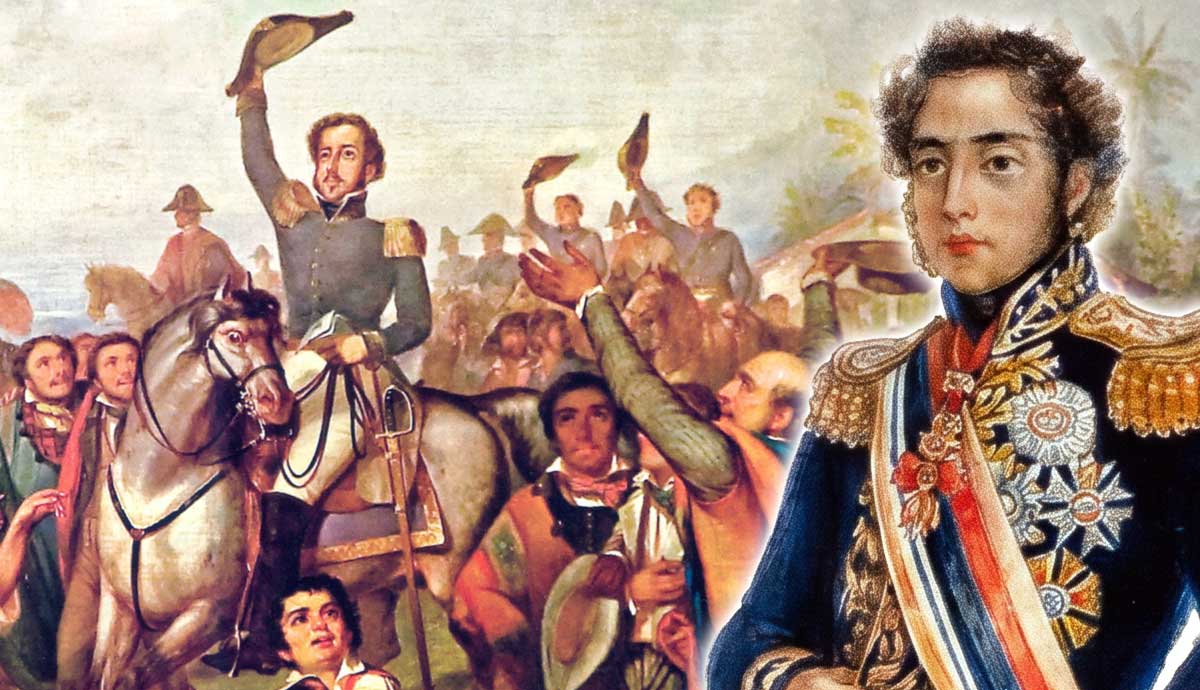
    Spanish America revolted from its Spanish overlords in a way that seems to have almost copied the United States of America, with one key difference. These Spanish states did not remain united, even if revolutionary figures like Simn Bolivar may have wanted it. If Bolivar could not even keep Gran Colombia together, how did Dom Pedro I maintain a united Brazil?Turmoil in SpainThe Third of May 1808, painting by Francisco de Goya, 1814. Source: Wikimedia CommonsAt the beginning of the 19th century, Spain controlled much of South America, all of Central America, and a large swath of North America. Their empire stretched from Patagonia in the south, Texas in the north, Cuba in the east, and California in the west. The main exports of the colonies were cash crops (like sugar cane and tobacco) and mining (mostly silver and gold). Silver and gold were the most important and were imported to such an extent that they even caused extreme inflation in Spain during the 16th century.By the 19th century, Spain had declined from their glory days but was still a formidable player in the colonial world. However, things soon began to unravel due to the same thing that caused most calamities in the 1800s: Napoleon.In 1808, Napoleon Bonaparte placed his brother, Joseph Bonaparte, on the Spanish throne. Discontent in Spain over having their monarch replaced with a foreign outsider led to the Peninsular War, which lasted until 1814, when the Bourbon Dynasty was restored in Spain, with King Ferdinand VII taking the throne.During the Peninsular War, many Spanish colonies saw the Bonaparte king as illegitimate and started to move away from the crown or outright rebelled. When the Spanish regained the monarchy on the mainland, they were already depleted financially and militarily from fighting France. This made it extremely difficult to put down a rebellion, let alone several happening on the other side of the world simultaneously.Spanish Colonies RebelSpanish conquest of the Americas map. Source: Wikimedia CommonsSpanish America was split into four viceroyalties:The Viceroyalty of New SpainThe Viceroyalty of New GranadaThe Viceroyalty of PeruThe Viceroyalty of Ro de la PlataRevolts began across Latin America starting in 1809. New Granada rebelled in 1810. Following them, a year later in 1811, Venezuela and Paraguay declared independence. Next was Argentina in 1816 and Chile in 1818. During the chaos, Portuguese Brazil managed to annex a part of the viceroyalty of the Ro de la Plata in 1817 (this territory would later form modern-day Uruguay).Later, Mexico followed in 1821, along with all the Central American states. In 1822, Mexico joined with Guatemala, El Salvador, Honduras, Nicaragua, and Costa Rica to form the Mexican Empire. The Mexican Empire would not even last half a decade, as the Central American countries declared independence. These nations united and formed their own country, the Republic of Central America. However, this country too would fall apart.In 1821, Peru declared its independence (and secured it in 1824). In the same year, Panama broke from Spain; however, they opted to join with Colombia. In 1822, Ecuador joined Gran Colombia as well. They were followed by Bolivia in 1825. Uruguay was finally able to declare its independence from Brazil in 1828. Despite wanting to join Argentina, it was decided that Uruguay would be made into a buffer state between Brazil and Argentina.Spanish American IsolationThe Collegiate Church of Guadalupe, by Luis Coto, 1859. Source: Wikimedia CommonsThe American Revolutionary War saw 13 colonies that all shared (at least mostly) a common identity. Each colony was easily accessible to the others, which allowed trade and travel between them. They had a shared struggle in the French and Indian War and a colonial system where each colony regularly met with the other twelve.The Spanish Viceroyalties, on the other hand, had a shared language and a colonial overlord. That is largely where their similarities end. While of course the cultures of each viceroyalty were more similar to each other than they would have been to say an English or French colony, they still were nowhere as unified as the American colonies were for two main reasons.First: geography. Spanish America was strung out over thousands of miles, making it already a difficult journey to get from one end to the other, not even including all of the physical barriers. Look at the Andes mountains, which separate Chile from Argentina, or the almost impenetrable lush jungles of Peru. The Darien Gap in Panama (still virtually uncrossable today) physically separated South America from North and Central America. The only way to effectively communicate and trade with other viceroyalties was by sea or river, making it all the more difficult for landlocked areas.The second reason was the Spanish colonial system itself. Spain required each of its viceroyalties to be governed independently of one another. So, if one wanted to talk or trade with another, they would have to go through Madrid; sometimes needing to physically travel all the way to Madrid and back to the Americas.Spanish America ShatteredSimon Bolivar, by Luis Enrique Toro Moreno, 1922. Source: Wikimedia CommonsAs regions within the same viceroyalties were isolated from each other, let alone from other viceroyalties, a collective rebellion was not feasible. While the American Revolutionaries rebelled all at once and formed a cohesive army with George Washington at its head, Spanish America could not do the same.Different regions of viceroyalties rebelled at different times, often not even in sync within the same viceroyalty. This led to multiple strong men figures like Simn Bolvar in New Grenada (Colombia region), Jos de San Martn in Ro de la Plata (Argentina region), and Miguel Hidalgo in New Spain (Mexico region).Furthermore, even these figures were not able to keep their respective regions whole due to infighting and differing priorities among factions. Often, while each region was fighting the Spanish, they would have to put down rebellions against their own rule and fight civil wars amongst themselves on issues like maintaining a centralized government or evolving into a federation.A lack of shared culture, communication, a centralized army, a unified goal, and an agreed-upon hierarchy led to Spanish America breaking up. In fact, when looking at how Spanish America was situated before it began its revolutions, it is hard to ever imagine the region being unified without Spanish force.Fleeing PortugalEmbarkation of the Royal Family to Brazil, by Nicolas-Louis-Albert Delerive, 19th century. Source: Wikimedia CommonsIt was almost impossible to expect Spanish America to remain whole. So, how did Brazil pull it off? The answer to this question begins yet again with Napoleon.The Portuguese crown had a different strategy than the Spanish did for dealing with Napoleon. While Spanish leaders were replaced with a French puppet and engaged in a long guerrilla war to oust the French, the Portuguese royal family simply moved the royal court to Brazil and ruled from there instead.In 1807, King Dom Joo VI moved the royal court to Brazil, which made Brazil the effective head of the Portuguese Empire until 1821. During their stay in Brazil, the royal family essentially fell in love with the colony. They began investing in Brazil, funding schools, roads, and trade infrastructure. They even allowed Brazil to engage in free trade outside of their colonial overlords, particularly to trade with the British (a privilege the Spanish colonies desperately wanted). They went as far as to make Brazil a co-equal kingdom with Portugal in 1815.Brazil was getting treatment Spanish America could only dream of, but this began to change in 1820 when a liberal revolution overtook Portugal proper. The reformers demanded that the king return to Portugal to sign off on the new constitution, forcing him to leave Brazil in 1821. However, he left his son, Dom Pedro I, in Brazil as the prince regent.Brazil RebelsThe Proclamation of the Independence of Brazil, by Franois-Ren Moreaux, 1844. Source: Wikimedia CommonsOnce King Dom Joo VI returned to Portugal, he was caught between multiple rival factions he did not have strong control over, including his own son (Pedros brother) and wife. Portugal began making reforms, many designed to turn Brazil back into a colony instead of a co-equal kingdom. Brazil was upset by this attempt at downgrading their status, and furthermore, the Cortes (the Portuguese parliament) repeatedly demanded that Pedro I return to Portugal.In 1822, Pedro I, seeing no other path towards Brazilian autonomy, declared independence with the Cry of Ipiranga, when he shouted: Independncia ou Morte! (Independence or Death). Pedro I coordinated this rebellion alongside Brazilian elites who supported him becoming the Emperor of Brazil, leading the country as a centralized figure.Armed conflict broke out almost immediately with rebel forces attacking loyalist cities, like Salvador. Fighting lasted from 1822 to 1824 with jungle campaigns, naval campaigns, and urban campaigns. The Portuguese did not put in as much effort into retaking Brazil compared to their Spanish counterparts. And so, in 1825, Portugal recognized Brazilian independence with Pedro I as emperor.Brazil Remains WholeJuramento da Princesa Isabel, by Victor Meirelles, 1875. Source: Wikimedia CommonsBrazil remained whole while Spanish America was completely shattered. Furthermore, Brazil only had to fight for a couple of years while Spanish America fought for decades. Brazils success comes down to four broad reasons.First, Pedro, I was able to legitimize his authority. Brazil was not treated as a backwater region of a colonial empire used only for resource extraction. When the royal family and court moved to Brazil, it became the heart of the empire. Investment rolled into the colony, creating new schools, roads, infrastructure, and dozens of other improvements that allowed for the quality of life in at least some parts of Brazil to be comparable to that of Europe.Furthermore, the opening of trade with other parts of the world, the further reduction of regulations, and the elevation into a kingdom made Brazilians feel a greater sense of loyalty to the Portuguese. While the Spanish were seen as tyrants by the people of the Americas, the Portuguese were seen in a much better light by not only the people but the Brazilian elites as well.Emperor Pedro I of Brazil, around age 18, c. 1816. Source: Wikimedia CommonsSecond was the centralization of authority. Brazil was run largely as a single colony, unlike the Spanish Empire, which was broken up into four viceroyalties. This allowed all parts of the colony to be on the same page. Essentially, Brazil already had a centralized government with a central commanding figure at the top: Pedro I. Unlike the Spanish Americans, the Brazilians did not have to replace an already existing governmental structure and create an entirely new one; they just had to sever a single thread of contact with Portugal.Third was geography. The regions of Spanish America were separated from each other by up to almost 5,000 miles in some cases, while Brazils regions are separated by at most a little more than half of that. Furthermore, a large part of Brazil is much more easily accessible to other parts due to the lack of geographical boundaries. Brazil has some of the densest jungles in the world, but those jungles werent barriers blocking contact from one major part of the empire to another.Fourth was the level of blowback. Brazil fought a much quicker and easier war than Spanish America had to. This can be attributed to factors such as Portugal having a smaller military than Spain. The Portuguese Empire was politically and economically headed by Brazil instead of by Portugal for more than a decade, strengthening the Brazilian position over the Portuguese, at least for a time. Multiple regions of Spanish America remained loyalist, which gave the Spanish footholds to stage troops and prepare offensives. But in Brazil, virtually the entire colony rebelled, not giving the Portuguese any way to stage a counterattack.

    0 Commentarios 0 Acciones 10 Views
  • WWW.THECOLLECTOR.COM
    7 Mythical Weapons That Arent Swords
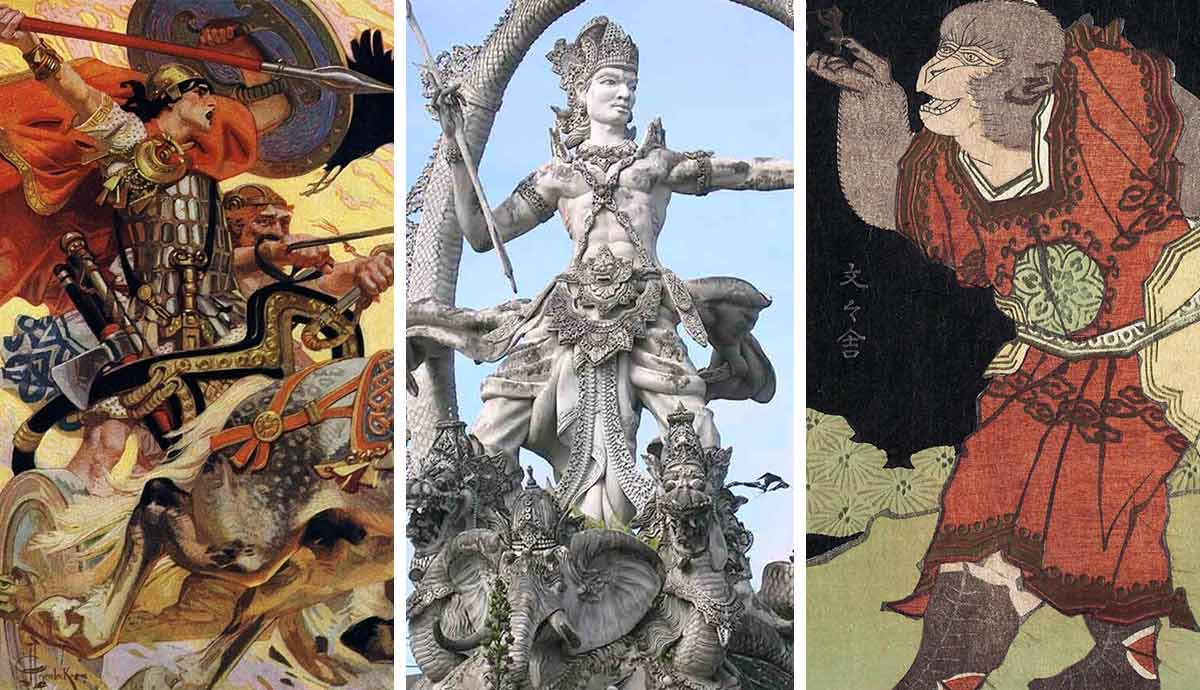
    Special weapons are a common element in ancient myths and legends, often wielded by a hero or a deity. Most famous mythical weapons featured in stories retold today are swords. The sword has a reputation for heroic mystique stemming from stories of Excalibur, Zulfiqar, and other weapons. However, there are just as many divine weapons that are not swords, for various reasons that the tale-tellers of the time felt appropriate.If you want to learn the values that a culture cherishes, be it ancient or modern, look to the heroes of its stories and how they are depicted. A spear might represent discipline or martial skill, a club might represent raw ferocity, and a bow might denote calmness under pressure, or a regal demeanor.1. SharurNinurta with his thunderbolts pursues Anz, who has stolen the Tablet of Destinies from Enlils sanctuary, from Monuments of Nineveh, 2nd Series, by Austen Henry Layard, 1853. Source: Wikimedia CommonsThe god Ninurta, son of Enlil and Ninlil, one day was in celebration of a festival honoring him and the other gods. As he was feasting and drinking, the lion-headed mace Sharur, which belonged to Ninurta, flew and kept watch over the world. It spoke, warning Ninurta of the primordial demon Asag, born of the earth itself, who commanded the stones, and his aim of usurping Ninurtas rule.The storm god went forth with Sharur and other weapons at his side and fought with the demon, their battle wreaking havoc upon the land and upon the peoples of the area. Sharur took the form of a winged lion and devoured his enemies. Ninurta went on to dictate the uses of the different types of rock that Asag had raised in rebellion.The above is documented in Lugal-e, a Sumerian praise poem dedicated to Ninurta, who was said to have dominion over agriculture, storms, and war. Such a diverse portfolio is common amongst earlier polytheistic deities. The weapon Sharur (said to mean smasher of thousands) symbolizes the wrath of thunderstorms, a motif common for war deities. The weapon also possesses sentience and the ability to speak and move independently, acting as a valued counsel to Ninurta.2. GandivaIllustration of Draupadi garlanding Arjuna, c. 1899. Source: Wikimedia CommonsLong ago in India, two factions of a family warred for power: the Pandavas and the Kauravas. The third of the five Pandavas, named Arjuna, was said to be the mightiest and most devoted warrior. He was said to have the aspect of Indra, the god of war and the sky. After his youth spent learning the arts of war, Arjuna is said to have gone into exile for twelve years for breaking a covenant with his other two brothers. During this time, he refined his skills and received several celestial weapons, one of which was the bow Gandiva.It was given to him by the water goddess Varuna at the request of the fire god Agni for burning down the Khandava Forest and killing all the living beings in it for the god to eat, replenishing his power so that the forest could be cleared away for new growth. This is, by modern standards, a horrific act, but what must be remembered about myths and legends is that they are often allegories for natural phenomena and historical occurrences. In this case, Arjuna, as a member of the kshatriya, was bound by oaths of fealty to the gods.State of Arjuna in Bali. Source: Wikimedia CommonsArjunas exploits are recorded in the Mahabharata, one of the two epic poems of India. The bow Gandiva has 108 strings, one of which is made of indestructible celestial sinew, and two quivers that contain an infinite supply of arrows. The bow is so heavy and so hard to draw that only Arjuna among half-mortals was able to use it. This is a common motif among divine weapons, wherein only a certain entity can wield it.Gandiva was created by Brahma for use against those who would defy the cosmic order, and passed down through several owners before Arjuna. He later used it to slay much of the opposing army in the Kurukshetra War.3. Pelian SpearThe Education of Achilles by Chiron, fresco from Herculaneum, 1st century AD. Source: Wikimedia CommonsNear the top of Mount Pelion in Thessaly grew a forest of ash. Made from one of these trees, possibly by the centaur Chiron, was a sacred spear destined to be used by the greatest heroes of Greek myth. Chiron presented the spear as a gift at the wedding between Peleus and Thetis.The divine essence of the weapon showed in its point, which was described as having an appearance of divine sunlight or fire. Given the time period, the spear likely would have had a bronze tip, and its appearance could be attributed to being exceptionally polished. It was also extremely heavy, to the point that only Peleus could wield it, but perfectly balanced in his hands.Peleus passed the weapon down to Achilles, who bore it across the Aegean Sea to fight in the Trojan War. One seldom-mentioned myth about the Pelian Spear was its supposed healing abilities. After a duel with Telephus, the king of Mysia, Achilles was said to have let a few droplets of rust fall into the wound, causing it to heal almost instantly.4. Ame-no-NubokoIzanagi with Ame-no-Nuboko, silk print, by Kobayashi Eitaku, 1880s. Source: Wikimedia CommonsBefore the universe was created, all of existence was a dark, cold, jellylike mass of roiling chaos, the raw energy of creation. Looking down from the Floating Bridge of Heaven, the kami Izanagi-no-Mikoto took the sacred spear Ame-no-Nuboko, which was given to him by the elder kami, and dipped the point into the ocean. When he withdrew it, droplets of water fell and coalesced and became the islands of Japan. So it is written in the Kojiki and the Nihon Shoki, the two foundational texts of Shinto.Ame-no-Nuboko is most often drawn as a yari, one of the most basic spear designs. Sometimes, though, it is depicted as a naginata, with sacred magatama jewels hanging from it.Unusually, this weapon has little confirmed role beyond the creation of the Japanese islands, but sometimes it is said to be the weapon that Izanagi used to kill the fire kami Kagutsuchi upon his birth.5. Ruyi Jingu BangThe Monkey King Songoku, from the Chinese Sun Wukong, by Yashima Gakutei, 1824. Source: The Met MuseumThe story of the Monkey King, Sun Wukong, resonates throughout Chinese literary culture and has been retold a number of times. One of the most persistent aspects of the story is the Ruyi Jingu Bang, Sun Wukongs staff. Unlike many of the other examples weve listed, this weapon doesnt come from Chinese mythology, but is rather a literary invention. In the novel Journey to the West, the staff is said to have originally been used by Yu the Engineer, or Yu the Great, to measure the depths of rivers and lakes to combat floods.Sun Wukong is said to have retrieved the Ruyi Jingu Bang from the Undersea Dragon Kings palace, where it was a support pillar. The name of the staff means something akin to compliant golden-ringed rod, and it has the ability to change its size to whatever the user wants it to be.The staff was said to be made of celestial black iron and weigh 17,000 lbs (exact translations vary), obviously far too heavy for anyone else to lift. The theme of a weapon being too heavy or unwieldy for any but its chosen warrior is a common theme amongst mythologies around the world.6. MjolnirThor, Hymir, and Jormundgandr, 1765-66. Source: Norse-Mythology.orgMjolnir hardly needs an introduction. The hammer of Thor, forged by the dwarves Brokr and Eitri/Sindri, is perhaps the second most well-known weapon in mythology, aside from Excalibur. The name Mjolnir means crusher and is derived from a proto-Indo-European word for lightning. Like lightning, Mjolnir could be thrown at a target at blinding speeds and made to instantly return to Thors hand. He used it this way frequently to slay jotnar, one of his most common foes.Unlike in the Marvel depiction, Mjolnir had no discrimination of so-called worthiness. It was simply a matter of strength, and even Thor himself needed to wear magical gloves and a belt to grant him enough strength to wield it. In the Prose Edda, Thors greatest feat with Mjolnir will occur during Ragnarok, the end of the world. He will use it to slay the World Serpent, Jormundgandr, in a mutual kill.Mjolnir has more than just a destructive, violent background: it was often used, or represented, in many consecration and healing rituals. Although Thor is considered a warrior deity, he is also a protector. Mjolnir was seen as a tool of protection and, strangely, fertility. This could tie into the symbolism of lightning clearing the way for new growth from fertile soil.7. Gae BolgCu Chulainn with spear, 1910. Source: Wikimedia CommonsThe spear Gae Bolg, made from the bones of a sea monster, is perhaps the most recognized weapon in Irish mythology. It was used mainly by Cu Chulainn, but passed through many hands throughout its existence, such as those of Scathach, who also taught Cu Chulainn how to fight.There are several different interpretations of its name, such as belly spear, barbed spear, or grievous death. It is one of the more brutal weapons on this list. Upon being thrust into an enemy, the spear would erupt a series of barbs in all directions, making the spear impossible to pull out without the barbs breaking off inside the victim.One of the most unusual properties of Gae Bolg is its method of wielding: it could be used as a normal spear, or it could be thrown by being gripped in between the big and second toes.
    0 Commentarios 0 Acciones 10 Views
  • 0 Commentarios 0 Acciones 10 Views
  • WWW.PCGAMESN.COM
    Valorant's Neon is "curbed" for now, but Riot says "balancing her is definitely challenging"
    Balance will always be the primary talking point when it comes to online multiplayer games. There's never a silver-bullet solution: someone somewhere is going to hate that 0.1% nerf, or that 10% buff. Valorant is a game that's seen myriad OP characters come and go: remember Chamber on release, and even the original version of Jett. One of the most frustrating Agents to deal with, however, has always been Neon. Give her a Bucky or a Judge and away she goes, tearing down anyone in her path and planting the Spike before you even know she's on-site. She's always been a menace, but in 2026, she's been absolutely disgusting.
    0 Commentarios 0 Acciones 11 Views
  • WWW.MASHED.COM
    Many Bartenders Hope You Never Order This Gross Type Of Shot
    Revelers better have a strong stomach if they dare to order one of these queasiness-inducing shots that even mixologists consider unsettling.
    0 Commentarios 0 Acciones 10 Views