5 Terrifying Monsters That Haunt the Louisiana Bayou
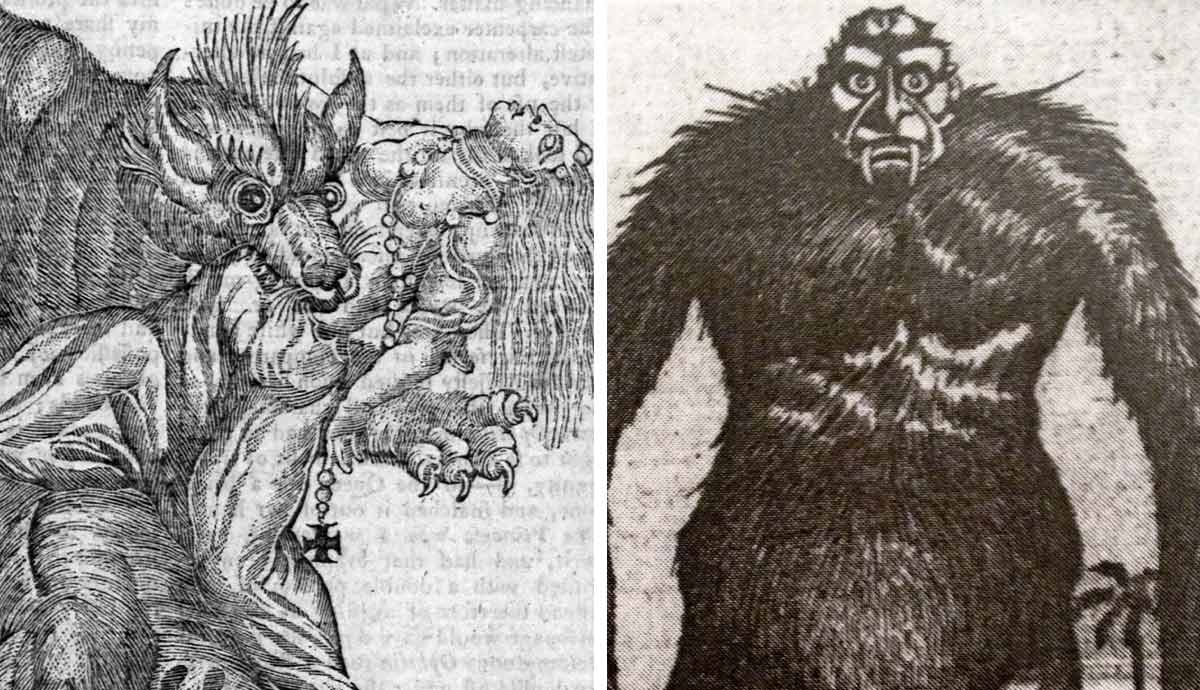
The Louisiana bayous have borne witness to centuries of migration and climate disaster. First home to indigenous communities, these dangerous canals became a refuge for escaped slaves, impoverished European immigrants, and refugees from Haitian rebellions. This blend of spirituality and folk tradition is intertwined with the dark and mysterious nature of the bayou. Soon, legends of reptilian monsters, prankster goblins, bloodsuckers, werewolves, and witches terrified outsiders, protected locals, and taught all how to respect these deadly waterways.What Are the Bayous?Scenic view of cypress swamp bottomland, photographed by the US Fish and Wildlife Service, 2013. Source: Wikimedia CommonsForming 5,000 years ago from the Mississippi River, the Louisiana bayous cover three million acres of slow-moving waterways, swamps, marshes, and wetlands, hosting one of the most diverse ecosystems in the United States. However, these streams are as deadly as they are ancient. The dark, misty, and disorienting landscape of overgrown moss, murky waters, and cypress trees shelters deadly creatures like alligators, snakes, and wild boar.Kenta Canal at Barataria Preserve, Louisiana, photographed by Jan Kronsell, 2004. Source: Wikimedia CommonsOriginating from the Choctaw word bayuk, the bayous witnessed the region transition into a coveted colonial possession for the French, Spanish, and British empires. Originally a frontier post, New Orleans became their contested crown jewel as one of the most diverse cities in North America. However, colonial violence soon drove native communities into the bayou to escape forced relocations, disease, and massacres. Escaped African and Caribbean slaves also found refuge in these swamps and marshes. Simultaneously, Anglo-French immigrants fleeing religious persecution further hid in these dangerous canals.Despite the harsh terrain, the geographical isolation of the bayous offered the most ostracized communities the opportunity to create self-sustaining settlements without the fear of persecution. Becoming the soul of the state, the bayou facilitated the eventual intermingling between these indigenous, European, African, and Caribbean factions. Their descendants eventually became known as the Creole and Cajun communities. To this day, Creole and Cajun cuisine, dialects, and musical standards, like jazz, are considered some of the richest facets of American culture. A crucial part of this legacy are the folk tales passed down for generations that warn all of the monsters and creatures that patrol and protect these wetlands.1. RougarouEngraving of the Beast of Gvaudan devouring a woman, 1765. Source: Wikimedia CommonsThe Rougarou is the most notorious creature of the Louisiana bayous. Famous for being a terrifying werewolf that stalks the swamps and sugarcane fields, it is often described as having glowing red eyes, a wolf head with fangs, and a large human male body covered in fur. Some accounts explain that it morphs between man and wolf, only fully transforming during full moons.The creature is known for hunting and punishing those who break rules, especially unruly children or Catholics who break religious vows during Lent. Those caught by the Rougarou are bitten, which transfers the curse onto them. For 101 days, they become a Rougarou until they find a new victim to bite and drain of blood.Some superstitions claim that you can protect yourself from the Rougarou by leaving 13 objects outside your home, as its animalistic mind cannot count past twelve. Others swear that simply living in a respectable fashion and not poking your nose where it does not belong is enough to protect yourself from its curse.Les Lupins, by Maurice Sand, 1858. Source: Wikimedia CommonsThe legend of the Rougarou originates from indigenous, Haitian, and French folklore. Some contend that the werewolf stems from indigenous beliefs about skin walkers. Skin walkers are men who shape-shift into ghastly creatures as punishment for their behavior. Likewise, French superstitions also seem responsible for this creature. Immigrants from French colonies in Canada and Haiti brought tales of the loup-garou, men cursed into becoming werewolves for being bad Christians.While this creature adopted its own attributes over time due to the physical isolation of the bayou and those who reside in it, the Rougarou continues to serve as a primary cultural figure in Louisiana. Many locals continue using threats of the Rougarou as a warning for children to not explore the forest alone and to exercise extreme caution around the wetland waters. Some even remember Catholic priests warning them to adhere to biblical law or risk the wrath of the Rougarou.Regardless of fear or fable, this werewolf is celebrated every year at the annual Rougarou Fest in Houma, Louisiana. Thousands partake in a multi-day celebration of the diverse music, food, folklore, and dance traditions cultivated in the southern bayous in its honor.2. Feu FolletA mirage in a marsh, colored wood engraving, by C. Whymper, c. 1853-1941. Source: Wellcome CollectionThe feu follet, also known as the will-o-the-wisps, are little orbs or flames seen flickering throughout the bayous and swamps. The feu have also been sighted down dark roads, secluded fields, and in cemeteries. Witnesses claim that the feu follet are a deep blue light that floats and flickers in the shadows. Most believe that these flames are evil and mischievous spirits who lure and drown those who are too curious and follow their light. Some believe that they do this to guard secret treasure or sacred sites in the bayou.Others believe they commit these tricks for their own entertainment. Either way, centuries-old accounts detail how the feu follet entice those who are too curious. Many who have followed them into the bayou are said to never be seen again.Additional variations offer a more tragic interpretation of these mystical lights. Some believe that the feu follet are souls stuck in the purgatory of those who died with too much hate or sorrow in their hearts. Others believe that they are the spirits of loved ones who remain with their family. Some Cajun superstitions also perceive the feu follet as the souls of infants who died before they were baptized, leaving them stuck in limbo to wander the swamps.The blue sulfur flames in the Ijen Caldera, photographed by Isderion, 2025, these flames, produced by natural gases, mirror the same bluish tint of the feu follet. Source: Wikimedia CommonsThe feu follet are deeply tied to Cajun folklore. These beliefs originated from Acadians, immigrants expelled from French Canadian colonies by the British during the French and Indian War. Finding solace in the isolation of the swamps, Acadians integrated with indigenous, European, and African influences to produce the Cajun traditions famous in Louisiana today. The feu follet became a superstition passed between these communities for centuries, warning all about the risks of unbridled curiosity and not respecting the unknown regions of the swamps and marshes.However, modern science may have proven the source of these ensnaring flames. Researchers now believe that the blue flames may instead be phosphorescent light from natural gases found in swampy and marshy regions. Decaying animal carcasses, rotten trees, and other organic material are also believed to be responsible for the frequent emission of blue flames dotting the most secluded and eerie sections of the bayou.3. The GrunchGreyscale drawing of the Chupacabra, by Alvin Padayachee, 2011. Source: Wikimedia CommonsThe Grunch is one of the most pervasive yet frightening little monsters near New Orleans. Since the citys founding days, these little beasts have patrolled the nearby swamps and roads, terrifying communities and visitors. Multiple variations of regional folklore depict the Grunch as a chupacabra-like monster with a horned goat head, glowing red eyes, and a human body. Other accounts describe the Grunch as a reptilian goblin, covered in scales with blue-green eyes and a horned spine.Grunchs appear at night in packs near swampy woodlands, and famously along Grunch Road. Renowned for their human-like intelligence, they lure their victims by mimicking their voices and shapeshifting into wounded animals. When someone approaches, they attack, dragging their victim into the bayou and draining them of their blood. Even today, they are blamed for missing livestock, pets, and other animals that are later found drained of blood and mutilated. Additional stories warn that Grunchs attack lone or drunk travelers. However, if they survive the attack, they are now cursed into becoming one.Many locals urge visitors to exercise caution at night, ignore any bizarre sounds, and leave the Grunch offerings to show respect.Vodnk, by Jaroslav Panuka, 1896. Source: Wikimedia CommonsSome believe that the Grunch originated from Creole superstitions inspired by folktales. Sightings of the Grunch have been prevalent since New Orleans was only a frontier outpost. Reports of small, horned reptiles hiding in the bayou, draining blood, and dismembering people and livestock have been documented from the early 1700s to the American Civil War during the 1860s. Sightings of the Grunch were even reported in 2005 after Hurricane Katrina.An alternative origin story of the Grunch begins with the famous voodoo queen Marie Laveau. Local histories explain that Marie came across a disfigured baby abandoned in the bayou. Upon learning the infant was the child of Satan, Marie chose to castrate the child to prevent a future demonic bloodline. However, when she attempted the procedure, these organs transformed into a female and male Grunch. They attacked and almost killed her before fleeing into the swamp, where they continue stalking and terrorizing their victims to this day.4. Honey Island Swamp MonsterThe Bombala Yowie shares multiple characteristics with the Honey Island Swamp Monster, such as its size, fangs, threatening demeanor, and fur, illustration by Will Donald, 1912. Source: Wikimedia CommonsDubbed the bayou Yeti or Sasquatch, the Honey Island Swamp Monster is a massive and terrifying creature that roams the Honey Island Swamp on the Old Pearl River. It is known for its piercing yellow eyes, sharp fangs, webbed feet, putrid breath, and thick gray fur. The alleged love child of an alligator and an escaped circus chimpanzee, local folklore claims this creature as their very own Bigfoot.Despite its terrifying appearance, the Honey Island Swamp Monster is relatively passive until provoked or bothered. It is often blamed for odd noises and loud shrieks that echo down waterways. The only evidence of its violent temperament is the occasional animal carcass found maimed with its throat ripped out near massive webbed footprints. The Monster is associated with lessons passed on to the community about respecting the unforgiving terrain of the wetlands. Elders teach children that while we may call the bayou home, so do many creatures who wish to be left alone with their habitat undisturbed.Pearl River Cypress Swamp, the region the Honey Island Swamp Monster allegedly roams. Source: Wikimedia CommonsIndigenous folklore and Cajun superstitions produced different origin stories about a swamp monster that haunts the bayous. Some myths explain how the monster was a human baby abandoned in the bayous that was later rescued and raised by alligators.It is not a coincidence that the Honey Island Swamp Monster allegedly lives in one of the most ancient, uncharted, and dangerous waterways. Covering over 70,000 acres of ancient cypress trees and thick brush, the Honey Island Swamp is one of the most ecologically diverse marshlands in the US.However, this monster remains controversial to this day. In 1963, a retired air traffic controller, Harland Ford, supposedly witnessed the creature when scouting for hunting grounds in the Honey Island Swamp. Harland swore he came across a seven-foot-tall monster with claws, webbed feet, and gray fur who was ripping apart a boar. Facing criticism by local communities, he dedicated the rest of his life to collecting evidence of the monster. He even preserved massive, webbed footprints that the best zoologists from Louisiana State University still cannot explain. His hunt is continued today by his granddaughter, Dana Holyfield.5. Spirits of Manchac SwampGhosts of the Redwoods, by Bluesbby, 2016. Source: Wikimedia CommonsAround 30 miles northwest of New Orleans lies the Manchac Swamp. Dubbed one of the most haunted and sinister parts of the bayou, this swamp is notorious for its violent and tragic past. Generations have passed their own tales of victims of drownings, hurricanes, alligator attacks, curses, and monsters that lurk in these waterways. The overgrown Spanish moss does little to quell its unsettling atmosphere.This swamp is believed to be the hub of voodoo practitioners, ghosts, and deadly animals that lurk in the bayous. In local legends, Manchac Swamp is the Rougarous favorite hunting grounds. The screams of hurricane victims frequently ricochet between cypress branches. The feu follet allegedly adores drowning its victims in its murky waters. But the most sinister phantom of Manchac is the spirit of former voodoo priestess Julia Brown. The monsters and apparitions that inhabit the swamp serve as a reminder that humans have no control or influence over the danger and power of the bayou and all who call it home.Storm surge at North Bay Village in Miami, Florida, during the 1947 Hurricane, 1947. Source: Wikimedia CommonsTales of the mystical properties of the swamp originate with the Houma and Choctaw indigenous communities, who used Manchac as a central place for fishing and hunting. However, the menacing superstitions surrounding the swamp are associated with Julia Brown. A healing woman and voodoo priestess, Julia retired to the swamp in the early 1900s. However, many residents accused Julia of being involved in dark magic. In response, many recall Julia sitting on her porch and muttering that when she dies, Im going to die and take the whole town with me.True to her word, during her funeral on September 29, 1915, 145 mph winds brought one of the most devastating hurricanes to Louisiana. Hundreds died, entire towns were swept off the map, and even an old rail line that went past the swamp was ripped apart.Many believe that Julia Brown still haunts the swamp and is responsible for the evil spirits that gather there.Manchac remains one of the most iconic swamps of the American South. Its folklore and legends continue to inspire many stories, poems, and songs.









 English
 Arabic
 French
 Spanish
 Deutsch
 Turkish
 Dutch
Dutch
 Italiano
 Russian
 Romaian
 Portuguese (Brazil)
 Greek
Greek