0 Commentarios
0 Acciones
8 Views
Directorio
Elevate your Sngine platform to new levels with plugins from YubNub Digital Media!
-
Please log in to like, share and comment!
-
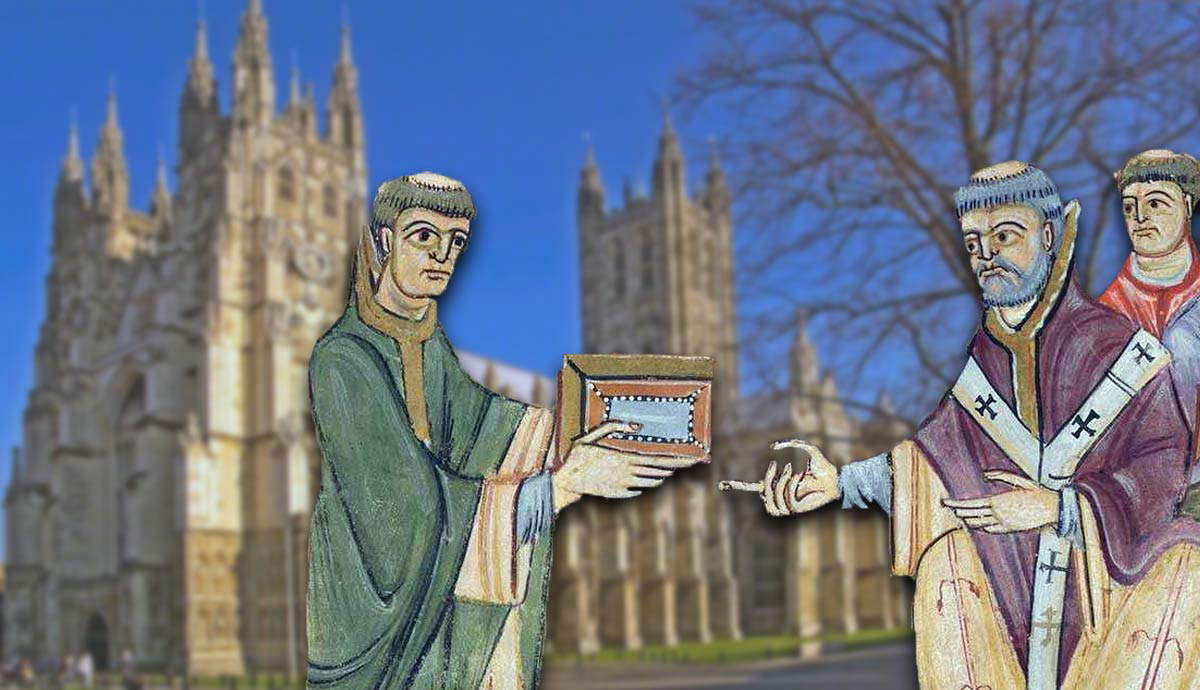
WWW.THECOLLECTOR.COMHow the Archbishop of Canterbury Came to BeA surprising historical development in early Christianity was its northward expansion into Britain and its establishment as a religious staple in British life. One of the earliest leadership roles within Christianity was that of the Archbishop of Canterbury.Christianity in England Before the First Archbishop of Canterbury11th-century manuscript image of Pope Gregory I sending Augustine of Canterbury. Source: British Library Board / English HeritageSome evidence of Christianity being practiced in Britain exists by at least the second century AD. The first British martyr, Alban, was executed in the early 300s AD, and various other accounts show Christianity arriving in Britain well within a few generations of its founding. However, the decline of the Roman Empire and the withdrawal of Roman troops in 410 AD allowed invasions by Anglo-Saxons and Celts, and Christianity declined significantly in the British Isles outside of Wales in the 400s and 500s AD.The Mission to BritainThe Gospels of St Augustine, 5th Century, probably brought by Augustine of Canterbury himself. Source: Wikimedia CommonsAccording to Bede in his Ecclesiastical History of the English People, Pope Gregory I, also known as Pope Gregory the Great, encountered a group of Anglo-Saxon boys for sale in a marketplace. He inquired as to where they were from and whether or not they were pagan, and responded,Alas! what pity, said he, that the author of darkness should own men of such fair countenances; and that with such grace of outward form, their minds should be void of inward grace. He therefore again asked, what was the name of that nation? and was answered, that they were called Angles. Right, said he, for they have an angelic face, and it is meet that such should be co-heirs with the Angels in heavenGregory would go on to send several missions into Britain, among which would be several men who would become Archbishops and lead the church in Britain.The First Archbishop of CanterburySt. Augustine of Canterbury on Canterbury Cathedral. Source: Wikimedia CommonsAugustine of Canterbury (not to be confused with Augustine of Hippo) was assigned by Pope Gregory I to go to England in 597 AD. The Anglo-Saxon King of Kent, Aethelbert, had married the Christian Frankish princess Bertha, and Aethelbert would eventually convert as well. Aethelbert granted property in Canterbury to the church (about 62 miles from London), and Christianity obtained a permanent foothold in Britain from that point forward, beginning under the capable leadership of Augustine.Other Early Archbishops of CanterburyKing Aethelbert. Source: Wikimedia CommonsKing Aethelbert died in 616 AD, and his heirs returned to their previous pagan practices. Augustines successors had to leave at times, with some occasionally residing in Francia. Much of their work was concentrated on missionary activities in converting the pagan Anglo-Saxons to Christianity and establishing the church in Britain. The first five Archbishops of Canterbury Augustine, Laurence, Mellitus, Justus, and Honorius were all members of the Gregorian missions to Britain.Theodore of Tarsus. Source: Wikimedia CommonsTheodore of Tarsus was probably the most influential of the early Archbishops. He had extensively traveled and studied in his youth, particularly in Antioch and Constantinople. When he arrived in Britain in 669, he handled several needed church reforms, particularly at the Synod of Hertford in 673 AD. Seeing the need for education, he established a sort of seminary at Canterbury, where Bede records:They attracted a large number of students, into whose minds they poured the waters of wholesome knowledge day by day. In addition to instructing them in the Holy Scriptures, they also taught their pupils poetry, astronomy, and the calculation of the church calendar.Canterbury Cathedral, Kent, England. Source: WyrdLight.com / Wikimedia CommonsFollowing Theodore, and up through the early medieval period, most of the archbishops were concerned with the spread of Christianity throughout England, as well as administrative matters. A majority of the theological disputes across the church had been dealt with before Augustines arrival in Britain, and the geographical distance from the continent allowed the development of the British church to be somewhat apart from the rest of the other theological and political disputes occurring on the continent. There would be little controversy over the position until after 1000 AD.0 Commentarios 0 Acciones 8 Views -
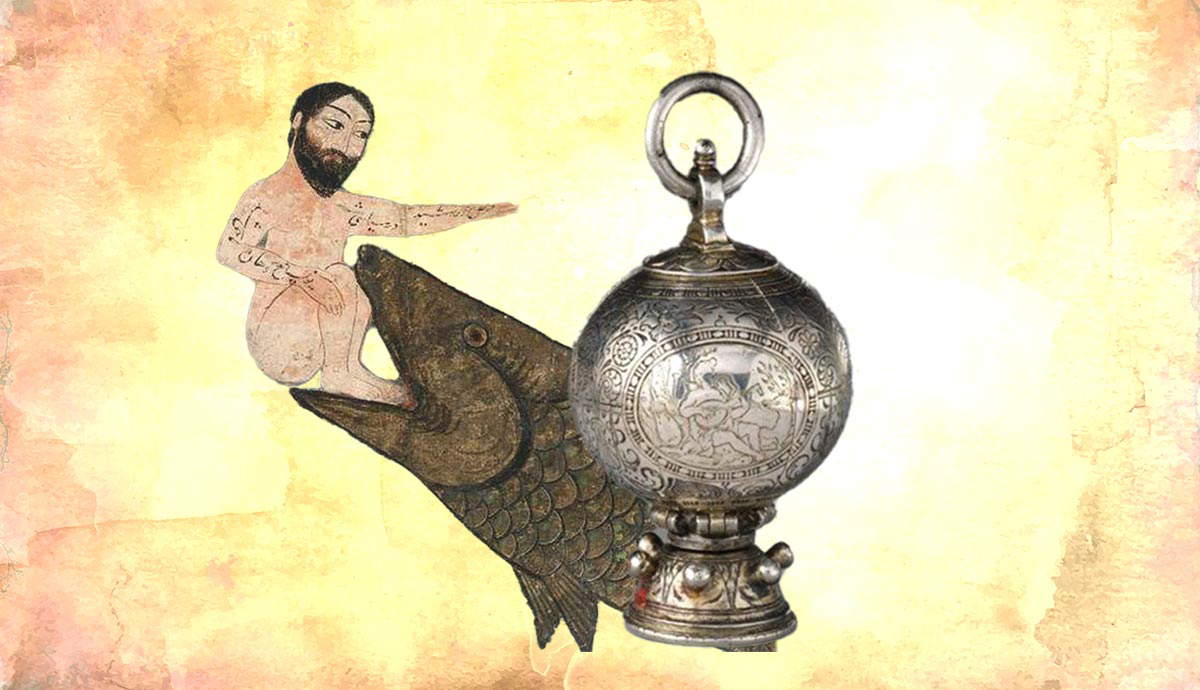
WWW.THECOLLECTOR.COMHow Whales Fecal Matter Became Ambergris, a Staple of PerfumesAmbergris is a natural substance that has enchanted civilizations around the world for centuries. Both its rarity and the mystery shrouding its existence only added to its value as a perfume, medicine, and substance capable of magic. Although today ambergris is most commonly associated with perfumes, it has also been used variously throughout human history as a medicine, a cooking ingredient, and in religious practice. However, to begin to talk about the origins of ambergris, one must begin with the whale, its unwilling producer.Inglorious BowelsWalvis en Vinvis by Jan Luyken, 1684. Source: Rijksmuseum, AmsterdamThe question of how ambergris is produced continues to plague researchers. That ambergris is a natural anomaly adds to the rarity, scarcity, and lore surrounding this natural substance. Additionally, that strangeness helps explain why ambergris was, and still is, so highly valued. What researchers have gathered is that ambergris is produced only by sperm whales, who consume sea creatures such as squids, whose beaks and eyelids their stomachs cant digest. In a normal whale, the hard-to-digest parts are spit back out after eating. However, in the rarest of cases, these parts of the squid get stuck and eventually settle in the whales backside.As one theory goes, the whale creates a black hardened mass internally to cover the stuck pieces, ensuring the flow of bowel movements. This hardened mass is what will become ambergris. In some cases, the beaks remain stuck, so that ambergris is seen with them protruding from its surface. This led people to believe that it was a substance produced by birds, or at least, in relation to birds.The mass continues to grow within the whales backside until, over time, it becomes so distended that it ruptures, simultaneously ending the whales life and releasing ambergris into the sea (Clarke, p. 18). Herman Melville mentions this process in the famous novel Moby Dick, when Ishmael expresses with disgust that such fine ladies and gentlemen should regale themselves with an essence found in the inglorious bowels of a sick whale!Beached whale at Berckhey by Gilliam van der Gouwen, 1598. Source: Rijksmuseum, AmsterdamOver time, the black outer shell sheds away, revealing a charcoal-gray center that can become bleached by the sun. This gray color endows the substance with its name, as ambergris is French for gray amber. However, the French werent the first to label this substance as such. In fact, it is likely that ambergris could be derived from the Arabic anbar, or amber. Yet the etymology for ambergris is tricky because anbar was also used in Greek and Middle Persian.When its initially ejected from the body, and as long as it has an inky-black color, ambergris has a feces-like smell. Its only when ambergris matures and lightens that it acquires its unique scent. This has been described as embodying the smell of old wood in churches, the scent of tobacco, sandalwood, and that of the tides and the sun, all combined (Clarke, p. 10).Mystery Origins and Ambergris LoreJonah and the Whale, Folio probably from a Jami al-Tavarikh (Compendium of Chronicles) by an unknown artist, c. 1400. Source: The Metropolitan Museum of Art, New York CityAlthough developments in technology and science gave a clearer understanding of how ambergris is produced, what exactly ambergris was and how it was created mystified the cultures and people that used it for centuries. Notably, ambergris would typically be found floating at sea or washed up onto a shores surface, its carrier ten thousand leagues under the sea. Mystery was a factor that shaped how this substance was perceived to be created.In some cases, the sea played a role in attempts to put a finger down on ambergris origins. The 10th century merchant al-Masudi of Baghdad remarked that anbar was a round substance that grew at the bottom of the sea. When the sea became angry, it would eject them to the oceans surface, which would become swallowed by birds. Birds would then choke on the anbar, which would float to the seas surface (Srinivasan, p. 309). In Chinese texts, ambergris is described as dragons saliva perfume, because they believed it was vomited by dragons in the South Seas during springtime (Srinivasan, p. 311).Mask from an Incense Burner Portraying the Old Deity of Fire by an unknown artist, 450750 AD. Source: Art Institute Chicago, ChicagoIn other cases, ambergris was associated with origins that were entirely separate from the sea, supplementing birds as the natural producer. This could have been due to the fact that ambergris was found on beaches, or even had beaks protruding from its surface, as mentioned previously. Duarte Barbosa, a 16th century Portuguese navigator, was told by people in the Maldives that ambergris was indeed bird droppings. This theory stuck, and was even depicted in the Ambr Historiam by Justus Fidus Klobius, a 1666 book intended to depict a comprehensive list of theories surrounding the origins of ambergris, which were still not fully understood at that time.Ambergris RemediesPendant of Ambergris by an unknown artist, c. 19th century. Source: The Metropolitan Museum of Art, New York CityAmbergris wasnt always renowned for its scent. In fact, some of its earliest uses involved healing and medicine. In China, ambergris was used to treat respiratory illnesses, such as asthma, or other cardiac pain (Read, p. 481). During the Han Dynasty (206 BC220 AD), ambergris was made into pills that were known as the elixir of life, perceived to give immortality to its user (Read, p. 482). In the Ayurvedic system of medicine in South Asia, ambergris, or agnijar in Sanskrit, was listed as a way to treat cases of heart diseases, fever, and even diabetes (Soni, p. 405).Putting the Miraculous Elixir on the Tripod, from the Xingming Guizhi, or Pointers on Spiritual Nature and Bodily Life by Yi Zhenren, a Daoist text on internal alchemy, 1615. Source: Wellcome CollectionAmbergris was even mentioned by the famous Greek physician Dioscorides in c. 5070 AD. In his De Materia Medica, which listed different natural substances used in medicines, he includes ambergris, despite being a specialist in botany. Although no specific treatment is mentioned, the fact it was included speaks to the level of importance ambergris had as an ingredient within medicine. Ambergris has also been mentioned in various Chinese, Ayurvedic, and Islamic texts as an aphrodisiac.Protecting Against Evil and PlaguePlague doctors outfit by an unknown artist, 1656. Source: The British Museum, LondonIn addition to being used to treat physical ailments, ambergris was also perceived as capable of protecting, or eliminating, negative spirits and dark energy. Ancient Egyptians burned ambergris not just for its fragrance, but as part of the belief that doing so would help ward off evil spirits. This is because the sweet smell it released when burned averted negative energy. This was incorporated into plague treatments used by doctors in Medieval Europe. Doctors carried burning ambergris in small balls worn around their necks, called pomanders, under the belief that it would ward off the plague. Ambergris was also combined with flowers and herbs and within plague masks for this same purpose.A Scent for KingsFume Dambre Gris (Smoke Of Ambergris) by John Singer Sargent, 1880. Source: The Clark Art Institute, Williamstown, MassachusettsAn exact time period for the discovery of ambergris as a scent is difficult to pin down, as it was found across the Indian Ocean near Indonesia, India, and the Persian Gulf and has a recorded history that spans many centuries. Perhaps one of the earliest examples is in Ancient Egypt, where scent was a highly-prized aspect of society. Perfumes and incense were simultaneously believed to be a gift from the gods and a way of honoring them. Ancient Egyptians had a complex system of perfume production to create scented oils that were used on earth and to accompany people to the afterlife. Seeing as ambergris was used as an incense, one can assume ambergris was also used in Ancient Egyptian perfume formulas.During the Sassanian Empire, which ruled present-day Iran and Iraq between 224 and 651 AD, ambergris was often mixed with musk and worn by kings and other royalty (King, p. 180). The rarity of ambergris and the fact that it was hard to come by added to its allure and exclusivity to those who could get their hands on it. However, through the rise of Islam in the Arabian Peninsula during the 7th-10th centuries, which then spread across the Indian Ocean, scent became a crucial part of the faith, and scents such as ambergris became sacralized.Sacralization of ScentIncense Burner or Hand Warmer by Zain Ad-din, 15th-16th century. Source: The Walters Art Museum BaltimoreWithin Islamic belief, fragrance, which as previously mentioned was hard to come by and used mainly by elites, was something that was promised in Paradise (Thalal, p. 43). This became an attractive point of conversion, as everyday people could now have access to exclusive and highly sought-after products. Furthermore, perfuming oneself became an essential step prior to prayer, and as Muslims prayed five times a day, ambergris, among other scents, were in high demand. Scent was no longer a luxury, but a necessity (Thalal, p. 44).Ambergris wasnt always used alone, and would often be mixed with other natural substances, such as aloeswood, camphor, musk, and even cloves. Many of these substances were foreign to the Arabian Peninsula, which added to their value. Aloeswood, musk and ambergris were used to create nadd (King, p. 181), one of the most prized perfumes used by elites. Ambergris has even been mentioned in early Islamic poetry for its hypnotic scent. An example is by the Persian poet Rdak around 941 AD, who wrote about his longing for a woman with ambergris-scented locks of hair (Averbuch, p. 64).Incense Burner of Amir Saif al-Dunya wal-Din ibn Muhammad al-Mawardi by Ja`far ibn Muhammad ibn `Ali, 118182 AD. Source: The Metropolitan Museum of Art, New York CityThe art and sacralization of scent also became disseminated into eating; foods were perfumed, and people would also perfume themselves before dining (Perry, xxxv). Take for example a recipe from the 13th century Syrian cookbook for quinces with sugar: when you remove it from the fire, add rose water, musk, raw ambergris, and Qaquilli agarwood (Perry, p. 20). In a recipe for sikbj, or royal beef stew, ambergris is combined with aloeswood to fumigate or purify the meat and other ingredients (Averbuch, p. 60).From the Whale to a Versatile SubstancePomander by an unknown German artist, 16th century. Source: The Metropolitan Museum of Art, New York CityThe mysterious nature of this natural object, its rarity, and its scent shaped the contexts of its use across time and space. Its integration into food, medicines, perfumes, incense, and rituals across the Indian Ocean would later be adopted by Europeans. Common combinations with ambergris included aloe wood and camphor, a blend of which with ambergris became known as incense, civet, clove, and musk, sometimes fused all together. These pairings would later become adopted into European recipes for medicine and perfumes alike.SourcesAverbuch, B. D. (2013). From siraf to sumatra: Seafaring and spices in the islamicate indo-pacific, ninth-eleventh centuries C.E. (Order No. 3566807, Harvard University). ProQuest Dissertations and ThesesClarke, R. The Origin of Ambergris. The Latin American Journal of Aquatic Mammals 5, no. 1 (2006): 721.King, A. (2008). The Importance of Imported Aromatics in Arabic Culture: Illustrations from PreIslamic and Early Islamic Poetry. Journal of Near Eastern Studies, 67(3), 175189. https://doi.org/10.1086/591746Perry, Charles. Scents and Flavors: A Syrian Cookbook, New York City, New York: New York University Press, 2020.Read, B. E. Ambergris: Translation And Notes From Old Chinese Literature. Chinese Medical Journal 1932, 46(05): 478-483.Soni, Snehdeep, Samita Kalra, Neha Joshi, Divya Rathore, Sangeeta Bala, and Deepak Verma. Agnijar (Ambergris): A Review Study Of An Animal Product W.S.R In Ayurved Medicines. World Journal of Pharmaceutical Research 8, no. 6 (April 17, 2019): 4016.Thalal, Muhammad. Fragrances From Heaven: The Relevance of Smelling in Understanding the Early History of Islam. Jurnal Ilmiah Islam Futura 20, no. 1 (2020): 3548.0 Commentarios 0 Acciones 8 Views -
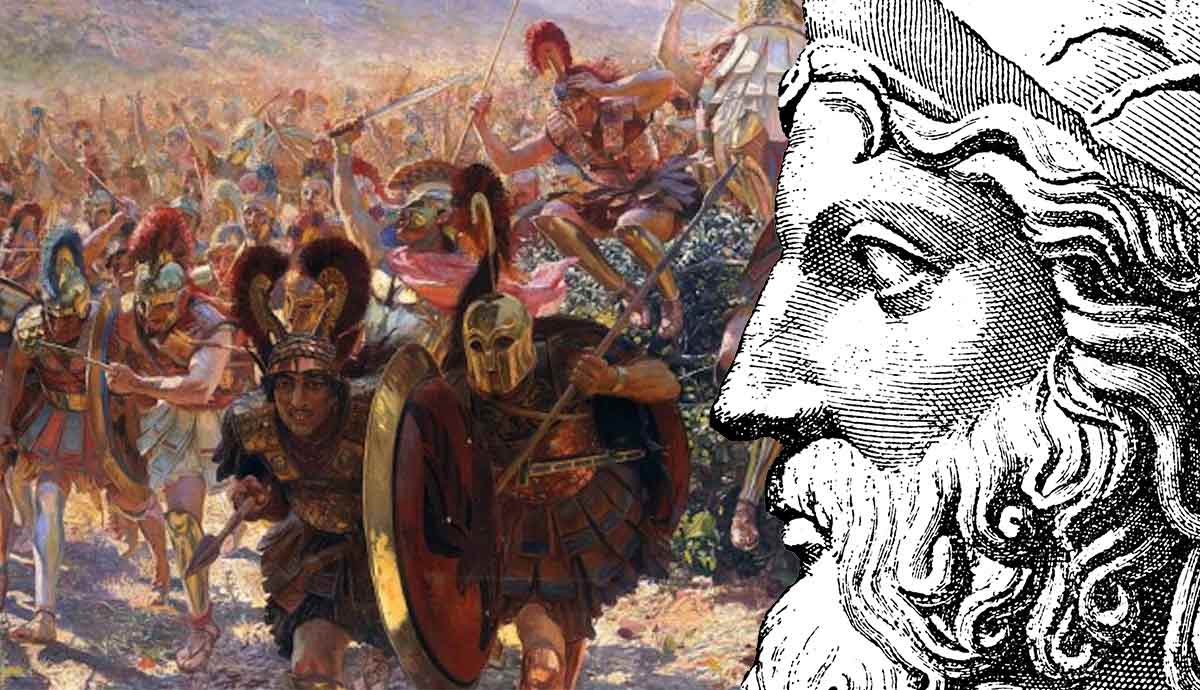
WWW.THECOLLECTOR.COMHow the Athenian General Miltiades Beat the Superior Persians at MarathonThe Battle of Marathon is one of the most famous battles of antiquity. Perhaps best known for inspiring the long-distance race of the same name, the battle has also been regarded as the triumph of freedom over despotism. Victory at Marathon owed much to the Athenian general Miltiades, who had previously fought alongside the Persians and knew how to exploit their weaknesses. His bold tactics ensured a lopsided victory against an enemy hitherto considered invincible.Son of Athens, Vassal of PersiaThe Helmet of Miltiades, 6th century BC. Source: Archaeological Museum of OlympiaMiltiades was born in Athens in c. 550 BC to a prominent family known for their chariot-racing prowess in the ancient Olympic games. He was named after his uncle Miltiades the Elder, who was the ruler of the Athenian colony on the Thracian Chersonese, the present-day Gallipoli Peninsula.The younger Miltiades grew up in Athens in the household of his father, Cimon. The historian Herodotus claims that Cimon was killed by the sons of the Athenian tyrant Peisistratus because they were jealous of him winning three Olympic chariot-racing prizes in a row. However, Miltiades served as archon or chief magistrate of Athens in 524 BC, suggesting that he was on good terms with Hippias, the son of Peisistratus.Miltiades the Elder died in 520 BC and was succeeded by his nephew Stesagoras, Cimons eldest son. Stesagoras was an unpopular ruler who was murdered in 516, Hippias dispatched the younger Miltiades to succeed his brother as tyrant (i.e. autocrat) of the Chersonese. To consolidate his position, Miltiades pretended to be in mourning for his brother and proceeded to arrest the local elites when they called on him.Relief of Darius the Great, Persepolis, 500 BCMiltiades realm was separated from Persian-ruled Asia Minor by the narrow straits of the Bosporus and the Dardanelles. The Persian king, Darius the Great, was the ruler of the largest empire the world had ever seen. The Persians were accomplished archers and spearmen on horseback and on foot, but a volley of Persian arrows was usually enough to put the enemy to flight.In 513, Darius launched his campaign against the Scythians in Ukraine. His march took him through the Thracian Chersonese, and Miltiades quickly submitted to the Persians. He accompanied Darius during the Scythian campaign up to the River Danube and was able to observe Persian battle tactics at close quarters.While Darius returned to Persia, he left behind a large army under his cousin Megabazos, which marched into Thrace and occupied parts of present-day Bulgaria and northern Greece. Miltiades may have joined Megabazoss campaign, since he married Hegesipyle, the daughter of King Oloros of Thrace.As a Persian vassal, Miltiades may have also conquered the nearby islands of Lemnos and Imbros.The Ionian RevoltThe Roman Stoa of Miletus. Photograph by Jimmy Chen, 2024. Source: Jimmy ChenWhile Miltiades was ruling the Thracian Chersonese, the Athenian tyrant Hippias was overthrown by a Spartan invasion in 510 BC. While the Spartans hoped that the new Athenian government would support Spartan interests, the Athenian statesman Cleisthenes filled the power vacuum and introduced democratic reforms, leading to the prospect of further Spartan intervention.In the face of Spartan aggression, Athens sought an alliance with the Persian Empire. An agreement was made in 507, but while the Athenians believed they had entered into an alliance of equals, the Persians considered it a show of submission. News of the agreement led to the disintegration of the Spartan-led coalition that was preparing to invade Athens in 506, but the confusion over its terms would eventually lead to hostilities between the Athenians and the Persians. The deposed Athenian tyrant Hippias had sought assistance from the Persian court, but the Athenians refused a Persian demand to reinstate him.In 499 BC, the Ionian Greeks in northwestern Anatolia rose in revolt against Persian rule. After some early success, the Ionians requested assistance from the Athenians, who sent 20 ships and joined a successful raid on the city of Sardis in 498. Greek fortunes declined thereafter as the Persians assembled their forces on land and sea and gradually pushed back the Greeks. By 494 the Persians captured and sacked Miletus, the epicenter of the Ionian Revolt.Miltiades allegiances during the conflict is unclear. Darius appears to have regarded him as a loyal vassal, but Miltiades decision to return to Athens in 493 BC indicates that his true loyalty lay with his native city. However, the Athenians soon put him on trial for his previous association with Hippias and for his submission to the Persians. Miltiades was acquitted, but suspicion remained.The Persian InvasionMap of the Greek world during the Persian Wars. Source: Wikimedia CommonsAlthough Athens played no further part in the hostilities after the sack of Sardis, Herodotus claims that the city was now firmly in Darius crosshairs for repudiating the agreement of 507. By summer 493, Darius began building a fleet for the invasion of Greece and sent envoys to the Greek city-states requesting their submission. While many complied, Athens and Sparta defied the King of Kings by executing the Persian envoys. Among the advocates for this hardline policy were Miltiades and Themistocles, the Athenian commander who would later defeat the Persians in the naval battle at Salamis in 480.In 492, a Persian force commanded by Darius nephew and brother-in-law Mardonios made further encroachments into Greece, taking over the northern regions of Thessaly and Macedon. The campaign set the stage for the invasion of 490 under the joint command of Darius nephew Artaphrenes and a general named Datis.According to Herodotus, the Persian invasion fleet amounted to 600 triremes, while later writers claimed that the Persians had up to half a million men. Modern estimates suggest that the Persians had 60,000 men at most, with 24,000 soldiers and 36,000 rowers. Such a force was insufficient for a full-scale campaign in Greece, suggesting that Dariuss primary objective may have been to capture the Cyclades Islands, including the large island of Naxos and the important religious site of Delos.Having successfully achieved these objectives, the Persians nevertheless continued towards mainland Greece in an effort to subjugate the Greek cities that had not yet submitted. After capturing the city of Eretria on the island of Euboea, Athens was next in line.Athens AloneBust of Miltiades, courtesy of Greek ReporterWith the Persians poised to land in Attica, the Athenians sent requests for assistance throughout Greece. They received positive responses from nearby Plataea, a traditional ally with no more than 1,000 soldiers, and Sparta, a traditional rival who happened to be as hostile towards the Persians.Athens was the largest of the Greek city-states and could field as many as 10,000 citizen hoplites and a similar number of light infantry. In spring 490, Miltiades had been elected one of the ten generals in Athens, perhaps owing to his experience in Persian service. While some Athenians believed they could survive a Persian siege, Miltiades proposed that as soon as the Persians landed in Attica, the Athenians should leave the city and advance against them. His motion was duly passed by the Athenian assembly.The exiled Athenian tyrant Hippias accompanied the Persian invasion force and was a source of valuable intelligence. Hippias advised Datis to land at Marathon, since it was close to Eretria and offered relatively open ground suited to Persian cavalry. In accordance with Miltiades policy, the Athenian army marched north to confront the Persians.Before embarking on the march, the Athenian generals sent an urgent message to their Spartan allies. According to Herodotus, the runner Pheidippides (otherwise known as Philippides) covered the 150-mile distance in a day-and-a-half. The Spartans informed the messenger that they were prepared to help, but they could not leave straight away. The Spartans were particularly pious and were celebrating the Karneia, a festival dedicated to Apollo and the most important religious event on the Spartan calendar. By the time 2,000 Spartan hoplites arrived at Marathon, the battle was already over.Victory at MarathonThe heroes of Marathon.Georges Rochegrosse, 1859. Source: Wikimedia CommonsWith the exception of the small Plataean contingent, the Athenians would have to face the Persians alone. Although the decision to march to Marathon was taken on Miltiades initiative, he was only one of ten Athenian generals who were subordinate to Callimachus, the polemarch or commander-in-chief. When the Athenian generals were evenly divided on whether to wait for the arrival of the Spartans, Miltiades persuaded Callimachus to vote in favor of a battle.Nevertheless, Miltiades did not attack immediately. A popular theory suggests that Miltiades was encouraged to attack after seeing the Persians embark part of their army to target Athens directly, though there is little evidence for this. Historian Peter Krentz argues that Miltiades had observed the Persian preparations over several days and decided to attack early in the morning before the Persian cavalry was in position (Krentz, p. 143).While the Athenians may have been outnumbered at Marathon, they were more heavily armored and had an advantage in close-quarters combat. Given his previous experience with the Persian army, Miltiades believed that victory could be possible so long as the Athenians closed with the enemy quickly enough before they were overwhelmed by the Persian archers and cavalry.On the morning of battle, conventionally dated to September 12, 490 BC, the Athenian army drew up in formation and marched across the Plain of Marathon towards the Persian camp. They paused around a mile away to dress their line, which was equal in length to the Persian line with strong flanks and a weak center.Map of the Battle of Marathon showing the Greek attack, by Goran tek-en. Source: Wikimedia CommonsAfter Callimachus conducted a favorable sacrifice, Miltiades gestured towards the Persians and shouted Rush at them! While Herodotuss description of the battle has had scholars questioning the feasibility of heavily armed hoplites being able to run almost a mile while remaining in a condition to engage the enemy, Peter Krentz suggests that hoplite armor was lighter than assumed and that the Athenians could comfortably cover the distance at a jog (Krentz, p. 150).Although the Persian archers released a volley of arrows, the Athenians continued to advance undaunted, and the two armies engaged in a protracted hand-to-hand fight. While the Persians broke through the weak Athenian center, the Athenians defeated the Persians on each flank and combined to defeat the Persians who had broken through their lines.As the Persians fled towards their ships, the Athenians gave chase, killing many Persians in the process. Persian casualties are estimated at 6,400, while the Athenians lost only 192 men, whom they cremated and buried in a large mound that remains a prominent feature on the battlefield. Among the Athenian dead was Callimachus, the nominal commander-in-chief.The Battle of Marathon is inextricably associated with the marathon race. The familiar tale is that after a battle, an Athenian soldier ran a distance of 26.2 miles in full armor to announce the victory before collapsing dead on the spot. Although the story was first mentioned by Plutarch in the 2nd century AD and does not appear in Herodotus, posterity has identified the man as Pheidippides, the Athenian runner who achieved the more impressive feat of running to Sparta and back within a few days.Downfall and DeathThe tomb of the Athenians at Marathon. Source: Hellenic Ministry of Culture and SportsThe heavy losses at Marathon prevented the Persians from continuing their campaign. Although they had failed to defeat the Athenians, the Persians had defeated Eretria and claimed the Cyclades. While he may have regretted the casualties at Marathon, Darius could still consider the campaign a victory. The Battle of Marathon showed other Greek city-states that the Persians were not invincible.Ten years later, Darius son Xerxes would personally lead a larger army into Greece. This second invasion force was delayed by Leonidas at Thermopylae, turned back by Themistocles at Salamis, and destroyed by Pausanias at Plataea, securing Greek victory in the Greco-Persian Wars.Although he was not formally in command of the Athenians at Marathon, Miltiades has been credited with the strategy and tactics that not only ensured that the Athenians fought the Persians, but that they won. Miltiades was around 60 years old and did not have long to savor his glory, and he continued to have enemies in Athens.In 489, Miltiades led a large Athenian fleet on a campaign to take back the Cyclades from the Persians. He suffered a serious leg wound during an unsuccessful attempt to take the island of Paros, and he returned to Athens in disgrace. In a demonstration of the fickleness of Athenian democracy, he was charged with treason and found guilty. Although his death sentence was commuted to a large fine, he soon died in prison from his leg wound.Miltiades son Cimon followed in his fathers footsteps to become a prominent Athenian general and statesman. His leadership of the pro-Spartan aristocratic faction made him a rival of Pericles, the populist champion of Athenian democracy.SourceKrentz, P. (2010). The Battle of Marathon. Yale University Press.0 Commentarios 0 Acciones 8 Views -
WWW.PCGAMESN.COMTitanfall spiritual successor Empulse is out now, but it's got a lot to proveI'm quietly resigned to the likelihood that we'll never see Titanfall 3. The good news is that other studios are taking up the mantle, and one of them - movement shooter Empulse - has just launched on Steam. It's built by 1047 Games, the team behind Splitgate, which has immediately put it on my radar. The new multiplayer FPS is now in early access, with the studio keeping microtransactions and battle passes out of the equation to focus on "building with you, the community" in these starting stages.0 Commentarios 0 Acciones 9 Views -
WWW.PCGAMESN.COMArc Raiders makes changes to expedition rewards, making life a bit easier after the wipeThere is a long wait for those Arc Raiders players waiting for the Frozen Trails update, but that doesn't mean Embark is resting on its laurels - it's making changes to the reward structure of expeditions, perhaps enticing more to process with a wipe and begin the grind anew. Beginning with the fourth expedition, players will receive blueprints and Raider Tokens instead of skill points.0 Commentarios 0 Acciones 9 Views -
WWW.THEKITCHN.COMI Went Grocery Shopping with a Private Chef, and Picked Up 5 Key Tips Ill Use ForeverPlus, her favorite grocery shortcuts.READ MORE...0 Commentarios 0 Acciones 8 Views
-
WWW.THEKITCHN.COMThe Wisconsin Butter Burger Twist I Cant Stop Making This SummerIts my new favorite burger.READ MORE...0 Commentarios 0 Acciones 8 Views
-
WWW.BGR.COMThe 4 Most Disappointing Tech Products Of 2026 (So Far)2026 has been a great year for tech, but there have been a fair share of duds as well. Here are some of the worst tech products that disappointed consumers.0 Commentarios 0 Acciones 8 Views -
TECHCRUNCH.COMGoogle Finance gets a dedicated app for AndroidUsers will be able to access their watchlists, real-time market data, live financial news, and Google's AI-powered "Key Moments" feature, which explains why stocks moved.0 Commentarios 0 Acciones 8 Views