0 Comentários
0 Compartilhamentos
8 Visualizações
Diretório
Elevate your Sngine platform to new levels with plugins from YubNub Digital Media!
-
Faça o login para curtir, compartilhar e comentar!
-
YUBNUB.NEWSTrump Takes Sledgehammer to Department of Education, Transfers Key Functions to Other AgenciesPresident Donald Trump has long vowed to eliminate or at least vastly downsize the Department of Education, saying we should shut [it] down and move education back to the states where it belongs.0 Comentários 0 Compartilhamentos 8 Visualizações -
YUBNUB.NEWSX Users Level Senator Jon Pajama Boy Ossoff with a Brutal Reminder After He Mocks GOP Opponent Mike Collins for Being the Son of a Former CongressmanScreencap of YouTube video. Senator Jon Ossoff (D-GA) kicked off his upcoming showdown with Trump-endorsed Rep. Mike Collins in a predictable fashion but did not escape the scrutiny of social media users.0 Comentários 0 Compartilhamentos 8 Visualizações -
WWW.UNIVERSETODAY.COMWhat Would Happen if the Sun Stopped? Part 3: The Photon Traffic JamA photon born in the Sun's core takes around 100,000 years to fight its way to the surface, bouncing through a random walk so inefficient that the light on your face is older than human civilization. Why the Sun's surface is a hundred-millennia-delayed broadcast.0 Comentários 0 Compartilhamentos 8 Visualizações -
I wish more wearables were as repairable as Google’s Pixel Watch 4Why the Pixel Watch 4’s Repairability Matters Prime Day The Mashable 101 Creator Hub Tech Science Life Social Good Entertainment Deals Shopping Games...0 Comentários 0 Compartilhamentos 11 Visualizações
-
Nintendo responds after alleged third-party data breach: Our ‘systems have not been compromised’Nintendo responds after alleged third-party data breach Nintendo of North America says it's aware of what's been described as a small third-party data breach affecting some of its employees."Nintendo’s systems have not been compromised," the company told Mashable in a statement, acknowledging that a third-party service was affected by...0 Comentários 0 Compartilhamentos 10 Visualizações
-
5 Android 17 features to try ASAP5 New Android 17 Features to Try Prime Day The Mashable 101 Creator Hub Tech Science Life Social Good Entertainment Deals Shopping Games...0 Comentários 0 Compartilhamentos 10 Visualizações
-
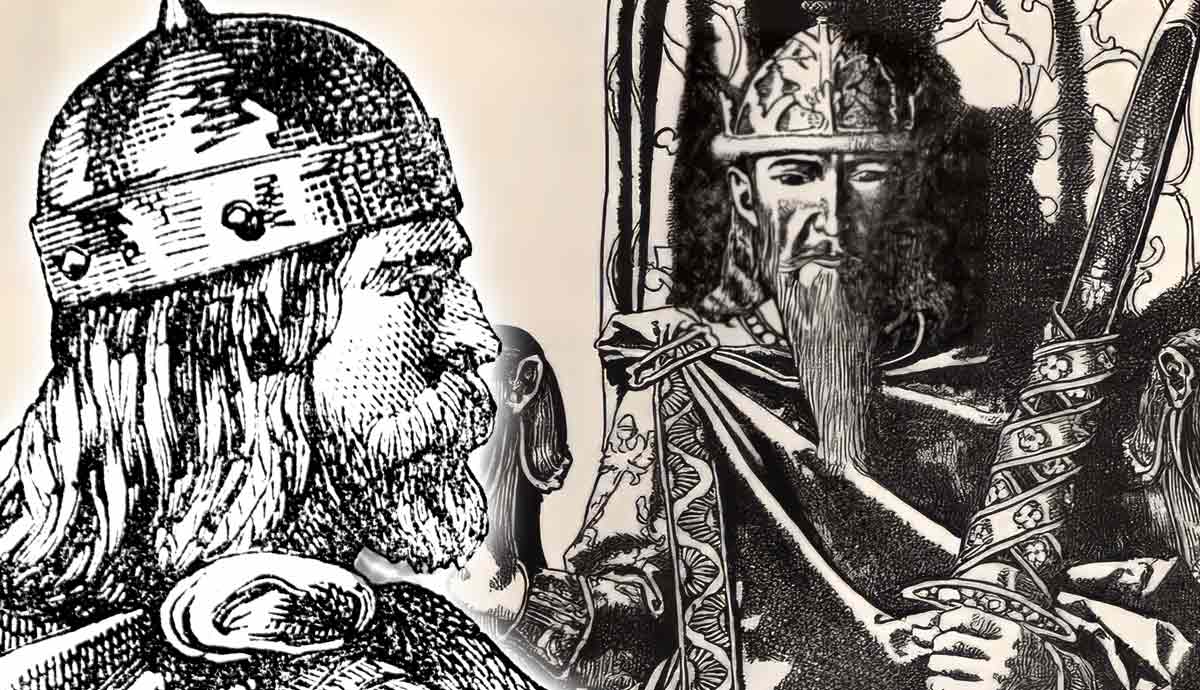
WWW.THECOLLECTOR.COM4 Villains From the Arthurian Legends Who Really ExistedDespite best efforts, researchers have been unable to verify whether King Arthur was a real historical figure, but they do agree that the Arthurian legends are set in a real historical setting of 5th and 6th-century Britain. While Arthur has not been identified in the surviving records of Dark Age Britain and the Anglo-Saxon conquests, many of the other characters who appear in the legend can be, including some important villains.Historians are still unsure whether King Arthur was a real historical figure. Take a look at the evidence.1. King Mark of CornwallIllustration of King Mark of Cornwall from The Champions of the Round Table, Howard Pyle, 1905, Source: Rochester UniversityKing Mark of Cornwall appears in the Arthurian legends about Tristan and Isolde. He is described as Tristans uncle by marriage. It is very likely that the legendary King Mark can be identified as the historical Conomor, a ruler of part of Brittany in the mid-6th century.The earliest piece of evidence for this claim is the 9th-century document known as the Life of St Paul Aurelian. The author sttes that the king known as Quonomorus was also named Mark. The only Quonomorus in this era was Conomor of Brittany. Just like King Mark of the Arthurian legends, Conomor of Brittany was infamous for his villainy involving marriages and obsession.An inscribed stone from Cornwall dating to about the 6th century includes the name Conomor. It also, according to the most recent scholarship, includes the name of Tristan, confirming the close connection between the two.2. Rhita the GiantStatue of Geoffrey of Monmouth at Tintern Station, Wales. Source: Visit MonmouthshireA somewhat more obscure villain from the Arthurian legends is Rhita Gawr, whose epithet means Giant. He appears in European and English tales as Rions or Rience. Geoffrey of Monmouth referred to him as Ritho, a form much closer to the Welsh spelling. According to most versions of the Arthurian legends, Rhita Gawr was a giant who lived in North Wales. He was an evil king who had killed various other monarchs and wore their beards on a garment. He challenged Arthur to a duel, but the young and newly appointed king killed the giant.Like many Arthurian legends, this story is full of fanciful elements, including the very nature of Rhita as a giant. Nevertheless, we can make a plausible identification of this character with a historical figure from the period. Bede, the 8th-century English historian, referred to an Irish figure named Reuda. He founded the kingdom of Dal Riata, which was named after him.Map of Argyleshire, broadly equivalent to the medieval kingdom of Dal Riata, from Imperial Gazetteer of Scotland, by John Marius Wilson. Source: The Internet ArchiveNotice the similarity between Reuda or Riata and the name of the legendary giant, Rhita. However, we need more than just a similar name to make a convincing case. Although Bede himself does not give a date for Reudas reign, later records place the founding of Dal Riata at the very end of the 5th century. This would logically place Reuda in the early Arthurian period.Later Irish records say that Dal Riata was founded by three brothers. The son and successor of the most prominent of these three, Fergus Mor, was named Domangart Reti. Given the apparent conflict between Bedes account of the founding of this kingdom and the later Irish versions, it seems very likely that Bedes Reuda was this Domangart Reti. Thus, the founder referred to by Bede was the son of one of the three brothers who allegedly conquered the territory originally.Dunadd hill fort, possible capital of Dal Riada. Source: BritannicaPresumably, Domangart consolidated his familys rule of the area, thus coming to be known as its founder in some traditions. Domangart Reti is recorded as dying in the early 6th century, and this matches with the placement of Rhitas death in the Arthurian legends. With this evidence in view, it is very likely that the Rhita Gawr of Welsh tradition is identical to the historical Domangart Reti, Bedes legendary Reuda.Although it is true that there is no tradition of the kings of Dal Riata dominating North Wales, we would do well to consider the earliest version of the legend. Geoffrey of Monmouths account is the earliest surviving source. He does not specifically say that Rhita (or Ritho, as he calls him) ruled over North Wales. He simply says that North Wales is where the battle between him and Arthur took place. Since most Welsh traditions place Arthur in South Wales, meeting a king from Dal Riata halfway between their respective territories, which would be North Wales, is a reasonable scenario.3. Lucius TiberiusMap of the Western Roman Empire, over which Timasius fought Magnus Maximus armies, c. 400 CE. Source: Wikimedia CommonsAs well as describing battles in Britain, the Arthurian legends describe Arthur fighting battles on the continent against the Romans. As scholar David Dumville argued, this part of the legend almost certainly came from Magnus Maximus usurpation of the Western Roman Empire, when he invaded from Britain. However, beyond this basic connection, relatively little research has been done on the intricate connections between the legend and its historical basis.The figure who serves as Arthurs primary antagonist in the legend is a certain Lucius Tiberius. Although some online sources describe him as an emperor, the earliest version of the legend only ever calls him a military leader.The two Roman leaders of the army of Emperor Theodosius at the climax of Maximus usurpation were Flavius Promotus and Flavius Timasius. Of the two of them, the latter is clearly the better option for the legendary Tiberius. When we consider the customs of medieval scribes, this identification is all but certain.Magnus Maximus, from The Llanbeblig Hours, manuscript NLW MS 17520A, c. 1390-1400. Source: National Library of WalesFirstly, it should be noted that the letter r and the letter s in some medieval Welsh manuscripts are almost identical. In the name Atroys, for instance, found in the Harleian MS 3859, we see both letters in the same name. It is only by a minuscule difference that the letters are distinguishable from each other. For this reason, these two letters were often swapped by mistake.The other main difference between Timasius and Tiberius is the b instead of the m. In fact, both letters were sometimes used to represent the same sound. An example of this is seen in the work of Gregory of Tours, who referred to Conomor of Brittany with a b in the place of the m. Sometimes, the letter f or v was used in place of both, masking whether b or m had been there originally.Therefore, we can see that the evolution from Timasius to Tiberius (a much more familiar name to the medieval scribes) would have been exceedingly easy. Therefore, Timasius can very likely be identified as the Roman military leader Tiberius from this Arthurian legend.Do you know the story of King Arthurs expedition to the European mainland?4. Osla Big-KnifeDepiction of Cerdic of Wessex, grandson of the likely Osla, from Theatre, by John Speed, 1611. Source: Cambridge UniversityOsla Big-Knife is a very obscure villain from the Arthurian legends. His epithet appears as Gyllellfawr in the Welsh texts. He appears in the late Mabinogi tale known as The Dream of Rhonabwy. This work presents the story of the prelude to Arthurs famous Battle of Badon. In this tale, the leader of the Saxons is named Osla. Interestingly, a separate Welsh tradition records the name of the leader of the Saxon army as Cheldric. These two bits of information can help us to identify Osla.The Cheldric who appears as Arthurs enemy in the Arthurian legends is almost certainly Cerdic of Wessex. He was a historical Saxon leader who fought against the Britons in the south in exactly the era in which Arthur was alive, according to legend, fighting against the Saxons. Notably, Anglo-Saxon genealogies make him the grandson of an otherwise unknown figure called Esla. Very likely, this Esla is the figure recorded as Osla in Welsh tradition. It may be that Cerdic was a young commander in charge of the armies of his grandfather, accounting for the two seemingly contradictory traditions about the leader of the Saxons at Badon.Do you know where the Battle of Badon took place?Historical Villains of the Arthurian LegendsAn illustration from The Mabinogion, by Charlotte Guest, 1877. Source: Wikimedia CommonsAn illustration from The Mabinogion, by Charlotte Guest, 1877. Source: Wikimedia Commons[/caption]Thus, several villains from the Arthurian legends can be identified as historical figures. Several heroic figures can be identified as well, such as Sir Uriens of Gorre and Sir Ywain. This verifies that, despite fantastical and supernatural elements, the Arthurian legends were tied to historical Britain.Meet the heroes from the Arthurian legend who can be identified as real historical figures.0 Comentários 0 Compartilhamentos 8 Visualizações -
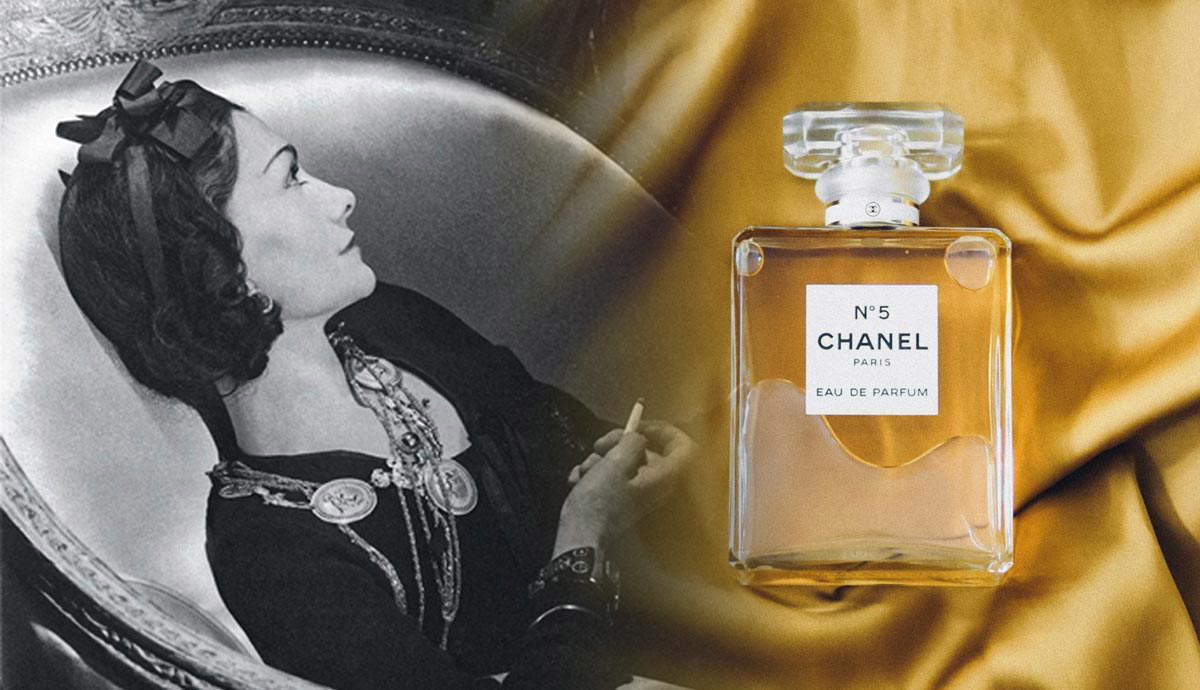
WWW.THECOLLECTOR.COM5 Fabulous Facts About Coco Chanel You Need to KnowGabrielle Coco Chanel rose to command fashion during the Art Deco era after World War I. Her innovative designs included the Little Black Dress, once mocked as deluxe poverty, better suited to undernourished little telegraph clerks than haute couture, and Chanel No. 5, created by a master perfumier who fled the Russian Revolution. But before Coco Chanel became a household name, she reinvented herself like a phoenix. Discover 5 fabulous facts about this 20th-century design rebel who redefined fashion history.1. She Was Raised by NunsFrench nun in habit posing with children at Aubazines Abbey. Source: National Catholic RegisterSurprising as it may seem, Coco Chanel wasnt always the glamorous, chain-smoking multimillionaire designer who blossomed into fame at the height of the Flapper era. In fact, the woman who later filled her luxurious Paris apartment with bronze lions, gold mirrors, and even a gigantic crystal chandelier, grew up in extreme poverty.Born in 1883, to an impoverished family with six children, Gabrielle Chanel had a less than stellar start in life. Her peasant mother died of tuberculosis and her nomadic, street vendor father abandoned her soon after. At age eleven, Gabrielles father dropped her and her siblings off with the nuns at the Aubazines Abbey orphanage and disappeared. In these austere surroundings, Chanels sense of identity and entrepreneurship began to develop. The convents entwined crosses, embedded in the stained-glass windows, created unique geometric patterns that later appeared in Chanels work, including her famous interlocking CC logo.From simple lines and monochromatic shades to geometric imagery, the Aubazines convent left its stamp on Chanel. Here, she demonstrated youthful rebellion by smuggling in forbidden books and magazines. She also learned to embroider, sew, and design her own creations that shocked the conservative nuns by mimicking chic Parisian fashions.Birds eye view of Aubazines Abbey where Coco Chanel spent her formative years; Symbol of the Lion of Venice collected by Chanel. Source: EWTN and Rue Des ArchivesWhen she aged out of the convent at 18, Chanel headed into the world to make her fortune. By day, she stitched as a seamstress. At night, she stepped into a different skin as a cabaret singer in Moulins, France. Later, she sang at the famous La Rotonde caf and other nightclubs. Chanel soon adopted a new nickname from the soldiers who gathered to hear her sing a popular song, Who has seen Coco in the Trocadro? It was a name that she would carry for the rest of her life.Despite her dreams, Cocos cabaret career failed to rocket her to fame. Instead, she pivoted toward fashion, climbing her way, design by design, into the ranks of haute couture before the First World War. By 1910, the seamstress reinvented herself as a business owner, opening her own milliner boutique at 21 Rue Cambon in Paris. As Europe drifted toward war, Cocos designs dismissed the tight corsets and stiff, rustling fabrics in favor of unusual materials such as soft jersey. She chose simple, relaxed, yet elegant silhouettes that combined minimalist rebellion with luxury.A woman who saw herself as a lion (after her zodiac sign), Chanel never put limits on the fashion miracles she could perform.2. She Launched the Most Famous Perfume in the WorldChanel No. 5 is an iconic scent, recognized for its luxury status worldwide. Source: UnsplashAfter opening her first atelier, Chanel Modes, in 1910, the designer leveled up her game by opening a haute couture house in Biarritz five years later. By 1921, Chanel was deep into a passionate affair with Grand Duke Dmitri Pavlovich, one of the men involved in Grigori Rasputins murder on the eve of the Russian Revolution. During this period, Coco surrounded herself with migr aristocrats, artists, musicians, and fashionistas. Chanel also had a new project on her mind: a unique perfume.Unlike previous perfumes, created by men for men to experience womens allure, Chanel envisioned this new scent, in her words, as A perfume like nothing else. A womans perfume, with the scent of a woman. Marketed by a woman for women, Chanels fragrance blended sensuality with complexity in a modern twist.Of course, Chanel did not create this perfume herself. Instead, she left the alchemy up to a Russian-French perfumier introduced to her by the Grand Duke on a trip to the south of France. Ernest Beaux, former official perfumier to the Russian Court, developed famous fragrances including an orange blossom concoction that became the Empress Alexandras favorite scent.The new Bolshevik government after 1917 had no need for Beauxs scents. During the Russian Civil War, Beaux served in the White Army at an outpost in the far north, where the pure Arctic snow and sharp scent of aldehydes inspired him to create a new fragrance that would capture and preserve that haunting scent. Beauxs escape from Russia at the end of the war brought him to France, where he crossed paths with Chanel.Wildflowers in Russias Murmansk region. Source: The National Center RussiaAfter developing a series of trial perfumes for Chanel, the master perfumier invited Coco to choose her favorite. Chanel chose the fifth bottle offered. For Chanel, the number five held a mystic symbolism. At the Cistercian abbey in Aubazine, circular paths leading through the rose gardens to daily prayers had been arranged in patterns of five. Now, Chanels lucky sign and her new favorite scent aligned in a magical feminine mix.A heady scent of raw jasmine, crisp aldehydes, and May roses juxtaposed with a burst of neroli and ylang-ylang notes, N5, or Chanel No. 5, evoked a stark yet complex simplicity translated into haute couture fragrance. Designed with a transparent whiskey decanter-style bottle, Chanel No. 5 became arguably the most iconic perfume in the world.3. She Designed for the BalletLon Bakst Firebird and the Prince (Tsarevitch) poster design for the Ballet Russes, 1915; Chanel-designed costumes for Serge Diaghilevs one-act ballet, Le Train Bleu. Source: Harvard Theatre Collection; English National BalletIn between a passionate affair with a Russian Grand Duke, Dmitri Pavlovich Romanov, and a creative collaboration with Pablo Picasso, Coco Chanel brought her love of the stage to life with her designs for the Ballet Russes in the production of Le Train Bleu.This popular avant-garde show, which debuted in 1924, unveiled the idle follies of the Jazz Age. It transported audiences to a beach on the Cte dAzur, where hilarious incidents packed with summer dalliances, tourists snapping photographs with box cameras, and people getting locked inside bathing huts satirized the privileged classes who wore Chanels latest designs.The world of dance provided Chanel a platform to showcase liberated fashion. As a friend of director Sergei Diaghilev and a patron of Ballet Russes, Chanel whipped up innovative costumes that evoked the ballets sun-soaked setting, mocking the upper classes which Chanel had fought so hard to join.4. She Invented the Little Black DressCoco Chanel, 1937; The original Little Black Dress from American Vogue. Source: Rue des Archives and Maryland Center for History and CultureThe Little Black Dress wasnt Chanels first design, but it became her most famous. In 1926, she unveiled a radical new look, revolutionary in its color scheme and simplicity.Debuted in American Vogues October issue, this simple sheath showed the kind of wearable fashion that could fit any womans look. It became known as the Little Black Dress, or LBD, and remains a fashion staple that continues to evolve today.Society and designers alike were scandalized. Chanel had taken something so basic, the frock of widows and working women, and turned it into something chic, wearable, and shocking. It wasnt the cut, the length, or daring features. Instead, the Little Black Dress flew in the face of established fashion norms, even during the wild experimentation that characterized fashion during the Flapper Era.Today, black reflects a classic choice, perfect for casual wear or elevated occasions, but in the 1920s, the absence of color signaled poverty or purgatory induced by mourning. In a decade of movement, color, and relentless accessorizing, a simple black sheath reminded Europeans of hard times and the dark years of the Great War, which everyone tried so hard to forget.High society, characterized by glitz and glamor, rejected the idea that black could look chic. Chanel, raised by nuns who wore simple but distinctive habits, found clarity in their austere minimalism and wove this into her Little Black Dress design.Coco Chanel in the Breton shirt that she upcycled into a style staple. Source: Vogue UKAmerican women, in contrast, recognized its potential first. Dubbed the Ford Dress, after the popular Model T Ford, the LBD represented a similar affordable yet elegant choice for everyone.In the postwar world where women might transition from work attire to evening wear, the Little Black Dress offered something for everyone, even for those who usually found nothing to wear in their closets. The Little Black Dress broke fashion barriers and turned the shade from a color that no one wanted to wear into a neutral canvas that could be dressed up or down.During the 1960s, the LBD shot into superstar status when Audrey Hepburn wore a chic black Givenchy dress in the 1961 movie Breakfast at Tiffanys. From crepe and silk to chiffon or wool variations, the Little Black Dresss versatile appeal made it a classic that became universal worldwide and transcended occasions, seasons, and generations.5. She Changed Female Fashion ForeverAudrey Hepburn modeling a version of the LBD in Breakfast at Tiffanys, 1961.Despite criticism that Chanel borrowed inspiration from the lower classes, the French designer invented sleek, structured, and minimalist designs that enabled people to invent themselves. She liberated a generation of women from lavish and restrictive styles that showcased their husbands wealth and status. Instead, her designs let women move easily in materials not typically used in high fashion such as soft, stretchy jersey and rustic tweed.Chanel changed the sartorial game by reimagining menswear for the female form. She popularized pants and reinterpreted nautical stripes, inspired by sailors shirts, into a womens wardrobe staple often associated with elite playgrounds like Marthas Vineyard, the Hamptons, or the French Riviera. Her two-piece suits, simple silhouettes, and modern cuts, popularized by cultural icons such as Grace Kelly, Audrey Hepburn, and Princess Diana, laid the foundation for womens fashion today.Two hours after President John F. Kennedys assassination in 1963, First Lady Jackie Kennedy wore a pink boucle wool suit based on the 1961 Chanel Haute Couture jacket aboard Air Force One as Lyndon B. Johnson was sworn into office. Source: New York Public Library PICRYL CollectionsIn contrast to the electric blues, reds, and greens that characterized her contemporaries flamboyant fashion, Chanel believed true style demanded less, not more: less ostentation, more authenticity, fewer bright colors, more natural tones. One hundred years later, her vision still stands. Chanel created clothes for modern women, a sartorial liberation that helped release them from the confines of corsets while avoiding falling into the same flashy fashion pattern as contemporary designers.Wearable and timeless, Coco Chanels creations ushered in an era in which women could move more freely and cemented her legacy as one of the worlds most iconic designers.0 Comentários 0 Compartilhamentos 8 Visualizações -
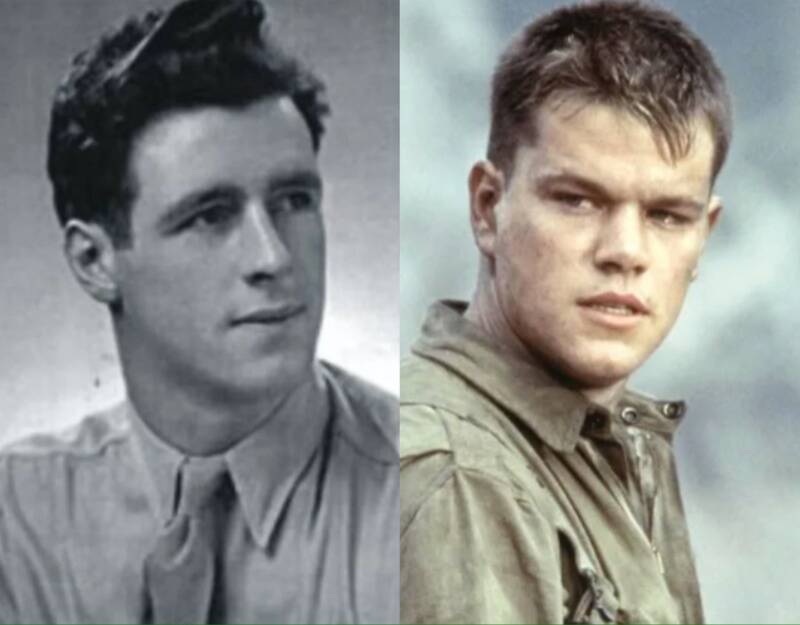
ALLTHATSINTERESTING.COMThe True Story Of The Niland Brothers Who Inspired Saving Private RyanTo this day, Steven Spielbergs 1998 film Saving Private Ryan continues to move audiences with its gripping portrayal of D-Day and its aftermath. The film focuses on a group of American soldiers tasked with finding their titular comrade, whose three other brothers have been killed, so that he can be brought home.Saving Private Ryan received 11 Academy Award nominations and earned praise for its realistic portrayal of World War II combat. Yet what may be even more surprising than the shocking realism of the onscreen bloodshed is that the very story itself was loosely based on the true tale of four brothers who endured a fate heartbreakingly similar to the one portrayed in the film.Public Domain/Paramount PicturesIn the true story of Saving Private Ryan, Frederick Fritz Niland lost his brothers before being removed from service in Europe and returned to the United States for the duration of World War II.In the true story of Saving Private Ryan, several of the Niland brothers from upstate New York were killed, prompting the U.S. government to track down remaining sibling, Frederick Fritz Niland, and bring him home.The True Story Of Saving Private RyanThe true story of Saving Private Ryan is, believe it or not, just as dramatic as the onscreen version. Upon joining the military, brothers Fritz, Bob, Preston, and Edward Niland of Tonawanda, New York were spread out amongst various units with Fritz and Bob in the 501st and 505th Parachute Infantries, respectively, Preston in the 22nd Infantry, and Edward in the Air Force.Public DomainThe Niland brothers, the real-life World War II servicemen whose tale of loss eventually became the true story of Saving Private Ryan.On May 16, 1944, less than a month shy of D-Day, Edward Niland was captured by the Japanese. He had parachuted into the jungles of Burma but had missed his mark. Though he managed to evade them for a while, he was captured by the Japanese and brought to a P.O.W. camp in Burma.After he jumped out of his B-25, the rest of his team never heard from him again and assumed he had been killed in action.On D-Day, Bob Niland was killed in Normandy while storming the beaches with the 505th Parachute Infantry Regiment, 82nd Airborne Division. He died a hero, volunteering to stay behind with two other men and hold off the German advance while the rest of his team escaped. Their plan managed to slow the Germans down, though Bob was ultimately killed while manning his machine gun.FlickrThe Niland brothers as pictured on the World War II memorial wall in Normandy, France.The next day, Preston Niland was killed after storming Utah Beach. He was able to survive the storming of the beach and made it farther inland but was mortally wounded while attempting to capture the Crisbecq battery, which had sunk a U.S. destroyer.Word of Bob and Prestons deaths as well as Edwards presumed death traveled fast and the government set out to notify the family. Mrs. Niland received all three notifications on the same day. Her only consolation was a letter from Fritz bragging about the stories he would have after the war.Dads Spanish-American War stories are going to have to take a backseat when I get home, he wrote. In the true story of Saving Private Ryan, just as in the film version, it appeared that the sole remaining brother had no knowledge of his siblings fates.Fritz Niland Comes Home After His Brothers Are KilledWhen the War Department heard that three of the four brothers had perished, they decided that the remaining brother needed to be brought home just like in the film.In the case of Fritz Niland, Father Francis Sampson, chaplain of the 501st Regiment, was tasked with finding Fritz and making sure he got home.After D-Day, Fritz had gone to the location of the 82nd Airborne in hopes of meeting up with Bob only to learn that his brother had been killed. But thanks to Sampson, whod tracked him down, Fritz also learned that hed now be going home.Fritz was shipped to England, then back home to New York, where he served as an M.P. for the remainder of the war. Back at home, Fritz and his family grieved over the loss of his brothers, but then they got one piece of good news.Public DomainA contemporaneous newspaper report on the Niland brothers who later inspired Saving Private Ryan.In May 1945, the Nilands received word that Edward, presumed dead, had in fact been found alive after the camp where he had been held in Burma was liberated. Now, a second Niland brother was on his way home.Though there were now only half as many Niland brothers as there had been at the start of the war, the two that were left spent many of their remaining decades together living back home in Tonawanda, New York. In this way, the true story of Saving Private Ryan had a somewhat happier ending than the cinematic version.Did The Sullivan Brothers Inspire Saving Private Ryan?Wikimedia CommonsThe Sullivan brothers who may have also helped inspire Saving Private Ryan.As dramatic as the true story of Saving Private Ryan is on its own, it may not have unfolded as it did if not for the tragic tale of another group of American brothers who served in World War II (and who some mistakenly believe inspired Saving Private Ryan).The Sullivan brothers of Iowa were, like the Niland brothers, a family of soldiers. George, Frank, Joe, Matt, and Al Sullivan all joined the Navy on the same day in early 1942. As they signed up, they stated that they had just one stipulation: If they were going to serve, they were going to serve together.Despite the Navys unwritten policy of separating brothers, they allowed the Sullivans to stay together.But on the morning of Nov. 13, 1942, during the Battle of Guadalcanal, the cruiser that the Sullivans were stationed on was hit by a torpedo from a Japanese submarine. The ship exploded almost instantly and before long was at the bottom of the ocean.Following the deaths of the Sullivan brothers, the powers that be adopted an unofficial policy that would keep brothers separate and not act on requests made by brothers to serve alongside each other. And thus the Niland brothers were split up and their incredible story played out as it did.The True Story Of Saving Private Ryan: Separating Fact From FictionParamount PicturesSaving Private RyanThough Saving Private Ryan was inspired by the Niland brothers story (as well as a similar story about four brothers all killed during the Civil War), its safe to say that writer Robert Rodat and the filmmakers crafted a story that differed in a number of obvious ways.For starters, in the case of the Nilands, Edward was ultimately found to have been alive. In the film, of course, the titular Private Ryan has lost all three of his brothers.Paramount PicturesSaving Private Ryan was inspired by the Niland brothers and the Sullivan brothers.Moreover, the biggest difference between the true story of Saving Private Ryan and the film, still regarded as one of the best war movies of all time, is that the latter features a dramatic search and rescue mission conducted by a group of U.S. soldiers. In the case of Fritz Niland, no such group was ever organized and he was instead tracked down by a chaplain.Of course, an easy rescue mission does not a blockbuster make, so it makes sense that the filmmakers would get a little creative.And this creativity certainly paid off as audiences, critics, and even the Library of Congresss National Film Registry have recognized the film as one of profound cultural, historical, and aesthetic significance.After this look at the Niland brothers and the true story of Saving Private Ryan, read the true tales of Desmond Doss, the World War II medic who inspired Hacksaw Ridge and Wladyslaw Szpilman, the man behind The Pianist. Then, discover facts about World War II that even most history buffs dont know.The post The True Story Of The Niland Brothers Who Inspired Saving Private Ryan appeared first on All That's Interesting.0 Comentários 0 Compartilhamentos 8 Visualizações