• WWW.THECOLLECTOR.COM
    The Vicious Viking Tax of Danegeld That Bankrupted Anglo-Saxon England
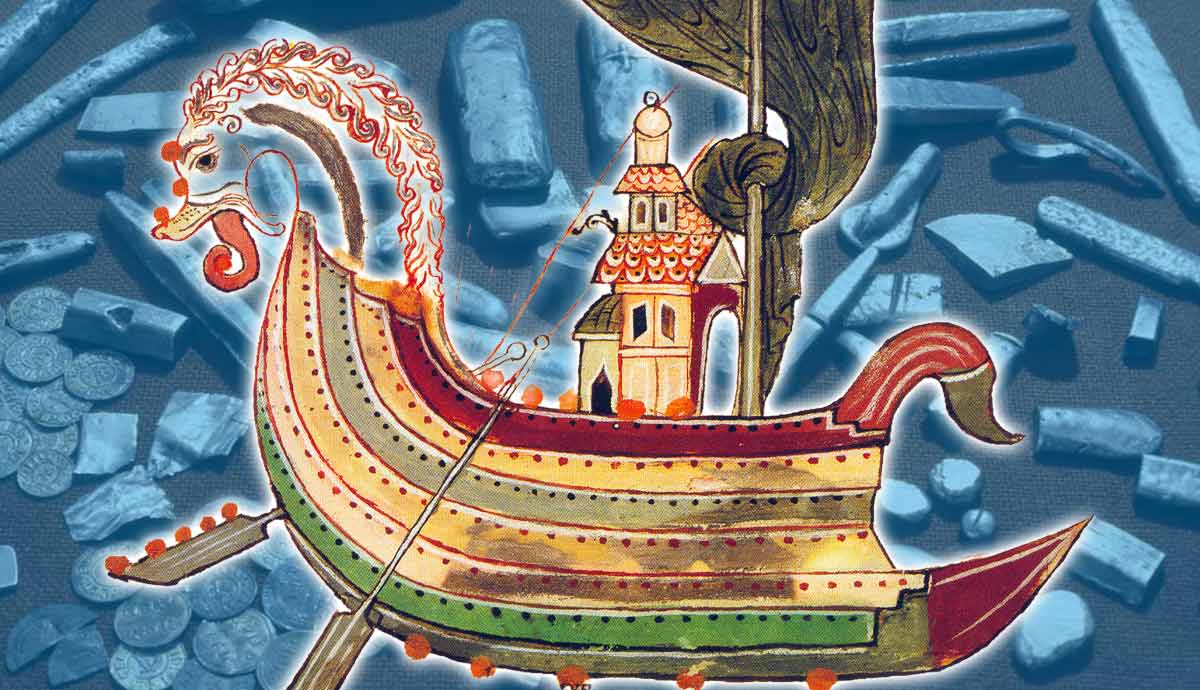
    During the height of the Viking Age, when raiders from the north were wreaking havoc on their European neighbors, rather than fight, sometimes communities would pay the Vikings to leave them alone, though the relief was only ever temporary. The practice seems to have begun in France, and happy with the results, the Vikings employed the same extortion tactics in England. Following the Norman Conquest, the Normans continued to collect this danegeld, but used the funds to cover their own expenses. As well as forming the basis for land tax in England, the practice shifted the Vikings from a bullion economy to a currency economy.Paying Off the Nordmanni in FranceViking ships besieging Paris, engraving, 19th century. Source: Wikimedia CommonsThe Vikings, whom the French called Nordmanni or Northmen, began raiding the coastal regions of France at the end of the 8th century; around the same time that they started raiding in England.The earliest evidence of something resembling danegeld comes from around this time. In 810, a Danish fleet of around 200 ships started harassing the coastline of Frisia and then defeated the Frisian troops in three standing battles. The Vikings demanded payment to end the conflict. The Frisians collected 100 pounds of silver through taxation to pay them off.This bought temporary peace, but it was not long before the Vikings were back. In 836, a group of Vikings burned Antwerp, and again, only agreed to leave in exchange for cold, hard cash. The following year, they captured several local nobles and held them for ransom. Then, according to the French annals, the Vikings proceeded to conduct a census, going from property to property and charging people an amount based on their wealth.Norse longship from an Anglo-Saxon manuscript, c. 18th century. Source: Getty ImagesUnsurprisingly, considering how lucrative attacking and then extorting money proved, the Vikings were back in 852, with more than 250 ships. This time they were paid off before they attacked. That taxes were levied to make these payments seems confirmed by a record that, in 873, the Frisians refused to pay extortion fees to the Vikings, saying that they only owed taxes to their king.Similar stories survive from around France. We hear of the people of Britany paying off the Vikings in 847, 854/5, and 869, before raising funds to hire them as mercenaries in 873. In 882, Charles the Fat paid to end the Siege of Elsloo. In West Francia, they paid off a chief named Ragnar after his attack on Paris, preventing the Vikings from destroying the city with six tons of silver and gold.Danegeld in Anglo Saxon EnglandManuscript image showing battle and treaty between Cnut and Emund, MS EE 3.59, fol. 4r, c. 13th century. Source: Cambridge University LibrariesThe practice of paying danegeld only arrived in Anglo-Saxon England much later. The first record of this kind of payment is in 991, when King Aethelred was advised to pay the Vikings off, at least for now, following the Viking victory at the Battle of Maldon. It is unclear exactly how the funds were collected, but it is described in the sources as a gafol, which means tax or tribute. The English paid the Vikings 3,300 kilograms of silver. This tribute was reportedly paid to Olaf Tryggvason, who was a Norwegian Viking.Again, the peace this bought was only temporary. In 994, the Danish king Sweyn Forkbeard arrived and laid siege to London. Aethelred used the same system, this time called heregeld, meaning army tax, to pay. Forkbeard launched similar expeditions in 1002 and again in 1007, when 13,400 kilograms of silver were paid. They got even more in 1012 when they sacked Canterbury and were bought off with 17,900 kilograms of silver.Runestone U344, Uppland, Sweden, c. 11th century, mentions receiving danegeld three times in England. Source: Wikimedia CommonsAt the end of 1013, Sweyn Forkbeard conquered England, and in 1016, his son Cnut the Great established himself as the King of England. Two years later, he felt sufficiently secure in his position that he sent away all but 40 of his ships. Those ships carried 26,900 kilograms of silver from the countryside and 3,900 kilograms of silver collected just in London.When Cnuts son lost control of England, the Vikings were no longer able to extort danegeld. It was not long after that the Normans conquered England in 1066. Records show that the Normans continued to collect the same land taxes, based on the same parcels of land considered sufficient to support a family, but used it to fund their own administration rather than pay off Viking raiders. While there was still some Viking activity in the second half of the 11th century, it stopped as other Europeans learned to better defend themselves and the Vikings converted to Christianity.The Success of DanegeldRare English coin showing the Norse symbol of the Valknut on the observe, Norfolk, c. 7th century AD. Source: BBCSimilar extortion tactics were used in other regions where the Vikings were active. There is evidence that people in Finland, Estonia, and Latvia paid the Vikings to stay away. The Primary Chronicle suggests that people as far away as Russia were often paying protection money to the Viking mafia. Even the Sami, who occupied the northern regions of Norway and Finland, paid a form of danegeld, though they paid in valuable furs rather than gold or silver.While danegeld was a successful money-making strategy for the Vikings, it was less successful for the people paying. When you paid the Vikings off, they would always be back for more. In the 19th century, English poet Rudyard Kipling dedicated a poem to the problem:And that is called paying the Dane-geld;But weve proved it again and again,That if once you have paid him the Dane-geldYou never get rid of the Dane.Norse BullionSilver bullion from the Cuerdale Hoard, AD 905-910. Source: British Museum, LondonOne result of the Vikings demanding so much wealth from the Anglo-Saxons is that coins needed to be minted to make the payments, and they were then exported to Scandinavia. More English coins from that period survive in Scandinavia than in England. Many coin-rich hoards from across England and Scandinavia date to the period of danegeld extortion.Despite being traders, the Vikings did not mint coins until the end of the 10th century. During the Migration Period (AD 400-700), the proto-Vikings mostly relied on a barter economy, trading goods for other goods they considered of equal value. When this became impractical, they switched to a bullion economy, with precious metals, mostly silver but also gold, representing value. This economic shift led to jewelry made of silver and gold becoming symbols of status and wealth in the Viking world.Initially, bullion trade was mostly in ingots made and weighted for that purpose. However, by the 9th century AD, hack metal was also commonly used. While whole pieces of jewelry could be traded, smaller pieces of metal were often hacked off pieces of jewelry to create smaller denominations. We know this practice began around the 9th century because this is when deliberately damaged pieces of jewelry started to appear in Viking hoards.As a note on Viking hoards, it is often assumed that most hoards were deposited to protect wealth with the intention of returning for it later. For example, if your village was being attacked, you might deposit your wealth as a secret location in the ground to prevent it from being taken. Similarly, if you were going off on a raiding mission, you might bury your valuables to protect them while you are away.However, the Vikings also believed that burying things in the ground was a way to pass things from the mortal world to the divine. So, some hoards may also have been buried as offerings to the gods. Or a person could bury a hoard with the purpose of retrieving the items in the afterlife, because, according to Odins Law given in the Heimskringa saga, men were allowed to bring with them to Valhalla everything that was burned on the funeral pyre with them and anything they had personally buried in the ground.Coins Become CurrencyGold bracteate pendant, Scandinavia, AD 400-600. Source: Metropolitan Museum of ArtThe lack of a currency was not because the Viking did not know about coins. Hoards of precious objects from the Migration Period and the first centuries of the Viking Age include coins from Rome, Constantinople, and even the Arab world. Many have small holes drilled into them, showing they were worn as pendants. This suggests that these foreign coins were highly valued, just not as currency.During the Migration Period, the people who would become the Vikings also made bracteates. These look like extremely thin one-sided coins that are worn as pendants. Their designs were inspired by Roman coins, featuring profile portraits of the gods in place of the Caesars, and marked with runic inscriptions in place of Latin dedications.Cnut the Great Coin, England, c. 1015-1035. Source: British Museum, LondonThe first Viking coins were only minted under Sweyn Forkbeard, who received vast amounts of coins from the Anglo-Saxons. His first coins were exact replicas of coins minted by the Anglo-Saxons in Britain, but with his name and likeness in place of that of the English king on the obverse. They were used as templates for new coins minted in Denmark. In the century that followed, coin designs were also copied from Byzantine coins, which made their way to Denmark through trade and payment received by mercenaries working for the Byzantines.Also, at the end of the 10th century, Olaf Tryggvason, the king of Norway, was copying coins minted in England by King Aethelred II. Harald Hardrada (1046-1066) had served in Byzantium and established a national Norwegian currency based on what he learned in the east.Coin of Harald Hardrada, Norway, c. 11th century. Source: Museum of Cultural History, NorwayCoins started to be minted at around the same time in Sweden, again based on English examples, but with inconsistent weights and meaningless inscriptions. A consistent Swedish coinage would not emerge until the 12th century. It is noteworthy that the Swedes were less engaged in raiding activities than their Danish and Norwegian neighbors and also adopted coinage much later.
    0 Комментарии 0 Поделились 13 Просмотры
  • WWW.THECOLLECTOR.COM
    The Black Conquistador Who Became the First African Explorer in the Americas
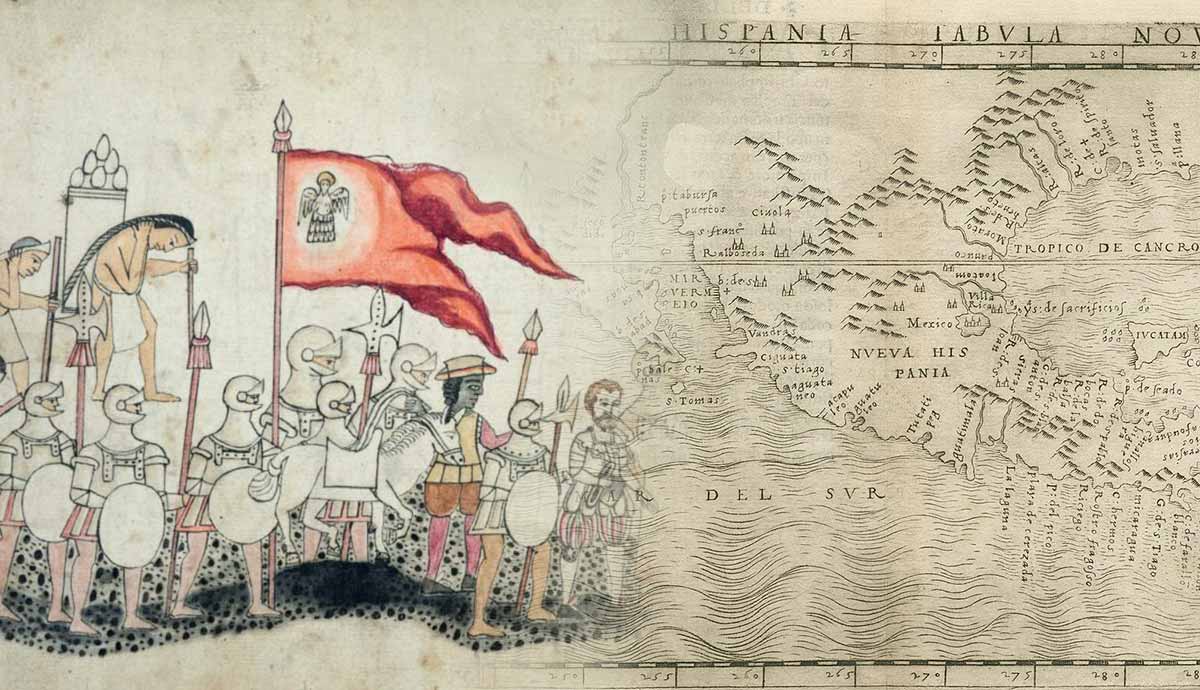
    Much has been written and discussed about the actions and legacy of the Spanish Conquistadors in the Americas. The presence of Black men as historical actors in the Spanish conquest of the New World, however, has often been overlooked. Among the earliest Africans to cross the Atlantic and explore the Americas was Juan Garrido. Known for his role in the fall of the Aztec Empire and the Spanish expansion in Central America, Garridos story reveals the ramifications of prejudice, race, and conquest in the 16th-century Spanish colonization of the Americas.Who Was Juan Garrido?Nautical chart of Hispaniola and Puerto Rico, by Johannes Vingboons, ca. 1639. Source: Wikimedia Commons/Library of Congress, Washington DCNot much is known about Juan Garridos earliest years. He was likely born around 1480 in West Africa, probably in the Kingdom of Kongo (present-day northern Angola). In the late 15th century, when he was still young, he moved to Lisbon. He then relocated to Seville, Spain. From there, he embarked on an expedition to Hispaniola, also known as Santo Domingo, the Caribbean island where Christopher Columbus landed in 1492.By the time Juan Garrido arrived in the Caribbean, the Spanish crown had already begun the forced shipping of enslaved African men and women to its American colonies. Juan Garrido, however, landed in Hispaniola, possibly on Governor Nicols de Ovandos expedition, as a free man.It is unclear whether Garrido became a free man before arriving in Lisbon or obtained his freedom while residing there. As for many other enslaved people, there is no record of his birth name. It has been suggested that the young Black conquistador was given the surname Garrido because he was a servant or protge of Pedro Garrido, a Spaniard who arrived in Hispaniola around the same time as Juan Garrido. Indeed, enslaved people were often given the family names of their masters. This theory, however, is purely hypothetical, as there is no documentary evidence to support it.Conquistadors attacking a village of Indians, illustration by Theodor de Bry for Las Casas Brevisima relacin de la destruccin de las Indias, 16th century. Source: Gallica/Bibliothque nationale de FranceLanding in Hispaniola in the early 1510s, Juan Garrido was one of the first Black auxiliaries to arrive in the Caribbean as part of a Spanish expedition. Alongside the presence of enslaved African men and women, there are also several records of free Black people crossing the Atlantic to take part in Spains conquest campaigns in Central America as subjects of the Spanish crown. Like Garrido, many accompanied the Spanish conquistadors in their expeditions throughout the continent.While their names and actions were often erased, they were crucial in the expansion of the Spanish presence in the New World. These Black conquistadors or armed auxiliaries even appear in several accounts of Spains violent campaigns in the Americas (more on that later). Garridos story sheds light on their experience as both victims of prejudice and actors of the Spanish colonization.Conquering Mexico: The Fall of TenochtitlanPortrait of Hernn Corts, by anonymous, 17th century. Source: Wikimedia Commons/Naval Museum of MadridShortly after his arrival in the Caribbean, Juan Garrido took part in the expeditions to Puerto Rico, Bimini, and Florida led by Ponce de Leon, a conquistador seeking fame and wealth. Then, around 1513, he served under Diego Velzquez de Cullar in a campaign in Cuba that ended with the Spanish conquest of the island. In 1514, Velzquez became the first governor of Spanish-controlled Cuba.Upon returning from the expedition, Juan Garrido returned to Puerto Rico, where he became involved in a gold-mining operation, hoping to improve his economic situation. In November 1518, however, he ceased his mining activity to participate in another Spanish expedition: Hernn Corts conquest of the Aztec Empire, ruled by Montezuma II.Garrido was not the only Black man in Corts retinue. Indeed, the Florentine Codex, a 12-volume encyclopedia documenting the culture of the Indigenous people of Mexico written by the Franciscan friar Bernardino de Saliagn (and a group of Nahua writers), reported that among [the Spaniards] came some Black who had crispy curled dark hair.In a later account of his exploits as a conquistador (more on that later), Garrido stated that he was present during the fall of Tenochtitln, the capital city of the Aztec Empire. More importantly, he recalled his contribution in honoring the Spanish conquistadors killed during the so-called noche triste (sad night), a hasty retreat planned after Pedro de Alvarado, Corts second-in-command, massacred hundreds of Aztec chiefs, provoking a revolt. After burying his fallen comrades, Garrido erected a chapel on the site of the clash.The March of the Spaniards into Tenochtitlan, in the Codex Azcatitlan, folio 23, c. 1530. Source: Smarthistory/Bibliothque nationale de FranceA depiction of Corts first march into Tenochtitln and his encounter with Montezuma can be found in the Codex Azcatitlan, a 16th-century Indigenous manuscript. In the image, behind the Spanish conquistador, the illustrator included a Black armed auxiliary, holding a spear and the reins of a horse. It has been suggested that the figure may be a direct reference to Garrido. It is just as likely, however, that the presence of an African soldier in Corts retinue is simply a testament to the multi-ethnic composition of the Spanish colonial forces in the Americas.The Life of a Black Conquistador in the Spanish EmpireView of New Mexico in an engraving in the Atlas Van der Hagen, ca. 1690. Source: Wikimedia Commons/KB National Library of the Netherlands, The HagueAfter the successful conclusion of a conquest expedition, the conquistadors were usually rewarded with a house lot within the city center (traza) and full recognition of their citizenship. However, Juan Garrido, despite his involvement in Corts conquest of Tenochtitln, initially received a plot of land outside Mexico City. He was granted a plot inside the traza and made a citizen (vecino) only in February 1525.Now a formal citizen of Mexico City, with the accompanying rights and responsibilities, Garrido, still under Corts patronage, was able to secure a position as doorkeeper (portero) of the citys council. A common post among Black auxiliaries in the Spanish forces, this post came with the small annual salary of 30 pesos. However, his economic situation improved when he was also granted the positions of guardian of the Chapultepec aqueduct and town crier (pregonero).His marriage in the late 1520s to Francisca Ramrez, a Spanish woman, suggests that Garrido was successful in raising his economic and social status. The couple would have three children. In the 1530s, however, Juan Garridos position seemed to worsen, likely due to the volatile power structure of the Spanish American colonies.The reversal of Garridos fortune strained his marriage. In 1536, Francisca Ramrez was investigated following an accusation of witchcraft. She was charged with allegedly hiring an enchanter (hechicero) to persuade his husband to leave her. Around the same time, renewed financial pressures led Garrido to contact a municipal lawyer in Mexico City, perhaps regarding unpaid back salaries from his service as doorkeeper for the city council. Meanwhile, he took part in various mining schemes and new expeditions of conquest.Campaigning in Central AmericaNueva Hispania Tabula Nova (map of New Spain), by Giacomo Gastaldi, published in his 1548 edition of Ptolemys Geography. Source: Wikimedia Commons/University of Texas at ArlingtonIn 1528, he participated in a gold-mining operation in the province of Zacatula and was placed in charge of a group of enslaved African men. He was likely active in the placers of the Motines area, where several other Spanish conquistadors tried their luck in digging for gold, with disastrous consequences for the Indigenous people settled there.Four years earlier, Garrido had also joined another conquistador, Antonio de Caravajal, in a campaign to Michoacan and Zacatula. The supposed goal of the expedition was to spread Christianity among the native tribes and compile a census of their communities. In fact, Caravajal and his men took detailed notes on the areas mineral wealth, annotating the tribute-paying capacity of the Indigenous groups.Then, in 1534, Juan Garrido took part in a new expedition led by Corts, this time to the Pacific coast. Recently returned to Mexico from Spain with the title of marquis, Corts organized the venture hoping to conquer what he believed to be a land full of highly sought-after gold and the homeland of the legendary Amazons. In fact, he and his men reached present-day Baja California. Garrido was only one of the hundreds of Black men in Cortss retinue, most of them shipped to the Americas as slaves.Asserting His Legacy: Juan Garridos Petition to the KingJuan Garridos 1538 probanza addressed to Charles I of Spain. Source: La Florida/Archivo General de Indias, SevillaThe names of the majority of Black men taking active part in the Spanish conquest of the Americas have usually been erased from history, their contributions denied by the historical records. Unlike his comrades-in-arms, Juan Garrido had the chance to defend himself against the dangers of erasure, providing a written account of his deeds as a conquistador and subject of the Spanish king.Known as probanza, the document was a petition to Charles I of Spain (Emperor Charles V) detailing Garridos merits and providing evidence of all he had done to support Spains campaigns of conquest: I, Juan Garrido, black resident of this city [Mexico City], appear before Your Mercy and state that I am in need of making a report on how I served Your Majesty in in the conquest and pacification of this New Spain.Written on September 27, 1538, the petition was Garridos newest attempt at improving his financial situation and claiming a higher social status. A rare autobiographical account of a Black mans experience as an armed auxiliary in the Americas, Garridos probanza also offers a key insight into the role played by race in the Spanish kingdom and its colonies.Besides listing the several expeditions he joined, Garrido declared to have been the first to have the inspiration to sow maize here in New Spain and to see if it took, adding that he made this and experimented at [his] own expense. Implicitly refuting Corts claim that Garrido was acting on his order when harvesting the first wheat crop in the Americas, Garrido highlights how the introduction of wheat in New Spain was a matter of no small importance for the Spaniards, who saw it as a matter of social status and identity that set them apart from the Indigenous populations.
    0 Комментарии 0 Поделились 13 Просмотры
  • WWW.THECOLLECTOR.COM
    The Ship That Refused to Sink: The 13,000 Mile Journey of the USS Marblehead
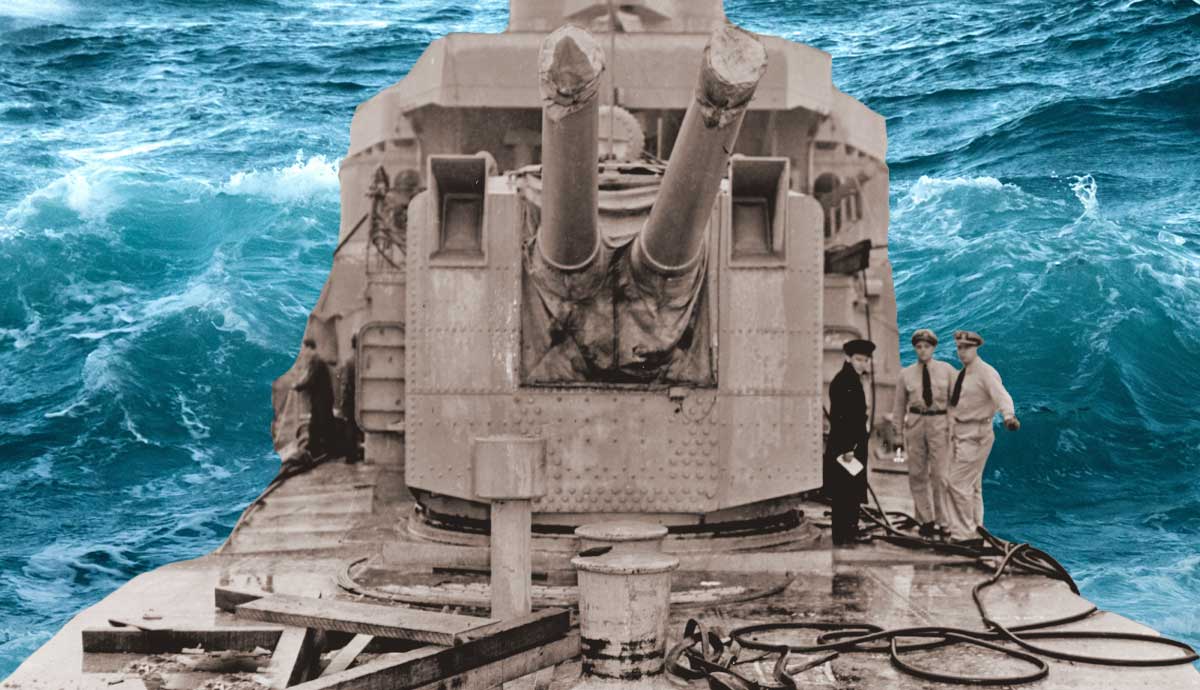
    Of all the World War II stories of tenacity, skill, or just sheer luck, few compare to the story of the USS Marblehead. Some ships survived incredible damage. Others escaped enemy nets, while others staggered home. Yet the Marblehead did all three. On February 4, 1942, Japanese bombers mauled the aging light cruiser in the Makassar Strait. On fire, compartments flooded, and steerable only by propellers, the Marblehead began a nearly 20,000-mile journey. In this story, the ship sailed across two oceans, perhaps one of the wars greatest acts of seamanship.The Battle of Makassar: Smashed but Still AfloatImperial Japans Southeast Asia offensives, 1942. Source: Wikimedia CommonsOn the morning of February 4, 1942, the USS Marblehead steamed north into the Makassar Strait as part of a force to confront the Japanese.At 10:27 a.m., about 37 Imperial Navy bombers located the cruiser (designation CL-12 light cruiser). With no Allied air support, the Japanese planes operated freely, attacking the Marblehead.10:40 a.m.: The initial bomb struck the fantail, or aft-most deck. Exploding deep inside, it burst through metal and sparked fires.The next bomb hit seconds later, exploding near the waterline. This ripped a large hole in the ships side. Seawater streamed in, flooding engineering spaces, fuel tanks, and other spaces.10:43 a.m.: A final bomb hit topside, tearing steel and ripping through compartments.Now in shambles, the Marbleheads jammed rudders only allowed left-turning circles her fate seemingly sealed.Down But Not OutA damaged USS Marblehead in port after the attack, 1942. Source: US Navy / Wikimedia CommonsBy 10:45 a.m., the Japanese bombers egressed the strait, leaving USS Marbleheads survival a big question. With fifteen dead and dozens wounded, the crew took stock of their desperate situation. The first bomb had destroyed the steering engine room, broken the steering linkages, and bent the rudder stock. Flooding had finished the job. Yet the ships engineers came up with the ingenious idea to use engine-steering. Though rudimentary, they alternated between revving engines and moving the ship left to right. While not fast, this worked.The Marbleheads crew next tackled the huge starboard hole as it took on massive amounts of water. With numerous water pumps knocked out, the crew used hand pumps or lined up to bail water to prevent the ship from capsizing. From February 4 to February 6, the crews pumped like madmen, staying ahead of the flooding.All efforts paid off as the Marblehead reached Tjilatjap, Java, on February 7, 1942. Dutch and American crews worked feverishly, using timber, concrete, and steel to patch holes or weld seams. With just enough repairs done, the still rudderless light cruiser slipped away on February 12, 1942, southwest into the Indian Ocean.Crossing the Indian and Atlantic OceansHeavy Atlantic swells. Source: PexelsAs the Marblehead began its creaky journey from Java towards Ceylon, the crew knew they couldnt stop working. Keeping their boots on, the crew slept in shifts in case of any alarms. The hull groaned with every swell or course change. Further complications from the 9-foot hole included 34 flooded compartments. The pumps never ceased operating.After a week of painful, reduced-speed sailing, the Marblehead reached Colombo, Ceylon, on February 19, 1942. She stayed only for a day, taking on supplies before departing for South Africa.The Marblehead reached Simons Town Naval Base near Cape Town on February 24. This was the only dry dock capable of servicing a larger ship. Here, round-the-clock repairs lasted for three weeks, and the ship left on March 15.As the Marblehead entered the Atlantic Ocean, it encountered heavy swells and violent cross-waves. The ship rolled occasionally to 20-30 degrees as she crept north. Incredibly, the battered USS Marbleheads New York arrival stunned many on May 4, 1942. Though rust-streaked, concrete-patched, and crusty-looking, the cruiser survived. The journey took three months, crossed two oceans, and some 20,000 miles, demonstrating a perfect example of naval damage control and endurance.A Reputation Earned and Something MoreThe USS Marblehead under repair near the rear turret in 1942. Source: Wikimedia CommonsSomehow, the Marbleheads crew kept a structurally compromised ship afloat, making it a Pacific War naval legend. By 1942, the Marblehead was two decades old, designed for a role that scout planes quickly replaced. Planned newer cruisers would arrive soon, but few would match this cruisers reputation.The Battle of the Makassar Strait nearly ended the Marblehead. The damage inflicted should have sunk the ship. But the crew stayed disciplined. As the Marblehead entered New York Harbor, newspapers began calling it a ship long since given up for dead.Though the ships fantastic journey deserved headlines, what it represented mattered more. The Marblehead victory was an indispensable one after months of defeat. Events like the Pearl Harbor attack hurt the countrys morale. The tale of a down-and-out old ship that prevailed raised Americas spirits during a bleak period.
    0 Комментарии 0 Поделились 13 Просмотры
  • ALLTHATSINTERESTING.COM
    9 Of Historys Most Infamous Con Artists And The Scams They Almost Got Away With
    The term con artist or conman comes from one of American historys earliest scammers, a man by the name of William Thompson. In 1849, Thompson was arrested in New York City for a slew of successful scams during which he duped unassuming passersby on the street into lending him their valuables before vanishing with them.Thompson was consequently known among local authorities as the confidence man, which was eventually shortened to con man. But Thompson was hardly alone in his clever grifts. According to historian Karen Halttunen, approximately 10 percent of all criminals in New York City in the 1860s were con artists.Nearly all confidence men or scam artists are charming. Take Victor Lustig, for example. This conman managed to sell the Eiffel Tower and allegedly even swindled notorious mobster Al Capone. He was fittingly dubbed the Count by authorities because he was so debonair. Beyond the smooth talkers, there are also those conmen who play on peoples biases like Anna Sorokin, who cheated her way into the ranks of New York Citys elite by pretending to be a rich heiress named Anna Delvey. The scam artists former friends, nearly all of them wealthy socialites, alleged that she had convinced them to loan her cash for lavish vacations abroad only to never be repaid.Indeed, conning is not a thing of the past. In todays internet age, scams exist in the form of spam emails and catfishing campaigns.And while cognitive scientists argue that most people today are more cautious, con artists still manage to find ways to evade the best lie detectors, leaving even the keenest people to be conned.Charles Ponzi, The Most Notorious Conman In U.S. HistoryLeslie Jones/Boston Public LibraryThis conman and investment fraudster from the early 20th century was the namesake of the term Ponzi scheme.Today, the term Ponzi scheme is used to describe an illegitimate operation. But the term actually came from the real-life Charles Ponzi, whose $15 million investment scheme claimed to turn the average American working man into a multimillionaire overnight.But really, the scheme only worked to turn Ponzi himself into a multimillionaire overnight. Charles Ponzi was an Italian immigrant who first came to the U.S. in 1903. Like most immigrants who came to America, Ponzi was looking for economic opportunity. The conman worked all kinds of odd jobs to make ends meet until he secured a job at Bank Zarossi, which served mostly Italian immigrants in Montreal, Canada.But when the bank went bankrupt, Ponzi found himself out of a job. As a result, he began dabbling in check forgery and illegal smuggling, which landed him in prison. But after his release, Ponzi was struck with inspiration. Thanks to a letter from a business correspondent in Spain, the ambitious hustler was introduced to the international postal coupon system.I landed in this country with $2.50 in cash and $1 million in hopes. And those hopes never left me.Charles PonziPonzi exploited the system by buying massive quantities of postal coupons from countries with weak economies and redeeming them in countries with stronger ones. He operated his scheme under his invented Securities Exchange Company.The scam artist trained sales agents to pitch potential investors, telling them that they would receive double their money plus interest back within 45 days. The sales agents pulled in 10 percent commissions for every investor they managed to bring in while subagents pulled in five percent. Leslie Jones/Boston Public LibraryPonzi, pictured with his gold-handled cane, heads to court in 1920 to defend himself.Charles Ponzis scheme grew as investors eagerly dumped money into his business. He took the payments from sales agents and investors directly and, instead of using them to ship the stamp coupons, simply pocketed them himself. Then, he gave portions of the money to pay off previous investors, creating an infinite cycle of non-profitable investments.His scam secured over 40,000 investors, making him a millionaire in less than six months. An article published by the Boston Post on July 24, 1920, estimated that his net worth was around $8.5 million. He had a 12-bedroom mansion, multiple cars, house staff, and a gold-handled cane.News of Ponzis wealth and the false claim that he was making others as wealthy as he was attracted more investors. But it also invited scrutiny from federal investigators. In the end, it was Ponzis publicist, William McMasters, who revealed his fraudulent scheme and reported him to authorities. The conman served three and a half years in federal prison for his scam. After he was paroled in 1925, he was sentenced to nine years in state prison on additional fraud charges. But his unmasking did little to motivate his remorse. Charles Ponzi described his scam as the best show ever staged on their territory since the landing of the Pilgrims! He subsequently tried to escape from prison multiple times. After he was released from jail in 1934, Ponzi was deported back to Italy where he died in a charity hospital in 1949 with just $75 to his name. But his name and the scheme he founded live on in infamy.Sylvia Browne, The Psychic Scam Artist Who Profited Off Of Grieving ParentsSteve SnowdenBefore her death in 2013, Sylvia Browne built an empire as a psychic detective.When it comes to conmen, few are more predatory than the self-proclaimed psychic named Sylvia Browne. Dubbed Americas most controversial psychic, she made her fortune selling false hope to the parents of missing children.Born Sylvia Shoemaker on Oct. 19, 1936, in Kansas, Missouri, Browne claimed that her psychic abilities began when she was a toddler. In 1974, the scam artist founded The Nirvana Foundation for Psychic Research.A few years later, she opened the Society of Novus Spiritus, where she trained ministers to help spread her ideas about God to their followers. Browne also taught hypnosis through her eponymous training center.Browne raked in money by charging customers $850 to ask her questions about their lives over the telephone for half an hour. She claimed she could look centuries into the past and talk to the dead and alledged that her psychic abilities had helped the FBI to solve many crimes.Sylvia Browne shot to fame after she landed a regular guest spot on The Montel Williams Show, where she gave parents whose children had gone missing premonitions or information on their whereabouts. Sometimes, she would tell the parents that their child was dead. One of her most notorious readings was of Opal Jo Jennings, a six-year-old girl who was kidnapped by a stranger from her grandparents Texas yard in 1999.Shes not dead, the scam artist told Jennings grandparents on Montel. But what bothers me now Ive never heard of this before but she was taken and put into some kind of a slavery thing and taken into Japan. The place is Kukouro. So she was taken and put on some kind of a boat or a plane and taken into white slavery.But Brownes reading proved false when Jennings body was found buried somewhere in Fort Worth, Texas. Pathologists concluded that the girl had been killed and buried the same day that she was kidnapped. Psychic debunker James Randi speaks about Brownes scheme with journalist Anderson Cooper.Brownes mention of the Japanese town of Kukouro, shouldve been the first clue that her reading was all a con, as a quick Google search would show that the place doesnt exist.An exhaustive examination of Brownes 115 public predictions about missing children concluded that 25 were wrong and the other 90 remain unsolved. In 1992, Browne was indicted on several charges of investment fraud and grand theft. She pled no contest to the sale of security without a permit, which is a felony, and was slapped with 200 hours of community service. Browne remained popular despite her numerous false readings and went on to publish over 50 books, 22 of which were New York Times best sellers. Most of her multimillion-dollar fortune has come from her pricey phone readings and the $700 consultations she offered to grieving parents. She has recently received renewed interest as in 2008, she predicted a pandemic that sounds much like COVID-19. Brown wrote that around the year 2020, the world would be plagued by a pneumonia-like illness.Browne ran her psychic empire until her death in 2013 at the age of 77. Ironically, her own death was another misreading: in 2003, she told Larry King that she would live until she was 88. The post 9 Of Historys Most Infamous Con Artists And The Scams They Almost Got Away With appeared first on All That's Interesting.
    0 Комментарии 0 Поделились 13 Просмотры
  • ALLTHATSINTERESTING.COM
    How Ted Kaczynski Went From A Child Math Prodigy To The Unabomber
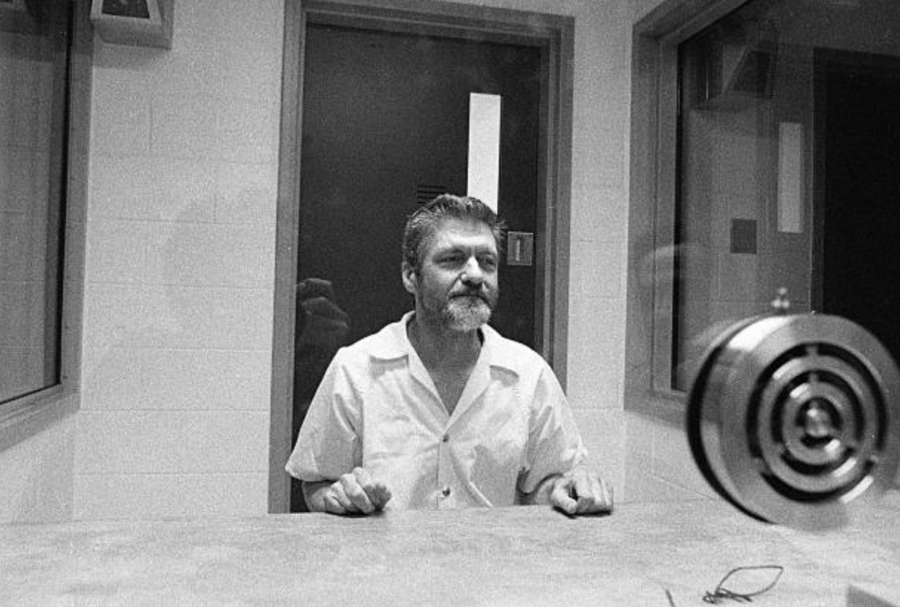
    Internet ArchiveThe Unabomber, Ted Kaczynski, in a supermax prison in 1999.In September 1995, The Washington Post printed a 35,000-word manifesto written by the mysterious Unabomber who had been terrorizing the United States for nearly two decades. An FBI task force had been working tirelessly to identify the suspect who was mailing bombs across the country, but theyd come up empty-handed time and time again. Then, a few months after the Unabombers essay was published, a man alerted the agency that he believed it was the work of his brother, Ted Kaczynski.Agents raided Kaczynskis cabin in rural Montana in April 1996 and found bomb components, thousands of pages of notes detailing the Unabombers crimes, and even a live bomb ready for its next victim. After 18 years, the FBI had found their man.But why had he done it? The answer was in the manifesto, which was titled Industrial Society and Its Future. Kaczynski blamed modern technology for the destruction of the environment. Hed targeted people he blamed for what he believed was the downfall of society, from scientists and computer technicians to university professors and airline executives. Ted Kaczynski was sentenced to life in prison without parole, as his bombs had killed three people and injured 23 others. He died behind bars in 2023, but the legacy of the Unabomber has not been forgotten.The Deadly Crimes Of The UnabomberBetween 1978 and 1995, Ted Kaczynski terrorized the country with homemade bombs that he either mailed to his victims or hand-delivered to locations where his targets would find them.Each device the Unabomber sent out was uniquely constructed. Many of the bombs were made of, or with, wood. In most cases, the explosives were crafted from gunpowder, match heads, and other readily available items. One resembled a cigar box and was left in a Northwestern University common area. Another, disguised as a wooden board with protruding nails, appeared in front of a computer store.Among the earliest and most complicated devices was a package fitted with a barometer that would trigger an explosion once an airplane hit cruising altitude. That bomb didnt kill anyone, but as the years went by, the Unabomber learned from his mistakes. Each device became more powerful, more concealable, and more deadly than the last.Because the terrorist sent bombs to universities and airlines, the FBI began referring to the case as UNABOM, an acronym for University and Airline Bomber. The news media dubbed the person behind the attacks the Unabomber.Public DomainA 1995 ad for FBIs UNABOM tip line.The Unabomber meticulously filed away all of his fingerprints from his bombs components. Other times, he seemingly treated pieces with acid. His devices were virtually untraceable. To further cover his tracks, the Unabomber would sometimes mail packages with insufficient postage so that they would be returned to the sender written on the box who was his actual target.The victims were seemingly random, with attacks in Illinois, Utah, Tennessee, California, Washington, Michigan, Connecticut, and New Jersey. They were academics, lobbyists, airline executives, and computer store owners. Many were maimed and lost fingers, limbs, and eyes. Three were killed. The only link between the targets seemed to be a tenuous connection to technology or the destruction of the environment.Even with an FBI task force comprising 150 full-time agents, analysts, and support staff, investigators had few leads. When one early bomb failed to completely explode, they found some twigs and leaves inside the device. The letters FC were also welded or carved into most of the bombs. But other than that, there was little to go on.Queerbubbles/Wikimedia CommonsA reproduction of one of Ted Kaczynskis bombs from an exhibit at the Newseum.FBI agents believed they were looking for a blue-collar mechanic or someone who was good with their hands. A popular theory was that the suspect was a disgruntled former airline employee looking to get back at the big shots. But what investigators would not realize until much later was how close their first discarded guess had come to the truth.In a report for the FBIs Behavioral Sciences Unit, profiler John Douglas had posited that the terrorist was a white male in his late 20s or early 30s and an asocial obsessive-compulsive loner of above-average intelligence, as reported by the New Yorker in 1996. He suggested that since the earliest bombings were at Northwestern University he was probably from Chicago and had connections to academia.When Ted Kaczynski was finally arrested in 1996, investigators would find that Douglas description of the Unabomber fit him nearly perfectly.Ted Kaczynski, The Man Behind The BombsBorn in Chicago in 1942, Ted Kaczynski had a fairly normal, middle-class suburban childhood for the most part. He had two loving parents and a younger brother, David, who idolized him. He played the trombone and collected coins. He was quiet, sensitive, and shy with others, but he loved animals and being outdoors. He also had an IQ of 167, placing him on the same level as Stephen Hawking and Albert Einstein.Kaczynski Family PhotoTed (left) and David Kaczynski circa the 1960s.Kaczynskis mother, Wanda, had grown up in a poor immigrant family in Southern Ohio. For her, education had been a gateway to a better life, and she believed the same would hold true for both her sons. When Kaczynski was 15, he graduated early from high school and, with his parents encouragement, applied to Harvard. He was accepted, and he started his freshman year in 1958 at age 16.But this opportunity would turn out to be a terrible mistake.During his first year, Ted Kaczynski was quarantined in special housing set aside for the youngest and least mature freshmen. Although the gesture was intended to be a nurturing one, in practice, it only encouraged Kaczynskis introverted nature. He made few, if any, friends and spent most of his time in his room or the library when not in class. Sophomore year was even worse.That fall, Wanda Kaczynski received a permission slip in the mail. Kaczynski had been accepted into a psychological study for gifted young men, overseen by his professor, Dr. Henry Murray. As a minor, however, he could not consent to his own participation. Wanda was enthusiastic. Shed long worried about her sons mental health and once considered testing him for autism.Kaczynski Family PhotoBrothers David and Ted Kaczynski in the mid-1960s.At nine months old, Teddy had a severe allergic reaction and was stuck in the hospital for a week, poked and prodded away from his parents, and shed always felt it had affected his relationships with other people. He had no friends outside of his family and seemed far more comfortable playing with younger children than those his own age.In Kaczynskis second year at Harvard, these emotional problems got even worse.The Psychology Of The UnabomberAs a former officer for the Office of Strategic Services during World War II, Henry Murray had completed a psychological profile of Adolf Hitler. After the war, he returned to Harvard as a chief researcher.At the time, one of the CIAs biggest projects apart from undermining Communist regimes around the world was an internal one: MKUltra, a study of mind control. Some have alleged that Murrays Harvard research was part of MKUltra.During this operation, Murray and other CIA-funded scientists were allegedly tasked with exploring the means of making and breaking an individuals personality and developing techniques for brainwashing and mind control, including torture, sleep deprivation, and psychedelic drugs, all of which were often used on unsuspecting victims.Harvard University Department of PsychologyHenry Murray, the psychology professor whose experiments may have helped shape the Unabomber.When he was still an impressionable teenager, Ted Kaczynski signed up to be a test subject in one of Murrays studies on the effects of stress on the human psyche.Kaczynski would go to Murrays lab, write essays about his deepest beliefs, values, and ideals, and debate another student while his vital signs were monitored. Hooked up to electrodes and facing a one-way mirror with bright lights pointed at his face, Kaczynski was put up against a law student who was instructed to berate, mock, and belittle everything he held dear.Murray would record the data of the subjects anger and embarrassment and then take the time to show the subject the video recording of their experience and specifically point out their expressions of impotent rage. Kaczynski described it as the worst experience of my life, but he spent hundreds of hours taking part in the study. According to David Kaczynskis book Every Last Tie: The Story of the Unabomber and His Family, Ted Kaczynski later explained, I wanted to prove that I could take it. That I couldnt be broken.After graduation, Ted Kaczynski attended the University of Michigan to pursue a masters degree and then a Ph.D. in mathematics. It was here that he started to come undone. He hated his teachers and fellow students.In his bedroom, he thought he could hear his neighbors whispering about him. Once, in a manic fit of sexual frustration, he decided the only way he could touch a woman was to become one. He made an appointment with the campus health center to discuss a possible gender reassignment surgery, but he had a change of heart in the waiting room.Kaczynski Family Photo/George Bergman/Wikimedia CommonsTed Kaczynski at UC Berkeley in June 1968.Embarrassed and angry with himself, his rage shifted to the thought of killing the psychiatrist he was waiting to see. This, he found, made him feel better. According to a later psychiatric assessment that was printed by the Los Angeles Times in 1998, Kaczynski wrote after the experience:Like a Phoenix, I burst from the ashes of my despair to a glorious new hope. I thought I wanted to kill that psychiatrist because the future looked utterly empty to me. I felt I wouldnt care if I died. And so I said to myself why not really kill the psychiatrist and anyone else whom I hate. What is important is not the words that ran through my mind but the way I felt about them. What was entirely new was the fact that I really felt I could kill someone. My very hopelessness had liberated me because I no longer cared about death. I no longer cared about consequences and I said to myself that I really could break out of my rut in life and do things that were daring, irresponsible or criminal.Eventually, he decided, I will kill but I will make at least some effort to avoid detection so that I can kill again. But he wouldnt start just yet.After completing his doctoral studies, 25-year-old Ted Kaczynski became the youngest-ever mathematics professor at the University of California, Berkeley. But the assessments from most of his students were less than stellar. He did not explain things well. He was too impatient with slow learners. At the end of his second year of teaching in 1969, he abruptly quit his job.Ted Kaczynski Retreats Into The WildKaczynski told his family that technological progress would prove disastrous for humanity in the near future, and as such, he could not, in good conscience, facilitate the process by working as a math professor. His loved ones were cautiously supportive of his views.David, his younger brother, admired his commitment to his principles. His parents began providing him with an allowance. Secretly, his mother worried that her son wasnt making a stand but rather running away from a society he doesnt know how to relate to, as David wrote in Every Last Tie.U.S. Forest Service/FlickrTed Kaczynski lived near the Flathead National Forest in Montana.Together with his brother, Kaczynski started looking for a rural plot of land to call his own. After his application for a Canadian homestead permit was rejected, Kaczynski stayed with his parents for a brief spell and then followed his brother to Montana. He wanted them to buy some land together.In 1971, the Kaczynski brothers settled on a 1.4-acre plot outside of Lincoln, Montana, about an hour east of Missoula and not far from the Flathead National Forest. Kaczynski built his own 10-foot by 12-foot one-room cabin.The home had no electricity and no running water, though a stream was available for bathing. An outhouse served as the only bathroom. At first, David planned to build a second cabin nearby. However, he realized he didnt want to live shackled to his civilization-hating older brother. He instead took a teaching job in Iowa in 1973.The Kaczynski family always expected or rather, hoped that their troubled son would leave the woods eventually and rejoin society. Instead, he was still living in that cabin in 1996 when federal agents arrested him for his crimes.The Early Crimes Of Ted KaczynskiFor a few years, Ted Kaczynski truly seemed to hope that solitude would soothe his troubled mind. He dedicated himself to reading, learning survival skills, hunting, identifying edible plants, and even experimenting with crossbreeding new types of carrots. But he soon realized that he could not find true solitude anywhere.Kaczynski Family PhotoTed Kaczynski standing outside of his cabin in Montana, circa 1971.So, in May 1978, he decided to finally act on his rage. He addressed his first mail bomb to Buckley Crist, a professor of materials engineering at Northwestern University, using his return to sender strategy. However, Crist became suspicious because he hadnt mailed any packages recently, so he contacted campus security. The officer who arrived on the scene opened the box and suffered minor injuries from the explosion. The following year, Kaczynski sent his cigar box bomb to Northwestern University, injuring a graduate student. As he carried out these crimes, his anger with the world continued to grow. Where once there had been just three people living in the entire valley around his home, new houses were erected, and ATVs, motorcycles, snowmobiles, and other recreational vehicles became more common. The worst in his opinion, however, were the airplanes and helicopters.In July 1979, he hiked far out into the woods and was relaxing in a hunting camp as far from civilization as he could manage. Still, he heard the sound of airplanes followed by a sonic boom That day, as recorded in the book Unabomber: The Secret Life of Ted Kaczynski, he wrote in his journal: This was the last straw and it reduced me to tears of impotent rage. But I have a plan for revengeHe began trying to shoot passing helicopters and low-flying planes with his hunting rifle, but he never succeeded, and it never helped. He remained so upset by the incident that he kept writing about it for several months.FBIAn FBI composite sketch of the Unabomber. 1987.It is not the noise in itself that bothers me, but what that noise signifies, Kaczynski wrote, It is the voice of the Octopus the octopus that will allow nothing to exist outside the range of its control. The outdoors had been tainted for him, he said, I still love it. I suppose it is the same way a mother loves a child who has been crippled and mutilated. It is a love filled with grief.Then, in November 1979, Kaczynski utilized his barometer device to attempt to explode a package in the cargo hold of an American Airlines plane mid-flight. It did put off smoke, leading to an emergency landing, but it could have been much worse. Frustrated that this plan hadnt worked out, Kaczynski decided to go straight to the source of his anger and mailed a bomb to Percy Wood, the president of United Airlines, who suffered severe cuts and burns.At this point, the FBI formed the UNABOM task force to determine who was behind these bombs. But it took Ted Kaczynskis own brother to finally bring him down.The Manifesto Of The UnabomberBetween 1978 and 1995, the Unabomber killed three victims with his devices and injured nearly two dozen others.The first fatality from one of Kaczynskis bombs came in December 1985, when computer store owner Hugh Scrutton found a box containing the device in the parking lot of his shop in Sacramento. Nine years later, Kaczynski mailed a lethal explosive to Thomas Mosser, an advertising executive who had helped repair Exxons public image after the Exxon Valdez oil spill. And in 1995, Gilbert Murray, the president of the California Forestry Association timber industry lobbying group, opened a package addressed to his predecessor, who had recently retired. He died in the resulting explosion.Two months after Murrays death, The New York Times and The Washington Post received packages of their own. They contained copies of a 35,000-word manuscript titled Industrial Society and Its Future. The packages also held instructions from the Unabomber: He wrote that if one of the newspapers didnt publish his manifesto, he would send a bomb to an unspecified location with intent to kill. If they did print it, he would desist from terrorism.The Washington PostThe Unabombers manuscript as it appeared in The Washington Post in September 1995.In the text, Kaczynski tore into what he perceived to be a technocratic superstructure pushed by capitalism, the search for knowledge, and misguided optimism about material progress. He pointed to the automobile once a luxury and now a necessity to argue that advancement eroded personal freedom and created new norms that individuals had to adopt in order to remain in society. He argued that progress in the political, economic, and media structures would destroy individuality and ecological stability. He attacked leftism and the push for social reforms.Kaczynski also questioned the ability of even well-meaning individuals to resist the negative consequences of technology. He accused moralistic media of being propaganda that blinded people to the reality of their own motives. The only solution to such a dystopia, the Unabomber concluded, was violent resistance.The FBI ultimately approved the manifestos publication in hopes that, if nothing else, someone might recognize the writing style. It was their last resort and it worked.According to FBI Files: The Unabomber, Linda Patrik, David Kaczynskis wife, asked her husband, Has it ever occurred to you, even as a remote possibility, that your brother might be the Unabomber?The Biggest Manhunt In FBI HistoryDavid Kaczynski was taken aback. His wife had never even met his reclusive sibling. How could she accuse him of terrorism? But his wife pointed out the fixation on technology and its impact on society as the same things that his brother was obsessed with, the same beliefs shed heard David and his mother attempt to understand at countless worried family meetings.Ted Kaczynski was disturbed, David knew, but he wasnt violent. He couldnt be the Unabomber. Still, if only to change the subject, he promised to read the manifesto.But even after reading it, David was unconvinced. His brother had never been particularly political, even at Berkeley. For all his love of nature, he wasnt even much of an environmentalist. At the end of his first reading, David first concluded that there was maybe one chance in a thousand that Ted might have written it.But his wife remarked that one in one thousand was still too close for comfort. Reluctantly, David agreed.Over the next few months, the couple pored over the manifesto and compared it to the letters Kaczynski had sent his brother. Finally, David acknowledged, there was a 50-50 chance his brother was the Unabomber. At that point, they called the FBI.Public DomainTed Kaczynskis 1996 booking photo.Despite being the longest and most expensive investigation in FBI history, agents were no closer to identifying their suspect in 1995 than they had been when the bombings started in 1978.In 1987, a witness had briefly caught a glimpse of the Unabomber dropping off one of his bombs at a Salt Lake City parking lot and provided the FBI with a description. Unfortunately, she had seen Kaczynski from across a parking lot, and he had been wearing sunglasses and a hooded sweatshirt. He had also shaved his beard down to a mustache.Kaczynski was meticulous in his efforts to avoid capture. He rarely went out in public without a disguise. He even planted false evidence like a couple of hairs hed picked up at a bus station in one devices electrical tape. But, in the end, what would give Kaczynski away was his ego.On April 3, 1996, Ted Kaczynski was sitting in his cabin with a loaded gun near his side when a voice called from outside. The U.S. Forest Service wanted to talk to him about the border of his property line, a topic Kaczynski was eager to angrily discuss. As he walked out the door, federal agents immediately arrested him. This was more fortunate than they could have known.Attached to a string beside Kaczynskis bed, there was an incendiary device designed to set his cabin on fire, in turn destroying all his journals and other evidence. He planned to grab his gun and run north into the dense forest if he were ever cornered, recovering stashes of food, ammunition, and other supplies he had buried in hiding places he memorized until he made it into Canada.U.S. Marshals ServiceThe Unabombers coded journals.This enormous amount of evidence was not the only thing spared from the flames. Underneath Kaczynskis bed, there was another bomb, ready to mail, which would have detonated in the conflagration.Along with this bomb were books on anthropology, history, metallurgy, and chemistry. Investigators found bomb-making components, a typewriter, and the original copy of Industrial Society and Its Future. They also found tens of thousands of pages of diary entries dating back to the early 1970s detailing Kaczynskis crimes and frustrations with modern society. It was essentially a decades-long confession.The hunt for the Unabomber was over.Ted Kaczynskis Incarceration And Death Behind BarsTed Kaczynskis defense team initially planned to argue that he was insane, but Kaczynski refused to go along with it, even if it meant that he was sentenced to death. If society labeled him crazy, he feared that his ideas and his manifesto would be ignored as the rantings of a mentally disturbed man. So long as he was officially sane, he reasoned, it would be harder to dismiss his arguments.Bob Galbraith/AFP/Getty ImagesTed Kaczynski with officers outside of a federal courthouse in Sacramento. January 1998.So, in January 1998, Kaczynski pleaded guilty and was sentenced to life in prison without the possibility of parole. He was incarcerated at ADX Florence, a supermax prison in Colorado. There, he became friends with Timothy McVeigh, the man behind the 1995 Oklahoma City bombing. He also published two books from prison: Technological Slavery and Anti-Tech Revolution: Why and How. The Unabomber never showed remorse for his crimes. The closest he ever came was a 1999 interview with TIME magazine in which he stated, I dont know if violence is ever the best solution, but there are certain circumstances in which it may be the only solution.Ted Kaczynski was diagnosed with rectal cancer in 2021 and was transferred to the Federal Medical Center near Butner, North Carolina. He underwent chemotherapy for two years, but his prognosis remained poor. So, in 2023, he declined further treatment and hanged himself with a shoelace in his cell. He was 81 years old.In the years since his incarceration and death, Kaczynski has been the subject of several films and documentaries. He has also inspired other terrorists and extremists. But more than anything, his crimes have led to unending debates about how the life of a brilliant child math prodigy could go so wrong.After reading about the life and crimes of Unabomber Ted Kaczynski, learn about James Fitzgerald, the FBI agent who helped bring Kaczynski down. Then, look through 27 horrifying photos of the 1993 World Trade Center bombing.The post How Ted Kaczynski Went From A Child Math Prodigy To The Unabomber appeared first on All That's Interesting.

    0 Комментарии 0 Поделились 13 Просмотры
  • ALLTHATSINTERESTING.COM
    Tsewang Paljor, The Climber Who Became Known As Green Boots After He Perished On Mount Everest
    Family Photo/Find a GraveTsewang Paljor died on Mount Everest at age 28, but his corpse became one of the mountains most famous landmarks.On May 10, 1996, Tsewang Paljor set out to break a record. The Indo-Tibetan Border Police officer hoped to become part of the first Indian expedition to summit Mount Everest from the North Face. He was seemingly successful, but he wouldnt live to experience the prestige.During the descent from the peak, Paljor and the two other members of his team were caught in a blizzard. They were never heard from again. In the days following the disaster, climbers noticed a frozen body curled up along the trail. The corpse was wearing bright green boots the very same ones that Paljor reportedly owned.Green Boots became a macabre landmark for Everests mountaineers. Located at an elevation of 27,900 feet, the body was a sign that their climb was almost over. It was also a reminder that they could easily suffer a similar fate.While Green Boots could be the remains of one of the other climbers who perished during the 1996 Mount Everest disaster, most people agree that the famous corpse is Tsewang Paljor. He may not have made it home from his shot at glory, but his name is now permanently linked to the tallest mountain on Earth.Who Was Tsewang Paljor?Born in Sakti, India, in 1968, Tsewang Paljor was known for his quiet and compassionate demeanor from an early age. Though he was shy, he was polite and would do anything he could to help those he loved.So after finishing 10th grade, he dropped out of school to support his family.He was thrilled to secure a job as an Indo-Tibetan Border Police officer, and he dedicated himself to his career as earnestly as he devoted himself to his parents and siblings. Paljor often volunteered for duties that no one else wanted to do, and this eagerness landed him a spot on the forces 1996 Mount Everest expedition.Find a GraveTsewang Paljor likely froze to death or perished from lack of oxygen on Everest.He told a small lie, that he was going to climb a different mountain, Paljors mother, Tashi Angmo, told the BBCs Rachel Nuwer in 2015. But he also told some friends what he was actually doing, and word got back to us.Paljors family was supportive of his ambitions, of course, but they were also worried. He must have thought, if he climbs Everest, it will bring benefits for his family, Angmo said. She begged her son not to go, but he wasnt worried. He knew he could do it.I always thought of him as a kind of Superman, said Paljors younger brother, Thinley Namgyal. But despite his skills and enthusiasm, Tsewang Paljor was no match for Mount Everest.The 1996 Mount Everest DisasterOn the morning of May 10, 1996, Tsewang Paljor began his summit push alongside two fellow officers, Tsewang Smanla and Dorje Morup. They got a late start, but they were determined to make it to the top of the mountain before dark.Around 3 p.m., the men radioed their commander, Mohinder Singh, to tell him they were almost at the peak. He ordered them to turn around, as the Sun was setting and weather conditions were deteriorating. But they were so close.Sir, please allow us to go up! Paljor begged, as reported by the BBC. Then, the radio cut off.Two-and-a-half hours later, the climbers called Singh once again. They had reached the summit, and they were heading back down. As everyone back at camp celebrated, Paljor, Smanla, and Morup began their descent.Then, a blizzard struck.Manjil.ghimire/Wikimedia CommonsThere is some debate as to whether Tsewang Paljor and his team ever made it to the summit of Mount Everest.As the night went on, Singh knew something was wrong. He asked a team of Japanese climbers who were about to depart to keep an eye out for the men, and they agreed. Around 9 a.m., they came across Morup, who was frostbitten and moving slowly. They helped him clip into a fixed line and continued their ascent.Accounts of what happened next vary. Singh claims that the Japanese team passed Paljor and Smanla but didnt stop to help them. One of the Japanese climbers, Hiroshi Hanada, later said, We did not see anybody who seemed to be in trouble or dying.Another member of the Japanese team suggested that Paljor and Smanla would have been in climbing gear that made it impossible to know who they were. It may have also concealed that they were in distress.Luca Galuzzi/Wikimedia Commons; thegreenboots.comThe circled location shows where on Mount Everest Green Boots was located.Nobody will ever know what really happened on the mountain that night. The body of Smanla, who reportedly stayed at the peak longer than Paljor and Morup, was found near the Second Step, at an elevation of roughly 28,300 feet. Morups corpse may have been found, too, though there is some debate surrounding this claim.Five other people also died on Everest between May 10 and 11, 1996, including Rob Hall and Scott Fischer. And Beck Weathers walked away from the disaster with one of the most incredible survival stories of all time. Soon after Paljors death, climbers captured footage of a body huddled in a small cave just off the trail. Green Boots, as the corpse came to be called, is widely believed to be the corpse of Tsewang Paljor. But is it?Is Tsewang Paljor Really Green Boots?Green Boots got his name from the neon green Koflach boots he wore and Paljor reportedly had the same pair. However, the body has never been positively identified as Tsewang Paljors. In fact, one theory suggests that it is actually Morup.Still, the belief that Paljor is Everests most famous body endures. And despite his death on the mountain, his loved ones still find honor in his accomplishments.Even mountaineer Jon Krakauers claims in his book Into Thin Air that Paljor and his team never actually reached the peak of Everest cant dampen their pride. Krakauer wrote that the men from the Indo-Tibetan Border Police likely stopped 500 feet before the summit, thinking theyd made it to the top due to poor visibility and confusion from the lack of oxygen in Everests Death Zone.Maxwelljo40/Wikimedia CommonsIts widely believed that Green Boots is the body of Tsewang Paljor.But Singh doesnt believe this. They made it, they accepted that they made it, and I confirmed it, he declared.Green Boots remained in his cave on Mount Everest for nearly 20 years. In 2006, another climber, David Sharp, perished in the cave. He seemingly stopped there to rest during his descent, but he never got back up.In 2014, a Chinese expedition moved Green Boots to a less visible part of the mountain. His cave lies empty today, but the memory of Tsewang Paljor is a permanent fixture in the minds of every climber who encountered Green Boots during their journey to the top of Mount Everest.After reading about the life and legacy of Tsewang Paljor, go inside more haunting deaths on Mount Everest. Then, learn about Ueli Steck, the record-breaking mountaineer who fell to his death near Everest in 2017.The post Tsewang Paljor, The Climber Who Became Known As Green Boots After He Perished On Mount Everest appeared first on All That's Interesting.

    0 Комментарии 0 Поделились 13 Просмотры
  • WWW.BGR.COM
    New Law Would Require A Recording Light On All Smart Glasses Sold And Used In One State
    A new law, if ultimately enacted, would mandate that all smart glasses sold and used in this U.S. state display a visual indicator when recording is active.
    0 Комментарии 0 Поделились 13 Просмотры
  • TECHCRUNCH.COM
    Netflix expands revamped mobile app across Asia and doubles down on kids gaming
    The media giant is pushing to expand its mobile and gaming business.
    0 Комментарии 0 Поделились 13 Просмотры
  • TECHCRUNCH.COM
    AI-pilled firms spend $7,500 per employee each month on AI
    The most AI-obsessed firms are spending roughly $7,500 monthly per employee on AI, per Ramp AI Index. That's not more than an engineer's salary yet.
    0 Комментарии 0 Поделились 13 Просмотры
  • North America Hydroquinone Market Trends and Future Outlook by 2034
    North America represents a significant share of the hydroquinone market due to the strong presence of pharmaceutical, cosmetic, chemical, and polymer industries across the region. The growing demand for skin care formulations, antioxidant applications, and specialty chemical production continues to support market expansion. Increasing investments in research and development activities, coupled...
    0 Комментарии 0 Поделились 16 Просмотры