


WWW.THECOLLECTOR.COM
The Black Conquistador Who Became the First African Explorer in the Americas
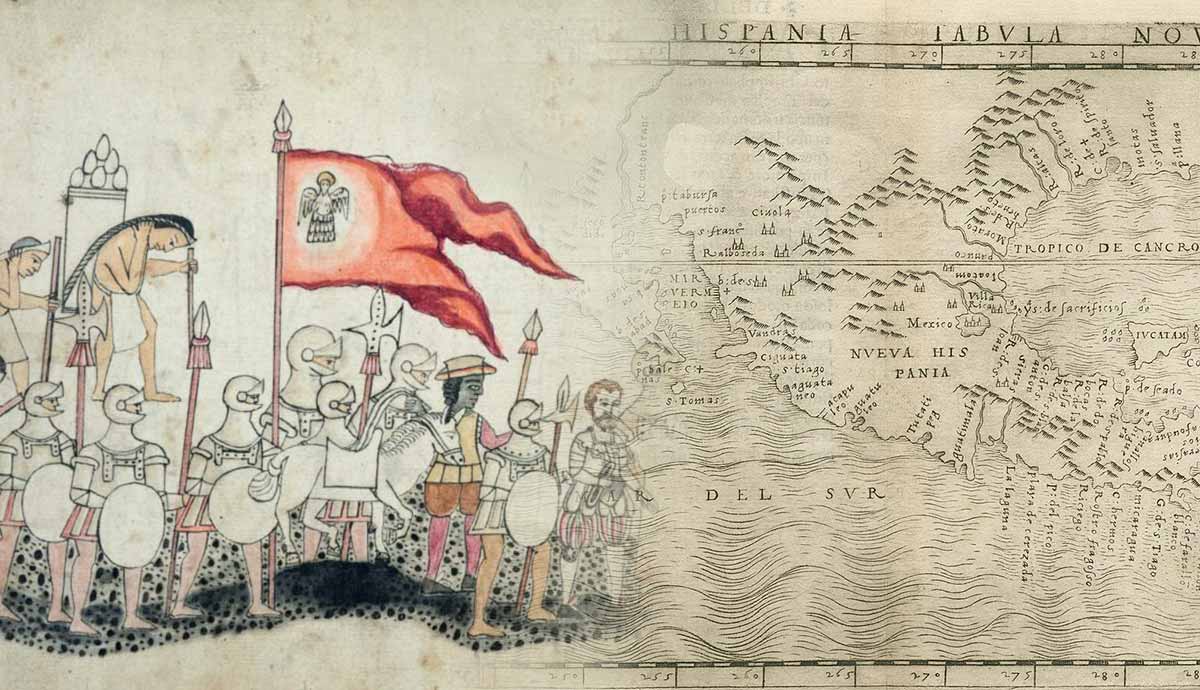
Much has been written and discussed about the actions and legacy of the Spanish Conquistadors in the Americas. The presence of Black men as historical actors in the Spanish conquest of the New World, however, has often been overlooked. Among the earliest Africans to cross the Atlantic and explore the Americas was Juan Garrido. Known for his role in the fall of the Aztec Empire and the Spanish expansion in Central America, Garridos story reveals the ramifications of prejudice, race, and conquest in the 16th-century Spanish colonization of the Americas.Who Was Juan Garrido?Nautical chart of Hispaniola and Puerto Rico, by Johannes Vingboons, ca. 1639. Source: Wikimedia Commons/Library of Congress, Washington DCNot much is known about Juan Garridos earliest years. He was likely born around 1480 in West Africa, probably in the Kingdom of Kongo (present-day northern Angola). In the late 15th century, when he was still young, he moved to Lisbon. He then relocated to Seville, Spain. From there, he embarked on an expedition to Hispaniola, also known as Santo Domingo, the Caribbean island where Christopher Columbus landed in 1492.By the time Juan Garrido arrived in the Caribbean, the Spanish crown had already begun the forced shipping of enslaved African men and women to its American colonies. Juan Garrido, however, landed in Hispaniola, possibly on Governor Nicols de Ovandos expedition, as a free man.It is unclear whether Garrido became a free man before arriving in Lisbon or obtained his freedom while residing there. As for many other enslaved people, there is no record of his birth name. It has been suggested that the young Black conquistador was given the surname Garrido because he was a servant or protge of Pedro Garrido, a Spaniard who arrived in Hispaniola around the same time as Juan Garrido. Indeed, enslaved people were often given the family names of their masters. This theory, however, is purely hypothetical, as there is no documentary evidence to support it.Conquistadors attacking a village of Indians, illustration by Theodor de Bry for Las Casas Brevisima relacin de la destruccin de las Indias, 16th century. Source: Gallica/Bibliothque nationale de FranceLanding in Hispaniola in the early 1510s, Juan Garrido was one of the first Black auxiliaries to arrive in the Caribbean as part of a Spanish expedition. Alongside the presence of enslaved African men and women, there are also several records of free Black people crossing the Atlantic to take part in Spains conquest campaigns in Central America as subjects of the Spanish crown. Like Garrido, many accompanied the Spanish conquistadors in their expeditions throughout the continent.While their names and actions were often erased, they were crucial in the expansion of the Spanish presence in the New World. These Black conquistadors or armed auxiliaries even appear in several accounts of Spains violent campaigns in the Americas (more on that later). Garridos story sheds light on their experience as both victims of prejudice and actors of the Spanish colonization.Conquering Mexico: The Fall of TenochtitlanPortrait of Hernn Corts, by anonymous, 17th century. Source: Wikimedia Commons/Naval Museum of MadridShortly after his arrival in the Caribbean, Juan Garrido took part in the expeditions to Puerto Rico, Bimini, and Florida led by Ponce de Leon, a conquistador seeking fame and wealth. Then, around 1513, he served under Diego Velzquez de Cullar in a campaign in Cuba that ended with the Spanish conquest of the island. In 1514, Velzquez became the first governor of Spanish-controlled Cuba.Upon returning from the expedition, Juan Garrido returned to Puerto Rico, where he became involved in a gold-mining operation, hoping to improve his economic situation. In November 1518, however, he ceased his mining activity to participate in another Spanish expedition: Hernn Corts conquest of the Aztec Empire, ruled by Montezuma II.Garrido was not the only Black man in Corts retinue. Indeed, the Florentine Codex, a 12-volume encyclopedia documenting the culture of the Indigenous people of Mexico written by the Franciscan friar Bernardino de Saliagn (and a group of Nahua writers), reported that among [the Spaniards] came some Black who had crispy curled dark hair.In a later account of his exploits as a conquistador (more on that later), Garrido stated that he was present during the fall of Tenochtitln, the capital city of the Aztec Empire. More importantly, he recalled his contribution in honoring the Spanish conquistadors killed during the so-called noche triste (sad night), a hasty retreat planned after Pedro de Alvarado, Corts second-in-command, massacred hundreds of Aztec chiefs, provoking a revolt. After burying his fallen comrades, Garrido erected a chapel on the site of the clash.The March of the Spaniards into Tenochtitlan, in the Codex Azcatitlan, folio 23, c. 1530. Source: Smarthistory/Bibliothque nationale de FranceA depiction of Corts first march into Tenochtitln and his encounter with Montezuma can be found in the Codex Azcatitlan, a 16th-century Indigenous manuscript. In the image, behind the Spanish conquistador, the illustrator included a Black armed auxiliary, holding a spear and the reins of a horse. It has been suggested that the figure may be a direct reference to Garrido. It is just as likely, however, that the presence of an African soldier in Corts retinue is simply a testament to the multi-ethnic composition of the Spanish colonial forces in the Americas.The Life of a Black Conquistador in the Spanish EmpireView of New Mexico in an engraving in the Atlas Van der Hagen, ca. 1690. Source: Wikimedia Commons/KB National Library of the Netherlands, The HagueAfter the successful conclusion of a conquest expedition, the conquistadors were usually rewarded with a house lot within the city center (traza) and full recognition of their citizenship. However, Juan Garrido, despite his involvement in Corts conquest of Tenochtitln, initially received a plot of land outside Mexico City. He was granted a plot inside the traza and made a citizen (vecino) only in February 1525.Now a formal citizen of Mexico City, with the accompanying rights and responsibilities, Garrido, still under Corts patronage, was able to secure a position as doorkeeper (portero) of the citys council. A common post among Black auxiliaries in the Spanish forces, this post came with the small annual salary of 30 pesos. However, his economic situation improved when he was also granted the positions of guardian of the Chapultepec aqueduct and town crier (pregonero).His marriage in the late 1520s to Francisca Ramrez, a Spanish woman, suggests that Garrido was successful in raising his economic and social status. The couple would have three children. In the 1530s, however, Juan Garridos position seemed to worsen, likely due to the volatile power structure of the Spanish American colonies.The reversal of Garridos fortune strained his marriage. In 1536, Francisca Ramrez was investigated following an accusation of witchcraft. She was charged with allegedly hiring an enchanter (hechicero) to persuade his husband to leave her. Around the same time, renewed financial pressures led Garrido to contact a municipal lawyer in Mexico City, perhaps regarding unpaid back salaries from his service as doorkeeper for the city council. Meanwhile, he took part in various mining schemes and new expeditions of conquest.Campaigning in Central AmericaNueva Hispania Tabula Nova (map of New Spain), by Giacomo Gastaldi, published in his 1548 edition of Ptolemys Geography. Source: Wikimedia Commons/University of Texas at ArlingtonIn 1528, he participated in a gold-mining operation in the province of Zacatula and was placed in charge of a group of enslaved African men. He was likely active in the placers of the Motines area, where several other Spanish conquistadors tried their luck in digging for gold, with disastrous consequences for the Indigenous people settled there.Four years earlier, Garrido had also joined another conquistador, Antonio de Caravajal, in a campaign to Michoacan and Zacatula. The supposed goal of the expedition was to spread Christianity among the native tribes and compile a census of their communities. In fact, Caravajal and his men took detailed notes on the areas mineral wealth, annotating the tribute-paying capacity of the Indigenous groups.Then, in 1534, Juan Garrido took part in a new expedition led by Corts, this time to the Pacific coast. Recently returned to Mexico from Spain with the title of marquis, Corts organized the venture hoping to conquer what he believed to be a land full of highly sought-after gold and the homeland of the legendary Amazons. In fact, he and his men reached present-day Baja California. Garrido was only one of the hundreds of Black men in Cortss retinue, most of them shipped to the Americas as slaves.Asserting His Legacy: Juan Garridos Petition to the KingJuan Garridos 1538 probanza addressed to Charles I of Spain. Source: La Florida/Archivo General de Indias, SevillaThe names of the majority of Black men taking active part in the Spanish conquest of the Americas have usually been erased from history, their contributions denied by the historical records. Unlike his comrades-in-arms, Juan Garrido had the chance to defend himself against the dangers of erasure, providing a written account of his deeds as a conquistador and subject of the Spanish king.Known as probanza, the document was a petition to Charles I of Spain (Emperor Charles V) detailing Garridos merits and providing evidence of all he had done to support Spains campaigns of conquest: I, Juan Garrido, black resident of this city [Mexico City], appear before Your Mercy and state that I am in need of making a report on how I served Your Majesty in in the conquest and pacification of this New Spain.Written on September 27, 1538, the petition was Garridos newest attempt at improving his financial situation and claiming a higher social status. A rare autobiographical account of a Black mans experience as an armed auxiliary in the Americas, Garridos probanza also offers a key insight into the role played by race in the Spanish kingdom and its colonies.Besides listing the several expeditions he joined, Garrido declared to have been the first to have the inspiration to sow maize here in New Spain and to see if it took, adding that he made this and experimented at [his] own expense. Implicitly refuting Corts claim that Garrido was acting on his order when harvesting the first wheat crop in the Americas, Garrido highlights how the introduction of wheat in New Spain was a matter of no small importance for the Spaniards, who saw it as a matter of social status and identity that set them apart from the Indigenous populations.
0 Commenti
0 condivisioni
1 Views

 English
 Arabic
 French
 Spanish
 Portuguese
 Deutsch
 Turkish
 Dutch
Dutch
 Russian
 Romaian
 Portuguese (Brazil)
 Greek
Greek