0 Reacties
0 aandelen
220 Views
Bedrijvengids
Elevate your Sngine platform to new levels with plugins from YubNub Digital Media!
-
Please log in to like, share and comment!
-
How Johnny Cash Made His Signature ChiliHow Johnny Cash Made His Signature Chili We may receive a commission on purchases made from links. It's no secret that Johnny Cash was just as much a foodie as he was a musician. As an Arkansas native, the country icon loved old-school...0 Reacties 0 aandelen 3K Views
-
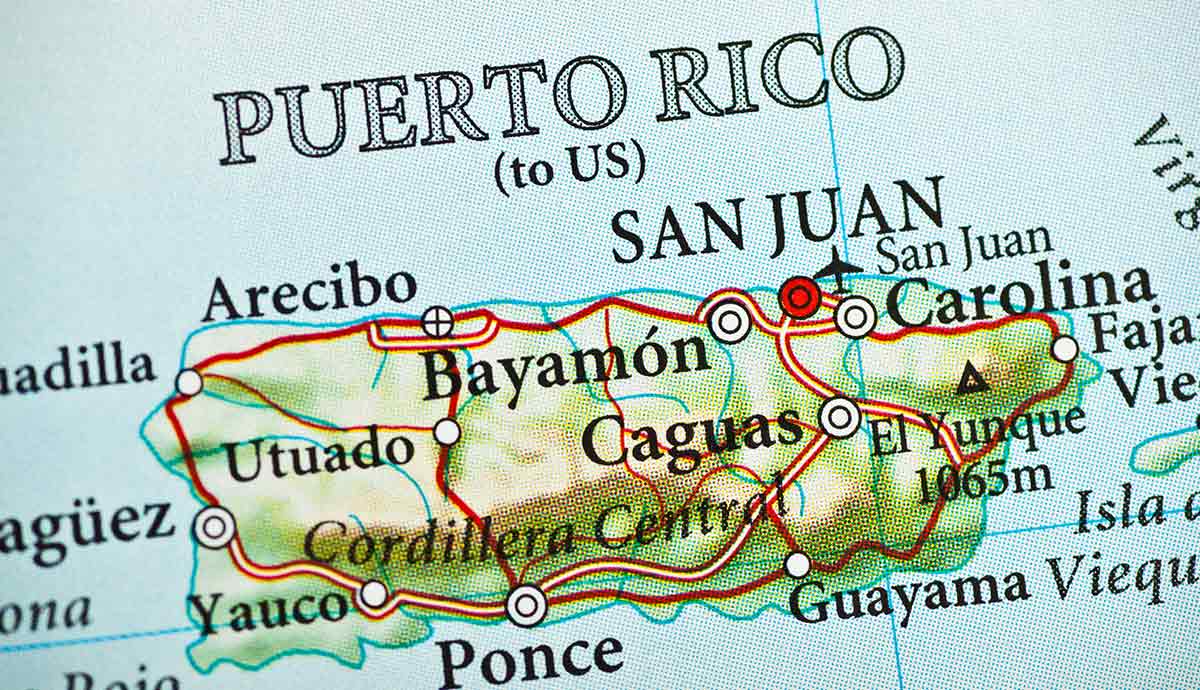
WWW.THECOLLECTOR.COMHow Puerto Rico Became a US Territory With Millions of Citizens But No Equal RightsCitizens of the 50 United States enjoy a set of protections and rights guaranteed by the US Constitution, but the same cant be said for those residing in US territories. Puerto Rico, the most populous US territory, has been in political limbo since it was acquired in the late 19th century. Today it is home to more than 3 million US citizens who cannot vote and are not entitled to the same rights as those residing in the states. Whats to blame for this bizarre circumstance? The Insular Cases.Background: Puerto Rico Becomes a US TerritoryA Thing Well Begun Is Half Done, Victor Gillam, satirical cartoon published in Judge Magazine, 1899. Source: Cornell UniversityBy the late 19th century, Spains once-dominant empire in the Americas had been reduced to a few remaining island possessions in the Caribbean. Though it had lost all of its colonies in North and South America after various wars of independence, it remained determined to retain its last few strategic outposts. So, when Cuba declared its independence in 1895, Spain responded with military force.At the same time, the United States had come to see the Caribbean region as essential to its business interests, particularly Cuba. As such, it was sympathetic to Cubas fight for independence. When a US naval ship sent to protect US interests in Cuba, the USS Maine, exploded in Havana harbor in early 1898, the US saw it as an act of warthough various investigations since have failed to determine the cause of the explosion.By April, the US had declared war on Spain. It launched offensive operations in the Philippines, Cuba and Puerto Rico, defeating the Spanish easily, particularly in Puerto Rico, where it faced almost no opposition. With the signing of the Treaty of Paris in December 1898, Puerto Rico became a US territory.Statehood Off the TableLaborers clearing a sugarcane field in Puerto Rico. Report of the Census of Porto Rico, 1899. Source: GeoislaOnce Puerto Rico became a US territory, the issue of how to govern itand what rights its citizens would havequickly came to the forefront. For the first year, it was largely treated the same way any other newly acquired territory had been as the US expanded westward. In 1899, a military government was put in place, but by 1900 the Foraker Act established a civilian government in Puerto Rico. While its highest representatives were appointed by the federal government, Puerto Ricans were permitted to elect their own House of Representatives. It was widely believed that the island would ultimately become a state and its residents entitled to the same protections, and subject to the same requirements, as US citizens.However, after President William McKinley was reelected in 1900, it became clear that his administration intended to pursue a different approach to Puerto Rico and other newly acquired territories. Unlike the newest territories in the continental US, which were largely populated by white settlers of European descent, Puerto Ricos population was largely mixed race and Black. In the minds of McKinley and his successor, Teddy Roosevelt, these rescued peoples and mere savages warranted a different approach. A colonial one.The Supreme Court Steps In: The Insular CasesThe Fuller Court, SCOTUS justices, 1888-1902. Source: Supreme Court Historical SocietyIn 1901, the US Supreme Court (SCOTUS) began hearing a series of cases that would ultimately determine the political fate of Puerto Rico and other recently acquired territoriesthough disagreements over which specific cases are included among them persist. Now referred to as the Insular Cases, they arguably began with Downes vs. Bidwell, a pivotal dispute ostensibly about duties: were shipments from Puerto Rico to New York international or intercontinental? The decision, however, didnt just answer that question. It established a new category of US territoriesone arguably based explicitly on race.The courts 5-4 decision in this case ruled that Puerto Rico was a territory appurtenant and belonging to the United States, but not a part of the United States within the revenue clauses of the Constitution. Justice Henry Brown, writing for the Court, argued that being inhabited by alien races, Puerto Rico could not be governed by Anglo-Saxon principles. The decision went on to establish an entirely new concept for the expanding US empire: incorporated vs. unincorporated territories. Puerto Rico, being the latter, did not merit the full protections of the Constitution or the full rights of US citizenship. Instead, it was declared, cryptically, foreign to the United States in a domestic sense and only undefined fundamental rights were guaranteed.Separated, by cartoonist Clifford Berryman, The Washington Post, March 9, 1900. Source: National ArchivesThe Downes vs. Bidwell decision laid the groundwork for the subsequent series of cases that, based on the ruling that Puerto Rico was not part of the United States, allowed the federal government to pick and choose which Constitutional protections were fundamental and therefore applied to the island and its residents and which did not. Another crucial decision came in Gonzales vs. Williams, a 1904 case that denied Puerto Ricans US citizenship but created an entirely new and largely undefined category for residents of these unincorporated territories: non-citizen national.Another case the same year, Dorr vs. United States, ruled that residents of unincorporated territories had no right to a jury trial. Even after Congress bestowed citizenship on Puerto Ricans with 1917s Jones Act, the decision in whats generally considered the final Insular Case, 1922s Balzac vs. Porto Rico, asserted that the islands unincorporated status meant that not all Constitutional protections appliedcreating an island of US citizens who did not have equal rights under the law. Further, unlike other citizens whose Constitutional rights are (ostensibly) guaranteed, basic rights and protections for Puerto Ricans have been subject to ongoing litigation and re-litigation, creating a sense of impermanence and confusion.Life After the Insular Cases: Separate and UnequalLuis Muoz Marn, first elected governor of Puerto Rico. Source: Wikimedia CommonsThe piecemeal and seemingly arbitrary awarding or denial of various Constitutional rights and protections to the island of Puerto Rico and its people resulted in haphazard development throughout the 20th century. For several decades the federal government maintained direct rule over the island, appointing its governor. In 1947, Congress granted the island the right to elect its own governor and in 1952 approved Puerto Ricos Constitutionbut not without making its own revisions first.The island was redesignated a commonwealth with a degree of political autonomy, yet it remained subject to federal laws and the US retained the authority to strike down any local or territorial laws it determined violated those federal laws. No representation in Congress was apportioned to the territory, so Puerto Ricans largely remained voiceless in the process of developing the federal laws it was subject to, as well as in selecting the President and Congressional representatives that held ultimate authority over the island. Lawsuits continued to be filed throughout the 20th century in an attempt to iron out which rights and protections of the Constitution were fundamental and which were not.Even into the 21st century, rulings in court cases suggest the Fifth Amendment right to equal protection under the law, among others, is still not considered fundamental. It was determined, for example, that it was legal to impose federal payroll taxes for Social Security and Medicare but to provide said benefits at a lower level on the island. Unequal access to veterans benefits on the island has also been documented, with testimony provided in a recent statement by the Puerto Rico Advisory Committee to the US Commission on Civil Rights. Most recently, in a 2022 case, United States v. Vaello Madero, the SCOTUS ruled that Puerto Ricans were not eligible for the Supplemental Security Income program.The Puerto Rican Rainbow, ca. 1981, Frank Espada. Source: National Museum of American HistorySome high-profile SCOTUS rulings have also demonstrated the lack of clarity on how far Puerto Ricos sovereignty extends. For example, there was a period of confusion when, in the Obergefell v. Hodges case, SCOTUS ruled that bans on same-sex marriage were unconstitutional. A Puerto Rican judge argued that the basis of that ruling, the Fourteenth Amendment, did not apply on the island, and therefore neither did the decision. The subsequent series of decisions and appeals regarding the ruling highlights both issues of Puerto Rican autonomy and persistent questions about which parts of the US Constitution apply on the island.One thing US citizenship has guaranteed Puerto Ricans is the right to live anywhere within the incorporated or unincorporated United States, with the result that several large waves of migration, particularly in the post-WWII period and since 2000, have brought millions of Puerto Ricans to the mainland since the early 20th century. Significantly, the full rights and protections of the Constitution do apply to Puerto Ricans residing in the 50 US states, though, like many other minority groups, Puerto Ricans attempting to exercise their right to vote faced discrimination, somewhat ameliorated by passage of the Voting Rights Act.Legacy of the Insular CasesSchool begins, Louis Dalrymple, 1899. Source: Library of CongressVarious legal scholars have argued for over a century that the territorial incorporation doctrine established in Downes vs. Bidwell had no Constitutional basis and that the unequal treatment of US citizens in Puerto Rico and other territories is unconstitutional. Yet, the decisions made in the Insular Cases, despite recognition by the Department of Justice that the racist language and logic of the Insular Cases deserve no place in our law, are still used to make rulings in contemporary court cases. In 2022, SCOTUS denied a request to consider whether the Insular Cases should be overturned.To date, Puerto Ricans living on the island still cannot vote in federal elections, nor do they have equal access to federal support services. They are eligible for the draft and can serve in the Armed Forces but cannot vote for their president. Puerto Rico has no Senators or voting Congressional representation, only a resident commissioner who serves as a non-voting delegate. Various non-binding plebiscites carried out over the last several decades have found significant numbers of Puerto Ricans in favor of either independence or statehood, but ultimately only Congress can approve a change in status for the de facto colony.0 Reacties 0 aandelen 217 Views -
Epstein Files release: Microsoft permanently banned Jeffrey Epstein from Xbox LiveEpstein Files release: Microsoft permanently banned Jeffrey Epstein from Xbox Live Another new batch of Epstein files was released by the DOJ on Friday, and this was a huge one. More than three million documents were included in the release related to the deceased sex offender Jeffrey Epstein. Among the revelations hidden in...0 Reacties 0 aandelen 3K Views
-
Amazon has Apple AirPods Pro 3 for $50 off right nowAmazon has Apple AirPods Pro 3 for $50 off right now SAVE $50: As of Jan. 31, Amazon has Apple AirPods Pro 3 on sale for 20% off their list price of $250, which comes down to $50 in savings. $199 at Amazon...0 Reacties 0 aandelen 3K Views
-
ALLTHATSINTERESTING.COMLeo Sharp: The 87-Year-Old Drug Mule Of El ChapoThere were a dozen unmarked cars waiting for Leo Sharp, planted across a 70-mile stretch of Michigans I-94 on October 21, 2011, monitoring his every move.It was an incredible amount of manpower to catch just one man, but this was no ordinary criminal. Leo Sharp was the Sinaloa Cartels most effective mule.Wikimedia CommonsLeo Sharp poses for a mugshot following his arrest for drug trafficking charges in October 2011.Sharp carted between 450 and 550 pounds of cocaine into his home state of Michigan each month. He was worth a fortune to El Chapos Mexican drug cartel; he sent more than $2 million back into their hands each month.He was a legend among drug dealers, the man they called Tata, or grandfather after all, Leo Sharp was 87 years old.Leo Sharp Goes From Daylilies To DrugsLeo SharpLeo Sharp during his military days.Long before he was a drug trafficker, Leo Sharp born in Michigan City, Indiana on May 7, 1924. He would become a war hero, a veteran of World War II decorated with a Bronze Star Medal for fighting in one of the most brutal battles of the Italian campaign.Afterward, hed settled into an honest career as one of the worlds most respected horticulturists. Sharp specialized in daylilies and maintained a farm in which hed hybridize new breeds of the flowers.180 new types of daylilies have been registered to his name, many of which have won awards in international competitions. There was a whole strand of flowers named in his honor: a beautiful purple-pink flower called Siloam Leo Sharp.His flowers even grew in the White House. During the Presidency of George H. W. Bush, Sharp was invited to plant his daylilies in the Rose Garden.Wikimedia CommonsA yellow lilyBut the flower business changed with the new millennium and the aging Sharp struggled to keep up with the changes. Flower traders went online, but Sharp was too old to learn his way around a computer. He kept trying to sell his unique breeds of daylilies through mail-order catalogs that increasingly found their way into peoples waste bins, and soon, Sharps business was falling apart.He was going to lose the flower farm. There was no way around it. His business was in the red and his doctor was convinced hed live to be 100. That meant hed be alive long enough to watch his flowers be sold away and his lifes work get crushed while spending his last years as a penniless burden on his family.And so, when a seasonal laborer on his farm offered Leo Sharp a way to make money, he couldnt turn it down.It seemed simple enough. All he had to do was drive down to Arizona, let them fill his pickup truck with packages, and drop them off back in Michigan.Nobody would pull over an elderly man, a great-grandfather, they assured him. Nobody would ask questions. And he had earn enough money to keep daylilies in bloom.The Perfect CourierClaudio Toledo/FlickrAuthorities sort through various packages of illegal drugs in Mexico.Leo is the perfect courier for the cartel, D.E.A. Special Agent Jeremy Fitch admitted after Leo Sharp was caught. He has a legitimate ID, hes an older guy, he wouldnt be pegged as a drug runner and he has no criminal history.The Sinaloa Cartel saw that too and they quickly began to trust Sharp more and more. After a quick test run, they began loading his truck up with hundreds of kilograms of cocaine at a time and trusting him to move millions of dollars by himself.Sharp knew what he was doing. He earned a great deal of trust from the cartel. While other drug couriers were kept from ever seeing the men who loaded their vehicles and forbidden from looking at the supply inside, Sharp drove right into the drug houses and chatted it up with Cartel members like they were old friends.In some cases, they were. Sharp certainly struck up a friendship with Viejo, the cartels head of Detroit distribution. The two even vacationed together in Hawaii.Leo Sharp was good at what he did. He was the last person anyone would ever suspect of being a drug mule, and so he could drive all the way around the country, dropping off shipments in Chicago, Boston, and Detroit in a single trip, without ever getting pulled over.For a decade in the 2000s, Sharp shipped drugs around the country, sometimes earning as much as $1 million in a single year. And his daylily business boomed as well. Now, with the resources to make it thrive, he had the freedom to take his flowers on tour.Buses would stop at his flower farm, filled with tourists eager to see Leo Sharps award-winning daylilies. None of those people had any idea that they were visiting the home of one of El Chapos best drug mules.The D.E.A. Hunt For TataJeff Moore/Twitter, Wikimedia CommonsD.E.A. Agent Jeff Moore (left) and Leo Sharp (right).In the end, it was a D.E.A. Special Agent named Jeff Moore who found Leo Sharp. Hed busted a small-time dealer carrying 2 kilograms of cocaine, and he pressed him to talk until hed led him to Ramon Ramos, the bookkeeper for the Sinaloa Cartel.Ramos cracked. He offered to tell the D.E.A. everything he knew if theyd give him protection and soon he was taking them to the scenes of pickups where more than $2 million changed hands.At first, Moore was sure he was watching a once-in-a-lifetime drug trade, but this, Ramos assured him, was routine business for the cartel. Their best courier, the man known only as Tata, moved enough drugs to bring them $2 million in cash on his own every month.On September 17, 2011, Ramos agreed to wear a hidden camera and Moore got his first glimpse of Leo Sharp the man he knew as Tata.Hed been warned that Sharp was 87 years old, but nothing prepared for the sight of this man who looked more like someones grandfather than a drug lord.By then, Sharp had dementia as well. Through wiretaps, the D.E.A. heard Viejo joke that, a few minutes after the two had talked, Sharp had called him back asking him to remind him what hed said. During one drug run, Sharp had gotten confused by the streets of Detroit and had to have his contact meet up with him and guide him through the city. And cartel members were complaining that Sharp was getting testy in his old age.Still, Leo Sharp was a funnel sending a sea of cocaine into Michigan. And for law enforcement, whether he was old or not, he had to be stopped.The Trial Of Leo SharpOn October 21, 2011, the police pretended they were pulling Sharp over for a routine traffic stop. Sharp immediately got out of his car, staggering toward the officer and demanding, Whats going on, officer? At age 87, I want to know why Im being stopped.He seemed legitimately confused. He had to cup his ear to hear what the officer was saying. He said he didnt know what day it was, and when they asked him for his registration, he rambled incoherently as he struggled to find his wallet.But when they sent a drug dog to inspect his truck, they found five duffel bags carrying a total of 104 kg of cocaine in the back.Sharp crumpled up on the spot. Why dont you just kill me, he muttered, as the police opened the bags. Let me, just, leave the planet.Instead, of course, Leo Sharp had to stand trial. His lawyer tried to present him as an old man with dementia, manipulated into being a drug mule at gunpoint. It was partially true. By the time they caught Sharp, he did have dementia, and it was plain for anyone to see. He spent his time in the courtroom showing officers pictures of his family that he kept in his wallet, and when they questioned him, he had to lean close and ask the judge to repeat himself over and over again.But the police had pictures of Sharp and Viejo together on vacation. They had proof hed been doing this for a decade or more. Sharp hadnt been forced into this. He made his own choice.Nevertheless, Sharp begged to stay out of prison. He offered to make up for what hed done by growing Hawaiian papayas for the people of the United States. Its so sweet and delicious, he told the judge. People on the mainland will love it.The judge refused and Leo Sharp was sentenced to three years in prison. For a 90-year-old man, it was a life sentence.The True Story Of The MuleThe trailer for Clint Eastwoods film The Mule, based on the story of Leo Sharp.Now, the story of Leo Sharp has reached a wide audience thanks to Clint Eastwoods film The Mule. Eastwood treats Sharp as a sort of antihero, a regret-stricken man struggling to get out of the business, caught while making one last run.The real Leo Sharp, however, didnt show quite so much regret. When the judge handed down his sentence, Sharp said: Im really heartbroken I did what I did, but its done but that single, polite statement was about the extent of his remorse.All Gods plants that cheer people up are created for a purpose: to take depressed peoples minds and make them feel good, Sharp told a reporter at another time. As far as he was concerned, delivering cocaine was no different from delivering daylilies. He was sharing a plant that made people feel good.What troubled him wasnt, as the prosecution put it, the amount of wrecked lives his drugs had created. It was the thought of spending his last years in prison.I wont live in a toilet with bars, Leo Sharp told ABC. Im going to get a goddamn gun and shoot myself in the mouth or the ear, one or the other.He didnt go through with his promise. Sharp went to prison, though he only served a year of his sentence before he was pulled out because of a terminal illness. He died in Dec. 2016, shortly after being released, at the age of 92.The daylilies are gone. Today, Leo Sharps farm lies empty. Nothing but bare patches of brown dirt remain in what was once a brightly colored field of flowers, bursting in full bloom.After this look at Leo Sharp and the true story behind The Mule, learn more about El Chapo, the kingpin behind the Sinaloa Cartel, or learn the story of George Jung, the drug smuggler who inspired Blow.The post Leo Sharp: The 87-Year-Old Drug Mule Of El Chapo appeared first on All That's Interesting.0 Reacties 0 aandelen 220 Views
-
ALLTHATSINTERESTING.COMThe Disturbing Story Of Pennhurst Asylum, The Site Of Horrific Patient Abuse That Is Now A Haunted House At HalloweenAmityPhotosPennhurst Asylum is abandoned today.Nestled amid the rolling hills of Chester County, Pennsylvania, Pennhurst State School and Hospital was once heralded as a progressive solution, a modern haven for societys most vulnerable. Instead, it became a nightmarish center of neglect, abuse, and systemic cruelty.For nearly 80 years, Pennhurst Asylum, as its come to be known, operated as a human warehouse. Thousands of children and adults with disabilities were hidden away from the world, and subjected to conditions that, when later exposed, shocked the nation. Indeed, reports about the rampant abuse at Pennhurst helped usher in the era of deinstitutionalization in the U.S. In the years since, some have come to believe that the spirits of those poor souls never left. And indeed, Pennhurst Asylum is haunted, if not by ghosts then by its long, dark history one that should never be forgotten.The Optimistic Early Years Of Pennhurst State School and HospitalThe story of Pennhurst Asylum, as its often called today, began in 1903, when it was first authorized by the Pennsylvania Legislature. Five years later, in 1908, the institution opened its doors as the Eastern Pennsylvania Institution for the Feeble Minded and Epileptic.Wikimedia CommonsAn aerial view of Pennhurst Asylums campus.It was just one of many such institutions that emerged at the beginning of the 20th century, meant to segregate and care for individuals deemed defective, degenerate, and unfit at the time. These descriptions most commonly referred to people with intellectual and developmental disabilities, as well as people with physical conditions such as epilepsy. The stated goal of the campus was to be a self-sufficient community, complete with farms, a power plant, a theater, and various workshops. It was driven by a philosophy of providing a humane environment where residents could live and work, separate from the general population, but the institution was plagued by serious issues from the start. Designed to house around 500 people, Pennhurst Asylum quickly became hopelessly overcrowded. And that was just the beginning. Pennhurst was a mistake from day one, a former assistant to Pennhursts Superintendent reflected, per the Pennhurst Memorial & Preservation Alliance, but it was a mistake made by all of us, following the dictates of the best minds of its time. Institutionalization, Overcrowding, And NeglectFor decades, Pennhurst operated in near-isolation, throughout which the institution was frequently overcrowded and understaffed. This alone would be problematic enough, but there was a much larger issue at Pennhurst, one that had been there since its inception: eugenics. Eugenics is a now-discredited pseudoscientific movement that seeks to improve the genetic quality of a human population by selectively promoting desired traits and eliminating undesirable ones through controlled reproduction. Historically, methods of doing so ranged from forced sterilization and segregation to marriage restrictions the very same concepts that helped give rise to the Nazi regime.Thomas/Flickr Creative CommonsThe exterior of the rundown Pennhurst Asylum.Indeed, Pennhursts 198 biennial report to the Pennsylvania legislature included a quote from prominent American eugenicist Dr. Henry H. Goddard that read, Every feeble-minded person is a potential criminal. But it wasnt just feeble-minded people that Pennhurst sought to remove from society. According to the Pennhurst Memorial & Preservation Alliance, the institution was under tremendous pressure to admit many different persons whom society, steeped in the eugenics movement, wanted removed from the gene pool. These included immigrants, orphans, criminals, and epileptics. With thousands of residents and a fraction of the necessary staff, individual care was impossible. People were denied basic education, meaningful therapy, or any semblance of a normal life. The staff, who were often poorly trained and paid, were unable to cope with the demands, leading to a culture of neglect and abuse. Patients at Pennhurst, including children, lived in squalor. They were often left naked in unheated rooms, physically and sexually abused by staff and other residents, and subjected to cruel restraints and punishments. It became, in many ways, a human warehouse. All the while, the public largely remained unaware of the conditions inside Pennhursts walls. That changed in 1968. The Suffer The Little Children ReportIn 1968, local news reporter Bill Baldini produced a five-part television news report for WCAU-TV in Philadelphia entitled Suffer The Little Children. The series secretly filmed inside Pennhurst, exposing the deplorable and inhumane conditions to the world for the first time. Footage showed residents tied to beds and chairs, living in filth, and exhibiting signs of severe trauma from abuse and neglect.We ship them 25 miles out of town to an institution and forget them, while they decay from neglect, Baldini remarked in the introduction to the series. Zoos spend more on their wild animals than Pennsylvania spends on its 2,800 patients at Pennhurst.Baldinis report caused a national outrage and galvanized the disability rights movement. One of the children he interviewed was Roland Johnson, who was sent to Pennhurst at the age of 12 because of an intellectual disability. There, Johnson was bullied, abused, and raped, and contracted HIV. He left Pennhurst in 1971 and ultimately became an advocate, and is sometimes referred to as the MLK of the disability rights movement.Indeed, the tide turned against Pennhurst in the 1970s and 1980s. In 1974, a class action lawsuit known as Halderman vs. Pennhurst State School (named for Teri Lee Halderman, a young patient who was horrifically abused at the school) was filed on behalf of Pennhurst residents. The case argued that the residents constitutional rights were being violated under the 14th Amendment, which guarantees equal protection and due process. In 1977, U.S. District Judge Raymond J. Broderick ruled in favor of the residents. He declared that the forced institutionalization of people with disabilities was unconstitutional, and, in 1984, a final settlement agreement called for the closure of Pennhurst.Closure Of The Shame Of PennsylvaniaThe legal battle over the closure was long and contentious, but Pennhurst Asylum officially closed its doors in between 1986 and 1987. It was a monumental victory for the disability rights movement helped greatly by activists like Johnson and the group Speaking for Ourselves. We have to make some changes! Johnson had shouted at the first Speaking for Ourselves meeting he attended. Were tired of the old system! Johnsons speeches and courtroom testimony, according to his obituary in The New York Times, played a significant part in the shutting down of Pennhurst. Wikimedia CommonsRoland Johnson with U.S. President George H.W. Bush.The closing of Pennhurst and the disability civil rights movement had also helped to propel the creation of the Americans with Disabilities Act, which was signed by President George H.W. Bush on July 26, 1990, with Johnson in attendance on the South Lawn. Meanwhile, the old asylum fell into disrepair. It was all but abandoned until 2010, when the partially renovated administration building reopened as the somewhat controversial Pennhurst Asylum, a haunted attraction which operates during the Halloween season. Fred Dunn/Flickr Creative CommonsAn old wheelchair at the abandoned Pennhurst.The decision drew criticism and has continued to do so from both former residents and disability advocates, who feel the haunted attraction commercializes and trivializes the immense suffering that occurred on the grounds. Given that some of the scare actors used historic items as props and explicitly mimicked those with disabilities, it would be hard to justify any artistic merits the original operators may have claimed. Management changed hands in the mid-2010s, after which the more offensive elements of the haunt were toned down. Recently, however, Bloomberg reported that a new future might be in store for the infamous historical site one as an AI data center that may require as much electricity as needed to power some 400,000 homes. As such, even decades after it closed its doors, it seems that Pennhursts controversial legacy continues. After exploring the dark, morbid history of Pennhurst asylum, learn about nine more of historys most infamous insane asylums. Or, see 44 disturbing photographs from inside these asylums that highlight just how awful the conditions truly were.The post The Disturbing Story Of Pennhurst Asylum, The Site Of Horrific Patient Abuse That Is Now A Haunted House At Halloween appeared first on All That's Interesting.0 Reacties 0 aandelen 219 Views
-
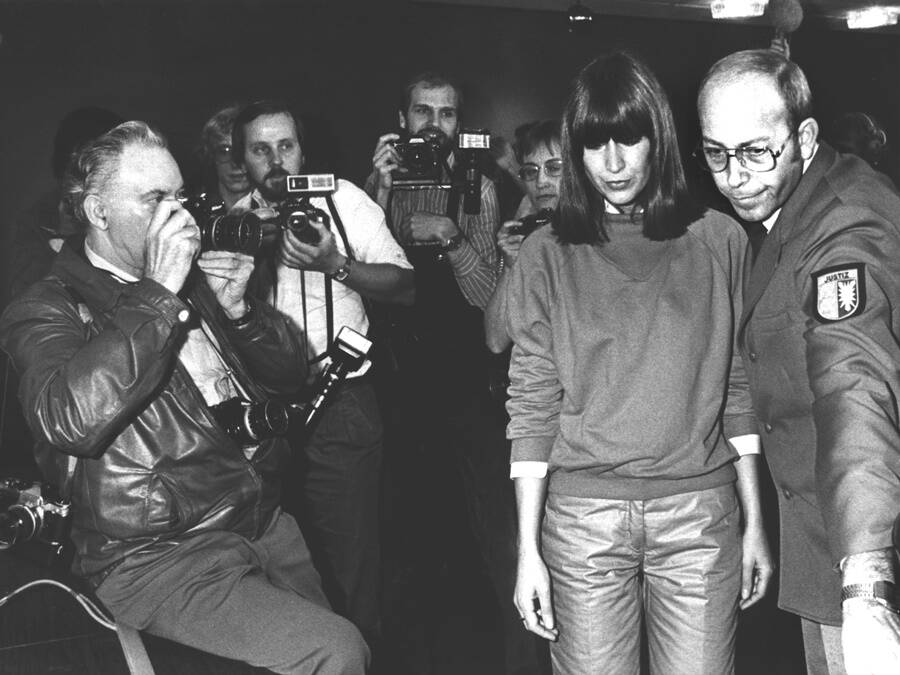
ALLTHATSINTERESTING.COMMeet Marianne Bachmeier, Germanys Revenge Mother Who Shot Her Childs Killer In The Middle Of His TrialOn March 6, 1981, Marianne Bachmeier opened fire in a crowded courthouse in West Germany. Her target was a 35-year-old sex offender on trial for her daughters murder and he died after taking six of her bullets.Immediately, Bachmeier became an infamous figure. Her subsequent trial, which was followed closely by the German public, begged the question: was her effort to avenge her slain child justified?Cornelia Gus/picture alliance via Getty ImagesMarianne Bachmeier was sentenced to six years in prison after shooting her daughters rapist and killer.Over forty years later, the case is still infamous. German news outlet NDR described it as the most spectacular case of vigilante justice in German post-war history.Marianne Bachmeiers Daughter Anna Bachmeier Is Murdered In Cold BloodPatrick PIEL/Gamma-Rapho via Getty ImagesMarianne Bachmeiers case divided public opinion: was the shooting an act of justice or was it dangerous vigilantism?Before she was christened as Germanys Revenge Mother, Marianne Bachmeier was a struggling single mother who ran a pub in 1970s Lbeck, a city in what was then West Germany. She lived with her third child, Anna. Her two older children had been given up for adoption. Anna was described as a happy, open-minded child, but tragedy struck when she was found dead on May 5, 1980.The seven-year-old had skipped school after an argument with her mother that fateful day and somehow found herself in the hands of her 35-year-old neighbor, a local butcher named Klaus Grabowski who already had a criminal record involving child molestation. Investigators later learned that Grabowski had kept Anna Bachmeier at his home for hours before he strangled her with pantyhose. Whether or not he sexually assaulted her remains unknown. He then stashed the childs body in a cardboard box and left it on the bank of a nearby canal. Grabowski was arrested that same evening after his fianc alerted the police. Grabowski confessed to the murder but denied that he abused the child. Instead, Grabowski gave a strange and disturbing story.The killer claimed that he strangled the little girl after she tried to blackmail him. According to Grabowski, Anna tried to seduce him and threatened to tell her mother that he had molested her if he didnt give her money.Marianne Bachmeier was incensed and when Grabowski headed to trial for the murder a year later, she enacted her revenge.Germanys Revenge Mother Shoots Klaus GrabowskiYouTubeKlaus Grabowski confessed to Anna Bachmeiers murder after his fianc tipped off police.Klaus Grabowskis trial was a heartache for Bachmeier. His defense attorneys claimed he had acted out of a hormonal imbalance that was caused by hormone therapy he received after being voluntarily castrated years earlier.At the time, sex offenders in Germany often underwent castration to prevent recidivism, though this wasnt the case for Grabowski.On the third day of the trial in Lbeck district court, Marianne Bachmeier grabbed a .22-caliber Beretta pistol from her purse and pulled the trigger eight times. Six of the shots hit Grabowski, and he died on the courtroom floor.Witnesses alleged that Bachmeier made incriminating remarks after she shot Grabowski. According to Judge Guenther Kroeger, who spoke to Bachmeier after she shot Grabowski in the back, she heard the grieving mother say, I wanted to kill him.Wulf Pfeiffer/picture alliance via Getty ImagesMarianne Bachmeier allegedly remarked I hope hes dead after shooting Klaus Grabowski.Bachmeier allegedly continued, He killed my daughter I wanted to shoot him in the face but I shot him in the back I hope hes dead. Two policemen also claimed to have heard Bachmeier call Grabowski a pig after she shot him. The mother of the victim soon found herself on trial for murder herself.During her trial, Bachmeier testified that she shot Grabowski in a dream and saw visions of her daughter in the courtroom. A doctor who examined her said that Bachmeier was asked for a handwriting sample, and in response, she wrote: I did it for you, Anna. She then decorated the sample with seven hearts, perhaps one for each year of Annas life.I heard he wanted to make a statement, Bachmeier later said, referring to Grabowskis claims that her seven-year-old was trying to blackmail him. I thought, now comes the next lie about this victim who was my child.Her Sentence Divides The CountryPatrick PIEL/Gamma-Rapho via Getty ImagesDuring her trial, Marianne Bachmeier testified that she shot Grabowski in a dream and saw visions of her daughter.Marianne Bachmeier now found herself at the center of a public maelstrom. Her trial received international attention for her act of vigilantism. The weekly German magazine Stern ran a series of articles about the trial, digging into Bachmeiers life as a working single mother who had a very rough start in life. Bachmeier reportedly sold her story to the magazine for roughly $158,000 to cover her legal expenses during the trial.The magazine received an overwhelming response from readers. Was Marianne Bachmeier a distraught mother simply trying to avenge the brutal death of her child, or did her act of vigilantism make her a cold-blooded killer herself? Many expressed sympathy toward her motives but condemned her actions nonetheless.In addition to the cases ethical conundrum, there was also a legal debate about whether the shooting was premeditated or not and whether it was murder or manslaughter. Different rulings carried different punishments. Decades later, a friend featured in a documentary about the case claimed to have witnessed Bachmeier perform target practice with a gun in her pub cellar before the shooting.The court ultimately convicted Marianne Bachmeier of premeditated manslaughter and sentenced her to six years behind bars in 1983.Wulf Pfeiffer/picture alliance via Getty ImagesAfter her death, Marianne Bachmeier was buried next to her daughter in Lbeck.According to a survey by the Allensbach Institute, a majority of 28 percent of Germans deemed her six-year sentencing as an appropriate penalty for her actions. Another 27 percent considered the sentence too heavy while 25 percent viewed it as too light. In June 1985, Marianne Bachmeier was released from prison after serving only half of her sentence. She moved to Nigeria, where she married and remained until the 1990s. After she divorced her husband, Bachmeier relocated to Sicily where she stayed until she was diagnosed with pancreatic cancer, upon which she returned to a now-unified Germany. With precious little time left, Bachmeier requested Lukas Maria Bhmer, a reporter for NDR, to film her last weeks alive. She died on Sept. 17, 1996, at the age of 46. She was buried next to her daughter, Anna.Now that youve learned about the infamous case of Marianne Bachmeier, check out these 11 merciless revenge stories from history. Then, read the twisted story of Jack Unterweger, the writer who killed his wife and wrote about it.The post Meet Marianne Bachmeier, Germanys Revenge Mother Who Shot Her Childs Killer In The Middle Of His Trial appeared first on All That's Interesting.0 Reacties 0 aandelen 218 Views -
WWW.DUALSHOCKERS.COMResearch Paper Locations in No Rest for the WickedIn No Rest for the Wicked, you will collect various items and resources to help you survive the harsh environment and fierce foes. Resources like Saltstone will allow you to upgrade your city, giving you access to more items, but other resources are needed for crafting new weapons.0 Reacties 0 aandelen 217 Views -
WWW.MASHED.COMHow Johnny Cash Made His Signature ChiliMost people know Johnny Cash for being a famous singer and songwriter, but did you know he also made a mean pot of chili? Here's how he did it.0 Reacties 0 aandelen 249 Views