



WWW.THECOLLECTOR.COM
6 Hanseatic Cities That Dominated the Medieval Baltic Trade
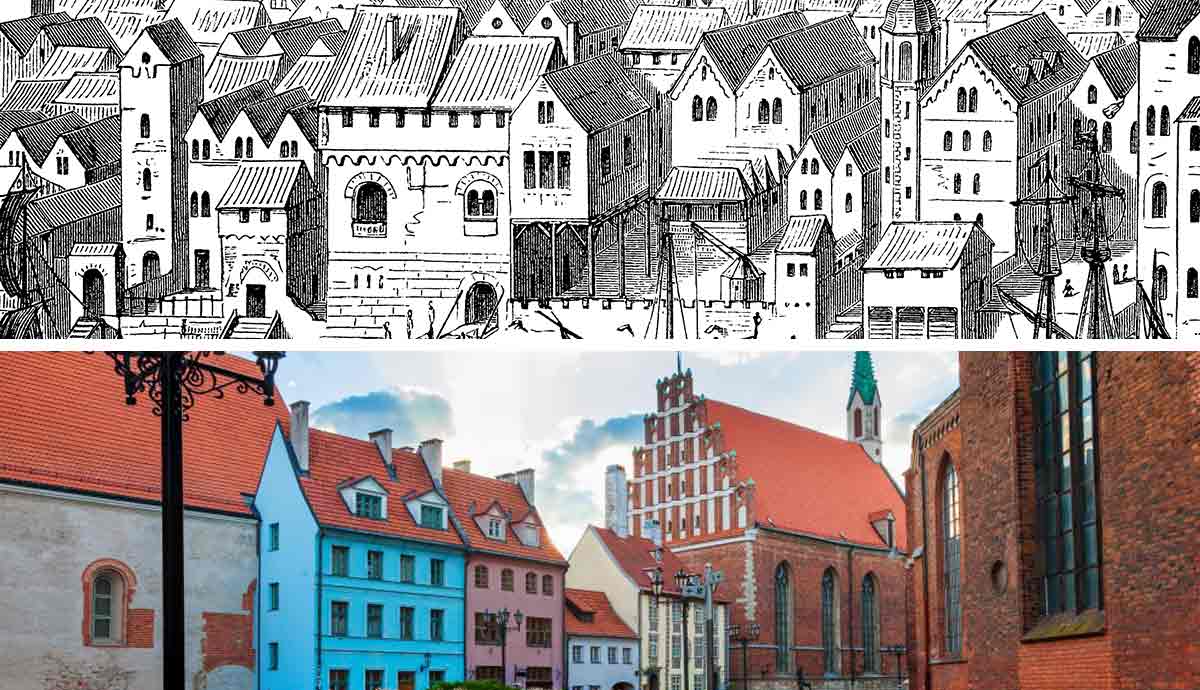
The Baltic region was a major center of trade and commerce in Medieval Europe. During the 14th and 15th centuries, Baltic trade was controlled by the Hanseatic League, a network of port cities across northern Europe that had its own armed fleet and foreign policy. Lbeck, Gdask, Riga, Tallinn, Visby, and Rostock were among the most important Hanseatic port cities.1. LbeckThe Holstentor gate in Lbeck. Source: UNESCOThe commercial center of the Hanseatic League was the city of Lbeck in northern Germany. The city was founded on an island near rivers flowing inland and the Baltic Sea. Following the development of its port, Lbeck became the main intermediary for trade between Western Europe, Scandinavia, and the cities of Novgorod and Pskov in northwestern Rus. The Lbeck law, one of Europes earliest supranational trade regimes, standardized trade practices and regulations across the Hanseatic ports.Salt discovered in the nearby city of Lneburg was transported to Lbeck for sale, powering much of the citys economy. Demand was always high due to the use of salt for the preservation of herring and meats, a necessity for sailors. The revenue gained through the salt trade enabled the city to expand into a sprawling metropolis. It was also the center of the Hanseatic Diet, where representatives of all League member cities gathered to coordinate trade and commercial policy.2. GdaskA crane used for ship construction during the Medieval period in Gdask. Source: National Maritime Museum in Gdansk, PolandThe main Hanseatic port in present-day Poland was the city of Gdask (known in German as Danzig). Its location at the mouth of the Vistula River was optimal for trade to both inland Poland and other locations around Europe. Gdasks immense wealth came from its grain and timber trade, as well as the export of other valuable raw materials like amber, potash, and tar. Even today Gdask is still one of the main Baltic ports and one of Polands primary export hubs for maritime trade.Despite being a prosperous member of the League, Gdasks city administration faced challenges. Its location meant that it had to choose between the Polish Kingdom and the Teutonic Knights. Its decision to side with the victorious Poles was rewarded with a grant of autonomy by King Casimir IV Jagiellon. This reward enabled Gdask to conduct its own trade policies and accumulate substantial wealth, which was displayed by the expansion of the city in a similar fashion to Lbeck. Gdasks wealth and trading connections ensured its continued prosperity even after the formal dissolution of the League in 1669.3. RigaRigas old town, a relic of the city during the Hanseatic period. Source: Air BalticFurther to the east, the city of Riga (today the capital of Latvia) was located at the mouth of the Daugava River. It was founded in 1201 by German colonists who hoped for the city to become a major trade hub. In 1282, the city joined the Hanseatic League and adopted the Lbeck law. Its merchants traded valuable goods such as furs, wax, and timber from medieval Rus in exchange for Western European textiles, salt, and wine.Rigas Old Town is the main part of the city that existed during the Medieval period. As the chair of the Livonian Hanseatic Diet, Riga held significant regional political power and oversaw the Leagues trading posts in Russian cities like Smolensk and Polotsk.4. TallinnA sketch of Tallinn during the medieval period. Source: Baltic GuideIn 1285, the city of Tallinn, known as Reval in German, joined the Hansa. Its location on the Gulf of Finland made it a trade hub for goods headed from Western and Central Europe to Russia. Tallinn was granted the crucial staple right in 1346, which forced all goods passing through to be sold locally, ensuring local merchants profited from all transit trade. This helped the citys economy grow and profit more than its merchants had anticipated when the city first joined the League.The citys Old Town, including its iconic towers and city walls, was constructed using customs revenue collected by city officials. As the northernmost outpost of the League, Tallinn was formidable and heavily fortified, holding complex political alliances with Danish and Teutonic rulers in order to preserve its economic advantages. It also attracted German settlers, most of whom dominated the citys economy until the Second World War.5. VisbyThe medieval walls of Visby. Source: Visit SwedenThe Swedish town of Visby, located on the strategically important island of Gotland, was contentious. In 1361, King Valdemar IV of Denmark conquered Gotland and looted the towns coffers. It would suffer additional attacks from a variety of foes, including pirate gangs and the Teutonic Knights. In 1470, the towns membership in the League was suspended and its independence was finally ended half a century later with an attack by a militia from Lbeck during a power struggle between rival Danish kings Frederick I and Christian II.Visbys merchants worked the lucrative east-west trade routes, transporting Russian furs, wax, and timber from Novgorod to German and Scandinavian markets. The wealth enabled the town to grow and build defenses, necessary in the face of repeated attacks, but it simply wasnt enough to combat the hostility and trade rivalries. The legacy of the Hanseatic League remains in Visby today, but its chance at becoming the dominant port in the League was suppressed by the repeated attacks and lootings.6. RostockHanseatic buildings in Rostock, Germany. Source: PicrylIn 1251, the German city of Rostock, located on the Warnow River, joined the Hansa. By the 14th century, Rostock was the largest city in Mecklenburg and a formidable naval power. Its location and absorption of several nearby ports helped the city to grow, making it rival Lbeck as one of the main Hanseatic ports in Germany. Its strategic interests were strengthened by the incorporation of the nearby fishing village of Warnemnde in 1323, ensuring direct and unimpeded access to the Baltic Sea.Despite the attempts by German nobles to control Rostock, the citys impressive wealth allowed it to maintain autonomy. The citys location and economic power gave it a formidable amount of leverage that helped fend off any threats to the citys income and status in the League. Rostocks legacy was further strengthened by the founding of the University of Rostock in 1419, one of the oldest educational establishments in the Baltic region. Today, even after the fall of the League, Rostock remains a prominent German port.
0 Comentários
0 Compartilhamentos
160 Visualizações









 English
 Arabic
 French
 Spanish
 Deutsch
 Turkish
 Dutch
Dutch
 Italiano
 Russian
 Romaian
 Portuguese (Brazil)
 Greek
Greek