Why Did Akechi Mitsuhide Betray the Most Powerful Man in Japan?
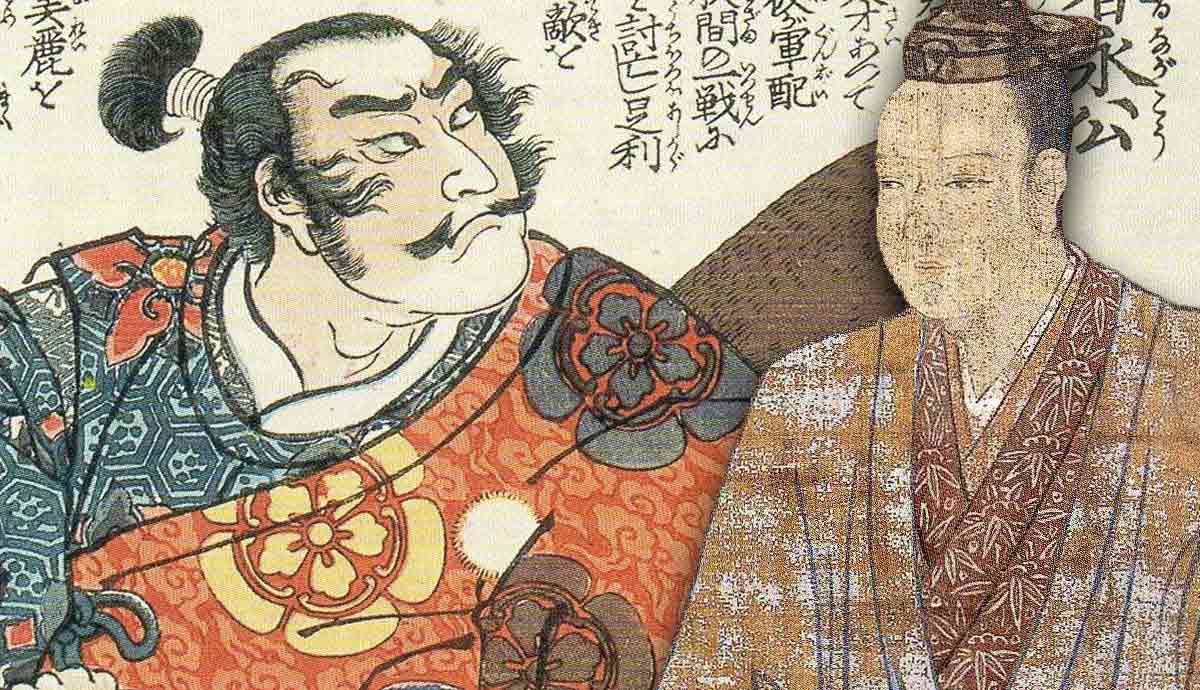
The betrayal of Oda Nobunaga by his general Akechi Mitsuhide in 1582 is one of the most debated episodes of Japans Sengoku period. It is impossible to say how different modern Japan would be had Nobunaga not been stopped mid-unification of the country, and what is even more contentious are the motives behind Akechis actions. Available sources offer limited clarity, political bias, and retrospective interpretations. As a result, historians have proposed multiple explanations rooted in personal experience, religious conviction, and political calculation. Let us examine the main ones.The Road to Honno-jiIncident at Honno-ji, Nobukazu Yosai, 1896. Source: Wikimedia CommonsAkechi Mitsuhide emerged as a prominent samurai during Oda Nobunagas later campaigns in the 1570s, distinguishing himself through administrative skill and military competence. Unlike many of Nobunagas vassals who rose through long-term battlefield loyalty, Mitsuhides ascent was rapid and based on his meritorious service to the Ashikaga shogunate. While serving Nobunaga, Akechi was entrusted with sensitive assignments, including territorial management, interactions with religious institutions, and negotiations with enemies suggesting a degree of confidence from his lord (Ota, Elisonas, and Lamers, p. 11).However, Mitsuhide ultimately moved against Nobunaga in what came to be known as the Honno-ji Incident. While en route to confront an enemy clan, Nobunaga lodged with minimal protection at the Honno-ji temple in Kyoto. Mitsuhide, ostensibly moving to reinforce another front, instead redirected his forces against his master. The attack was swift, leaving Nobunaga with no way to escape. Surrounded by the raging fire of the burning temple, he committed seppuku.What is interesting is that Mitsuhides position was secure and that his authority kept expanding with Nobunagas military successes. This complicates interpretations of an impromptu betrayal inspired by an unexpected opening in Nobunagas defense. Instead, the incident appears as the culmination of pressures that had accumulated even as Mitsuhide advanced his career. But what were those pressures exactly? This is where historians differ (Deal, p. 22).A Personal GrudgeSamurai and General Akechi Mitsuhide, Utagawa Yoshiiku, 1867. Source: Tokyo Metropolitan LibraryOne of the most enduring explanations for Mitsuhides betrayal centers on personal resentment arising from repeated insults by Nobunaga, who has frequently been portrayed in historical sources as volatile, prone to public reprimands, and dismissive of any social niceties when displeased. A most-likely apocryphal story says that his preferred nickname for Mitsuhide was kinkan atama (kumquat head.)Mitsuhide reportedly had a high-class, cultivated disposition shaped by courtly norms, a literary education, and familiarity with aristocratic culture. This contrast in temperament may have led to a personal animosity between master and retainer. Accounts suggest that Mitsuhide was reprimanded harshly on several occasions, sometimes in front of fellow commanders or subordinates, which was not just demeaning but could also weaken his authority.During the Sengoku period, the concept of honor served as both personal identity and political currency. A commanders effectiveness depended on military successes and the perception of legitimacy and respect. Over time, repeated slights and perhaps even physical abuse may have given the impression that Mitsuhides position in Nobunagas ranks was insecure regardless of his service. If retainers or local elites perceived Mitsuhide as having lost his lords confidence, their willingness to cooperate with him would go down the drain. Being left without allies and soldiers during the Warring States period was akin to suicide.It is not unreasonable to think that a man in such a position would go to great lengths to protect himself.Portrait of Tokugawa Ieyasu, Kano Tanyu, Early 17th century. Source: Osaka CastleThe personal grudge theory, however, faces some notable limitations. Nobunagas harsh treatment extended to many prominent retainers, several of whom remained loyal. In another apocryphal account, Nobunagas vassal Toyotomi Hideyoshi, who would go on to become the second great unifier of Japan, was often called monkey by the man. Yet Hideyoshi never moved against his lord. Nor did Tokugawa Ieyasu, the third great unifier of Japan, even after ordering the death of his wife and son to prove his loyalty to Nobunaga. This raises the question of why Akechi Mitsuhide alone resorted to rebellion.Furthermore, many stories of insults appear in sources written after the supposed events happened. These retrospective accounts may exaggerate personal conflict to impose a narrative structure on a complex real-life political situation where things are rarely so simple. In addition, organizing an attack on Nobunaga required logistical coordination, troop loyalty, and confidence that rivals would not immediately intervene. That is a massive gamble just to settle a personal score.Even so, grievances may still have played a role in Mitsuhides betrayal. Long-term resentment could have eroded Mitsuhides emotional commitment to loyalty, toppling the first domino that eventually crushed Nobunaga at Honno-ji temple.Religious ConvictionKonponchudo of Enryakuji Buddhist Temple, by 663highland, 2009. Source: Wikimedia CommonsAnother interpretation of the Honno-ji Incident emphasizes Mitsuhides religious convictions, particularly relating to Nobunagas campaigns against powerful Buddhist institutions. The most frequently cited example is the destruction of the Enryaku-ji complex on Mt. Hiei in 1571, a slaughter that resulted in the deaths of 20,000 armed monks and noncombatants, and the destruction of sacred buildings. Even within the bloodthirsty norms of Sengoku warfare, this episode was singled out by Nobunagas contemporaries as going too far, especially since Enryaku-ji was considered the spiritual guardian of Kyoto and the emperor.Akechi Mitsuhides experience in mediating between military authorities and religious communities suggests that he may have regarded Nobunagas actions on Mt. Hiei beyond the pale.Nobunaga justified these campaigns as measures against autonomous institutions that functioned as political actors and military threats, which is an accurate assessment of powerful temples in 16th-century Japan. However, the destruction of Enryaku-ji was not a military campaign as much as wholesale, indiscriminate slaughter. This was problematic not just for spiritual or ethical reasons but also pragmatic ones. Association with temple destruction risked alienating populations for whom religious institutions were responsible for social order, to say nothing of a persons soul. An experienced administrator like Mitsuhide would have been aware of the consequences of targeting Buddhist temples.A warlord perceived as antagonistic towards men of religion risked being interpreted as disrupting the balance between worldly authority and spiritual order. Even if Akechi Mitsuhide was not a true believer, working for Nobunaga could have proven difficult to reconcile with his moral convictions.Ukiyo-e of Oda Nobunaga, Utagawa Kuniyoshi, 1830. Source: Wikimedia CommonsAt the same time, there is limited evidence directly connecting the Honno-ji Incident to explicit religious protest. No surviving document records Akechi Mitsuhide invoking some divine mandate or defending his actions as heavenly judgement. Then again, belief does not have to be codified in text or speech to still guide a person, so we cannot fully discount it as a powerful motive for Mitsuhides betrayal.From this angle, Mitsuhides actions can be interpreted less as a bid for power and more as an attempt to address perceived disorder, which religious institutions were supposed to be the guardians of. Even if spiritual concern was not the dominant motive, it may have offered an ethical justification for Mitsuhides betrayal.Political AmbitionToyotomi Hideyoshi Portrait, Kano Mitsunobu, 1598. Source: Osaka City Museum of Fine ArtsPolitical explanations of Mitsuhides actions at Honno-ji focus on how, in 1582, Oda Nobunagas authority appeared both overwhelming and fragile. Nobunagas military successes and administrative reforms had weakened established power holders and concentrated decision-making within his immediate circle. Mitsuhide may have interpreted the political landscape of the early 1580s as entering a transitional phase when Nobunagas dominance was undeniable yet relied on his personal leadership rather than a clearly defined political apparatus.In short, it is quite possible that Akechi Mitsuhide believed that by eliminating the great lord, he could exploit the ensuing power vacuum. His status, combined with his proximity to Kyoto, placed him in a unique position to entertain this notion in increasingly serious fashion.The immediate circumstances of the Honno-ji Incident give credence to this theory. In 1582, Nobunaga was traveling with minimal protection, his heirs were not positioned to respond quickly, and his main generals were engaged in distant campaigns. For someone just waiting for a chance to eliminate Nobunaga before a coordinated resistance could emerge, this was the ideal time to strike. Mitsuhides efforts to secure support from nobles and regional lords in the immediate aftermath of the attack suggest that the general wished for Honno-ji to blaze the path to the capital for himself.He ultimately did not succeed but failure to consolidate authority does not invalidate the political rationale behind his actions. If he was indeed maneuvering politically, then Mitsuhide simply misjudged the speed and determination with which rivals, particularly Toyotomi Hideyoshi, could mobilize a response (Totman, p. 211).A Convergence of CausesAkechi Mitsuhide, Unknown Author, 1613. Source: Wikimedia CommonsNo single explanation fully accounts for Akechi Mitsuhides betrayal of Oda Nobunaga. Personal resentment, religious concern, and political calculation each offer partial insight into the bloody event but remain insufficient on their own. The available evidence suggests a convergence of motives, though they do all point to Mitsuhides actions being neither impulsive nor inevitable. Rather, they were the product of intersecting loyalty, morality, and ambition during one of the most volatile periods in Japanese history.Sources:Deal, W.E. (2006). Handbook to Life in Medieval and Early Modern Japan. Oxford University Press.Ota, G. (author), Elisonas, J.S.A., Lamers, J.P. (trans. & eds.) (2011). The Chronicle of Lord Nobunaga. Brills Japanese Studies Library.Totman, C. (2016). A History of Japan, Second Edition. Blackwell Publishing.














 English
 Arabic
 French
 Spanish
 Portuguese
 Deutsch
 Turkish
 Dutch
Dutch
 Italiano
 Russian
 Portuguese (Brazil)
 Greek
Greek