• YUBNUB.NEWS
    Minnesota State Lawmaker Hammers Point About How 'Chaos' Didn't Have to Happen During CNN Town Hall
    A key point we've made throughout some of the more contentious immigration enforcement operations is that the confrontations between agitators and ICE/CBP agents, which in some cases have gotten violent,
    0 Commentaires 0 Parts 49 Vue
  • WWW.LIVESCIENCE.COM
    'Previously unimaginable': James Webb telescope breaks own record again, discovering farthest known galaxy in the universe
    The James Webb Space Telescope has confirmed the most distant, early galaxy in the known universe. The new contender, MoM-z14, is visible just 280 million years after the Big Bang.
    0 Commentaires 0 Parts 51 Vue
  • WWW.LIVESCIENCE.COM
    South Carolina's measles outbreak nears 790 cases making it the biggest in decades
    Nearly 790 people, primarily children, have been infected in South Carolina's ongoing measles outbreak, officials report.
    0 Commentaires 0 Parts 51 Vue
  • WWW.THECOLLECTOR.COM
    Why Ely Parker Was So Much More Than Ulysses S. Grants Quiet Right Hand
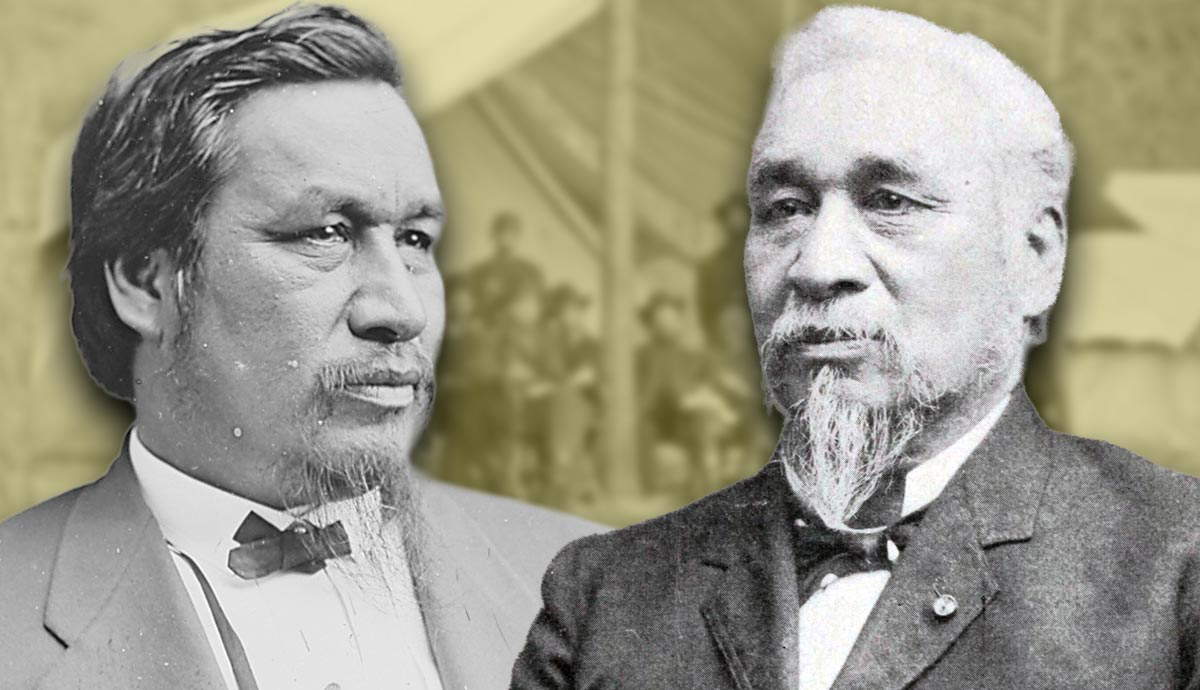
    Truly a man of two worlds, Ely S. Parker made his mark on both. As a cultural and educational leader and advocate within his tribe, the Seneca, Parker fought to promote the survival of his peoples way of life. Facing discrimination throughout his life, Parker persisted, becoming an accomplished engineer, military man, and politician. The myriad challenges he dealt with along the way didnt seem to discourage his progress, and Parker himself had an impressive impact on many of his contemporaries and the hallmark events of 19th-century America.Born in a BuckboardA buckboard wagon like the Parkers. Source: Dwight Burdette/Wikimedia CommonsEly Samuel Parkers entrance into the world was an exciting one, taking place as his parents took a rough buckboard wagon ride back home to the Tonawanda Reservation in New York State. William and Elizabeth Parker were members of the Wolf Clan of the Seneca Nation, a culture in which their new son would be raised. Parker was born Hasanoanda in 1828 and later changed his name to Ely when he attended a mission school. Ely was the Parkers fourth of seven children and was one of the six who survived to adulthood.Seneca leader Kiontwogky, painted sometime in the early 19th century. Source: University of Cincinnati Libraries Digital Collection/Wikimedia CommonsThe Seneca people were part of the Haudenosaunee Nation, a group of allied Indigenous tribes that lived in the New York area at the time of Parkers birth. The Parkers decided to raise their son in Haudenosaunee traditions but also thought it important that he receive an American education to be successful in a changing world, so they sent Ely to a Baptist mission school to be educated. Ely was an excellent student and mastered the English language along with traditional Seneca. His ability to communicate in both tongues was useful and thrust him into a leadership role when he was only a teenager.The American government threatened to remove the Seneca people to westward reservations, much like they had removed the Indigenous people in the Southeast to Oklahoma in the 1830s. To face this threat head-on, the Seneca people needed to understand treaties and propositions written in a foreign language. At just 14, Ely was appointed as a translator and scribe for Seneca leaders who were corresponding and meeting with US officials.Lewis Henry Morgan used his influence to support Ely Parkers education pursuits. Many members of the Parker family assisted Morgan in his ongoing studies of the Haudenosaunee people. Source: Popular Science/Wikimedia CommonsElys educational experience was further expanded when anthropologist Lewis Henry Morgan sponsored his admission to Cayuga Academy, a renowned whites-only prep school. Despite facing racial harassment during his time at the school, Parker excelled and became well-known for his excellent oratory and debate skills. He continued to assist his people in protecting themselves from the US governments efforts at encroachment and eventually had the opportunity to travel to Washington, DC, to advocate for the preservation of his peoples reservation.Finding a Professional PathAn image of 1900 Cayuga County, New Yorks bench and bar. Racist policies prevented Parker from ever applying. Source: Library of Congress/Wikimedia CommonsOnce he had completed his education, Parker began considering where his career path might lie. He had an interest in the law and began legal studies at the law offices of Angel and Rice in Ellicottville, New York. However, when Parker applied for the New York State Bar, he encountered a roadblock. The New York Supreme Court had ruled that only natural born or naturalized United States citizens were eligible for admission to the state bar. As a Seneca, Parker met neither of those qualifications.With help from Morgan, he studied civil engineering at Rensselaer Polytechnic Institute and obtained a new job in 1850. He worked on the expansion of the Erie Canal, where he became more entrenched in day-to-day white society. However, he maintained his roots to his people and was named a Sachem of the Six Nations Confederacy in 1851. With his new role, Parker was given a new name: Donehogawa, meaning Keeper of the Western Door, due to his role as a liaison to the white world.Parker continued this effort despite the US Congress refusing to allow his people to keep their homeland. He used his legal knowledge to help bring four lawsuits against land companies that were pursuing the Seneca lands. Two of these cases brought legal decisions in favor of the Seneca, and the Senate revised their plans. The Seneca were able to use the resources earmarked for their Kansas removal to buy back over seven thousand acres of the Tonawanda Reservation.Ely Parker photographed during the Civil War era. Source: National Archives at College Park/Wikimedia CommonsParker continued working in engineering and eventually earned a job as an engineer for the US Treasury Department. In 1857, he was in Galena, Illinois, to oversee the construction of the US Customs building. There, he met a former Army officer who was working as a clerk in a family store: Ulysses S. Grant. The two struck up a lifelong friendship.Uncivil TreatmentGeneral Ulysses S Grant pictured in a Civil War camp with staff members, including Ely Parker, seated second from right. Source: The US National Archives/Wikimedia CommonsWhen the American Civil War broke out in 1861, Parker attempted to enlist in the Union Army and encouraged several other Haudenosaunee men to sign up with him. However, the men were turned away due to their race, with Secretary of State Willliam Seward stating this was an affair between white men. After repeatedly being turned away, in 1863, Parker finally received a commission to the United States Army.He worked first as an army engineer, then as a military secretary for Grant, who had rejoined the army at the onset of the war. As Grant rose to the position of commander of the entirety of the Union Army, Parker accompanied him, eventually rising to the rank of lieutenant colonel.Parker was instrumental in the surrender that took place at Appomattox Courthouse in 1865. He drafted the official copy of the terms of surrender. During the meeting in which the document was signed, Confederate General Robert E. Lee made the comment to Parker, I am glad to see one real American here, to which Parker responded, We are all Americans, sir.A print showing those present at the Confederate surrender in Appomattox. Parker is fifth from right. Source: Historical Society of the New York CourtsAfter the conclusion of the war, Parker continued working with Grant in the army and served as a consultant for new Indian policies as the military focus shifted from the Civil War to assimilating tribes in the West. His work with the US government drew criticism among some of the Seneca people who had once seen him as their champion.Parkers marriage to a white woman, Minnie Sackett, in 1867 unsettled his critics in the Seneca and white worlds alike. Marriage between different races wasnt officially legalized until the twentieth century. Ely and Minnie had one daughter, Maud.On to WashingtonEly Parker in his later years. Source: Internet Book Archives/Wikimedia CommonsWhen Grant took the presidency in 1869, Parker was appointed as the first Native American cabinet member when he became the first Native American Commissioner of Indian Affairs. He was heavily involved with President Grants peace policy toward Indigenous tribes. While Grant and Parker hoped to protect Indigenous interests, they found many obstacles in their way. However well-meaning these policies were, corruption within the government led to increased assimilation measures and little consideration for Indigenous culture. Despite his accomplishments in the army, Parker continued to suffer from racism in his government job. He was accused of fraud, with opponents claiming he misdirected funds that were intended for reservation use for his own personal gain. While these proved to be simple attacks from racist political enemies, they frustrated Parkers work. He was found innocent of all charges by an 1871 Congressional committee but lost many powers within his office and decided to resign.Minnie and Ely moved to Fairfield, Connecticut, and Parker proved himself adept in business. He built quite a fortune in the stock market, but the economic Panic of 1873 hit his finances hard. He attempted to go back to engineering but found that his skills had aged with the advent of rapidly growing technologies.Ely eventually found a steady job as a desk clerk for the New York Police Department. He stayed busy as a devoted father and took some public speaking gigs for extra cash. His health suffered in his final years as he dealt with kidney issues, diabetes, and multiple strokes. Ely Parker passed away in his sleep on August 31, 1895. He was buried with full military honors in Connecticut but was later re-interred in New York.A historical marker near Parkers birthplace. Source: 777edward via Wikimedia CommonsSubjected to blatant racism despite his achievements in a variety of arenas, Ely Parker walked a troubled line between two worlds. At home in both, yet still not quite fitting in, he was viewed with both admiration and suspicion. Skilled in numerous areas, he used his abilities to help advance both his people, the Seneca, and the future of the country as a whole. Parker was a groundbreaking speaker, engineer, military man, but most of all, a leader for a young America.
    0 Commentaires 0 Parts 52 Vue
  • WWW.THECOLLECTOR.COM
    What Life Was Really Like in Al-Andalus During Its Golden Age
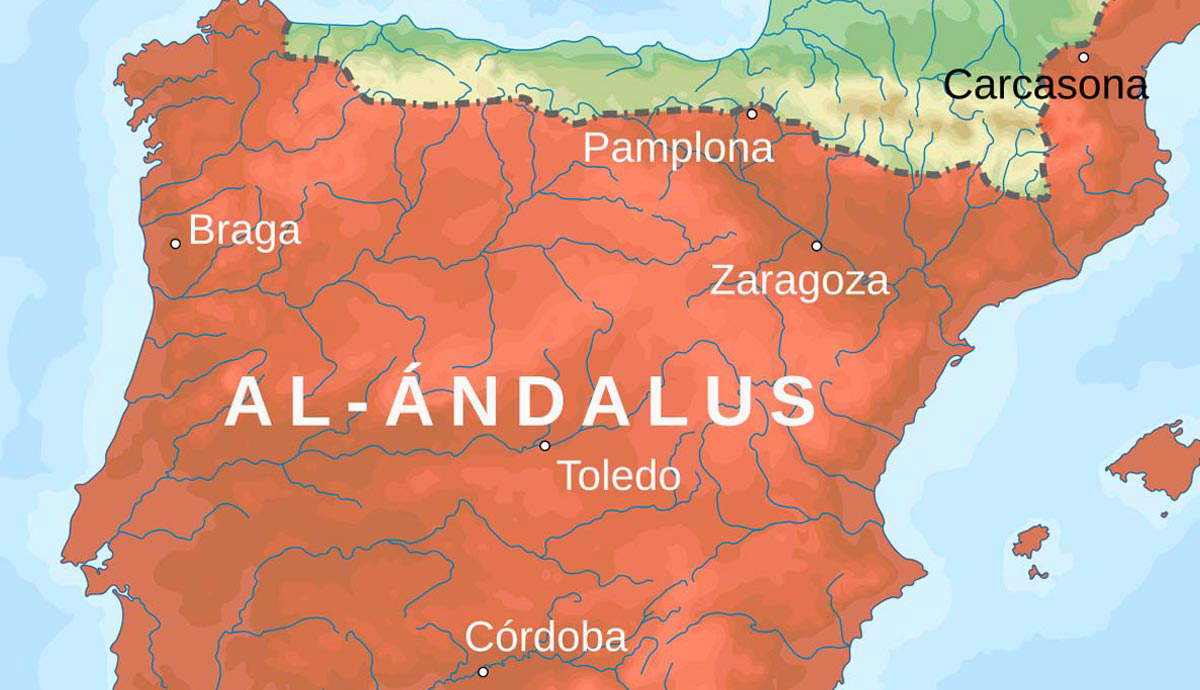
    From the 8th to the 15th centuries, the Moors ruled most of the Iberian Peninsula, which ended with the Christian Reconquista. While there was certainly a lot of innovation and cultural advancement, life for Al-Andaluss inhabitants was not as utopian as has often been suggested.What Was Al-Andalus?Painting on the ceiling of the Hall of Kings in the Alhambra Palace, Granada. Source: Wikimedia CommonsTo this day, historians argue the impact Muslim rule had on the Iberian Peninsula. Some people argue that Muslim rule brought innovation, tolerance, and security to the region. Others argue that al-Andalus was riven with internal chaos, suffered under the tyranny of fundamentalist rulers, and weakened itself to the point where the Christians could conquer their territory relatively easily. These debates include references to first-person accounts of life in Moorish Iberia.During the 750s, the Umayyad prince Abd al-Ramn I fled Damascus after his family was overthrown by the Abbasid Caliphate. Abd al-Ramn marched to Spain and founded the Emirate of Crdoba, conquering most of the Iberian peninsula, which was known to Muslims as al-Andalus. The emirate was later upgraded to a caliphate in 929.The Umayyad period, which lasted between 756 and 1031, came to be known as al-Andaluss Golden Age. Culture, arts, and sciences flourished there in a fashion unknown to much of continental Europe. Religious tolerance was maintained under the banner of Islamic Law. Many intellectuals wrote about their experiences there, such as Maimonides and Ibn Rushd.However, there was a darker side to Muslim rule. By the 11th century, al-Andalus started to fragment into separate kingdoms that engaged in ruthless violence towards one another. To the north, Christian kingdoms like Aragon and Castile were on the march, seeking to restore the Iberian peninsula to Christian rule. The Almohad and Almoravid caliphates proved to be poorly administered and intolerant. By the time the Reconquista was completed, few people mourned the end of al-Andalus. For centuries after the fall of Granada in 1492, scholars have debated what to make of al-Andaluss legacy.Demographics of Al-AndalusThe ruins of a Mozarabic Church in Ardales. Source: Council of MalagaThroughout the period of Moorish rule in Iberia, al-Andalus had a relatively consistent social structure. Muslims, especially Arab Muslims, dominated the hierarchy, since they formed the core of Abd al-Ramns invasion force. Many of the soldiers in the Umayyad armies were Berber tribesmen from North Africa, who took up administrative roles in the rural frontier areas of the kingdom. Anyone who converted to Islam, known as a Mulad, was granted certain privileges but was still considered separate from the Arabs and Berbers.Christians in al-Andalus were known as Mozarabs. They were second-class citizens, forced to pay a tax known as a jizya. However, they were granted certain legal protections, including the right to pray and speak their native language, called Mozarabic. Jews were also granted these rights, speaking Ladino and being allowed to hold certain positions in society. At the bottom of the hierarchy were slaves of the Arabs and Berbers, often people from sub-Saharan Africa.This system held throughout the Umayyad period but it started to collapse with the Almohad period in the 12th century. The Almohads insisted that anyone under their rule had to be a practicing Muslim and they drove out anyone who did not conform to this rule in the 1140s. The chaos in the aftermath of the fall of the Umayyads undermined the social structure of the region. Additionally, the Christian conquests took more territory, depriving al-Andalus of the manpower it needed for its armies.Culture of Al-AndalusPhotograph of the Real Alcazar in Seville, including the Moorish archways. Source: Exodus TravelsAl-Andalus reached its cultural zenith during the Umayyad period. The Umayyad rulers encouraged innovation and learning in Andalusian society. For instance, Moorish farmers experimented with new types of irrigation techniques, which expanded the regions agricultural capacity. Additionally, the Moors brought stunning architecture to the region, such as the horseshoe arch, mosaic tilework like zellij, and the honeycomb vaults in major buildings throughout the region.By the 11th century, al-Andalus started to fracture and this had a major impact on the regions cultural development. The Almohad expulsions of non-Muslims devastated the regions capacity for diversity of thought. It also led to the region becoming defined by backwardness and fundamentalism. The Christian Reconquista contributed to this phenomenon by creating a siege mentality amongst the Moors. This halted the cultural innovations initiated during the Umayyad period.Even after the collapse of Moorish rule, some of al-Andaluss cultural accomplishments remained in place. For instance, many of the Alczars (Moorish castles) that the Moors constructed remained intact when the Christians took over the whole peninsula. The teachings of Maimonides and Ibn Rushd resonated with later generations of Spaniards and Portuguese people. Lastly, the innovations made in agriculture, navigation, and science helped drive the rise of the Spanish and Portuguese empires.Myths of Moorish Society18th-century engraving depicting Maimonides, the Jewish scholar from al-Andalus. Source: Yale University LibraryNotwithstanding the major achievements of the Andalusian Golden Age, the idea that the population lived in a utopian society is false. The Arab conquerors created a social hierarchy, as mentioned above, that prioritized themselves at the expense of the people they conquered. Even Berbers, who made up much of the conquering armies, did not enjoy the same social status as the Arabs, though they were rewarded with plots of land for their military service.Under the system of Dhimmitude, non-Muslims had to pay a tax called the Jizya in order to be accepted in Moorish society. This was notwithstanding the fact that Christians and Jews sought to be accepted members of Andalusian society. The Almohads ended the policy but ordered most non-Muslims to be exiled instead. While some people, like Maimonides, went to North Africa, others went to the Christian kingdoms in Europe. Throughout the entire period of Moorish rule, slavery was an institutionalized practice.For many years, scholars of Islamic history and thought characterized al-Andalus as a haven for minorities and innovation, only to be brought down by the backward, intolerant Christian kingdoms. This view has been revised by recent scholarship. The society that existed in al-Andalus was very modernized and developed for a period, but ultimately imploded on itself centuries before the completion of the Reconquista. The contradictions in Andalusian society made the realm unsustainable over time.Why Did Al-Andalus Fall?The Capitulation of Granada by Francisco Pradilla y Ortiz, 1888. Source: Wikimedia CommonsWhile the fall of al-Andalus is generally attributed to the successful conquests of Christian kingdoms such as Aragon and Castile, internal problems were also largely responsible. When the Umayyad Caliphate of Cordoba collapsed, the fragmentation of the region ensured that the Christians could acquire territory more easily. Over the centuries, Castile gradually absorbed other Christian kingdoms as al-Andalus unraveled, gaining more manpower and resources at the expense of the Moors.In the late 12th century, the Almohads unsuccessfully attempted to stem the Christian advances. At the Battle of Las Navas de Tolosa, the Castilians broke Moorish control over central Spain. Almohad intolerance also encouraged many people to flee the region, contributing to a fall in population. The Moors struggled with the same problems that the Crusader Kingdoms in the Levant did: long distances from the metropoles, internal chaos, and poor governance.The last Moorish kingdom in Iberia was the Emirate of Granada, which hugged the southern Spanish coast. By 1479, it faced a united Castile and Aragon, whose forces were poised to drive the Moors off the peninsula entirely. The Spaniards had modern artillery and more men while the Moors were still feuding amongst each other. In 1492, the Christians conquered Granada itself, marking the end of the Reconquista.
    0 Commentaires 0 Parts 52 Vue
  • ALLTHATSINTERESTING.COM
    Omayra Snchez Was Trapped In A Mudflow When A Photographer Captured Her Last Moments
    In November 1985, the small town of Armero, Colombia was inundated by a massive mudslide brought on by the eruption of a nearby volcano. Thirteen-year-old Omayra Snchez was buried in a giant vat of debris and neck-deep water. Rescue efforts were futile and, after three days trapped up to her waist in mud, the Colombian teenager died.French photographer Frank Fournier, who stayed by the dying girls side until she drew her last breath, captured her horrifying ordeal in real time.This is the tragic story of Omayra Snchez.The Armero TragedyBernard Diederich/The LIFE Images Collection/Getty Images/Getty ImagesThe eruption of the nearby Nevado del Ruiz volcano and subsequent mudslide claimed over 25,000 lives in the town of Armero.The Nevado del Ruiz volcano in Colombia, at a height of 17,500 feet above sea level, had shown signs of activity since the 1840s. By September 1985, the tremors had become so powerful that it began to alarm the public, mostly residents in nearby areas like Armero, a town of 31,000 that was about 30 miles east of the volcanos center.On Nov. 13, 1985, the Nevado del Ruiz erupted. It was a small explosion, melting between five and 10 percent of the ice cap that covered the Arenas Crater, but it was enough to trigger a devastating lahar, or mudflow.Traveling at a speed of roughly 25 miles per hour, the mudflow reached Armero and covered 85 percent of the city in thick, heavy sludge. The citys roadways, houses, and bridges were destroyed, engulfed by mudflows up to a mile wide.The flood also trapped residents trying to flee, many of them unable to escape the sheer force of the mud that burst into their small town.Chip HIRES/Gamma-Rapho/Getty ImagesThe hand of a victim buried by mudslide from the volcanic eruption.While some were lucky enough only to suffer injuries, most residents perished. As many as 25,000 people died; only a fifth of Armeros population survived.Despite the incredible devastation, it would take hours before initial rescue efforts began. This left many like Omayra Snchez to endure terrifying deaths trapped beneath the mud.The Failed Rescue Of Omayra SnchezIn this 1985 Spanish-language news broadcast, Omayra Snchez speaks with reporters while nearly drowning in muddy water.Photojournalist Frank Fournier arrived in Bogot two days after the eruption. After a five-hour drive and a two-and-a-half-hour walk, he finally made it to Armero, where he planned to capture the rescue efforts on the ground.But when he got there, conditions were much worse than he had imagined.Instead of an organized, fluid operation to save many of the residents that were still trapped under debris, Fournier encountered chaos and desperation. All around, hundreds of people were trapped. Rescuers were having difficulty reaching them. I could hear people screaming for help and then silence an eerie silence, he told the BBC two decades after the horrifying disaster. It was very haunting.Amid the chaos, a farmer took him to a little girl who needed help. The farmer told him that the girl had been trapped under her destroyed house for three days. Her name was Omayra Snchez.Jacques Langevin/Sygma/Sygma/Getty ImagesThe devastation in Armero, Colombia after the eruption of Nevado del Ruiz.Rescue volunteers from the Red Cross and local residents tried to pull her out, but something below the water surrounding her had pinned her legs, making her unable to move.Meanwhile, the water engulfing Snchez got higher and higher, partly due to continuous rains.By the time Fournier reached her, Snchez had been exposed to the elements for too long, and she began to float in and out of consciousness.Im going to miss a year because I havent been to school for two days, she told Tiempo reporter German Santamaria, who was also at her side. Snchez asked Fournier to take her to school; she was worried she would be late.Tom Landers/The Boston Globe/Getty ImagesOmayra Snchez died after spending more than 60 hours trapped under mud and debris.The photographer could feel her strength weaken, as if the teenager was ready to accept her fate. She asked volunteers to let her rest, and bid her mother adis.Three hours after Fournier found her, Omayra Snchez died.The New York Times reported the news of Snchezs death accordingly:When she died at 9:45 A.M. today, she pitched backward in the cold water, an arm thrust out and only her nose, mouth and one eye remaining above the surface. Someone then covered her and her aunt with a blue and white checked tablecloth.Her mother, a nurse named Maria Aleida, received the news of her daughters death during an interview with Caracol Radio. She wept silently while radio hosts asked listeners to join in a moment of silence out of respect for the 13-year-olds tragic death. Much like her daughter, Aleida showed strength and courage following her loss.Bouvet/Duclos/Hires/Getty ImagesThe deathly white hand of Omayra Snchez.It is horrible, but we have to think about the living, Aleida said, referring to survivors like herself and her 12-year-old son Alvaro Enrique, who lost a finger during the disaster. They were the only survivors from their family.When I took the pictures I felt totally powerless in front of this little girl, who was facing death with courage and dignity, Fournier remembered. I felt that the only thing I could do was to report properly and hope that it would mobilize people to help the ones that had been rescued and had been saved.Fournier got his wish. His photograph of Omayra Snchez black-eyed, drenched, and hanging on for dear life was published in Paris Match magazine a few days later. The haunting image won him the 1986 World Press Photo of the Year and elicited public outrage.Outrage In The AftermathBouvet/Duclos/Hires/Gamma-Rapho/Getty ImagesShe could sense that her life was going, said photojournalist Frank Fournier who photographed Omayra Snchez in her last moments.The well-documented death of Omayra Snchez confounded the world. How could a photojournalist just stand there and watch a 13-year-old girl die?Fourniers iconic photograph of Sanchezs suffering was so disturbing that it spurred an international backlash against the Colombian governments practically nonexistent rescue efforts.Witness accounts from volunteer rescue workers and journalists on the ground described a grossly inadequate rescue operation that was wholly lacking in both leadership and resources. In Snchezs case, rescuers didnt have the equipment needed to save her they didnt even have a water pump to drain the rising water around her. Bouvet/Duclos/Hires/Gamma-Rapho/Getty ImagesAt least 80 percent of the small town vanished under the flood of mud and water from the eruption.Later it would be discovered that Omayra Snchezs legs had been trapped by a brick door and her dead aunts arms underneath the water. But even if they had figured that out earlier, rescuers still didnt have the heavy equipment necessary to pull her out. Journalists at the scene reportedly saw only a few Red Cross volunteers and civil defense workers along with friends and families of victims raking through the mud and rubble. None of Colombias 100,000-person army or 65,000-member police force were dispatched to join rescue efforts on the ground.Gen. Miguel Vega Uribe, Colombias minister of defense, was the highest-ranking official in charge of the rescue. While Uribe acknowledged the criticisms, he argued that the government did all it could.We are an underdeveloped country and dont have that kind of equipment, Uribe said.The general also stated that if troops had been deployed, they wouldnt have been able to get through the area because of the mud, responding to criticisms that the troops could have patrolled the perimeter of the mudflow. Wikimedia CommonsThe haunting photograph of Omayra Snchez shot by Frank Fournier. The photo sparked global backlash after her death.Officials in charge of the rescue operation also denied statements from foreign diplomats and rescue volunteers that they had refused offers from teams of foreign experts and other aid for the operation.While evidently, some friendly countries were able to send over helicopters the most efficient way to transport survivors to improvised triage centers set up in nearby towns unaffected by the volcano and put up mobile hospitals to treat the injured, it was already too late.Many of those who were fortunate enough to survive the terrifying natural disaster suffered grave injuries to their skulls, faces, chests, and abdomens. At least 70 survivors had to undergo amputations due to the severity of their injuries. The public outcry over Omayra Snchezs death also sparked debate over the nature of photojournalism. There are hundreds of thousands of Omayras around the world important stories about the poor and the weak and we photojournalists are there to create the bridge, Fournier said of the criticisms. The fact that people still find the photograph utterly disturbing, even decades after it was taken, shows Omayra Snchezs lasting power.I was lucky that I could act as a bridge to link people with her, he said.Now that youve read about the tragic death of Omayra Snchez and her unforgettable photograph, find out more about the devastation of Mount Pele, the worst volcanic disaster of the 20th century. After that, read about Bobby Fuller, the rising 23-year-old rockstar who suffered an abrupt demise.The post Omayra Snchez Was Trapped In A Mudflow When A Photographer Captured Her Last Moments appeared first on All That's Interesting.

    0 Commentaires 0 Parts 53 Vue
  • ALLTHATSINTERESTING.COM
    The Life Of Circus Performer Jean Libbera, The Man With A Parasitic Twin Growing Out Of His Torso
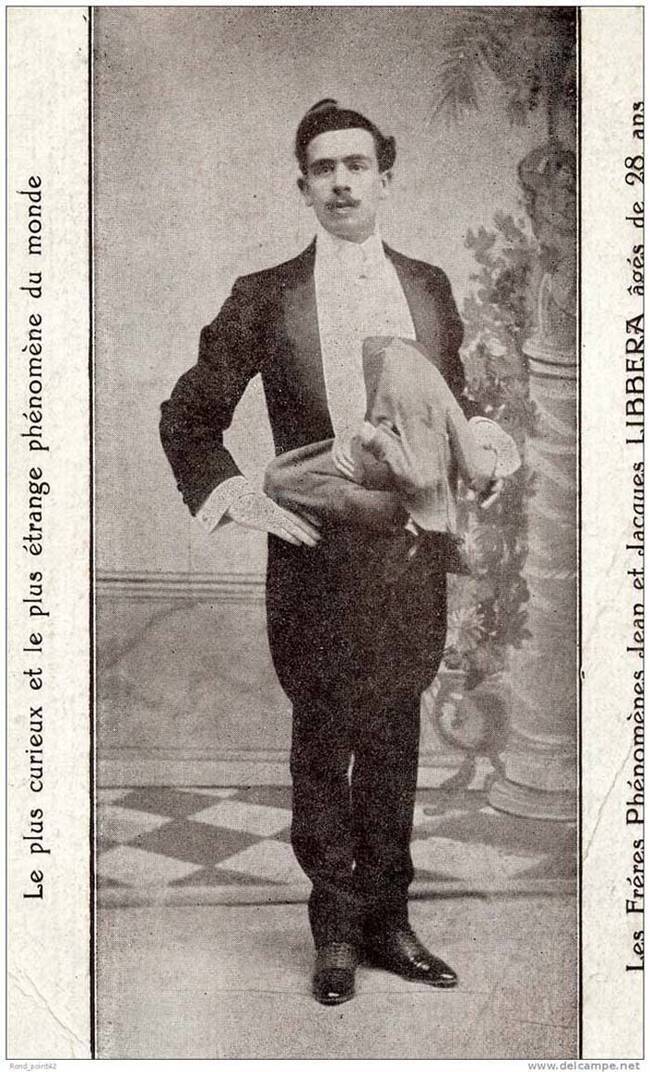
    Public DomainJean and Jacques Libbera traveled across Europe and the United States in various freak shows.In the early 20th century, audiences at circuses and sideshows all over the world were captivated by Jean Libbera, the Double-Bodied Man, who had a small parasitic twin named Jacques growing out of his torso.Jacques had two arms, two legs, and a partially formed head embedded in Jeans stomach, but reportedly depended entirely on Jeans bodily functions to survive. Consequently, Jean had the burden of carrying his twin brother around with him his entire life.Still, despite his condition, Jean managed to lead a fairly normal existence. He got married, had four children, and lived to be about 50 years old.But with few records of Jean Libberas life outside of sideshow advertisements, much of his story is shrouded in mystery.The Double-Bodied Man Is BornFind A GraveX-rays allegedly revealed that Jacques semi-formed head was embedded in Jeans stomach and had a circumference of only six inches.Jean Libbera was born in Rome in 1884 with a parasitic twin attached to his abdomen. He was one of 13 children, another of whom also had a parasitic twin but did not survive past infancy.Libberas twin, Jacques, was a vestigial parasite. This condition occurs when an embryo only partially separates into twins and the two sides develop asymmetrically in utero, resulting in the smaller twin being attached to the larger, more developed one.Parasitic twins like Jacques are a type of conjoined twin. According to the Cleveland Clinic, conjoined twins are incredibly rare, affecting only about one in 50,000 pregnancies worldwide. Parasitic twins, meanwhile, reportedly account for around 10 percent of conjoined twins and affect less than one in a million births worldwide.Because vestigial twins almost always die in the womb, today, doctors typically remove the parasitic twin after birth to prevent the surviving twin from experiencing medical issues. But in the late 19th and early 20th centuries, people with vestigial parasites would often perform in circuses and sideshows. And thats exactly what Jean Libbera did.The Life Of Jean (And Jacques) LibberaPublic DomainJean Libbera had a parasitic twin that depended entirely on his bodily functions to survive.Jean Libbera grew up to be a traveling freak show performer known as the Double-Bodied Man, showing off his small twin to curious audiences at circuses and sideshows all over the world. Often, the brothers would wear matching suits during performances.I dont know if people really fainted when they saw Jean Libbera, said freak show photographer Diane Arbus, as reported in Rachel Adams book Sideshow U.S.A.: Freaks and the American Cultural Imagination. He looked a bit rueful in a poster on the far wall, standing in a tuxedo sweetly holding the hands of his vestigial twin who grew, head inwards, sticking out of his abdomen and wore, the twin did, little patent leather shoes and a diaper to keep him from wetting his pants. Jacques had two small arms, two hands, two legs, and two feet. While parasitic twins typically lack consciousness, according to some reports, Jacques was alive and could even move though he depended on Jean to survive. Jean and Jacques quite literally shared everything, including circulatory and nervous systems.As Marc Hartzman wrote in his book American Sideshow, pamphlets distributed at Jean Libberas performances proclaimed that a very thorough and complete X-ray had shown that Jacques partially formed head was embedded in Jeans stomach and measured only six inches in circumference.Still, with few records of Jean-Jacques Libberas life, its hard to know what exactly was true, and what was exaggerated in the name of show business.When he wasnt onstage, Jean managed to live a relatively normal life, supposedly covering Jacques with a cloak whenever he went outside. He also found a wife, with whom he had four healthy children. Eventually, Jean Libbera retired from show business and moved back to Italy, where he died sometime between 1934 and 1936 at the age of about 50.Other Conjoined Twins In The CircusWhile Jean Libbera and his brother Jacques were a rare case, they certainly were not the only conjoined twins to perform in European and American circus shows at the turn of the 20th century.One of the first documented cases of conjoined twins, and arguably the most well-known, was that of the Bunker twins, Chang and Eng. In fact, the term Siamese twins was originally coined in reference to the brothers, who were born in Siam (now known as Thailand) in 1811.The two men, both perfectly healthy from birth, were connected at the sternum and waist by just a few inches of tissue.Wellcome Library/Wikimedia CommonsThe term Siamese twins came from Chang and Eng Bunker, conjoined twins from Siam (modern-day Thailand).In 1829, the Bunkers left Siam with a British sponsor to tour with sideshows and circuses around the world. They even had a stint in P.T. Barnums American Museum. The Bunker brothers eventually settled down in North Carolina, married a pair of sisters, and had 21 children between them.One of the most tragic cases involving conjoined twins in the early circus days was that of the Hilton twins, Daisy and Violet. The two girls, born in England in 1908, were fused together at the hips and pelvis. Their mother was unmarried, and shortly after their birth, their mothers employer Mary Hilton effectively bought the twins with the intention of putting them on display for entertainment.Wikimedia CommonsDaisy and Violet Hilton were another well-known example of conjoined twins in the American circus circuit in the early 20th century.Daisy and Violet began performing and touring at the young age of three years old under the strict care of Mary Hilton. The twins were essentially enslaved by Mary and her husband, and later by Marys daughter after her death. They were forced to work long hours without pay, and faced beatings if they disobeyed their captors.But in 1931, the sisters sued their managers and won their emancipation. They went on to perform in vaudeville and burlesque shows as an independent act.Their story has since inspired a number of movies, as well as a Broadway musical, Side Show, which premiered in New York in 1997 and was nominated for multiple Tony awards.After reading the incredible story of Jean Libbera, the Double-Bodied Man, read about Frank Lentini, a sideshow performer who had three legs, 16 fingers, and two penises. Then, discover the story of Martin Laurello, the Human Owl who could turn his head completely backward.The post The Life Of Circus Performer Jean Libbera, The Man With A Parasitic Twin Growing Out Of His Torso appeared first on All That's Interesting.

    0 Commentaires 0 Parts 52 Vue
  • ALLTHATSINTERESTING.COM
    The History Of Moloch, The Ancient God Of Child Sacrifice
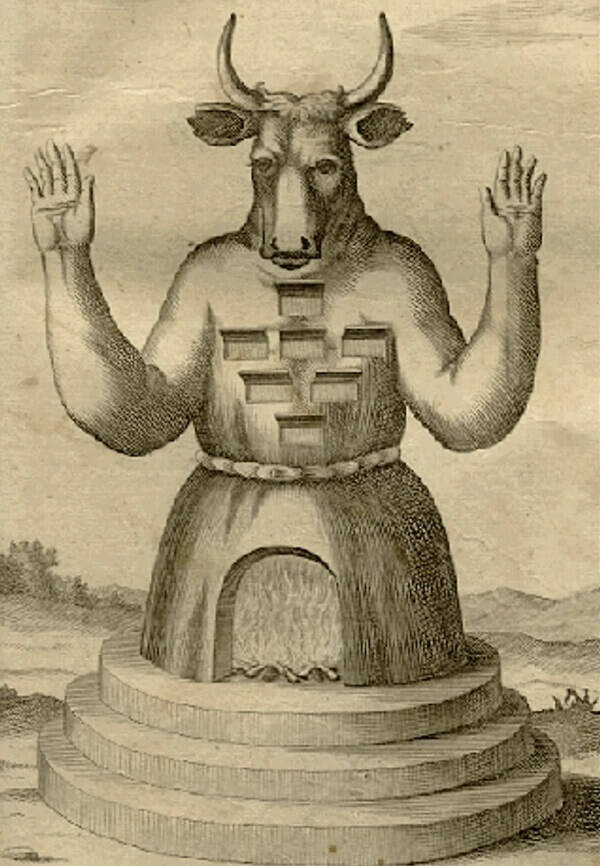
    Throughout antiquity, sacrifice might have been utilized in times of great strife. But one cult stands out from the rest for its brutality: the cult of Moloch, the alleged Canaanite god of child sacrifice.The cult of Moloch, or Molech, is said to have boiled children alive in the bowels of a big, bronze statue with the body of a man and the head of a bull. Offerings, at least according to some inscriptions in the Hebrew Bible, were to be reaped through either fire or war and its rumored that devotees can still be found to this day.Who Is Moloch And Who Prayed To Him?Wikimedia CommonsAn 18th century depiction of the Moloch idol, The idol Moloch with seven chambers or chapels. It was believed these statues had seven chambers, one of which was reserved for child sacrifices.Although historical and archaeological communities still debate Molochs identity and influence, he seems to have been a god of the Canaanites, which was a religion born out of a combination of ancient Semitic faiths.Whats known about Moloch largely comes from Judaic texts outlawing the worship of him and the writings of ancient Greek and Roman authors.The cult of Moloch is believed to have been practiced by the people of the Levant region from at least the early Bronze Age, and images of his bullish head with a child burning in his belly persist until the medieval times.His name likely derives from the Hebrew word melech, which usually stands for king. There are also references to a Molock in Ancient Greek translations of old Judaic texts as well. These date back to the Second Temple period between 516 B.C. and 70 C.E., before the Second Temple of Jerusalem was destroyed by the Romans.Wikimedia CommonsStone slabs in the tophet of Salammb, which was covered by a vault built in the Roman period. This is one of the tophets Carthaginians would sacrifice children in.Moloch is most frequently referred to in Leviticus. A passage from Leviticus 18:21 condemns child sacrifice, Do not allow any of your children to be offered to Molech.Passages in Kings, Isaiah, and Jeremiah also refer to a tophet, which has been defined as both a location in ancient Jerusalem where there was a special bronze statue internally heated by fire, or the statue itself into which children were apparently thrown for sacrifice.Medieval French Rabbi Shlomo Yitzchaki, otherwise known as Rashi, wrote an extensive commentary on these passages in the 12th century. As he wrote:Topheth is Moloch, which was made of brass; and they heated him from his lower parts; and his hands being stretched out, and made hot, they put the child between his hands, and it was burnt; when it vehemently cried out; but the priests beat a drum, that the father might not hear the voice of his son, and his heart might not be moved.Comparing Ancient Hebrew And Greek TextsAn illustration from Charles Fosters 1897, Bible Pictures and What They Teach Us, depicting an offering to Moloch.Scholars have compared these Biblical references to later Greek and Latin accounts which also spoke of fire-centric child sacrifices in the Carthaginian city of Punic. Plutarch, for instance, wrote of burning children as an offering to Baal Hammon, a chief god in Carthage who was responsible for the weather and agriculture. While scholars still debate whether or not the Carthaginian practice of child sacrifice differed from the cult of Moloch, its generally believed that Carthage only sacrificed children when it was absolutely necessary like during an especially bad draught whereas the cult of Moloch might have sacrificed more regularly.Then again, some researchers argue that neither of these cults sacrificed children at all and that passing through the fire was a poetic term that most likely referred to initiation rites that may have been painful, but not deadly. Further complicating matters is that there is every reason to believe these accounts were exaggerated by the Romans to make the Carthaginians appear crueler and more primitive than they were as they were the bitter enemies of Rome, after all.Nonetheless, archaeological excavations in the 1920s discovered primary evidence of child sacrifice in the region, and researchers found the term MLK inscribed on numerous artifacts.Depictions In Modern Culture And Dispelling The Moloch OwlThe ancient practice of child sacrifice found renewed footing with medieval and modern interpretations. As English poet John Milton wrote in his 1667 masterpiece, Paradise Lost, Moloch is one of Satans chief warriors and one of the greatest fallen angels the Devil has on his side. According to this fictional account, Moloch gives a speech at Hells parliament where he advocates for immediate war against God and is then revered on Earth as a pagan god, much to Gods chagrin.First MOLOCH, horrid King besmeard with bloodOf human sacrifice, and parents tears,Though, for the noyse of Drums and Timbrels loud,Their childrens cries unheard that passed through fire.Gustave Flauberts 1862 novel about Carthage, Salammb also depicted child sacrifice in poetic detail:The victims, when scarcely at the edge of the opening, disappeared like a drop of water on a red-hot plate, and white smoke rose amid the great scarlet colour. Nevertheless, the appetite of the god was not appeased. He ever wished for more. In order to furnish him with a larger supply, the victims were piled up on his hands with a big chain above them which kept them in their place.This novel is supposedly historical.Moloch made another appearance in the modern era with Italian director Giovanni Pastrones 1914 film Cabiria, which was based on the novel by Flaubert. From Allen Ginsbergs Howl to Robin Hardys 1975 horror classic The Wicker Man varying depictions of this cult abound today.Wikimedia CommonsThe statue at the Roman Colosseum was modeled after the one Giovanni Pastrone used in his film Cabiria, which was based on Gustave Flauberts Salammb.Most recently, an exhibit celebrating ancient Carthage popped up in Rome with a golden statue of Moloch placed outside of the Roman Colosseum in November 2019. It served as a memorial of sorts to the defeated enemy of the Roman Republic, and the version of Moloch used was purportedly based on the one Pastrone used in his film down to the bronze furnace in its chest, much like the alleged Brazen Bull torture device of ancient Greece.In the past, Moloch has been connected to Bohemian Grove a shadowy gentlemens club for wealthy elites that met in the San Francisco woods because the group erected a great wooden owl totem there each summer.However, this seems to be based on the erroneous conflation between the Moloch bull tophet and the Bohemian Grove owl totem, perpetuated by notorious huckster Alex Jones.While conspiracy theorists will continue to claim that this is yet another reviled occult symbol of child sacrifice still in use by covert elites the truth may be less dramatic.After learning about Moloch, the Canaanite god of child sacrifice, read about human sacrifice in the pre-Columbian Americas. Then, learn about the dark history of Mormonism from child brides to mass murder.The post The History Of Moloch, The Ancient God Of Child Sacrifice appeared first on All That's Interesting.

    0 Commentaires 0 Parts 52 Vue
  • WWW.MASHED.COM
    Customers Voted This The Best Snack At Trader Joe's, Hands Down
    Trader Joe's grocery store has become well-known for offering many delicious snacks, and this was the item voted the top pick in the category by customers.
    0 Commentaires 0 Parts 65 Vue
  • WWW.MASHED.COM
    Super Bowl Food Commercials That Left Celebs Looking Unrecognizable
    In recent years, we've grown accustomed to seeing Super Bowl commercials jam-packed with celebrities, but at times, viewers almost missed their famous faces.
    0 Commentaires 0 Parts 60 Vue