How the Golden Horde Changed Eastern Europe Forever
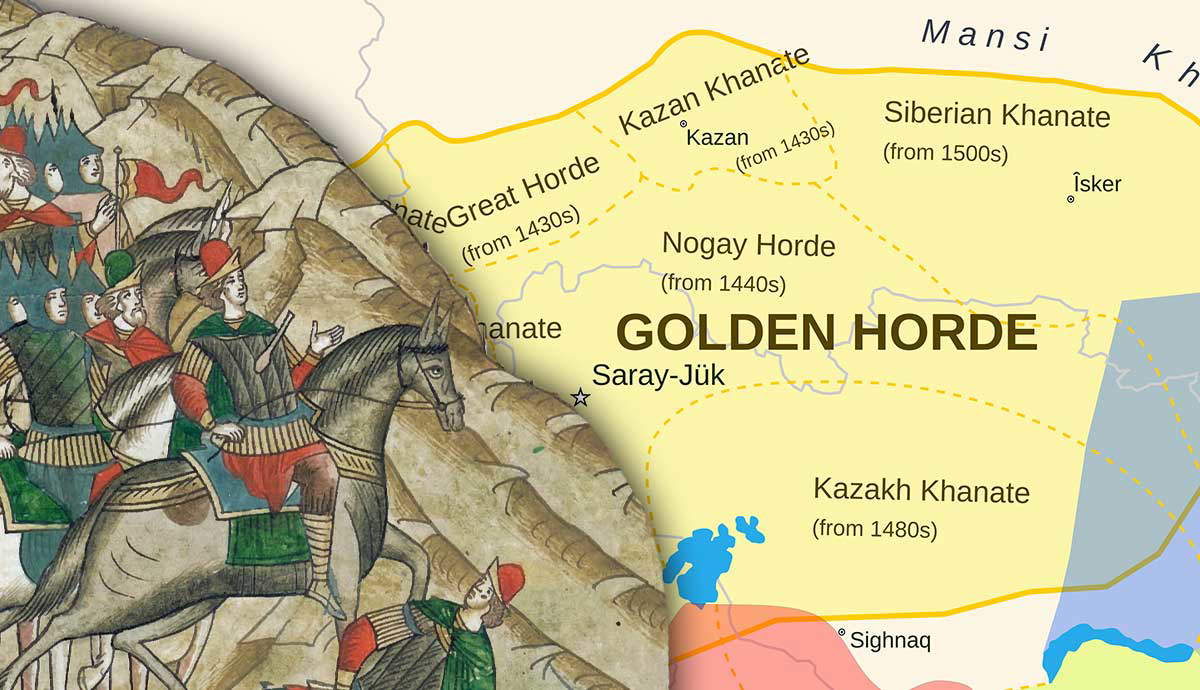
When Jochi, the eldest son of Genghis Khan, was promised land by his father, he proceeded to formulate plans for marching an army west across what is now southern Russia. After years of conquest by Batu Khan, Jochis son, the Mongols managed to dominate Eastern Europe, where they left a major footprint on the region.The Mongols Arrive in EuropeMap of the Mongol invasion of Rus, 2019. Source: Foreign ExchangesThe arrival of the Mongols in Eastern Europe during the 13th century was one of the most transformative episodes in the regions history. They first appeared in the early 1220s, when Genghis generals Jebe and Subutai launched their Great Raid into the Rus following the conquest of the Khwarezmian Empire.Some 15 years later, Genghiss grandson Batu Khan swept westward after conquering much of Central Asia and the Caucasus. Between 1237 and 1241, they devastated the principalities of Rus, destroyed Kyiv, and advanced into Hungary and Poland. Their actions caused fear and devastation amongst anyone unfortunate enough to encounter them.Though their westward push halted after the death of the Great Khan gedei in 1241, the Mongols established a lasting power base on the steppe north of the Black and Caspian Seas. This empire would become known as the Golden Horde. Their power enabled them to dominate Eastern Europe for more than two centuries.The appearance of the Mongols shattered the fragile balance among Slavic states, Turkic tribes, and steppe peoples. Local rulers were forced to reckon with a new actor that demanded submission and tribute.However, the cities and rulers that submitted to Mongol rule enjoyed considerable political, cultural, and religious autonomy. The Golden Horde brought the benefits of the Pax Mongolica to Eastern Europe, tying the region into networks of commerce, diplomacy, and cultural exchange that stretched from the China Sea to the Mediterranean.At its height, it controlled six million square kilometers, used three different types of currency, and helped fuel the rise of Turkic tribes in the region. The legacy of Mongol rule in Eastern Europe endures to the present day.Political Realignment and VassalageStatue of Batu Khan in Pinarbasi, Turkey, 2019. Source: World HistoryThe most immediate political consequence of the Golden Hordes arrival was the subjugation of the Rus principalities. The fragmentation of Kyivan Rus made it easier for the Mongols to advance through Eastern Europe.The Mongol rulers imposed a system of vassalage and tribute. Princes were required to travel to the Hordes capital at Sarai to receive a patent of authority, the yarlyk, which confirmed their legitimacy as rulers. This ensured that political survival depended not only on local support but also on the khans favor. The system transformed regional power dynamics, empowering some princes while undermining others.The rise of Muscovy is a good example of this. Initially a relatively minor principality in northeastern Rus, Muscovite princes skillfully navigated the politics of tribute collection. By serving as reliable tax collectors for the Mongol khan, they gained favor and expanded their influence. Over time, this arrangement gave Moscow the financial resources and military power to eclipse rival centers like Tver and Novgorod. In this sense, Mongol oversight laid the foundations for the future Russian state.For other principalities, Mongol rule meant instability and decline. Kyiv, once the capital of Kyivan Rus, struggled to recover from its sacking in 1240. Galicia-Volhynia, on the western frontier, went back and forth between submission to the Horde and alliances with neighboring Poland and Lithuania. Across the region, rulers faced the challenge of balancing internal ambitions with the demands of their Mongol overlords. Thus, the political map of Eastern Europe was redrawn under the shadow of the Golden Horde.Economic TransformationGenoese fortress in Caffa, present-day Feodosia, which served as a conduit for trade between the Golden Horde and Italy. Source: Wikimedia CommonsMongol domination of Eastern Europe brought both devastation and integration. The Golden Horde imposed a heavy burden on its European provinces through tribute. The peasantry was taxed to sustain the Hordes armies, while regular demands for resources plunged communities into hardship. Raids and conscription compounded the strain, disrupting local agriculture and trade. For many, Mongol rule symbolized relentless extraction.Yet alongside exploitation, the Golden Horde also opened doors to unprecedented economic connections. The Hordes dominion stretched across the Eurasian steppe, linking the Slavic lands with Central Asia, Persia, and China. Merchants from Genoa, Venice, and the Muslim world established trading posts in Black Sea ports such as Caffa and Tana, which flourished under Mongol protection.Through these routes, Eastern European merchants gained access to luxury goods like silk, spices, and precious metals, while exporting furs, slaves, and grain. The Mongols also provided some security along the trade arteries of the Silk Road, ensuring that caravans and envoys could pass through their territory with fewer risks. This stability benefited urban centers in Rus, where new markets and crafts took root. The Golden Horde promoted prosperity even as it drained wealth through taxation.The economic legacy of the Horde was contradictory. On the one hand, it integrated Eastern Europe into a wider trade network, fostering commercial growth, while conversely keeping the region politically subordinate and financially dependent. The tax burden exacted by the Golden Horde would encourage Muscovite princes to rebel against Mongol rule and establish an independent Muscovite state.Cultural and Religious SignificanceA Mongol Yurt in Mykolaiv in present-day Ukraine, 2023. Source: Yurt of Invincibility ProjectThe Golden Hordes rule over Eastern Europe was marked by an unusual degree of religious tolerance for the time. The Mongols themselves practiced shamanistic tradition, but they allowed subject peoples to maintain their faiths so long as they paid tribute.For the Orthodox Church, this arrangement was very beneficial. While princes were humiliated by their dependence on Mongol authority, the church often enjoyed protection and exemptions from taxation. As a result, Orthodoxy not only survived but expanded under the Hordes watch, strengthening its role as a prominent force in Eastern European society. Jews throughout the Horde were also protected by the Horde before and after the Mongols mass conversion to Islam.Cultural exchanges also flowed through Mongol influence. The Hordes elite lived in steppe cities such as Sarai, where Turkic, Persian, and Mongol customs mingled. European diplomats and merchants who traveled there encountered new styles of governance, dress, and art. Elements of steppe culture filtered back into Eastern Europe, visible in language, military organization, and even architecture. At the same time, Eastern Slavic culture absorbed influences from Islamic and Central Asian traditions.Yet the relationship was not entirely harmonious. Mongol domination also fostered stereotypes of the Asiatic horde in European imagination, casting the steppe as a land of despotism and barbarism. Many people in the former territories of Kyivan Rus felt deeply humiliated by being ruled over by the Mongols and hoped to overthrow them. To this day, many Europeans make comparisons between modern Russias actions in Ukraine and Georgia and the Mongol conquests. The Golden Hordes rule reshaped cultural and religious life, reinforcing Orthodoxys authority while embedding East Asian influences deep within Eastern Europes identity.Military and Administrative LegacyA recreation of a Mongol cavalryman in a museum in Singapore, 2019. Source: World HistoryOne of the most enduring impacts of the Golden Horde on Eastern Europe was the implementation of military and administrative practices. The Mongols were experts at fighting in the steppe. Their armies relied on highly mobile cavalry, disciplined formations, and the devastating use of composite bows. European armies, forced to fight both with and against the Horde, adopted aspects of these methods. The emphasis on cavalry raids, siege tactics, and strategic mobility became embedded in Russian, Ukrainian, and Polish military culture.The Golden Hordes administrative model also left an impactful legacy. Mongol rulers organized their empire around census-taking, taxation, and a system of relay messengers for communicating across their land. These practices were introduced to the Rus lands through the collection of tribute and the issuance of special charters.Over time, Muscovite rulers began to adopt similar systems to strengthen their own control. The practice of centralized taxation and the integration of church privileges into governance provided a template for consolidating rule. This borrowing extended to statecraft itself. The Muscovite princes, particularly Ivan I and his successors, learned from the Horde how to balance coercion with patronage, using both military force and administrative efficiency to overcome rival principalities. The same mechanisms that secured Mongol dominance in Eastern Europe were later turned against them by their former vassals.The Mongols inadvertently provided the tools with which Moscow would eventually overthrow the Hordes authority and establish itself as the nucleus of a powerful Russian state. Even today, Russias model of relying on friendly rulers in the ethnic republics such as Tatarstan or Chechnya is modeled on the Golden Hordes practices.Long Term ConsequencesMongol sabre discovered in Yaroslavl, Russia, 2007. Source: Medievalists.netThe legacy of the Golden Horde in Eastern Europe endured long after its political decline in the late 15th century. Their most profound influence lay in the political culture they left behind. Under Mongol suzerainty, rulers of Muscovy learned the art of centralized government, collecting tribute, and military tactics. These methods, initially imposed by the Horde, became cornerstones of the emerging Russian state. The autocratic rule of Muscovite princes and later Russian tsars bore the imprint of the Golden Hordes rule.The Horde also affected Eastern Europes geopolitical orientation. While Muscovy was influenced by the Renaissance in Europe, it remained embedded into networks that drew them eastwards across the Eurasian steppe. Ivan the Terribles conquest of the Tatar khanates of Kazan and Astrakhan in the mid-16th century set the stage for the Russian conquest of Siberia.The image of the Mongol as both overlord and outsider contributed to a lingering ambivalence toward Asia and Europe, a tension that continues to shape Russian identity to this day.The memory of devastation left by the Mongols became a powerful historical narrative. For Russians, the Tatar yoke is remembered as a period of humiliation and suffering, even as it also laid the foundations of state power. This dual legacy of occupation and development impacted Russian nationalism and justified later imperial expansion into the steppe as a reversal of past subjugation. As a result, the Golden Horde changed Eastern Europe forever, casting a long shadow that still influences the region today.











 English
 Arabic
 French
 Spanish
 Portuguese
 Deutsch
 Turkish
 Italiano
 Russian
 Romaian
 Portuguese (Brazil)
 Greek
Greek