0 التعليقات
0 المشاركات
28 مشاهدة
الدليل
Elevate your Sngine platform to new levels with plugins from YubNub Digital Media!
-
الرجاء تسجيل الدخول , للأعجاب والمشاركة والتعليق على هذا!
-
Veteran indie developer scared to reveal new game in case it gets "slurped up by AI"Veteran indie developer scared to reveal new game in case it gets "slurped up by AI" There are few game developers quite like Lucas Pope. He created two of our favorite games of the 2010s with Papers, Please and The Return of the Obra Dinn, and practically created two brand new genres, too. Since that grand success, he's released some understated titles, including flash games and the...0 التعليقات 0 المشاركات 44 مشاهدة
-
WWW.LIVESCIENCE.COMAI-written code can beat humans at biomedical analysis, some studies find. What does that mean for the field?LLMs can accelerate medical research, scientists say, but they come with risks.0 التعليقات 0 المشاركات 29 مشاهدة -
WWW.LIVESCIENCE.COMArtemis II moon flyby begins: How to watch and what to knowThe Artemis II astronauts have reached the moon and will soon lose contact with NASA as they whip around the lunar far side. Here's how to follow along with their journey and everything you need to know about the "dark side" of the moon.0 التعليقات 0 المشاركات 29 مشاهدة -
Hisense just launched the CanvasTV in a 50-inch sizeNew Hisense CanvasTV: Get the 50-inch size for a bedroom, studio apartment, or kitchen. Your TV no longer has to look like a void black rectangle when you turn it off. Instead, you can turn it into a framed piece of art with the Hisense CanvasTV. The brand just launched a new size that's perfect for a bedroom, kitchen, or studio...0 التعليقات 0 المشاركات 43 مشاهدة
-
The Sony WH-1000XM5 headphones are $5 away from their lowest price everThe Sony WH-1000XM5 headphones are $5 away from their lowest price ever Save $151.99: As of April 6, the Sony WH-1000XM5 headphones are down to just $248 at Amazon. The 38% discount on their $399.99 list price puts them just $5 away from their record-low price of $243. $248...0 التعليقات 0 المشاركات 42 مشاهدة
-
WWW.IFLSCIENCE.COMScans Reveal How A Womans Brain Reorganizes Itself When She Enters A Transcendental State, Without Psychedelics Or MeditationThe study examines the brain activity of a woman who can consistently enter this non-ordinary state of consciousness without assistance from substances.0 التعليقات 0 المشاركات 24 مشاهدة -
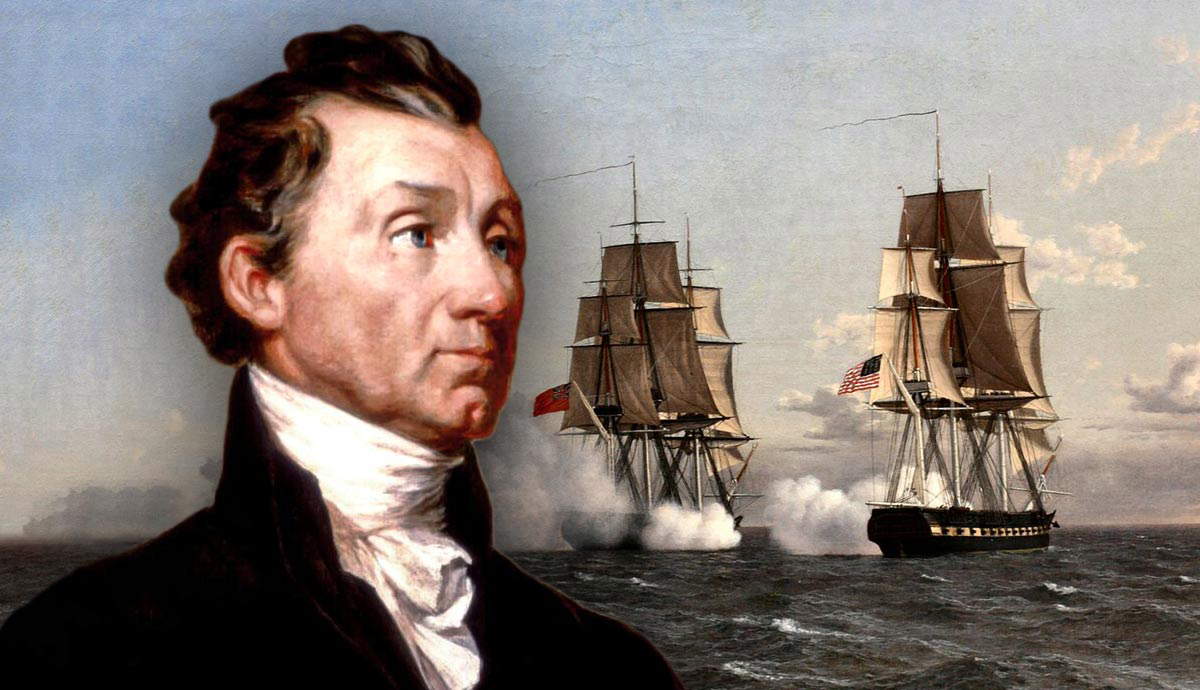
WWW.THECOLLECTOR.COMWhy the Monroe Doctrine Was Enforced by the Royal NavyAmerican foreign policy shifted on December 2, 1823, when President James Monroe announced the Monroe Doctrine in his yearly address to Congress. President Monroe reaffirmed that European colonial expansion in the Western Hemisphere would be considered a hostile actto the US, while alsopledging non-intervention in European matters. Despite this bold declaration, the US lacked the military, especially naval, strength to enforce it. Instead, the British Royal Navy played a decisive role in upholding the doctrine throughout much of the 19th century, aligning it with Britains own economic and political interests in the Americas.Why & How the Monroe Doctrine Was BornPortrait of James Monroe, by Samuel F. B. Morse, 1819. Source: The White House Historical Association/White House CollectionThe origins of the Monroe Doctrine can be found as early as 1783, when the United States declared the policy of isolationism following the American Revolution.American historian Samuel Eliot Morison pointed out that:as early as 1783, then, the United States adopted the policy of isolation and announced its intention to keep out of Europe. The supplementary principle of the Monroe Doctrine, that Europe must keep out of America, was still over the horizon.By 1823, the Latin American Republics had achieved long-awaited independence and diplomatic recognition from the United States. These territories had been under Spains colonial rule for centuries. The Napoleonic Wars and the subsequent invasion of Spain in 1808 weakened Spains colonial control, laying the foundation for the Spanish colonies to seek independence. In the following years, the waves of the independence movement spread across Latin America.When Napoleon Bonaparte was defeated in 1815, the Congress of Vienna did not take into consideration the independence struggles in Latin America. However, the United States saw the opportunity to support the revolutions in the Western hemisphere. The Congress of Vienna intended to restore the balance of power in Europe, reinstate monarchies, and prevent the spread of revolutionary movements. On the other hand, the United States, influenced by its own revolutionary past and economic interests, viewed the colonies independence movement as a way to weaken European dominance in the Americas.Illustration shows Uncle Sam holding a large magnifying glass labeled National Vanity which he is using to examine a battleship flying an American flag labeled U.S. Navy. He also holds papers labeled Monroe Doctrine, by Udo Keppler, 1908. Source: Library of Congress, Washington DCThe formation of the Holy Alliance on September 23, 1815, changed the power dynamics. The alliance, composed of the European powers of Austria, Prussia, and Russia, aimed to strengthen monarchism in post-Napoleonic Europe. To achieve this goal, the Holy Alliance authorized the use of military force to re-establish the rule of the Bourbon dynasty over Spain and its colonies. At the same time, France had already agreed to re-establish monarchy in Spain in exchange for control over Cuba.As a constitutional monarchy, Great Britain did not join the Holy Alliance, whose members supported the principle of absolutism. Instead, British Foreign Secretary George Canning proposed to American President James Monroe a joint Anglo-American action that would constrain the Holy Alliances influence in the Western Hemisphere.The British proposal was dictated by several calculations. In particular, as a great European power, Britain sought to maintain its current colonies as well as expand territorially to meet the increasing demand for new markets and sustain its quick industrialization. While the Spanish Empire struggled to survive, and France was still weak from the Napoleonic Wars, Britain remained the only European power able to influence the power dynamics with the United States, whether through support or coercion.In 1821, the Russian Empire also entered the contest between the powers set on gaining influence in the Western hemisphere with the Ukase (proclamation), claiming territorial sovereignty over northwestern North America (present-day Alaska) and most of the Pacific Northwest. Under this proclamation, the Russian Empire also forbade non-Russian ships from approaching the coast.John Quincy Adams, the US Secretary of State from 1817 to 1825. Source: Wikimedia Commons/US Department of StateSimultaneously, the Monroe administration was negotiating with Spain to purchase Florida to increase its influence in the region. The negotiation resulted in the Transcontinental Treaty, signed in 1821. Following this, the United States proceeded to recognize the Latin American republics of Argentina, Chile, Peru, Colombia, and Mexico as independent states in 1822.While the United States sought to keep the old European colonial powers out of the Americas, the Monroe administration recognized that the United States lacked the necessary military strength to achieve this goal. As the historian Caitlin Fitz pointed out: Great Britain was the preeminent global power, while the United States was little more than a second-ring show in the high-strung Atlantic circus.Although President Monroe did not turn downBritish suggestion to join forces to deter European colonialism in the Western hemisphere,Secretary of State John Quincy Adams disagreed,claiming that It would be more candid as well as more dignified to avow our principles explicitly to Russia and France, than to come in as a cockboat in the wake of the British man-of-war.Despite these concerns, the conflux of interests between the two countries, ensuring the stability and independence of Latin American republics while preventing European intervention, led to the creation of the Monroe Doctrine, proclaimed by the United States, but enforced by the Royal Navy of Great Britain.The Monroe DoctrineCartoon of the Monroe Doctrine showing Uncle Sam armed with a rifle to defend Latin America from the European powers, by Victor Gillam, 1896. Source: Wikimedia Commons/Library of Congress, Washington DCIn his yearly address to Congress on December 2, 1823, President James Monroe unveiled a new American foreign policy strategy, later known as the Monroe Doctrine. According to this doctrine, the New and Old Worlds, having distinct socio-political systems, should remain divided.James Monroe outlined four key points of the new approach:The United States would refrain from interfering in the internal affairs or the military conflicts between European powers.The United States would recognize and would not be involved in the affairs of the existing European colonies in the Western Hemisphere.The remaining territories of the Western Hemispherewere closed to future colonization.Any attempt by a European power to gain control over any nation in the Western Hemisphere would be viewed as a hostile act against the United States.The address read:In the wars of the European powers in matters relating to themselves we have never taken any part, nor does itcomportwith our policy so to do. It is only when our rights are invaded or seriously menaced that we resent injuries or make preparations for our defense.With the existing colonies or dependencies of any European power, we have not interfered and shall not interfere. But with the governments who have declared their independence and maintained it, and whose independence we have, on great consideration and just principles, acknowledged, we could not view any interposition to oppress them or control in any other manner their destiny, by any European power in any other light than as themanifestationof an unfriendlydispositiontoward the United States.Initially, President Monroes address was not perceived as the foundation of a foreign policy doctrine but rather as an answer to the security challenges and the compromise between passive and aggressive policy options in light of the rising threat of the re-colonization of the newly independent republics in Latin America by the reactionary European powers.Portrait of John Quincy Adams, by Gilbert Stuart, 1818. Source: The White House Historical AssociationAccording to author Leonard Axel Lawson, avoiding entering the Anglo-American alliance and instead declaring the unilateral Monroe Doctrine was part of Secretary Adamss diplomatic game. In his book The Relation of British Policy to the Declaration of the Monroe Doctrine (1922), Lawson argues:England possessed, at that time, a navy as large as the combined navies of all the other powers of the world; and, insofar as the existence of the British navy compelled respect for those interests, it also compelled respect for and observance of the Monroe Doctrine.Indeed, Secretary of State Adams, in explaining his position regarding the relation with Great Britain, declared: My reliance upon the cooperation of Great Britain rested not upon her principles but upon her interests.By adopting the Monroe Doctrine, the United States needed a formidable maritime presence, especially a powerful navy, to safeguard the vast coastline of the Americas from European colonial powers intervention. The British Royal Navy would play a decisive role in enforcing the doctrine throughout the 19th century, even if it acted out of self-interest in expanding and maintaining trade relations.The British Royal Navys Role in Enforcing the Monroe DoctrineBattle between the English frigate Shannon and the American frigate Chesapeake, by Villy Fink Isaksen, 1836. Source: Ministry of Culture of DenmarkIn the 19th century, the British Royal Navy maintained a dominant presence in key strategic regions, particularly the Atlantic Ocean, the Caribbean Sea, and the South Atlantic, to prevent European intervention in the Americas and to deploy rapidly in case of a threat.One such example was the Falkland Islands Dispute in 1833, when Britain deployed its fleet to curb Argentinas claim over the islands. While Argentina was not a European nation, Great Britain illustrated its intention to uphold the Monroe Doctrine with this move.Similarly, when France invaded Mexico and installed Emperor Maximilian I, a French-backed monarch, in December 1860,Britain decided to withdraw its support for France in 1866. Without British diplomatic and naval support, France was forced to retreat from Mexico.The event effectively deterred future French ambitions in the region and reinforced the Monroe Doctrine.Theodore Roosevelts Corollary & the End of British Royal Navy DominancePrint showing President Theodore Roosevelt as a constable standing between Europe, Latin America, Asia, and Africa with a truncheon labeled The New Diplomacy, by Dalrymple Louis, 1905. Source: Library of Congress, Washington DCDuring the second half of the 19th century, the United States emerged as a leading naval power.By this time, the United States had undergone a rapid industrialization process and expanded its economy and infrastructure through global trade. Regarding territorial expansion, in 1867, the United States acquired strategic locations such as Alaska. However, the Spanish-American War of 1898 appeared to be a turning point. The United States emerged victorious and gained control over former Spanish territories, including Puerto Rico, Guam, and the Philippines. This victory demonstrated American military strength and capabilities.This period also saw the influence of Alfred Thayer Mahans naval theories, which emphasized the importance of a strong navy for acquiring and maintaining global influence. Alfred Thayer Mahans naval theories inspired Theodore Roosevelt who emerged as a leading maritime strategist. After 1901, when Roosevelt became the president of the United States, he linked the Monroe Doctrine to his new foreign policy approach.In this context, he secured the construction of the Panama Canal connecting the Atlantic and Pacific oceans and sent 16 battleships, also known as the Great White Fleet, on a world tour.The introduction of the Roosevelt Corollary to the Monroe Doctrine in 1904 marked the beginning of the United States actively enforcing the doctrine itself, rather than relying on the British fleet. The Roosevelt Corollary ensured that the United States could intervene in the internal affairs of the Latin American countries if necessary. Throughout the 20th century, the United States would play a decisive role in world politics as a new global power.0 التعليقات 0 المشاركات 25 مشاهدة -
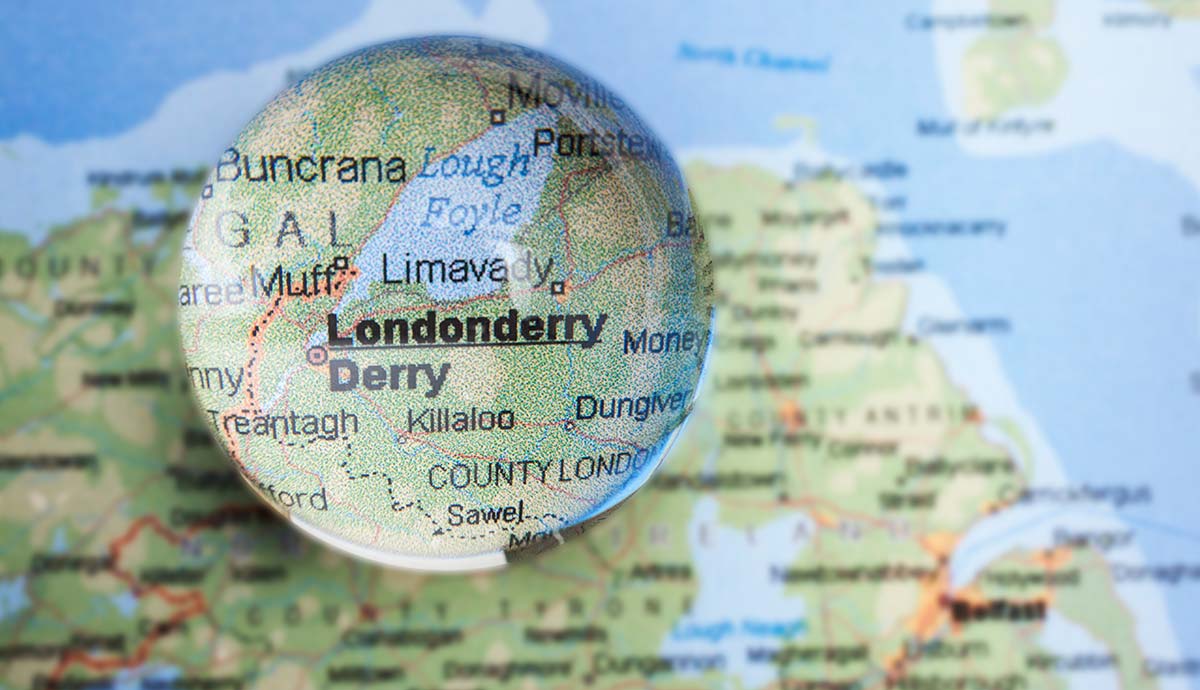
WWW.THECOLLECTOR.COMWhy Derry Has Been at the Heart of Northern Irish History Since the 17th CenturyWhen scores of Scottish Presbyterians and English Anglicans first set foot in Ulster, then the most Gaelic region of Ireland, in the early 17th century, they may not have imagined that their presence on Irish soil would lay the foundations for centuries of conflict. Generations of 20th-century men and women, both Protestant and Catholic, would pay with their lives for the decision of a Protestant English king three centuries earlier, James I (1566-1625), to colonize Ulster and consolidate his power. In a sense, the history of Derry/Londonderry is a lens through which we can read and study Irish history.A Border TownThe Tower Museum in Derry/Londonderry, photograph by K. Mitch Hodge. Source: UnsplashDerry is a city of many names. Among its Protestant and Unionist population, as well as within the United Kingdom, it is usually referred to as Londonderry, reflecting its loyalty to and association with London and the United Kingdom. Catholics and Nationalists prefer the name Derry, an anglicization of Doire from the Old Irish (or Old Gaelic) name Doire Calgaich, meaning oak wood of Calgach. It is believed to be in honor of a (now unknown) pagan or of Calgacus, although the latter interpretation is less likely.Historically, the city walls, now lined with more than 20 cannons and fully accessible on foot, have never been breached despite the many sieges the city has withstood over the centuries, hence, Derrys nickname the Maiden City. Derry is the only city on Irish soil to have completely intact and walkable city walls.The River Foyle, Derry/Londonderry, photograph by K. Mitch Hodge. Source: UnsplashThe border between the Republic of Ireland and Northern Ireland, a part of the United Kingdom, curves just around Derry/Londonderry, skirting the outskirts of the city. To the west, the border runs parallel to the River Foyle, a river which is itself a symbol of the border, as it originates from the confluence of the Finn and Mourne rivers and straddles two Irish towns, Lifford and Strabane, which are themselves divided by the border. While Lifford is in County Donegal, one of the 26 counties of the Republic of Ireland, Strabane, on the east bank of the Foyle, is in County Tyrone, one of the six counties of Northern Ireland.The River Foyle also runs through Derry/Londonderry, one of the oldest continuously inhabited places in Ireland, and divides the city into two areas: the so-called Cityside (on the west bank of the river) and the Waterside (on the east bank of the Foyle).Martin McGuinness (center) with Gerry Adams (right) and Caomihghn Caolin (left) at Wolfe Tones grave on June 22, 1997. Source: Wikimedia CommonsIt was the construction of the first wooden bridge over the Foyle in 1789-1791 that led to the creation of the Waterside, now a predominantly Protestant (and Unionist) area. The Cityside, on the contrary, is home to Derrys Catholic (and Republican) population. Today, the two areas are linked by three bridges, the Craigavon Bridge, the Foyle Bridge, and finally the Peace Bridge.Opened in June 2011, the Peace Bridge physically and symbolically connects Ebrington Square in the Protestant Waterside and the Guildhall, in the Catholic Cityside. The opening ribbon-cutting ceremony was attended by then First Minister of Northern Ireland Peter Robinson, then the Deputy First Minister Martin McGuinness (1950-2017), and then Taoiseach Enda Kenny, as well as the EU Commissioner Johannes Hahn and former Social Democratic and Labour Party (SDLP) leader John Hume (1937-2020).From the Plantation to the Rebellion of 1641King James I, 1595. Source: National Galleries of ScotlandThe Irish Rebellion of 1641 shaped the perception of Derry as a loyal Protestant stronghold and set the stage for further division and death. Like many other violent events in Northern Irelands history, the rebellion had its roots in the Plantation, the colonization and settlement of Ulster by King James I in the 17th century. It was during the Plantation, between 1613 and 1619, that the walls of Derry were built and that the city was officially renamed Londonderry in the Royal Charter of 1613.More than ten centuries earlier, in the mid-6th century, St. Columba (or Colmcille) had built a Christian monastery on the west bank of the Foyle on land granted to him by a local king. It was on this land that Derry/Londonderry was eventually built. In the 6th century, Derry was still known as Doire Calgaich and remained a predominantly monastic settlement with people living in the surrounding area.From 1609, thousands of acres of land in the counties of Donegal (pictured here), Cavan, Tyrone, Armagh, and Londonderry were distributed to Protestant landowners, photograph by Conor Rabbett. Source: UnsplashFrom 1609, however, the British Crown embarked on a major colonial project, the so-called Plantation of Ulster. On the one hand, the Crown wanted to bring the region, then one of the most Gaelic areas in Ireland, under its control and to spread Protestantism and English laws. On the other hand, it also wanted to completely eliminate the rule of the native Gaelic-speaking Irish lords. As a result, thousands of Anglican and Presbyterian settlers (planters) from southern Scotland and northern Great Britain who were loyal to the Crown were encouraged to move to Ulster.Derry/Londonderry was founded as a Protestant town and remained a predominantly Protestant town for almost two centuries, from the early 1600s to the late 1700s. During the Plantation, thousands of acres of land in the present counties of Donegal, Cavan, Tyrone, Armagh, and Londonderry were confiscated and distributed to Protestant landowners.Map of Ulster published by Johannes Janssonius (1588-1664) in 1646. Source: Wikimedia CommonsThousands of Gaelic Irish Catholic families were dispossessed and lost their lands and influence. Sir Phelim (Felim) ONeill (1604-1653), one of the leaders of the Irish Rebellion of 1641, was one of them.During the seven-month rebellion, which lasted from October 23, 1641, to May 1642, ONeill and his men were responsible for occupying strategic points and towns throughout Ulster, from Dungannon to Lisburn, from Derry to Coleraine. In mid-November, Irish rebels marched 100 Protestant prisoners from the Loughgall prison camp to a bridge over the River Bann at Portadown, stripped them naked, and forced them off a broken wooden bridge down into the cold river below. Anyone who tried to swim ashore was shot with muskets. The Portadown massacre was the largest and bloodiest (but not the only) massacre of Protestants during the rebellion.During the Plantation, thousands of acres of land in Tyrone (pictured here is Omagh, Co. Tyrone) were confiscated and distributed to Protestants, 1900-1939. Source: Wikimedia CommonsAt this time, Derry/Londonderry became a refuge for thousands of Protestants who had fled from the surrounding countryside, which had been devastated by clashes between the Catholic Irish rebels and the British forces. The 1641 Rebellion and the massacres of Protestants that took place in various Ulster counties, from County Armagh to Tyrone, served to exacerbate sectarian divisions and deepen mistrust between the Irish Catholic population and Protestant settlers, not only in Derry/Londonderry but throughout Ulster. Indeed, because of its strategic location and defensive walls, Derry was chosen by the Crown as a military base to restore order in Ulster.Ensuring Protestant AscendancyKing James II landing at Kinsale, in Ireland in an attempt to regain his throne during the War of the Two Kings, 1873. Source: Wikimedia CommonsBrian Walker effectively sums up the history of Ulster when he writes in his article for the Irish Review: These three dates mark what are often regarded as key events in Unionist and Protestant history. 1641 is the date of the outbreak of the rebellion in Ireland, 1689 is the year of the Siege of Derry, and 1690 marks the date of the Battle of the Boyne. () 1641 represents a time of betrayal and death, 1689 marks a famous siege, while 1690 is the date of a great victory.The Siege of Derry in 1689 was a direct consequence of the Glorious Revolution of 1688-89, which led to the deposition of the (Catholic) King James II (1633-1701) in favor of the (Protestant) William III (1650-1702), or William of Orange, and his wife Mary II (1662-1694), James IIs daughter. In Ulster, the Catholic population largely supported James II, while the Protestants sided with William of Orange.William III as Prince of Orange with the four preceding Stadthouders, painting by Romeyn de Hooghe. Source: The Metropolitan Museum of ArtWhen Jamess troops, the Jacobites, arrived outside Derry in April 1689 and the (deposed) king himself called on the city to surrender, the defenders fired cannons at them from the city walls. Some of them were heard shouting No surrender! a slogan that can still be seen painted on the walls of Derry more than three centuries later.The siege, the longest in Irish history, lasted for 105 days, and up to 10,000 people died within Derrys fortified walls, mostly from disease and starvation. Relief came three months into the siege in the form of four ships, the HMS Dartmouth and three merchant ships, which managed to break through a blockade on the River Foyle and bring food to the exhausted people of Derry. By the end of the month, Jamess forces had lifted the siege.Mural in the Waterside reading Londonderry West Bank Loyalists Still Under Siege, No Surrender, 2005. Source: Wikimedia CommonsOn the morning of August 1, the besieged, leaning over the walls of Derry, discovered that the army was gone. The Siege of Derry, like the Battle of the Boyne, is part of what British historians call the Williamite War (1689-1691). In Ireland, it is known as the War of the Two Kings.The Boyne is the name of a river that rises near Carbury in County Kildare, in the Republic of Ireland and flows northeast through County Meath and County Louth before emptying into the Irish Sea. In July 1690, a force of some 23,000 Irish Catholics and French allies led by James II clashed with (and were defeated by) William of Oranges armya multinational force of 36,000 English, Danish, Dutch, and Huguenot menon the banks of the Boyne River at Drogheda.The River Boyne outside Trim, County Meath, photograph by Aidan Murphy. Source: Wikimedia CommonsIf the Siege of Derry had consolidated Protestant control in Ulster, the Battle of the Boyne dashed the Jacobite hopes of restoration. It also cemented William IIIs rule over Ireland (as well as England and Scotland). From this point on, the Penal Laws further segregated Irish society, preventing Catholics (and Protestant dissenters) from participating in public life, serving in Parliament, joining the army, possessing firearms, marrying Protestant men or women, inheriting Protestant land (i.e. land that had previously belonged to a Protestant), buying land on a lease of more than 31 years, or building stone Catholic churches near main roads. William IIIs victory at the Battle of the Boyne had the effect of securing the ascendancy of Anglican Protestantism in Ireland (and particularly in what is now Northern Ireland) and set the stage for the Irish Rebellion of 1798.The Partition of 1921A British Army armored vehicle in Dublin during the War of Independence, 1920-21. Source: The National Museum of IrelandBy 1850, although Catholics comprised most of the population in Derry, the city was ruled by a Protestant oligarchy. This significant imbalance continued after the Government of Ireland Act 1920 (or Fourth Home Rule Bill) and the 1921 partition of the island of Ireland into the Irish Free State (which later became the Republic of Ireland) and Northern Ireland (which remained part of the United Kingdom).By the end of the 19th century, Hennessey writes in his A History of Northern Ireland, There was a new divide, that between nationalists who wanted self-government for Irelandwhich had been absorbed into the United Kingdom of Great Britain and Ireland in 1801and unionists, who wished Ireland to remain part of the United Kingdom. This divide was to shape the history of Derry/Londonderry and Ulster throughout the 20th century.Eamon de Valera, Arthur Griffith, Robert Barton, Count Plunkett, and Lord Mayor Laurence ONeill traveled to London in July 1921 to meet British Prime Minister Lloyd George after the Anglo-Irish Truce, 1921. Source: The National Museum of IrelandIn early June 1920, Derry entered a week of bloodshed. At the time, the West Bank was still a largely mixed area, where Catholics (who were the majority) still lived side by side with Protestant families. After a group of Unionists shot dead five people, Nationalists began to mobilize.Over the next few days, as gunfire ripped through the walled city, shops were looted and destroyed, many residents were forced to flee their homes, thousands of Catholics and socialist workers were expelled from their workplaces, and bystanders were caught in the crossfire. On June 24, ten-year-old George Caldwell was killed as he looked out of a window in Nazaret House. A woman, Margaret Mills, was killed in her own home after answering a knock at her front door. Howard McKay, the son of the governor of the Apprentice Boys of Derry, was abducted, blindfolded, and shot by nationalist gunmen. Bodies were found floating in the Foyle.Derry in the early 1970s. Source: The Museum of Free DerryBritish troops arrived in the city on June 23, 1920, to restore order alongside the Royal Irish Constabulary (RIC), further enraging Nationalists. In the two years between July 1920 and July 1922, 557 people were killed in the widespread sectarian violence that accompanied the birth of Northern Ireland. The majority of them were Catholic. The level of violence that shook Derry/Londonderry in June 1920 was a grim harbinger of what would happen in Derry some 50 years later, with the outbreak of the Troubles.A City of Riots?The Free Derry Corner in late 1969. Source: The Museum of Free DerryDerry/Londonderry was one of the cities that suffered most in the early years of the Troubles, the conflict that brought death and destruction to the people of Northern Ireland and isolated the province from the rest of Ireland and Europe for thirty years, from 1968-69 to 1998. Although the Troubles did not begin on a specific date, most historians agree that the conflict started on the streets of Derry/Londonderry in August 1969, following the Battle of the Bogside.The Troubles, writes Irish historian Niall Dochartaigh in his From Civil Rights to Armalites (1997), grew out of a situation of rapid social and political change that began after the end of the second World War in 1945, changes that, year after year, eventually disrupted a set of relationships, in particular a tradition of quiescence by the Catholic population in Northern Ireland, on which the very existence of the Northern Ireland state had been based.An IRA volunteer surrounded by children in Circular Road in the predominantly Nationalist Creggan neighborhood in Derry, photograph by Eamon Melaugh. Source: The Museum of Free DerryThe activism of the Northern Ireland Civil Rights Association (NICRA), an organization founded in 1967 which began campaigning for reforms in housing allocation and voting rights through marches modeled on those of the American civil rights movement, was one of the factors which, in the eyes of many Protestants and Unionists, posed a threat to the status quo. It was during a peaceful march organized by NICRA that 13 demonstrators were killed by British soldiers from the 1st Battalion of the Parachute Regiment in the Bogside on January 30, 1972, during one of the most violent years of the Troubles. Another died of his wounds a few months later. All the victims were Catholics. In the aftermath of the massacre, now known as Bloody Sunday, thousands of young men and women joined the ranks of the Irish Republican Army (IRA).The Protestant ExodusThe now famous You Are Now Entering Free Derry, back in 1969. Source: The Museum of Free DerryNiall Gilmartin notes that the violence of the Troubles has typically been measured using standardised assessments, assessments that have primarily taken into account the fatality rate, the number of people injured and the economic impact of bombings and related attacks, and that much of the focus with regards to addressing legacy has, understandably, centred on the needs and interests of those who lost loved ones or those physically and psychologically harmed through shootings and bombings. But there are other forms of violence, harm and trauma which need to be considered.The so-called Protestant Exodus is one of them. Following the outbreak of the Troubles in 1969, thousands of Protestants decided to leave their homes and flee Derry. In the decade between 1971 and 1981, the Protestant population of Derry fell from 8,459 to 2,874. By 1991, it had fallen to 1,407, with a reduction of 7,052 in just two decades.Members of the INLA (Irish National Liberation Army) following the funeral cortege of hunger strikers Patsy OHara in Derry, on May 25, 1981. Source: The Museum of Free DerryForced displacement during an armed conflict is traumatic in itself, as it involves the disruption of ones community and social networks. Many of the people interviewed by Niall Gilmartin and whose stories he shares in his Trauma, Denial, and Acknowledgment: The Legacy of Protestant Displacement in Londonderry/Derry during the Troubles, recall the heartbreak of leaving their homes, homes that you had paid for, that you had furnished and done up, built on a bathroom and kitchen.Interviewed by the News Letter, Doris Carruthers, a Protestant living with her husband and three-year-old child in a predominantly Catholic area in 1969, recalls how, after the Troubles broke out, we had to live with the back windows boarded because Jeanette was a young child in the back bedroom. We had the wire cages on the front of the house. We had to basically barricade ourselves into the house.Peace Bridge, Derry/Londonderry, photograph by K. Mitch Hodge. Source: UnsplashIn 1971, the Carruthers were finally able to move into the newly built Newbuildings estate in the Waterside, on the east bank of the River Foyle. A report commissioned in the autumn of 2016 by the Pat Finucane Centre, a non-party political, anti-sectarian human rights group, named after Irish human rights lawyer Pat Finucane, identified housing and employment issues as some of the factors behind the Protestant Exodus. However, based on his own field research, Niall Gilmartin writes that The overarching reasons for many were intimidation (direct and indirect), the targeting of RUC and UDR personnel by the IRA, bomb attacks in the city centre, feelings of insecurity and vulnerability, and an overwhelming sense that Protestants, their identity and culture were not welcome in the West Bank.Shipquay Street, Derry/Londonderry, photograph by K. Mitch Hodge. Source: UnsplashSince the signing of the Good Friday Agreement in 1998, Derry/Londonderry seems to have struck a new, albeit precarious, balance. The checkpoints have largely disappeared. The city center has been revitalized. In 2013, Derry/Londonderry was named the UK City of Culture, attracting visitors from across Ireland and Europe. And while parades and commemorations, particularly in July, continue to highlight the long-standing sectarian divisions at the heart of Derry/Londonderry, for more than two decades after the end of the Troubles, its citizens have been able to work together to secure peace and cross-community dialogue and cooperation.0 التعليقات 0 المشاركات 27 مشاهدة -
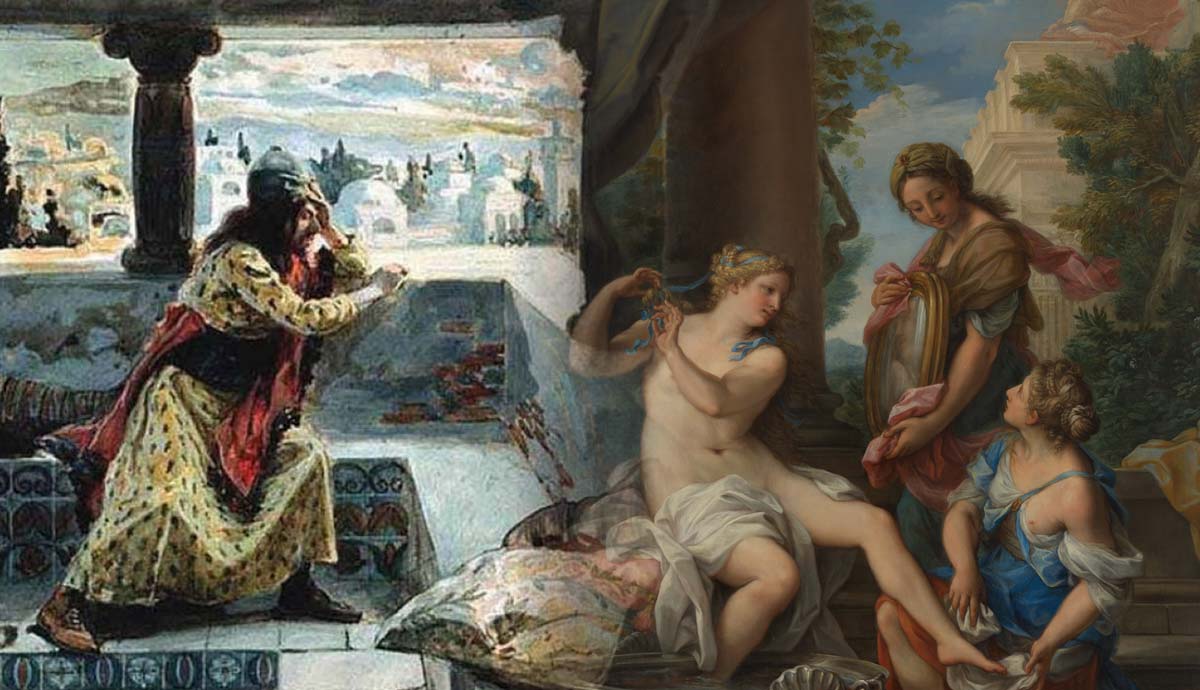
WWW.THECOLLECTOR.COMHow Bathsheba Went From Davids Greatest Sin to His Heirs MotherWhen it comes to biblical immorality, no one quite delivers like King David upon seeing Bathsheba. Their story reads like a fever dream of soap opera scandal: a kings rooftop lust, a bathing beauty, a husband sent to his doom, and a prophet with receipts from the Almighty. Oh, and lets not forget the aftermath: a dead child, a cursed lineage, and a second son who would go on to build the Temple and become one of the wisest (and most infamous) monarchs in history. Bathsheba emerges as a cunning power player, securing her son Solomons place on the throne. The tale is as layered as it is unsettling, leaving us questioning the nature of power, agency, and how one royal misstep has echoed throughout history.King David on a Rooftop, Instead of Fighting a WarKing David Spies Bathsheba, by James Tissot, 19th century. Source: PicrylBy the time of the infamous rooftop incident, David had been king for over 15 years. He had transformed from the shepherd boy who took down Goliath to a seasoned ruler, well-established in his palace in Jerusalem. His kingdom was flourishing, his conquests were piling up, and his personal life was, lets say, complicated. With six wives already sharing his royal quarters, David wasnt exactly experiencing poverty in the consort department.By ancient custom, spring was the season when kings went out to war. Yet David, the once-hands-on warrior-king, stayed behind in his palace, delegating the campaign to his loyal general Joab. Joab and the Israelite army were laying siege to the Ammonite capital, Rabbah; a grueling campaign. Among those enduring the brutality of the battlefield was Uriah the Hittite, one of Davids elite soldiers. Calling him a Hittite, and remembering him thusly, also seems to be a bit of a literary backhand. He was probably a second-generation Israelite, as the name Uriah isnt one of Hittite origin.Uriah was part of the Thirty, a group of highly skilled warriors who formed the backbone of Davids military might. To reach that rank required immense courage and skill; Uriah had earned this place. Yet as he fought on the front lines, his king stood on his palace rooftop, enjoying the comforts of home. It was there that David noticed Uriahs wife, Bathsheba, bathing nearby.The story spiraled from there. David, already married in the multiple, was overcome by his desire for Bathsheba and summoned her to a meeting.The Girl on the RooftopBathsheba Mourns, by Henri de Triqueti, 19th century. Source: Wikimedia CommonsBathshebas story invites modern readers into deeply uncomfortable territory. When modern folk imagine her bathing on a rooftop, the titillating scene conjured is often one of a grown woman intentionally seducing the king, soaping up where he can easily spy on her. But lets pause and look at the context: Bathsheba was likely very young. Young enough, in fact, that she just may have been purifying herself after experiencing her first menstrual cycle.Bathsheba wasnt a stranger to King David, either. Her grandfather, Ahithophel, was one of Davids most trusted advisors, a man renowned for his wisdom and influence. Her father, Eliam, had been one of Davids elite warriors, also counted among the Thirty. Bathsheba had grown up in a family that served Davids court and military. She wasnt some unknown beauty who suddenly appeared on a rooftop one day. She was part of the extended network of loyalty and service that bolstered Davids reign.Additionally, historical context can clear up a lot of common misconceptions about the rooftop. The bath Bathsheba was taking was most likely part of a mikvah, a ritual purification mandated by Jewish law. She wasnt luxuriating in plain sight to attract attention; she was following religious tradition. The very idea that she was seducing David collapses under scrutiny. If anything, she was fulfilling a religious and cultural obligation, not orchestrating an affair.Ancient Mikvah, Jerusalem. Source: Wikimedia CommonsWhat makes Bathshebas situation even more tragic is her youth and vulnerability. She had been married to Uriah the Hittite, but given her age, their union was likely a political arrangement rather than a marriage of equals. Some scholars argue she may have been too young for the marriage to have even been consummated yet.The story of Bathsheba as a siren says more about historical biases than the truth of her circumstances. She was a young girl from a family who gave themselves into the service of the royal house, married to a soldier, and likely living under the shadow of courtly politics. Her choices were shaped by the world around her, where a kings summons was not a request but a command. She simply had no choice.David Summons Her, She Gets Pregnant, Then What?Illuminated text, Bathsheba Bathing, Medieval. Source: GetArchiveThey meet. They know each other. Then, as far as the king is concerned, the tryst is over and his hunger is sated. That is until Bathsheba notifies him that she is carrying proof of the affair. If, as some suspect, she hadnt known any man before the king, her life was suddenly in even more dire straits. The consequences of being labeled an adulterer were fatal: stoning was the punishment prescribed by law. Bathshebas fate, and the fate of the child that grew within her, were tied to Davids decisions. Both of their survival depended on the kings willingness to protect her, and his choices left much to be desired.Davids first attempt to cover up his actions was riddled with faulty smoke and mirrors. He summoned Uriah back from the battlefield, ostensibly for a report on the war. The kings real intention was to send Uriah home to sleep with Bathsheba, creating the illusion that her child was conceived within the bonds of matrimony. However, Uriahs loyalty to his comrades and his unyielding sense of duty prevented him from enjoying comforts denied to his fellow soldiers. Not even Davids ploy of getting the soldier drunk could sway him.When deception failed, Davids solution turned deadly. He sent Uriah back to the front lines with sealed orders instructing Joab to position him where the fighting was fiercest and then withdraw support, ensuring Uriahs death. The man unknowingly delivered his own death sentence. The plan worked, and Uriah was killed in battle; a betrayal that left Bathsheba widowed and free to remarryquickly.Bathsheba Bathing, from the Book of Hours, 1300-1500. Source: GetArchiveAfter a brief mourning period for Uriah, Bathsheba was brought to the palace and married to David. To the public, it may have seemed like an act of gentle stewardship, a king caring for the widow of a soldier who had served him well. In reality, it was damage control. But the prophet Nathan saw through Davids ploy and delivered a devastating rebuke. In a parable that mirrored Davids sins, Nathan likened him to a rich man who stole and slaughtered a poor mans only lamb. When David condemned the hypothetical man, Nathan struck with the truth: You are the man!Nathans prophecy foretold violence and tragedy within Davids household; a punishment that began with the death of Bathshebas child. The baby did not live longer than seven days, leaving Bathsheba to grieve yet another loss. In a matter of months, she had been torn from her first marriage, thrust into a dangerous relationship with a much older man, and lost her firstborn child.Again, somehow, she managed to pick up the pieces and continue living. She went on to have four more sons with David: Shammua, Shobab, Nathan (not to be confused with the prophet), and Solomon. Her enduring friendship with the prophet Nathan, who had foreseen that Davids sins would lead to death in her own family, suggests a remarkable strength and resilience in the face of such overwhelming trauma.Enter SolomonBathsheba Leading Solomon, by Gilles Rousselet, 17th century. Source: Look and LearnSolomons birth marked a turning point in Bathshebas story, both as a mother and as a woman wielding political influence in a world shaped by and for men. By the time of Solomons birth, David was nearly 50 years old burdened with a tumultuous household. Bathsheba, likely still a teenager, now had to navigate the childhood of a vulnerable son; a son whose future would shape the destiny of Israel.When Solomon was born, the prophet Nathan, who had once rebuked David for his sins, delivered a message of grace: God loved this child. While in the womb, the Almighty called this baby a Jedidiah, meaning beloved of the Lord, signaling to all his divine favor. This blessing set Solomon apart, but it was Bathshebas calculated influence that secured his path to the throne.Bathsheba at Her Bath, by Giuseppe Bartolomeo Chiari, ca. 1700. Source: The MET, New YorkThough Solomon was not Davids eldest son, Bathshebas determination ensured he was not overlooked in the scramble for succession. Davids indulgence with his other children, particularly his older sons, had already proven to produce nothing but chaos. Amnon, Davids firstborn, committed an unspeakable crime against his half-sister Tamar, and Davids refusal to act led to Absaloms vengeful murder of Amnon. Absalom, in turn, declared himself king and forced David into a humiliating retreat. After all, if David couldnt protect his own daughter or take retribution on her abuser, how could he effectively run a country? Through all this, Bathsheba and Solomon witnessed firsthand the destructive consequences of unchecked ambition and parental inaction.Bathsheba understood the precarious position Solomon was in. Absalom, with his striking beauty and magnetic charisma, had stolen the hearts of the people and likely dismissed Solomon as a mere child. It wasnt this older brother but Bathsheba who saw what others overlooked: Davids growing affection for Solomon and the divine promise attached to him.Young Mother and Child, by Elisabeth Baumann, 19th century. Source: CreazillaAs David aged, his remaining sons jockeyed for power. Adonijah (the next in line after Absaloms murder of Amnon and then his own death after usurping the crown) declared himself king with the backing of key allies. During this final power grab, Bathsheba, in a masterful display of political acumen, approached the ailing David alongside the prophet Nathan. She reminded the king of his earlier vow that Solomon would succeed him all while exposing Adonijahs premature claim to the throne. Her timing and tact were impeccable, compelling David to publicly anoint Solomon as his heir, effectively quashing Adonijahs rebellion before it could take hold.Bathshebas role didnt end with securing Solomons kingship. She remained a trusted advisor and a powerful presence in the royal court (after all, she was now queen mother). Even after Davids death, she skillfully navigated palace intrigues, including Adonijahs attempt to marry Abishag, one of Davids concubines; a move that Solomon interpreted as a threat to his reign. It was Bathsheba who brought this request to Solomon, a gesture that demonstrated her continued influence. She likely knew the outcome would not extend Adonijahs lifespan.Solomon grew to be a man of contrasts, renowned for his wisdom and wealth, but flawed by his insatiable appetite. His request for wisdom at Gibeon earned him divine favor, and his legendary judgment solidified his reputation as Israels wisest ruler. Yet, as he aged, Solomons heart turned toward the foreign gods of his many wives and concubines, leading to spiritual decline and the eventual fracturing of the kingdom after his death. Bathsheba probably did not live to see this change of character.Chalk Imagining of Young King Solomon, by Benjamin Robert Haydon, 1812. Source: The MET, New YorkAs the mother of the wisest king of Israel, she left an indelible mark on history. One can only wonder what Bathsheba thought of Solomons many marriages and his eventual straying from Yahweh. Did she warn him against repeating Davids mistakes, or was she powerless to prevent her son from repeating history?Though the Bible leaves much of Bathshebas inner life to speculation, her actions speak volumes. She rose above scandal and tragedy to become a mother of kings and a wise strategist in a complicated court. Solomons reign, with all its splendor and flaws, was a testament to the strength and influence of the woman who ensured he could live long enough to flourish.0 التعليقات 0 المشاركات 29 مشاهدة