5 Places in America Where Indigenous Traditions Still Anchor Daily Life
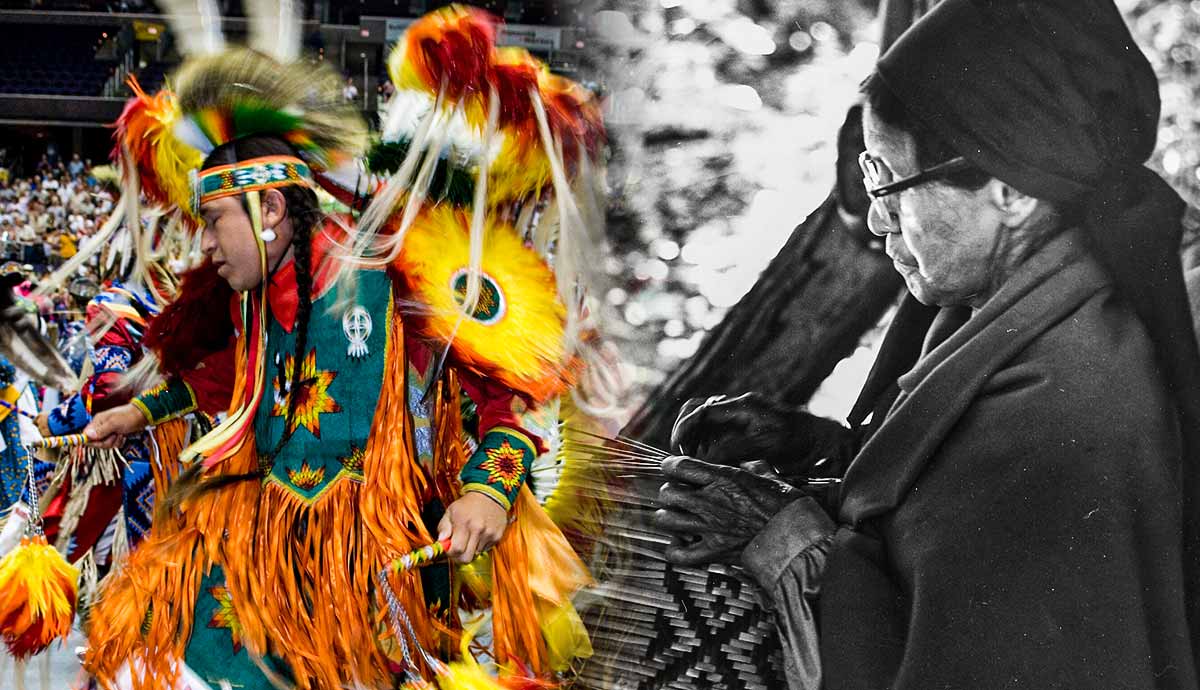
America is home to hundreds of diverse Indigenous nations. When colonization began in the Age of Exploration, these groups were suppressed, relocated, and endured genocidal actions at the hands of governments and settlers. Though Indigenous populations suffered under these measures, and assimilation forced its hand, Americas native peoples held onto their sacred traditions as time marched on. Even today, in the 21st century, Indigenous ways of life that date back hundreds of years are curated and preserved for future generations.1. Taos Pueblo: Continuously Inhabited for Over 1,000 YearsTaos Pueblo, New Mexico. Source: Wikimedia CommonsIndigenous people have inhabited the Taos Valley in New Mexico for about a thousand years. A pueblo, or village, was built there most likely between 1000 and 1400 AD. The structures making up the pueblo were built from adobe, a mixture of soil, water, and straw that was sun-dried into bricks or poured into forms. Parts of these original structures still exist in Taos Pueblo and are considered to be the oldest continuously inhabited places in the United States.An Ansel Adams shot of a church in Taos Pueblo in 1942. Source: National Archives/Wikimedia CommonsFrom a distance, the pueblo appears to be one large structure, but it is actually numerous individual homes built side by side and in levels, sharing common walls. Originally, the only way into these buildings was via the roof, but doors and windows have been added in subsequent years. Today, about 150 people live within Taos Pueblo full-time, and are members of the Taos tribe, which in total numbers about 1,900 people on tribal lands. Other people keep seasonal homes or have built modern homes nearby in the valley. The villages operations are overseen by a Tribal Council, made up of about 50 male elders. This group appoints a tribal governor and war chief annually. The governor and his accompanying staff deal not only with issues within the pueblo and tribal lands, but with non-Native relations.A placard welcomes visitors to Taos Pueblo. Source: Wikimedia CommonsThe pueblo is largely supported by the tourist trade, with over 1.7 million day visits reported in 2022. This allows for around 3,000 jobs to be supported by tourism in Taos County. In addition to viewing the ancient buildings themselves, visitors are drawn to crafts made by traditional artisans, including pottery and silverwork such as jewelry. Traditional dances such as the Turtle Dance, celebrating the New Year, and other events are open to spectators.2. A Traditional Village in North CarolinaA woman weaving a basket at Oconaluftee Village, around 1963. Source: National Archives and Records Administration/Wikimedia CommonsIn the heart of North Carolinas Smoky Mountain region lies a living history museum offering the public a look at life within an 18th-century Cherokee Village. Though the employees of Oconaluftee Indian Village do not live as their ancestors did 24/7, their demonstrations of traditional practices have become an important part of their daily lives. Real-life performances of dancing, music, and more connect visitors with history in an engaging way. Artisans utilize historic practices not only to engage with visitors but also to preserve their cultural heritage. In addition, employees wear traditional dress daily.The Village opened to the public in 1952, and though it is a re-created replica of a village, it incorporates numerous traditional aspects and speaks to accuracy in its re-imagined homes, ceremonial areas, and council house.3. Traditions Persist on Pine RidgeDrying meat on Pine Ridge in 1908. Source: Library of Congress/Wikimedia CommonsThe Pine Ridge Reservation in South Dakota is home to the Oglala Lakota and is a place where rich history meets modern challenges. The site of the 1973 Wounded Knee Occupation, Pine Ridge has a legacy of political strife that has contributed to todays hurdles. Those living on the reservation face an unemployment rate of over 80%, a lack of educational funding, and poor healthcare access. Despite these obstacles, the citizens of Pine Ridge remain dedicated to many of their peoples traditions. Forms of expression such as beadwork, painting, quilting, and sculpture continue to thrive. Ceremonies are essential to the Oglala culture, including naming ceremonies, sweat lodge practices, and the Sun Dance.A Lakota mans depiction of the Sun Dance, 1918. Source: Smithsonian Institution/Wikimedia CommonsLargely considered the most important traditional ceremony of the Lakota people, along with several other Plains tribes, the Sun Dance is a time of great renewal. A trimmed and decorated cottonwood tree serves as the central pole, and dancers begin dancing around it at sunrise. Before dancing, their bodies are purified through a special ceremony called Inipi. Traditionally, lengths of rawhide were attached to the central pole and pierced into the chest of the dancers, attaching them to the pole. Dancing would continue, with the dancers hoping to eventually release themselves through the tearing of their flesh in a practice of self-sacrifice and cleansing. Singing, praying, and chanting may take place at various points during the ceremony.4. Gathering Sweetgrass in MaineBaskets made from sweetgrass. Source: Flickr/Wikimedia CommonsCurrently, four Indigenous tribes inhabit the state of Maine: the Maliseet, Micmac, Passamaquoddy, and Penobscot. Collectively, these tribes are known as the Wabanaki, which means People of the Dawnland. Among the traditions of the Wabanaki is the practice of gathering sweetgrass, often used in basketmaking. It also has its place in ceremony and traditional medicine. Sweetgrass is a perennial native grass, earning its name from its sweet aroma. However, beginning in the early 20th century, Indigenous peoples were prohibited from harvesting sweetgrass within Acadia National Park.Sunset over Acadia National Park. Source: Flickr/Wikimedia CommonsAcadia is one of the most visited parks in the National Park System, with around 4 million visitors a year. It covers approximately 50,000 acres along the Maine coast. It includes mountains, forests, marshes, and beaches, with habitats that support sweetgrass. In 2015, the National Park Service announced new regulations that would allow for the gathering of certain plants and their parts by federally recognized Indigenous tribes within national parks. This wasnt a blanket law, still requiring agreements and other steps before gathering could occur, most notably an environmental assessment to determine that gathering for traditional use would have no significant impact on the resources within the park.A stand of sweetgrass. Source: Flickr/Wikimedia CommonsIn a show of cooperation, park officials worked with Wabanaki representatives and scientists to study the potential effects of sweetgrass gathering, and in 2024, released a statement announcing a Finding of No Significant Impact for the collection of sweetgrass for traditional purposes. This allowed the federally recognized tribes of Maine to move forward in entering agreements with the National Park Service for traditional sweetgrass harvesting. Though it is not anticipated that traditional plant gathering will impact the ecology of Acadia, the situation will continue to be studied and monitored.5. The Indian Shaker Church Combines CulturesThe first Indian Shaker Church, circa 1892. Source: US Government Printing Office/Wikimedia CommonsThough not traditional by some standards, the Indian Shaker Church, centered in the Northwestern United States and Canada, combines Christianity with Coast Salish spirituality. Founded in 1882 near Shelton, Washington, the religion remains active today.The religion was founded by John and Mary Slocum and emphasizes a belief in Jesus, along with healing rituals and gestures. Slocum was called to spread his religious beliefs after a near-death experience during which he reported God spoke to him. Congregants are encouraged to abstain from alcohol, tobacco, drugs, and gambling. Though considered a Christian sect, non-Indigenous people are generally not invited to participate in the Indian Shaker Church.An Indian Shaker church on the Tulalip reservation in Washington. The church was built in 1924. Source: Wikimedia CommonsThe church has faced criticism and discrimination on multiple fronts throughout its existence. Bans against Indigenous religions were common in the late 19th and early 20th century in both the United States and Canada, punishable by arrest. On the other hand, some of those practicing more long-standing Indigenous religious traditions looked upon the Shaker Churchs association with Christianity with suspicion. It is unknown how many practicing Indian Shakers exist today, but this uniquely hybrid religion remains alive and well, with numerous physical church locations throughout the Pacific Northwest and western Canada.Photo of a dancer from the National Powwow in 2005. Source: Smithsonian Institution/Wikimedia CommonsDespite hundreds of years of existence, certain Indigenous cultural traditions are just as alive today as they were generations ago. Tribal members have persisted in preserving these ways of life through numerous challenges and attempts to stop them. Still, Indigenous people throughout America have demonstrated a commitment to ensuring that their sacred heritage survives to be taught to future generations. Cultural customs rely on this dedication to memory to persevere and thrive.










 English
 Arabic
 French
 Spanish
 Portuguese
 Deutsch
 Turkish
 Dutch
Dutch
 Italiano
 Russian
 Portuguese (Brazil)
 Greek
Greek