• This new adult content ban is boosting VPN popularity
    This new adult content ban is boosting VPN popularity Sometimes I feel a bit like a broken record writing VPN news. Over the course of the last year, many countries around the world have started to enforce new laws around internet access that usually result in people having to upload their ID if they want to access content that has been deemed harmful to children, and it has happened...
    0 Комментарии 0 Поделились 14 Просмотры
  • WWW.THECOLLECTOR.COM
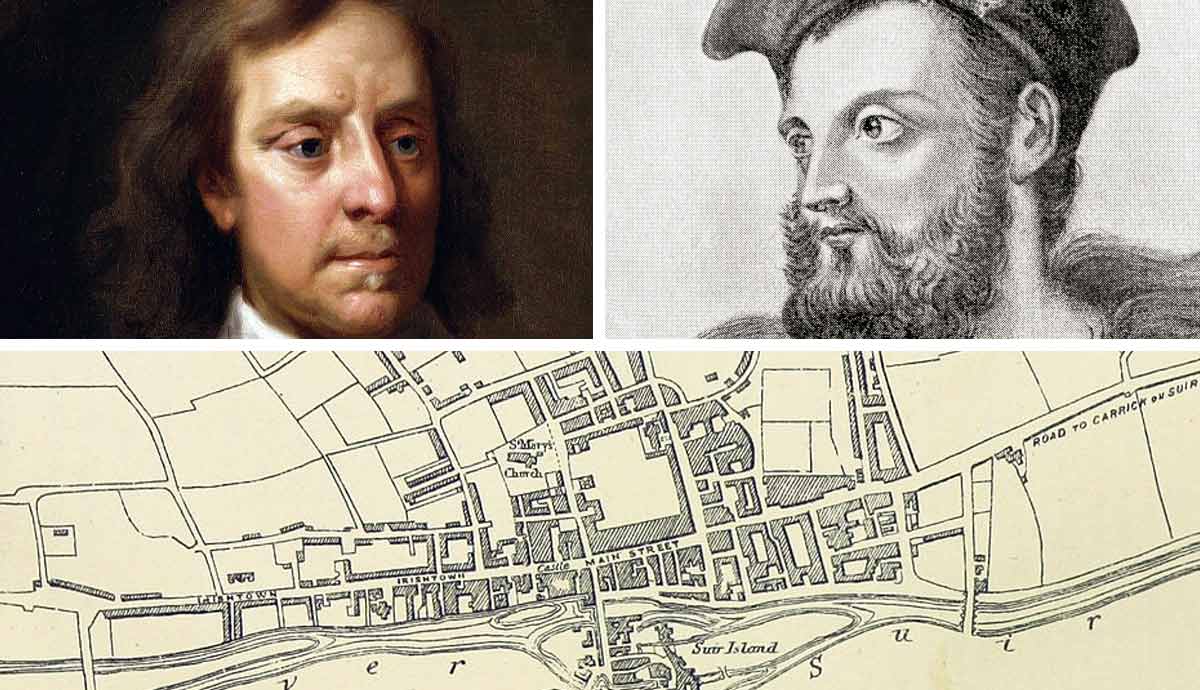
    Why the Siege of Clonmel Was Oliver Cromwells Greatest Military Reverse
    Nine months was all it took for Oliver Cromwell to alter the landscape of Ireland forever. He did it with a hammer, blunt and forcefully applied to the walled towns that resisted him. But such bluntness came at a significant cost to his famous New Model Army, and never more so than on the banks of the river Suir in the spring of 1650.Cromwells NemesisOliver Cromwell by Samuel Cooper, 1656. Source: National Portrait GalleryOliver Cromwell was a man haunted by the past. Never more so then of his last month in Ireland when his hitherto invincible army smashed itself bloody against the stout walls of Clonmel in county Tipperary. Of his coming to the town and the storming of it, Cromwell was silent. His son-in-law, Henry Ireton, bore no such qualms, remarking long after of the horrors that befell the army on the River Suir. It was enough to turn him towards thoughts of vengeance against the man who had so blackened Cromwells eye, and when the city of Limerick succumbed to Iretons army a year later, its warrior governor fell into his hands.That man who now stood with the threat of execution looming over his head, came from the line of the ONeills of Tyrone, yet was born an exile in Brussels and learned his soldering in the wars of the Spanish Kings. He was 31 before he ever set foot in Ireland, following his uncle, Owen Roe ONeill, to assist his ancestral land in a time of ruthless war. Now a decade later, with his life in balance, Hugh Dubh ONeill stood firm in the conviction that he had always done his duty and had nothing to fear. His court martial agreed, and much to Iretons consternation, Hugh Dubh ONeill departed Ireland intact.ONeills role in the storied military career of Oliver Cromwell and the New Model Army was all too brief, yet of enormous impact. For no general ever delivered unto him such a reverse as he met before the walls of Clonmel in May 1650. But his stand at Clonmel, for all the slaughter reaped upon Cromwells army, was waged in isolation in a cause that was already on its knees. A year earlier it was not so.Cromwell Smashes the Royalists in IrelandJames Butler, Duke of Ormond by Sir Peter Lely, 1665. Source: National Portrait Gallery, LondonThe internecine warfare that plagued Ireland since 1641 had cooled as Protestants and Catholics rallied to the Royalist cause of King Charles I against the rising power of Parliament. When the Parliamentarians removed the Kings head in January 1649, they simply switched their allegiance to his son, Charles II. Cromwell warned of a potential invasion of England should they succeed in taking Dublin. But the Royalists led by the Marquis of Ormond faltered before the Irish capital and were routed in August 1649.The victory of the Parliamentarians came a mere two weeks before Cromwell landed with a large army. Despite the sea sickness that attacked him during the crossing, Cromwell had cause to rejoice. Ormonds army was dispersed. It had been the only force then in the field capable of challenging his own, and reeling in defeat was unable to offer him even token resistance, except from behind the walls of Irelands towns.These Cromwell promptly set about reducing. Drogheda was the first. Nestled on both banks of the Boyne near where its waters flowed into the sea, it had withstood siege before. But Cromwell was a cavalryman at heart and wasted no time. With demands for its surrender refused, he blasted through the walls, and on September 11 fought his way in. The massacre that followed stunned Ireland and left Ormond reeling.Millmount, epicenter of Cromwells infamous sack at Drogheda. Photograph by Tommyxx, 2010. Source: Wikimedia CommonsThe annihilation of some of Ormonds finest regiments within Droghedas walls deprived him of desperately needed manpower and left few of his men eager to engage Cromwell in battle. Thus, unable to keep an army in the field long enough to contest Cromwells advance, Ormond watched helplessly as his garrisons in Leinster and Munster succumbed one by one. Some like Wexford resisted and shared the same gory fate as Drogheda. The terror sown from these two sacks alone was enough to induce the garrison of New Ross to surrender after a breach opened up in their walls. Only before Waterford did the New Model Army finally stall.Irelands greatest killer was disease, and after three months campaigning, the New Model Army had lost hundreds of men. Cromwell himself fell ill by November. On top of this, the tenacity of the Waterford garrison ensured the city would hold on until Cromwell was forced to seek winter quarters. He had been frustrated by soldiers newly entered upon the war against him, but who were as seasoned as any of the men Cromwell himself commanded. These men were opponents with whom he was to become intimately acquainted, for Ulster had joined the fight against him.The Ulstermen Come SouthOwen Roe ONeill, commander of the Ulster army, uncle of Hugh Dubh ONeill, 1856. Source: Wikimedia CommonsAmongst the diverse factions of the Catholic Confederacy of Kilkenny there stood the old Gaelic Irish of Ulster headed by General Owen Roe ONeill. His Ulstermen were forged by hard experience and equipped by Papal supplies and money into a formidable army.But now Owen Roe was a sick man, his army was exhausted from years of campaigning. Keeping his men out of Ormonds Rathmines fiasco, Owen Roe entered negotiations with the Marquis soon after. The specter of Cromwell was enough to reconcile the old foes towards an alliance. In exchange for concessions to Irish Catholics, Owen Roe agreed to place the Ulster army at Ormonds disposal. With Owen Roes condition worsening to the point he could no longer travel, he dispatched an advance force of 2,000 men under his nephew Hugh Dubh ONeill to act under Ormonds commands. Within two weeks Owen Roe died, rendering his army operationally impotent as its leadership took to squabbling among themselves. Only those already sent south would play a significant role in the fight against Cromwell.Map of Clonmel c. 17th century. A History of Cromwells Irish Campaign by Rev. Denis Murphy, 1883. Source: British LibraryLike his deceased uncle, Hugh Dubh was a man of war. Fashioned by Spains long conflict with the Dutch into a professional soldier he followed his uncle to Ulster with 15 years of military service behind him. Unluckily, however, Hugh Dubhs career in Ireland was cut short and he was forced to linger as a prisoner of war for three years. Now he led two veteran regiments of foot and several troops of horse southward. Ormond promptly placed them in Clonmel on the Tipperary side of the Suir. With 1,200 men at his command, Hugh Dubh quickly set about strengthening Clonmels defenses. An old hand at sieges, he recognized the limitations of the town.Clonmel was a rectangle with its back to the Suir and high ground to the north. Thirty-foot-high walls six feet thick encased the town of four gates with a fosse and outer ditch offering the only obstacles to an attacker before the towns walls. It was not the most imposing place in Ireland, but in Hugh Dubh it possessed a commander seasoned in siege warfare. Cromwells approach to these matters was far cruder compared to the more sophisticated sieges Hugh Dubh had known in Flanders: blast a hole in the walls and send in the infantry. It was a formula that often worked, but at a cost.The mild winter aided by the recovery of many of his sickened soldiers, prompting Cromwell to recommence operations at the end of January 1650. Leaving his winter quarters on the Munster coast, he thrust into the counties of Tipperary and Kilkenny with a three-pronged assault that bagged him several towns in the immediate vicinity of Kilkenny.Faltering Before KilkennyKilkenny, capital of the Irish Confederacy, saw Cromwells infantry falter. Photograph by Zairon, 2022. Source: Wikimedia CommonsOnce again, Cromwells rapid movements caught Ormonds forces napping and within two months of the start of the campaign he stood before the old Confederate capital of Kilkenny, his guns hammering away with a brusqueness that signaled the inevitable infantry storm. More than six months after the first assaults on Drogheda, the New Model Army had yet to meet a town it could not subdue. But at Kilkenny the mental and physical costs of these successes became glaringly obvious.In attacking the town Cromwell saw his infantry falter, storming the breach without the same spirit that had greeted past assaults. Indeed, Kilkennys defenders fought Cromwells attackers to a standstill and while surrendering in the end they did not suffer the fate of Drogheda or Wexford. By his own admission, Cromwell recognized his tactical handling of sieges was uninspired. Prolonged sieges cost money and supplies he did not possess, nor was England able to provide. Yet the frontal assaults were taking a toll on the effectiveness of his men who could only test their luck in the breach so many times. Kilkenny showed signs of their cracking. Clonmel would split them wide open.Bloody ClonmelRemains of Clonmels defenses. Photograph by RustyTheDog. Source: Wikimedia CommonsWith Kilkenny humbled, at the end of April Cromwell turned his eyes upon Clonmel, where he found an opponent far more active than any he had met before. Hugh Dubh would not sit idle but strove to disrupt Cromwells preparations to deploy his guns by leading his men on several sorties to disrupt the digging of batteries. The problem for Cromwell was that his field guns were too light to blast through Clonmels northern perimeter. After spending weeks bringing his heavy siege artillery inland from the coast, he found the ground too soft to hold all but a handful of guns. With so few guns, Cromwell had no alternative to a direct frontal assault from the north.Hugh Dubh, that surly old Spanish soldier, quickly determined where the blow would fall, and using every available man and woman to hand, threw up a second line of defenses fronting the breach by fortifying the houses either side of a gaping hole in the walls. In connecting these makeshift fortifications, the Irish defenders raised a traverse across the breach that was made serviceable the afternoon of May 15, 1650. Cromwell, however, would only attack the next morning.This delay afforded Hugh Dubh more time to prepare his killing zone, sighting every gun available to him at the breach. When Cromwells men finally came forward the next day, it was in a tightly packed column, one regiment upon another. Hurtling themselves up the fallen masonry ramp into an open area beyond, they entered Hugh Dubhs carefully prepared trap and were cut down by the hundreds. Bunching together in what one historian has recently equated to the crush of the Hillsborough Disaster of 1989, the New Model infantry were slaughtered in heaps amidst the nightmare of the breach. Those who survived the inferno recoiled in horror. Soon the dead were the only men Cromwell had inside the walls.A Pyrrhic VictoryThe Act for the Settlement of Ireland in 1652 banished Catholics to Connaught. Map from 1870. Source: British LibraryIt was a nightmare Cromwell kept himself aloof as he waited with his ironsides to storm into town as soon as his troops opened the gates from within. Coming upon the wreck of his advance party, it was only with vigorous cajoling he managed to keep the survivors before the walls. Another attack was doubtful. Luckily enough for Cromwell, Hugh Dubh decided to abandon the town altogether that very night. His ammunition had been expended and despite inflicting extraordinary losses upon the enemy, he decided to live and fight another day.Clonmel surrendered without a massacre and Cromwell left Ireland forever only a few weeks later to wage war with the Scots. His days in Ireland ended upon a sour note, but Clonmel was a reverse suffered in isolation. The Royalist cause was reeling, unable to recover from the disasters of Drogheda and Wexford. For all the bluntness of Cromwells siege operations they were enough to quell effective resistance to his reconquest, whose legacy looms over Ireland to this day. By comparison, Cromwells nemesis Hugh Dubh ONeill died in a forgotten Spanish exile.Suggested readingLenihan, Padraig. Siege in Ireland 1641-1653 (Dublin: Four Courts Press, 2025).O Siochru, Micheal. Gods Executioner: Oliver Cromwell and the Conquest of Ireland (London: Faber & Faber, 2008).Wheeler, James S. Cromwell in Ireland (Dublin: Gill & MacMillan, 1999).
    0 Комментарии 0 Поделились 9 Просмотры
  • WWW.THECOLLECTOR.COM
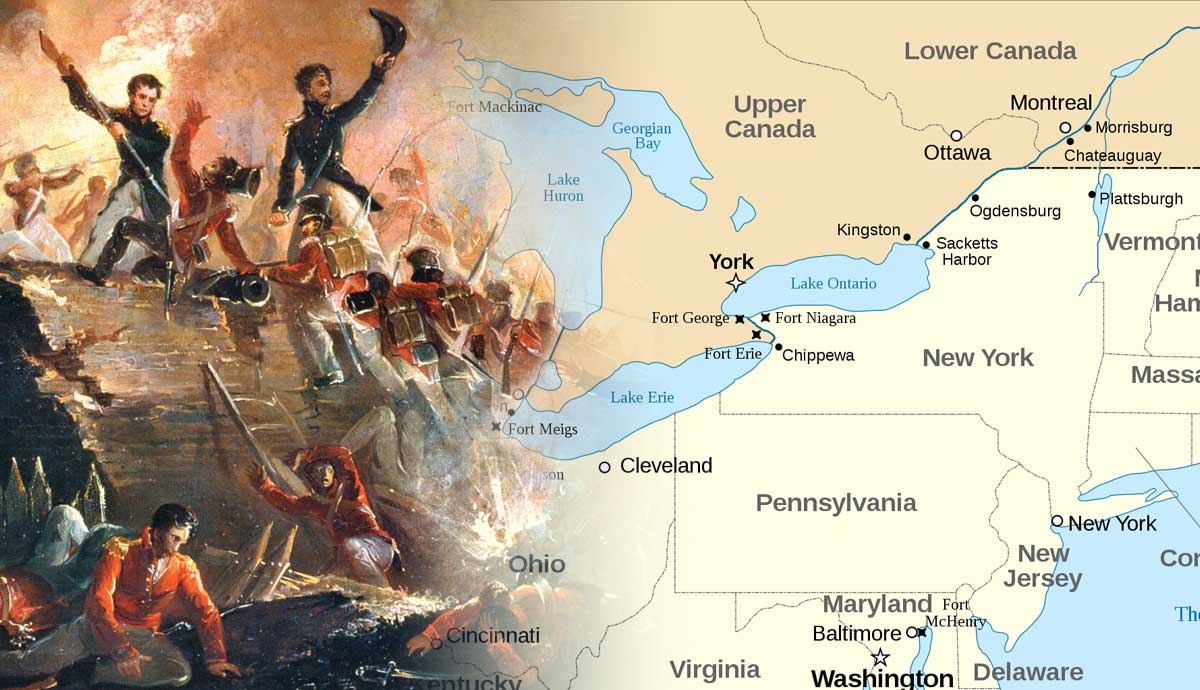
    Why the Battle of Lundys Lane Stopped the US Conquest of Canada
    The conquest of Canada was meant to be simple. American forces would cross the border as liberators and spread the ideals of 1776 northward without a shot fired in anger. The reality proved far bloodier, and never more so than in the July darkness of 1814 where murderous cannons boomed in sight of the frothing falls of Niagara.A Mere Matter of MarchingThomas Jefferson, presidential portrait, by Rembrandt Peale, 1801. Source: The White HouseFor a battle its size, Lundys Lane was a massacre. It came after two years of war on the Niagara frontier. Two long years since the United States and Great Britain went to war. Two years since Thomas Jefferson obnoxiously declared that the American conquest of British Canada would be a mere matter of marching. This excessive optimism on the part of a former president was not only ill considered but was grounded in outright ignorance of the task. Indeed, two centuries on and the statement is laughable to modern ears. To an experienced soldier-scholar of the caliber of John Elting, Jeffersons hubris echoed wider American temperaments that flew in the face of actual military preparedness.No other conflict in Americas history, Elting argued, saw the nation so unready and so ill-prepared, as the War of 1812 (Elting, Amateurs to Arms, p. 1). The Regular army was minuscule, its officers were overwhelmingly political appointees, and lacked a unifying doctrine to ground regimental action. Even drill was not standardized, and in the hard arenas of Canadian battlefields, American soldiers would pay a dear price for a nations folly. Never was that price greater than amongst the graves crowning a hillside near the rushing waters of Niagara Falls.Waged in the twilight hours of July 24, 1814, either side of a country track known as Lundys Lane, American, British and Canadians slaughtered one another with such vigor it remains one of the bloodiest battles of the entire Napoleonic era in terms of casualty ratios. The sacrifice of American lives was not enough to crown this final invasion of Canada with strategic success. Nevertheless, it has often been said of the American army on the Niagara that summer, that it came of age after two hard years of struggle.Defeat After DefeatThe Northern Theater of the War of 1812. Source: Wikimedia CommonsThe struggle for Canada began ruinously in the fall of 1812. A planned multiple pronged assault into Canada faltered because of a lack of supplies and the unwillingness of many American militiamen to serve beyond the boundaries of the United States. Only on the Niagara that October was any invasion attempted. It slammed into determined resistance on the heights of Queenston, a summit that witnessed the surrender of almost a thousand trapped Americans.Amongst the men led into captivity that day was a tall Virginian named Winfield Scott. Then a lieutenant colonel of artillery, Scott took command of the beleaguered American forces on the Canadian side of the river. With most of the American militia unwilling to support his stand, Scott grudgingly surrendered but bore the lessons of this defeat with him forevermore.Brave as they were, American soldiers possessed no unifying drill nor doctrine to unite them in common action. Regiments may as well have been individual armies such was their lack of coordination, but it was a full two years before Scott had his opportunity to rectify such shortcomings. In the meantime, aggressive assaults into Upper Canada in 1813 likewise met their end without gaining much more than hard earned experience for the soldiers forced to wage them.Bust of Winfield Scott by William Rush, 1814. Source: Wikimedia CommonsBut these defeats were offset by gains elsewhere. Further to the west, an American naval squadron triumphed over its British adversaries for control of Lake Erie in September 1813, which opened the door to an invasion of Ontario that fall.In October, American forces under the energetic General William Henry Harrison routed the British and their Indigenous allies along the River Thames, killing the great Shawnee war leader Tecumseh in the process. Simultaneously in the American southeast, Andrew Jackson was busily reducing the power of the British backed redstick Creeks in a war that was to doom the Indigenous peoples of the southeast to land confiscation and forcible relocation.Peripheral victories such as these did not bring Washington to its ultimate goal of conquering the north. A conquest that could begin nowhere else but the bloodied waters of the Niagara River. And in the summer of 1814, an American army once again stood poised to cross them in force.The Left DivisionGeneral Jacob Jennings Brown by John Wesley Jarvis, 1815. Source: New York City HallThe army had been reorganized after its earlier reverses. Dubbed the Left Division, it came under the able hands of Major General Jacob Brown and combined the strength of three brigades, two of battle hardened Regulars who knew well the bitterness of defeat, and another of New Yorker and Pennsylvanian militiamen willing to step into the breach alongside warriors of the six nations of the Haudenosaunee, equally willing to fight alongside those who had disposed them of their ancestral lands.These disparate units were to be molded into a single unified force by the efforts of Winfield Scott. An avid student of military history who paid close attention to ongoing developments in Europe, Scott set up a camp of instruction that spring for his brigade. From the ground up, squad by squad, like an 1812 Von Steuben, Scott infused his units with a common drill centered upon the French Regulations of 1791.As the division took shape, Scotts system was replicated in its sister brigade under Brigadier General Eleazar Ripley, as well as the volunteers of General David Porters third brigade. Most of the Regulars had been schooled in the hard campaigning of the previous two years, so while Scotts training was rigid, he was not molding raw materials. The Americans were veterans, able in combat and now united in action. How far they had come since the gloomy months of 1812 was to be seen shortly after they crossed the river on July 3.The Road to Lundys LaneUS Troops at the Battle of Chippewa. Painting by H. Charles McBarron, Jr. Source: US Army Center of Military HistoryFort Erie, on Niagaras southern shore, succumbed without a shot being fired. This stalwart bastion anchored American movements throughout the coming weeks. Under the overall command of General Jacob Brown, the Left division began the march northward towards Fort George and promptly ran into the British marshalled near Chippewa Creek on July 5.Materializing in the woods below the creek, where the light infantry and native allies of both sides grappled amongst the trees with musket, bayonet and tomahawk, the battle of Chippewa exploded onto the pancake flatness bordering the river. Here under the reeking smoke of a half hour of sustained slaughter, Scotts brigade met the might of the British armys right division and cut it apart.Clearly, the Americans had learned a thing or two since the previous year. But in this victory Scotts brigade suffered almost three hundred casualties of their own. Reinforcements arrived in the following days and with the division brought back up to strength Brown moved north. His advance promptly stalled.Map of the Niagara Frontier from The Pictorial Field Book of the War of 1812 by Ben Lossing, 1896. Source: Archives of OntarioThe fault rested on the shoulders of the British, who refused to be drawn into another fight, and upon the American naval squadron on Lake Erie, which refused to sail up the Niagara to support Browns efforts to batter through the gates of Fort George and press deeper into the Canadian interior. Three weeks of fruitless skirmishing forced Brown to withdraw towards Chippewa. It was then the British gave chase.Reinforced and refashioned under the command of Lieutenant General Sir Gordon Drummond, the Canadian born son of a Scottish laird with three decades of military service behind him, the British aimed to drive the Americans from Canadian soil forevermore. What they got was an unexpected fight across a country track which to this day still bears the name of Lundys Lane within sight of the roaring Niagara Falls.Here on the summit of a hill crowned by a cemetery and Methodist meeting house, Drummond pushed forward a brigade on July 24, 1814. Unlimbering their artillery, the British sighted their guns against the Portage Road running north from the American camp at Chippewa, blackened barrels protruding from among the tombstones. Around 7:15 p.m. these guns roared to life as the first of Winfield Scotts infantry deployed in line of battle on the fields below.Chaos and Carnage in the DarknessBattle of Lundys Lane by Alonzo Chappel, 1859. Source: Six Nations Public Library, OhswekenThe battle Brown had sought weeks before erupted without his knowledge. Believing the British pickets sniping at his camp were unsupported, he dispatched Scotts brigade to rid the area of them. Advancing along the portage road with the British parties fleeing before him, Scotts men emerged onto the open ground west of the road in full sight of the British artillery.Stunned by the presence of the Redcoats barring the way forward, Scott immediately threw his four battalions into line of battle, his own artillery furiously answering the British challenge. Attacking this position unsupported across open ground with a steep climb and an enemy of unknown strength to his front was a risk, yet to disengage his brigade whilst under fire was equally difficult, and not in Scotts style.The enemy was before him in strength, and the tall Virginian decided to attack him at once. While messengers rushed back to Brown at Chippewa, Scott threw his brigade forward in a bullheaded advance that got nowhere near the British guns. Instead, their advance faltered as cannon fire tore into them, losses compounded by Scotts inexplicable decision to halt them well beyond effective musket range. For the next hour Scotts men stubbornly maintained their position, neither attacking nor retreating but simply dying.The darkness that enclosed them around 9 p.m. was a gift, as was the sudden arrival of Brown with the rest of the Left Division. Had Drummond, whose forces were steadily building up as reinforcements marched to the sound of the guns, launched an immediate counterattack against Scotts brigade, it is likely it would have been annihilated before Brown arrived to save him. With one brigade swept from the field the American commander would have been obliged to admit defeat. As it was, Scotts impetuous stand served as a marker around which Brown could deploy amidst the darkness.Repulsion of the British at Fort Erie by E. C. Watmough, 1841. Source: Wikimedia CommonsThe British still retained the hill in strength. The battle dissolved into a confused mess in the darkness. Decisive action cut through the confusion, action incarnated in the figure of Jacob Brown. The British were on the hill, and he would throw them off it.With Ripleys brigade forming in line to Scotts battered front and Porters volunteers anchoring their left, Brown ordered a charge up the hillside. In the darkness of night, the British did not see the Americans until they were almost upon them.In the carnage that followed regiments closed to within shouting distance, the flashes of musketry and cannon fire lighting up the hillside. The fighting was so close that the enemies could see the faces of their foes. Shoving every man he could into this uphill assault, Brown succeeded in capturing the battery at the point of the bayonet and drove the British from their guns.Two counterattacks followed as Drummond ordered a general advance along his whole line. Two British counterattacks were smothered by withering American volleys tearing great gaps in the British ranks as the killing continued until midnight.In the intervening hours, senior officers on both sides became casualties, only adding to the confusion and disorder. Scott and Brown were wounded and evacuated from the field, leaving Ripley in overall command of the Americans. After Drummond retired bleeding profusely from a wound to the neck, his subordinate was unwilling to fling his men against the American wall and pulled the British back out of range.Stalemate and PeaceSigning of the Treaty of Ghent, Christmas Eve, 1814, by Charles Amedee Forestier, 1914. Source: Smithsonian American Art MuseumThe quiet that followed was eerie. Ripley, shellshocked, and stunned by the staggering losses of the Left Division, decided to withdraw back towards the camp. An enraged Brown would order him back, but by the time the Americans returned, the British had once again gained possession of the ruined hillside. After so much bloodshed to little avail, Brown decided to let them keep it.While the battle of Lundys Lane was a tactical stalemate, Browns withdrawal killed the momentum of the US invasion. The Americans would tenaciously defend Fort Erie in the face of a determined British siege and only abandon it in October. Thus ended the last major American invasion of Canada.By years end, diplomats meeting in present-day Belgium concluded the Treaty of Ghent to end the war. The last American invasion of Canada proved the United States had come of age as a fighting force, but the cost in men had left them unable to pursue the lofty goals for which they died. Jeffersons mere matter of marching had failed to take into account the significant amount of dying that went with it.BibliographyElting, John. Amateurs to Arms! A Military History of the War of 1812 (New York: Da CapoPress, 1995).Graves, Donald E. Where Right and Glory Lead!: The Battle of Lundys Lane, 1814 (Montreal:Robin Brass Studio Inc., 1997).

    0 Комментарии 0 Поделились 9 Просмотры
  • WWW.PCGAMESN.COM
    This new adult content ban is boosting VPN popularity
    Sometimes I feel a bit like a broken record writing VPN news. Over the course of the last year, many countries around the world have started to enforce new laws around internet access that usually result in people having to upload their ID if they want to access content that has been deemed harmful to children, and it has happened once again.
    0 Комментарии 0 Поделились 10 Просмотры
  • WWW.MASHED.COM
    Is Crystallized Honey Safe To Eat?
    Here, we unpack whether or not that honey that has gone chunky is really bad, or if honey crystallization should give us no reason to worry.
    0 Комментарии 0 Поделились 10 Просмотры
  • WWW.BGR.COM
    The MacBook Neo Might Be The Chromebook Replacement We've Needed
    Google's Chromebooks have been the go-to cheap laptop for years, but they may have finally been dethroned by the release of Apple's new MacBook Neo.
    0 Комментарии 0 Поделились 9 Просмотры
  • WWW.BGR.COM
    The Little Cameras On Coca-Cola Machines Aren't For Pouring Drinks
    If you've ever noticed the small cameras at the top of Coca-Cola Freestyle machines, be aware that they have nothing to do with pouring drinks.
    0 Комментарии 0 Поделились 10 Просмотры
  • The 3 Most Hilarious Outback Steakhouse Reviews On The Internet
    The 3 Most Hilarious Outback Steakhouse Reviews On The Internet...
    0 Комментарии 0 Поделились 11 Просмотры
  • Whole Wheat Guinness Bread With A Beautiful Oat-Sprinkled Top Recipe
    Easy Guinness Bread Recipe Whole Wheat Guinness Bread With A Beautiful Oat-Sprinkled Top Recipe...
    0 Комментарии 0 Поделились 14 Просмотры
  • YUBNUB.NEWS
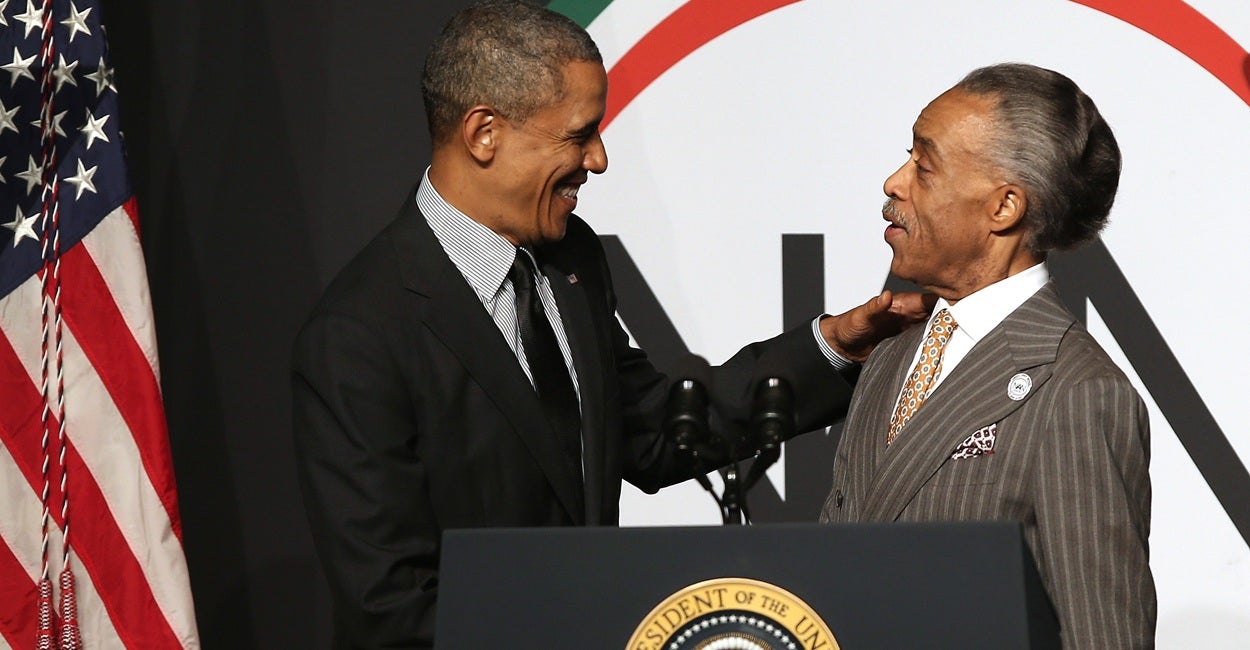
    Obamas Race-Hustling Eulogy at a Race Hustlers Funeral
    Former President Barack Obama long ago surpassed the Rev. Jesse Jackson and the Rev. Al Sharpton as Americas most influential race hustler. The country got a reminder when Obama spoke at Jacksons
    0 Комментарии 0 Поделились 9 Просмотры