• ALLTHATSINTERESTING.COM
    Inside The Tunguska Event, The Astronomical Explosion That Rocked Russia In 1908
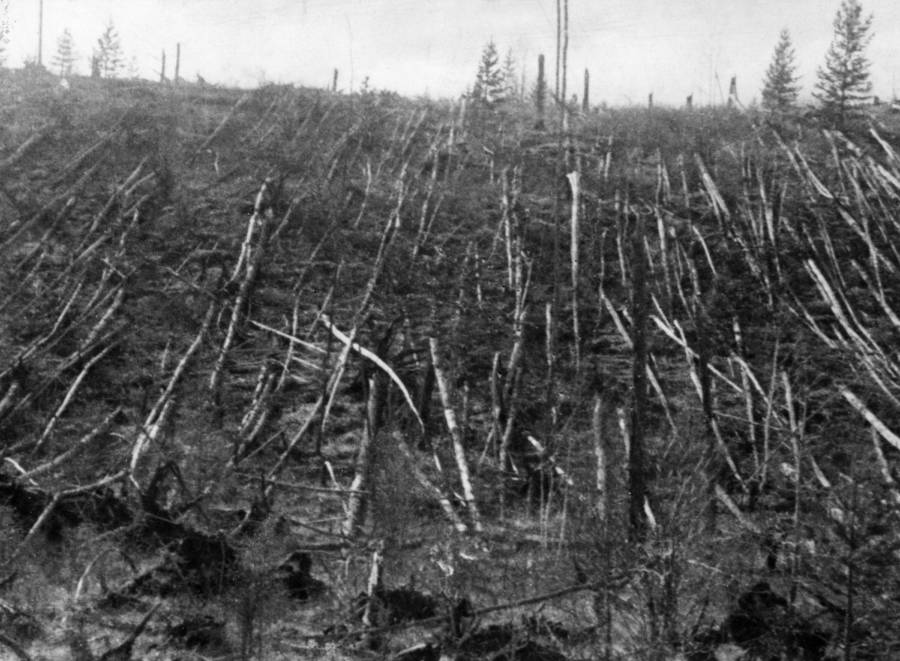
    Sovfoto/UIG/Getty ImagesA Siberian forest that was flattened during the Tunguska event.On June 30, 1908, a massive explosion estimated to be up to 1,000 times more powerful than the atomic bomb dropped on Hiroshima unfolded in the remote Siberian wilderness of Russia. Shattering the calm of the landscape, the explosion burned hundreds of square miles of forest and flattened approximately 80 million trees in the area.Now known as the Tunguska event, since it occurred near the Podkamennaya Tunguska River, the explosion is considered the largest impact event in Earths recorded history, and one that was long shrouded in mystery. Many scientists now believe it was caused by an asteroid that approached Earths atmosphere and then exploded over Siberia, but several other theories have been floated throughout the years.This is the true story of the Tunguska explosion, the impact event that caused a split in the sky but left no impact crater behind.What Happened During The Tunguska Event?Bettmann/Getty ImagesDamaged trees at the site of the Tunguska event.At around 7:17 a.m. local time on June 30, 1908, Siberian villagers near the Podkamennaya Tunguska River basin were startled by a bright blue light that moved across the sky. Then, they heard a devastating boom.A powerful shockwave traveled across the area, shattering numerous windows and knocking some people right off their feet.S.B. Semenov, a peasant who was living in the area at the time, described the incident, saying, Over Onkouls Tunguska Road, the sky split in two and fire appeared high and wide over the forest. The split in the sky grew larger, and the entire northern side was covered with fire.Semenov continued, At that moment I became so hot that I couldnt bear it, as if my shirt was on fire; from the northern side, where the fire was, came strong heat. I wanted to tear off my shirt and throw it down, but then the sky shut closed, and a strong thump sounded, and I was thrown a few meters.Meanwhile, the owners of two gold mines in the area called one another on early telephones to accuse each other of blasting in the area.Due to the remote nature of this region in Siberia, only three people were reported to have died. But many more animals met terrible demises, according to an eyewitness account from Luchetkan, a member of the Indigenous Tungus people of the region.Luchetkans relative had been herding reindeer in the area of the blast, and unfortunately, they were still there when the explosion unfolded.As Soviet mineralogist Leonid A. Kulik later recalled: Of some reindeer they found the charred carcasses; the others they did not find at all. Of the sheds nothing remained; everything was burned up and melted to pieces clothes, utensils, reindeer equipment, dishes, and samovarsDespite the devastation, the Tunguska event initially attracted little attention, even within Russia. But that would eventually change, especially as experts searched for an explanation for the sudden explosion.What Caused The Tunguska Explosion?Sovfoto/UIG/Getty ImagesIt took decades before a patchy new forest began to regrow on the site of the Tunguska event.In 1927, the first scientific expedition reached the area of the Tunguska explosion, nearly two decades after the blast occurred. The long delay was due to the remote location of the site, as well as more pressing historical events like World War I and the Russian Revolution.Soviet mineralogist Leonid A. Kulik, who led early expeditions to the site, eventually uncovered a butterfly-shaped area of destruction. This devastation stretched about 830 square miles, and approximately 80 million trees had been knocked over. Chillingly, some trees remained standing, but had broken branches that had been stripped of their bark.Though early researchers quickly suspected that the explosion had an extraterrestrial origin, based on their observations and witness testimony, they werent able to confirm whether it was an asteroid or a comet. Curiously, they were also unable to find any actual physical evidence of a celestial object. In addition, they couldnt find any crater at the epicenter of the blast, probably because the explosion had occurred too high above Earths surface to create one. Though remnants of the mysterious astronomical object were eventually found in the area, these fragments were remarkably tiny in size and difficult to study in detail.The head-scratching nature of the crash site led to the rise of alternative theories about the Tunguska event as the decades went on.Google Earth/Adler PlanetariumThe site of the Tunguska explosion, as depicted on Google Earth.Some of these theories were more eyebrow-raising than others. For instance, in 1973, a team of physicists based at the University of Texas suggested that the Tunguska event could have been caused by a primordial black hole passing through the Earth. According to the physicists, this would explain the lack of an impact crater left behind. It could have also possibly explained the bright blue light that was seen by Siberian villagers.Most of the radiation from the shock front would be in the vacuum ultraviolet and would be absorbed and reradiated at longer wavelengths, the team explained. There would be little hard X radiation and the accompanying plasma column would appear deep blue. Decades later, astrophysicist Wolfgang Kundt at the University of Bonn in Germany offered yet another alternative theory about the Tunguska explosion. He said that instead of looking to space for an explanation, perhaps we should look inside the Earth itself. As he put it, an eruption of natural gas from kimberlite, a type of volcanic rock, may have been the real cause.It would have come from the molten Earth, some 3,000 kilometers deep (1,864 miles deep), Kundt explained. The natural gas would be stored as a fluid that deep, and when it reaches the surface it would become a gas and expand by a factor of thousand in volume, for a huge explosion.Some other strange theories include an annihilation of a chunk of antimatter, a UFO crash, and even a disastrous test of Nikola Teslas alleged death ray. By 2013, however, a team of researchers published a new study in Nature that seemed to confirm that an asteroid-turned-meteorite had been behind the Tunguska explosion, as was long suspected.The researchers came to this conclusion by reexamining tiny rocks that had been collected at the Tunguska site back in the 1970s. The detailed analysis indicated that the fragments, which each measured less than one millimeter wide, originated from an iron-rich meteor that apparently caused the explosion. Transmission electron microscopy showed that the rocks featured known meteorite mineral concentrations, like troilite and schreibersite.So does this mean the mystery was solved once and for all? While many experts seem to accept the asteroid theory, others believe an icy comet was more likely to cause that type of destruction than a rocky asteroid. And yet others have stubbornly held on to other theories, perhaps captivated by the remote landscape of the site and the eerie signs of destruction left behind.Now that youve read about the Tunguska event, go inside the chilling story of the Dyatlov Pass Incident. Next, learn about the mysterious disappearance of the Anjikuni people.The post Inside The Tunguska Event, The Astronomical Explosion That Rocked Russia In 1908 appeared first on All That's Interesting.
    0 Σχόλια 0 Μοιράστηκε 8 Views
  • ALLTHATSINTERESTING.COM
    George Everest, The English Surveyor Who Is The Namesake Of Mount Everest
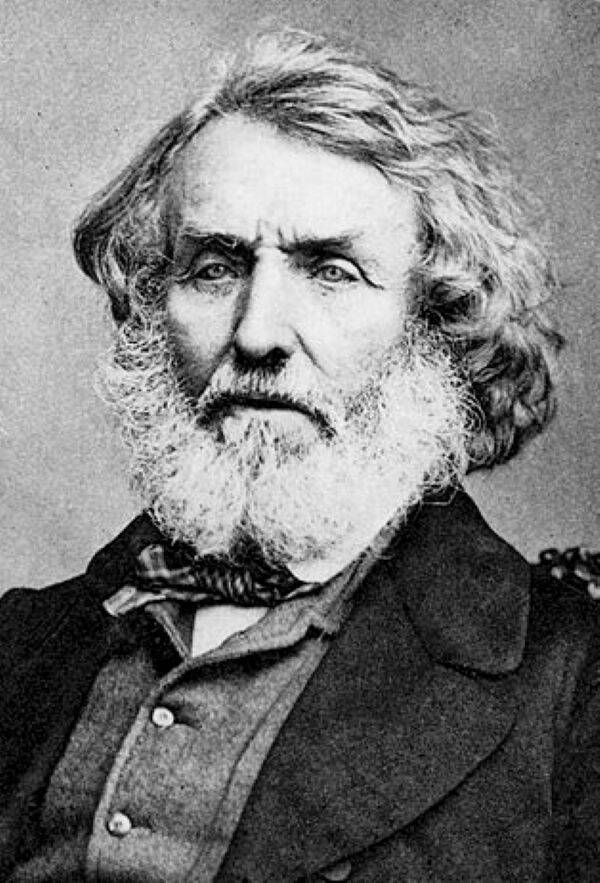
    The worlds highest mountain has many names. In Nepal, its known as Sagarmth, which translates to Goddess of the Sky. Tibetans call it Qomolangma. But its best known in the Western world as Mount Everest, named for English surveyor George Everest.Public DomainGeorge Everest, the namesake of Mount Everest, circa the 1860s.In the early 19th century, Everest spent three decades in India working on the Great Trigonometrical Survey, which aimed to accurately map the subcontinent. He was appointed Surveyor General of India in 1830, and he was responsible for hiring Andrew Scott Waugh and Radhanath Sikdar, both of whom were instrumental in identifying Everest as the highest mountain in the world.Despite all of this, George Everest never actually laid eyes on Mount Everest. Still, Waugh who succeeded Everest as Surveyor General of India insisted that the mountain carry his mentors name. Everest declined this honor, worried that the people of India would have trouble pronouncing his surname. Regardless of his protestations, however, the Royal Geographical Society officially settled on the name Mount Everest in 1865, permanently tying Everests legacy to a mountain he never set foot on.George Everests Early Life And Move To IndiaBorn in either Wales or England in 1790, George Everest had a fairly normal if wealthier than average childhood. He attended military school, and by the time he was 16, hed joined the East India Company. When he arrived in India in 1806, he served as a second lieutenant in the Bengal Artillery. Because of his propensity for math and astronomy, he was trained as a surveyor. By 1814, hed been assigned to survey the island of Java, and his work there and along the Ganges River caught the attention of Colonel William Lambton, the leader of the Great Trigonometrical Survey.Public DomainA group of surveyors in the Himalayas in 1897.The survey, which Lambton had started in 1802, aimed to map India with scientific precision. Lambton appointed Everest as his chief assistant in 1818, teaching him everything he knew about surveying.Most of Everests work involved mapping the meridian arc that ran some 1,500 miles from Cape Comorin at the southernmost point of India to the border of Nepal. After a brief stint in South Africa to recover from malaria in 1820, Everest returned to India in 1821 to continue the project.Two years later, William Lambton died and the Great Trigonometrical Survey fell into the hands of George Everest.Mapping The Indian SubcontinentIn 1823, Everest became the superintendent of the Great Trigonometrical Survey. He continued Lambtons work, mapping central India in the present-day state of Madhya Pradesh. In 1825, however, he fell ill again, this time with rheumatism, and he was forced to return to England for five years.Even on his sickbed, Everest kept working. He lobbied the East India Company for better surveying equipment, which would prove to be instrumental in completing the project.University of Dundee Museum CollectionsA primitive theodolite, similar to the surveying instruments used by George Everests teams to map the Indian subcontinent.Upon his return to India in 1830, George Everest was appointed Surveyor General of India. He spent the next decade completing the survey of the meridian arc with the help of Andrew Scott Waugh, who joined the project in 1832.By 1841, the meridian arc was mapped, and shortly after, Everest retired and recommended Waugh as his replacement. He returned to England in 1843, where he married a woman more than 30 years his junior and had six children. In 1847, Everest published An Account of the Measurement of Two Sections of the Meridional Arc of India, a book that he surely thought would be his legacy. He couldnt have imagined how wrong he was.Becoming The Namesake Of Mount EverestAfter George Everests retirement, Andrew Scott Waugh continued the Great Trigonometrical Survey, mapping the Indian Himalayas. In 1847, Waugh was observing Mount Kangchenjunga which was considered the worlds highest mountain at the time when he noticed a peak beyond it. He began to refer to it as Peak B and later Peak XV.Then, in 1852, Indian mathematician Radhanath Sikdar officially calculated the height of Peak XV, determining it was the highest mountain in the world at 29,000 feet. (Today, Mount Everest is considered to be 29,032 feet tall, a difference of just 32 feet from Sikdars original calculation.)Public DomainAndrew Scott Waugh, the surveyor who first proposed naming the worlds highest mountain after George Everest.Waugh wrote to the Royal Geographical Society announcing this discovery in March 1856. In the letter, according to HISTORY, Waugh declared:I was taught by my respected chief and predecessor, Colonel Sir George Everest, to assign to every geographical object its true local or native appellation. But here is a mountain, most probably the highest in the world, without any local name that we can discover, whose native appellation, if it has any, will not very likely be ascertained before we are allowed to penetrate into Nepal.At the time, most of Nepal and Tibet were closed to the British, and the Indians didnt have a specific name for Peak XV. Thus, Waugh proposed naming it Mount Everest to perpetuate the memory of that illustrious master of geographical research [George] Everest.Everest himself objected to the proposition. He didnt think that the native of India would be able to pronounce his surname or write it in Hindi. Still, the Royal Geographical Society officially settled on the appellation Mount Everest that same year.Seeing his name on the worlds highest mountain wasnt Everests only honor, though. The Enduring Legacy Of George EverestThroughout George Everests lifetime, he became a Fellow of the Royal Society, the Royal Asiatic Society, and the Royal Geographical Society. He was made a Commander of the Order of Bath and even knighted in 1861. According to the Surveyors Historical Society, when Everest received an award from the Royal Astronomical Society in 1848, Sir John Herschel stated, The Great Meridianal Arc of India is a trophy of which any nation, or any government of the world would have reason to be proud, and will be one of the most enduring monuments of their power and enlightened regard for the progress of human knowledge.George Everest died in 1866 at age 76 having never seen the mountain that bears his name.shrimpo1967/Wikimedia Commons Mount Everest as seen from Bhutan.Today, Mount Everest is perhaps the most famous mountain in the world. Since Edmund Hillary and Sherpa Tenzing Norgay became the first people to reach Everests summit in 1953, more than 7,000 people have successfully climbed the peak.Tragically, more than 340 others have died trying. Their bodies litter the mountain, serving as macabre landmarks for their fellow climbers. From Scott Fischer and Francys Arsentiev to Marco Siffredi and George Mallory, even the most experienced mountaineers have succumbed to Everests deadly conditions.As such, George Everests legacy is one of perseverance, endurance, ambition, pride, disappointment, tragedy and, above all, hope.After reading about George Everest, go inside the story of Yuichiro Miura, the oldest person to ever climb Mount Everest. Then, learn about Rob Hall, the man who summited Everest five times and then perished during his final descent.The post George Everest, The English Surveyor Who Is The Namesake Of Mount Everest appeared first on All That's Interesting.
    0 Σχόλια 0 Μοιράστηκε 8 Views

  • 0 Σχόλια 0 Μοιράστηκε 8 Views
  • WWW.DUALSHOCKERS.COM
    Every Horror Game Announced for Release in 2026
    Fans of horror games have been eating good lately, with several different survival horror behemoths leading the pivot away from action horror back to the genre's terrifying roots. Plus, many innovative indie titles have firmly planted their feet into horror and have stayed ever since.
    0 Σχόλια 0 Μοιράστηκε 9 Views
  • WWW.DUALSHOCKERS.COM
    GTA 6 Leak Claims It Might Skip Physical Release At Launch
    Take-Two might be pushing Grand Theft Auto 6 back to 2027 after all, at least in terms of a disc release, as a prominent leaker is claiming that the game will be digital only at launch.
    0 Σχόλια 0 Μοιράστηκε 9 Views
  • WWW.MASHED.COM
    This Hearty Vegan Meatloaf Is Loaded With Plant Protein
    Would you believe us if we told you this meatloaf didn't have any meat? Instead, this vegan meatloaf is packed with plant protein from lentils and chickpeas.
    0 Σχόλια 0 Μοιράστηκε 8 Views

  • WWW.MASHED.COM
    Who Is James Brown From Grill Nation BBQ?
    James Brown from Grill Nation BBQ has inspired millions of barbecue fans across the country with his recipes. Here's what we know about the grilling legend.
    0 Σχόλια 0 Μοιράστηκε 8 Views
  • WWW.MASHED.COM
    Does Trump's Air Force One Food Comply With New MAHA Guidelines?
    The new "Make America Healthy Again" guidelines are intended to encourage healthy eating in the U.S. But does the food on Air Force One meet those standards?
    0 Σχόλια 0 Μοιράστηκε 8 Views
  • 0 Σχόλια 0 Μοιράστηκε 8 Views
  • WWW.BGR.COM
    What Happens To Your Roku When You Leave It On All The Time?
    With power consumption (and lagging devices) being top-of-mind for many techies, the question of what happens when your Roku stick is left on comes to the fore.
    0 Σχόλια 0 Μοιράστηκε 9 Views