The Famous Battleship Potemkin Mutiny That Was Immortalized in Eisensteins Iconic Film
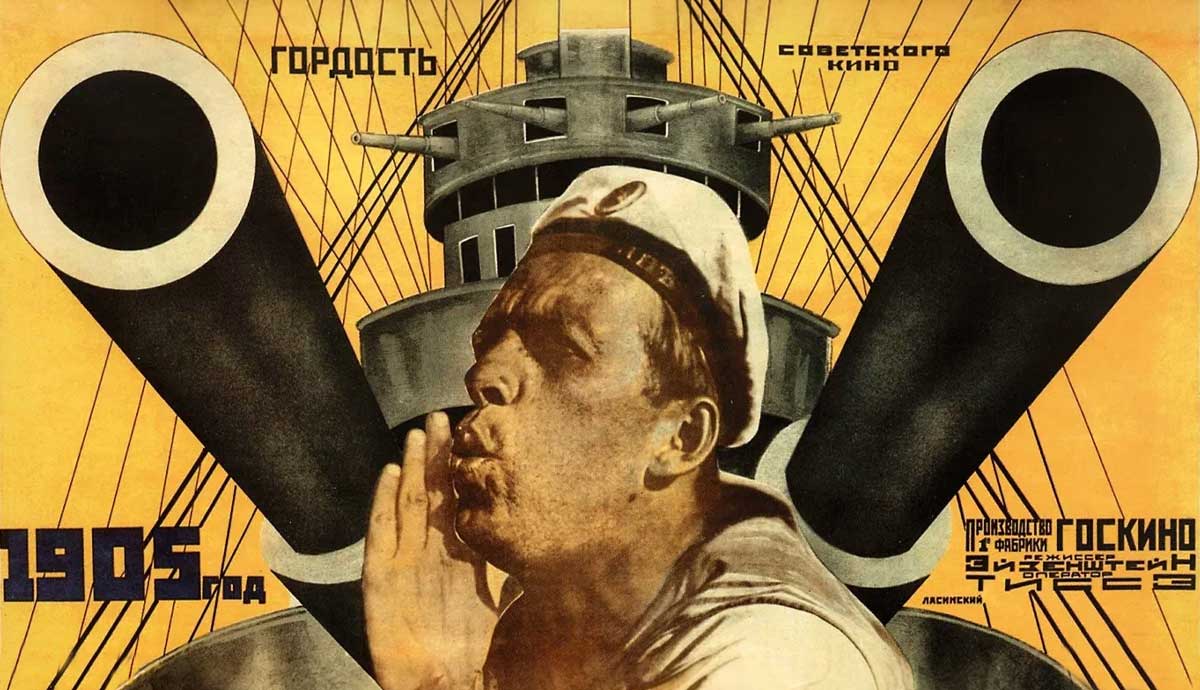
In June 1905, Russian sailors aboard the Potemkin found maggots in their meat rations while at sea. They mutinied and took the ship to the port of Odesa in Ukraine. After the tsarist forces tried to crush the mutiny, the ship sailed to Romania before eventually returning to Russia with a new crew. The Potemkins mutinous sailors became a symbol of the 1905 Revolution and highlighted the unpopularity of the tsarist regime in the Russian Navy. Twelve years later, Russian sailors played a key role in the Revolutions of 1917.The Potemkin and Russias Navy Before 1905The Russian Warship Oslyabya, the first ship to be sunk at Tsushima, 1903. Source: Photographic Archive of the Russian and Soviet FleetLaunched in the Nikolayev shipyard in Ukraine in 1898 and named after Prince Grigory Potemkin, the warship Potemkin was a formidable addition to Russias fleet. She carried four 12-inch main guns and an array of 3 and 6-inch secondary guns. Her crew consisted of 26 officers and 705 enlisted men and the vessel was assigned to Russias Black Sea Fleet. Her sea trials began in 1903 but the ship did not witness any military action before the mutiny.Although Russia was primarily a land empire, it had a formidable navy by the early 20th century. Control of ports in the Black and Baltic seas, the northwest Pacific, and the Arctic Ocean enabled the empire to project force globally. By 1905, Russia had dozens of heavy warships available supplemented by smaller vessels. The officer corps was drawn from an elite body considered loyal to the tsar and the Russian Orthodox Church. The Black Sea Fleet was not considered the most elite force but had the important mission of keeping the Ottoman Turks at bay.Beneath the surface, major tensions lingered. Russia was undergoing major social upheaval before the Russo-Japanese War and the navy was no exception. Officers abused their men and exploited a gulf between their higher status in society versus enlisted personnel. Disastrous losses against Japan at Port Arthur and Tsushima caused morale to plummet and many competent officers and men were sent to fight there. This, combined with the rise of revolutionary socialism throughout the empire, created the conditions for mutiny.The Revolution of 1905Engraving illustrating the confrontation between demonstrators and tsarist soldiers on Bloody Sunday, 1925. Source: Wikimedia CommonsAfter pursuing reactionary and unimaginative policies that failed to address increasing social tensions in Russia, Tsar Nicholas II faced the most decisive challenge to the Romanov monarchy in 1905. For centuries, the Romanov tsars wielded autocratic power over the empire. While the empire experienced socioeconomic advances including the abolition of serfdom and industrialisation, urbanization held to spread revolutionary ideas among industrial workers and their relatives back in the country. After the massacre of striking workers in St. Petersburg during Bloody Sunday in January 1905, strikes and rebellions broke out all over the empire.Similar to the rest of society, there was a major gulf between officers and enlisted personnel in the Russian military. The immense losses sustained in the fighting in Manchuria against Japan horrified and demoralized the rank-and-file. Officers struggled to address the anger among the lower ranks. The navy was particularly affected because of the heavy losses suffered fighting the Japanese.During the 1905 Revolution, sailors at the Kronstadt naval base near St. Petersburg mutinied in response to terrible conditions on their base. The Kronstadt sailors would prove to be among the most radical sections of the Russian Navy during the revolutionary period. Russian army units on land also staged mutinies, particularly Cossack regiments that shared the grievances of workers and peasants. From October to December of 1905, 26 Russian infantry and cavalry units mutinied. The Potemkin mutiny took place in the context of near military collapse.The Mutiny BeginsIppolit Giliarovsky, second-in-command aboard the Potemkin, 1905. Source: Wikimedia CommonsOn June 27, 1905, the Potemkin was at sea undertaking gunnery practice off of the Ukrainian coast. Captain Evgeny Golikov was commanding the vessel, supported by his second-in-command was Ippolit Giliarovsky. After drills during the day, sailors were served borscht, a typical ration for Russian servicemen. However, the crew were outraged to find the meat crawling with maggots. They began to make demands to the officers, saying that they would only perform their duties if they received better quality rations.Giliarovsky had a reputation as a martinet and immediately ordered the crew to eat the rotten meat and continue their work, and threatened to shoot them if they refused to obey his orders. Enlisted man Grigory Vakulinchuk denounced the officers threats and egged on an uprising. He was aided by another sailor: Afanasy Matyushenko, a quartermaster involved in revolutionary circles. Golokov and Giliarovsky ordered the ships marine detachment to crush the mutiny, but the mutineers got access to the ships armory. In the ensuing fight, Vakulinchuk and Giliarovsky were both killed.Many of the ships remaining officers were killed by the mutineers including Captain Golikov. A committee of sailors was elected to command the vessel and steer for Odessa. Matyushenko was in charge of the committee and hoped to instigate a fleet-wide mutiny. They arrived in Odesa harbor the same day and found the city paralyzed by a general strike. There were hopes that the rest of the Black Sea Fleets sailors would also rise up against their officers. They even captured the transport vessel Vekha, which arrived in the city with no idea what was going on.The Odessa Riots and Defecting to RomaniaIllustration of the famous Potemkin Stairs in Odesa, 1905. Source: Library of CongressUpon arriving in Odesa, the Potemkin anchored offshore while the crew sought to bury Vakulinchuk in the city. Soldiers attempted to round up the mutineers and other revolutionaries at the funeral. The ship fired shells at an army headquarters in the city in retaliation. The locals, many of whom were supportive of revolutionary socialism and Ukrainian nationalism, demonstrated their support for the mutinous crew. They sent food and water to the crew while allowing sailors to come ashore.On the 30th, Vice Admiral Grigoriy Chukhnin, commanding the Black Sea Fleet, ordered a squadron of ships to compel the mutineers to surrender. If they refused, the fleet was to sink the Potemkin by force. Several warships arrived off of the harbor and demanded that the crew surrender. However, they held their fire when the Potemkin started heading out to sea. Sailors on other ships had been inspired by Matyushenkos actions and were reluctant to fire on their own comrades. When ordered to attack the Potemkin, sailors on the warship Georgii Pobedonosets mutinied in solidarity. As a result, the Potemkin was able to escape the blockade and go to Romania.The committee of sailors commanding the ship decided to sail to a Romanian port in the hope of getting asylum. When she arrived in Constana, Romania, on the 31st, the local authorities refused to let the ship dock. Therefore, Potemkin sailed to Crimea to get supplies. After repeated failures to obtain supplies from port authorities in Crimea, she returned to Romania, arriving on July 7.The End of the MutinyRomanian postcard featuring a photograph of the Potemkin in Constana, Romania, 1905. Source: World Naval ShipsOnce they arrived, Romanian authorities demanded that the crew surrender the vessel and allow the Romanian flag to be flown from the masttop. In exchange, Romania offered the crew asylum. Romania maintained good ties with Tsarist Russia ever since achieving independence in 1878. However, they were eager to gain access to a well-constructed warship to add to their fleet. They hoped that, by forcing the mutineers to disarm, the Tsar would understand the seizure.However, Nicholass government was furious and immediately insisted on the ships return to Russia. Several hours of negotiations took place between representatives of the Black Sea Fleet and the Romanian government. Before these negotiations ended, Matyushenko had the ship partly scuttled to prevent it from being used again. The Romanians ultimately agreed to refloat the ship and most of the mutineers were able to remain behind. Potemkin sailed with a new crew back to Russia. Subsequently, she was renamed Panteleimon and continued her service with the Black Sea Fleet.Most of the mutineers remained in Romania. They knew that if they returned home, they would face court-martials and executions for killing their commanders. At the same time, there was little desire by the Russian government to go after the mutineers once they were outside the empire. The majority remained in Romania until the Bolshevik Revolution when the USSR welcomed their return. Afanasy Matyushenko was an exception; he tried to return to Russia in 1907 under an assumed name. After being court caught, he was sentenced to death and executed.The Legacy of the MutinyPoster for Sergei Eisensteins film Battleship Potemkin, 1925. Source: Russian State Library, MoscowThe mutiny came to symbolize everything wrong with the Russian Empire. The failure of the aristocratic officer class to treat their subordinates with dignity ensured that they became radicalized. Until her June voyage in the Black Sea, most of the Potemkins crew remained loyal to their commanders, notwithstanding their grievances and exposure to radical doctrines. However, the failure to adequately provide for the crew was the final straw that motivated the Potemkins sailors to take action.In addition to being the subject of one of the worlds most famous silent films by Sergei Eisenstein, the crew of the Potemkin became revolutionary symbols in Russia. Many of the men involved in the Kronstadt Uprising of 1921 viewed the Potemkin mutineers as role models for their own actions. The sight of lower-ranking sailors taking on their brutish officers excited many revolutionaries around the world. The Potemkin mutiny became a 20th-century version of the HMS Bounty mutiny, an act of defiance against a thuggish, reactionary, culture of leadership.Even while Russia managed to get back the Potemkin, there was no real effort to resolve the grievances that enlisted personnel had during the 1905 Revolution. During WWI, Russian military servicemen had the same problem with discipline and mistrust of officers that they had during the Russo-Japanese War, and there were regular mutinies at the front. It was easier for the tsarist government to blame upstart revolutionaries for any disturbances rather than their own incompetence.The tsarist regime had always been reliant on its military resources to maintain political order. In 1905, the tsar still had enough loyal troops to survive the revolution. The continued failure to supply and feed soldiers in the First World War once again exposed the internal weaknesses of its military and led to the collapse of the tsarist regime in 1917.













 English
 Arabic
 French
 Portuguese
 Deutsch
 Turkish
 Dutch
Dutch
 Italiano
 Russian
 Romaian
 Portuguese (Brazil)
 Greek
Greek