40,000-year-old bird figurines the size of a thumbnail discovered in German cave
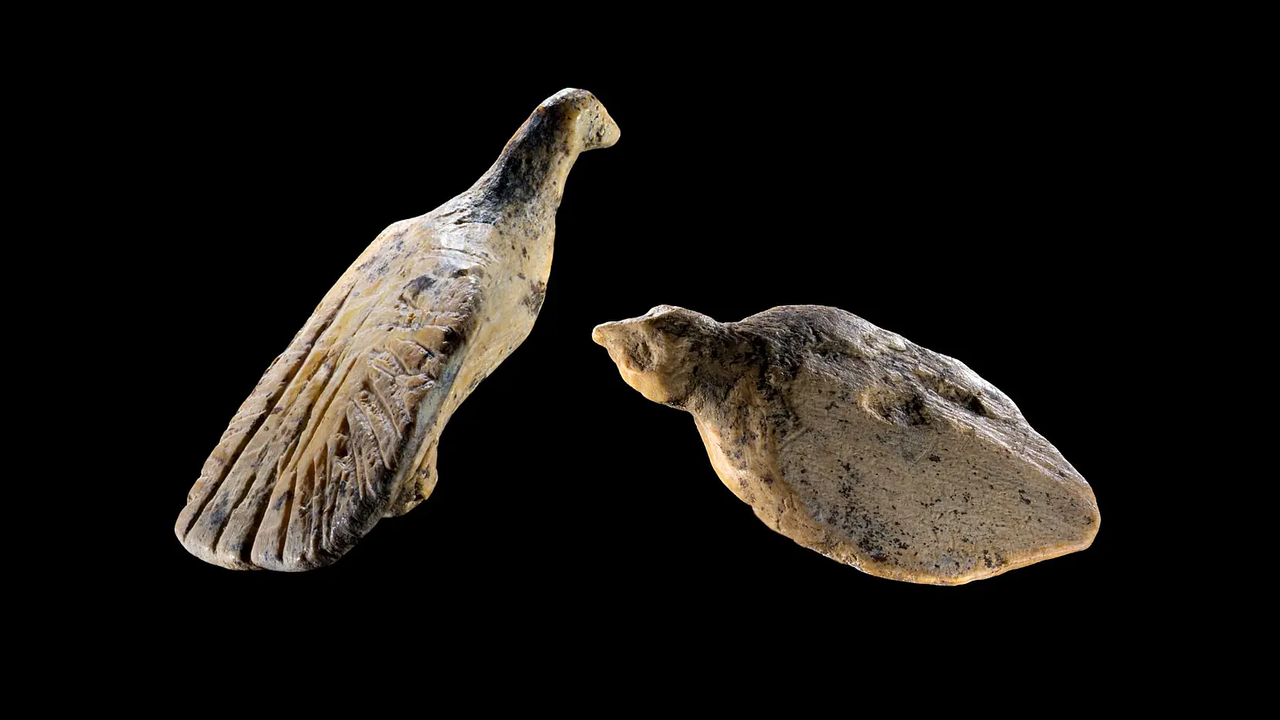
Archaeologists excavating in the famous prehistoric Hohle Fels cave in Germany have uncovered two bird figurines carved from mammoth ivory. The thumbnail-size carvings add to the existing evidence that ice age humans had a sophisticated artistic sense 40,000 years ago."The figurines demonstrate that the earliest artists were skilled ivory-carvers, who could depict delicate motifs in miniature form," Nicholas Conard, an archaeologist at the University of Tbingen in Germany and director of excavations at Hohle Fels, said in a July 29 statement.When the birds were found in 2025, they were lying just 5 feet (1.5 meters) from each other in a layer dating back 40,000 years, according to the statement. The sculptures bring the total number of bird figurines from Hohle Fels up to three; a small water bird was found there in 2001. Hohle Fels was occupied by early Homo sapiens during the Aurignacian period of prehistory (43,000 to 28,000 years ago), following the decline and disappearance of Neanderthals from Europe. At that time, humans launched a creative explosion, creating the world's first musical instruments, jewelry and small sculptures. The Venus of Hohle Fels, a 41,000-year-old statuette of a woman with exaggerated breasts and buttocks discovered in the cave in 2008, is generally considered the oldest figurative sculpture in Europe. Archaeologists have also found figurines of animals and an ivory rope-making tool at Hohle Fels, a German name that means "hollow rock" in English. At roughly thumbnail-size, the two new bird carvings are significantly smaller than the figurines found previously at Hohle Fels. Despite their tiny dimensions, "the carvings are not highly stylized but instead include many specific and unique features," Conard said. "The artist has recorded detailed observations that allow us to consider which kind of bird is represented and what the bird could be doing."One bird appears to be lying on the ground, possibly brooding over its eggs. This position suggests the bird is a ptarmigan, a game bird that is related to chickens and grouse and whose bones have been discovered in the prehistoric layers at Hohle Fels. The second bird has spread wings that are suggestive of flight or posturing in courtship, according to the statement. This bird may also be a ptarmigan, or possibly a bird of prey.RELATED STORIES18,000 years ago, ice age humans built dwellings out of mammoth bones in Ukraine'Major disruption in Neanderthal history': 65,000 years ago, all Neanderthals in Europe died out except for one lineageRare skeletons up to 30,000 years old reveal when ancient humans went through pubertyThe two tiny ptarmigans raise many new questions about early humans in Europe, Conard said. They are among the earliest evidence of modern humans in Europe, suggesting art was a major feature of early human life. Archaeologists do not know what meaning the carvings held for the Aurignacian people who lived at Hohle Fels, but the objects may have been personal talismans or a symbol of a specific group of people. Hohle Fels is unique among ice age cave sites because, to date, it is the only one with bird figurines. This may reflect people's keen observations of the natural world around them."Our region and landscape have always been the home of a vast range of birds," Stefanie Klbl, managing director of the Museum of Prehistory and Ice Age Art, said in the statement. "Their calls signaled warnings, and the residents of the region often used their hollow bones and even mammoth ivory to make flutes that produced magical sounds."The figurines are on display at the Museum of Prehistory and Ice Age Art in Blaubeuren, Germany, through April 4, 2027.What do you know about the Paleolithic, Mesolithic and Neolithic eras? Find out with our Stone Age quiz!




 English
 Arabic
 French
 Spanish
 Portuguese
 Deutsch
 Dutch
Dutch
 Italiano
 Russian
 Romaian
 Portuguese (Brazil)
 Greek
Greek