


WWW.LIVESCIENCE.COM
Diagnostic dilemma: Rare 'spinal stroke' struck an 8-year-old and temporarily paralyzed her
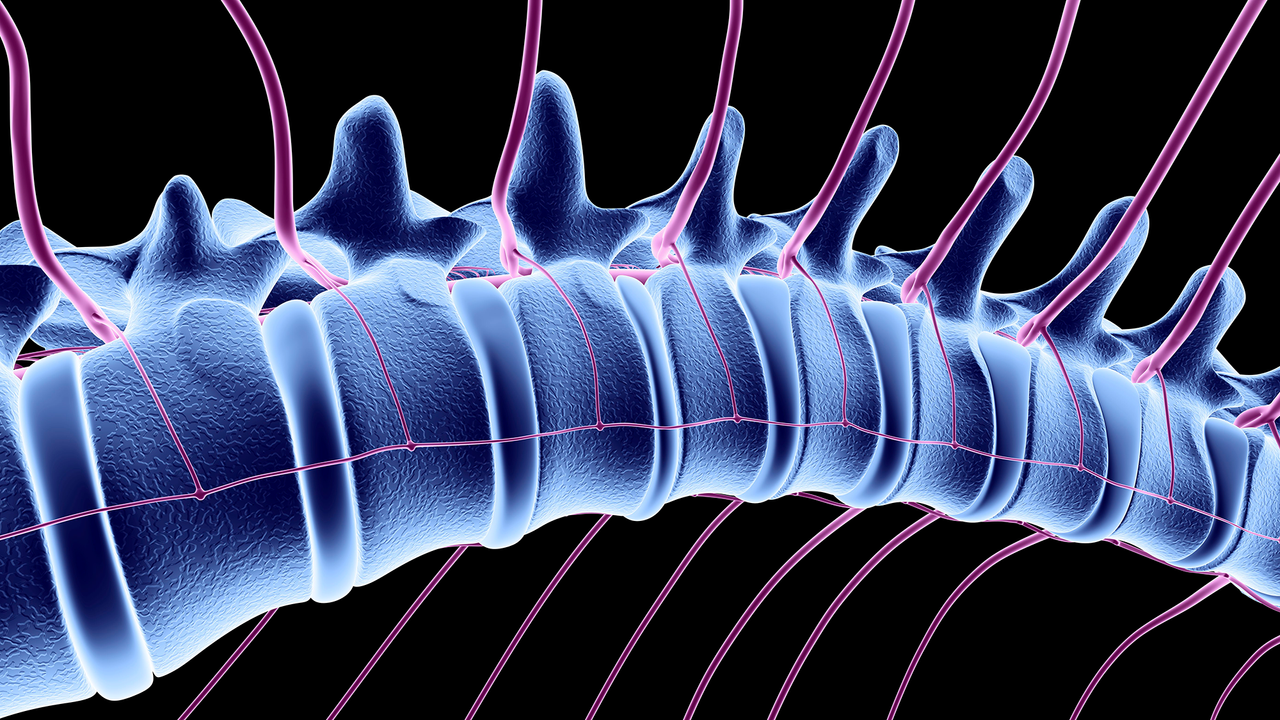
The patient: An 8-year-old girl in the U.S. The symptoms: The girl arrived at an emergency department after waking up with sudden, severe pain in her upper back. Within hours of the pain emerging, she developed rapidly worsening weakness in all four limbs, making it impossible for her to stand or walk. She also reported painful tingling and loss of sensation in her hands, and doctors discovered that she had diminished reflexes and sensory changes beginning at her upper chest and moving down her body. In multiple instances at the hospital, she lost control of her bladder and bowels. The combination of acute paralysis, severe back pain and incontinence suggested damage to the spinal cord, but the cause wasn't immediately clear, her doctors wrote in a report of the case.What happened next: The medical team launched an extensive search for the underlying cause. An MRI of her neck and torso showed evidence of extensive inflammation or injury that stretched from her lower neck to the middle of her back. The scan also showed a small tear in one of the disks in her lower neck, with a small amount of disk material pushing outward. However, the girl and her parents did not report any recent falls or injuries, and the MRI alone couldn't determine what had caused this apparent damage.The girl's medical team then performed blood tests, a spinal fluid analysis and more imaging to look for signs of infections, autoimmune diseases or other inflammatory conditions that can trigger acute paralysis in children. These tests all came back negative. While clinicians continued investigating, the girl was treated with intravenous steroids and underwent a procedure called plasmapheresis, during which blood is drawn from the patient into a machine which separates blood plasma (the liquid portion of blood) from blood cells and then returns the blood cells to the patient mixed with fresh plasma from donors. This process helps to filter out harmful antibodies and abnormal proteins that can be present in people with autoimmune or blood disorders. Over the following days, the girl gradually regained her ability to feel, walk and control her bladder. However, repeat MRI scans showed worsening inflammation, which didn't seem to match the girl's improving condition.The cause of the girl's symptoms was not immediately clear when she arrived at the emergency department. (Image credit: Douglas Sacha via Getty Images)The diagnosis: Throughout her hospital stay, the medical team suspected a diagnosis of transverse myelitis, which is a rare neurological disorder that involves swelling in the spinal cord. However, as infectious and autoimmune causes became increasingly unlikely, the physicians changed their minds. They instead concluded that the girl had experienced a spinal cord infarction, or essentially a stroke affecting the spinal cord. This blood-flow blockage was most likely caused by an exceptionally rare condition called fibrocartilaginous embolism (FCE).In FCE, a small piece of jelly-like material from the soft center of an intervertebral disk breaks off, enters the bloodstream and blocks one of the arteries supplying the spinal cord. The resulting loss of blood flow can cause sudden paralysis, sensory loss and bowel and bladder dysfunction. It's unknown exactly how many people experience FCE, as it's difficult to diagnose and frequently underreported. One literature review found only 30 suspected cases and 41 confirmed cases of FCE that had been documented in the U.S. The case study notes that FCE is most common in children and young adults ages 10 to 20, and that rate also jumps up later in adulthood, around ages 40 to 60. It is slightly more common among female patients than male. While slightly younger than the most commonly affected demographic, the 8-year-old patient in this case otherwise fit this description.FCE is difficult to diagnose because there is no definitive laboratory or imaging test for it. Instead, physicians must rule out more common causes of spinal cord injury while looking for imaging findings and clinical signs and symptoms that might fit the diagnosis of FCE.The treatment: There isn't a specific treatment for FCE; instead, care focuses on managing the symptoms caused by the spinal stroke. Other dilemmas6-year-old develops life-threatening allergic reaction after blood transfusionJunk-food diet caused a teen's permanent blindnessAn 83-year-old man went to the hospital because of very itchy skin. It turned out he had a rare form of syphilis.The patient was treated with corticosteroids to reduce inflammation, medications to manage pain and plasmapheresis. After a few weeks, and with extensive rehabilitation therapy, the girl regained nearly all of her strength and functional abilities. Her only lingering symptom was weakness in her hands.What makes the case unique: The case study notes that FCE is often linked to minor trauma to the spine, such as that caused by heavy lifting or other activities that briefly increase pressure inside the spinal disks. In this case, however, the medical team was unable to identify a clear triggering event, and the girl was otherwise healthy and had no reported history of physical trauma. The girl simply woke up with symptoms, which made the diagnosis even more unexpected.The case also highlights that, although FCE is rare and often carries a poor prognosis as many patients experience long-term disability and some may even die from complications meaningful recovery is also possible. The case report authors concluded that, with early recognition and supportive treatment, patients with FCE may achieve improved outcomes and a return to their normal activities.For more intriguing medical cases, check out our Diagnostic Dilemma archives.This article is for informational purposes only and is not meant to offer medical advice.Kakadiya, J., Lakhani, D. A., Gaddamanugu, S., Goncalves, F. G., & Mullen, A. J. (2026). Presumed fibrocartilaginous embolism causing spinal cord infarct in 8-year-old female: A case report. Radiology Case Reports. https://doi.org/10.1016/j.radcr.2026.03.047 Can you guess the diagnosis in these strange medical cases? Find out with our diagnostic dilemma quiz!
0 Kommentare
0 Geteilt
11 Ansichten

 English
 Arabic
 French
 Spanish
 Portuguese
 Turkish
 Dutch
Dutch
 Italiano
 Russian
 Romaian
 Portuguese (Brazil)
 Greek
Greek