Humanity's first look at the surface of Mars shared on 50th anniversary of historic NASA landing Space photo of the week
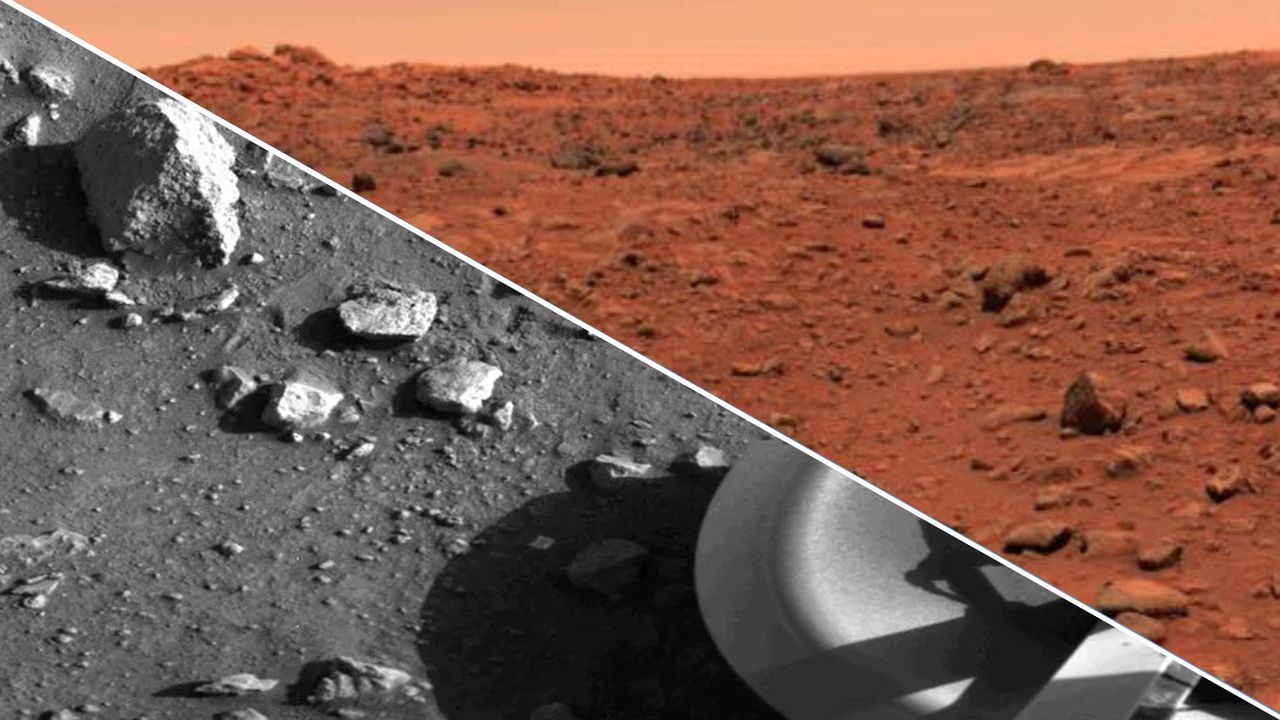
About 40 minutes after it landed on Mars on July 20, 1976, NASA's Viking 1 lander sent this first photo from the surface of the Red Planet. (Image credit: NASA/JPL)Quick factsWhat it is: The surface of MarsWhere it is: 189 million miles (305 million kilometers) from EarthWhen it was shared: July 20, 2026.For thousands of years, humans looked at Mars and wondered what lay on its surface. Fifty years ago this week, we finally found out when NASA's Viking 1 became the first spacecraft ever to land on the Red Planet and transmit images from its surface. It was humanity's first view from the surface of another planet.Viking 1 had been programmed to take its first image just 25 seconds after touchdown, according to NASA. It occurred at 7:53 a.m. EDT on July 20, 1976 exactly seven years after Apollo 11 landed on the moon. It was supposed to coincide with the U.S. Bicentennial on July 4, 1976, but the landing was delayed by the search for a flat landing zone. Although the spacecraft landed safely at Chryse Planitia, north of the equator, mission controllers still had to wait another 19 minutes for the radio signal confirming success to cross the 212 million miles (340 km) between Mars and Earth.Forty minutes after touchdown, the confirming image began appearing on monitors at NASA's Jet Propulsion Laboratory, slowly building line by line from left to right. Dr. Thomas Mutch, leader of the Viking lander imaging team, never forgot the moment. "I studied the black screen, waiting for that narrow strip that will signal the first few lines of the first picture," he said. "Rocks and sand are visible and finally at the far right one of the spacecraft foot pads, a symbolic artifact that stamps our accomplishment with the sign of reality Time and time again I repeat, 'It's incredible.'" The image revealed a solid, slightly rocky surface, with dust and pebbles thrown up by the landing already settling back onto the spacecraft. Vikings first color image came the next day, with a panorama following a few days later.The first color image taken by the Viking I Lander in 1976. (Image credit: NASA)The Viking mission consisted of four spacecraft: two orbiters and two landers. Viking 1 was joined six weeks later on the surface by Viking 2, which landed in Utopia Planitia, also in the northern hemisphere. Meanwhile, the two orbiters mapped Mars and relayed data including more than 52,000 orbital images and 4,500 photographs from the surface back to Earth.Viking transformed our understanding of Mars, but its most intriguing scientific result remains unresolved. The landers carried the first experiments designed to detect life directly in Martian soil. Although the mission's official conclusion was that no convincing evidence of life had been found, some scientists have continued to argue that one of the experiments produced a genuine biological signal; others argue that Vikings experiments destroyed the very evidence of life that they sought to prove. Discoveries by later missions including organic molecules detected by Curiosity and perchlorate salts found by Phoenix have prompted some researchers to revisit the Viking data. Viking 1 fell silent in 1982, two years after Viking 2, following a software error during an update. The intrepid spacecraft showed us the surface of another planet for the first time, but whether Viking 1 also found the first hints of life off-Earth remains one of planetary science's most enduring mysteries. What do you know about the Red Planet? Test your knowledge with our Mars quiz!




 English
 French
 Spanish
 Portuguese
 Deutsch
 Turkish
 Dutch
Dutch
 Italiano
 Russian
 Romaian
 Portuguese (Brazil)
 Greek
Greek