


WWW.LIVESCIENCE.COM
'It's a really poor quality of life': Once a 'miracle in the desert,' California's Salton Sea now spreads toxic dust on vulnerable communities
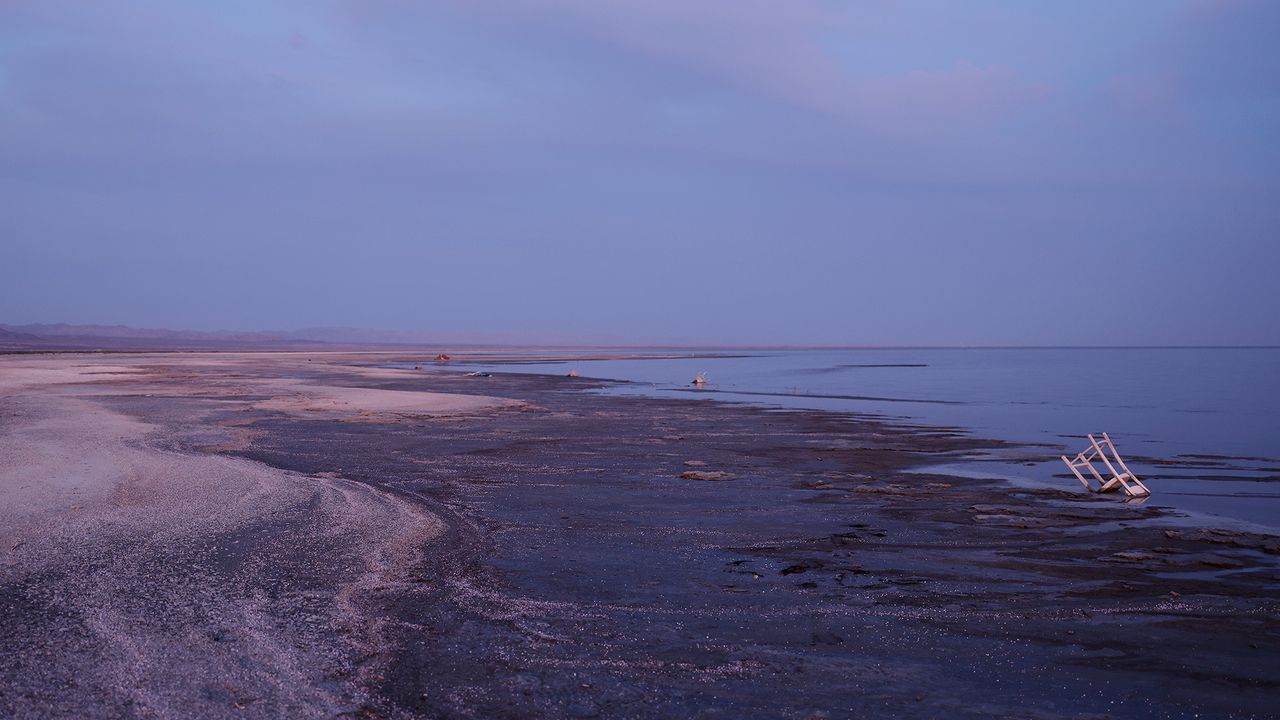
Fifty years after Southern California's Salton Sea formed due to an engineering mishap in 1905, the giant salt lake became a booming vacation destination. Nicknamed the "miracle in the desert," the lake offered watersports and boating, while its shores were lined with yacht clubs, vacation homes, shops and nightclubs.However, by the 1970s, the Salton Sea had begun shrinking due to high evaporation rates and flow reductions in the Colorado River, which had fed the lake. The lake's retreat exposed muddy sediments imbued with pesticides and other agricultural chemicals from large cotton, alfalfa and vegetable farms in the Imperial and Coachella valleys.Today, the Salton Sea is a ghost of its former self, but the lake looms larger in the lives of local residents than ever before. Its shrinking shoreline releases toxic particles so tiny that they can penetrate deep into human lungs and enter the bloodstream. Exposure to these particles can raise the risk of a range of respiratory and cardiovascular conditions, including asthma, impaired lung function and heart attacks.The communities most affected by this pollution are low-income, racial and ethnic minorities that, for socioeconomic reasons, cannot move away or adequately protect themselves.A study published July 1 in the journal BMC Environmental Science reveals just how bad living conditions are for some communities near the Salton Sea. The authors examined air quality and respiratory health in Latinx and Indigenous Mexican families in the Eastern Coachella Valley, finding that families must change their daily routines to protect themselves from harmful dust events.To find out more, we spoke with study co-author Ann Cheney, a professor of social medicine, population and public health at the University of California, Riverside School of Medicine. Cheney, who oversees a free clinic for underserved minority communities in the Eastern Coachella Valley, described the daily struggles of families living near the Salton Sea and some of the measures that are needed to improve their quality of life.Sascha Pare: The Salton Sea has shrunk by 65 square miles (168 square kilometers) and dropped by 14.6 feet (4.5 meters) over the past few decades. Why is that, and how does it affect local residents?Ann Cheney: The Salton Sea occupies an ancient lake bed that, over the millennia, has been filled, and then dried up again. In the early 1900s, because of an engineering mistake, part of that lake bed filled, and it created the Salton Sea. [Editor's note: The sea formed when Colorado River floodwater breached an irrigation canal that was under construction in the Imperial Valley.]Then, over decades, there were changes in the composition of the sea because the main source of water was agricultural runoff. The sea is located in the inland southern Californian desert region. In the 1940s and 1950s, there was a boom in agribusiness. This remade the landscape, and all of those chemicals and pesticides from the agricultural land seeped into the lake bed. With [water management] decision-making around the Colorado River waters, that then meant that another source of water, which had been the Colorado River, ceased to enter into the Salton Sea. 2018 was the last time that water from the Colorado River touched the Salton Sea.Once a booming vacation destination, the Salton Sea is now the site of an environmental disaster that affects neighboring communities. (Image credit: Mario Tama via Getty Images)Because there is the primary source of agricultural runoff going into the sea and no new fresh water coming in and with climate change [boosting evaporation] it's created this environment in which you have a drying sea. Over decades, there have been chemicals and heavy metals seeping into the playa [dry lake bed], and now it's exposed. It's the desert, so there's a lot of dust storms, and the winds take the exposed playa and bring it into the air, which is then breathed by the local residents.For me, what's most concerning is that the local residents who are most affected by the poor air quality are Latinx and Indigenous Mexicans, many of whom are undocumented and have very little political voice.SP: You asked caregivers of children with asthma and other respiratory conditions to document their experiences of living near the Salton Sea. What did those submissions reveal?AC: When I first started doing this work, I thought about it as solely the Salton Sea [affecting people]. But it's the environment in which the Salton Sea is one contributor to poor air quality [that impacts local residents].The caregivers perceive the Salton Sea as being a contributor to the poor respiratory health of their children. But also, this area has many disenfranchised communities that are interspersed on tribal lands, and there are different rules on these tribal lands. There is a lot of dumping and a lot of burning of trash. What we heard from caregivers is that it's not just the exposure to the toxic dust, but also the fires [that are causing issues].A photograph submitted by one of the caregivers shows a door mat covered in dust outside their front door. (Image credit: Trinidad et al (2026). CC BY 4.0)In that article that we published [July 1 in BMC Environmental Science], there was an incident in which there was a fire I think it was related to tire burning in very close proximity to one of the apartments that one of the caregivers and her family were living in. These things happen commonly. So, from the perspective of the caregivers, there are multiple different factors that contribute to their children's poor respiratory health.SP: Can you take me through a day in the life of one of these caregivers, based on the evidence you gathered?AC: It could be a beautiful day. The caregiver walks outside. It's sunny; everything's beautiful. In my opinion, this environment is very beautiful. Maybe, later on in the day, there is a pickup of wind, and there's dust. Let's say the caregiver is a mother with a child who has asthma who's at school. The children are outside on the playground. Her child is going to be highly affected by the dust that's being picked up by the wind. What's going to happen is, the school will bring the child inside, and if the child doesn't have too severe of a respiratory distress, the child could stay at school. Otherwise, the caregiver will get called and have to come to school and pick up their child.Most folks in that region are farm laborers. They're not owners of farms; they are the ones who are working the land for the owners. Many individuals who are living in very impoverished conditions for instance, the Purpecha community, which is the Indigenous community we worked with that's from Michoacn in Mexico are pickers. They are in the lowest-social-ranking jobs within farm labor, and, in part, that's because they may be monolingual Purpecha. That means they don't speak Spanish or English, and that limits the type of employment they can have.In a situation where you have this very precarious employment, if your child needs to be taken out of school and you are the caregiver, then you risk losing your job. That's the type of dynamic that's at play among many of the families that we work with.SP: What are the long-term consequences of living day after day in these conditions?AC: It's a really poor quality of life for children, especially. There's a picture that a caregiver took of her child that I think exemplifies so well the experience of children and their quality of life. The child is just lying on the floor in their home. The photo illustrates the child's lethargy and the boredom and the fact that caregivers often choose to have their children stay inside, because they can better control the indoor air quality. They can't necessarily control what's going to happen outside, but they can control indoor air quality.The problem is, if the family doesn't have the resources to have an air filter to clean and purify the air, for instance, then what we've noticed in our research is that there can still be very poor indoor air quality, particularly when there's more extreme weather events like fires or dust storms.With the research, I anticipated very poor quality of life for children. But what I understood less was that it also means poor quality of life for their families, and particularly for mothers, who are often the primary caregivers. It really affects their mental health and well-being.SP: Currently, are there any measures in place to protect these families?AC: There has been Assembly Bill 617, which was a measure to engage members of the communities that are most affected by the Salton Sea environment in a process of mitigating the effects of the sea. From that, there have been a lot of community meetings. Years ago, I started to participate as one of the advisory board members. It became a bit frustrating and I think this illustrates the history of frustration in this region because government entities come in with resources and money. But it's very top-down, and often the community gets upset and frustrated because they don't see these agencies making changes in the community. There's a lot of talk and very little action.There are also monies that have been dedicated to Salton Sea restoration, and there's been an ongoing conversation about a 10-year plan to mitigate the effects of the drying of the sea. But the focus has been primarily on wildlife, not human health. Only more recently have there been conversations about human health and the public health implications.One of the caregivers in the study submitted this image of the medication their child needs to take daily. (Image credit: Trinidad et al (2026). CC BY 4.0)For individuals who have a specific diagnosis of asthma, they may qualify for retrofitting. That means they will receive money through their health insurance to be able to invest in improving their home. That might mean taking out carpet [which can capture dust], or maybe fortifying windows or doors things like that. But it's a really small amount of money. It can help to a certain degree, but I think in this community, in particular, they may not always know how to navigate the healthcare system to get access to that type of resource. In addition, the most vulnerable people in this community don't have access to health insurance.SP: What more could be done to improve people's quality of life in this community?AC: We installed air-quality monitors in people's homes, and we spent a lot of time collaborating with communities in this region. Some live in apartment complexes; some live in single-family homes. But the majority live in mobile home parks, in which they're living in very old, dilapidated trailers. The land is dirt. It's an area that is very impoverished. So, when I think about these communities, in particular, they can't protect themselves from the external environment. In terms of policies, [I wonder] how we can put money toward building housing that is not trailers and can really protect people from the dust. Right now, the wind is bringing dust into the homes. We need to find ways to actually keep the homes sealed.This image submitted by one of the caregivers shows a blurred highway during a dust storm. (Image credit: Trinidad et al. BMC Environmental Science, 2026. CC BY 4.0)SP: The Salton Sea is a hotspot for lithium, and although there are currently no active lithium mines in the region, policymakers and private companies are investigating the sea's potential to host one. How might lithium mining affect the families you worked with?AC: That conversation's been going on for several years now. At the moment, it's not as much a community concern, because there's been very little movement [to open mines]. There was a lot of action and movement about three or four years ago. But it's been a few years since they've been testing the prototype, and it doesn't seem like it's gone to scale, where they would have been able to commercialize it.Initially, the community was quite upset, because it's just another example of the lands being exploited and other people benefiting. Typically, the beneficiaries are individuals who are not originally from the community and who have professional degrees. They get the resources, and they get to make decisions about the resources. Then, the conversation was, "Well, but if we have this type of business coming in, then it can create jobs." But we know that it creates jobs for individuals who have professional degrees, or they'll have to get some type of training; they're not jobs for farmworkers or individuals who are undocumented.It takes a lot of water to do lithium mining, so that also has implications for the continuation of the shrinking of the Salton Sea.Related storiesPollution may fuel depression, anxiety and other mental health problems, emerging research suggestsScientists are unraveling the link between pollution and psoriasis'Sacrifice zones' around critical mineral mines are rife with pollution, child workers and birth defectsSP: Other lakes around the U.S., including Utah's Great Salt Lake, are shrinking and exposing toxic sediments that are then blown into residential areas. Do those drying lakes have similar effects on local communities?AC: There is a film director [Abby Ellis from around the Great Salt Lake] who, I think two years ago, came to the Eastern Coachella Valley and met with myself and my team members. She said, "I want to get a sense of what's going on here, because this is essentially where we are going to be 10 or 15 years from now." I had the opportunity to very briefly chat with her, but also view the trailer for her documentary. One of the distinctions between the communities surrounding the Great Salt Lake and the Salton Sea is the color of the skin of those living around these bodies of water. In Utah, it seems to be more so individuals who maybe are middle class, or have a certain access to resources people who can have a political voice and organize and say, "We don't want this to happen." It will be interesting to see if there can be more change in communities where there are more affluent people living near these bodies of water.This interview has been condensed and edited lightly for clarity.
0 Commentaires
0 Parts
26 Vue

 English
 Arabic
 Spanish
 Portuguese
 Deutsch
 Turkish
 Dutch
Dutch
 Italiano
 Russian
 Romaian
 Portuguese (Brazil)
 Greek
Greek