Mummy mask with wig: A 1,000-year-old 'false head' found in Peru that was crafted with real human hair and toxic red cinnabar
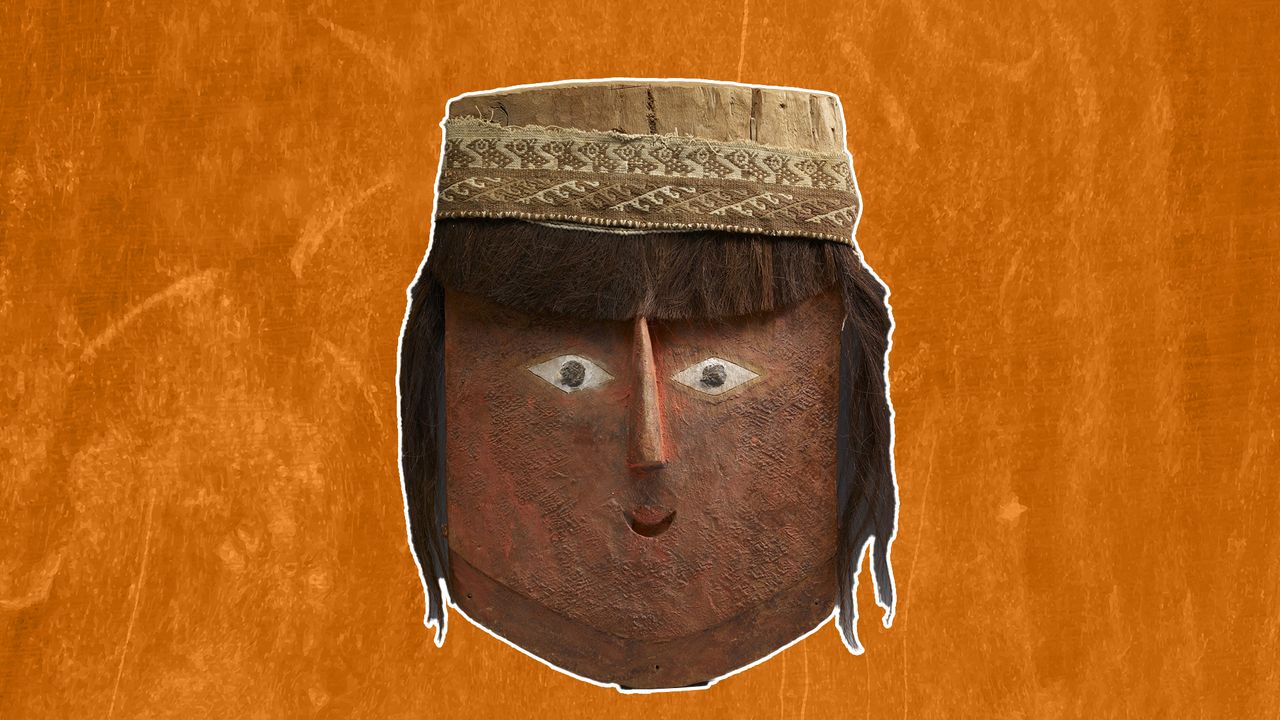
QUICK FACTSName: Mummy mask with wigWhat it is: A carved wooden maskWhere it is from: PeruWhen it was made: Circa 1000 to 1450This wooden mask, which is decorated with human hair and a textile headband, adorned an Andean mummy up to a millennium ago. Made by an artist of the Chancay people, the mask was also painted red with the mercury-containing pigment cinnabar.The Chancay were a pre-Inca people who lived along the central coast of Peru in the Late Intermediate Period (1000 to 1450). A common tradition among the Chancay was the funerary bundle the end result of wrapping their dead in layers of textiles, vegetal material and animal skin. The bundle was then buried in a pit along with grave goods such as tools, food and figurines. Because the bodies were usually wrapped in a fetal position, however, it was not always clear exactly where the head was located once the bundle was complete.According to The Walters Art Museum in Baltimore, which has this mask in its collection, "false heads" made from textiles or wood were sometimes tied onto the Chancay funerary bundles to act as a focal point for venerating the ancestor.The mask is roughly life-size, measuring 12 by 8 inches (30.5 by 20.3 centimeters). Chancay funeral masks were not meant to be realistic. Instead, they had simplified features, such as the diamond-shaped eyes; triangular nose; and tiny, U-shaped smile on this mask. The wig was almost certainly made from human hair, according to a microscopic analysis The Walters Art Museum undertook in 2017.The Chancay artist who made the mask painted it red using cinnabar, a toxic substance that is the brick-red form of mercury sulfide. Cinnabar was frequently used in Andean funerary rituals, and the color was associated with purification and commemoration rituals. But the mask was likely not placed on the outside of the bundle burial, as a patterned impression has been left on the cinnabar of this mask, probably from being wrapped in even more textiles, according to The Walters Art Museum.Although the Chancay culture is not as well known as the Inca, recent research into the ceramics the Chancay left behind and the tattoos on their mummified ancestors has revealed that they were a complex society with a high degree of artistic talent. For more stunning archaeological discoveries, check out our Astonishing Artifacts archives. The Stargazer Sleep and Death Foot Lamp Can you put together last week's Astonishing Artifact?




 English
 Arabic
 French
 Spanish
 Portuguese
 Turkish
 Dutch
Dutch
 Italiano
 Russian
 Romaian
 Portuguese (Brazil)
 Greek
Greek