


WWW.LIVESCIENCE.COM
What is the roundest animal?
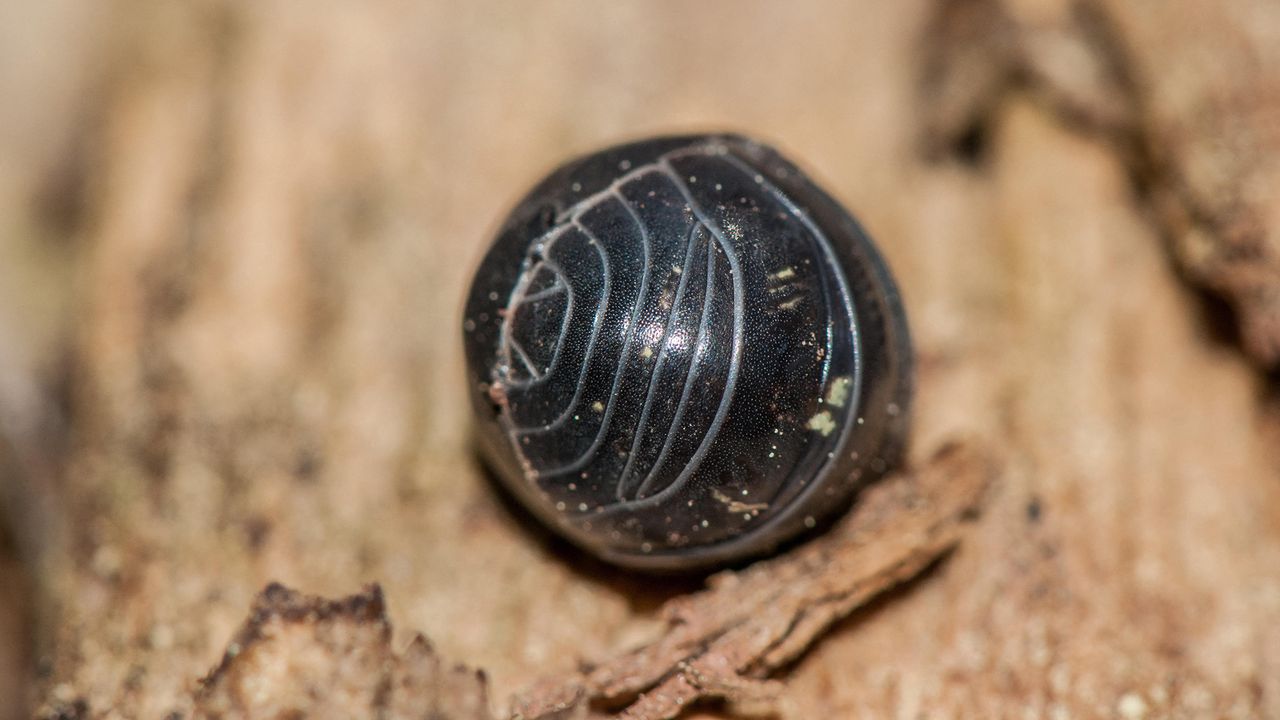
Animals come in a wide range of shapes and sizes, from spindly stick insects to blubbery whales. Round animals are harder to come by, but they're more common in the ocean than on land. So what is the roundest animal, and why are round animals uncommon?At a glance, round animals might not seem that out of place on land. After all, small mammals like rabbits and pikas often look a bit spherical when their fur is puffed out and they're sitting. But Chris Law, an evolutionary biologist at the University of Washington in Seattle, said this shape is mostly an illusion."They're physically not as round as they appear to be," he told Live Science.A sphere has the lowest surface-area-to-volume ratio of any shape, which is ideal for heat conservation. Law said the ability to curl or scrunch into a sphere can be essential to the survival of small animals, which lose heat more quickly than larger animals do.Some small and furry mammals like the cotton-tail rabbit, Ezo flying squirrel and northern pika make look spherical when they're scrunched up and sitting down, but in reality they're not as physically round as they appear to be. (Image credit: Chris Rogers/Satoru S/feathercollector via Getty Images)Rolling into a circle can also offer protection. To safeguard their vital organs, animals like armadillos and hedgehogs roll into balls when threatened, leaving only their armor or spikes exposed to predators. But when you look at the skeletons of these supposedly round critters and their shape when they're not scrunched up, they aren't round at all, Law said. Sign up for our newsletter(Image credit: Marilyn Perkins / Future)Sign up for our weekly Life's Little Mysteries newsletter to get the latest mysteries before they appear online.In fact, there are several reasons why round creatures are rarely found on land. Being perfectly round all the time would make it difficult to fit into small spaces, which is a key survival technique for avoiding predators, he added, and with the effects of gravity, having a lot of unsupported round mass puts strain on an animal's body. Overly round mammals, like obese cats and dogs, often suffer joint issues and other health problems."As a round animal, you're probably going to lose mobility, and you're going to be picked off by predators pretty easily," Law told Live Science. There are exceptions, however. For example, beetles are small enough not to be affected as much by gravity and can fit into nooks and crannies without much wiggling. Their round shape coupled with their hard carapace makes them more difficult for predators to eat. And rain frogs puff up into a round shape to keep predators from removing them from their hiding spots. If we're counting animals that are only round sometimes, then pill bugs (also known as rolly pollies) might take first place for the roundest land animal. But if not, rain frogs, and beetles like ladybugs, are the top contenders for the roundest land animal. But even these animals aren't perfectly round; ladybugs have flat bottoms to make it easier to move around, and rain frogs are less spherical when not puffed up.Round sea animalsBeing round at sea is a little more feasible than it is on land. In fact, sometimes, it's critical to survival.Karly E. Cohen, a biomechanist at Friday Harbor Labs in Washington, studies lumpsuckers, a type of fish she describes as "quite round." These bulbous fish have suction cups made of enamel on their stomachs, which they use to latch on to surfaces at the bottom of the ocean. Lumpsuckers have armor, also made of enamel, covering their round shape. According to Cohen, lumpsuckers' roundness plays a huge part in keeping them attached to the seafloor or other surface. The curve of their bodies, coupled with the tooth armor, modifies the drag around the animal, creating a force that pushes them down rather than shooting them into the water column.A lumpsucker sits on a rock. These animals use their enamel armor and their round shape to stay anchored to the ocean floor. (Image credit: MWCPhoto via Getty Images)Although gravity still works underwater, buoyancy helps push objects up, meaning the effects of gravity do not feel as strong at sea as they do on land. According to Cohen, lumpsuckers can get around just fine, if a bit more slowly than their more streamlined neighbors. And like pufferfish and porcupine fish, lumpsuckers' round shape and uninviting exterior make them tough to swallow literally."There's no real good way to eat an apple whole; you have to take a bite," Cohen told Live Science. "And then this thing is armored, so it's very hard to take a bite." All about symmetryDespite their spherical shape, lumpsuckers don't quite win the award for the roundest animal. Lumpsuckers, like most animals, have bilateral symmetry, which means they are divided into two symmetrical sides across one plane of symmetry. But there are animals that have radial symmetry, which means they are symmetrically arranged in a circle around a central point with multiple planes of symmetry. Echinoderms which include sea stars, sea urchins and sand dollars have pentaradial symmetry, which means they have five planes of symmetry arranged around a central point. According to Laurent Formery, a developmental biologist at the Oceanological Observatory of Banyuls-sur-Mer in France who studies echinoderms, scientists aren't entirely sure of the benefits of pentaradial symmetry or why echinoderms are the only modern animals that have it. However, Formery thinks being divided into five sections instead of two may give echinoderms better sensory perception than bilaterally symmetrical animals. Echinoderms have decentralized nervous systems, meaning that instead of a brain, they have a series of neurons distributed evenly across their body, and photoreceptors all over their skin. "They are kind of like a big crawling eye and brain, so they are receiving information from everywhere," he told Live Science. "They have a completely different way, that is difficult for us to imagine, of interacting with their environment."An urchin in the genus Histocidaris. Underneath their spines, sea urchins are almost perfectly spherical. (Image credit: Volgi archive via Alamy)Because of this unique organization, radially symmetrical animals can sense predators from any direction. They can also easily switch which segment of their body is in the lead, making it easier for them to change directions to capture prey.Discounting their spikes, certain species of sea urchin are almost perfectly spherical. Like lumpsuckers, sea urchins' spherical shape, coupled with their spines, makes them difficult meals for predators, Formery said. Sponges lack any symmetry, so they can develop all sorts of body shapes. One species, called the death ball sponge, looks like a Sputnik lamp, with many hook-covered spheres attached to its spindly "arms."'Related mysteriesWhat is the world's slowest animal?Which animal has the best hearing?Why do animals have different pupil shapes?Under the sea, urchins in the genus Histocidaris, like Histocidaris purpurata and Histocidaris formosa, are the closest to perfect spheres, making them the top candidate for roundest animal.Although roundness might be uncommon in the animal kingdom, Cohen said it's fascinating to study these animals and the reasons for their adaptations. "As somebody that's interested in the tools and ways organisms work in their environments," she said, "they're a real treasure trove of evolution."What do you know about the animal kingdom? Test your knowledge with our animal quiz!
0 Commentarios
0 Acciones
19 Views

 English
 Arabic
 French
 Portuguese
 Deutsch
 Turkish
 Dutch
Dutch
 Italiano
 Russian
 Romaian
 Portuguese (Brazil)
 Greek
Greek