


WWW.LIVESCIENCE.COM
'Shared cosmic experience': 'Potentially hazardous' asteroid Apophis could be visible to 90% of Earth's population during ultraclose 2029 flyby, new maps reveal
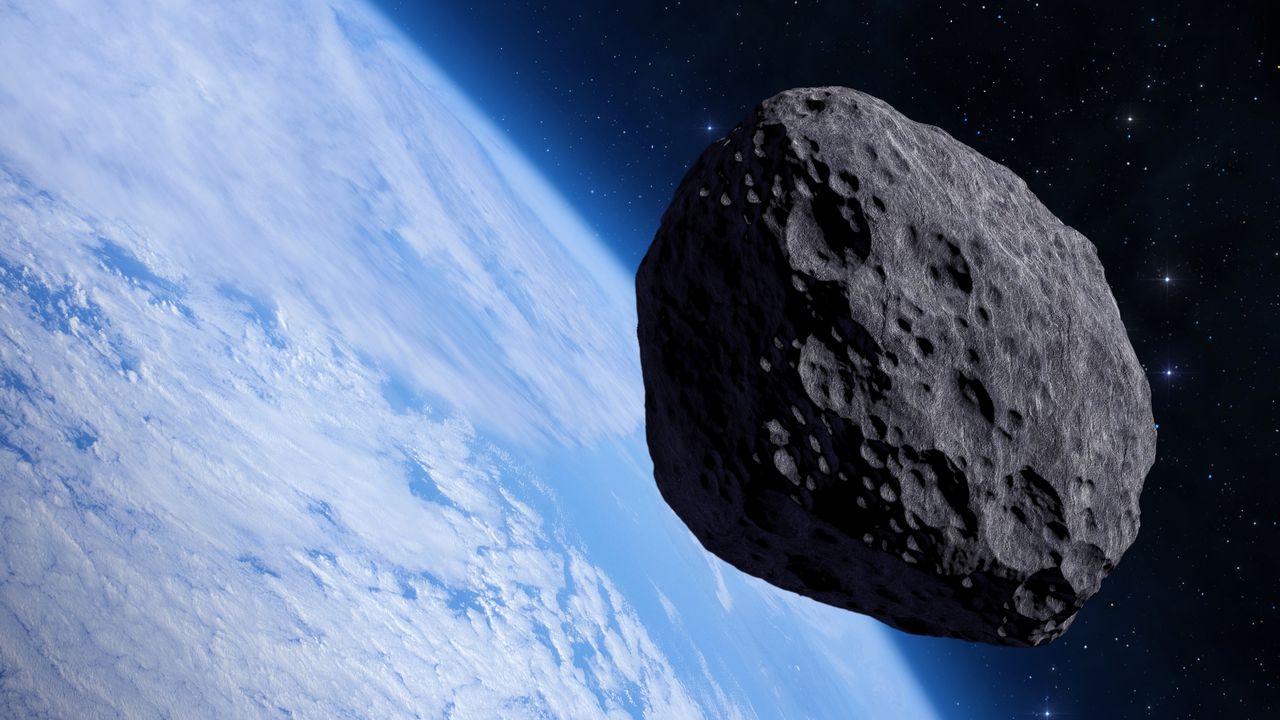
Up to 90% of Earth's population may be able to see the enormous "God of Chaos" asteroid Apophis zoom past our planet in less than three years, scientists say. The skyscraper-size space rock will come closer to us than some satellites, making it clearly visible to the naked eye during the "once-in-a-millennium" skywatching event.This will be the first time humans have ever been able to predict a flyby of an asteroid visible to the naked eye, and it could be a once-in-a-lifetime experience for the up to 7.6 billion people who manage to see it, scientists said at the Apophis T-3 Years workshop, held June 18-19 at the University of Padua in Italy."Sighting Apophis as it passes by is a way of feeling a shared cosmic experience, realizing the smallness of Earth in the vastness of space," Richard Binzel, a planetary scientist and asteroid expert at MIT who helped organize the recent workshop and create new maps of the flyby, told Live Science in an email. The asteroid, dubbed 99942 Apophis (or simply Apophis), is a peanut-shaped object that spans about 1,500 feet (450 meters) across at its widest point, or around as wide as the Empire State Building is tall, making it large enough to wipe out a city if it ever impacted our planet. Apophis likely originated from the solar system's main asteroid belt between Mars and Jupiter, but it now resides between the orbits of Venus and Earth, circling our home star roughly every 10.5 months. The name Apophis comes from Apep, the Egyptian serpent god of darkness and disorder, which has earned the space rock the nickname "God of Chaos."On April 13, 2029, Apophis will make a superclose flyby of Earth, reaching a minimum distance of around 19,000 miles (30,600 kilometers) from our planet, according to The Planetary Society. That's much farther away than the International Space Station and the thousands of other spacecraft in low Earth orbit, but it's closer than several hundred satellites stationed in an elevated geosynchronous orbit. (Apophis poses no threat to these high-altitude satellites because they can easily be maneuvered away from its projected path.)At the recent Apophis T-3 Years workshop, scientists shared new maps showing how many people will be within viewing range of the asteroid at each point of its seven-hour flyby of Earth. (Image credit: eclipseatlas.com)There is currently zero chance that Apophis will impact our planet during the flyby or within the next 100 years. However, some experts have suggested that there is still a slim chance that the asteroid's trajectory could change before it reaches us. Other experts worry that the upcoming flyby could permanently alter the space rock or nudge it off course, potentially increasing the chances it could hit us in the future. Therefore, scientists are keen to monitor the flyby in great detail and will coordinate observations from telescopes around the world to understand the potentially hazardous asteroid better. Several spacecraft, including NASA's OSIRIS-APEX, will also attempt to fly past Apophis to study its structure and trajectory. The event is so significant that the United Nations has declared 2029 the International Year of Asteroid Awareness and Planetary Defence.Researchers also hope the flyby will provide a unique opportunity to inspire the next generation of space scientists. "I hope people will find the Apophis flyby intriguing, as it is not anything fearful or frightening at all," Binzel said. "Who knows how many young people might find a spark of curiosity that leads them on a path to a career in space studies."Who will see Apophis?The new maps help break down who might be able to see Apophis throughout the roughly seven-hour period it passes by our planet. The asteroid will be visible only to people who are positioned within its path at twilight or night amid clear skies and limited light pollution.Apophis will slowly move across the night sky through a set of well-known constellations, although its exact position will depend on where in the world you are. (Image credit: eclipseatlas.com)At the start of the flyby, when Apophis is farthest from Earth, the asteroid could be visible to around 4.5 billion people across Australia and most of Asia. By the end of the flyby, when the space rock reaches its closest point to us, it might be visible to around 1.9 billion people in eastern South America, northern Africa and parts of Europe, according to the new maps. RELATED STORIESAn 'invisible threat': Swarm of hidden 'city killer' asteroids around Venus could one day collide with Earth, simulations show'City killer' asteroid 2024 YR4 could shower Earth with 'bullet-like' meteors if it hits the moon in 2032Fallout from NASA's asteroid-smashing DART mission could hit Earth potentially triggering 1st human-caused meteor showerPeak visibility will occur around halfway through the flyby, when Apophis might be seen by as many as 5.7 billion people across eastern Africa, Southern Europe, Australia, and all of Asia and the Middle East. At this point, astronomical observatories situated on Spain's Canary Islands will likely snap the best photos of the asteroid's flyby, according to Live Science's sister site Space.com.North America is the only continent that will not get a clear view of Apophis.For those who are lucky enough to see the passing space rock, the asteroid will appear as a "modest star passing slowly across the sky, much like a slow-moving satellite," Binzel said, and it will shine as brightly as the stars in the Big Dipper.
0 Commentarios
0 Acciones
21 Views

 English
 Arabic
 French
 Portuguese
 Deutsch
 Turkish
 Dutch
Dutch
 Italiano
 Russian
 Romaian
 Portuguese (Brazil)
 Greek
Greek