0 Commenti
0 condivisioni
36 Views
Elenco
Elevate your Sngine platform to new levels with plugins from YubNub Digital Media!
-
Effettua l'accesso per mettere mi piace, condividere e commentare!
-
YUBNUB.NEWSDepartment of War, Lockheed Martin Partner to Triple Patriot Missile ProductionPatriot launcher modules mounted on the M983 Heavy Expanded Mobility Tactical Truck, part of the U.S. MIM-104 Patriot surface-to-air missile system, are pictured in Zamosc, Poland, on Feb. 18, 2023. Omar0 Commenti 0 condivisioni 36 Views -
YUBNUB.NEWSThe precursors for war are in place. Iran to define the post-Trump futureThe precursors for war are in place. Iran to define the post-Trump future byAlastair Crooke as posted at The Ron Paul Institute At the 30 December meeting with Netanyahu and his team, President0 Commenti 0 condivisioni 38 Views -
Why You Shouldn't Just Toss Your Meat In For A Pot Roast (It's Costing You Flavor)Why You Shouldn't Just Toss Your Meat In For A Pot Roast (It's Costing You Flavor)...0 Commenti 0 condivisioni 109 Views
-
Nvidia’s new Vera Rubin chips: 4 things to knowNvidia’s new Vera Rubin chips: 4 things to know Nvidia CEO Jensen Huang announced at CES 2026 in Las Vegas this week that its new superchip platform, dubbed Vera Rubin, was on schedule and set to be released later this year. The news was one of the key takeaways from the highly anticipated keynote from Huang. Nvidia is the dominant...0 Commenti 0 condivisioni 104 Views
-
WWW.UNIVERSETODAY.COMAstronomers Discover a Bright Supernova Using Gravitational Lensing for the First TimeAn international team of astronomers using a combination of ground-based telescopes, including the W. M. Keck Observatory on Maunakea, Hawaii Island, has discovered the first-ever spatially resolved, gravitationally lensed superluminous supernova. The object, dubbed SN 2025wny, offers a rare look at a stellar cataclysm from the early Universe and provides a striking confirmation of Einsteins theory of general relativity.0 Commenti 0 condivisioni 47 Views -
WWW.UNIVERSETODAY.COMAs Puzzling As A Platypus: The JWST Finds Some Hard To Categorize ObjectsAstronomers found a handful of unusual objects in JWST survey data. These 9 point sources are being called 'Astronomy's Platypus' because, like the animal, they seem to defy categorization. They're not like active galactic nuclei, and they're not like star-forming galaxies. What are they?0 Commenti 0 condivisioni 46 Views -
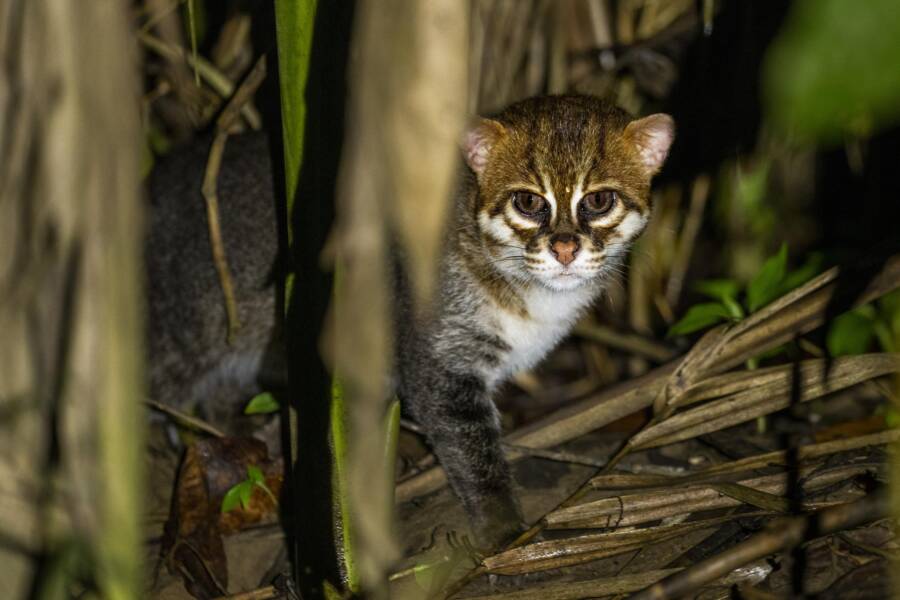
ALLTHATSINTERESTING.COMScientists Have Captured Photographs Of A Tiny Cat Species Previously Thought To Be Extinct In ThailandSebastian Kennerknecht/PantheraA rare photograph of the elusive flat-headed cat.For the first time in 30 years, researchers have spotted elusive flat-headed cats in Thailand. They were seen on camera in a wildlife sanctuary near the countrys southern border, renewing the hopes of conservationists.The species, so rarely observed that it was classified as endangered in 2008, had long been considered possibly extinct in Thailand. Then, from 2024 to 2025, scientists carried out the largest-ever survey of the wild felines. The results shocked them.Rare Photographs Of A Possibly Extinct Cat SpeciesAccording to a press release from Panthera Thailand, an organization that focuses on the conservation of wild cats, researchers captured the photographs in cooperation with Thailands Department of National Parks, Wildlife, and Plant Conservation (DNP) during an ecological survey that launched in 2024. Remote camera traps placed around protected wetlands in the country captured 13 photos of the cats in 2024 and an additional 16 images in 2025. Notably, researchers spotted a female flat-headed cat with her baby an especially rare sighting, given that litters typically only produce a single cub. This is one of the reasons why the species struggles to grow. Still, the observation of a mother with her cub does provide evidence of ongoing reproduction, a positive sign for the species future. It also explains, in part, why flat-headed cats have proven so difficult to observe. Sabah Forestry Department/Sabah Wildlife Department/PantheraOnly around 2,500 adult flat-headed cats are estimated to exist today.With only an estimated 2,500 adults remaining globally, catching a glimpse of these small felines is not a common occurrence. With their webbed toes, they prefer habitats like tropical rainforests, swampy regions, marshes, lakes, and forests located along rivers, all of which are somewhat inaccessible for researchers but provide the cats with their preferred diet of fish, frogs, and shrimp.Flat-headed cats are named for their flattened foreheads and elongated skulls. They are roughly the size of domestic house cats but only half the weight, making them the smallest wild cats in Southeast Asia.Their lack of any distinctive markings makes it difficult to say just how many individuals were recorded during the survey, but their presence alone could be a boon for researchers looking to protect the natural habitats of Thailand. Rediscovery of the flat-headed cat in southern Thailand is a significant win for conservation in Thailand and the broader Southeast Asia region where the species is still found, said Athapol Charoenshunsa, the director general of the DNP.Charoenshunsa continued, Uncovering the existence of a species once thought lost in the region highlights the dedication and effectiveness of DNP officials in protecting border forests and preserving rare wildlife populations despite challenging political and social circumstances that make conservation work difficult.Indeed, researchers hope this survey is only the beginning of their conservation efforts. Flat-Headed Cats Bolster Conservation Efforts In ThailandDNP/Panthera ThailandFlat-headed cats have not been scientifically observed in Thailand since 1995.Some of the greatest threats to flat-headed cats are the direct result of human actions: fishing, agricultural encroachment, hunting, water pollution, and the spread of disease from domestic animals. And as habitats continue to shrink, competition increases, making it even harder for these tiny felines to survive. As a result, they have largely moved to remote and undisturbed locations. Researchers emphasized just how crucial it is, then, to protect these environments.Even species thought to be lost can be rebuilt if we invest in protecting the habitats they depend on, said Pantheras Science Director, Wai Ming Wong. Flat-headed cats persistence in Thailand suggests that these ecosystems still hold remarkable biodiversity but also underscores how urgently we must conserve and restore them before they vanish entirely. DNP/Panthera ThailandThe smallest wild cats in Southeast Asia, flat-headed cats weigh half as much as the average house cat.Panthera and the DNP stated that they will continue to work together to research the species, its habitat, and the most effective pathways for conservation. Future steps include more training for park rangers, prioritizing field gear and trap cameras, and working with local communities to identify threats to local environments. This is a landmark moment for Thailand and a powerful reflection of our long-standing commitment to conservation, Charoenshunsa said. The flat-headed cats resurgence is a well-timed reminder that when we safeguard our natural heritage, we safeguard our nations wild habitats and future.After reading about the rediscovery of Thailands flat-headed cats, learn about the misunderstood fisher cats of North America. Or, check out seven places around the world that have become overrun with cats.The post Scientists Have Captured Photographs Of A Tiny Cat Species Previously Thought To Be Extinct In Thailand appeared first on All That's Interesting.0 Commenti 0 condivisioni 39 Views -
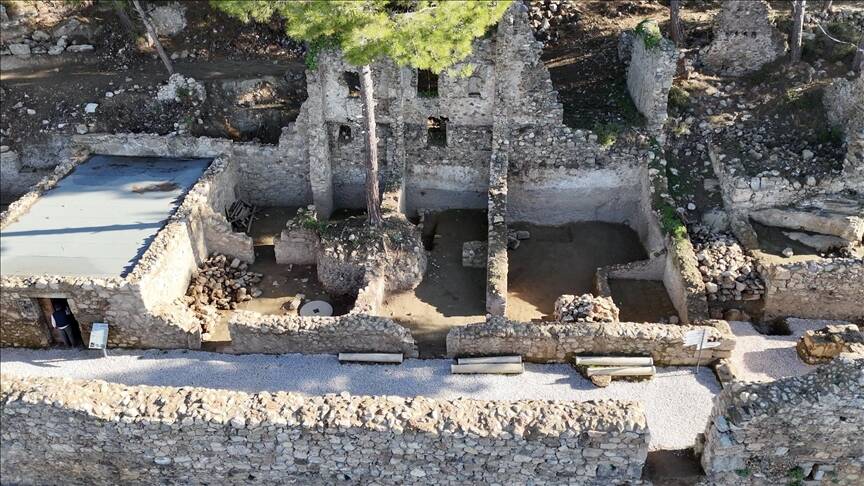
ALLTHATSINTERESTING.COMAn Ancient Hub Of Olive Oil Production Was Just Uncovered In A Lost City On The Southern Coast Of TurkeyAA PhotoArchaeologists have found dozens of olive oil workshops across the city of Syedra, which is roughly 3,000 years old.In many ways, olive oil was the lifeblood of the ancient Mediterranean. Called liquid gold, it was used for everything from cosmetics to medicine to religious rituals. And archaeologists have just uncovered one of the major centers where olive oil was once produced during antiquity.In the ancient city of Syedra, located in present-day Turkey, archaeologists have found evidence of a sprawling olive oil operation. Curiously, while most olive oil at the time was produced outside of urban centers, Syedras olive oil was seemingly produced within the city walls, making this site not only pivotal, but unique.The Production Of Olive Oil In Syedra During AntiquityAccording to The Anadolu Agency, excavations led by Alanya Alaaddin Keykubat University discovered a wealth of olive oil workshops across the 3,000-year-old port city of Syedra during excavations that began in 2019.AA PhotoA restored olive oil workshop in Syedra.Through excavations, we have uncovered nearly 20 olive oil workshops, said excavation director Professor Ertug Ergurer. Beyond that, we have identified over 100 such workshops across the entire ancient city. This indicates very intensive olive oil production here.Indeed, archaeologists excavating Syedra found evidence of olive oil production almost everywhere they looked. Nearly every structure in the ancient city seemed to contain some kind of workshop, and many held pithoi, large vessels for storing olive oil.This indicates that Syedra was once an important industrial hub, and it also suggests that the city played a unique role in antiquity. Most olive oil production in the ancient world, Ergurer noted, took place in more rural areas outside of urban centers.The presence of olive oil workshops within the city was intriguing for us, he said. Typically, production occurs outside the city, beyond the walls. Here, however, they are under nearly every building, which is noteworthy. This shows that olive oil production was carried out on a massive scale.This production allowed Syedra to play a significant role in the ancient Mediterranean.How Olive Oil Made Syedra A Commercial Powerhouse In The Ancient Mediterraneanmatzi01/Wikimedia CommonsThe ancient ruins of Syedra, perched along the coastal hills of southern Turkeys Antalya province.Settled in the 7th century B.C.E., Syedra served as an important port in the Mediterranean during antiquity. It likely reached its heyday during the Roman period, between the 2nd and 4th centuries C.E., when its population was between 4,000 and 5,000 people.Indeed, archaeologists have found evidence that Syedra was once a thriving metropolis. Its citizens once enjoyed Roman amenities like a stadium, baths, a theater, water infrastructure systems, and colonnaded streets. The surplus of olive oil workshops under the citys structures suggests that the olive oil industry was an important part of Syedras commerce and culture.Public DomainA 19th-century depiction of olive oil production during antiquity.Whats more, Ergurer suspects that most of the olive oil produced in Syedra was exported elsewhere. After all, olive oil played an important role in the ancient world.Olive oil cultivation in the Eastern Mediterranean began around 6000 B.C.E., and swiftly spread across the ancient world. Hippocrates called olive oil the great healer and Homer famously referred to it as liquid gold. Olive oil was used for cooking, perfume, cosmetics, medicine, and soap, as well as for anointing both athletes and the dead.And Syedra was seemingly one of the many important production centers for olive oil throughout antiquity. Tucked between almost every structure in the ancient city is evidence of olive oil production, suggesting that the liquid gold of the ancient world was the citys lifeblood. Produced in massive quantities, it seemingly brought comfortable prosperity to Syedra for centuries before it was finally abandoned in the 13th century.Until that point, however, olive oil produced in Syedra was likely sent out to the many corners of the ancient Mediterranean, making its way from the shores of the city to far-off lands in North Africa, the Levant, and beyond.After reading about the sprawling olive oil operation that was unearthed in the ancient port city of Syedra, discover the astounding story behind the production of Tyrian purple, the vibrant dye coveted by elites throughout antiquity. Then, learn about the incredible lost stories of the Seven Wonders of the Ancient World.The post An Ancient Hub Of Olive Oil Production Was Just Uncovered In A Lost City On The Southern Coast Of Turkey appeared first on All That's Interesting.0 Commenti 0 condivisioni 36 Views -
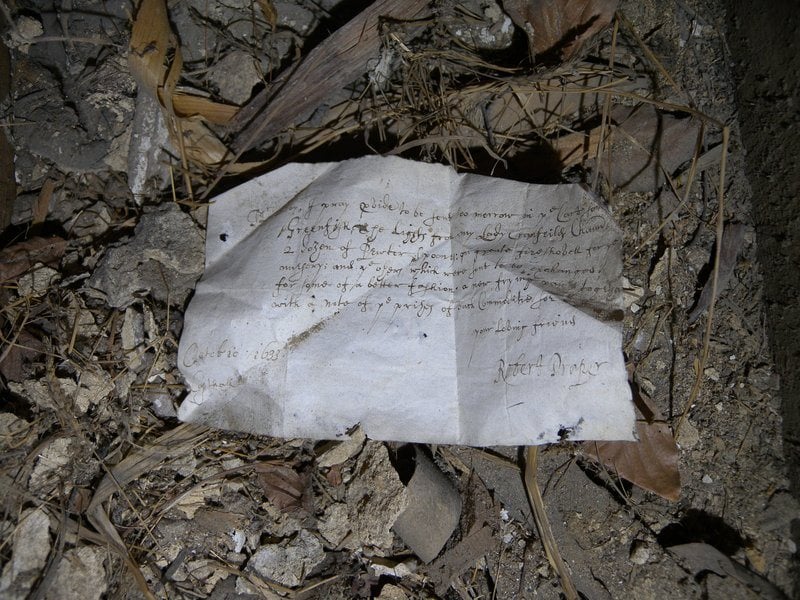
ALLTHATSINTERESTING.COMA Nearly 400-Year-Old Shopping List Was Discovered Under The Floorboards Of A Historic English HomeUK National TrustArchaeologists who are helping restore a historic country home in Kent, England have discovered a 17th-century shopping list hidden under its floorboards.Written in 1633, the note was uncovered during a multimillion dollar renovation of the famed Knole House. Constructed in the late 15th century and surrounded by 1,000 acres of forest, it is one of Englands largest houses.Written by one Robert Draper to a Mr. Bilby, the shopping list includes pewter spoons, a frying pan, and greenfish, which is now known as unsalted cod. It also asks Mr. Bilby to send a fireshovel and lights to Copt Hall, which is 36 miles away on the other side of London.According to the UKs National Trust, Draper must have been a high-ranking servant because the list was beautifully written.UK National TrustThe archaeology team working hard at Knole House.The renovators found two other similarly aged notes near to where they found the shopping list. One was similarly hidden away under the attic floorboards, while the team found another shoved into a ceiling cavity.Its extremely rare to uncover letters dating back to the 17th century, let alone those that give us an insight into the management of the households of the wealthy, and the movement of items from one place to another, Nathalie Cohen, the regional archaeologist for the National Trust, told Kent Live.The Knole letters good condition makes this a particularly exciting discovery, she added.The full text of the shopping list reads:Mr Bilby, I pray p[ro]vide to be sent too morrow in ye Cart some Greenfish, The Lights from my Lady Cranfeild[es] Cham[ber] 2 dozen of Pewter spoon[es]: one greate fireshovell for ye nursery; and ye o[t]hers which were sent to be exchanged for some of a better fashion, a new frying pan together with a note of ye prises of such Commoditie for ye rest.Your loving friendRobert DraperOctobre 1633CopthallNext, check out the new discoveries that have shed light on the lost kingdom of the Dark Ages.The post A Nearly 400-Year-Old Shopping List Was Discovered Under The Floorboards Of A Historic English Home appeared first on All That's Interesting.0 Commenti 0 condivisioni 38 Views