6 Successful Revolutionary Leaders in History
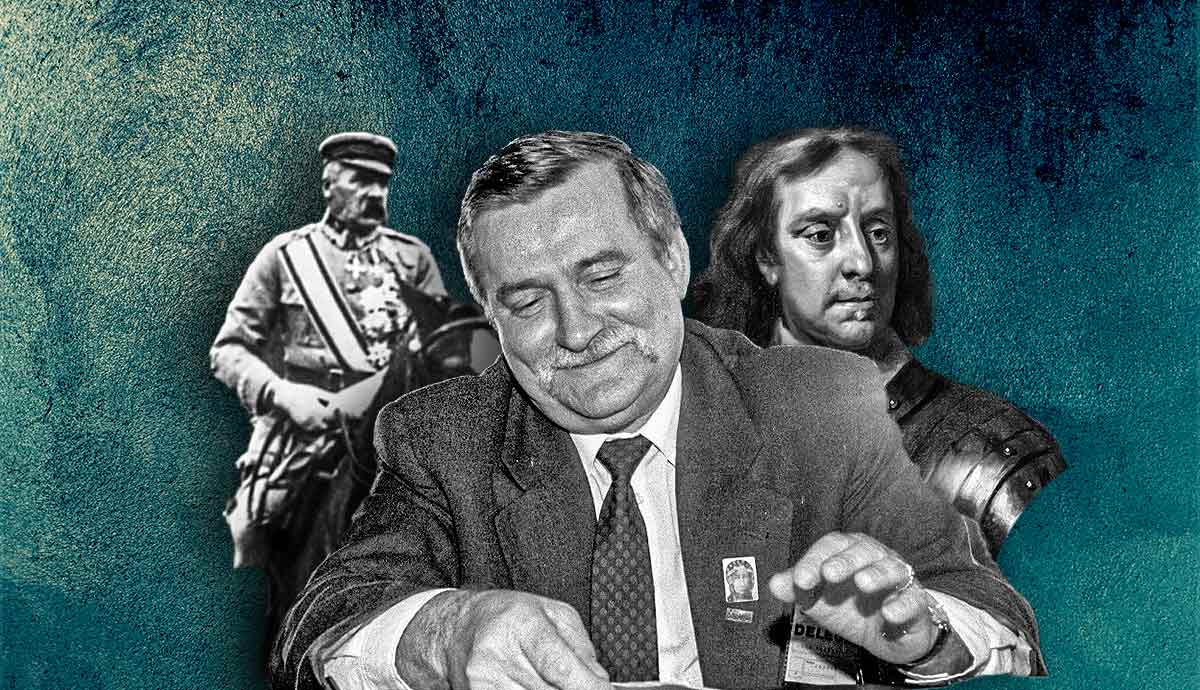
Revolutionary leaders are known for their willingness to display ruthlessness and charisma when seeking to accomplish their goals. The most successful ones mix pragmatism with determination. Read on to learn more about six revolutionary leaders who did just that, often overcoming odds that doomed less fortunate individuals.1. Oliver CromwellOliver Cromwell by Samuel Cooper, 1656. Source: Wikimedia CommonsIn 1641, members of the English Parliament attempted to restrict the powers of King Charles I, who demanded that Parliament subsidize his wars. Tensions between King and Parliament had been simmering for over a decade over Charles autocratic tendencies and his marriage to Queen Henrietta Maria, a French Catholic princess.Amid rising tensions, on January 4, 1642 Charles stormed into Parliament to demand the arrest of five MPs whom he regarded as the ringleaders of the opposition against him. The five men had already escaped, but the Kings actions encouraged further parliamentary opposition, leading to the outbreak of the English Civil War.Amongst the ranks of the parliamentary faction was Oliver Cromwell. He took control of a regiment that eradicated the Royalists in East Anglia and steadily rose up the ranks as an effective cavalry general. By 1648, he took full command of the New Model Army, the most effective parliamentary force.In 1649, Charles was arrested and sentenced to death by Parliament. Cromwell became a leading member of the Rump Parliament, set up after Charless execution. In 1653, he became Lord Protector of the Commonwealth of England, Scotland and Ireland.Although he refused a royal title, Cromwell was king in all but name, and often disregarded parliamentary opposition. By giving English generals governing authority, he effectively established a military dictatorship. However, his government allowed some tolerance: for instance, English Catholics were generally treated well and Jews were allowed to return for the first time in 350 years. However, he remains vilified in Ireland to this day for his aggressive policy towards Irish Catholics.When Cromwell died in 1658, he was succeeded by his son Richard, who lacked his fathers abilities and was overthrown when the Stuart monarchy was restored in 1660. Oliver Cromwells corpse was exhumed and hanged. Cromwells legacy was mixed, seen as a dictator by some while celebrated as a revolutionary hero by others.2. Simn BolvarStatue of Simn Bolvar in Central Park, New York City, 2022. Source: Central Park NYCSimn Bolvar was a Venezuelan military and political leader who played a key role in Latin Americas successful struggle for independence from Spanish colonial rule. Born into an aristocratic family in Caracas, Bolvar was educated in Europe, where Enlightenment ideals and the spirit of the French and American Revolutions profoundly influenced him. Returning to Venezuela in the early 1800s, he became a leading advocate for independence.Bolvar began his military campaigns in 1810, initially facing defeats and exile. However, his resilience and leadership helped rally revolutionary forces across northern South America. He took advantage of the French occupation of Spain during the Napoleonic Wars to lead campaigns in Venezuela and Colombia. By 1821, he had liberated Venezuela and played a pivotal role in the creation of Gran Colombia, a short-lived republic encompassing modern-day Colombia, Venezuela, Ecuador, and Panama. He later led campaigns that secured the independence of Peru and the creation of Bolivia.Despite his military triumphs, Bolvar struggled to maintain unity among the newly independent states. His vision of a united Latin America proved difficult to realize due to regional rivalries, political instability, and resistance from local elites. He briefly served as president of Gran Colombia but faced growing opposition and resigned in 1830. His rule was marked by both authoritarian tendencies and a desire to promote freedom and equality for all Latin Americans regardless of racial or ethnic background. He is considered the most well-known Latin American revolutionary to this day.3. Jzef PisudskiMarshal Pisudski, seen here on horseback on parade, helped found the Polish 2nd Republic after World War I, 1933. Source: TVP WorldJzef Pisudski was a Polish military leader and statesman who played a central role in the reestablishment of Poland as an independent nation after World War I. Born in 1867 in what is now Lithuania, Pisudski grew up in Congress Poland. Early in life, he idolized Polish revolutionary Tadeusz Kociuszko and became involved in socialist and nationalist movements in opposition to Russian control.In 1904, he began organizing paramilitary groups to fight for Polish national liberation. During World War I, he formed the Polish Legions to align with Austria-Hungary against Russia, hoping it would lead to national liberation.Following the war and the collapse of the partitioning empires, Pisudski returned to Warsaw in 1918 and assumed control of the newly independent Polish state. As Chief of State, he led the country through its early years, including the Polish-Soviet War, the Polish-Ukrainian War, and the invasion of Lithuania. His most successful victory was the 1920 Battle of Warsaw, where the Red Army was forced back from the gates of the Polish capital.After stepping back from politics in the 1920s, Pisudski returned to power in 1926 through a military coup, establishing an authoritarian regime while maintaining the trappings of democracy. Though controversial, he emphasized military strength, national unity, and minority rights. He remained the de facto leader of Poland until his death in 1935. Revered by many as the father of modern Poland, Pisudski left a lasting legacy as a revolutionary in Polish history.4. Tom MasarykTom Masaryk. Photograph from 1925. Source: Wikimedia CommonsWhile Pisudski led his legions to victory over the Soviets and founded modern Poland, Czech lawyer and statesman Tom Masaryk was preparing for the independence of a state composed of Czechs and Slovaks amidst the collapse of the Habsburg Empire. During the First World War, Masaryk and his two colleagues, Edvard Bene and Milan R. tefnik, encouraged the Entente to create a military force known as the Czech Legion. Masaryk believed that an Allied victory would precipitate the collapse of the regime in Vienna and allow for the creation of an independent Czechoslovakia.In 1918, Masaryk went to the United States and sought recognition from Washington. At this time, Czech soldiers were caught up in the Russian Civil War and the priority of Czechoslovak political leaders was to get them back to their homeland. By 1920, these troops managed to escape the maelstrom that engulfed the former Russian Empire. Masaryks gambit proved successful; he gained recognition from all the major Allied powers, and he was elected president of the Czechoslovak Republic in 1920.Unlike Pisudski and many other post-WWI revolutionaries, Masaryk was a firm believer in liberal democracy and sought to make Czechoslovakia a progressive democratic country. The Czech Constitution was one of the most egalitarian in the world at the time. Czech politics were not affected by military interference or demagoguery. When the independent Czech Republic emerged in the 1990s after decades of Nazi and Communist rule, Masaryks vision was promoted by men like Vclav Havel. Today, he is universally venerated in the Czech Republic for his ideals and accomplishments.5. Fidel CastroFidel Castro, leader of revolutionary Cuba, speaking at the UN General Assembly. Photograph by Marty Lederhandler, 1961. Source: Associated Press via LA TimesBesides Simn Bolvar, the most prominent Latin American revolutionary was Fidel Castro, who ruled Cuba for nearly five decades and became one of the most influential and polarizing figures of the 20th century. Born in 1926, Castro studied law at the University of Havana, where he became involved in leftist politics. In 1953, he led an unsuccessful assault on the Moncada Barracks, for which he was imprisoned. After his release, he went into exile in Mexico, where he organized the 26th of July Movement with other exiles, including Ernesto Che Guevara.In 1959, Castro successfully overthrew Cuban dictator Fulgencio Batista after a guerrilla campaign launched from the Sierra Maestra mountains. He quickly consolidated power, declared Cuba a socialist state, and aligned the country with the Soviet Union. His leadership led to sweeping land reforms, nationalization of industries, and a centralized economy. These policies brought improvements in education and healthcare but also led to authoritarianism, repression of dissent, and economic stagnation.Castro became a key figure in Cold War geopolitics, especially during the Cuban Missile Crisis in 1962, which brought the US and USSR to the brink of nuclear war. He survived numerous CIA assassination attempts, outlasted ten US presidents, and inspired leftist movements across Latin America and beyond. In 2006, he transferred power to his brother, Ral Castro, due to health issues, and formally retired in 2008. Fidel Castro died in 2016, leaving behind a legacy tainted by his ruthlessness but also venerated for his revolutionary idealism.6. Lech WasaLech Wasa, the first leader of post-Communist Poland, at the 2nd Solidarity Trade Union Conference, 1990. Source: WyborcaWhile Jzef Pisudski was the man behind Polands resurrection in 1918, Lech Wasa was responsible for its liberation from Communism in the 1980s. Wasa was born into a working-class family in German-occupied Poland during the Second World War. He survived the war and went into the shipbuilding industry in Gdask. By the 1970s, he started to engage in labor agitation, promoting strikes and encouraging workers to organize. Wasa was repeatedly fired and subject to surveillance by the Polish security services.By 1980, Wasa became the chairman of the National Coordinating Committee of the Solidarno (Solidarity) Free Trade Union, which sought to fight for working-class people. The union grew to over 10 million members and became a major political force. In 1981, Polish dictator Wojciech Jaruzelski declared martial law and cracked down on political dissent. Wasa was arrested along with other activists. After his release, he continued to engage in dissident activities, supported by the United States. He led negotiations with the government at the Round Table Talks, leading to limited reforms and the reestablishment of Solidarity.In 1989, he helped Tadeusz Mazowiecki get elected the first non-Communist Prime Minister in Poland since WWII. A year later, Wasa won the first presidential election in Polish since the 1930s. His presidency was transformative: he pushed for Polish membership in NATO and the EU, started the opening of Polands market, and advocated for major democratic reforms in Polish society. After losing his re-election campaign in 1995, he became a figure celebrated globally for his advocacy for democracy and support for human rights. He is still considered one of the most iconic anti-communist leaders in Eastern Europe.







 English
 French
 Spanish
 Portuguese
 Deutsch
 Turkish
 Dutch
Dutch
 Italiano
 Russian
 Romaian
 Portuguese (Brazil)
 Greek
Greek