0 Commentarii
0 Distribuiri
3 Views
Director
Elevate your Sngine platform to new levels with plugins from YubNub Digital Media!
-
Vă rugăm să vă autentificați pentru a vă dori, partaja și comenta!
-
WWW.LIVESCIENCE.COMBest space photos of 2025An alien comet, a Martian volcano, a mans fall from the sun and a groundbreaking telescopes first images: Here are the most jaw-dropping space photos of 2025.0 Commentarii 0 Distribuiri 3 Views -
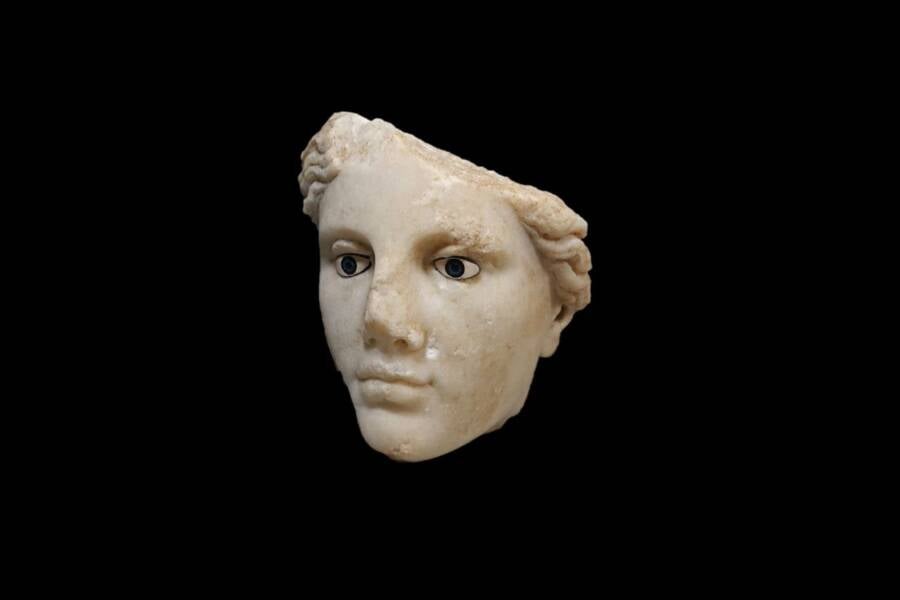
ALLTHATSINTERESTING.COMArchaeologists In Turkey Just Unearthed An Ancient Statue Head Believed To Depict The Greek Goddess HestiaAA PhotoThe marble statue head found in western Turkey, believed to depict the Greek goddess Hestia, as seen after it was cleaned.Archaeologists in Turkey have uncovered a marble statue head from the Hellenistic period that is believed to depict the Greek goddess Hestia.The discovery was made during excavations at the ancient ruins of Metropolis near Izmir. Archaeological work at the site, also known as the City of the Mother Goddess, has been ongoing since 1989.The earliest-known settlement of the area goes back to the Neolithic period, though it especially flourished in the Greek era more than 2,000 years ago. This new find may help deepen archaeologists understanding of the region at this time, as well as reshape notions about local craftsmanship.The Ancient Hellenistic Statue Head Believed To Depict HestiaAA PhotoThe marble head was found in the ruins of a commercial building in the ancient city of Metropolis.The marble statue head was found in a commercial building in the ancient city, according to Trkiye Today. The statues detailed features, including its hair, suggest that its from the Hellenistic period. The other clue that points to this era is the way in which the head was constructed out of two separately carved pieces that were then joined together.The Hellenistic period refers to the time in Greece, the Eastern Mediterranean, and the Middle East that unfolded between the death of Alexander the Great in 323 B.C.E. and the death of Cleopatra in 30 B.C.E.The dimensions suggest that this head belonged to a monumental statue, Serdar Aybek from Dokuz Eylul University, whos been directing excavations at Metropolis since 2007, told Arkeonews. It provides valuable evidence for the level of sculptural expertise and artistic ambition present in Metropolis during the Hellenistic period.Provincial Directorate of Culture and TourismOne of the most unique deities in the Olympian Pantheon, Hestia was worshipped as the goddess of the hearth and home, yet she featured in none of the famous Greek myths.Archaeologists have furthermore suggested that the head depicts the Greek goddess Hestia. The daughter of Cronos and Rhea, Hestia does not appear in many of the popular Greek myths. However, she played an important role in society as goddess of the sacred hearth, representing home, family, and social stability.Upon closer examination of the heads features, the team of archaeologists found that a cavity in the pupil area of the eye was purposefully added. This feature wasnt uncommon in other ancient Greek statues. In place of a carved pupil, sculptors would place colorful stones to create brighter, more vivid eyes.Where This Statue May Have Once Sat In The City Of MetropolisIts possible that archaeologists had already identified the torso that goes with this newly-discovered head. The team points out that a previously-unearthed Hestia torso from the Bouleuterion building (legislature assembly house) in Metropolis matches the dimensions of this head.Archaeologists believe that the two pieces together may have formed a monumental Hestia statue. However, further examination is required to confirm this hypothesis.AA PhotoA profile view of the ancient Hellenistic statue head found in Turkey.However, if the torso and the head do belong together, it could help archaeologists understand the intersection of religious and civic architecture in Metropolis during the Hellenistic period.Excavations at Metropolis remain ongoing as part of Turkeys Heritage for the Future Project. From theaters to council buildings to bath complexes, this historic city has provided no shortage of glimpses into the regions storied past.Archaeologists are hopeful that, as studies into the statue and its meaning continue, it will reveal itself to be an especially important find in the world of Hellenistic archaeology.After reading about the statue head found in Turkey, see the 2,000-year-old headless statue found in a garbage bag in Greece. Then, learn about the surprising story behind the Venus de Milo.The post Archaeologists In Turkey Just Unearthed An Ancient Statue Head Believed To Depict The Greek Goddess Hestia appeared first on All That's Interesting.0 Commentarii 0 Distribuiri 0 Views -
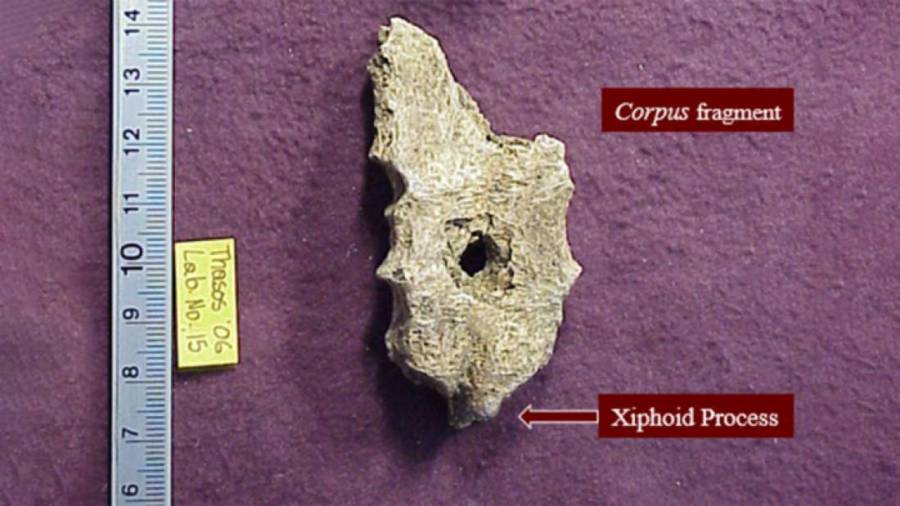
ALLTHATSINTERESTING.COMA Strange Hole In The Skeleton Of An Ancient Greek Man Helps Researchers To Solve Murder MysteryAnagnostis Agelarakis/Access ArchaeologyPart of the Ancient Greek mans fossilized breastbone.When a team of archaeologists discovered the remains of 57 people at an excavation site on the Greek island of Thasos, one particular skeleton sparked a longstanding mystery. The almost perfectly circular hole in its sternum was either the result of a birth defect or a stark sign of violence.According to Forbes, scientists initially believed the hole was caused by sternal foramen, a birth defect that prevents a persons sternum from forming completely. The precision of the hole, however, led researchers to quickly abandon that conclusion in search of a more logical alternative.The team now firmly believes the circular hole resulted not from a biological defect, but from a styrax the spike at the end of a spear shaft.Wikimedia CommonsAn aerial photo of Thasos, the Greek island once advantageous to the empires war and trade efforts.According to a study published in the journal Access Archaeology, the recovered remains dated back to the Greek Hellenistic period, which lasted from the fourth to the first centuries B.C.The excavation, which occurred at an ancient cemetery in 2012, prompted lead archaeologist Anagnostis Agelarakis of Adelphi University to investigate just how this breastbone anomaly was formed. While his team recovered the skeletons of dozens of men and women of all ages this one offered a mystery he was eager to solve.Analyzing and dating the bone as well as the wear-and-tear on the joins and teeth first told Agelarakis that the remains were those of a male older than 50. There were also indications that this person was once fairly fit and physically active.Agelarakis wasnt surprised that this particular ancient Greek was in good shape. Ancient Greeks, particularly on Thasos during this period, were regularly involved in physically demanding challenges. Thasos itself has been written about by ancient authors such as Herodotus and Thucydides. The island once housed various strongholds and settlements, and became a hub of military power due to its advantage of regional sea routes. Anagnostis Agelarakis/Access ArchaeologyA drawing of the seven-sided styrax theorized to have been the murder weapon.Only once the bones were sent to the Archaeological Museum of Thasos Island for cleaning did Agelarakis come to notice the gaping, impressively circular hole in the skeletons breastbone. Because sternal foramen only occurs in around five percent of the population, Agelarakis was confident the truth lay elsewhere.It became immediately apparent, he said, that this case did not pertain to a developmental anomaly of sternal foramen, but to a multilevel mechanically caused orifice, one that had been sustained by a through-and-through gladiolar (lower breastbone) injury. Most notable, of course, was the fact that the entry wound was seven-sided clearly indicating a non-biological cause, and likely the result of a weapon penetrating the mans chest. Finally, Agelarakis and his team were more than confident in concluding that this person had been stabbed.As an unbiased observer and a forensic anthropologist at the University of Central Lancashire, Patrick Randolph-Quinney thoroughly agreed that the studys lead author is onto something.In my considered opinion, Agelarakis has a case, he said. Penetrating peri-mortem trauma is consistent with some of the skeletal defects displayed.While Randolph-Quinney isnt entirely convinced of Agelarakis conclusion that the entry-wound is seven-sided, he did agree that the exit wound virtually rules out both post-mortem damage and the initial sternal foramen diagnosis. In cases of arrow or crossbow wounds, he said, its my experience that they punch their way through flat bone, leaving sharp margins on both entrance and exit surfaces, similar to the photos in Agelarakis article. I think hes right about the injury but maybe for the wrong reasons.Anagnostis Agelarakis/Adelphi UniversityThe 3D-printed model of the mans torso with the replicated styrax penetrating the sternum.In order to garner a more informed perspective on exactly what type of weapon caused this wound, Agelarakis and his team created a 3D wax model of the mans torso, as well as a mold from that models breastbone hole to reconstruct the weapon in bronze. This is when the team posited that the wound was caused by a styrax, which was arguably confirmed by using the reconstructed spear on a ballistic model of a human to estimate how much force was used, and from which direction, to cause the wound. Agelarakis found that this was a close-reach injury, perhaps while the man was immobilized, in order to receive a contact thrusting of an accurately anatomically calculated, precisely positioned, and well-delivered striking into the inferior mediastinum region of the thorax.In other words, the fatal wound put the man into cardiac arrest, as he was dying of blood loss. Agelarakis believes that this was almost undeniably a prepared execution event. Since he was buried among seeming commoners, however, its unlikely the mans death was punishment for treason or conspiracy. It may be postulated that his untimely and violent death could have been the result of a political-military turmoil or reprisals, possibly during forceful regime changes, Agelarakis explained, adding that the man would have been recognized as a worthy opponent.Next, discover the most interesting facts about Ancient Greece. Then, learn all about history-altering Greek wars.The post A Strange Hole In The Skeleton Of An Ancient Greek Man Helps Researchers To Solve Murder Mystery appeared first on All That's Interesting.0 Commentarii 0 Distribuiri 0 Views -
WWW.MASHED.COMIndulge In Layers Of Chocolate Perfection With This Olive Garden Black Tie Mousse Cake Copycat RecipeFeaturing layers of brownies, chocolate mousse, and ganache, this copycat Olive Garden Black Tie Mousse cake makes for a positively stunning dessert option.0 Commentarii 0 Distribuiri 0 Views -
WWW.MASHED.COMThe 15 Best Cajun Restaurants In The SouthThere are stellar Cajun restaurants dotted throughout the South, but these eateries are cited time and time again as the best in the region.0 Commentarii 0 Distribuiri 0 Views -
WWW.MASHED.COMThe NYC Breakfast Spot That Earned Anthony Bourdain's Highest PraiseThere is no shortage of great breakfast spots in New York City, but for late chef and world traveler Anthony Bourdain, this century-old Jewish deli was tops.0 Commentarii 0 Distribuiri 0 Views -
WWW.THEKITCHN.COMWe Tried 9 Chocolate Chip Brands And No One Saw the Winner Coming // And the Clear Winner Is the One Well Bake with ForeverIt makes the best chocolate chip cookies.READ MORE...0 Commentarii 0 Distribuiri 0 Views
-
TECHCRUNCH.COMAlphabet to buy Intersect Power to bypass energy grid bottlenecksAlphabet is set to pay $4.75 billion in cash, plus debt, for the data center and clean energy developer.0 Commentarii 0 Distribuiri 0 Views -
YUBNUB.NEWSWatch Live: The WAR Zone Podcast With Wayne Allyn Root Presented by The Gateway PunditCLICK HERE TO WATCH RIGHT NOW!The Most Exciting, Intense, High-Energy MAGA/America First Podcast in the USA!2 Hours Daily, Monday-Friday, 6 to 8 PM Eastern, 3 to 5 PM Pacific0 Commentarii 0 Distribuiri 0 Views