• WWW.MASHED.COM
    This Is Hands Down The Best Grocery Store Italian Dressing
    Dressings are a huge part of many salad lovers' diets, so getting your hands on the best grocery store Italian dressing is quite important, and this is it.
    0 Kommentare 0 Geteilt 4 Ansichten
  • YUBNUB.NEWS
    U.S. Hits TrillionDollar Debt Disaster, Interest Costs Now Exploding
    Federal budget watchdogs are sounding urgent alarms after the U.S. government reached a troubling fiscal milestone in fiscal year 2025: the cost of servicing the national debts interest surpassed $1
    0 Kommentare 0 Geteilt 3 Ansichten
  • YUBNUB.NEWS
    What requires us to commit national suicide?
    [View Article at Source]To further confuse the public and protect progressivism, the corrupted liberal media ignores the criminal, their origins, and/or sexual preferences, blaming the weapon instead
    0 Kommentare 0 Geteilt 3 Ansichten
  • YUBNUB.NEWS
    Vermont School Raises Somali Flag: Intentional Provocation?
    Raising a foreign flag over any portion of America is problematic, unless its the UN in New York City (and even that is controversial). But for a school to do it, like the Winooski School district
    0 Kommentare 0 Geteilt 3 Ansichten
  • YUBNUB.NEWS
    Vermont School Raises Somali Flag: Intentional Provocation?
    Raising a foreign flag over any portion of America is problematic, unless its the UN in New York City (and even that is controversial). But for a school to do it, like the Winooski School district
    0 Kommentare 0 Geteilt 3 Ansichten
  • YUBNUB.NEWS
    Nicki Minaj: Being at Turning Point USA's AmericaFest More Important than Any Concert I've Performed, Because Charlie Kirk's Organization 'Is a Direct Link Between Young People and God'
    Rap megastarNicki Minaj said being able to speak at Turning Point USAs AmericaFest is more important than any concert she has ever performed anywhere in the world, because slain conservative
    0 Kommentare 0 Geteilt 3 Ansichten
  • WWW.THECOLLECTOR.COM
    How the Astor Family Sold Fur and Became the Kings of New York
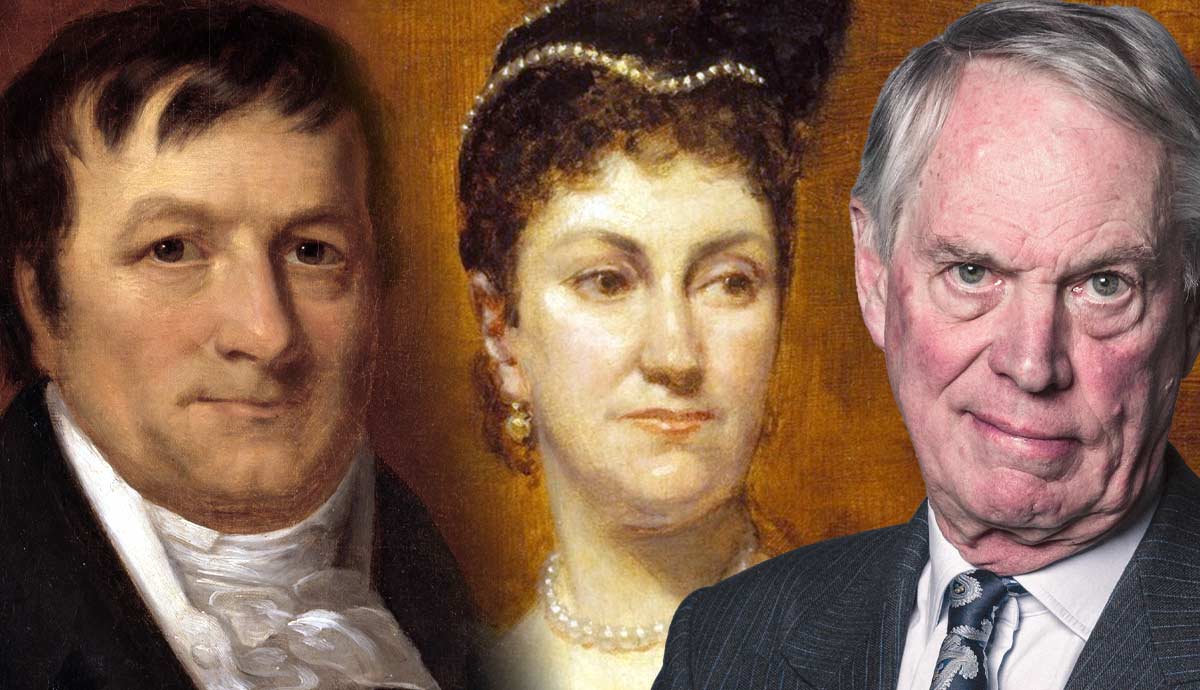
    The Astors didnt just waltz into wealththey built it from the ground up, leveraging everything from fur pelts to Manhattan real estate to carve out their place as American royalty. Starting with a savvy German immigrant who knew exactly how to turn a profit in a growing nation, the Astors transformed their fortune with each generation, shaping New Yorks social elite. Long before the Vanderbilts or the Rockefellers came onto the scene, the Astors were already kings of the cityunrivaled in influence, status, and, of course, scandal. Heres how they rose from wilderness traders to high-society titans.Astors: Roots and FoundersPersecution of the Huguenots, The Saint Bartholomews Day Massacre, by Franois Dubois, c. 1572-1584. Source: The Cantonal Museum of Fine Arts, Lausanne, SwitzerlandBefore the Astors were Manhattans ruling elite, they were modest French Huguenots who had fled to Germany in search of religious freedom and away from terrible persecution. In those days, they were about as far from respectable monied society as could be. John Jacob Astors father, a butcher by trade, kept the family afloat on blue-collar hard labor. John Jacob had bigger dreams, though he did assist his father with the family business. Hed been born in Walldorf, Germany, in 1763, a place worlds away from the glittering New York empire he would one day build. He knew, early on, that Europe was no land of opportunity for a man like him.So, in 1784, at the tender age of 20, Astor boarded a ship bound for America, where he wasted no time figuring out how to make a fortune. From wisdom gained via speaking to a fellow passenger, he quickly set his sights on the beaver fur tradean industry that was, quite literally, in fashion. The fur of the American beaver was all the rage in Europe, thanks to its durability and soft texture, which made it perfect for the top hats gracing the heads of the eras most fashion-forward gentlemen. It was a lucrative business, but an unregulated one, and Astor understood that if he wanted to make a name for himself, hed have to be tougher than the most ruthless competition.Trappers in the Wilderness, 1897. Source: PicrylAstor quickly got his hands dirty, cutting deals with Indigenous trappers who were skilled at procuring the prized pelts. However, lets be clear: Astors business strategy wasnt about fair trade or ethical practices. He profited by barely compensating Native hunters a pittance for their work, securing valuable furs for prices that absolutely took advantage of the skilled labor he relied on to secure the product. As demand skyrocketed on both sides of the Atlantic, his income climbed accordingly.By the early 1800s, Astors monopoly over the fur trade had turned him into one of Americas richest men. However, Astor wasnt one to rest on his laurels: once hed cornered the fur market, he moved on to real estate, snapping up land in what was then the wild fringes of New York City. It is safe to say that if a deal was cutthroat, underhanded, or downright exploitative, Astors name was attached. In fact, at the end of his life, he said his only regret was not gobbling up more land for his real estate portfolio.John Jacob Astor, by John Wesley Jarvis, 1825. Source: National Portrait Gallery, WashingtonAstor wasnt entirely alone in his ascent. There was another fighter in the ring with him, one just as wily and forward-thinking. In 1785, he married born New Yorker Sarah Todd, a resourceful lady who would prove herself a formidable business partner and advisor. They met when he rented a room in the Manhattan boarding house that Sarah managed with her widowed mother.Though John Jacob was later known to remark that he wanted to wed Sarah because she was so pretty, it is worth noting she also brought a $300 dowry (about $10,000 in todays money)likely as attractive to the ambitious young immigrant as her beauty. That dowry was their start, allowing them to open a small business selling musical instruments. But it wasnt long before they shifted focus to the more rapidly profitable fur trade, and Sarah quickly became more than just a traditional helpmeet.With a sharp eye for fur quality, Sarah managed the business whenever her husband was away on buying expeditions. She supervised the labor-intensive and rather noxious task of processing pelts, negotiated sales, and kept the whole operation afloatall while raising their eight children, five of whom lived to adulthood. So adept was she at managing the Astor empire that, according to legend, she even faced accusations of witchcraft. Her real crime was only that she was a woman with a knack for business.Real Estate and the Legacy of LandAstor House, 1893. Source: PicrylIf there is one thing to know about the Astors, it is that they didnt just build wealth, they acquired it by buying, holding, and squeezing every last drop of worth out of New York Citys real estate market. Unlike other city landowners, whod occasionally show mercy to their tenants or invest in building upkeep, John Jacob Astor pioneered what could only be described as the art of planned neglect. His real estate strategy was less about developing beautiful properties to stand the test of time and more about padding his empire by any means necessary.Caricature from the 1837 panic, The Times, 1837. Source: Library of CongressEvidence exists of him leasing land to sublandlords on contracts that sounded like a sweet dealuntil you read the fine print. Astor would lease his plots for new construction under a clause stating that, after a mere 20 years, all buildings on the land would revert back to the Astor family.As you might imagine, when youre only going to own a building for two decades, theres little motivation to keep it in top shape. These sublandlords knew they would be handing back the keys to the Astors sooner rather than later, so there was no incentive to fix the leaky roof or update the sagging floors. As a result, many Astor-owned properties became dilapidated eyesores well before their timean early example of strategic deferred maintenance.Then there was the great Panic of 1837, which nearly obliterated New Yorks real estate market. Property values crashed harder than a 1929 ticker tape, and families citywide found themselves unable to stay current with their mortgage payments. The state of New York even had to step in with a grace period, giving homeowners an extra year to catch up before foreclosure or eviction. For most people, it was a time of desperation and constant stress. For John Jacob Astor, it was just another chance to get what he wanted for discount prices.John Jacob Astor, 1896. Source: PicrylWhile other higher-ups were frantically selling off assets to stay solvent, Astor calmly snatched up prime Manhattan parcels for almost nothing. In 1837 alone, he spent a whopping $224,000 on landa sum that would equal more than five million dollars todayand he did it with the patient, calculating confidence of a man who knew exactly what he was doing.When interest rates shot up to 7%, Astor was the master of other peoples mortgages that were ticking fiscal time bombs. Those who couldnt keep up with the payments saw their properties foreclosed, their American dreams slipping directly into Astors overstuffed back pocket. Call it coldblooded or call it cunning, but John Jacob Astor never missed an opportunity to turn someone elses worst moments into his underpriced victory.All that money and success did not make the family run smoothly as it continued to expand. Take the legendary feud between Caroline Astorwho, despite an unhappy marriage to an uninterested man, insisted she was the Mrs. Astorand her nephew, who wanted his wife, Mary, to carry the vaunted title. When Caroline refused to share the mantle of Mrs. Astor, and the esteem that went with it, her nephew decided to really stick it to her. He built a luxurious hotel right next to Carolines grand mansion, something that granted anyone with enough money the one thing Caroline liked to be the gatekeeper of access.Caroline couldnt stand this, bought and moved the family to another sprawling property, and built her own hotel right beside William and Marys to be in perpetual competition. The hotels stood shoulder-to-shoulder like stubborn siblings, each vying for dominance in New Yorks high society. It is a tale of egos, money, and enough petty competition to make a reality TV producer salivate.The Women of the Astor FamilyCaroline Astor, by Carolus-Duran, 1890. Source: Wikimedia CommonsThe Astor women, both those born into the wealth and those who married in, were busy shaping society, surviving tragedies, and, on occasion, causing a scandal or two. Each generation seemed to produce at least one Astor woman who made her own kind of history, whether it was through philanthropy, societal reinvention, or a headline-grabbing escape.Take Madeleine Astor, for instance. At just 19 years old, Madeleine was the young bride of John Jacob Astor IV (the great-grandson of the founder of the New York dynasty, John Jacob), who, at 47, was several decades her senior. The two were honeymooning overseas when she became pregnant. Discovering this, the newlyweds booked passage back to New York on the luxury liner, the Titanic.What ensued next was a shocking tragedy: while Madeleine made it into a lifeboat and survived, Mr. Astor did not. Left widowed before shed even reached her 20s, Madeleine and, later, her and the late John Jacob IVs son, became somewhat synonymous with the sinking. Madeleine and her boy were handed a fortune but with a rather significant caveatAstor family rules dictated shed lose her inheritance if she remarried.Resourceful and a romantic, she eventually did marry again, turning down a life of well-paid mourning in favor of love, even if it meant losing her claim to the family fortune. Madeleine became, in short, a survivor in every sense.RMS Titanic, April 10, 1912. Source: Wikimedia CommonsThen there was Caroline Astor, the grand dame who essentially invented New York high society. Known simply as the Mrs. Astor, Caroline held court in her mansion and famously conceptualized a list of New Yorks 400 most acceptable peoplethe magical number, she said, that could fit into her ballroom at one time.To make her list was to be granted entry into the elite echelons of New York society. Caroline was known to snub even the wealthiest newcomers if she felt they lacked pedigree. In a world where family lineage was everything, she was the ultimate madam judge, standing firmly on the social ladder that every up-and-coming family aspired to climb.Madeleine Force Astor, 1910. Source: PicrylMagdalena Astor, on the other hand, took her own path and wasnt about to let any manor empirerun roughshod over her life. She married the Governor of the Danish West Indies at 18 years old, a man of considerable status and power, only to decide that the life of a people-pleasing diplomatic spouse was not her cup of tea.After a few years and two buried children, she simply packed her bags and left him. In an era when divorce was utterly scandalous, Magdalena walked away from a high-ranking position and sought after title in pursuit of her own freedom. She was a woman who would not settle, even if it meant defying social norms. She later married again to a lawyer/doctor who became a practicing clergyman.View of St. Thomas harbor in Charlotte Amalie, Danish West Indies, by Fritz Melbye, 1851. Source: Wikimedia CommonsBrooke Astor was perhaps the most beloved of the Astor women in recent memory. She married into the family and laid her husband to rest after just five years of matrimony. Brooke gave away millions of dollars over her lifetime, supporting libraries, cultural institutions, and educational programs across New York City. She became known as the first lady of philanthropy, embodying the kind of grace and generosity that helped shape the perception of old moneybut with a warmth and forthrightness that made her truly adored.Tragically, in her final years, Brooke suffered criminal mistreatment at the hands of her son, Anthony Marshall, who attempted to seize control of her estate as her health declined. In a story that became tabloid fodder, the beloved philanthropist was thrust into the spotlight once more, as New Yorkers rallied around her in court to ensure her son couldnt drain her assets before her death.He had, apparently, been keeping his mother in squalor and refused to even install railings on her bed, though shed fallen from it multiple times. Her son was eventually convicted of grand larceny, and Brookes memory lives on as a recipient of the Presidential Medal of Freedom. Her motto, adopted from a theater production, also continues to inspire; Money is like manure; its not worth a thing unless its spread around.In a world dominated by ruthless men, the Astor women carved out their own power, on their own terms. Sarah Todd would certainly be proud.English Connections and Aristocratic TiesAstor Wing at Hever Castle, by Jayembee69. Source: FlickrWilliam Waldorf Astor, the aforementioned builder of a hotel to spite his aunt and famously disgruntled by his treatment in New York society, led the charge overseas. Once in England, William Waldorf was determined to make a name for himself among the nobility. His line of thinking went something like this: what better way to cement ones status than by acquiring a piece of Tudor history? He achieved this via the purchase of Hever Castle, the childhood home of Anne Boleyn, the queen who lost her head and birthed the child that would become Englands Gloriana.William poured his substantial wealth into restoring the castle to its former glory, and, not one to do things halfway, he went so far as to build an entire mock Tudor village nearby. The English aristocracy might have initially scoffed at his colonial manners, but William was intent on proving he had the resourcesand the audacityto fit right in. With his American fortune, he soon turned Hever Castle into an aristocratic playground, inviting high society to experience Tudor opulence with all the comforts of modern wealth.During the tense years leading up to World War II, the English branch of the family found themselves in a much darker chapter of history. Members of the Astor clan were reportedly present at the infamous Cliveden Set gatheringsa group of influential figures who believed, to the horror of many, that Britain should pursue peace with Hitlers regime. This circle of appeasement, meeting at the Astors own Cliveden House, cast a long, Nazi-shaped shadow over the familys legacy. Many in the know still debate just how involved they were in encouraging capitulation, the very association left notable asterisks behind the Astor name.Clivedon House, photo by Daderot, 2005. Source: Wikimedia CommonsAmid these complicated connections to British high society and political intrigue, one Astor woman was determined to make her own name in politicsNancy Astor. Born an American but transplanted to England by her marriage to Waldorf Astor (Williams son), Nancy became the first woman to blaze her way to taking a seat in the British Parliament.With her inability to back down under pressure and fiery personality, she defied expectations. Famed for locking horns with Winston Churchill and speaking her mind on issues from womens rights to prohibition, Nancys political career opened a door many didnt know was there. Her ascent from Virginia society girl to a political powerhouse in Parliament was nothing short of groundbreaking, further entrenching the Astor name in the annals history.The Astors carved out a legacy in England as audacious as their American one. They had, perhaps, traded Manhattan for the English countryside but their flair for the dramatic remained very much intact.Modern Astors and LegacyOfficial portrait of Lord Astor of Hever, 2018. Source: UK ParliamentToday, their legacy stretches across continents. David Astor, son of Nancy Astor, was a prominent figure in the media and social justice arenas. As the longtime editor of The Observer, he used his platform to champion progressive causes, including anti-apartheid activism. His work earned him a reputation as one of Britains most respected journalists, committed to both truth and change. He was to the Astors what Anderson Cooper is to the Vanderbilts.The Astor influence remains in British politics as well. William Astor, 4th Viscount Astor, holds a seat in the House of Lords, representing the modern face of the family in governance. Through his marriage, he also became the stepfather of Samantha Cameron, wife of Prime Minister David Cameron. Similarly, another John Jacob Astor, third Baron Astor of Hever, served in the House of Lords from 1986 until his retirement in 2022.The Astors remain well-connected to the British aristocracy. William Waldorf Astors great-great-granddaughter, Rose Astor, married Hugh van Cutsem, a close friend of Prince William. Their daughter, Grace, became an unexpected media darling as the adorable but grumpy bridesmaid at the globally watched royal wedding of Prince William and Kate Middleton in 2011.Rose, who professionally goes by her maiden name to avoid confusion, co-founded a posh London club for mothers in Kensington with amenities that cater to both kids and adultsfrom wood-fired pizza to child-friendly yoga classes. Though she left the venture after a few years, Rose later joined Soho Farmhouse, curating memberships for one of the UKs most exclusive clubs. She is, perhaps, the modern iteration of Caroline Astor, gaining wealth and recognition by gatekeeping elite spaces for women.Harry Lopes and Wife. Source: PinterestAnother descendant, Harry Lopes, married adjacent to British royalty. He wed Laura Parker-Bowles, Queen Camillas daughter, further reinforcing the Astor connection to British aristocracy.There is also Prince Serge Obolensky, an Astor descendant who connects the family to Russian nobility. Serge was born in London but carried the legacy of both the Obolensky family of Russian princes and his Astor lineage. Through him, the Astors can now trace a line back to the ancient Rurikid rulers of Kyivan Rus, linking them to an empire that predated the infamous reign of the Romanovs.The Astor legacy is a unique blend of old-world aristocracy and modern-day influencea family whose mark on history spans continents, centuries, and even ideologies. The Astors may no longer rule New Yorks land or high society, but their presence is felt in places they couldnt have imagined when their story first began in the fur trading business.

    0 Kommentare 0 Geteilt 3 Ansichten
  • WWW.THECOLLECTOR.COM
    Why Thomas Jeffersons Election in 1800 Changed American Democracy Forever
    Renowned for crafting the United States Declaration of Independence and later serving as the third president of that republic, Thomas Jefferson is widely known as one of Americas Founding Fathers. However, many may be unaware of his important actions as both a Revolutionary War-era diplomat and as commander-in-chief. Jefferson helped establish many of Americas political traditions, including partisanship, and actively sought to expand the nation from an East Coast territory to a continent-spanning giant. From a pre-Revolutionary politician to his iconic death on July 4, 1826, Jeffersons life is a terrific study in American history.Thomas Jeffersons Early LifeA 1671 engraving of a map of Virginia, which included the English settlement at Jamestown and locations of Native American tribes. Source: Jacob Meurs/Library of VirginiaThomas Jefferson was born to a wealthy family in colonial Virginia in 1743. When he was three, the family moved to a new plantation to manage it after the death of a family friend. For several years, young Jefferson wandered and explored the nearby woods before beginning his formal education at age nine, and was sent to a boarding school. In 1760, Jefferson entered higher education at the College of William and Mary in Williamsburg, Virginia, where he met many influential professors.From 1762 to 1767, Jefferson received tutoring in law by George Wythe, to whom he was introduced at the College of William and Mary. In 1765, Jefferson was admitted to the bar and began practicing law two years later, specializing in land disputes. As he resided in the western part of the state, where westward expansion led to high demand for land purchases, Jeffersons legal practice prospered. Public speaking did not come naturally to him, and he preferred research to courtroom litigation. This led him to broaden his legal specialties and become a consultant to other lawyers on difficult cases.Thomas Jefferson in Pre-Revolutionary PoliticsA painting by Peter F. Rothermel of Patrick Henry in the Virginia House of Burgesses, whose speech against the Stamp Act inspired young Thomas Jefferson. Source: Wikimedia CommonsAs a young lawyer in 1769, Jefferson was elected to the Virginia House of Burgesses, the colonys legislative body. Within the House of Burgesses, Jefferson joined the anti-British coalition, which was angered over increasing taxation and government overreach. Four years earlier, as a law student, Jefferson had visited the legislative body and witnessed Patrick Henrys passionate speech against the Stamp Act. As a legislator, similar to his legal practice, Jefferson used his research and writing skills more than his oratory, helping craft skilled legislation.In 1774, after Britain passed the Intolerable Acts, further increasing taxation, Jefferson crafted a resolution actively protesting this move. A year later, as the Thirteen Colonies moved toward open rebellion against Britain, Jefferson was chosen as an alternate to attend the Second Continental Congress in Philadelphia, Pennsylvania. When Peyton Randolph stepped down, Jefferson replaced him, becoming the youngest delegate at the Congress. First, Jefferson worked on responses to British acts but later began working on editing Benjamin Franklins draft of the Articles of Confederation, which he had begun two decades earlier. By July 1775, Jefferson was preparing for the possibility of war with Britain.1776: Thomas Jefferson and the Declaration of IndependenceA frieze in the Rotunda of the United States Capitol depicting the reading of the Declaration of Independence to colonists. Source: Filippo Costaggini/Architect of the CapitolIn May of 1776, Jefferson returned to Philadelphia. By now, the first shots of the American Revolutionary War had been fired. Colonies were working on creating their own state constitutions, and Jefferson quickly put his skills behind creating one for his home state of Virginia. A month later, however, Jeffersons skills were transferred to a new task: crafting a declaration of independence of all Thirteen Colonies from Britain. Of the five men on the committee, Jefferson would become the famous name and face most associated with the United States Declaration of Independence.Jefferson largely crafted the Declaration of Independence himself, working on the second floor of the Graff House, though John Adams and Benjamin Franklin provided commentary. On June 28, 1776, Jefferson presented his document to the second Continental Congress, which had already decided to vote in favor of declaring independence. The Congress voted in favor of independence on July 2, with the Declaration adopted on July 4. A copy was made on July 5 and distributed to states, committees, and Continental Army units. On August 2, a copy was created and eventually signed by 56 delegates to the second Continental Congress. King George III of Britain likely received a copy or summary a week or two after this.Revolutionary War and Virginia GovernorshipA map showing the January 1781 Raid on Richmond conducted by British forces, damaging Thomas Jeffersons governorship. Source: Boston Public Library/Wikimedia CommonsNow that the United States of America was pursuing independence from Britain by force of arms, Jefferson returned home to Virginia to assist the new state government. There, he helped write a state constitution and overhaul the states laws as a member of the Virginia House of Delegates. In 1779, he became the states governor. While governor, he drafted a bill to guarantee religious freedom in the state, which eventually passed in 1786. Unfortunately, being governor was difficult during wartime, and a January 1781 invasion of the state by the British rendered Jefferson mostly powerless. In June, the British forces almost captured Jefferson himself after forcing the states General Assembly to flee.Thomas Jeffersons struggles in 1781 as governor, during which time he decided not to run for a third term, represented the low point of his career. He was blamed for moving too slowly when calling upon the state militia to defend against the British and also blamed for not negotiating with the invading British to minimize their plunder. Jefferson found he had no way to enforce his decrees, resulting in high levels of noncompliance by bureaucrats and military officers who did not want to anger the public. When Jefferson evaded capture by the British in June, he went with his family to Poplar Forest rather than returning to join the state legislature in Staunton, leading to allegations of desertion. The state legislature promptly elected a new governor, General Thomas Nelson.Post-War: Jefferson as American DiplomatA 1786 oil painting of Thomas Jefferson by Mather Brown, depicting a relatively young Thomas Jefferson prior to his time as Secretary of State. Source: Wikimedia CommonsThe war situation stabilized in Virginia, with new governor Thomas Nelson immediately receiving the legal powers that Jefferson had lacked. In October 1781, the Continental Army, with the help of the French and Spanish, defeated the British at the Siege of Yorktown, effectively ending the war. Two years later, the Treaty of Paris formalized Americas independence. Thomas Jefferson returned to government in 1783 as Virginias representative to the Confederation Congress, which was the national legislature under the Articles of Confederation. The next year, he went to France when the Confederation Congress appointed him as Americas minister to the Court of VersaillesAmericas most important ally.Jefferson arrived in France during the summer of 1784 and spent the next five and a half years as Americas key diplomat in continental Europe, replacing Benjamin Franklin as senior minister to France in 1785. As an educated man, Jefferson was skilled in languages, including French and Spanish, and joined John Adams and Benjamin Franklin as the voices of America. Although Jeffersons five years in Europe did not produce many treaties, he worked hard to advance American commercial interests and learned much about European culture, which he would put to use as president.Jefferson as Secretary of StateThe Thomas Jefferson State Reception Room in the Harry S. Truman Federal Building, which is the State Department Headquarters. Source: Library of Congress/US State DepartmentIn the autumn of 1789, Jefferson returned home from a France gripped by a burgeoning revolution. Jefferson had supported the revolutionaries cause, including helping the Marquis de Lafayette to write The Declaration of the Rights of Man, and intended his trip back to the United States to be brief. Instead, Jefferson was offered the position of Secretary of State by the first US president, George Washington, which he accepted. In his new role, Jefferson continued to support France as an American ally but agreed with the president regarding the need to keep the new nation neutral in disputes between foreign powers, especially France and Britain.As part of the presidents Cabinet, Thomas Jefferson quickly came to disagreements with Treasury Secretary Alexander Hamilton. Jefferson disagreed with the growing powers of the central government, especially in regard to taking on debt and the establishment of a national capital city, and resigned his position as Secretary of State on December 31, 1793. Despite his short tenure in that office, less than four years, Jefferson helped create the new role of the American diplomat and began the difficult work of impressing upon the world the importance of American thought and culture. He also used this time to help found the Democratic-Republican Party, which countered the Federalist Party and its desire for a strong central government and urban commerce.Election of 1796: Americas First Partisan ContestAn oil painting by Allyn Cox of US President George Washington crafting his 1796 Farewell Address, which was promptly ignored in that Novembers election. Source: Architect of the CapitolBy 1796, despite President George Washingtons disdain for political parties and partisanship, two major parties had formed. In his famous Farewell Address, Washington declared that he would not seek a third term, setting the stage for Americas first contested presidential election. His vice president, John Adams, was the preferred candidate of the Federalists. Former Secretary of State Thomas Jefferson became the nominee of the Democratic-Republicans (which was often called the Republican Party). Unfortunately, the pro-Federalist media quickly turned to mudslinging, disparaging Jefferson and alleging that he had fled as a coward during the British invasion of Virginia in January 1781.Jeffersons own allies behaved no better and accused Adams of seeking to create a political dynasty and mocking the vice presidents physical appearance. Behind the scenes, Alexander Hamilton attempted to swing the Federalist electoral vote to Thomas Pinckney, a man who was intended to be Adams running mate. Hamilton believed that Pinckney was a more devout Federalist than Adams and would likely bestow more political favors upon Hamilton himself. The plan failed, with Adams still winning the electoral college majority vote but Thomas Jefferson of the Democratic-Republicans won the second-most votes. Back then, the winner of the second-most votes became vice president, as there was no such thing as a ticket (this method began in June 1804 with the ratification of the Twelfth Amendment to the U.S. Constitution).Vice Presidency and the Election of 1800Second US President John Adams, who ran against his own vice president, Thomas Jefferson, in 1800, marking the only president vs vice president election contest. Source: The White HouseJohn Adams, a Federalist, was now the US president, and Thomas Jefferson, a Democratic-Republican, was the vice president. As president of the Senate, one of the constitutional duties of the vice president, Jefferson set his skills to use crafting rules for that legislative body. His Manual of Parliamentary Practice, published upon his leaving the vice presidency in February 1801, was later adopted by the US House of Representatives in 1837. During this time, the US was facing a growing naval threat from France, resulting in the Quasi-War (1798-1800). As a result of the French seizure of American cargo ships in the Caribbean, the US suspended debt repayments from the Revolutionary War, bringing the two nations to the brink of war.Adamss attempts to solve the dispute diplomatically resulted in the XYZ Affair, with three French diplomatsthe redacted X, Y, and Z in published reportsdemanding bribes. The failure of diplomacy led to a rapid expansion of the US Navy to counter the French threat. Despite a treaty between the US and France being signed in September 1800, the Quasi-War and the XYZ Affair damaged Adams presidency enough to give the edge to Vice President Thomas Jefferson in the election of 1800. The transition of power from Adams Federalists to Jeffersons Democratic-Republicans after Jeffersons victory was peaceful, and represented the first transfer of power between political parties in American history. Jeffersons inaugural address on March 4, 1801, was well received by members of both parties and is credited with helping establish a tradition of peaceful transfer of power between opposing political parties.Peaceful Revolution and the Third President of the United StatesA 1919 map showing the Louisiana Purchase of 1803, which doubled the size of the United States of America. Source: James McConnell/Library of CongressJeffersons peaceful and dignified acceptance of presidential power after winning the election of 1800 is often known as the Revolution of 1800. Although peace with France was restored, many challenges remained. Jefferson sought to reduce the nations debt by decreasing the size of the central government, and he gave greater discretion to state governments under the conservative principle of state sovereignty. In 1803, Jefferson did not object to the famous US Supreme Court decision in Marbury v. Madison to give federal courts the ability to nullify laws that were deemed unconstitutional, creating the important concept of modern judicial review.Famously, Jefferson agreed to expand presidential powers and, thus, central government powers in 1803 to purchase the Louisiana Territory from France, which had been offered after the US inquired about purchasing only the port city of New Orleans. The Louisiana Purchase doubled the size of the United States for $15 million, a tremendous sum at the time but equal to only 4 cents per acre. Jefferson ordered the Lewis and Clark Expedition to explore this territory, with Meriwether Lewis having served as the presidents personal secretary for two years prior. In September 1806, the Expedition of the Corps of Discovery returned to St. Louis, Missouri to report what they had learned of the West and reaching the Pacific Ocean in present-day Oregon.Post-Presidency and Later LifeAn aerial view of Monticello, the Virginia estate of the third US president, Thomas Jefferson, in which he entertained guests in his post-presidency. Source: Thomas Jefferson FoundationLike Washington before him, Jefferson had won a second term (in the election of 1804) and decided against seeking a third. Many praised Jefferson for acting decisively in using presidential power for the greater good, such as purchasing the Louisiana Territory despite the US Constitution giving no explicit acceptance of that power. Upon retirement in 1809, Jefferson returned to his plantation estate in Virginia, named Monticello, and studied natural science. In 1819, he founded the University of Virginia. This desire may have been amplified after he sold his personal library collection to the Library of Congress in 1815 to replace what had been destroyed when the British burned Washington, DC during the War of 1812.In his later years, Jefferson returned to his plantation and hosted numerous friends and guests. His lifestyle was expensive, which influenced his decision to loan out many of his slaves as collateral. As his final years approached, Jefferson made efforts to highlight his accomplishments. The former president was most proud of his role in crafting the Declaration of Independence, the religious freedom in Virginia law, and the University of Virginia. He passed away on July 4, 1826, and had designed his own obelisk-shaped tombstone. Coincidentally, his former friend and political rival, John Adams, died on the same day.Jeffersons Legacy: Natural Rights and Sally HemingsThe University of Virginia, with its iconic Rotunda. Source: University of VirginiaDue to his holding of slaves, which numbered some 150 at most, Thomas Jeffersons legacy is complicated. Jefferson bought and sold slaves, though he reportedly disliked selling them for humanitarian reasons, and released only a handful during his life and in his will. After a 1998 DNA test revealed that Thomas Jefferson very likely fathered children with his slave, Sally Hemings, the Thomas Jefferson Foundation eventually accepted the historical allegation as fact. Jeffersons paternity of six children with one of his slaves sparked controversy due to Hemings lack of ability to consent to the relationship. Most of Jeffersons slaves were sold after his death to pay off his numerous debts.Today, Thomas Jefferson is celebrated for his role in crafting the Declaration of Independence and asserting human rights, although some question his adherence to his famous words, all men are created equal. Due to his tremendous writing skills, experience in both domestic and foreign affairs, and tall, statuesque bearing, Jefferson is remembered as one of the most important Founding Fathers. Undoubtedly, his storied career in politics, going back to the Virginia House of Burgesses before the American Revolution, helped establish a workable foundation for the United States of America. However, despite his writing acumen, Jefferson was not present at the Constitutional Convention of 1787; he was a diplomat in France at the time and James Madison, a fellow Virginian, wrote the Constitution.
    0 Kommentare 0 Geteilt 3 Ansichten
  • YUBNUB.NEWS
    JD Vance Closes AmericaFest With Final Repudiation Of Ben Shapiros Call For Cancelations
    Vice President J.D. Vance delivered a fiery speech Sunday, closing down AmericaFest by commenting on the growing rift inside the conservative movement. Vance proclaimed that every American is invited
    0 Kommentare 0 Geteilt 1 Ansichten
  • YUBNUB.NEWS
    Shorts Weather For Santa!
    Shorts Weather For Santa! Should we thank Al Gore forMaking Global Warming Great Againahead of Christmas? (ZH)- The coldest stretch of winter weatheracross the eastern half of
    0 Kommentare 0 Geteilt 1 Ansichten