• 5 Creative Ways To Make The Most Of Cheap Bourbon
    5 Creative Ways To Make The Most Of Cheap Bourbon...
    0 Комментарии 0 Поделились 8 Просмотры
  • WWW.THECOLLECTOR.COM
    How Christmas Cards Came to Be (From Henry Cole to Norman Rockwell)
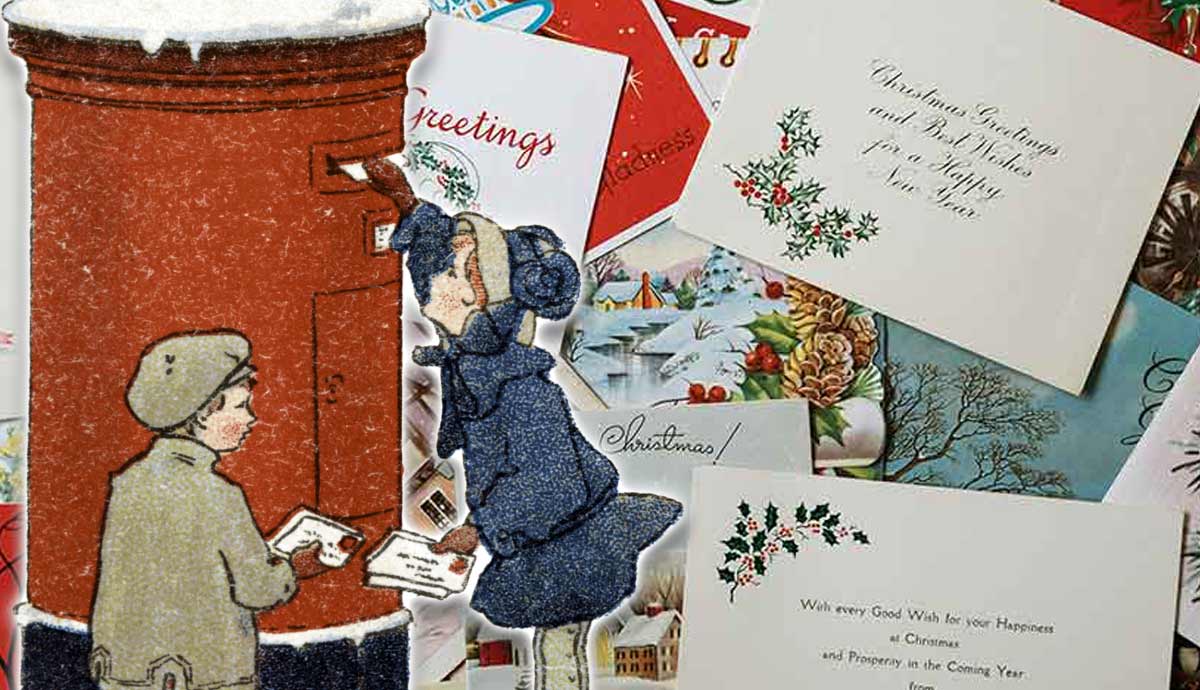
    The worlds first commercially produced Christmas card was designed by John Callcott Horsley for Henry Cole in 1843. But thats only the tip of the iceberg when it comes to the origin of the humble Christmas card. Read on to find out how one whimsical idea transformed into one of the most singular traditions in the history of civilization.The First Card for ChristmasChristmas card, designed by John Callcott Horsley for Henry Cole in 1843. Source: Wikimedia CommonsThe very first commercial Christmas card was sent in 1843 by the future founding director of the Victoria and Albert Museum in London, Sir Henry Cole. A busy civil servant accustomed to sending lengthy letters with holiday greetings within, Henry Cole commissioned the artist John Callcott Horsley to design a jolly image with a festive greeting, leaving just enough space for Cole to simply sign his name.Henry Cole wrote of the event in his diary on December 17, 1843:In the evening, Horsley came & brought his design for Christmas Cards.Horsleys card was designed in a triptych style, with the centerpiece depicting three generations of the Cole family around a large wooden table, raising a toast to the receiver. An eye-catching pink banner drapes below them, with the message A MERRY CHRISTMAS AND A HAPPY NEW YEAR TO YOU. Either side of the joyful image are black and white sketches capturing scenes of acts of giving: feeding the hungry and clothing the naked.Cole was delighted with the finished piece and commissioned a printer to transfer the design onto 1,000 cards that could be personalized on the back with a handwritten note. Cole used as many as he needed and then offered the rest for sale at a shilling per card. This was an expensive purchase at the time. He advertised the sale in the Athenaeum paper with the words:Just published. A Christmas Congratulation Card: or picture emblematical of Old English Festivity to Perpetuate kind recollections between Dear Friends.The commercialization of Christmas had begun.Home-Made CardsA 1916 hand-sewn Christmas Card. Source: Time and Tide MuseumEarly Christmas cards were made by an expensive production line. A printer would produce the image on a piece of card no bigger than a business card by todays standards. They would be printed in black and white and then colored in by hand. Valentines cards were already an established trade, so the introduction of the Christmas card marked an expansion in business for card printers.After the arrival of Coles first Christmas card, the trend caught on. For a time, hand-painted cards were made inexpensively at home, in place of the more extravagant commercial cards. But when the printing press developed in the 1860s, cheaper printing allowed for more complex and varied designs.Two major developments propelled the Christmas card business:The rotary press enabled high-speed, high-volume, and consistent production. The gravure presses introduced continuous rolls of paper rather than individual sheets, which meant continuous printing and increased production rates.Adoption of stereotype plates. These were invented in the 18th century, but became readily available throughout the 19th century. The primary benefit was in the speed of delivery.With these improvements, Christmas cardsand greeting cards in generalwere given a lease of life. What were once niche and expensive novelties turned quickly into affordable, mass-produced items. Before long, elaborate and colorful cards flooded the market. These were made using Chromolithographya method for creating vibrant prints with separate plates for each color.Thus, the printing press removed the necessity for hand-coloring, which had previously contributed to the high cost of a Christmas card. Further, the cheapest cards were sold in multi-packs for pennies and were popular among the working classes. This new accessibility across class divides meant that by the 1870s, the practice of sending cards was cemented in British Christmas culture.Father of Christmas CardsA Louis Prang Christmas card, 1884. Source: Henry Ford MuseumIt took several decades for the Christmas card to make its way to other countries, but once it did, there was no looking back.Louis Prang, a German printer living in Boston, owned a print shop that specialized in chromolithographed artist prints. In the mid-1870s, Prang began creating small Christmas notelets for the American market. Prang already produced business cards, so his Christmas cards werent a huge step away from his status quo. His first design featured a simple painted flower with the message Merry Christmas in sloping font.From here, the first generation of American Christmas cards was conceived. Traditional nativity scenes, the baby Jesus, or Cole-like depictions of family gatherings, cropped up in stores in every major city. Prang pioneered variety, with quirky images and fun rhymes. One card depicted a traveling band of frogs, armed with musical instruments. The message reads, O Children, join our merry band and carry a banner for the good of the land. A jolly time just to remember that Christmas comes on the 25th of December.A print in the London Illustrated News pokes fun at the popularity of Christmas cards, 1884. Source: Postal MuseumWith this, people began collecting Christmas cards in the same way that coin or stamp collecting would take off. By 1880, Louis Prangs business was selling nearly five million holiday cards per annum. In the same year, Prang established Christmas card competitions, wherein the public could submit their designs for print. This furthered the popularity of the practice.Prang gathered notable artists to judge the competition and secured an exhibition at the American Art Gallery in New York for the winner. The prize money totalled $2,000 for the top designs, and there were over 800 entries. Prang was savvy and reserved the right to produce the images on his Christmas cards free of royalties.The competition was a great success, and in 1881, Prang organized a second contest. This time, there were 1,500 entrants.Prang would become known as the father of the American Christmas card. But, as is always the way, bigger fish were entering the pondNear and FarChildren posting Christmas cards, Alexander Baird and Son Limited, early 20th century. Source: Postal MuseumPrangs innovations made the Christmas card accessible for Americans. By 1915, the book-style card was introduced by a company that would become inextricable with the modern greeting card, and the book style became the standard format almost instantly.In 1915, Joyce Hall published a holiday card from his Kansas City postcard printing company, the Hall Brothers. The cards were folded in the middle and posted inside a protective envelope.Hall Brothers became Hallmark, and commissioned work from artists such as Salvador Dali and, most notably, Norman Rockwell, whose iconic and sentimental images of Santa, elves, snow, and Christmas trees became synonymous with not only Christmas cards, but the season itself.Rockwell designed a series of cards for Hallmark, which are still regularly reprinted. However, Hallmarks most popular Christmas cards often depict licensed characters such as Snoopy or traditional biblical scenes. One of the most popular depicts three cherubs, heads bowed in prayer. The message reads: God bless you, keep you and love youat Christmastime and always. The card remains a staple in the Hallmark yearly output.By the early 20th century, Hallmark had helped turn the Christmas card into a reliable, repeatable commercial product for a mass consumer market. Cards were now affordable, widely distributed, and designed to be displayed.Design for LifeChristmas Cards, by Annie Spratt. Source: UnsplashBack in Britain, the first royal Christmas card was sent in 1914 during World War I and included a simple message of goodwill to British and Allied troops and their families. Queen Elizabeth II and Prince Philip popularized the photographic Christmas card through the Royal Households annual greeting card, which often features a family portrait. These images are widely reproduced by the press each December, reinforcing the cards role as a public-facing symbol of continuity and tradition. Each year, King Charles sends around 750,000 Christmas cards across the Commonwealth.But the digital age is reducing the popularity of the Christmas Card tradition. Email, messaging apps, and social media now offer faster and cheaper ways to send seasonal greetings, often replacing the handwritten note and stamped envelope. Six in ten adults are receiving fewer Christmas cards, and 75% of them arent bothered about it. Rising stamp costs have contributed to a decline in sales, with many feeling that a more instant connectiona text or callis substitution enough. Regardless, Americans continue to send roughly two billion Christmas cards each year. And in Britain, the annual greeting card awardsThe Henrieskeep Sir Henry Coles legacy alive.
    0 Комментарии 0 Поделились 7 Просмотры
  • WWW.THECOLLECTOR.COM
    The Role of Artillery in the American Revolutionary War
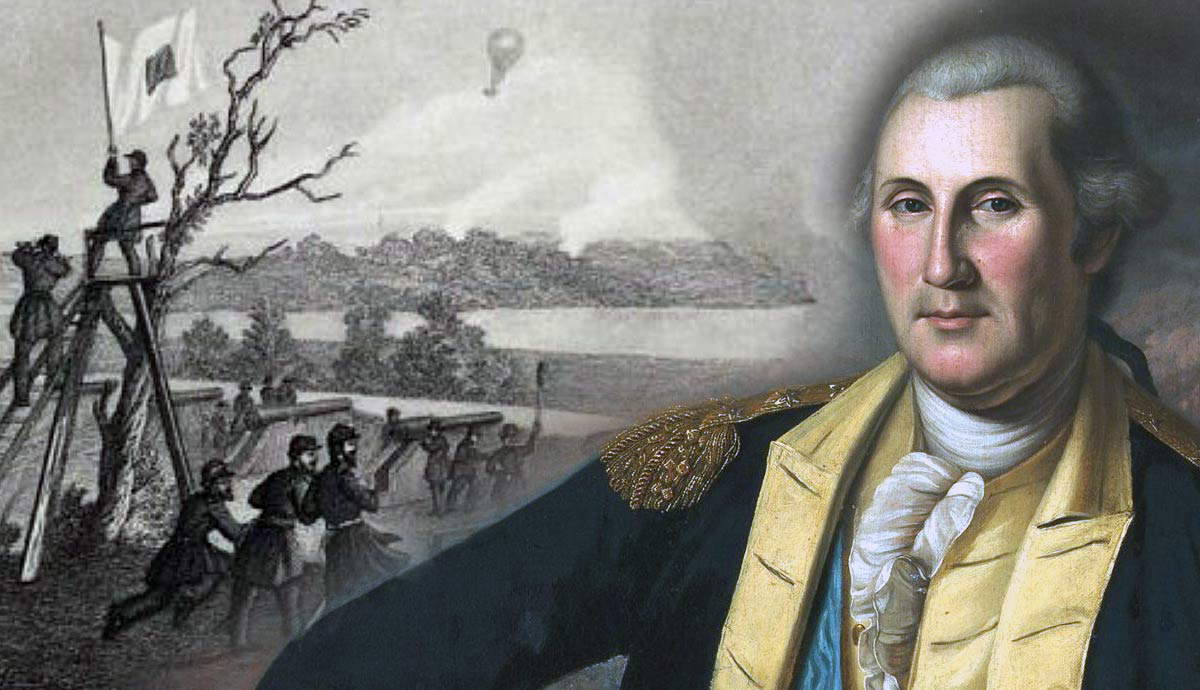
    The American Revolution provided a means for disgruntled American colonials not just to express their grievances to British rulers, but to fight for a free country founded on the principles of life, liberty, and the pursuit of happiness. To achieve this objective, however, the Continental Army needed to turn a ragtag fighting force into a professional military organization capable of countering the leading global power. Through hardship, sacrifice, and strategy, George Washington led the Thirteen Colonies towards this unlikely outcome by leaning on his armys most useful asset: artillery.Early StrugglesBattle at Bunkers Hill, John Trumbull, 1843-1852. Source: Smithsonian InstitutionAs an army composed of minutemen and informal militia groups, the Continental Army had limited artillery and ammunition. After the shot heard round the world announced the outbreak of hostilities between the colonies and the British at Lexington and Concord in April 1775, the Americans achieved early success by preventing the British authorities from destroying their supplies of guns and powder.At the Battle of Bunker Hill shortly afterwards, William Prescott commanded the Continental forces and established a battery at Breeds Hill targeting the British in Boston. Despite a strong initial defense which inflicted heavy casualties on the enemy, the Continentals eventually ran out of ammunition and were compelled to withdraw. Artillery would play the decisive role in forcing the British to withdraw from Boston in March 1776 after Colonel Henry Knox brought an artillery train 300 miles from Fort Ticonderoga to Washingtons besieging army. After Washington deployed the guns at Dorchester Heights within range of British warships in Boston Harbor, the British were compelled to withdraw.Less than a year later, George Washingtons forces employed artillery at Fort Stirling and Fort Putnam prior to the Battle of Brooklyn. Strategically, the Continental Army sought to control the East River from nearby waterways. Despite an advantageous position, the Patriots were outnumbered and suffered heavy losses. Similar outcomes at the Battle of White Plains and neutralized American gun crews at the Battle of Fort Washington led the commander to reconsider his artillery tactics.Gaining MomentumWashington crosses the Delaware River before the Battle of Trenton, 1861. Source: Library of CongressTo turn the tide of the war, George Washington came up with a bold plan: by sneaking across the icy Delaware River on Christmas night in 1776, the Continental Army could catch a Hessian outpost at Trenton by surprise. Understanding the power of artillery, Washington chose Henry Knox to lead a detachment of artillerymen who ferried their cannons across the river. Although the rivers current proved formidable for the heavy assets and their arrival was delayed, this setback did not stop Knox from devastating the 18-gun Hessian position. This operation, spearheaded by artillery and wise strategy, proved vital in securing victory after a string of defeats.Supported by the Captain of the New York Provincial Company of Artillery, Alexander Hamilton, as his personal aide-de-camp, Washington built on the momentum following the Battle of Trenton by skilfully employing artillery at the Battle of Princeton just seven days later. Led by Captain Joseph Moulder, the Continental Armys gunners peppered the British with short-range grapeshot and canister fire from seasoned gun crews.Although these actions allowed Washington to penetrate British defensive lines, the British quickly regained the strategic initiative in nearby states. Months after these successes, the British captured Fort Ticonderoga, Philadelphia, and Fort Mifflin. As the brutal winter of 1777 welcomed a new year, Washingtons battered, tired, hungry, and ill-equipped army at Valley Forge needed additional support before it was too late. Soon, the French joined forces with the colonists, bringing much needed logistical support and artillery assets.An Important AllyMajor General Marquis Lafayette, 1782. Source: Library of CongressRecognizing the value of allies, Washington lobbied for French involvement in the conflict against the British. As Britains rival for global hegemony in the 18th century, France sympathized with Washingtons cause and provided political and economic support since 1776, which proved crucial in supplying the Continental Army with cannon and ammunition. In a 1777 letter to General William Heath, Washington wrote: I was this morning favored with yours containing the pleasing accounts of the late arrivals at Portsmouth and Boston. That of the French ships of war, with artillery and other military stores, is most valuable.Following a vital American victory at the Battle of Saratoga in late 1777, France formally entered into an alliance with the nascent United States in 1778. This partnership brought about an increased supply of French guns, munitions, and resources from across the Atlantic needed to stem the tide of British victories. Aside from physical resources, the French alliance delivered military expertise via artillery training and strategic planning.One of General Washingtons most trusted personal advisors was the Marquis de Lafayette, a young French aristocrat who played a significant role in the training of the Continental Armys troops. Lafayettes dedication proved vital in American victories following the harsh winter at Valley Forge. During the Battle of Monmouth, Washingtons troops were outnumbered two to one. Fearful of defeat, the Continental Army began to retreat, but Washington and Lafayette organized a counterattack. Noticing that General Nathanial Greenes troops were pinned down by British General Cornwallis, the pair shifted artillery support to Greenes division and forced the British to withdraw to New York City during the night.The Siege at YorktownView of Union artillery station at the Siege of Yorktown, 1862. Source: Smithsonian InstitutionNo other battle of the American Revolution witnessed bombardments to the same extent as the Siege of Yorktown. As the decisive battle of the war, the Battle of Yorktown was a three-week blockade of the coastal town at the tip of a peninsula where American and French forces isolated the British until General Cornwallis surrendered. The unique shape of the Yorktown peninsula allowed the allies to quickly cut British supply channels and potential lines of retreat.The bombardment began on October 9, 1781, and General Knox coordinated fire against weakened British defensive positions by delivering more than 15,000 rounds from 73 field cannons, siege guns, and mortars. At sea, French naval vessels fired munitions including bar and chain shots, which neutralized the rigs and sails of British ships. On land, the Continental artillery was able to inch closer towards the British strongpoints each day of the attack by constructing extensive siege networks and trenches for artillery batteries.The British, despite facing constant bombardment and inferior positioning, did not surrender without a fight. British artillery units attempted to coordinate counter-battery fire aimed at French and American gun crews, but the attacks proved futile when contested by a numerically superior enemy. Of the dozens of artillery assets, 350 British soldiers temporarily disabled six colonial cannons by spiking them, driving a metal rod through the weapons vents. The bombardment was so relentless that the only break in fire enjoyed by the British resulted from adverse weather conditions.After the WarGeneral George Washington by Charles Willson Peale, c. 1779-1781. Source: Metropolitan Museum of Art, New YorkThe role of artillery in the United States was forever changed by its decisive impact during the American Revolution. Post-war reorganization mandated a standing military including dedicated artillery through the formal creation of the United States Army in 1784, which would prove vital during the War of 1812. Less than two decades after the Armys official inception, the country opened the United States Military Academy at West Point, where some of the nations best artillery training took place.Positions of great stature awaited many of the wars leading artillery officers. General Knox managed the transition of the Continental Army from a wartime to peacetime force, and in 1785, the artillery leader was named the United States Secretary of War by the Continental Congress. After the adoption of the US Constitution in 1789, Knox served in George Washingtons administration as Secretary of War until 1794.Alexander Hamilton, on the other hand, fulfilled several crucial roles as an American founding father. The former artilleryman served as a delegate to both the Congress of the Confederation and the Constitutional Convention, co-authored the Federalist Papers, and served as the nations first Secretary of the Treasury. Lafayette, Washingtons most trusted advisor on artillery issues despite not being an artillery officer by trade, returned to his home country and became a prominent figure during the early stages of the French Revolution.Legacy of Revolutionary War ArtilleryNational Portrait Gallery painting of Alexander Hamilton by Jacques Riech, 1903. Source: Smithsonian InstitutionWhile most of the artillery-related tactics, technology, and procedures employed by the Continental Army and its allies in the Revolutionary War have long been obsolete, the general strategic use of artillery during the conflict remains relevant in American warfare. Clashes such as the Battle of Bunker Hill and the Siege of Yorktown, for example, underline the importance of strategic positioning. Difficulties in transporting artillery over challenging terrain, as illustrated by General Knoxs plight during the Battle of Trenton, highlight the significance of modern self-propelled assets that offer increased flexibility compared to its forebears. The variety of modern projectile, propellent, and fuse combinations expand upon the use of artillery projectiles at Princeton and Yorktown which show how various munitions can be employed in different tactical scenarios.From a personnel perspective, the expertise of artillery leaders during the war demonstrates how a detail-oriented view of the battlefield gives artillerymen and women a unique perspective on political and military challenges. The United States owes immense gratitude to its founding artillery leaders who not only led a nascent nation in overthrowing British colonial rule, but also played an important role in setting up the countrys political institutions. Certainly, the experience of the US artillery during the American Revolutionary War justifies the reputation of artillery as the King of Battle.

    0 Комментарии 0 Поделились 7 Просмотры
  • WWW.DUALSHOCKERS.COM
    FPS Games That Are Longer Than 100 Hours
    There's nothing more fun than spending hundreds of hours playing your favorite FPS games.
    0 Комментарии 0 Поделились 14 Просмотры
  • WWW.DUALSHOCKERS.COM
    10 Best Action Adventure Games With High Replay Value
    The action-adventure genre has an endless number of games to play, but not all of them are good enough to warrant a second playthrough. A lot of games are a one-and-done experience, unfortunately, and are easily forgotten about once the credits roll. However, there are some amazing action adventure games out there with incredibly high replay value and are designed to keep you busy for hours on end.
    0 Комментарии 0 Поделились 14 Просмотры
  • WWW.MASHED.COM
    We Tried 8 Ways To Make Broccoli, Here's How They Ranked
    From air frying to grilling, there are so many different ways to prepare broccoli, but which one steals the show? We tried them to find out.
    0 Комментарии 0 Поделились 7 Просмотры
  • WWW.MASHED.COM
    5 Creative Ways To Make The Most Of Cheap Bourbon
    Find out how to transform cheap bourbon with smart, creative tips that make budget bottles work beautifully in cocktails, savory dishes, and desserts.
    0 Комментарии 0 Поделились 7 Просмотры
  • YUBNUB.NEWS
    And Now, Some Common-Sense Talk on Politics From the Frontman of KISS
    All right, listen up, now, you leftists: Gene Simmons wants you to calm down. And hes right.The KISS frontman is an unlikely source for political wisdom, but on Sunday, he said what a lot of people
    0 Комментарии 0 Поделились 7 Просмотры
  • YUBNUB.NEWS
    President Trump Set Example In Addressing Global Antisemitism
    The shocking terrorist attack in Australia last week in which a radicalized Muslim father-son kill team shattered the peace of a Hanukkah celebration on Sydneys famed Bondi Beach, shooting and
    0 Комментарии 0 Поделились 7 Просмотры
  • YUBNUB.NEWS
    Britains Ruling Class Loves to Cosplay as a Titan
    Britains Ruling Class Loves to Cosplay as a Titan Starmer has delayed the Defence Investment Plan because the militarys wish list collided with the Treasurys reality byGerry Nolan via
    0 Комментарии 0 Поделились 7 Просмотры